 Скачать презентацию Room Acoustics Bouncing Around Experiment Listen to
85b642cab227a5d8d511e636955f3b75.ppt
- Количество слайдов: 63



Room Acoustics Bouncing Around
Experiment Listen to a tone and move your head from side to side. What do you hear? Why do you hear it? ?
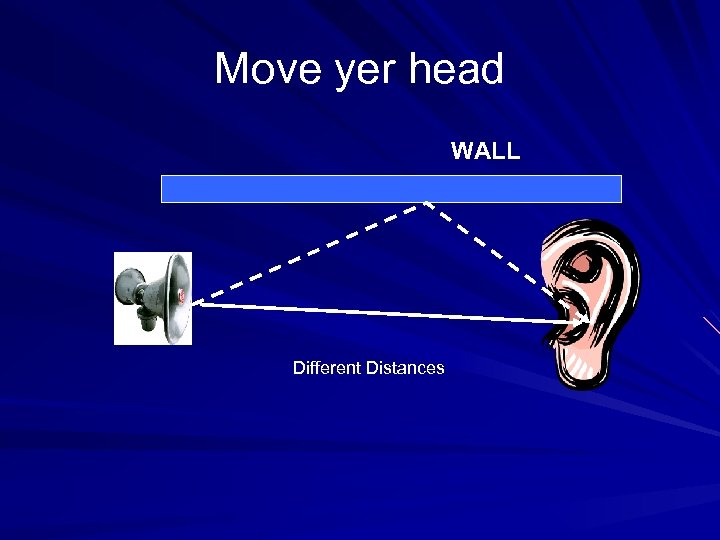
Move yer head WALL Different Distances
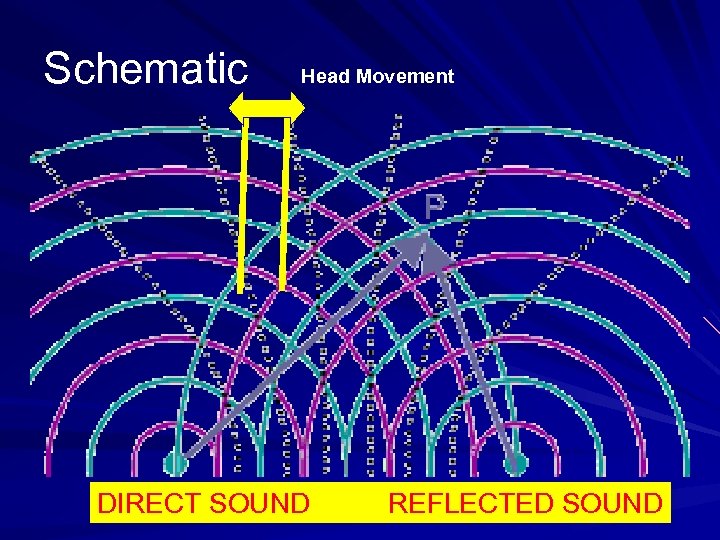
Schematic Head Movement DIRECT SOUND REFLECTED SOUND
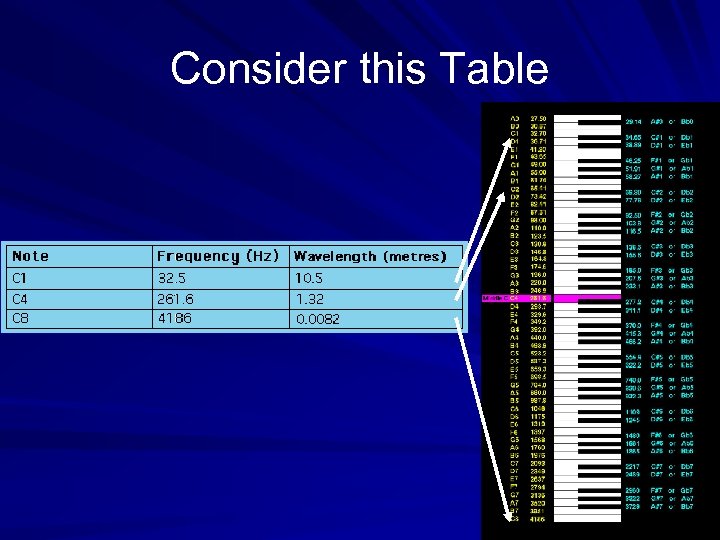
Consider this Table
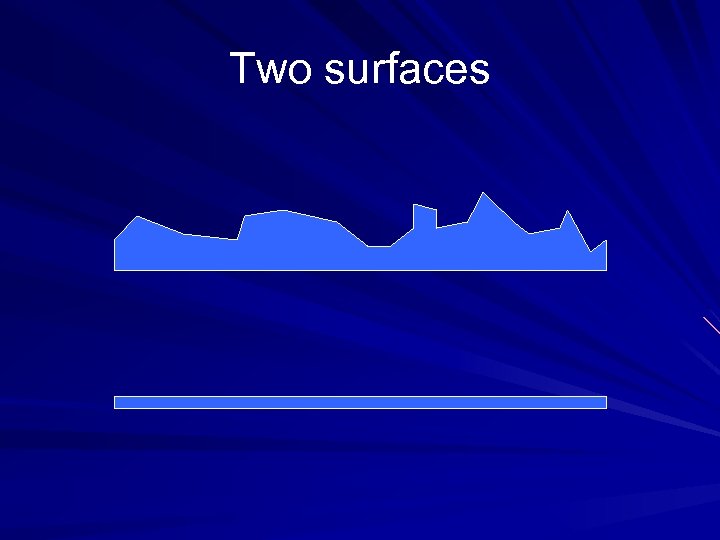
Two surfaces
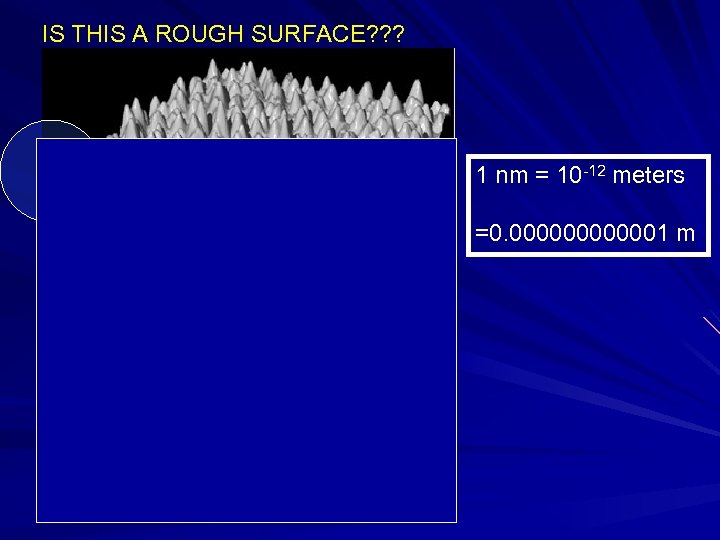
IS THIS A ROUGH SURFACE? ? ? 1 nm = 10 -12 meters =0. 0000001 m
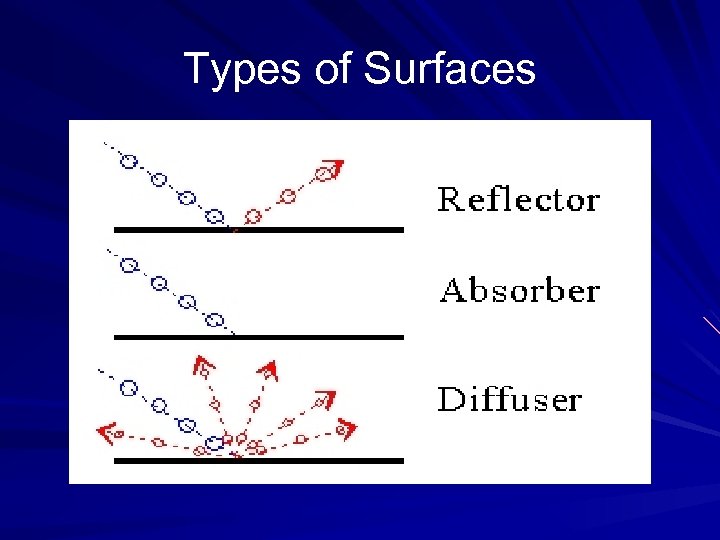
Consider a Wall How smooth is it? Smooth is in the feel of the feeler! Smooth or Rough are Relative terms. We define: – SMOOTH – Variations occur on a scale much smaller than a wavelength of the sound we are considering. – ROUGH – The variations in the surface are comparable to the size of the wavelength.
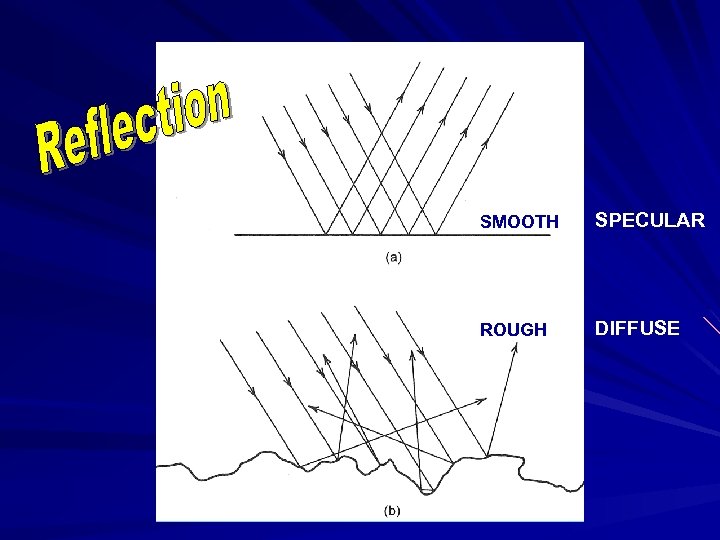
SMOOTH SPECULAR ROUGH DIFFUSE
SOFT Walls A soft wall (like rubber or cork) will yield when you push on it. Sound (music) pressure pushes on the wall. IF the wall deforms, than a force (p. A) times a distance (the deformation), means that the wave does WORK. The sound therefore loses some energy when it hits such a wall. The reflection isn’t as strong as one from an “unyielding” wall.
Consider an outdoor concert Musicians on stage People in the audience No Walls or Ceilings Only reflections possible are from structures in back of the musicians.
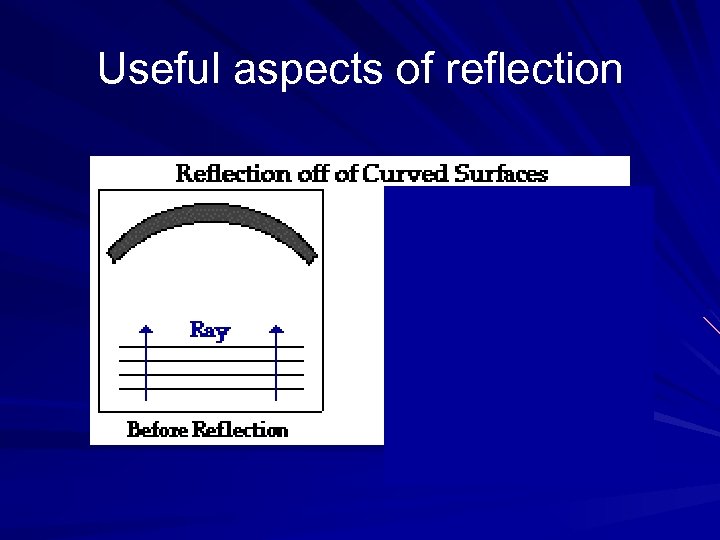
Useful aspects of reflection Think about the reverse!
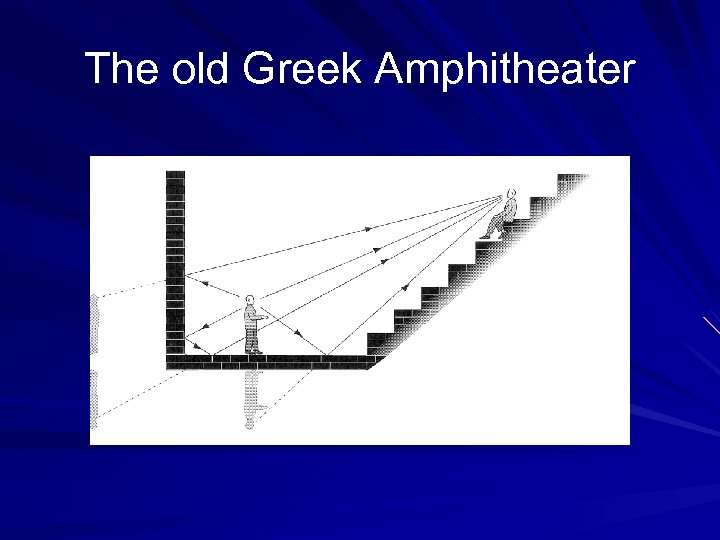
The old Greek Amphitheater

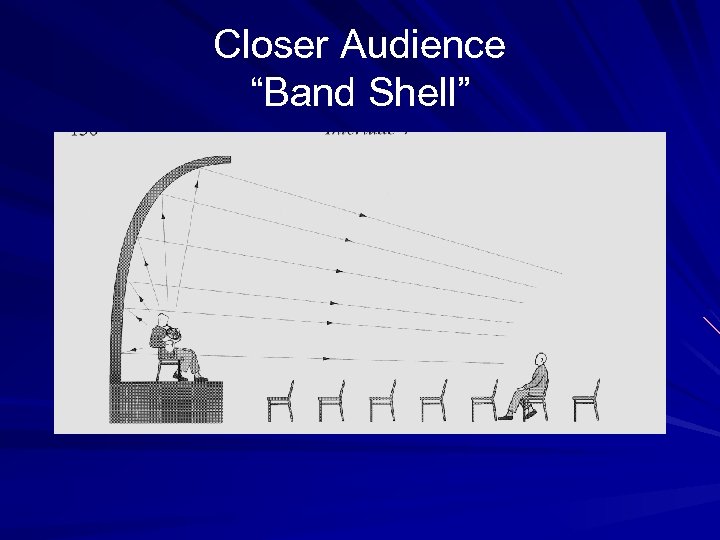
Closer Audience “Band Shell”
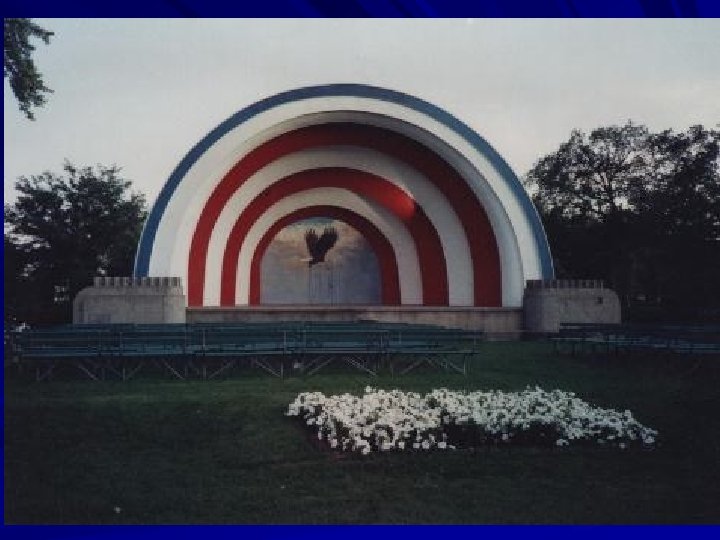
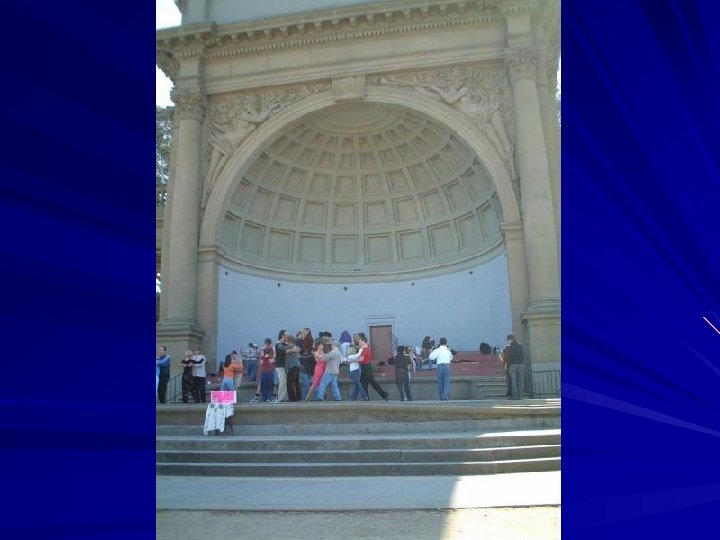
Care in a band-shell The focus can’t be too good because then all of the performers need to be at the same place. Since they can’t be, a vertical wall might be better. Real Band shells look right but really do NOT properly focus. ON PURPOSE!
What does “focus” mean Sound waves hit a surface which can be called a mirror. The mirror surface can be curved so that rays of sound from different directions can be made to come together at the same place. – Like a lens In a concert hall, too much focusing can also mean that there is only ONE good seat in the house!
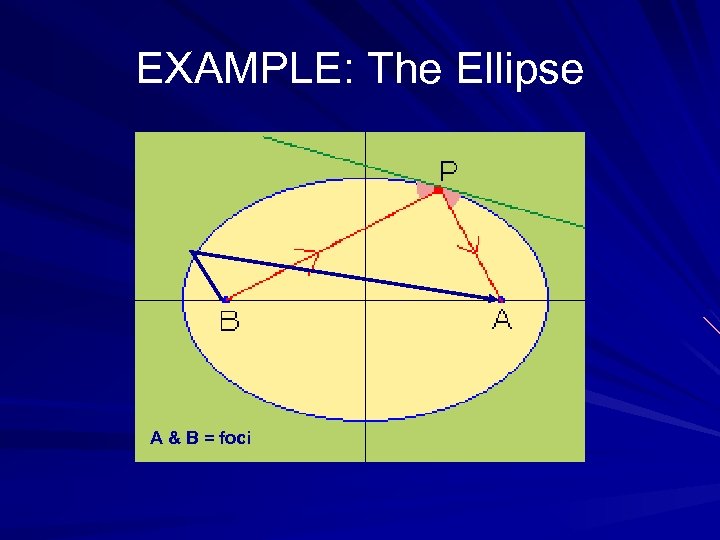
EXAMPLE: The Ellipse A & B = foci
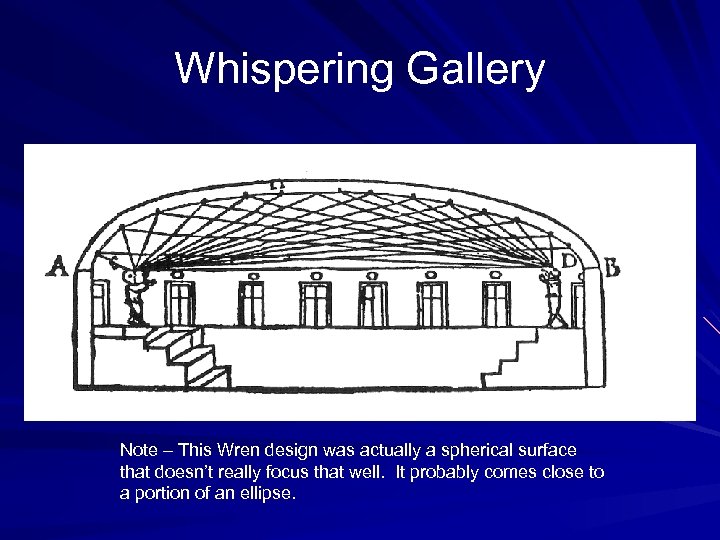
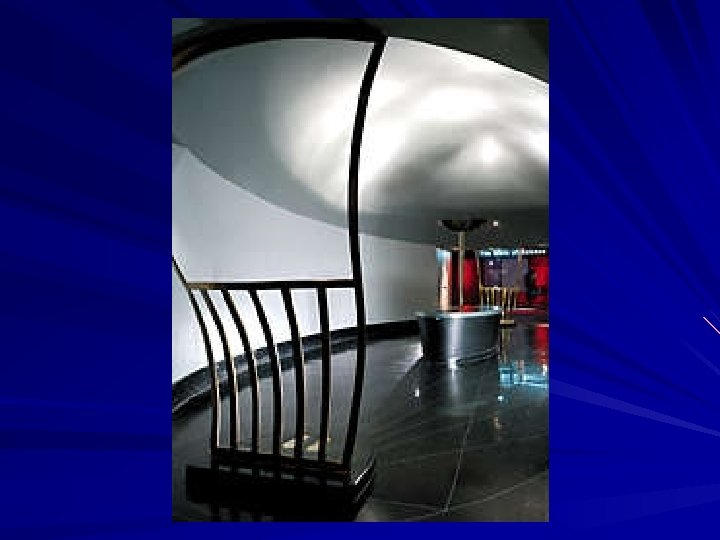
Whispering Gallery Note – This Wren design was actually a spherical surface that doesn’t really focus that well. It probably comes close to a portion of an ellipse.
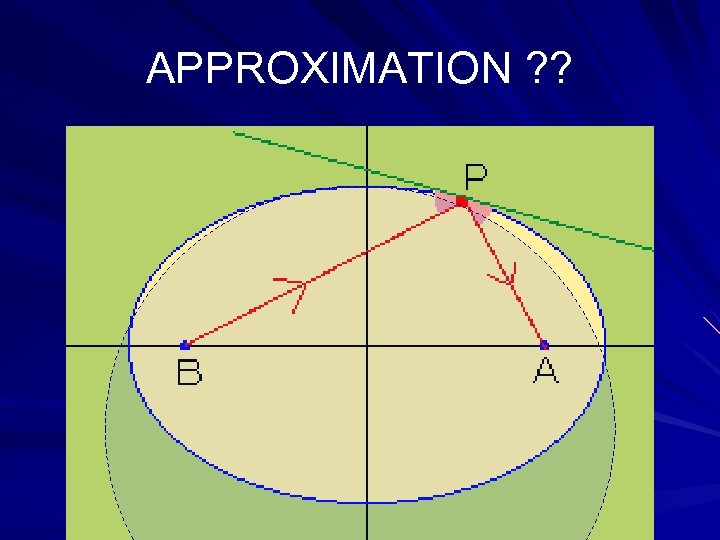
APPROXIMATION ? ?
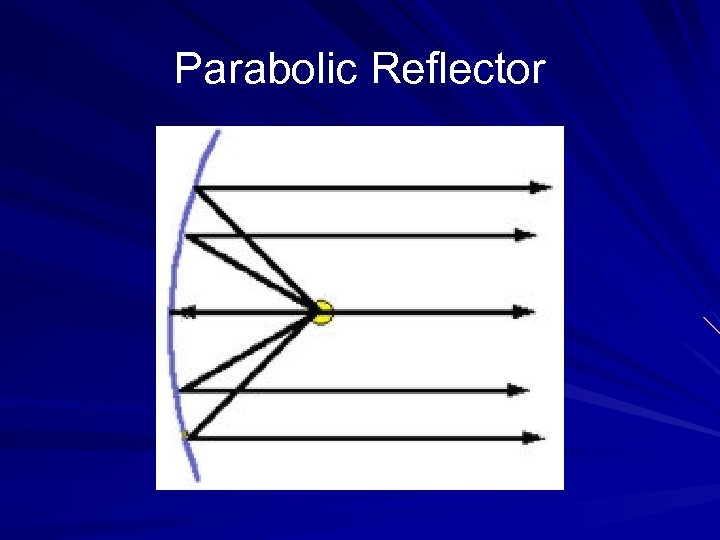
Parabolic Reflector

Parabolic Receiver
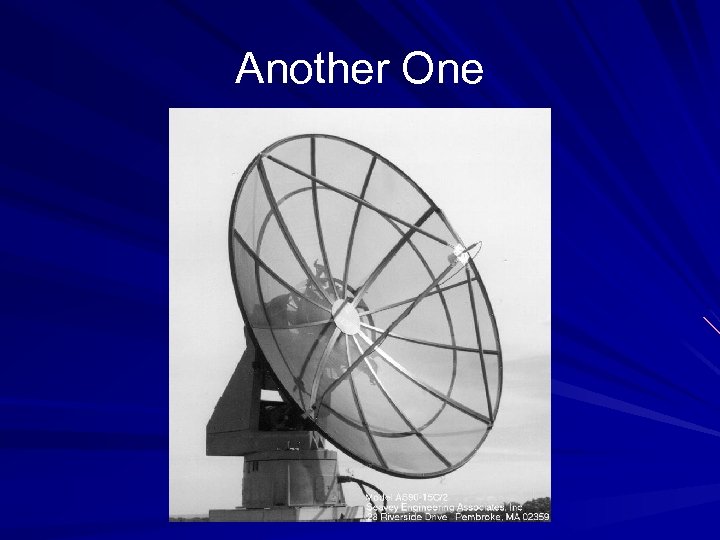
Another One
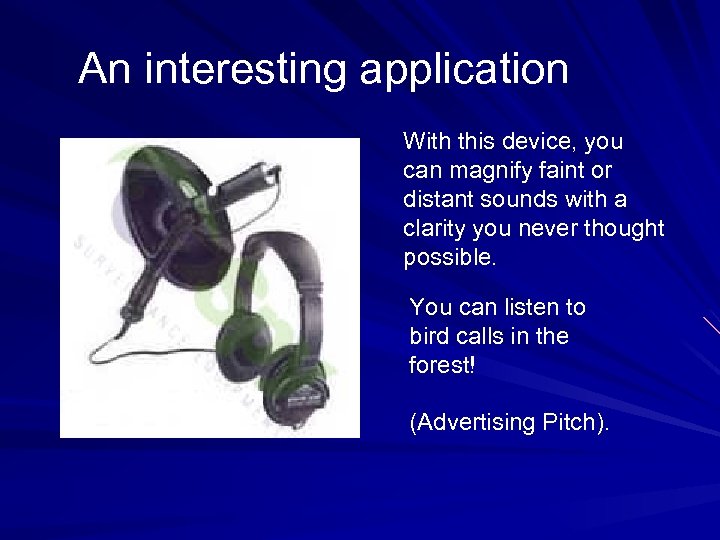
An interesting application With this device, you can magnify faint or distant sounds with a clarity you never thought possible. You can listen to bird calls in the forest! (Advertising Pitch).

What about REAL Rooms? ? ?
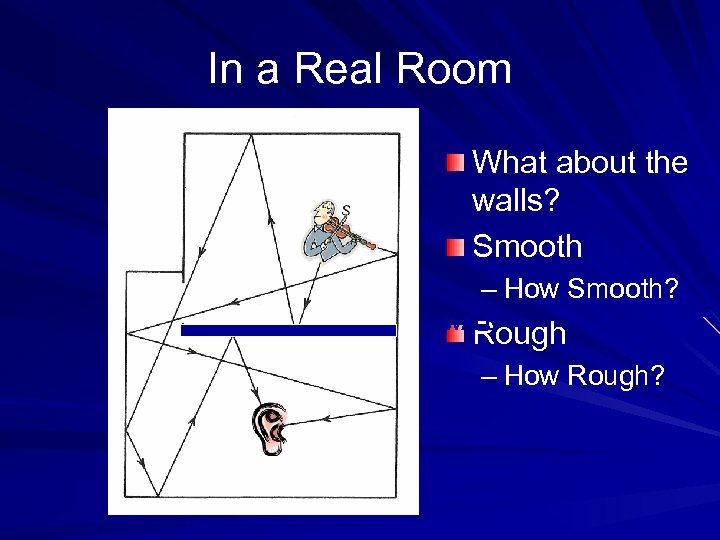
In a Real Room What about the walls? Smooth – How Smooth? WALL Rough – How Rough?
Diffraction Sound can “bend” around objects. Sound can change its properties depending upon the size of the wavelength compared to objects. The Diffraction effect can be understood via one of the early theories of waves.
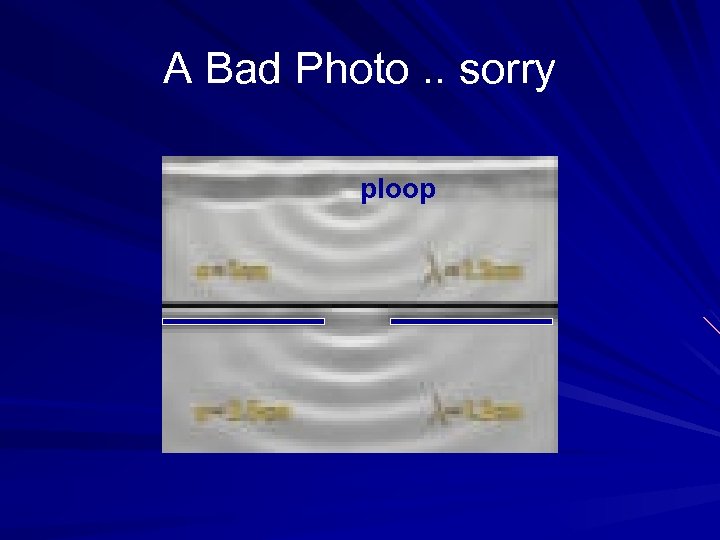
A Bad Photo. . sorry ploop
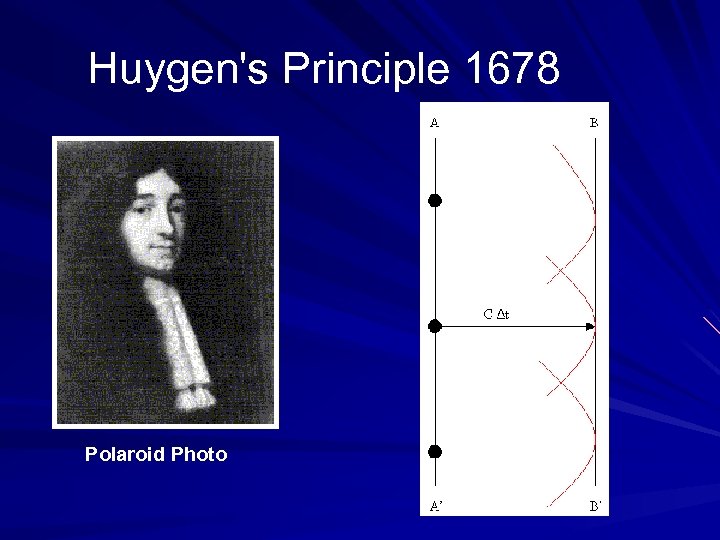
Huygen's Principle 1678 Polaroid Photo
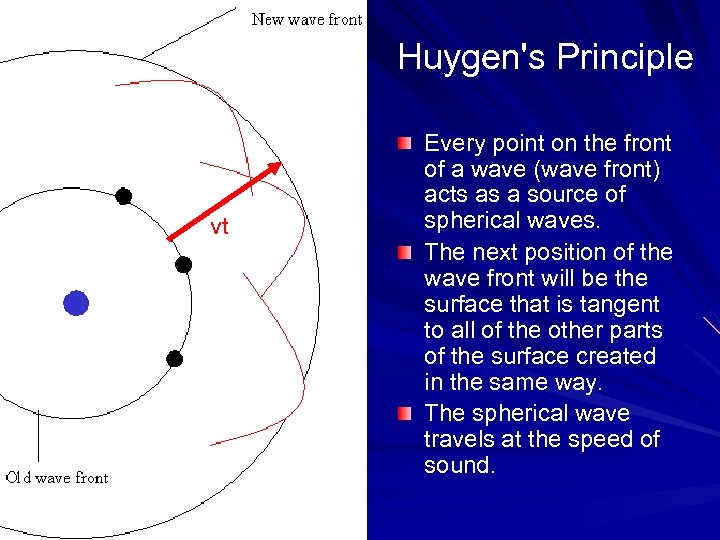
Huygen's Principle vt Every point on the front of a wave (wave front) acts as a source of spherical waves. The next position of the wave front will be the surface that is tangent to all of the other parts of the surface created in the same way. The spherical wave travels at the speed of sound.
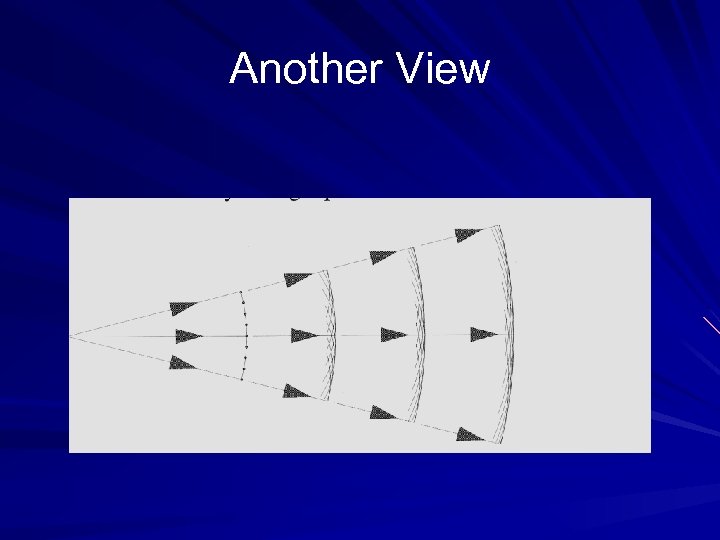
Another View
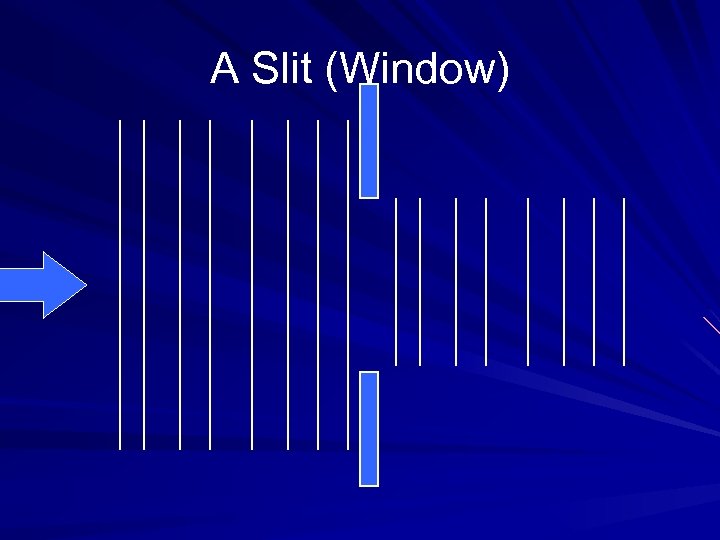
A Slit (Window)
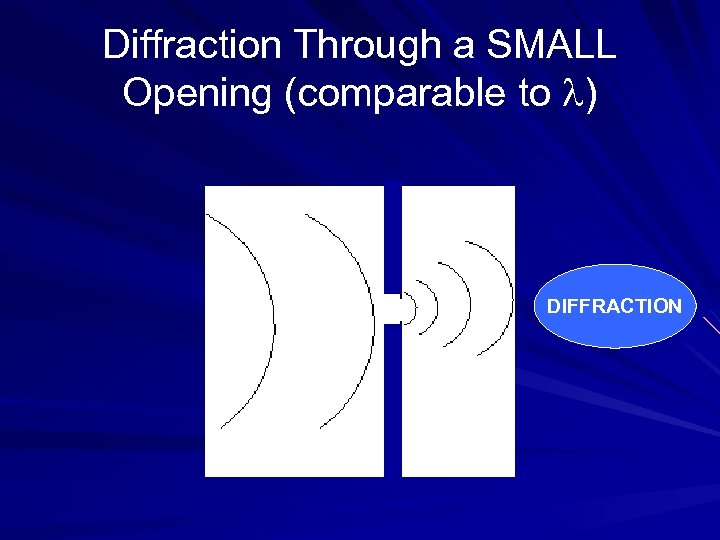
Diffraction Through a SMALL Opening (comparable to l) DIFFRACTION
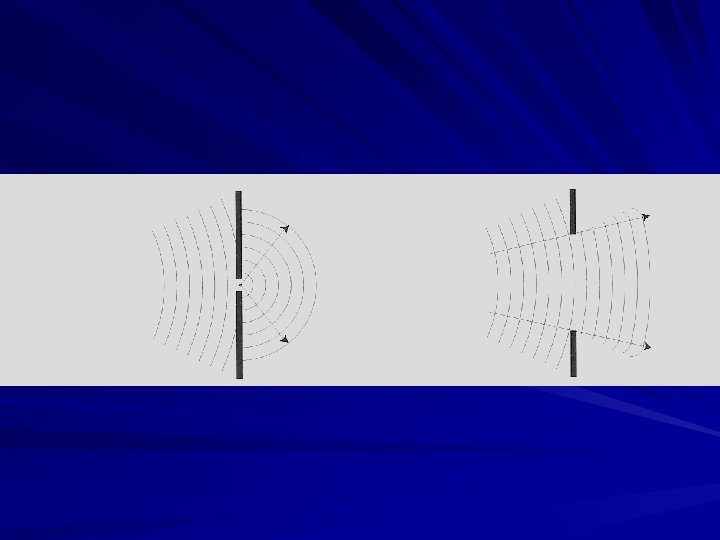
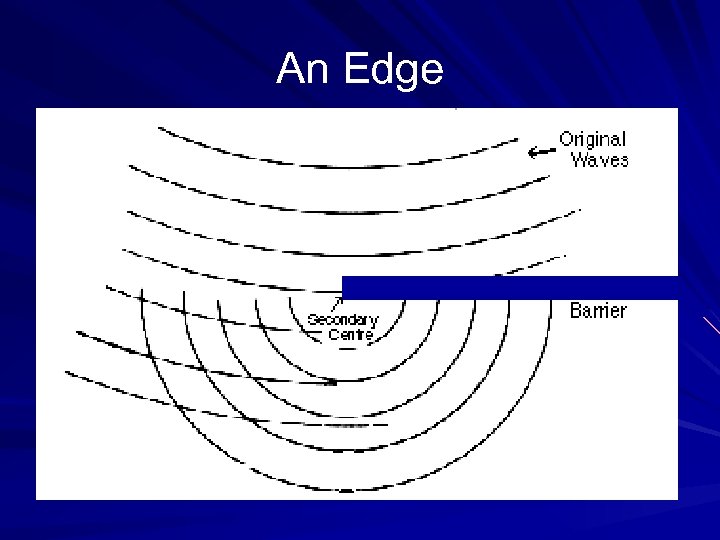
An Edge
Sound Travels in straight Lines. Travels in crooked lines. Can be focused. Can be absorbed by a surface Can be diffracted Can interfere “with itself” Is dependent on the properties of the room.
What else? Small objects will scatter or diffract sound so it can be heard in non-straight lines. – Around edges, etc. Small objects do very little to long wavelength sounds (low tones). They are like the e. Everready Battery … they keep going and going …. . Higher frequency sounds will be deflected or absorbed more than low frequency sounds.
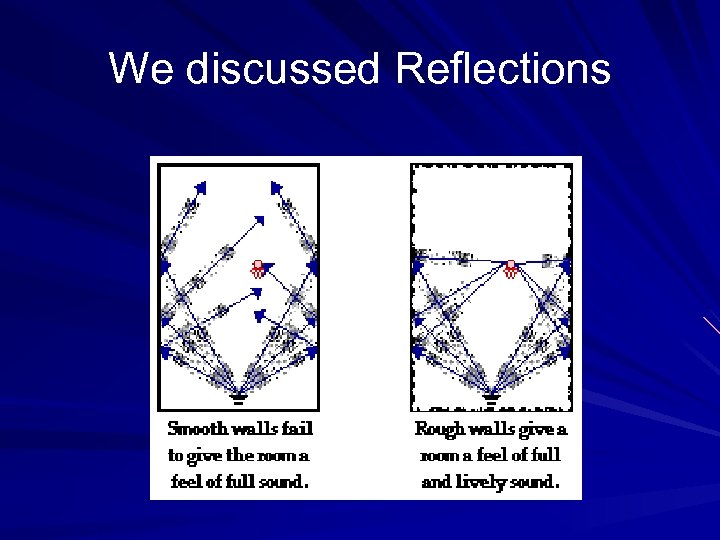
We discussed Reflections
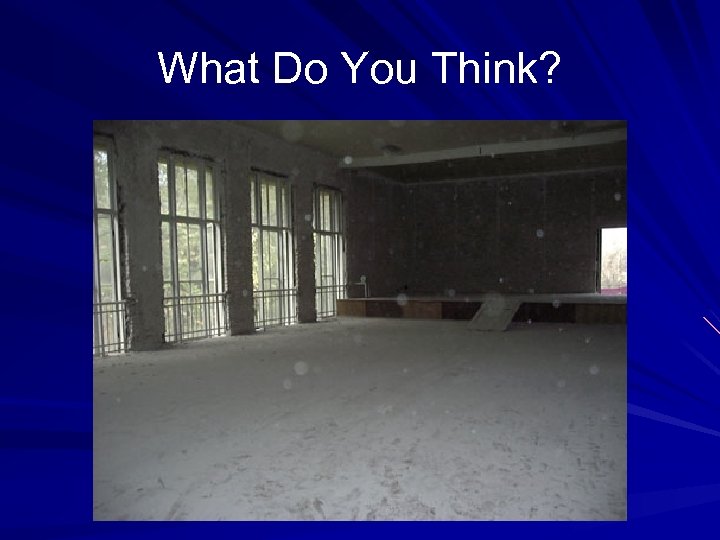
What Do You Think?
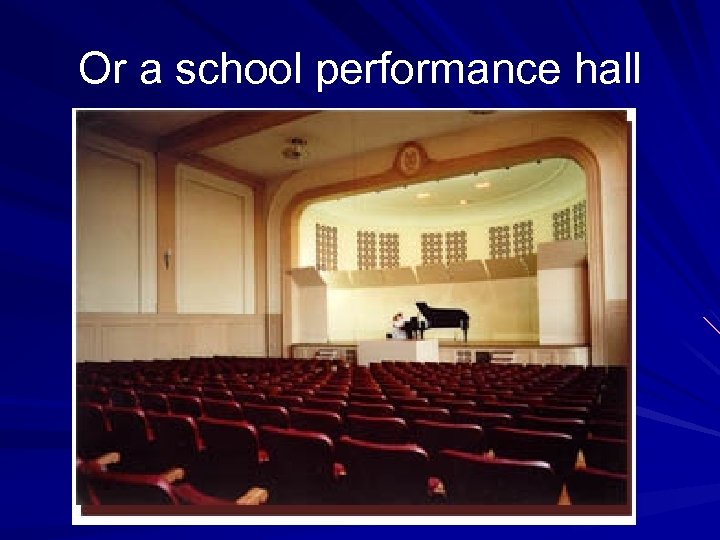
Or a school performance hall
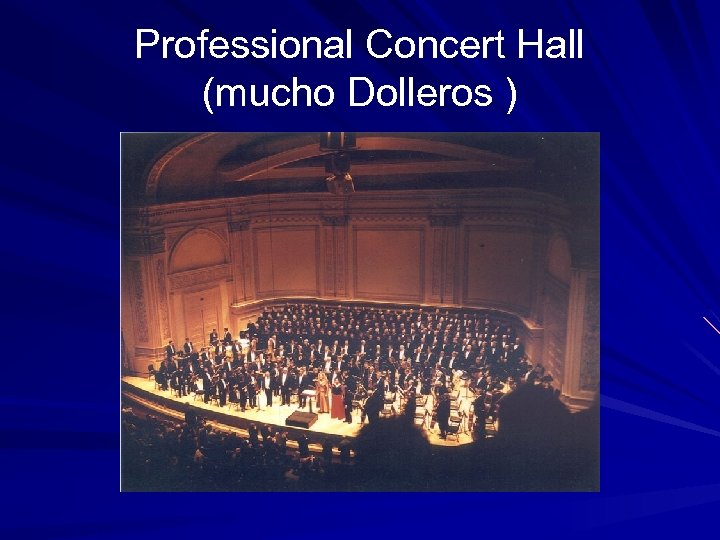
Professional Concert Hall (mucho Dolleros )
Types of Surfaces
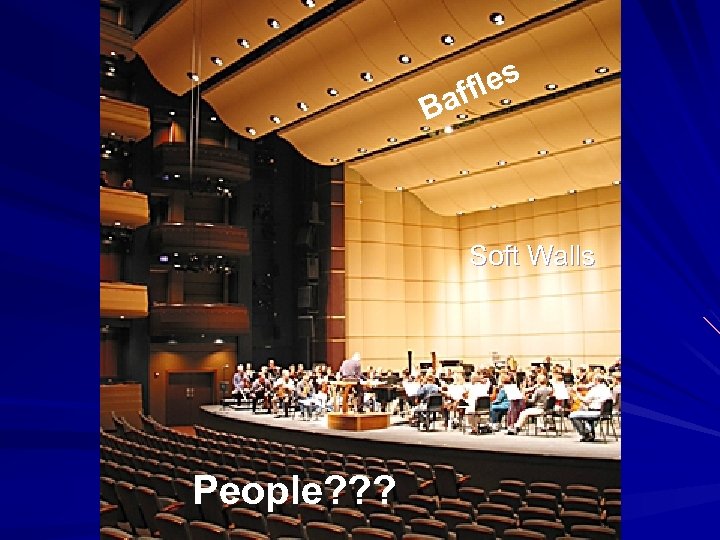
les aff B Soft Walls People? ? ?
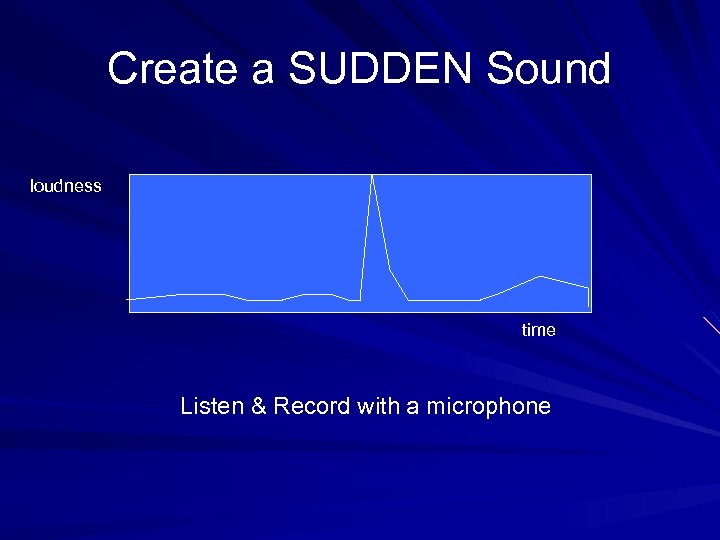
Create a SUDDEN Sound loudness time Listen & Record with a microphone
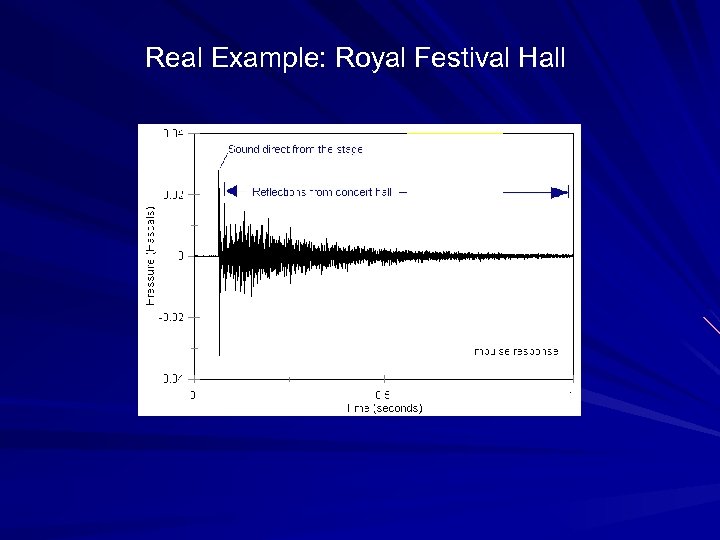
Real Example: Royal Festival Hall
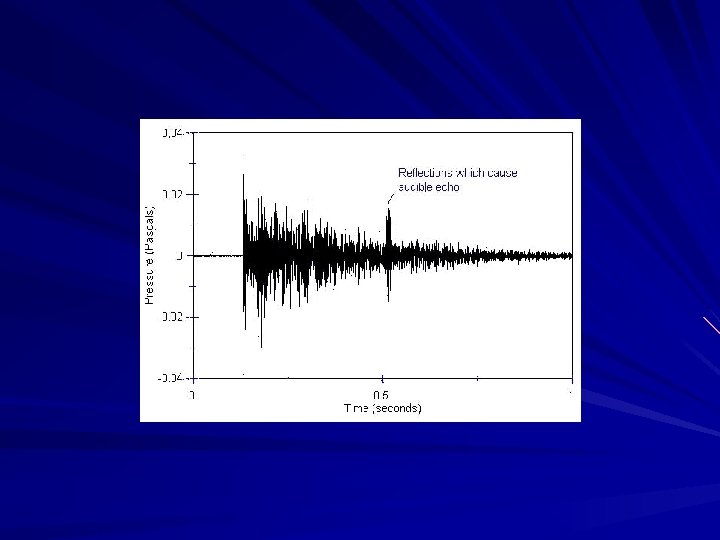
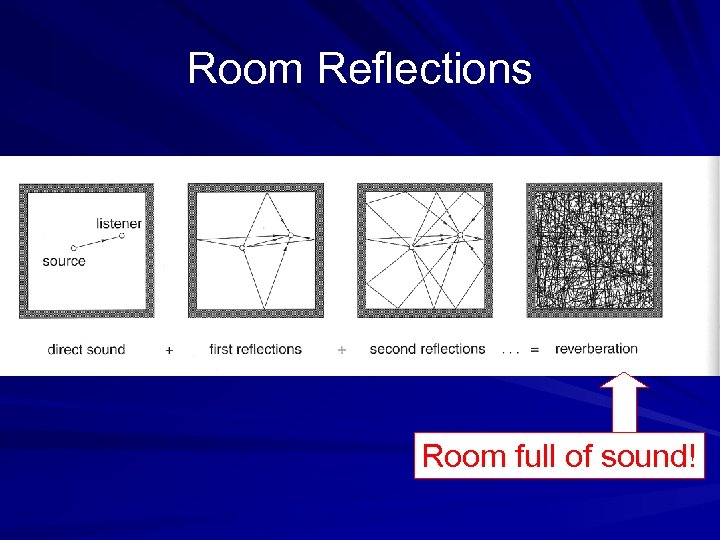
Room Reflections Room full of sound!
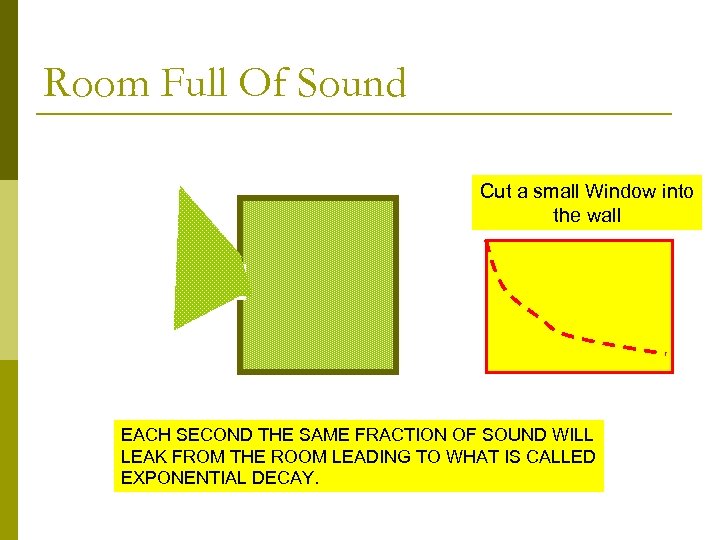
Room Full Of Sound Cut a small Window into the wall EACH SECOND THE SAME FRACTION OF SOUND WILL LEAK FROM THE ROOM LEADING TO WHAT IS CALLED EXPONENTIAL DECAY.
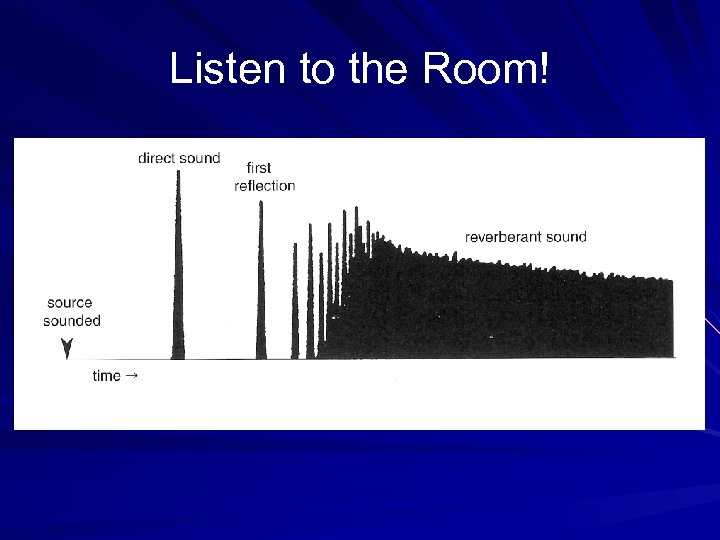
Listen to the Room!
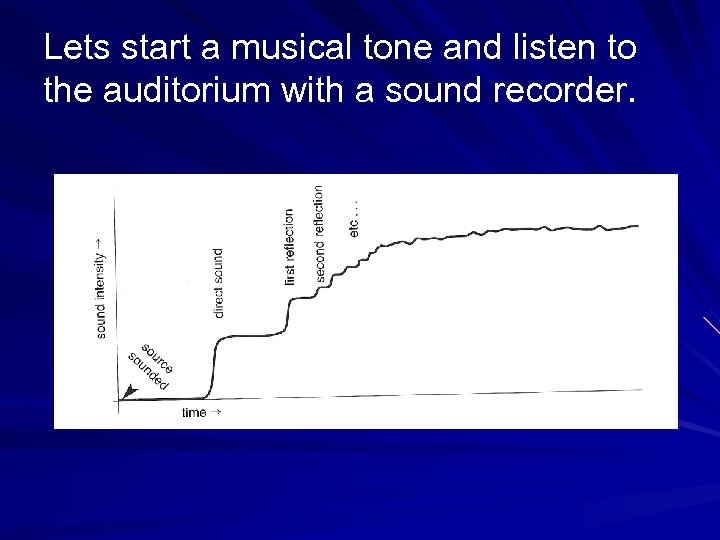
Lets start a musical tone and listen to the auditorium with a sound recorder.
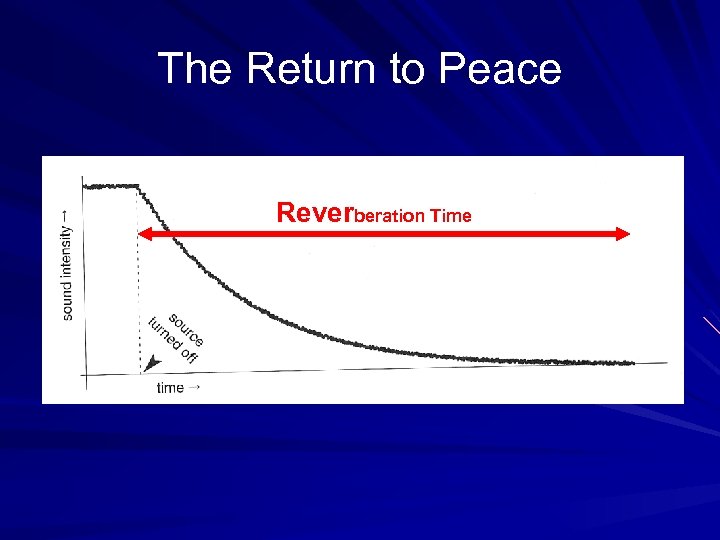
How about the return to silence? There is a steady musical sound in the auditorium. The symphony is over. The music suddenly stops. It takes a certain time for the sound level to get to a very small level. The time it takes for the auditorium sound to drop to 1/1, 000 th of the steady level is called the REVERBERATION TIME.
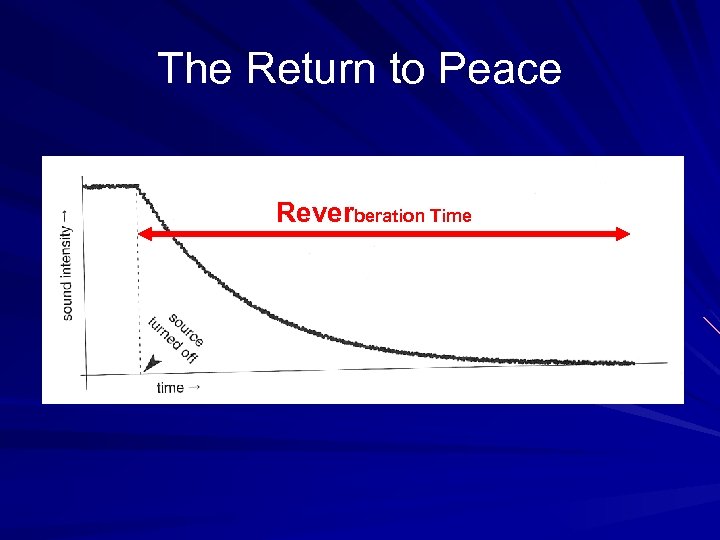
The Return to Peace Reverberation Time
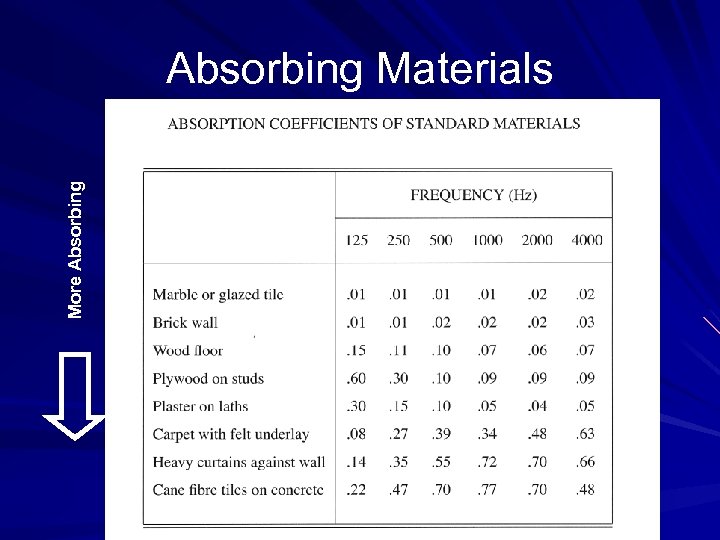
More Absorbing Materials
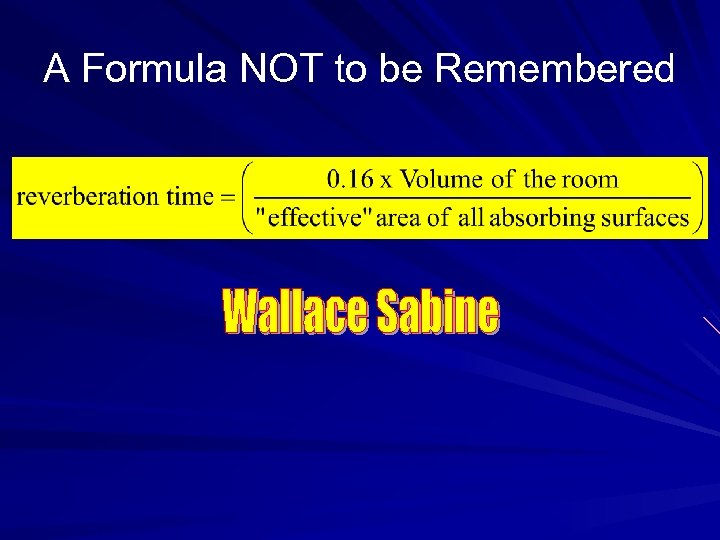
A Formula NOT to be Remembered
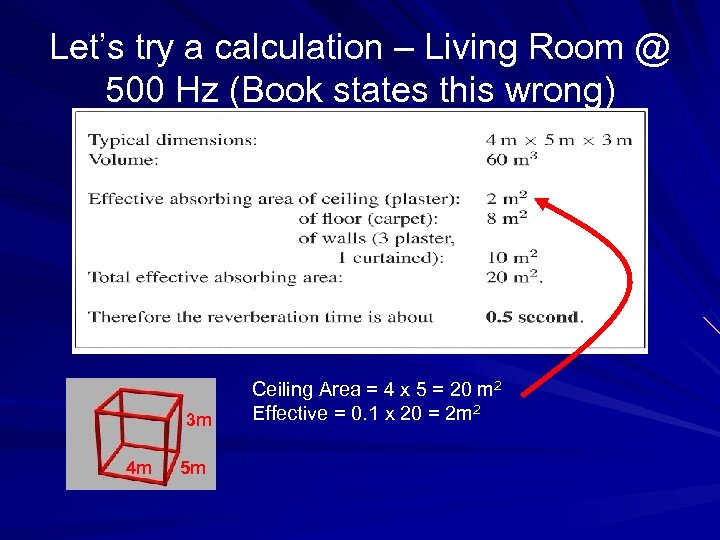
Let’s try a calculation – Living Room @ 500 Hz (Book states this wrong) 3 m 4 m 5 m Ceiling Area = 4 x 5 = 20 m 2 Effective = 0. 1 x 20 = 2 m 2
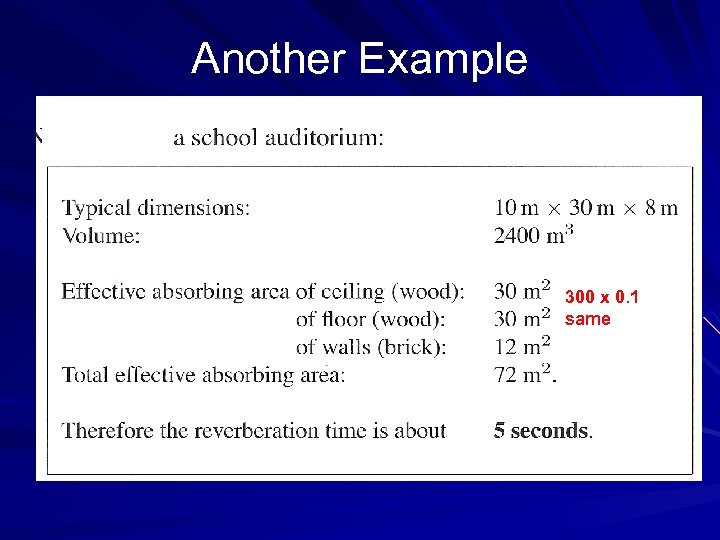
Another Example 300 x 0. 1 same
The Return to Peace Reverberation Time
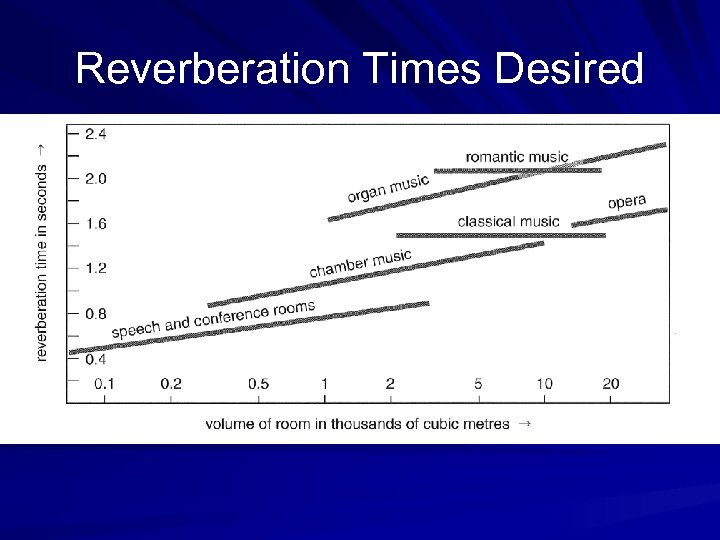
Reverberation Times Desired
For Music Rooms must be carefully designed. The “engineering” contains a lot of “Kentucky Windage”. Different kinds of music require different acoustical designs. In the right room, you hear what the composer intended you to hear.
Скачать презентацию Room Acoustics Bouncing Around Experiment Listen to
85b642cab227a5d8d511e636955f3b75.ppt