


 Скачать презентацию Romana Satmo 11 C The first people
discoveries and colonies, Stamo 11C.pptx
- Количество слайдов: 7
 Romana Satmo 11 C
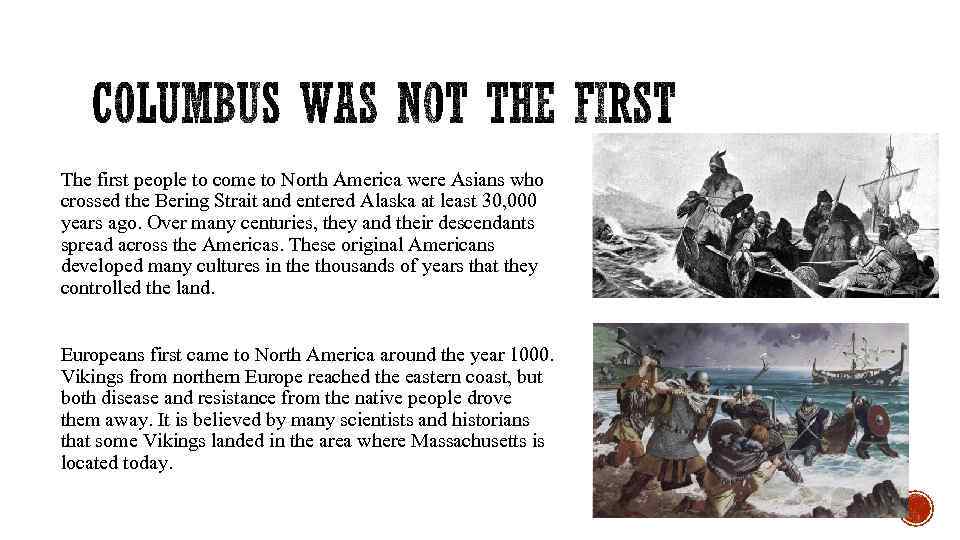 The first people to come to North America were Asians who crossed the Bering Strait and entered Alaska at least 30, 000 years ago. Over many centuries, they and their descendants spread across the Americas. These original Americans developed many cultures in the thousands of years that they controlled the land. Europeans first came to North America around the year 1000. Vikings from northern Europe reached the eastern coast, but both disease and resistance from the native people drove them away. It is believed by many scientists and historians that some Vikings landed in the area where Massachusetts is located today.
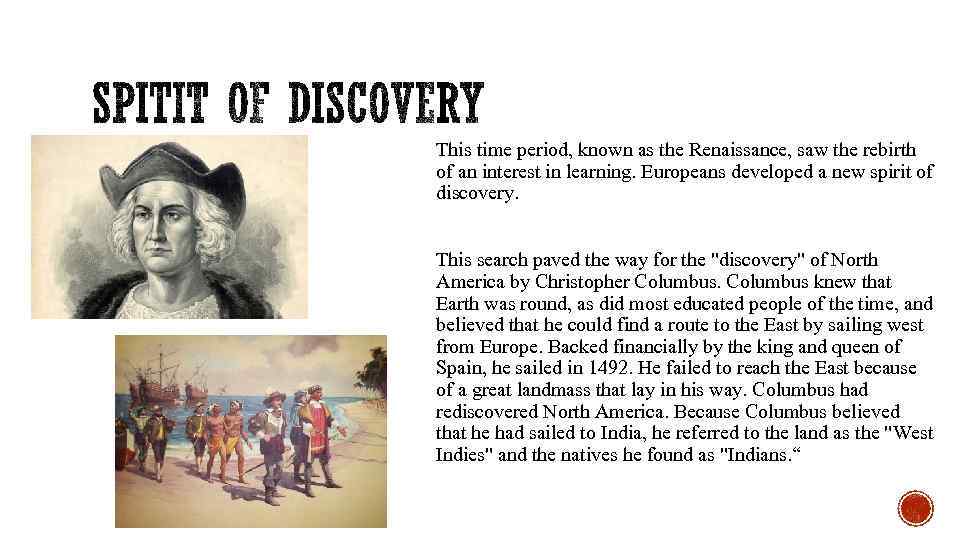 This time period, known as the Renaissance, saw the rebirth of an interest in learning. Europeans developed a new spirit of discovery. This search paved the way for the "discovery" of North America by Christopher Columbus knew that Earth was round, as did most educated people of the time, and believed that he could find a route to the East by sailing west from Europe. Backed financially by the king and queen of Spain, he sailed in 1492. He failed to reach the East because of a great landmass that lay in his way. Columbus had rediscovered North America. Because Columbus believed that he had sailed to India, he referred to the land as the "West Indies" and the natives he found as "Indians. “
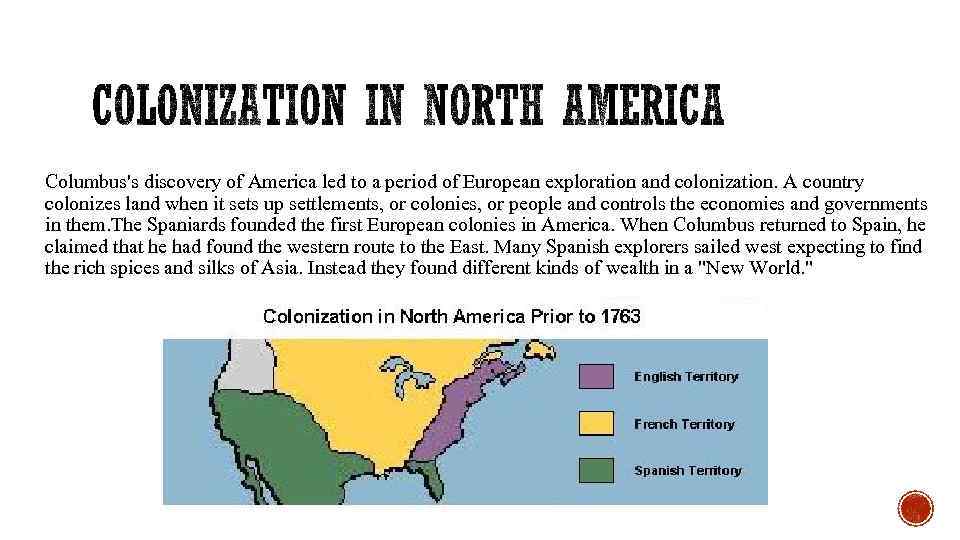 Columbus's discovery of America led to a period of European exploration and colonization. A country colonizes land when it sets up settlements, or colonies, or people and controls the economies and governments in them. The Spaniards founded the first European colonies in America. When Columbus returned to Spain, he claimed that he had found the western route to the East. Many Spanish explorers sailed west expecting to find the rich spices and silks of Asia. Instead they found different kinds of wealth in a "New World. "
 Not all Spaniards who came to America were searching for instant riches. Many came to build homes and make new lives for themselves. Spanish colonies thrived in California and Florida as well as in Mexico, Central America, and South America. France, Holland, and England also sent explorers to America, but they didn't establish permanent colonies during the 1500 s. French trappers traveled inland to trap otter and beaver for European markets. They also set up trading posts to buy furs from Native American trappers. France then sent explorers and colonists to claim and settle lands in North America. The city of Quebec became the center of their holdings in America. During the 1500 s the Dutch sent fishing boats to North America. In 1609 Henry Hudson claimed for Holland the land along the river that still bears his name. Dutch farmers and merchants began settling along the Hudson River, and soon the port town of New Amsterdam was busy and prosperous. By 1664 England had forced Holland out of North America, and New Amsterdam was renamed New York. In the late 1500 s England made several unsuccessful attempts to start colonies. Finally, in 1607, a private company sent a group of about 100 English settlers. They landed in Virginia and named their settlement Jamestown after their king. At first the colonists spent more time looking for gold than planting crops. But under the leadership of Captain John Smith, Jamestown did survive. In 1620 another group of English colonists known as the Pilgrims arrived. The Pilgrims weren't looking for riches; they wanted religious freedom. On the coast of New England they founded Plymouth Colony, which succeeded with farming advice from nearby Native Americans. Soon other English settlements grew up all along the eastern coast.
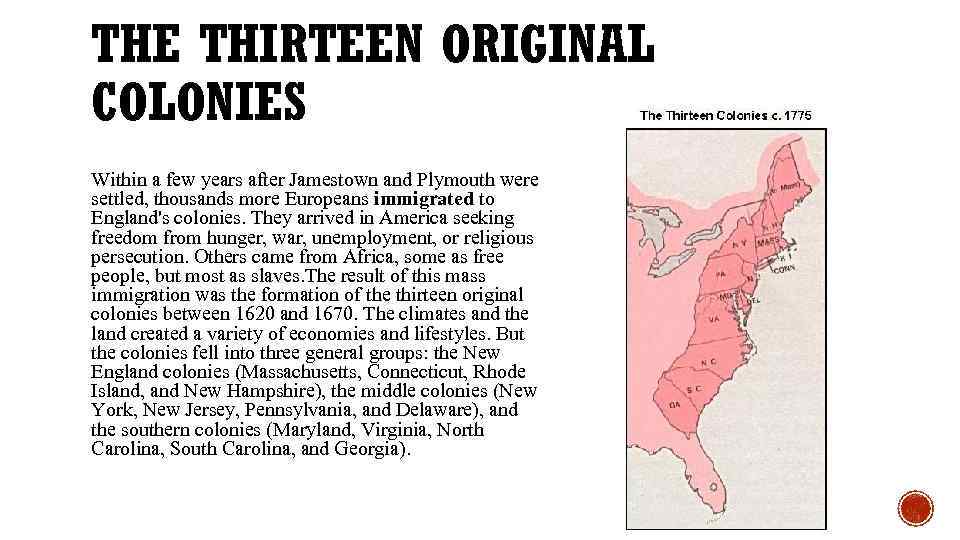 THE THIRTEEN ORIGINAL COLONIES Within a few years after Jamestown and Plymouth were settled, thousands more Europeans immigrated to England's colonies. They arrived in America seeking freedom from hunger, war, unemployment, or religious persecution. Others came from Africa, some as free people, but most as slaves. The result of this mass immigration was the formation of the thirteen original colonies between 1620 and 1670. The climates and the land created a variety of economies and lifestyles. But the colonies fell into three general groups: the New England colonies (Massachusetts, Connecticut, Rhode Island, and New Hampshire), the middle colonies (New York, New Jersey, Pennsylvania, and Delaware), and the southern colonies (Maryland, Virginia, North Carolina, South Carolina, and Georgia).
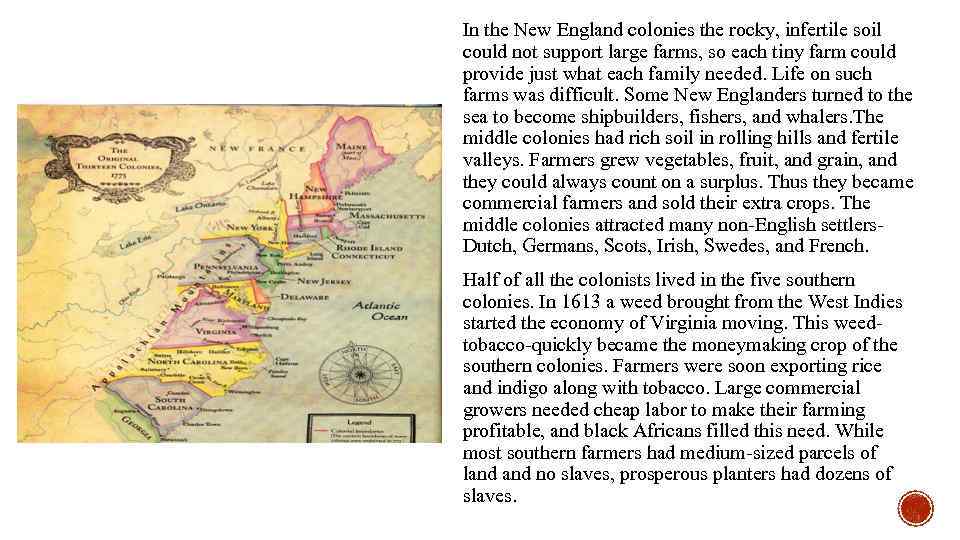 In the New England colonies the rocky, infertile soil could not support large farms, so each tiny farm could provide just what each family needed. Life on such farms was difficult. Some New Englanders turned to the sea to become shipbuilders, fishers, and whalers. The middle colonies had rich soil in rolling hills and fertile valleys. Farmers grew vegetables, fruit, and grain, and they could always count on a surplus. Thus they became commercial farmers and sold their extra crops. The middle colonies attracted many non-English settlers. Dutch, Germans, Scots, Irish, Swedes, and French. Half of all the colonists lived in the five southern colonies. In 1613 a weed brought from the West Indies started the economy of Virginia moving. This weedtobacco-quickly became the moneymaking crop of the southern colonies. Farmers were soon exporting rice and indigo along with tobacco. Large commercial growers needed cheap labor to make their farming profitable, and black Africans filled this need. While most southern farmers had medium-sized parcels of land no slaves, prosperous planters had dozens of slaves.