 Скачать презентацию Roll of Thunder Hear My Cry by Mildred
e71da064dbfad2fe6e465490cf24b043.ppt
- Количество слайдов: 55



Roll of Thunder, Hear My Cry by Mildred Taylor Setting and Historical Background
The Great Depression The world experienced an economic catastrophe. The stock market crashed, causing lost fortunes and jobs. Banks had invested their money in stocks, so people lost their life savings. (This was before FDIC!) Rich people were now poor; poor people were destitute.
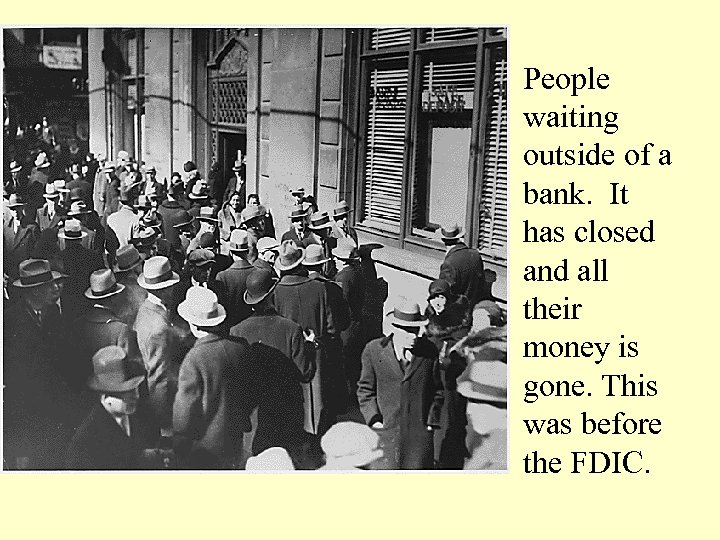
People waiting outside of a bank. It has closed and all their money is gone. This was before the FDIC.
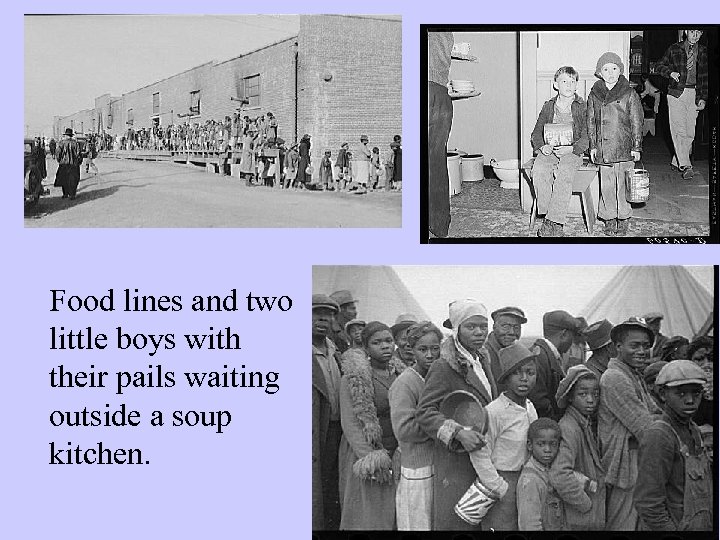
Food lines and two little boys with their pails waiting outside a soup kitchen.
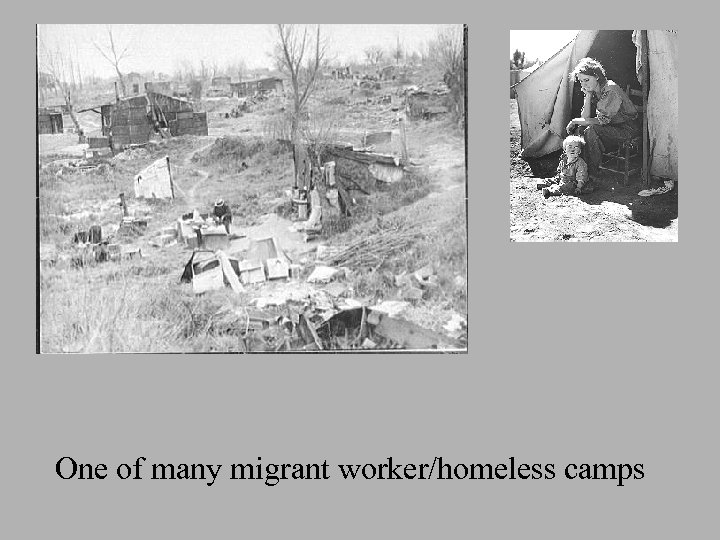
One of many migrant worker/homeless camps
To make things worse, many poor farming and logging practices caused an environmental crisis known as the Dust Bowl. All through the South, drought and high winds caused storms that darkened skies and blew dust as far northeast as Massachusetts.
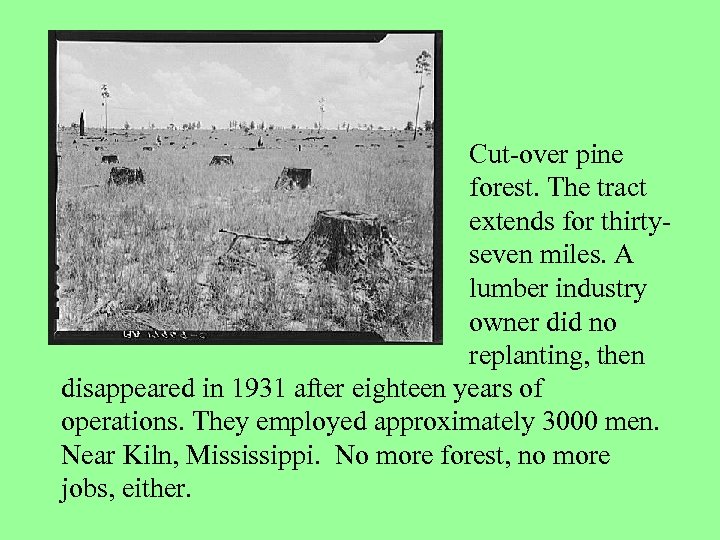
Cut-over pine forest. The tract extends for thirtyseven miles. A lumber industry owner did no replanting, then disappeared in 1931 after eighteen years of operations. They employed approximately 3000 men. Near Kiln, Mississippi. No more forest, no more jobs, either.
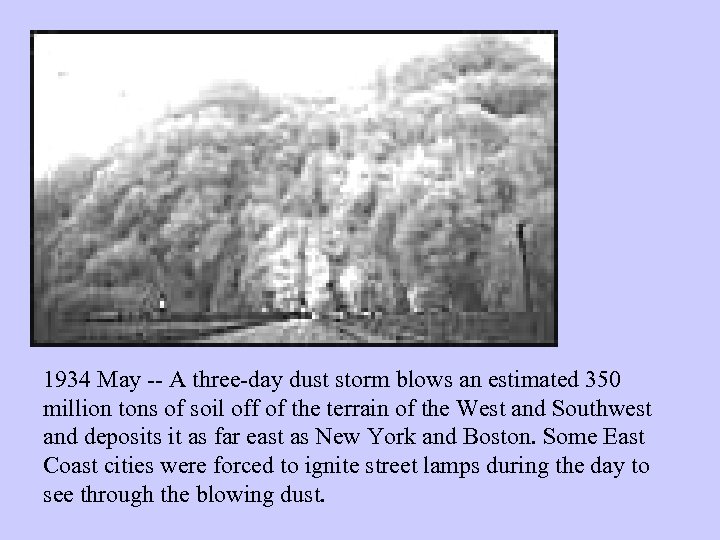
1934 May -- A three-day dust storm blows an estimated 350 million tons of soil off of the terrain of the West and Southwest and deposits it as far east as New York and Boston. Some East Coast cities were forced to ignite street lamps during the day to see through the blowing dust.
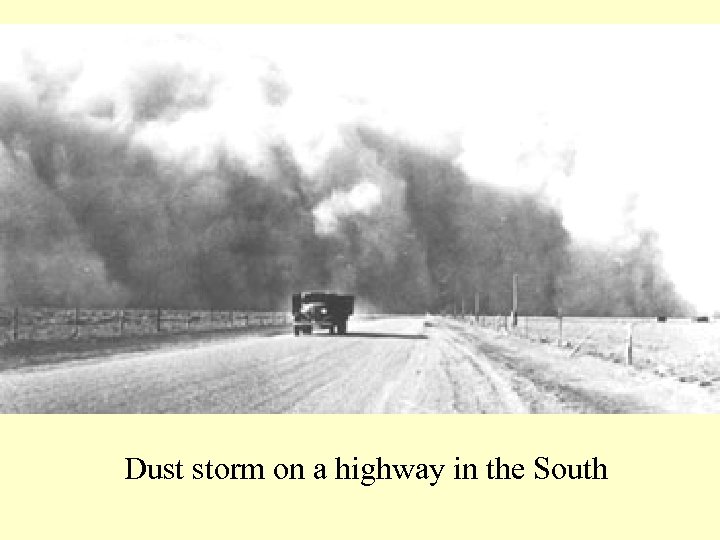
Dust storm on a highway in the South
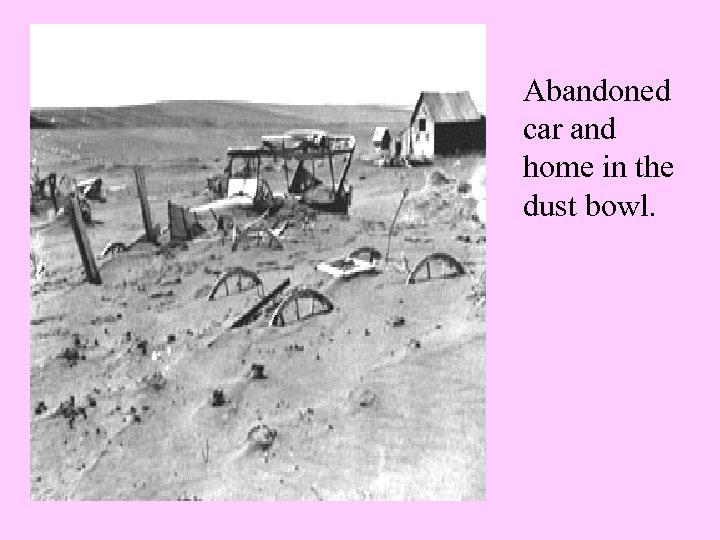
Abandoned car and home in the dust bowl.
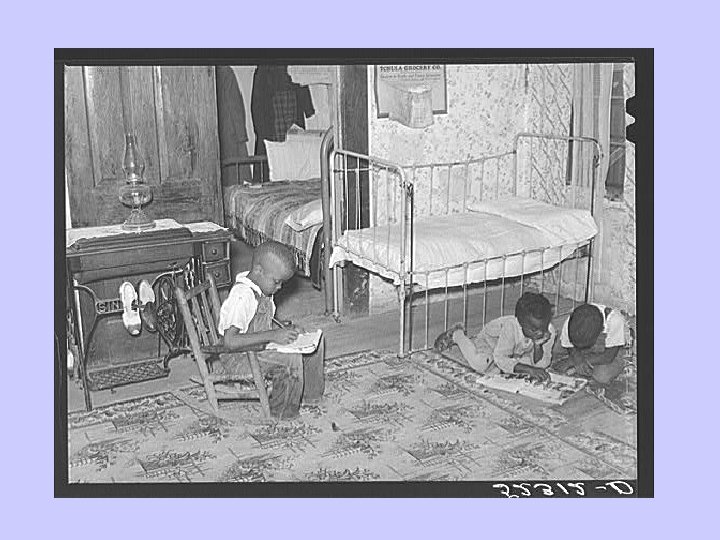
Sharecropping was practiced by plantation owners renting out acres of their land to be farmed by other families. The families would buy the seed, do all the work, and give half of their profit to the landowner. The sharecroppers usually had to buy their supplies on credit from the plantation store and were charged high prices and high interest. This virtually always kept the sharecroppers in debt to the owner.
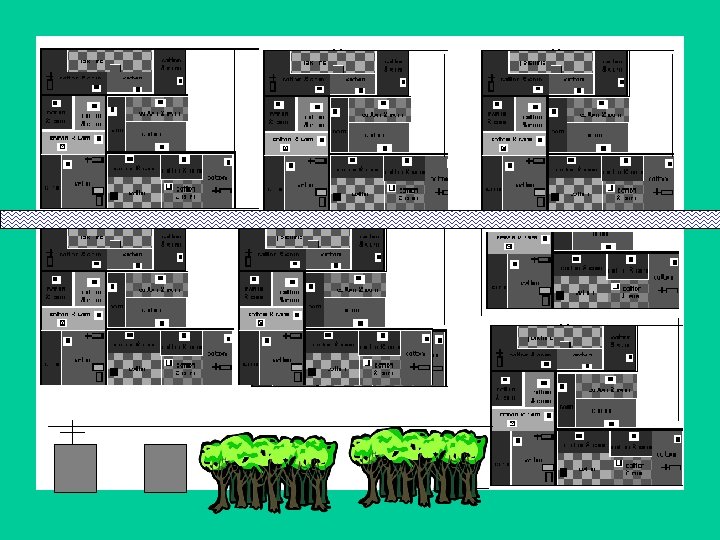
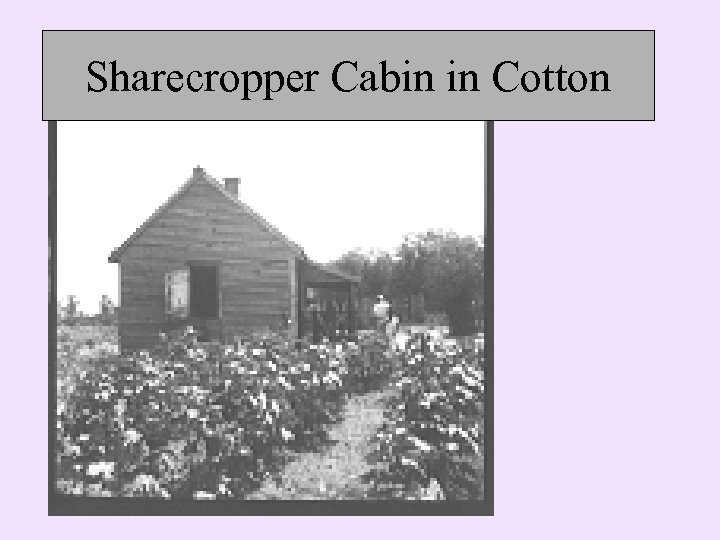
Sharecropper Cabin in Cotton
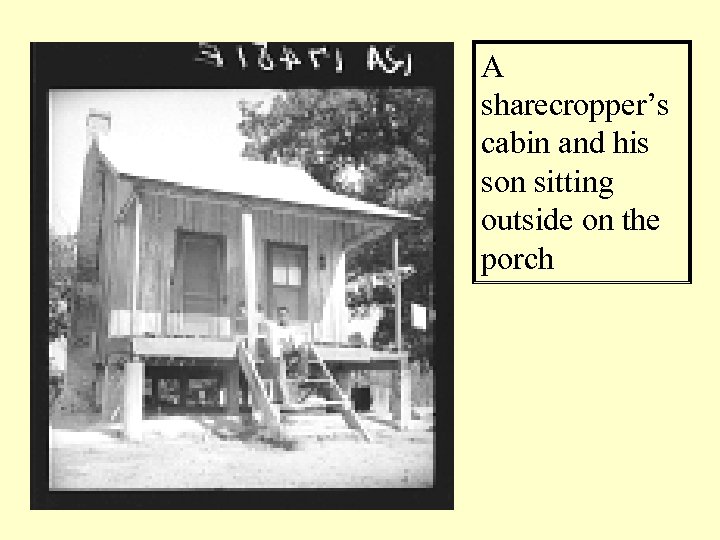
A sharecropper’s cabin and his son sitting outside on the porch
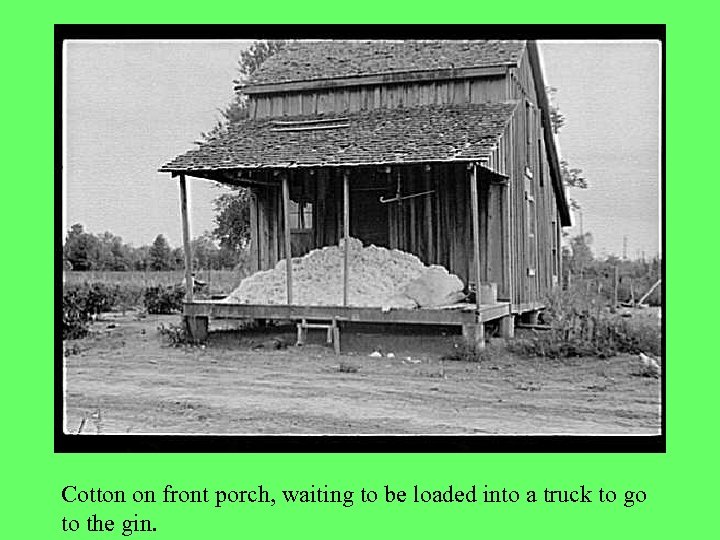
Cotton on front porch, waiting to be loaded into a truck to go to the gin.
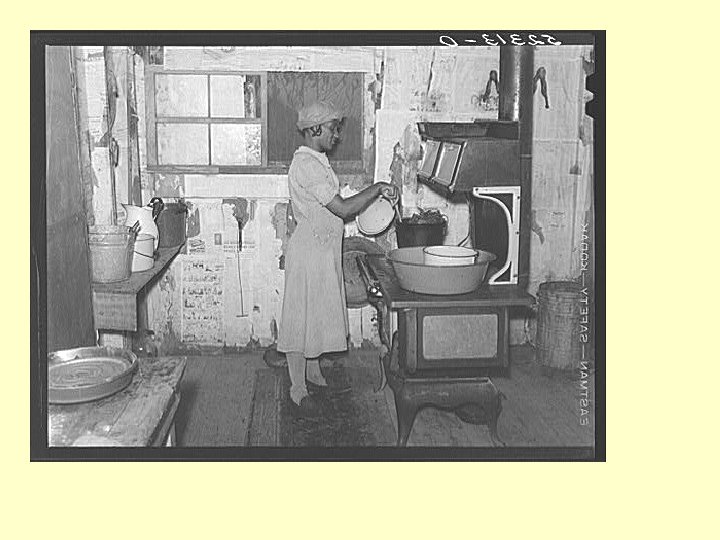
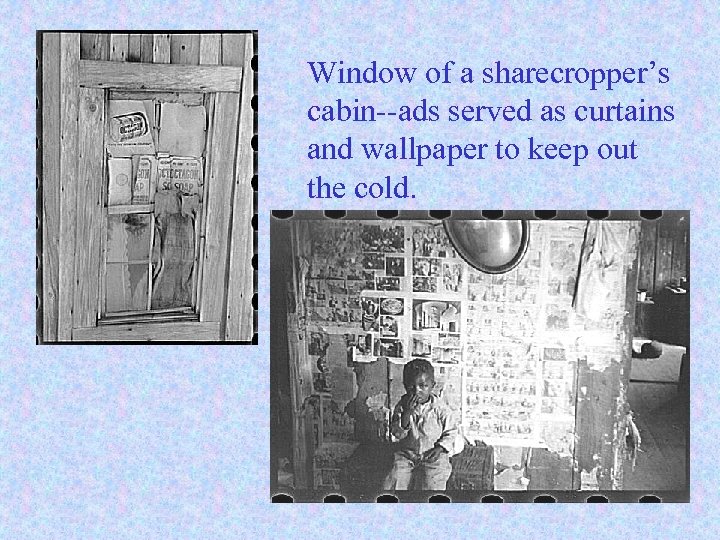
Window of a sharecropper’s cabin--ads served as curtains and wallpaper to keep out the cold.
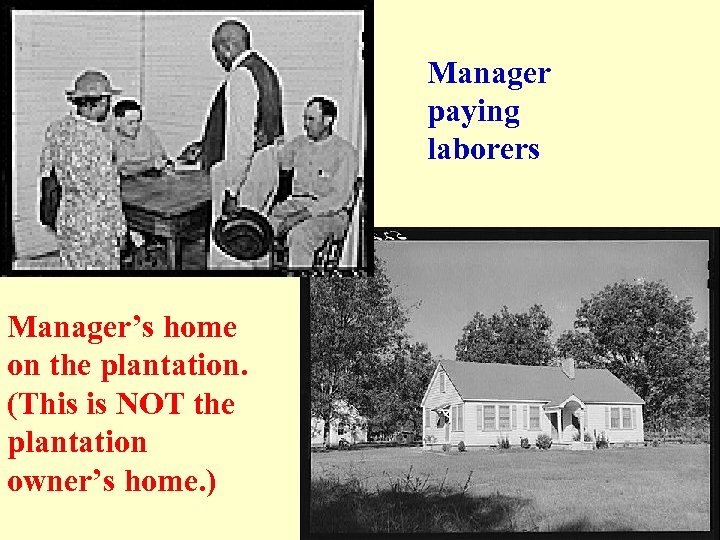
Manager paying laborers Manager’s home on the plantation. (This is NOT the plantation owner’s home. )
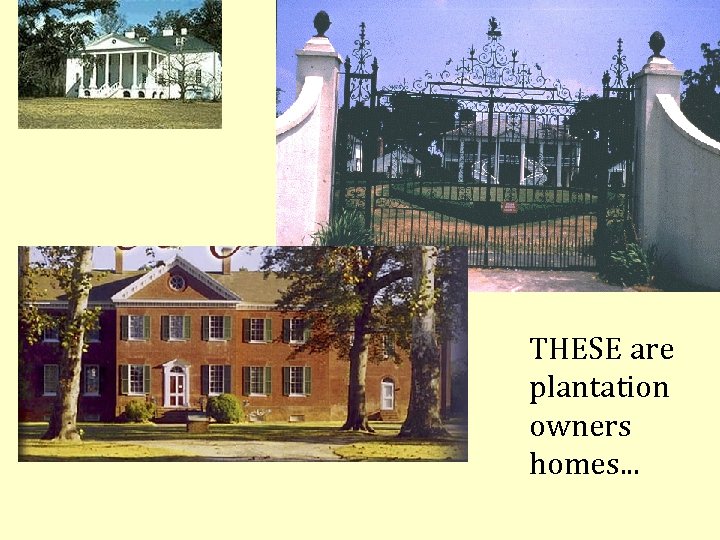
THESE are plantation owners homes. . .
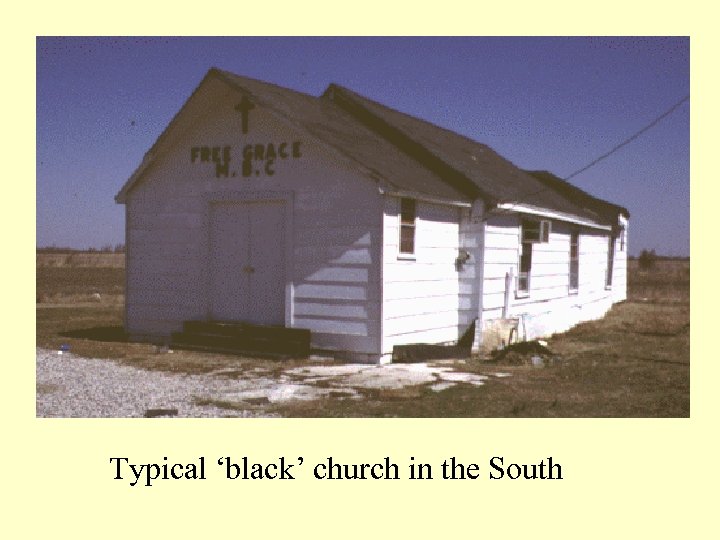
Typical ‘black’ church in the South
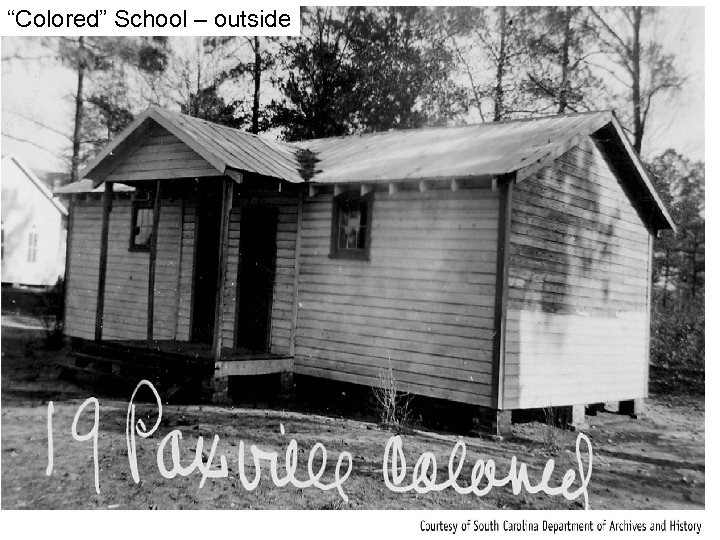
“Colored” School – outside
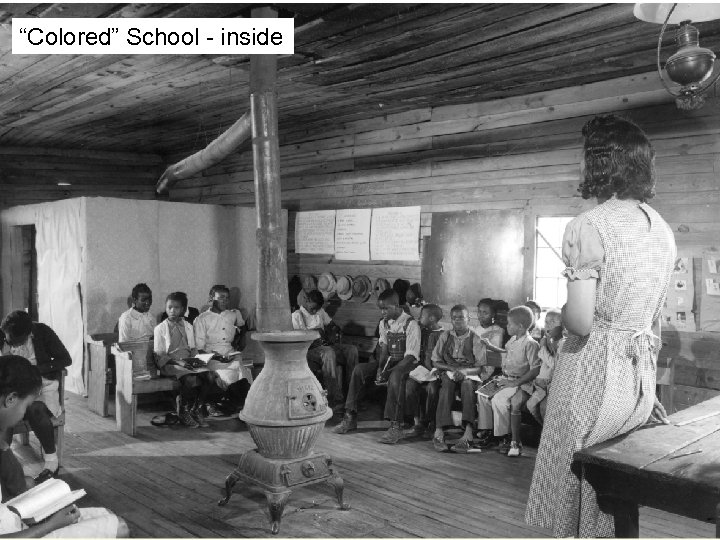
“Colored” School - inside
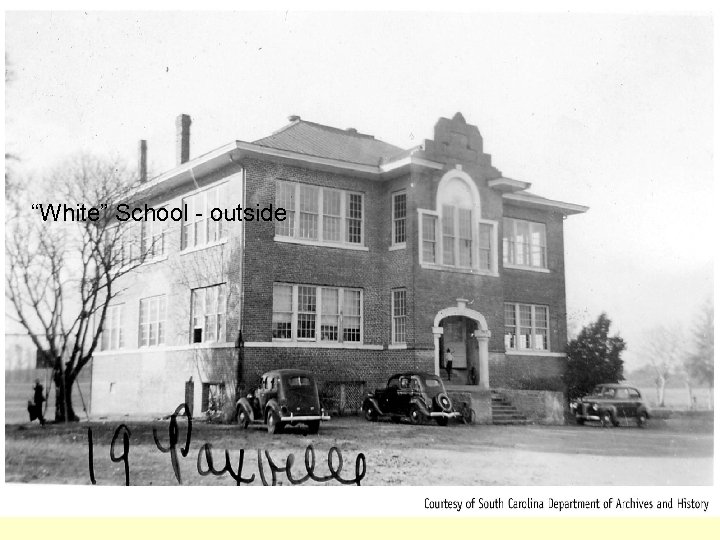
“White” School - outside
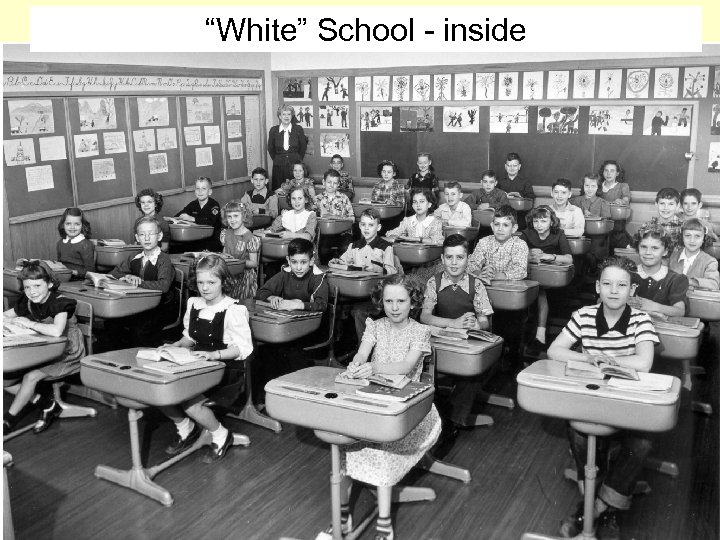
“White” School - inside
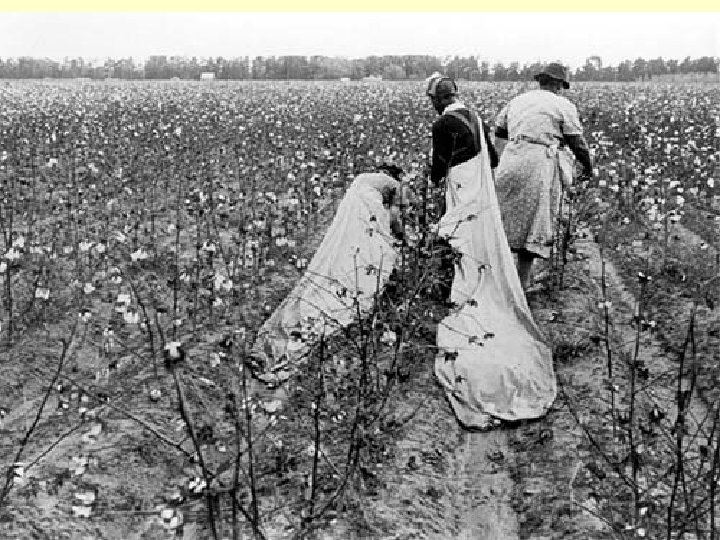
Cotton was “king” in the South. Cotton was the reason slave ownership had flourished for so long in the South. It was a difficult, labor intensive crop. After the Emancipation Proclamation, some plantation owners lost their land, but most were able to keep it by sharecropping--virtual slavery. A sharecropping family was almost always in debt, and since everyone was needed to labor, children rarely were able to go to school for a full year, guaranteeing no way out of the poverty of sharecropping.
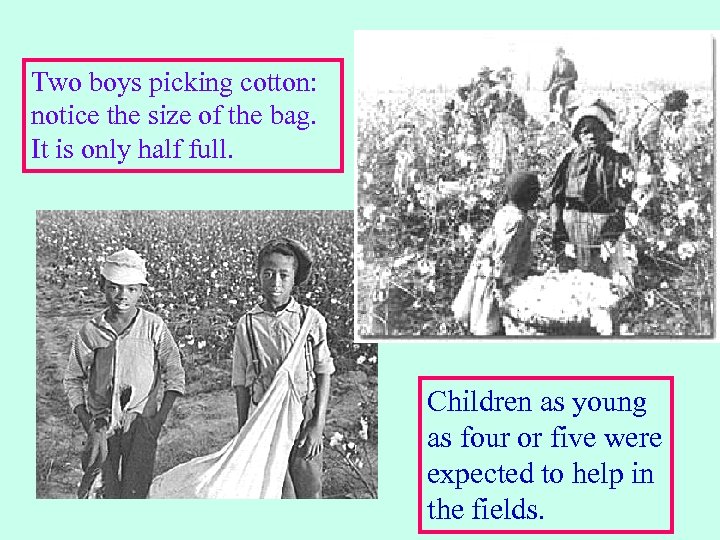
Two boys picking cotton: notice the size of the bag. It is only half full. Children as young as four or five were expected to help in the fields.
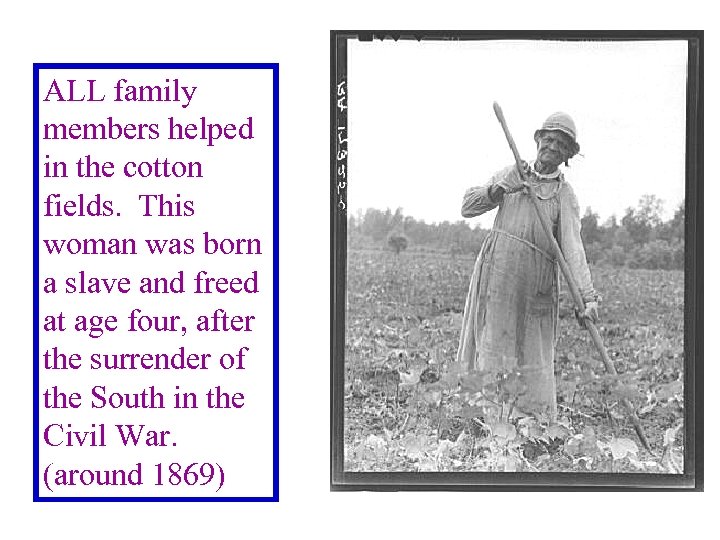
ALL family members helped in the cotton fields. This woman was born a slave and freed at age four, after the surrender of the South in the Civil War. (around 1869)
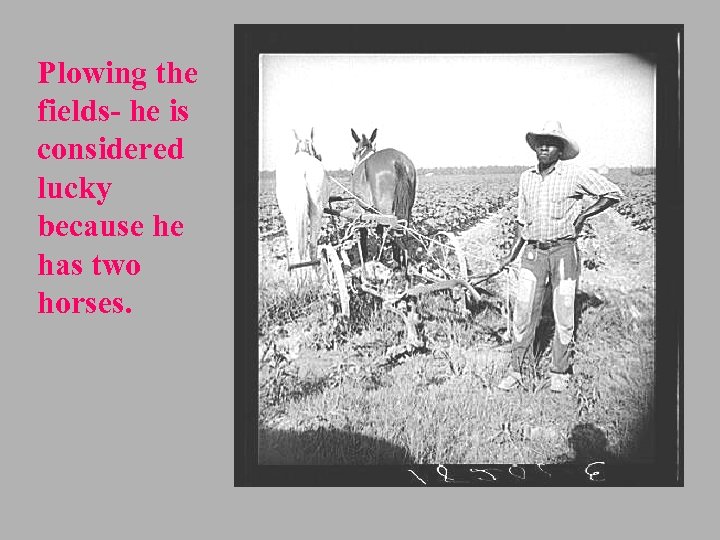
Plowing the fields- he is considered lucky because he has two horses.
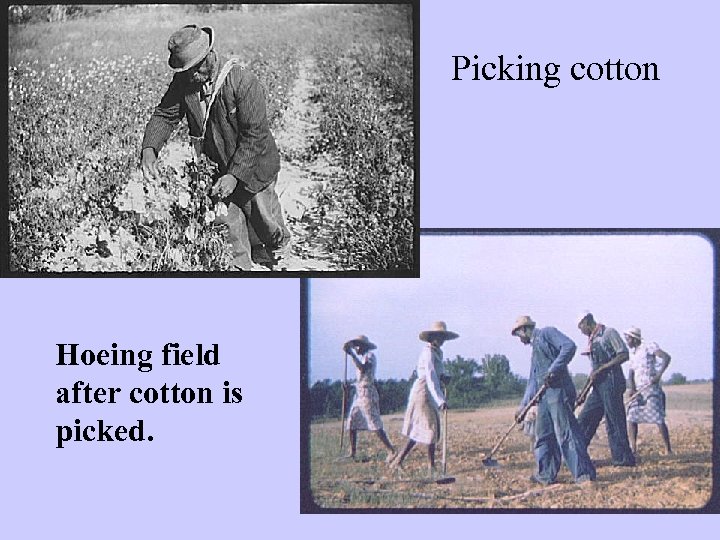
Picking cotton Hoeing field after cotton is picked.
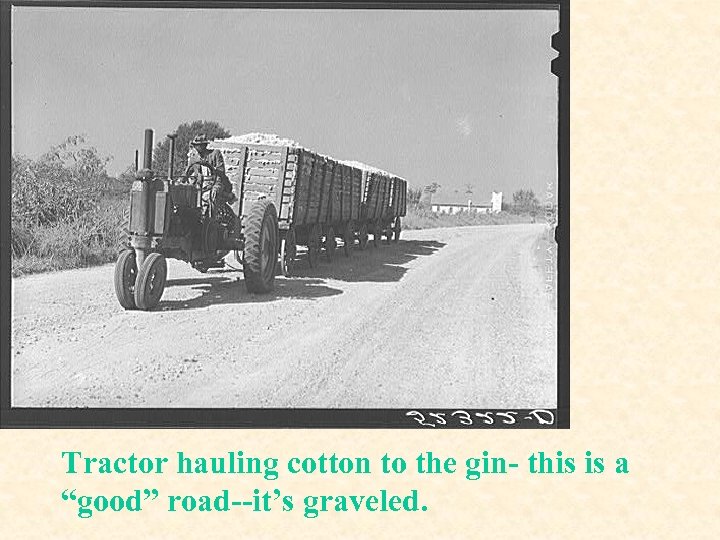
Tractor hauling cotton to the gin- this is a “good” road--it’s graveled.
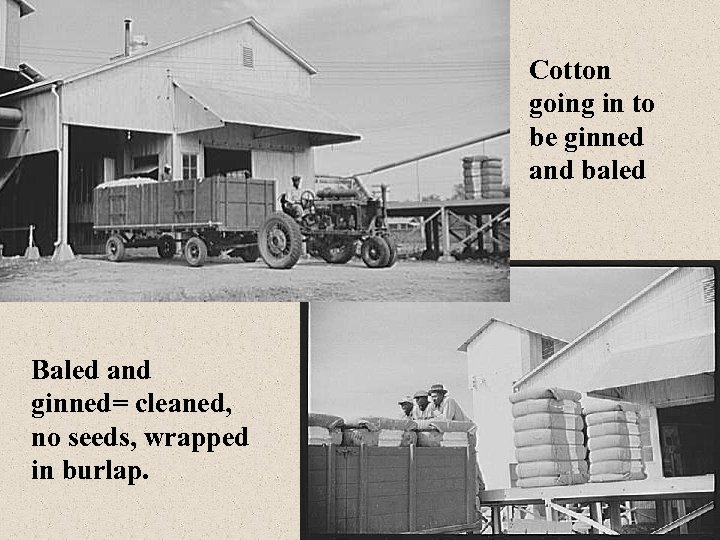
Cotton going in to be ginned and baled Baled and ginned= cleaned, no seeds, wrapped in burlap.
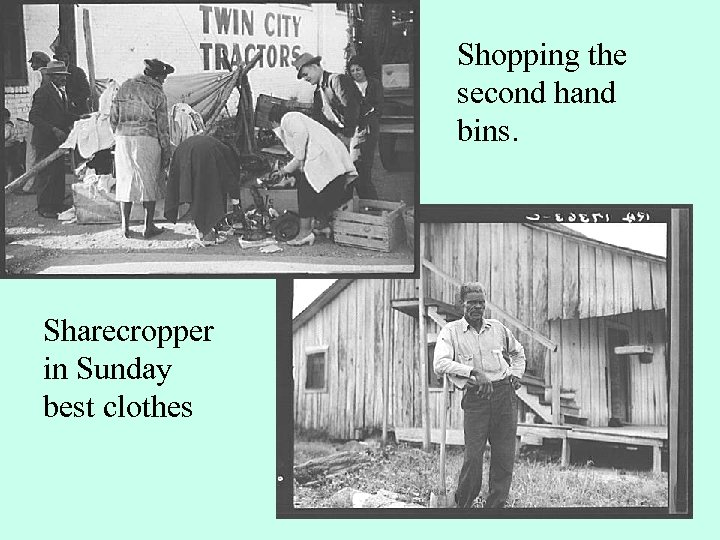
Shopping the second hand bins. Sharecropper in Sunday best clothes
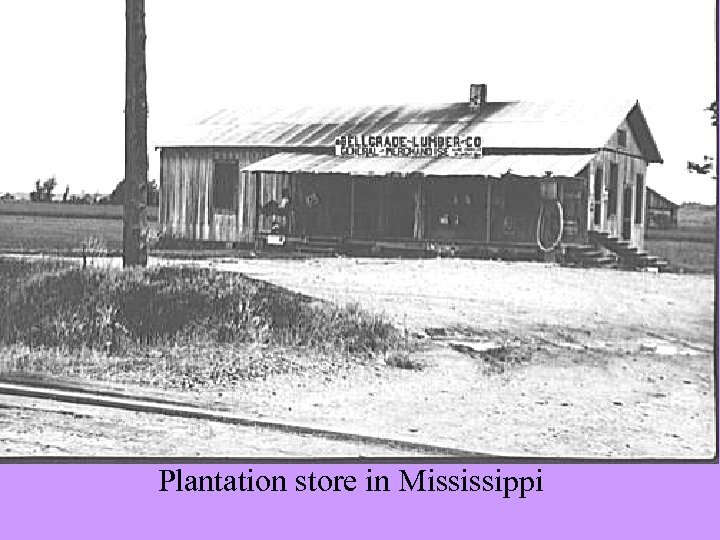
Plantation store in Mississippi
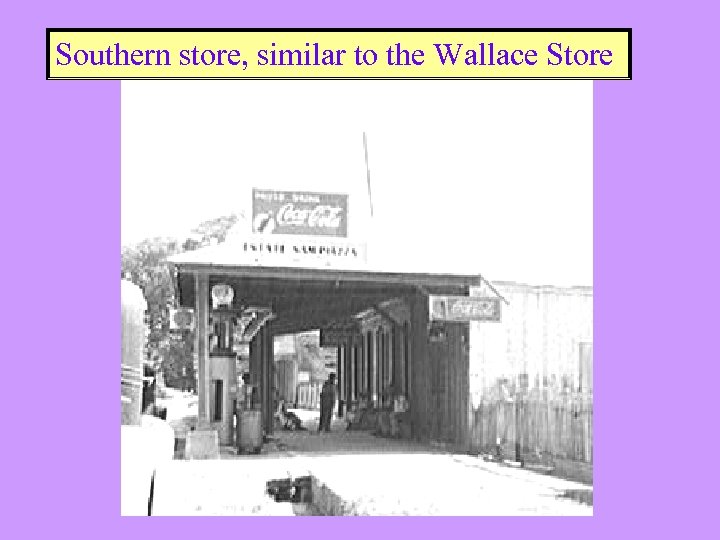
Southern store, similar to the Wallace Store
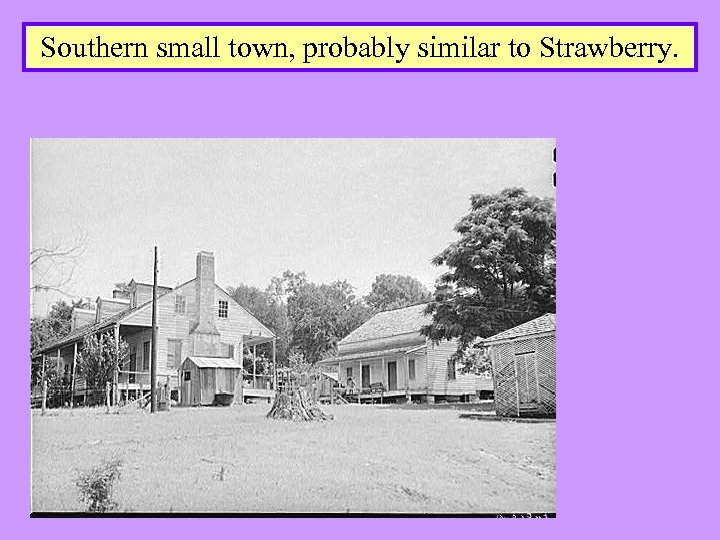
Southern small town, probably similar to Strawberry.
Jim Crow laws were first written after the Civil War during Reconstruction. They were designed to keep the former slaves in “their place”. These laws persisted well into the 1960’s when the Civil Rights Movement, led by Dr. Martin Luther King, finally overturned them. Most were completely unconstitutional from the start. In addition to the Jim Crow laws, blacks were denied many constitutional rights, such as the right to a fair trial.
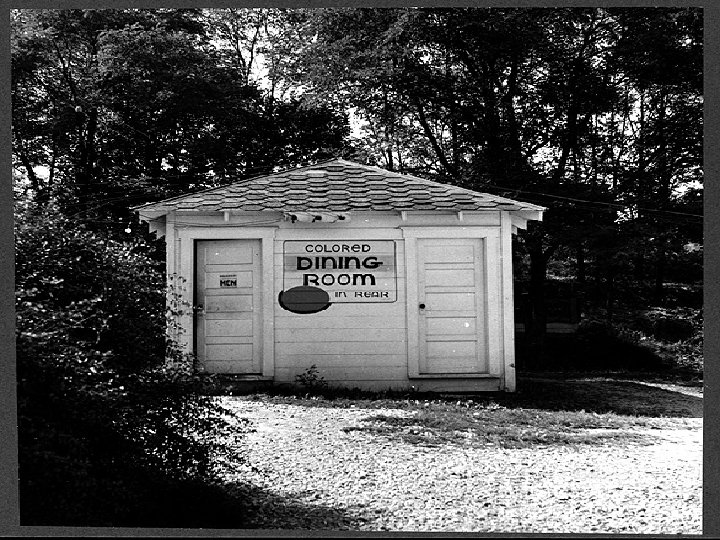
Jim Crow Laws around the country • It is illegal for a business to allow black and whites to share the same advantages as: entrance, dipper, water pail, look out the same window, cups or glasses, staircase, water fountain, and restrooms. • On all mail, no black person should be addressed as Mr. or Mrs. • No black citizen shall be found playing any recreational activity with a white person such as, pool, dominoes, cards, checkers, dice, billiards, softball, basketball, football, golf, track, or associate or swim together at a swimming pool.
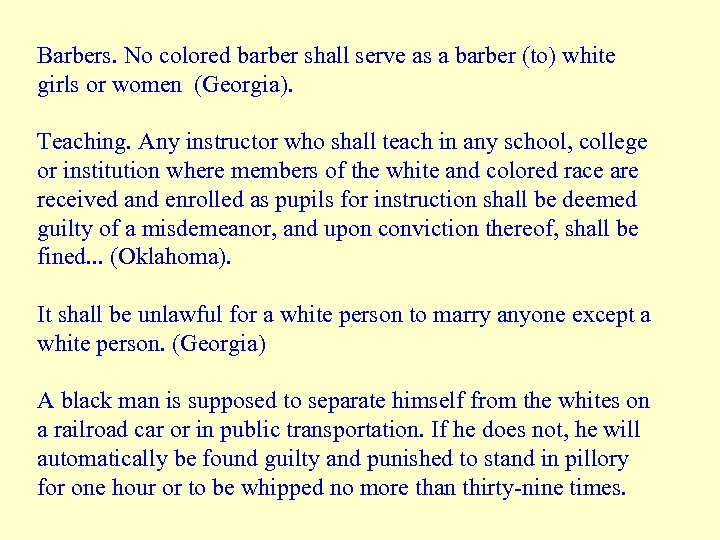
Barbers. No colored barber shall serve as a barber (to) white girls or women (Georgia). Teaching. Any instructor who shall teach in any school, college or institution where members of the white and colored race are received and enrolled as pupils for instruction shall be deemed guilty of a misdemeanor, and upon conviction thereof, shall be fined. . . (Oklahoma). It shall be unlawful for a white person to marry anyone except a white person. (Georgia) A black man is supposed to separate himself from the whites on a railroad car or in public transportation. If he does not, he will automatically be found guilty and punished to stand in pillory for one hour or to be whipped no more than thirty-nine times.
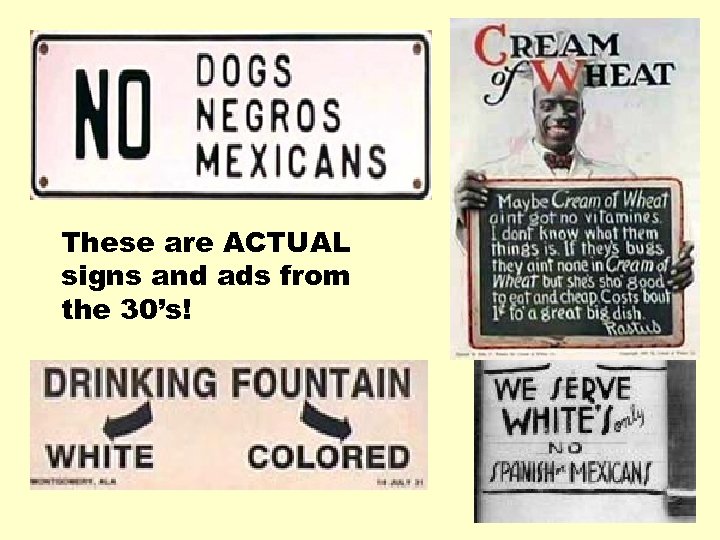
These are ACTUAL signs and ads from the 30’s!
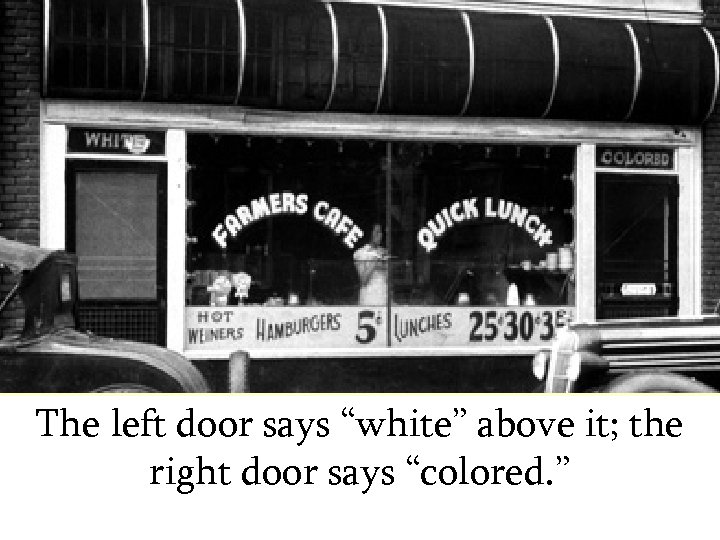
The left door says “white” above it; the right door says “colored. ”
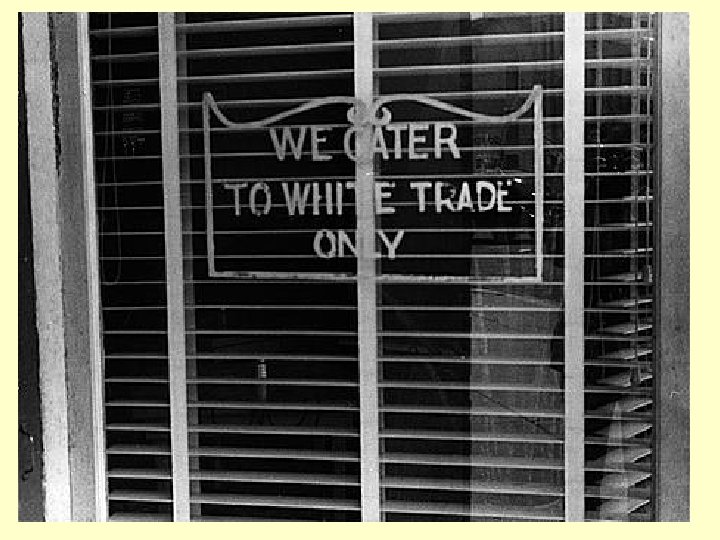
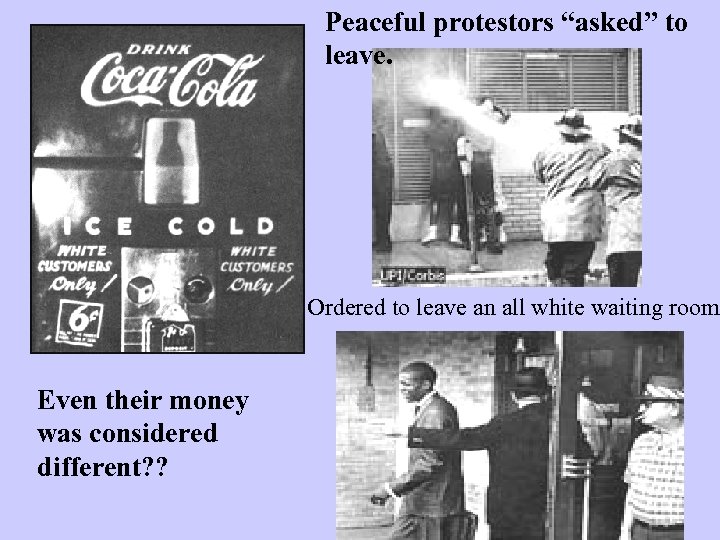
Peaceful protestors “asked” to leave. Ordered to leave an all white waiting room. Even their money was considered different? ?
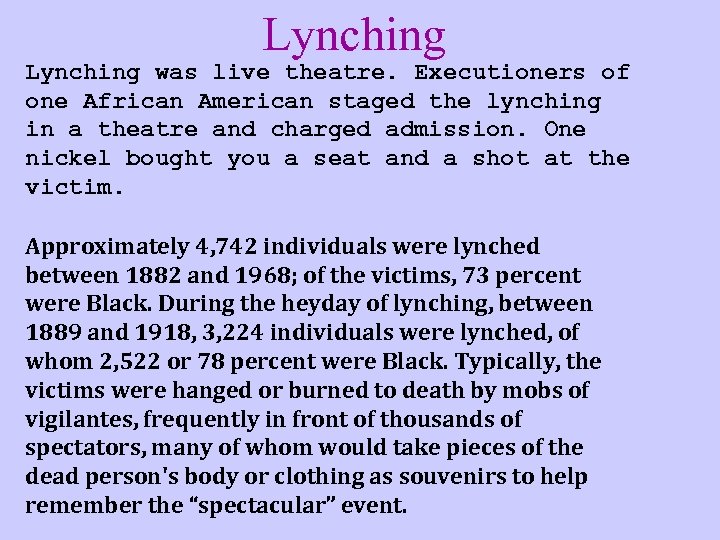
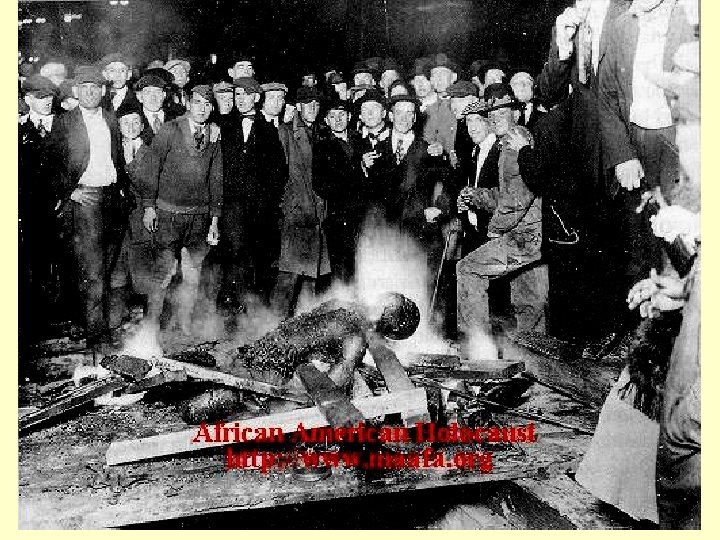
Lynching was live theatre. Executioners of one African American staged the lynching in a theatre and charged admission. One nickel bought you a seat and a shot at the victim. Approximately 4, 742 individuals were lynched between 1882 and 1968; of the victims, 73 percent were Black. During the heyday of lynching, between 1889 and 1918, 3, 224 individuals were lynched, of whom 2, 522 or 78 percent were Black. Typically, the victims were hanged or burned to death by mobs of vigilantes, frequently in front of thousands of spectators, many of whom would take pieces of the dead person's body or clothing as souvenirs to help remember the “spectacular” event.
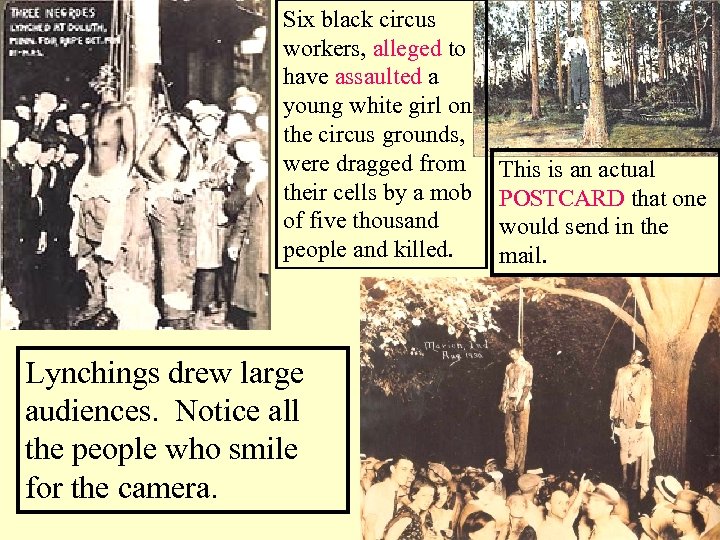
Six black circus workers, alleged to have assaulted a young white girl on the circus grounds, were dragged from their cells by a mob of five thousand people and killed. Lynchings drew large audiences. Notice all the people who smile for the camera. This is an actual POSTCARD that one would send in the mail.
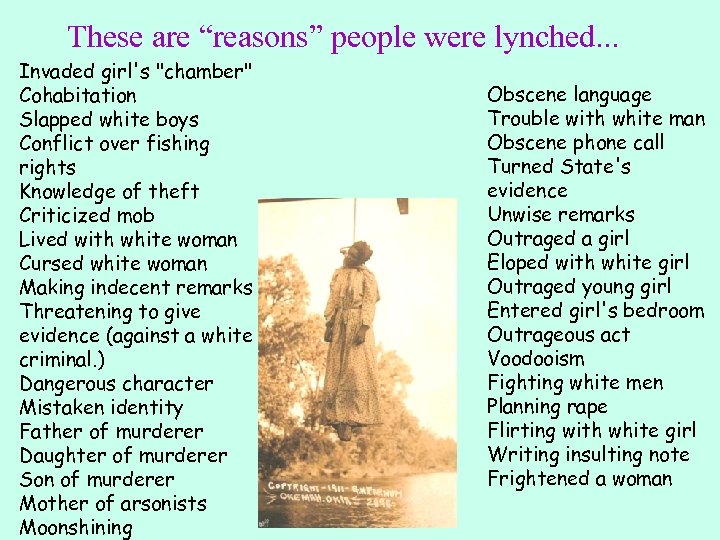
These are “reasons” people were lynched. . . Invaded girl's "chamber" Cohabitation Slapped white boys Conflict over fishing rights Knowledge of theft Criticized mob Lived with white woman Cursed white woman Making indecent remarks Threatening to give evidence (against a white criminal. ) Dangerous character Mistaken identity Father of murderer Daughter of murderer Son of murderer Mother of arsonists Moonshining Obscene language Trouble with white man Obscene phone call Turned State's evidence Unwise remarks Outraged a girl Eloped with white girl Outraged young girl Entered girl's bedroom Outrageous act Voodooism Fighting white men Planning rape Flirting with white girl Writing insulting note Frightened a woman
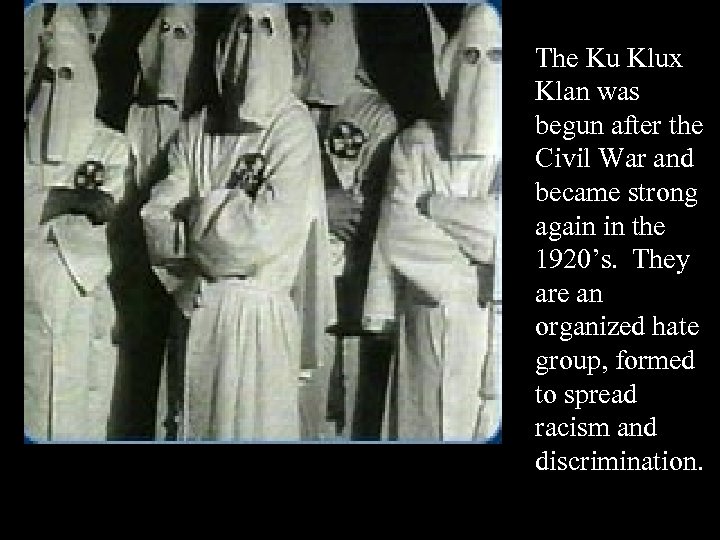
The Ku Klux Klan was begun after the Civil War and became strong again in the 1920’s. They are an organized hate group, formed to spread racism and discrimination.
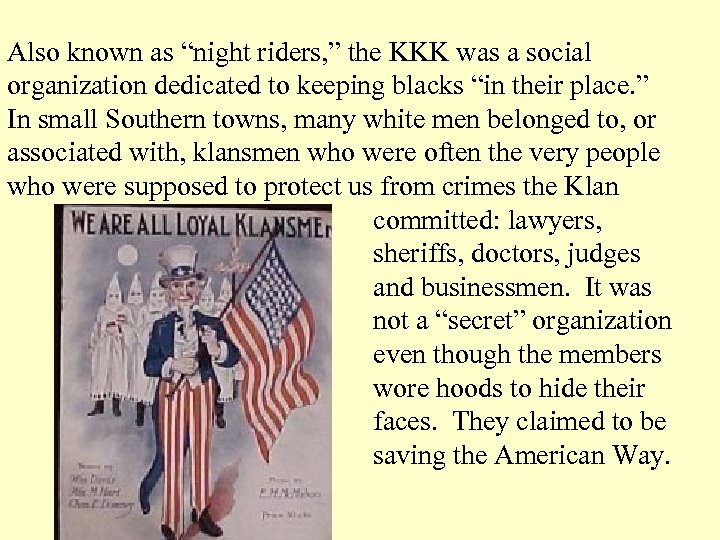
Also known as “night riders, ” the KKK was a social organization dedicated to keeping blacks “in their place. ” In small Southern towns, many white men belonged to, or associated with, klansmen who were often the very people who were supposed to protect us from crimes the Klan committed: lawyers, sheriffs, doctors, judges and businessmen. It was not a “secret” organization even though the members wore hoods to hide their faces. They claimed to be saving the American Way.
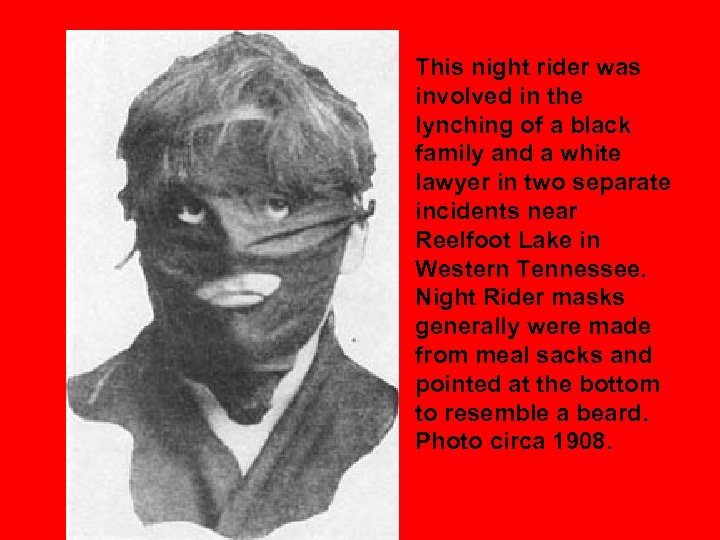
This night rider was involved in the lynching of a black family and a white lawyer in two separate incidents near Reelfoot Lake in Western Tennessee. Night Rider masks generally were made from meal sacks and pointed at the bottom to resemble a beard. Photo circa 1908.
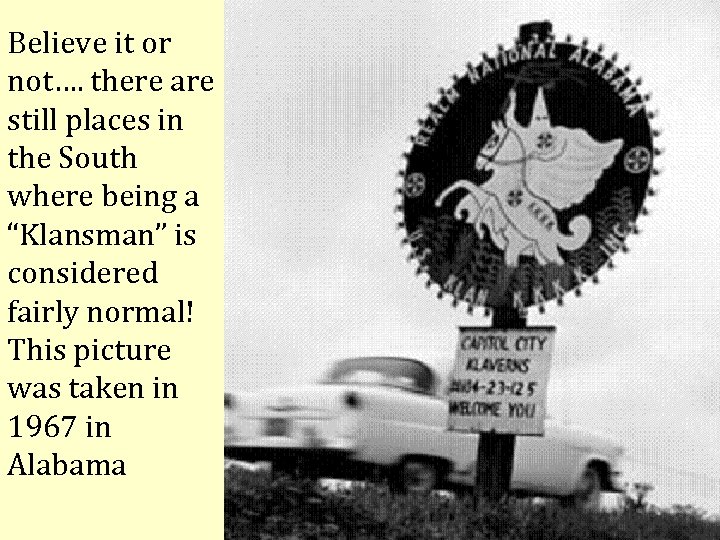
Believe it or not…. there are still places in the South where being a “Klansman” is considered fairly normal! This picture was taken in 1967 in Alabama
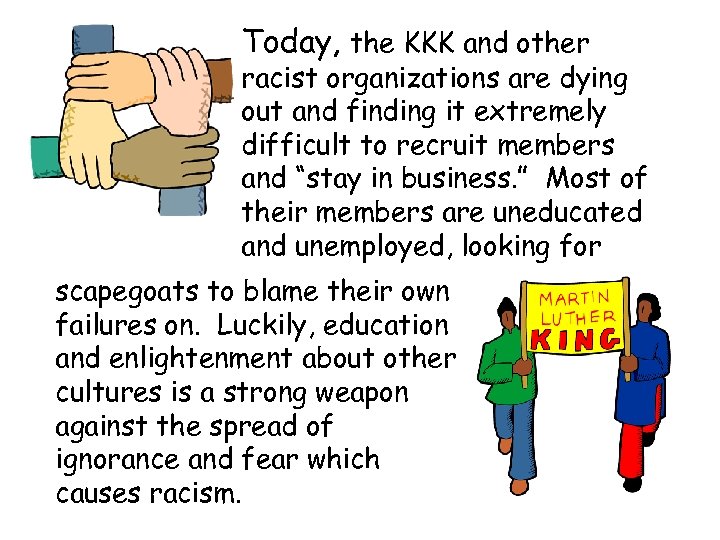
Today, the KKK and other racist organizations are dying out and finding it extremely difficult to recruit members and “stay in business. ” Most of their members are uneducated and unemployed, looking for scapegoats to blame their own failures on. Luckily, education and enlightenment about other cultures is a strong weapon against the spread of ignorance and fear which causes racism.
Скачать презентацию Roll of Thunder Hear My Cry by Mildred
e71da064dbfad2fe6e465490cf24b043.ppt