


 Скачать презентацию Roles of State Legislatures and State Government in
d9ae80b7499ca940c27192caa85c489b.ppt
- Количество слайдов: 22
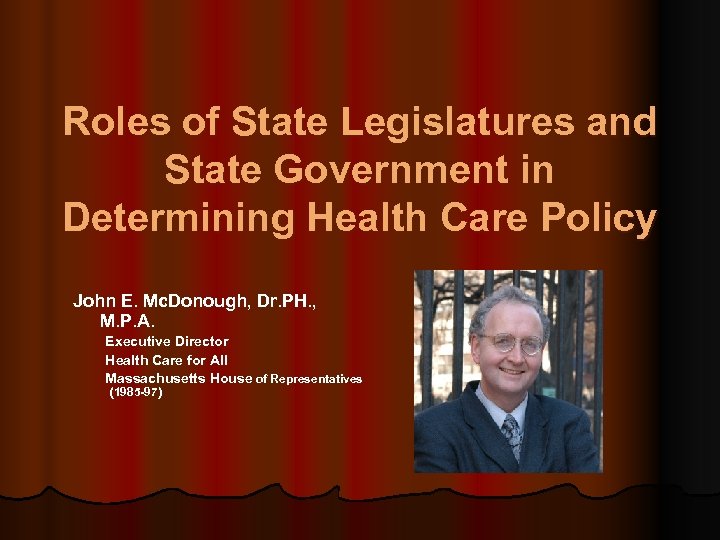 Roles of State Legislatures and State Government in Determining Health Care Policy John E. Mc. Donough, Dr. PH. , M. P. A. Executive Director Health Care for All Massachusetts House of Representatives (1985 -97)
 SESSION OUTLINE I. III. IV. V. Three Pillars of Health Policy Four Eras in U. S. Health Policy Eight Key State Government Roles Federalism and Health Policy Your Role in All of This 2
 I. Three Pillars of Health Policy l l l Cost Access Quality Everything you do affects at least one, and frequently two § Health policy home run – positively influence all three § w § Childhood Immunization Most of the time, pick any two… 3
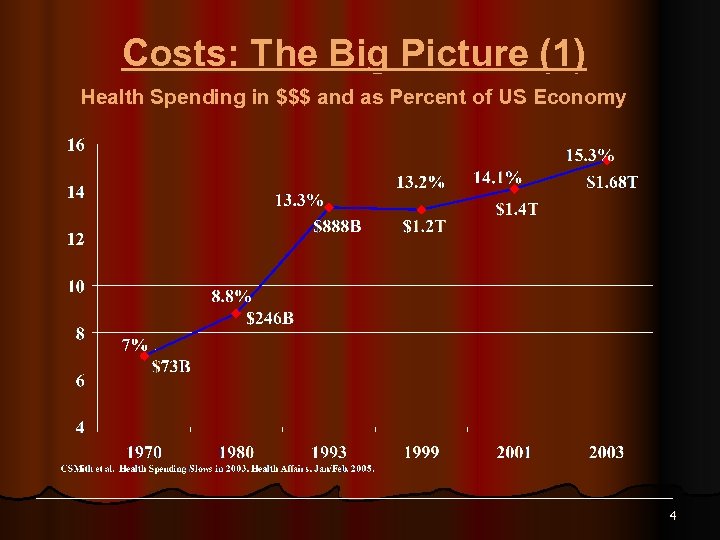 Costs: The Big Picture (1) Health Spending in $$$ and as Percent of US Economy 4
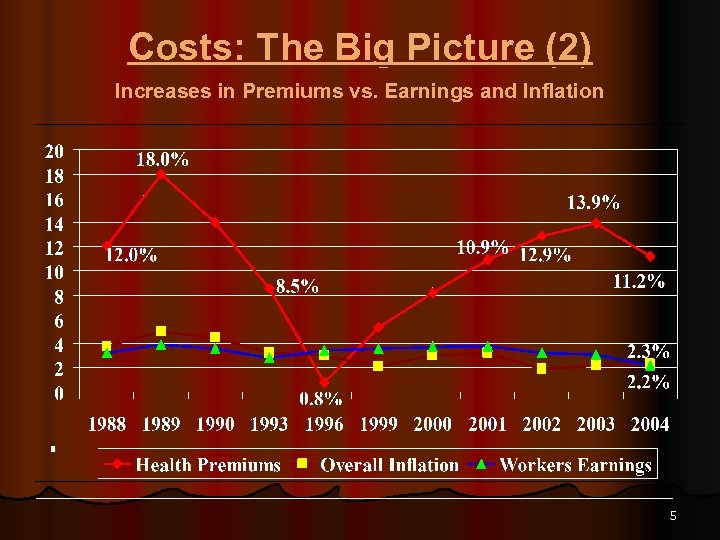 Costs: The Big Picture (2) Increases in Premiums vs. Earnings and Inflation 5
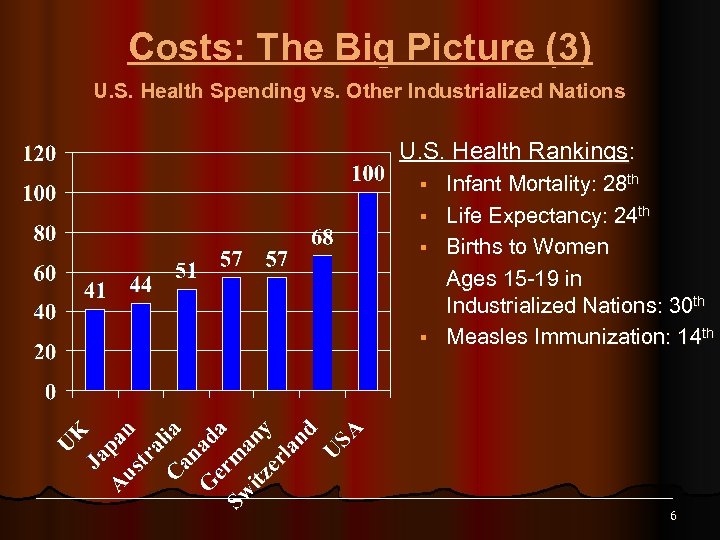 Costs: The Big Picture (3) U. S. Health Spending vs. Other Industrialized Nations U. S. Health Rankings: Infant Mortality: 28 th § Life Expectancy: 24 th § Births to Women Ages 15 -19 in Industrialized Nations: 30 th § Measles Immunization: 14 th § 6
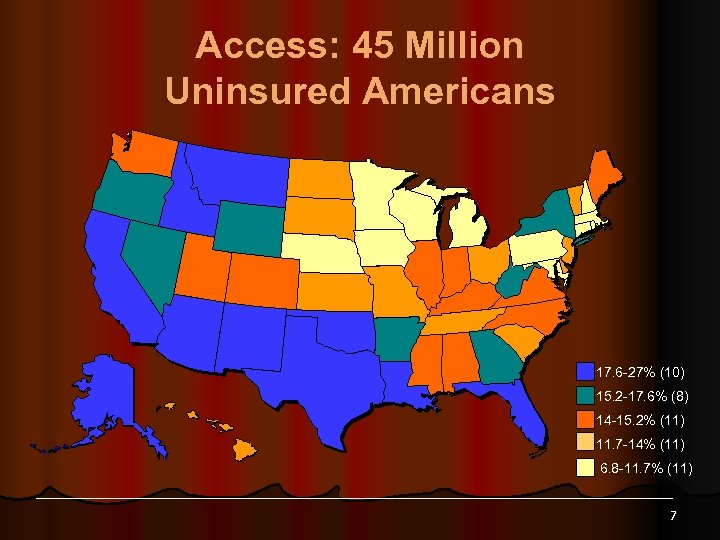 Access: 45 Million Uninsured Americans 17. 6 -27% (10) 15. 2 -17. 6% (8) 14 -15. 2% (11) 11. 7 -14% (11) 6. 8 -11. 7% (11) 7
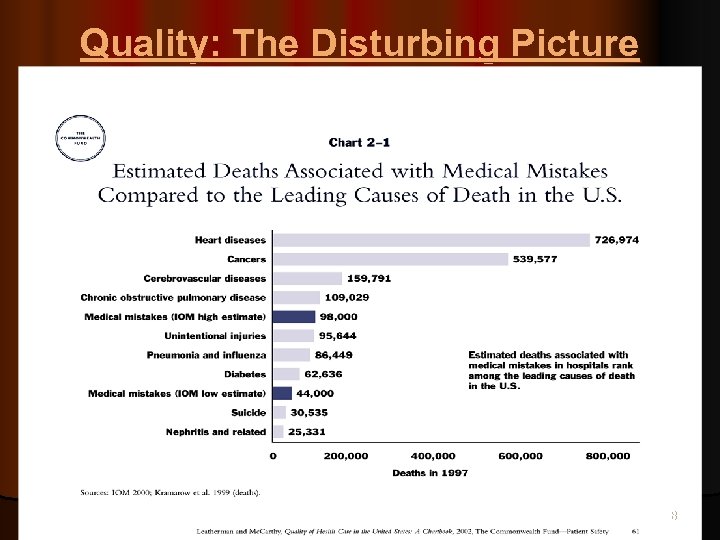 Quality: The Disturbing Picture 8
 Four Health Policy Eras Era I: Pre/Emerging System Period l l l l Pre-1910 s Minimal licensure and professional standards No health insurance as we know today Minimal public investments No standards for medical education Infectious disease leading cause of death Life expectancy ~46 years See The Social Transformation of American Medicine – Paul Starr 9
 Four Health Policy Eras Era II: Professionalization and Growth l 1910 s to 1960 s l Scientific breakthroughs l Widespread licensure, professional standards, public sector regulation l Development of modern health insurance and insurance regulation l Federal Support: medical education, facilities, research l Emergence of chronic disease as leading cause of death 10
 Four Health Policy Eras Era III: Government Regulation l l l 1965 to late 1980 s (life expectancy ~70 s) Creation of Medicare & Medicaid in 1965 Market failure as defining metaphor Cost control as major public priority Government/business partnership Key instruments to address market failure: § Certificate of need § Health system planning § HMO Act § Hospital rate setting 11
 Four Health Policy Eras Era IV: Market Dominance l 1990 s through today l Key idea: market failure can be corrected l Phase I: The managed care revolution § l l Led to backlash and retreat Growth in investor owned health entities Major provider consolidations Different role for government Phase II: Era of the consumer § Health savings accounts (“skin in the game”), transparency, public data release 12
 What’s Next? “The solution is not a government-run system or a fend-for-yourself marketplace but, instead, a new approach that combines the best care options offered by the private sector backed by the resources and oversight of Federal and State governments. ” Sen. John Breaux (D-La. ), on his proposal for universal health coverage Still waiting… 13
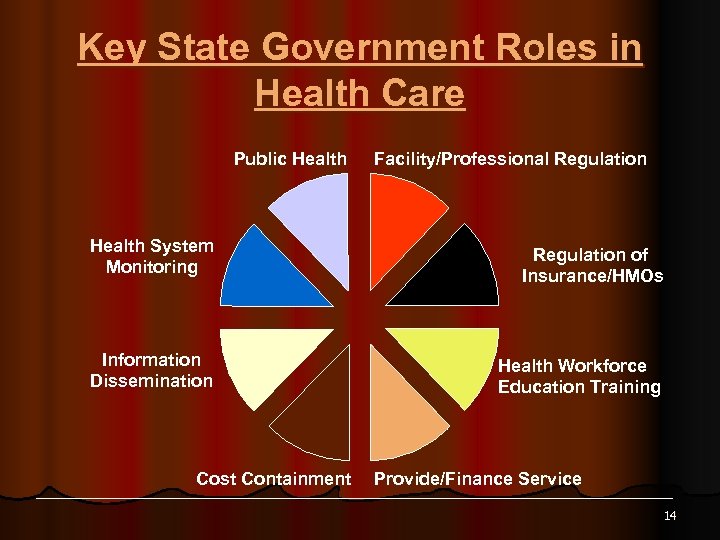 Key State Government Roles in Health Care Public Health System Monitoring Information Dissemination Cost Containment Facility/Professional Regulation of Insurance/HMOs Health Workforce Education Training Provide/Finance Service 14
 Key State Roles: I 1. Public Health Population health, disease control and prevention, sanitation, environmental protection, bioterrorism Schism with Clinical Medicine 2. Regulation: Facilities and Professionals Licensure: e. g. , hospitals, nursing homes, clinics, physicians, nurses, social workers; scope of practice; discipline Joint Commission on Accreditation of Healthcare Organizations; Certificate of Need From Quality Assurance to Quality Improvement • 15
 What is Quality? l Quality of care is the degree to which services for individuals or populations increase the likelihood of desired health outcomes and are consistent with current professional knowledge. ― Institute of Medicine, 1990 l Quality is doing the right thing and doing it right. 16
 Key State Roles: II 3. Regulation of insurance and HMOs Solvency concerns, consumer protection ERISA (Employee Retirement Income Security Act of 1974 – your 800 lb. gorilla) 4. Health workforce education Support for medical education, State medical schools, other professionals How to finance fairly in managed care environment and tight fiscal times? 17
 Key State Roles: III 5. Provision/financing of health care services – Make/Buy? § Medicaid: fee for service/gatekeeper; managed care/capitation § State worker/retiree health insurance § Indigent services: public hospitals, clinics, uncompensated care § Health coverage expansions § Other services: mental health, mental retardation, veterans, other disabilities § Pharmaceutical assistance 18
 Key State Roles: IV 6. Cost Containment What can government do about rising costs (premiums, prescriptions)? Pay for Performance § Evidence-Based Medicine § 7. Information Dissemination Public reporting on hospitals, physicians, nursing homes, HMOs. Who gets what? 8. Health System Monitoring Anti-trust & mergers, malpractice, for profit conversions, specialty hospitals. When to intervene? 19
 Federalism & Health Policy l l 1960 and 1970 s: Mandates and limited discretion, i. e. , Medicaid, Employee Retirement Income Security Act of 1974 (ERISA) 1980 s: Transition, i. e. , New Federalism, block grants, Boren, Waxman 1990 s and 2000 s: Partnership, i. e. , Medicaid waivers, HIPAA, SCHIP Is the partnership beginning to fray? 20
 Your Role in Making Health Care Work in Your State l The Job of a Legislator (Fenno, 1978) § Being one of them w Getting around, soliciting advice, relating to culture § Providing services w Helping constituents, organizing community initiatives § Acquiring resources w Using prerogatives to obtain resources § Expressing policy views and interests w District/Personal 21
 Your Role in Making Health Care Work in Your State (cont). l l l What is politics? § The way we decide “who gets what” without resorting to violence What is health care politics? § The way society decides “who gets what” The culture says: Politics is bad/corrupt Bob Kuttner says: “…Politics is the practice of democracy in real life”. This is your turn, your moment 22