 Скачать презентацию Rocking Therapy By Gavin von Mollendorff Researched
1ff60272fb45e85b854895633c2fa37b.ppt
- Количество слайдов: 22



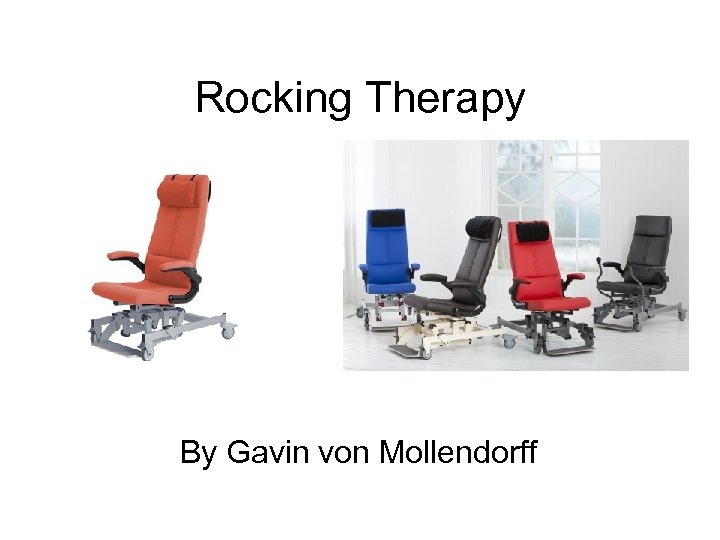
Rocking Therapy By Gavin von Mollendorff
Researched & prepared by Melissa Delaney UL student
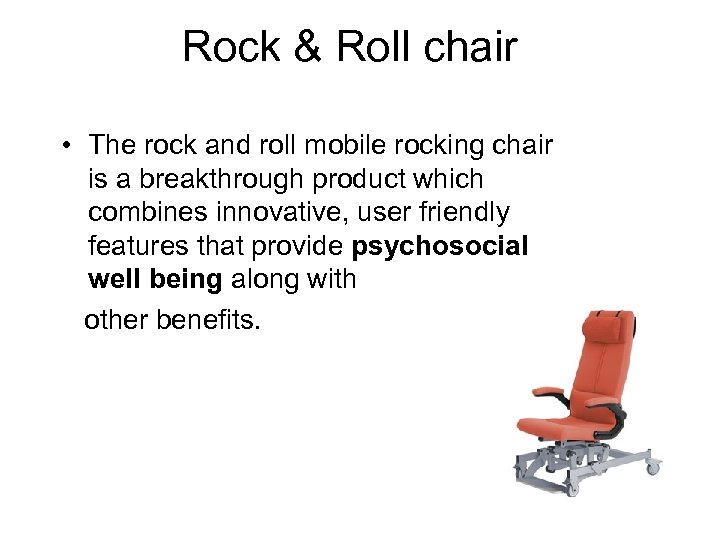
Rock & Roll chair • The rock and roll mobile rocking chair is a breakthrough product which combines innovative, user friendly features that provide psychosocial well being along with other benefits.
Rock & Roll chair features • Two locking handles one on each side of the chair • Two locking positions- upright and reclined • Ability to transfer in and out of chair • Braking system • Foot rest, arm rest and head rest • Washable seat cushion and incontinence protection cover
Rocking Therapy • Rocking is a repetitive, rhythmic motion and it may affect psychosocial well being as well as balance through stimulation of the vestibular pro-prioceptive system. (Watson et al, 1998) Repetitive rhythmic movements are widely held to be soothing and rocking chairs are familiar to many older people (O’Connor, 2009)

Who will it benefit? • • • Elderly patients in nursing homes Clients with aggression or agitation Clients who are experiencing pain Clients who have poor mobility &balance Clients with Alzheimer's or Dementia
Potential benefits to client’s • According to Watson et al rocking appeared to have the most affect in reducing anxiety/depression among some patients. • This could be seen as a relaxation response to rocking • Gentle rocking was reported to help reduce signs of acute distress in some patients.
Benefit to balance? • Given the lifestyle of many patients with dementia- sitting for long periods • This may lead to a lack of stimulation to the vestibular system as well as a lack of practice maintaining balance
Other benefits…pain? • Pain in persons with a cognitive impairment is poorly understood. • The use of a low intensity form of exercise has been found to reduce arthritic pain. • Prolonged rhythmic exercise is associated with the release of endorphins (which could explain an improved mood in patients)
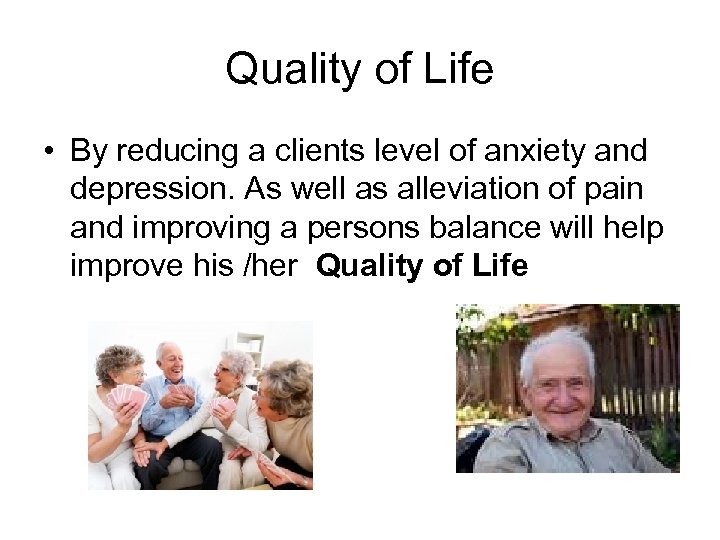
Quality of Life • By reducing a clients level of anxiety and depression. As well as alleviation of pain and improving a persons balance will help improve his /her Quality of Life

Benefit to staff • It may also benefit staff as rocking offers patients a way to achieve body motion without the physical stamina, skill and oneto-one supervision or support required by an other program. (Watson et al 1998)
Important studies • Watson and Wells et al 1998 reported a significant improvement in balance and a decrease in depression and anxiety. • Snyder et al 2001 reported that the glider intervention significantly improved emotions and relaxation
Case Study • We have client who may be suited for the rocking chair therapy. • Client A is a 78 year old female recently admitted to a nursing home in Ofalia House Co. Offaly. • Client A has been diagnosed with Alzheimer's, dementia OA of the hip and a risk of falling, wandering.
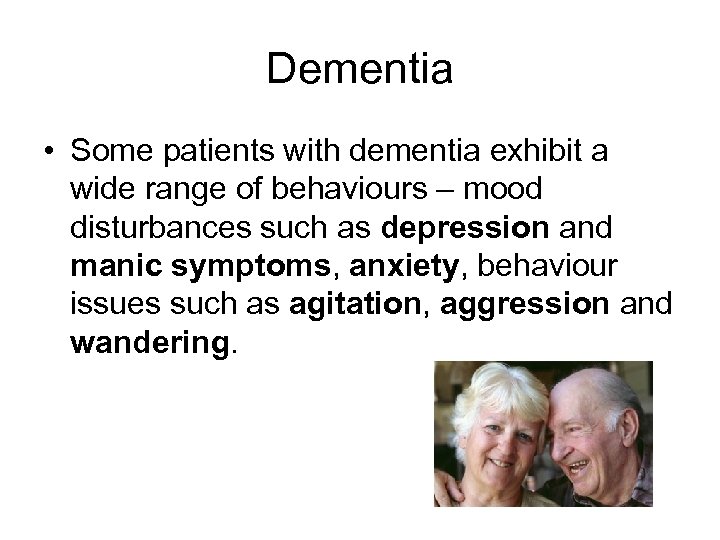
Dementia • Some patients with dementia exhibit a wide range of behaviours – mood disturbances such as depression and manic symptoms, anxiety, behaviour issues such as agitation, aggression and wandering.
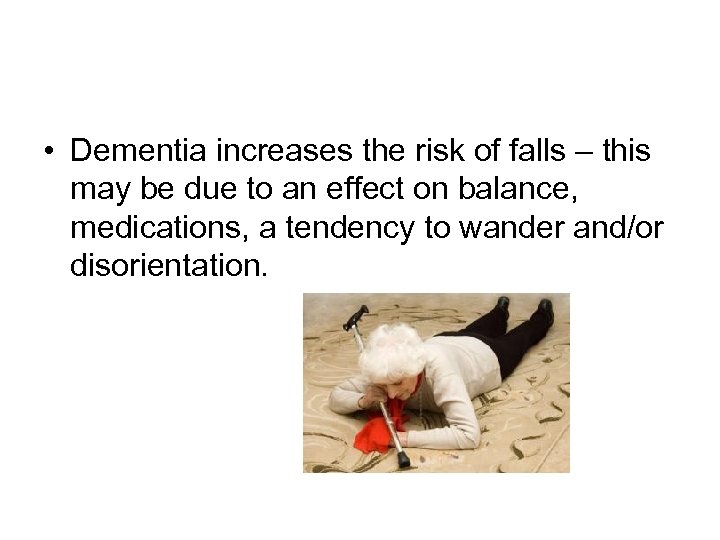
• Dementia increases the risk of falls – this may be due to an effect on balance, medications, a tendency to wander and/or disorientation.
• Client A shows signs of agitation, aggression and confusion • Client A requires a staff member at all times to ensure she is not a danger to herself or others • This causes a huge strain on staff resources
Intervention • We have started a program with Client A • We are beginning with between 5 and 10 minutes per day and gradually build up the amount of time spent • Client A was apprehensive the first time in the chair, we are hoping with proper supports Client A will adapt sufficiently.
• The client must not be left in the chair for long periods of time more that 2 hours without proper supervision.
Future implications • The use of rockers are safe, practical, nonlabour intensive source of relaxation and improved physical and psychosocial wellbeing and balance. • Rocking Chair therapy represents a promising new innovative approach to improving quality of life of dementia patients living in nursing homes.
References • Watson, N. M. , Wells, T. J. , & Cox, C. (1998). Rocking chair therapy for dementia patients: Its effect on psychosocial well-being and balance. American Journal of Alzheimer's Disease and Other Dementias, 13(6), 296 -308. • Snyder, M. , Tseng, Y. H. , Brandt, C. , Croghan, C. , Hanson, S. , Constantine, R. , & Kirby, L. (2001). A glider swing intervention for people with dementia. Geriatric Nursing, 22(2), 86 -90.
• O'Connor, D. W. , Ames, D. , Gardner, B. , & King, M. (2009). Psychosocial treatments of psychological symptoms in dementia: a systematic review of reports meeting quality standards. International Psychogeriatrics, 21(2), 241. • Vrugt, D. T. , & Pederson, D. R. (1973). The effects of vertical rocking frequencies on the arousal level in two-month-old infants. Child development, 205 -209.

Thank you for listening
Скачать презентацию Rocking Therapy By Gavin von Mollendorff Researched
1ff60272fb45e85b854895633c2fa37b.ppt