 Скачать презентацию Robert Toru Kiyosaki born April 8 1947
Роберт Кийосаки.pptx
- Количество слайдов: 21



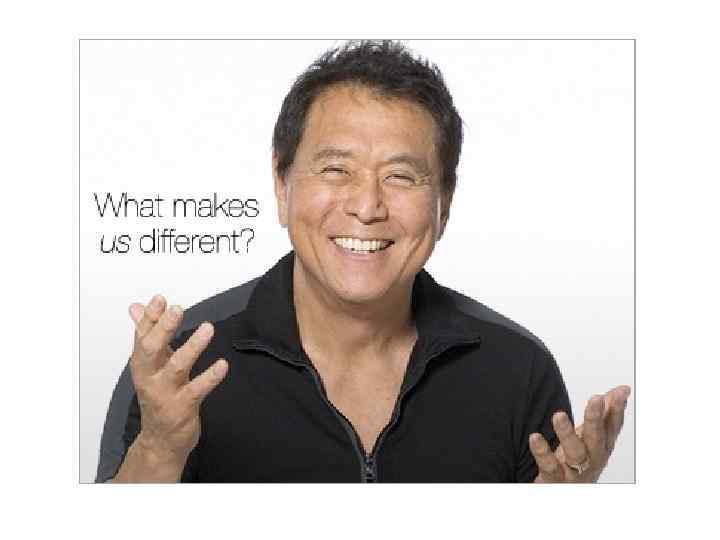
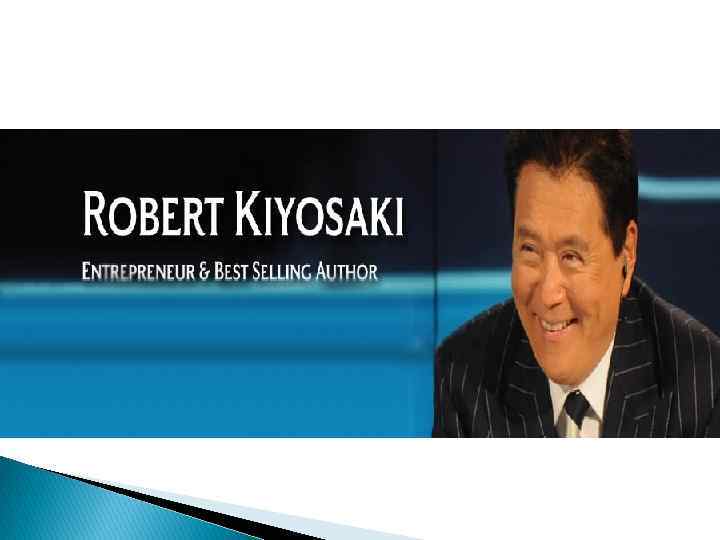
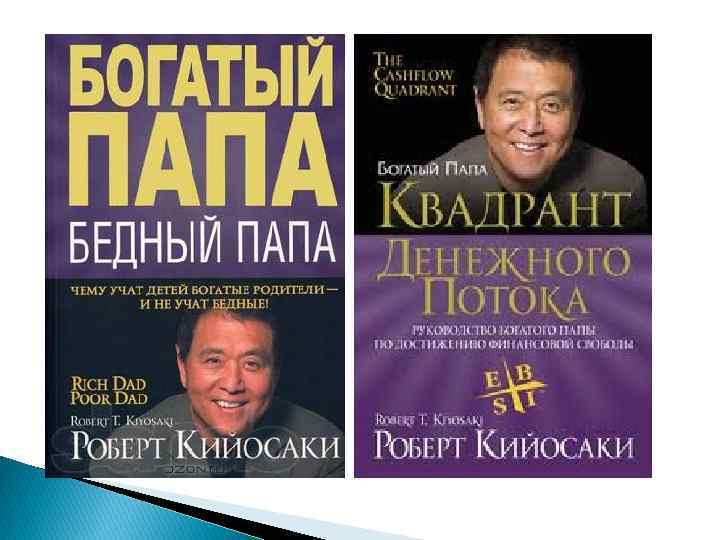
Robert Toru Kiyosaki (born April 8, 1947) is an American investor, businessman, self-help author, motivational speaker, financial literacy activist, and financial commentator. Kiyosaki is well known for his Rich Dad Poor Dad series of motivational books and other material published under the Rich Dad brand. He has written over 15 books which have combined sales of over 26 million copies. [3] Three of his books, Rich Dad Poor Dad, Rich Dad's CASHFLOW Quadrant, and Rich Dad's Guide to Investing, have been on number one on the top 10 best-seller lists simultaneously on The Wall Street Journal, USA Today and the New York Times. Rich Kid Smart Kid was published in 2001, with the intent to help parents teach their children financial concepts. He has created three "Cashflow" board and software games for adults and children and has a series of "Rich Dad" CDs and disks. A financial literacy advocate, Kiyosaki has been a proponent of entrepreneurship, business education, investing, and that comprehensive financial literacy concepts should be taught in schools around the world. [4] Kiyosaki also operates his own blog and maintains a monthly column on Yahoo Finance writing about his latest thoughts on global economics, investing, business, world financial markets, and personal finance.
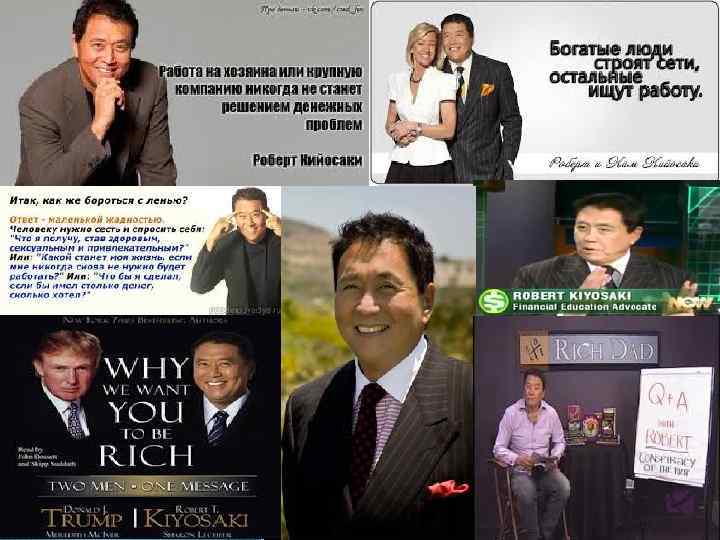
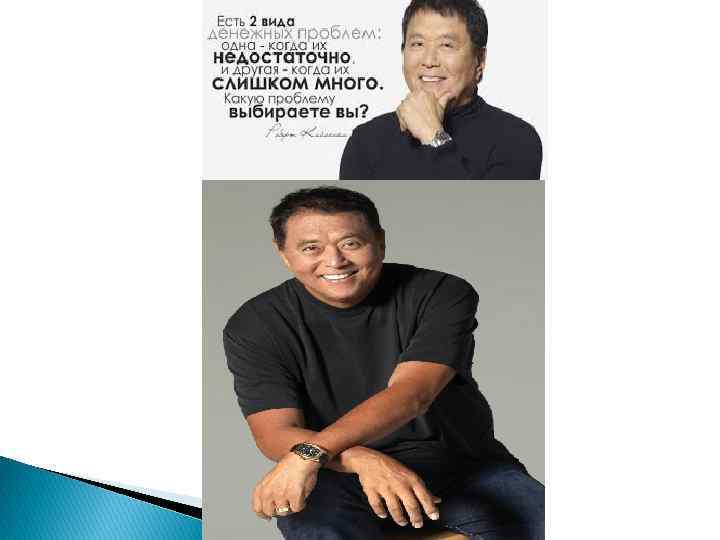
Роберт Тору Киосаки – миллионер, писатель, бизнесмен, автор экономических игр. Интересен тем, что сам прошёл путь от наемного работника до миллионера. Он утверждал, что для достижения финансовой независимости, прежде всего, необходимо менять свое мышление и окружение. Именно окружение формирует наше поведение, мысли и результат. Роберт Киосаки родился 8 апреля 1947 на острове Гавайи. В семье педагогов. Его отец был министром образования, что позволило Роберту учится в лучшей школе, где он общался с детьми из богатых семей. После окончания средней школы Киосаки продолжил обучение в Нью-Йорке. Закончив ВУЗ в 1969 г, он присоединяется к американскому Морскому Корпусу и пошёл служить в военно-морские силы США во Вьетнаме, как офицер и пилот боевого вертолета. В 1974 г Киосаки устраивается работать в компанию «Ксерокс» , торговым агентом. Проработав около трех лет по найму, Роберт решает открыть собственное дело. Это была компания по выпуску нейлоновых бумажников, которые разошлись по всему миру и принесли многомиллионный доход. Сегодня Киосаки признает, что время, так же как и многие предприниматели, совершал традиционные ошибки. Он имел опыт в различных финансовых сферах: игра на фондовой бирже, а также инвестирование в проекты связанные с недвижимостью. Однако не все его проекты были рентабельными и успешными, но именно этот опыт он считает бесценным. Так кризис, приводит к пониманию основных ошибок и вырабатывает навыки гибкого мышления, что позволяет достичь более высоких результатов в будущем. Киосаки хотел не только обогатиться, но и научить этому других. На основания своего опыта он пишет книги в которых рассказывает о тех ошибках и сложных ситуация, которые он преодолевал на пути финансового развития, рассказывает о необходимых навыках и умениях, которые нужны для построения бизнеса. В 1985 г он создал международную образовательную компанию, которая обучала основам ведения бизнеса и финансовой грамотности. В последствия эта организация инвестировала не малые суммы в образование по всему миру. Решив сделать процесс обучения финансовому успеху более наглядным, Роберт Кийосаки разработал уникальную настольную финансовую игру Денежный поток. В ее основу легли финансовые и инвестиционные стратегии, секреты создания, сохранения и приумножения капитала, которые помогли ему самому стать миллионером в возрасте 47 лет. Сейчас Кийосаки занимается операциями с недвижимостью и развитием маленьких компаний, но настоящая его любовь и страсть все же отданы обучении. Основной призыв Роберта Кийосаки звучит так: «Или вы управляете своими финансами, или пляшете под их дудочку всю жизнь. Вы или хозяин денег, или раб денег» . Решать Вам, ведь именно Вы пишите повесть под названием жизнь. Удачи Вам и не совершайте нелепых ошибок, на исправление которых потребуется основной и наиболее важный ресурс Ваше время. Именно поэтому сыграв хотя бы раз в эту игру вы определите уровень вашего мышления и финансовой грамотности.
Personal life Kiyosaki has 3 younger siblings: Emi Kiyosaki (b. 1948), Jon Kiyosaki (b. 1949), and Beth Kiyosaki (b. 1951). Emi Kiyosaki, is a Tibetan Buddhist nun known by the name Ven. He has coauthored one book with Tenzin Kacho called "Rich Brother, Rich Sister". Kiyosaki's mother died suddenly of heart failure in March 1971. His father, a long-time smoker, died of lung cancer in 1991. Kiyosaki divorced his first wife, named Janet, in 1981. In late 1983, Kiyosaki met Kim Meyer; he pursued her for 6 months until they finally started dating in February 1984. They were married in November 1986, in La Jolla, CA. Kim Kiyosaki, [10] is now an entrepreneur, investor, author, and motivational speaker. The Kiyosakis have lived in the Scottsdale area in Phoenix, Arizona since 1994.
Early life and career A fourth-generation Japanese American, Kiyosaki was born and raised in Hilo, Hawaii. He is the eldest son of educator Ralph H. Kiyosaki (1919– 1991) and Marjorie O. Kiyosaki (1921– 1971). After graduating from Hilo High School in 1965, he attended the U. S. Merchant Marine Academy in New York, graduating with the class of 1969 as a deck officer. He served in the Marine Corps as a helicopter gunship pilot during the Vietnam War in 1972, where he was awarded the Air Medal. [7] Kiyosaki was honorably discharged from the Marine Corps in June 1974; he soldcopy machines for the Xerox Corporation as a salesperson from 1974 until June 1978. In 1977, Kiyosaki entered the retailing industry. He started a company that brought to market the first nylon and Velcro "surfer" wallets. The company was moderately successful, but eventually went bankrupt, as he wanted to save money on costs and did not intellectually protect the product. In the early 1980 s, Kiyosaki started a business that licensed T-shirts for heavy metal rock bands such as Mötley Crüe. The company went bankrupt in 1985. [8] In his book You can Choose to be Rich, Kiyosaki said that after his bankruptcy, he became homeless and was living with his then girlfriend Kim at the back of an old Toyota for several months before starting their own business from the ground up. [9] In 1994, Kiyosaki left the Money and You program in Australia. [10] With various real estate investments, Kiyosaki retired at the age of 47. In 1997, he launched Cashflow Technologies, Inc. , a business and financial education company[11] which owns and operates the Rich Dad and Cashflow brands.
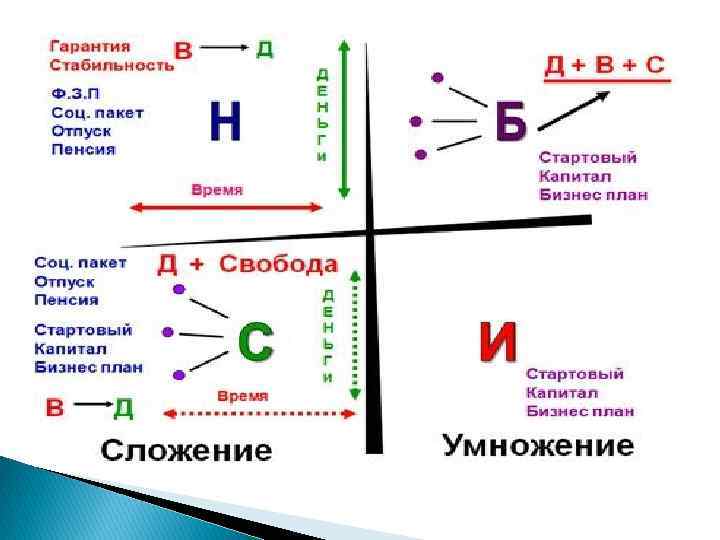
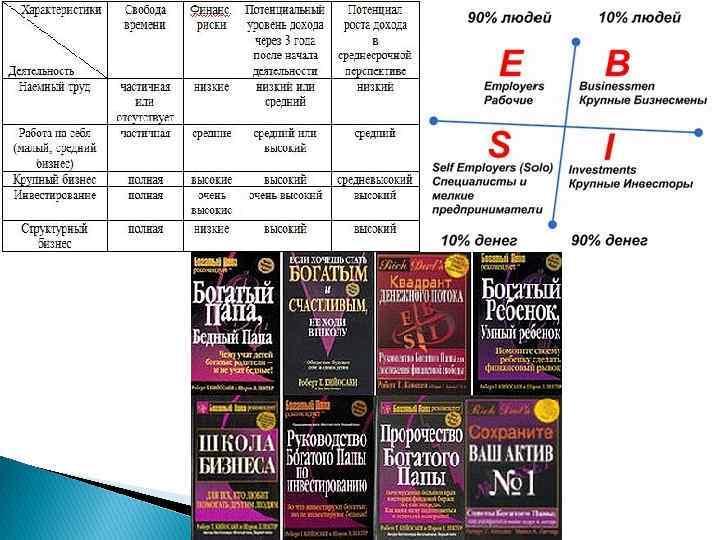
Financial advice Kiyosaki's teachings focus on what he calls "financial education" generating passive income by means of investment opportunities, such as real estate investments, businesses and commodities, with the ultimate goal of being able to support oneself by such investments alone and thus achieving true financial independence WITHOUT working for a paycheck. Kiyosaki defines the term "assets" as things that generate cash inflow, such as stock dividends, rental properties, or businesses, and the term "liabilities" as things that use cash, such as houses, cars, and so on. Kiyosaki argues that financial leverage is critically important in becoming rich, despite the inherent financial risks, repercussions, and pitfalls that come with it. Originally self-published before being picked up commercially to become a best seller, the central concept of the book is an anecdotal comparison of his "two fathers. " His "poor dad" was his biological father, who was highly educated and became superintendent of the Hawaii State Department of Education but was poor. Contrasted with this is his "rich dad, " who was his best friend's father who became "the richest man in Hawaii" by investing his smaller income into income-producing investments, and was a high school dropout. Its main purpose as a self-help book is to help people rethink their idea of money and their concept of themselves as employees who will gain financial rewards fromconformity and education. Kiyosaki uses the "rich dad, poor dad" comparison to illustrate his view that the majority of people are stuck in what he refers to as "the rat race"–living paycheck to paycheck and spending all of their time working to pay bills and other expenses. In his books, Kiyosaki advocates tax-advantaged investment vehicles, such as real estate or businesses, rather than ownership of securities such as stocks. This idea is further developed in his later books and "Rich Dad" became Kiyosaki's personal brand for various publishing ventures. Kiyosaki stresses financial literacy through the acquisition of he calls "assets" as the means to obtaining wealth. He says that life skills are often best learned through experience and that there are important lessons not taught in school. He says that formal education is primarily for those seeking to be employees or self-employed individuals, and that this is an "Industrial Age idea. " In order to obtain financial freedom, one must be either a business owner, an investor, or both generating passive income, particularly on a monthly basis. Kiyosaki often refers to The CASHFLOW Quadrant, a conceptual tool which he developed to categorize the four major ways income is earned. Depicted in a diagram, this concept entails four groupings, split with two crossed lines (one vertical and one horizontal). In each of the four groups there is a letter representing a way in which an individual may earn income. The letters are as follows.
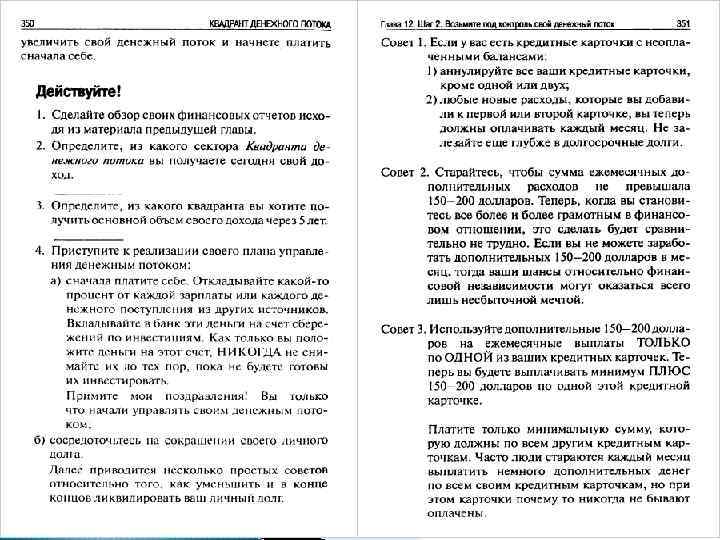
Квадрант денежного потока В каком секторе находитесь Вы? Этот ли сектор подходит Вам лучше всего? Вы финансово свободны? «Денежный поток» написан для Вас, если Ваша жизнь стоит у развилки финансовых путей. Если хотите взять под контроль то, чем Вы занимаетесь сегодня, чтобы изменить свою финансовую судьбу, то эта книга поможет Вам начертить свои последующие шаги. Вот как выглядит квадрант. Буквы в каждом секторе обозначают: Е – служащий S – работающий на себя В – владелец бизнеса I – инвестор Каждый из нас находится как минимум в одном из четырех приведенных выше секторов денежного потока. Наше место определяется источником получения наличных денежных средств. Многие из нас полагаются на чеки, которыми оплачивается их оклад, поэтому являются служащими, в то время как другие работают только на себя. Служащие и работающие на себя находятся на левой стороне денежного квадранта. В правой стороне квадранта находятся люди, которые получают наличные деньги с собственного бизнеса или благодаря инвестициям. «Квадрант денежного потока» изображает разные типы людей, которые составляют мир бизнеса, он объясняет, кто эти люди и какие их отличительные черты. Это поможет вам определить, в каком именно секторе Вы находитесь, и начертить Ваши дальнейшие шаги для достижения в будущем финансовой свободы. Так как финансовую свободу можно найти в любом из четырех секторов, то навыки и мастерство людей типа «В» и «I» помогут Вам достичь финансовых целей как можно быстрее. Успешные люди типа «Е» должны также стать успешными в секторе «I» .
Controversy Kiyosaki's books and teachings have been criticized for focusing on anecdotes and containing little in the way of concrete advice on how readers should proceed. [47] Kiyosaki responds that his material is meant to be more of a motivational tool to get readers thinking about money rather than a step-by-step guide to wealth. He also says the books are supposed to be "interesting" to people, which precludes involving a lot of technical material. [48] In 2010, the Canadian Broadcasting Corporation investigated the Rich Dad seminars associated with Kiyosaki on their consumer advocacy program, Marketplace. [49] They found that one-day free seminars were conducted at which three-day courses were offered for $500. At the three-day classes, participants were offered longer courses priced between $12, 000 and $45, 000. A hidden camera was employed at a $500 seminar in Kitchener, Ontario, showing the trainer, Marc Mousseau, advising participants to request that their credit-card limits be raised and giving out scripts with instructions on how to ask for limits as high as $100, 000. [50] The show interviewed Bob Aaron, [51] a lawyer whose practice is 25% real estate law, [52] who said that some of Mousseau's advice was unusual and unlikely to work, such as advising that a developer might give two condos free when selling ten, getting an option to buy the house at a later date, and buying a house in pre-foreclosure. [50] The program also found a claim by the trainer to be untrue; he claimed to have been part of a deal that made $32 million on a mobile home park in Saskatchewan, but the park did not exist. The instructor was described as "overbearing, obnoxious, and rude" by an attendee, after showing video footage of his behavior. [49] When questioned about the findings of the program, Kiyosaki said he too was unhappy about how the company running the seminars, Tigrent Learning (formerly Whitney International), was conducting them and that these were not the first complaints he had heard. He promised to look into the problems and said they would serve as "ammunition I need" in his "continuing to pressure them" and "constantly saying" to Tigrent Learning that he is "unhappy with them". He claims not to have known "how severe it was" at the time of partnering with them that Tigrent Learning had such a "checkered past". "I'm more upset than you are; I really am, " he told the interviewer, "It disturbs me. It's not my fault. " [50] On August 20, 2012, one of Kiyosaki's companies, Rich Global LLC, filed for bankruptcy in Wyoming Bankruptcy Court. [53] The move followed a ruling by a U. S. District Court jury that former business partners of Kiyosaki were entitled to $23, 687, 957. 21 of the profits from events they helped to set up for Kiyosaki including a 2002 appearance at New York's Madison Square Garden. A spokesman for Kiyosaki asserted that the amount of the award exceeded the value of Rich Global LLC and that Kiyosaki would not use money from outside the company to meet the judgement.
 Скачать презентацию Robert Toru Kiyosaki born April 8 1947
Роберт Кийосаки.pptx