 Скачать презентацию Roadmap for Publication and Maximizing Your Chances for
publications-presentation.pptx
- Количество слайдов: 16



Roadmap for Publication and Maximizing Your Chances for Getting Published Nathan Pickett Ph. D candidate, Dept. of Geography and Atmospheric Sciences, University of Kansas Fulbright Student
Outline • The process of getting published and timeline • • Finding journals and CFPs Submitting your article Review process Outcomes • Maximizing your chances of getting published • • Being a good fit Having the “right” sources Translations and English Giving back/playing the game
Finding journals and CFPs • CFP = call for papers • Listservs: h-net. org, lsoft. com/catalist. html • Professional organizations in your discipline
Submitting your article • Every journal has its own submission method and author guidelines (usually on their website) • 2 most common methods: email the editor or use an online submission system • Pay attention to the author guidelines (more on that later) • It’s possible to be rejected at this stage if your article is poorly written, has plagiarized portions, or if it’s not a good fit
Review process • Usually takes months • (don’t worry, this part has nothing to do with you or your writing) • Don’t pester the editor(s) for updates, but check in if it’s been over 6 months • Double-blind peer review • What they’re looking for: • • Quality of writing Sound arguments/academic rigor Valuable contributions to the field Active engagement with the literature
Outcomes • “Accepted with minor changes” • Means: your paper was excellent, only some small formatting/spelling/grammar errors • “Revise and resubmit” • Means: your paper has good ideas that are worth publishing but it has issues that must be addressed • Understanding reviewers’ comments • “Rejected” • Means: your paper has serious flaws that (at best) cannot be addressed without major revisions
Maximizing your chances for getting published
Being a good fit • Just knowing that a journal is of good quality is not enough—you have to do your homework • Read multiple articles published by that journal in the past few years • Browse the abstracts and citations • Talk with colleagues, esp. if they’ve published in that journal • Things to look for: commonly-cited sources, solo vs multiple authors, audience, acknowledgments and funding
Being a good fit • Author guidelines are vital for things like length, formatting, citation style, footnotes, figures, sections and headers, etc. • If you have any questions, ask the editors • Appropriate style and tone • • Is the structure of your paper clear? Is your actual writing (words and sentences) clear? Bigger/longer/fancier is usually not better Third person (and not first person) is the overwhelming trend in most disciplines
Having the “right” sources • Having an article published means that you are entering into a conversation—your work is not an island—and you need to put it in the right context • Be well-read in your field, not just the “classics” or seminal works, but also current articles • If you’re ignoring the literature (on purpose or not) your chances of getting published plummet • Amount and quality of citations
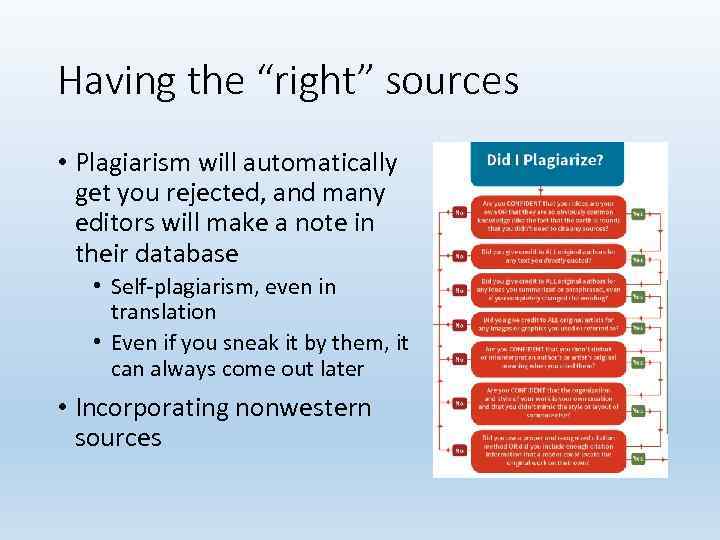
Having the “right” sources • Plagiarism will automatically get you rejected, and many editors will make a note in their database • Self-plagiarism, even in translation • Even if you sneak it by them, it can always come out later • Incorporating nonwestern sources
Translations and English • You absolutely cannot rely on automatic translation • You should not rely on manual translation • Your writing will be much better if you start in English (or the journal’s target language) even if you don’t think your English is that great • Translations of your own work is not new scholarship
Giving back/playing the game • Say yes when editors ask you to do reviews • And if you have to say no, tell them why and when you’d be able to review • Submit often, but never submit the same article to multiple journals at the same time • Meet your deadlines • Many editors have databases where they note if you were late, hard to work with, plagiarizing, and if you keep saying no to doing reviews • Get to know the people
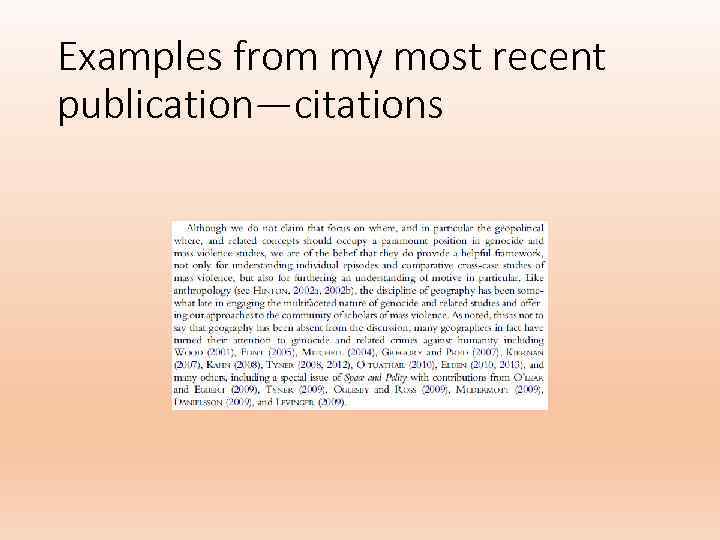
Examples from my most recent publication—citations
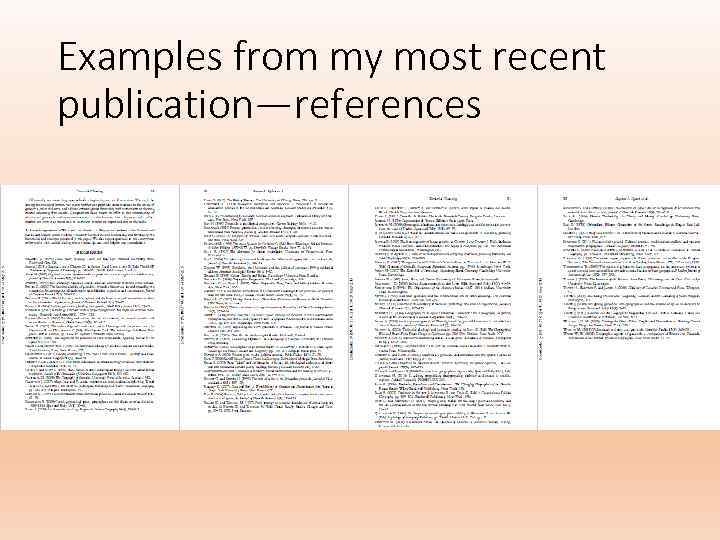
Examples from my most recent publication—references
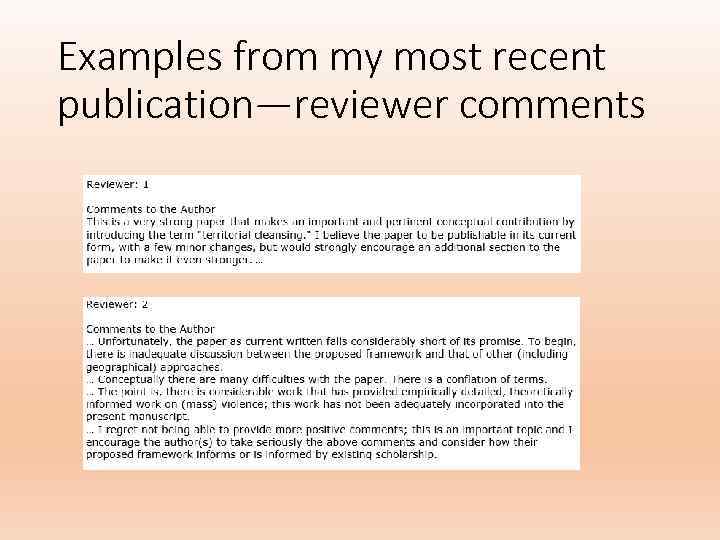
Examples from my most recent publication—reviewer comments …
Скачать презентацию Roadmap for Publication and Maximizing Your Chances for
publications-presentation.pptx