


 Скачать презентацию Road to Civil War Chapter 14 I
86677c5aa5cf02382ce915a9be8d9de0.ppt
- Количество слайдов: 33
 Road to Civil War Chapter 14
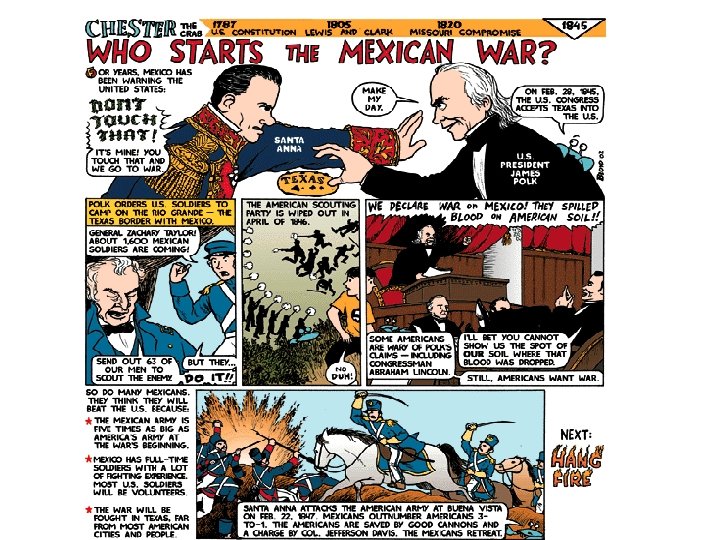
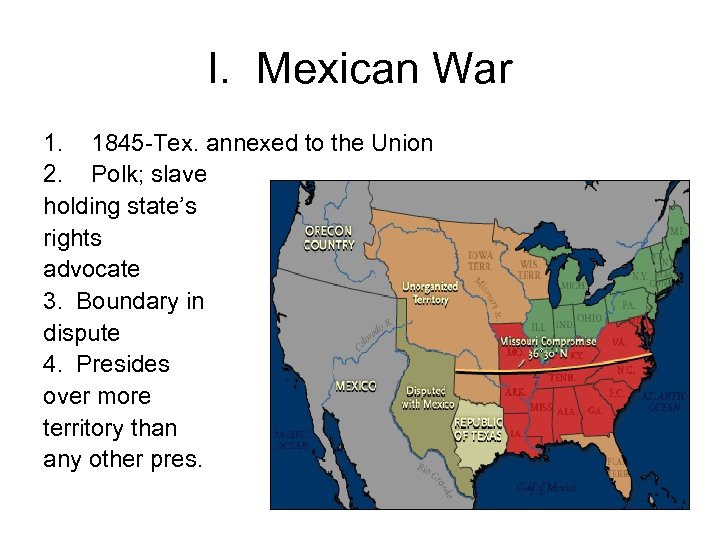 I. Mexican War 1. 1845 -Tex. annexed to the Union 2. Polk; slave holding state’s rights advocate 3. Boundary in dispute 4. Presides over more territory than any other pres.
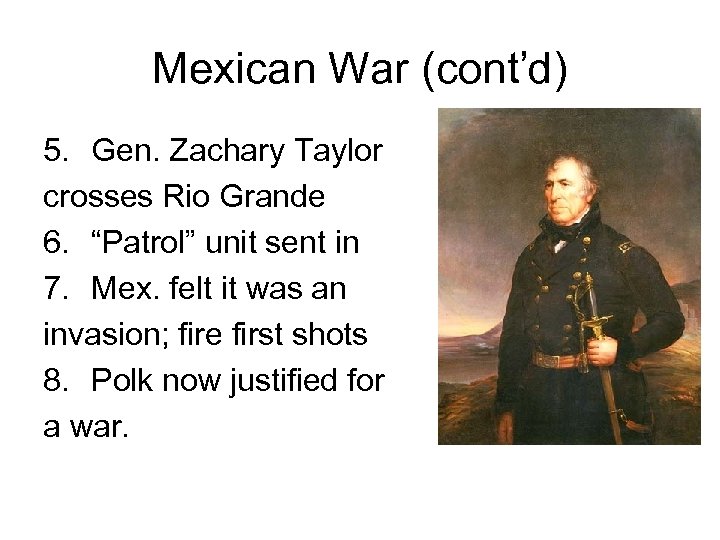 Mexican War (cont’d) 5. Gen. Zachary Taylor crosses Rio Grande 6. “Patrol” unit sent in 7. Mex. felt it was an invasion; fire first shots 8. Polk now justified for a war.
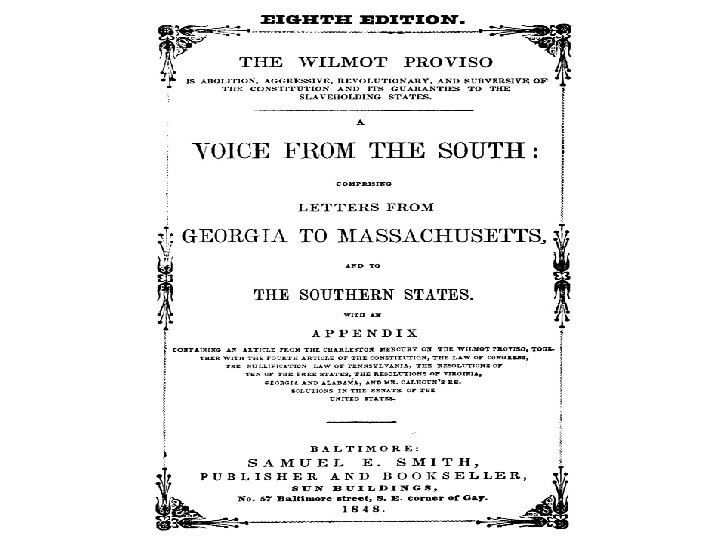
 II. Wilmot Proviso 1. August, 1846—Proviso(amendment) to an appropriations bill 2. Slavery will not exist in ANY territory gained in the war w/Mex. 3. Wilmot wants free white labor to expand; not slavery 4. Bill passes in the House; fails in the Senate
 Wilmot Proviso (cont’d) 5. Significance: 1. Sectional crises 2. North feared slave power & nation could become slave territory 3. South feared N. would not allow them to take slaves into the new territory
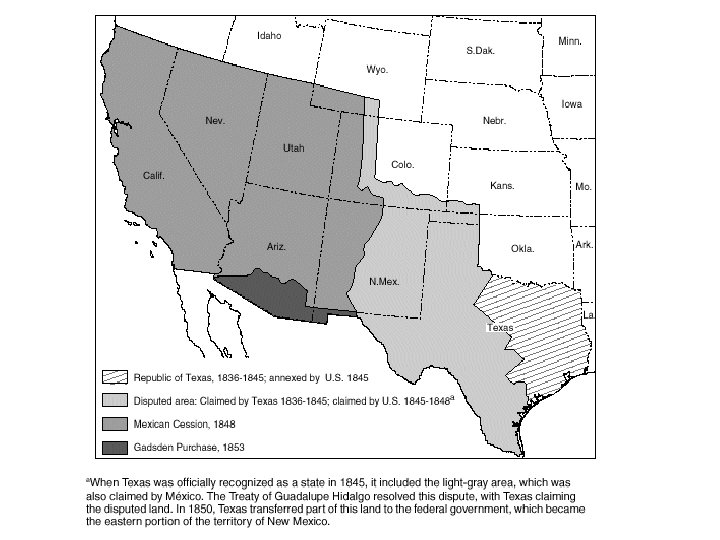
 III. Treaty of Guadalupe Hidalgo 1. Feb. 1848—Ends Mexican War 2. U. S. gains CA, NM (including UT, NV, AZ) 3. Rio Grande River the southern boundary 4. Mexico gets $15 million 5. “We take nothing by conquest…Thank God. ”
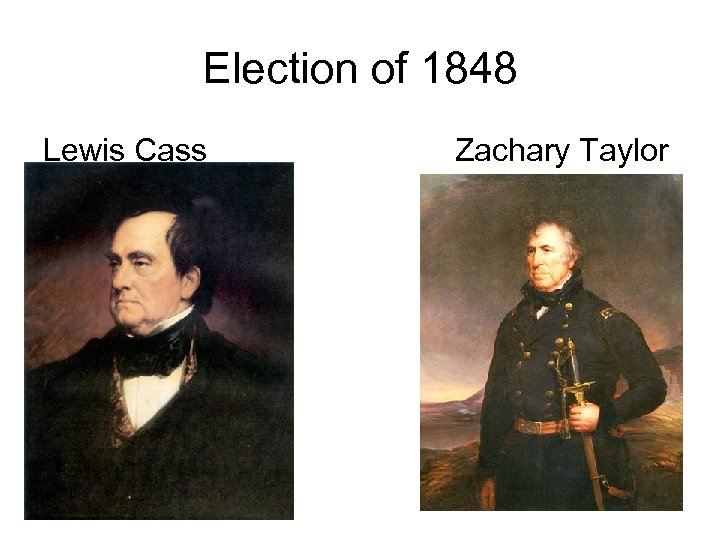 Election of 1848 Lewis Cass Zachary Taylor
 IV. Election of 1848 1. Dem. Lewis Cass 2. Popular Sovereignty—Let the residents of a territory decide, by vote, whether or not to allow slavery 3. Free Soil Party—Anti-slavery party; Whigs & Dem. 1. Oppose expansion of all slavery 4. Taylor wins!!
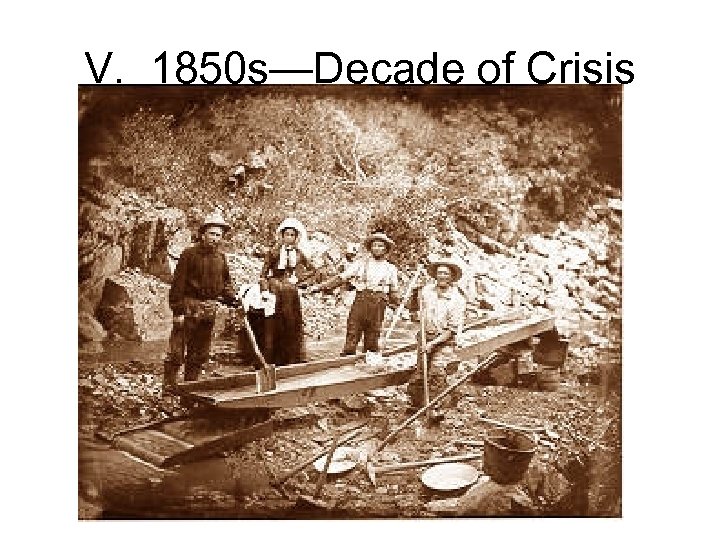 V. 1850 s—Decade of Crisis
 1850 s—Decade of Crisis (cont’d) 1. 2. 3. 4. 1849— 80, 000+ flood CA CA a free state? CA a slave state? Extend the Missouri Line?
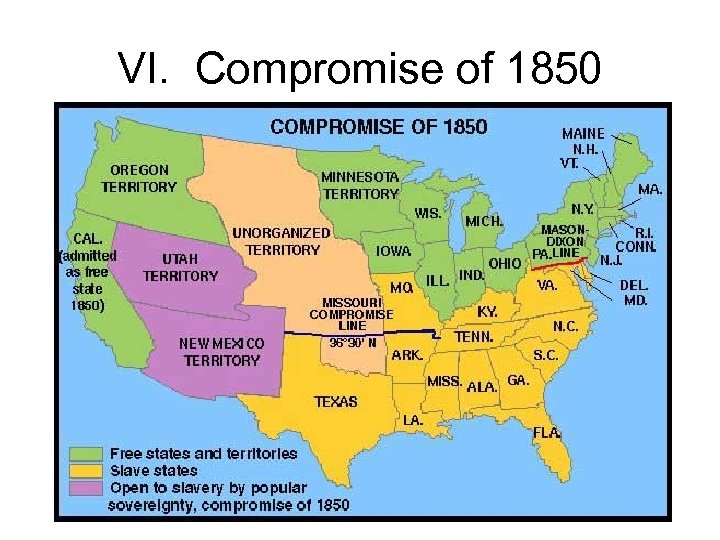 VI. Compromise of 1850
 Compromise of 1850 (cont’d) 1. 2. 3. 4. 5. CA free state Slavery unrestricted in UT & NM territories TX gets $10 million for land Slave trade abolished in D. C. & MD Fugitive Slave Act 1. 2. 3. 4. Return of runaways. Free states must return slaves! Denied legal rights to blacks Whites fined/jailed for helping fugitives
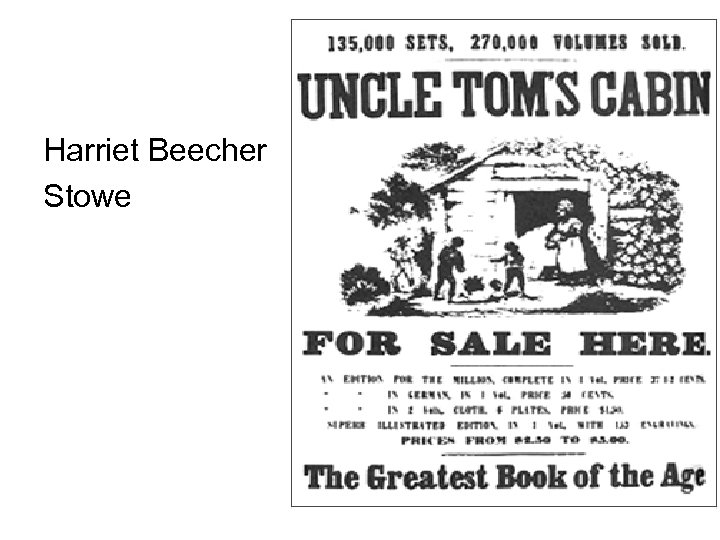 Harriet Beecher Stowe
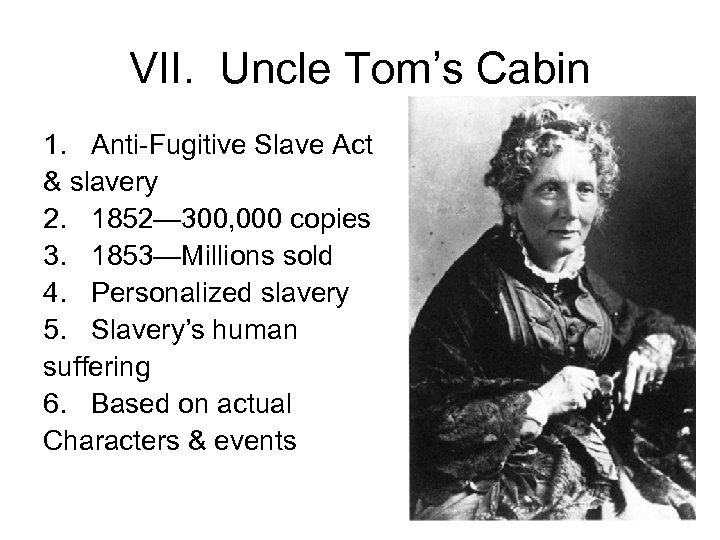 VII. Uncle Tom’s Cabin 1. Anti-Fugitive Slave Act & slavery 2. 1852— 300, 000 copies 3. 1853—Millions sold 4. Personalized slavery 5. Slavery’s human suffering 6. Based on actual Characters & events
 VIII. “Bleeding” Kansas
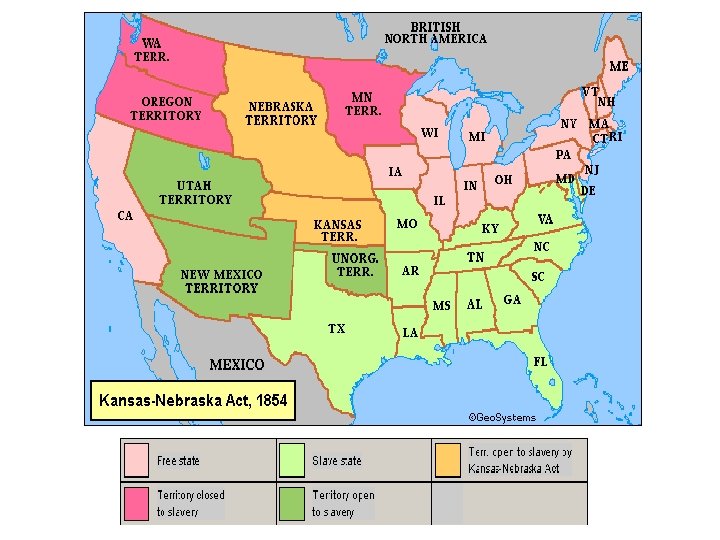
 “Bleeding” Kansas 1. KS-NE Act 2. IL Sen. Stephen A. Douglas 3. Divide the Nebraska Territory Kansas & Nebraska territories 4. Popular Sovereignty 5. KS & NE ABOVE 36° 30´!!!! 6. Repeal Missouri Compromise of 1820. 7. 1854 -Pierce sings into law
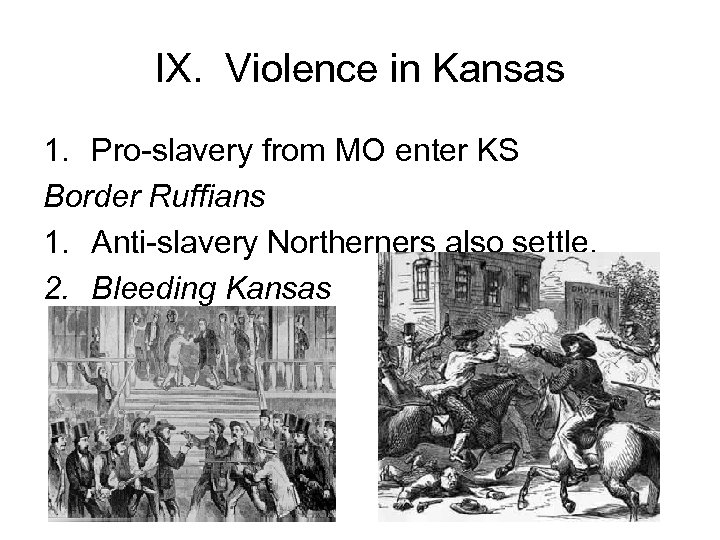 IX. Violence in Kansas 1. Pro-slavery from MO enter KS Border Ruffians 1. Anti-slavery Northerners also settle. 2. Bleeding Kansas
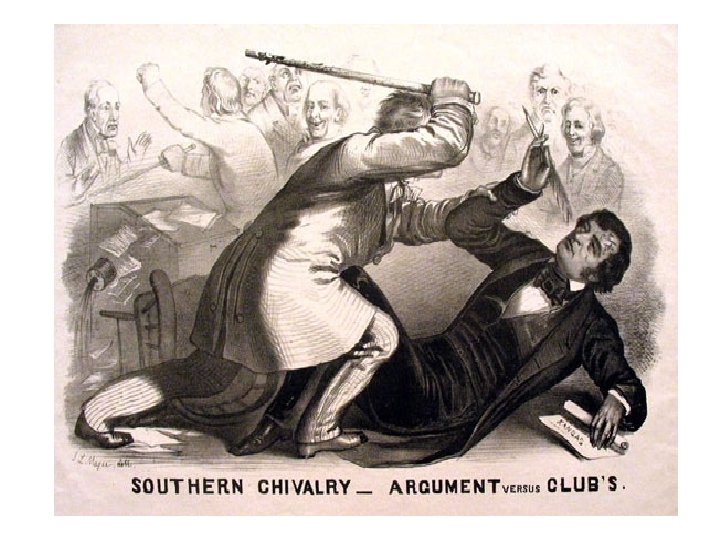
 Violence in Kansas (cont’d) 4. Pro-slavery ruffians; Lecompton, KS 5. Lecompton Constitution—Slavery in KS 6. Anti-slavery; Topeka, KS 7. John Brown—Pottawatomie Creek; kills 5
 X. A New Party is Born 1. N. Dems. believe Union “sold out” to the S. Dems. in regard to slavery. 2. Republican Party—Opposed to the expansion of slavery & KS/NE Act.
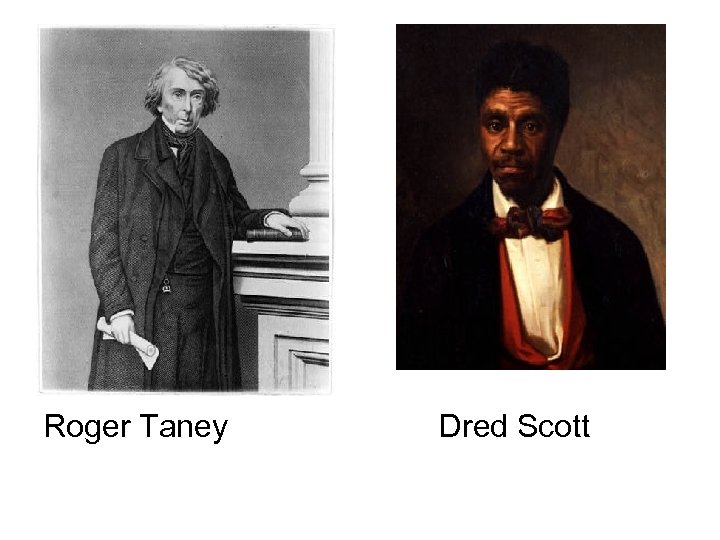 Roger Taney Dred Scott
 XI. Dred Scott Decision 1. 2. 3. 4. 5. March 6, 1857 36° 30´ unconst. Blacks were not citizens Can’t to sue in federal court Taney—Congress couldn’t deny a person their property under the Const. 6. Missouri Comp. 1820 unconst. ; deprived people of their “property”
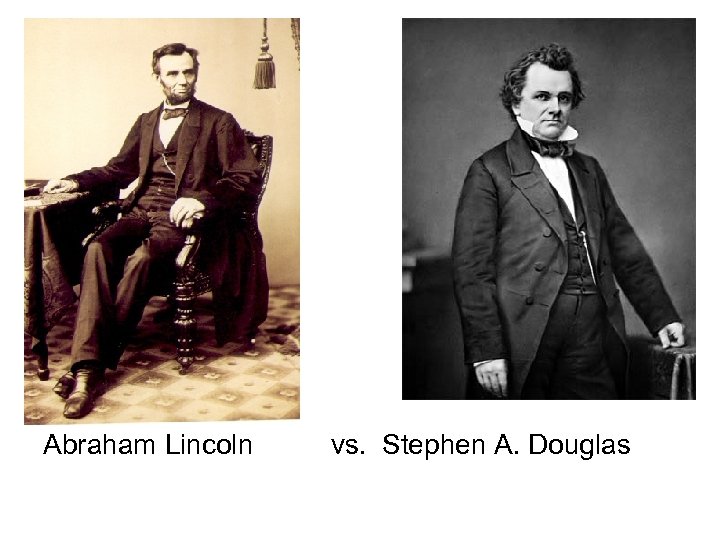 Abraham Lincoln vs. Stephen A. Douglas
 XII. John Brown 1. 2. 3. 4. 5. Harper’s Ferry, VA Big slave rebellion? Failure Caught, tried, executed Confederate Army begins….
 XIII. Rise of Lincoln & the 1860 Election 1. 1858—Freeport, IL 2. Lincoln challenged Douglas to defend “popular sovereignty’ 3. Freeport Doctrine—Communities would have to pass & enforce laws to protect slavery. 4. Lincoln brought to the “spotlight’ ; possible Rep. hopeful
 Rise of Lincoln & the 1860 Election (cont’d) 5. Dem. split in 2—Douglas from the N. ; John C. Breckenridge S. 6. Rep. nominate Lincoln 7. Most important aspect: non-extension of slavery to the territories. 8. S. warns secession if Lincoln elected. 9. Lincoln, 40% of pop. vote; enough in electoral college
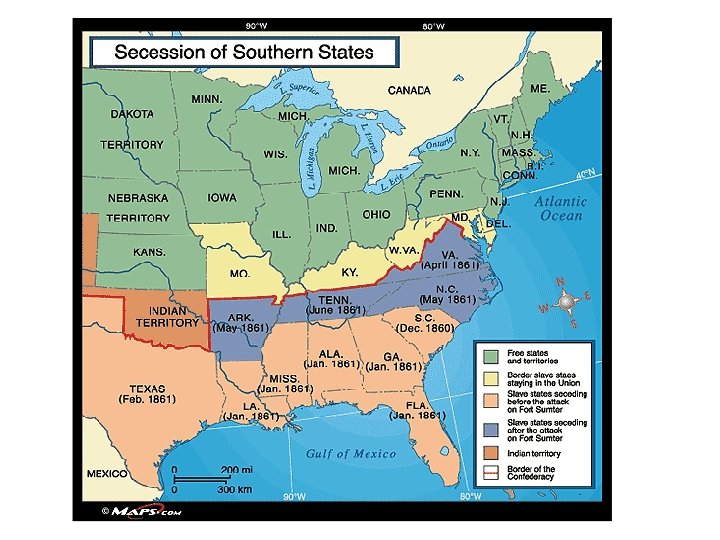
 XIII. The South Secedes 1. Dec. 20, 1860—SC secedes 2. Protect state’s rights, slavery, & way of life 3. MS, FL, AL, GA, LA, TX followed. (Later VA, AK, NC) 4. Feb. 1861—Confederate States of America 5. Pres. Jefferson Davis
 The South Secedes (cont’d) 6. Fort Sumter, Charleston, SC 7. S. opens canon fire; Union gives up the Federal Garrison 8. Conf. celebrated their 1 st victory; Civil War begins. (Bloodies war in U. S. history)