


 Скачать презентацию RNA 1 Structure Quantitation Last week
59bdd8ab9894ba859461949537c990d6.ppt
- Количество слайдов: 70
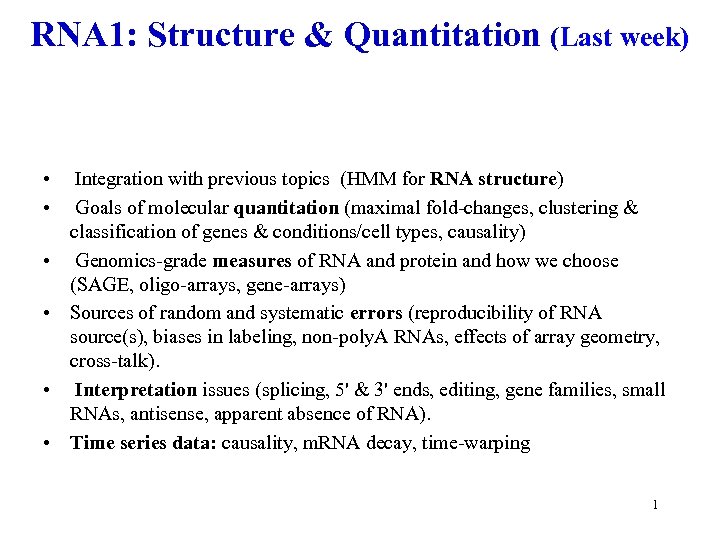 RNA 1: Structure & Quantitation (Last week) • • • Integration with previous topics (HMM for RNA structure) Goals of molecular quantitation (maximal fold-changes, clustering & classification of genes & conditions/cell types, causality) Genomics-grade measures of RNA and protein and how we choose (SAGE, oligo-arrays, gene-arrays) Sources of random and systematic errors (reproducibility of RNA source(s), biases in labeling, non-poly. A RNAs, effects of array geometry, cross-talk). Interpretation issues (splicing, 5' & 3' ends, editing, gene families, small RNAs, antisense, apparent absence of RNA). Time series data: causality, m. RNA decay, time-warping 1
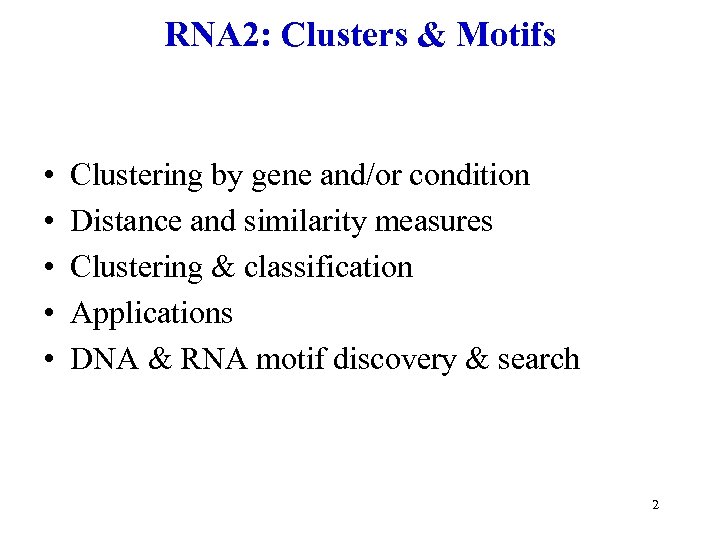 RNA 2: Clusters & Motifs • • • Clustering by gene and/or condition Distance and similarity measures Clustering & classification Applications DNA & RNA motif discovery & search 2
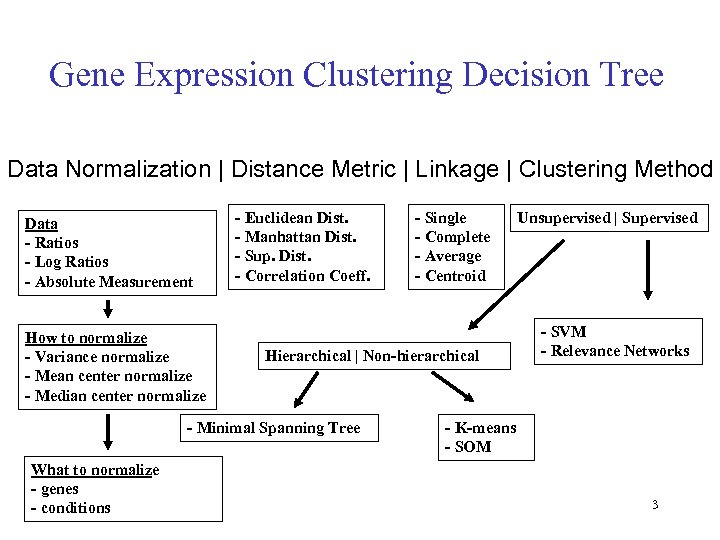 Gene Expression Clustering Decision Tree Data Normalization | Distance Metric | Linkage | Clustering Method Data - Ratios - Log Ratios - Absolute Measurement How to normalize - Variance normalize - Mean center normalize - Median center normalize - Euclidean Dist. - Manhattan Dist. - Sup. Dist. - Correlation Coeff. Hierarchical | Non-hierarchical - Minimal Spanning Tree What to normalize - genes - conditions - Single - Complete - Average - Centroid Unsupervised | Supervised - SVM - Relevance Networks - K-means - SOM 3
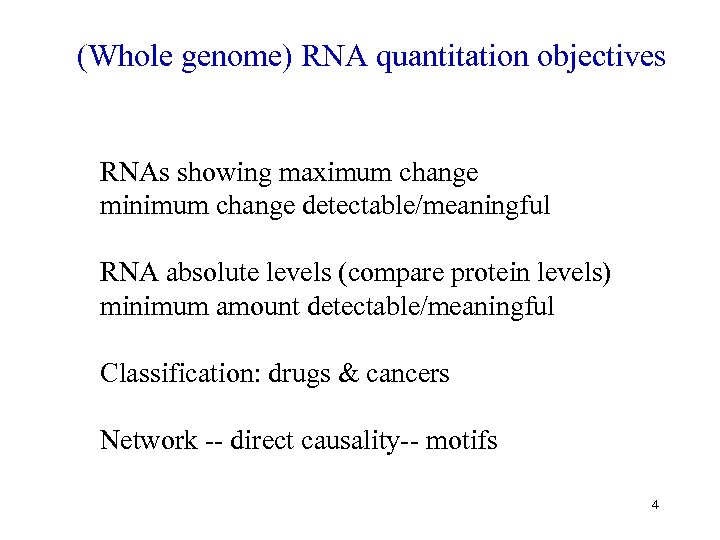 (Whole genome) RNA quantitation objectives RNAs showing maximum change minimum change detectable/meaningful RNA absolute levels (compare protein levels) minimum amount detectable/meaningful Classification: drugs & cancers Network -- direct causality-- motifs 4
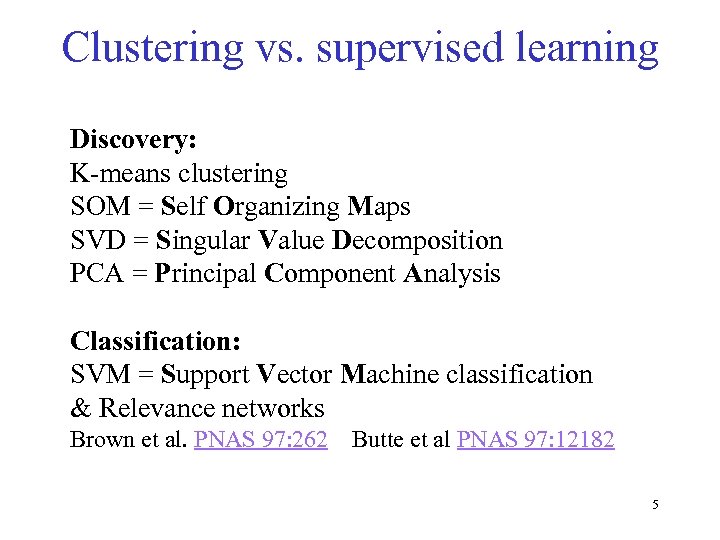 Clustering vs. supervised learning Discovery: K-means clustering SOM = Self Organizing Maps SVD = Singular Value Decomposition PCA = Principal Component Analysis Classification: SVM = Support Vector Machine classification & Relevance networks Brown et al. PNAS 97: 262 Butte et al PNAS 97: 12182 5
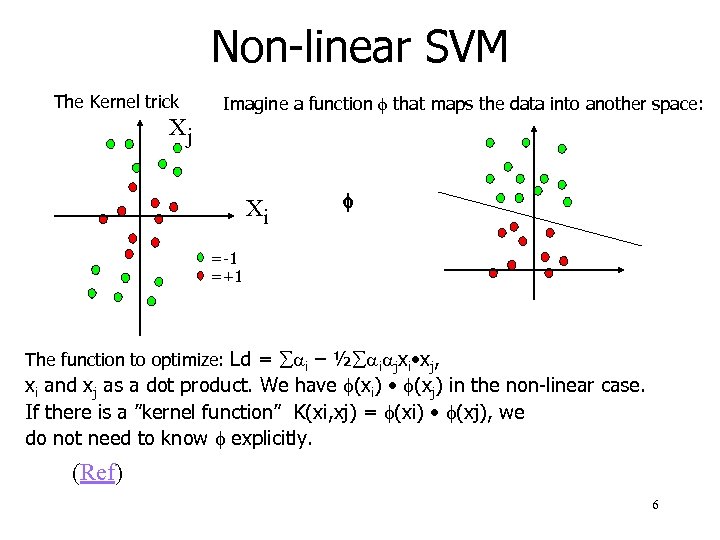 Non-linear SVM The Kernel trick Xj Imagine a function that maps the data into another space: Xi =-1 =+1 The function to optimize: Ld = i – ½ i jxi • xj, xi and xj as a dot product. We have (xi) • (xj) in the non-linear case. If there is a ”kernel function” K(xi, xj) = (xi) • (xj), we do not need to know explicitly. (Ref) 6
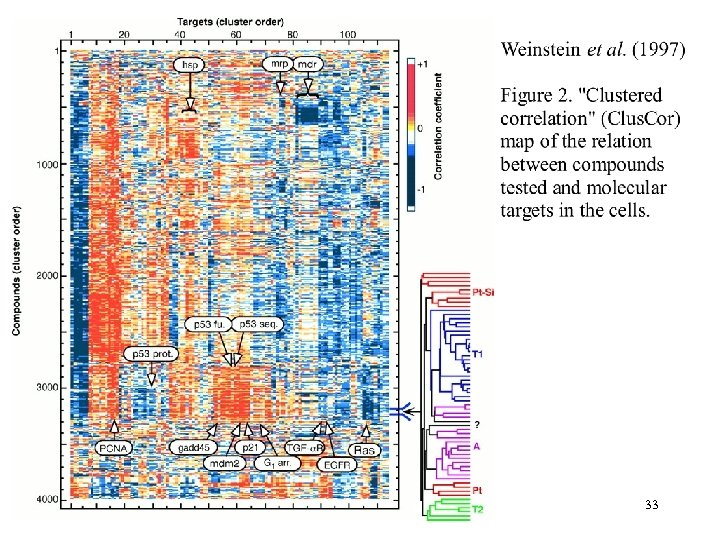
 Cluster analysis of m. RNA expression data By gene (rat spinal cord development, yeast cell cycle): Wen et al. , 1998; Tavazoie et al. , 1999; Eisen et al. , 1998; Tamayo et al. , 1999 By condition or cell-type or by gene&cell-type (human cancer): Golub, et al. 1999; Alon, et al. 1999; Perou, et al. 1999; Weinstein, et al 1997 Cheng, ISMB 2000. . Rana. lbl. gov/Eisen. Software. htm 7
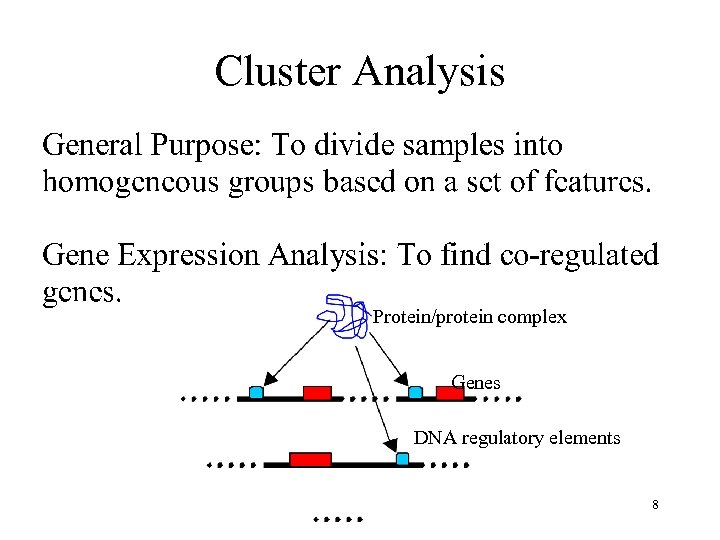 Cluster Analysis Protein/protein complex Genes DNA regulatory elements 8
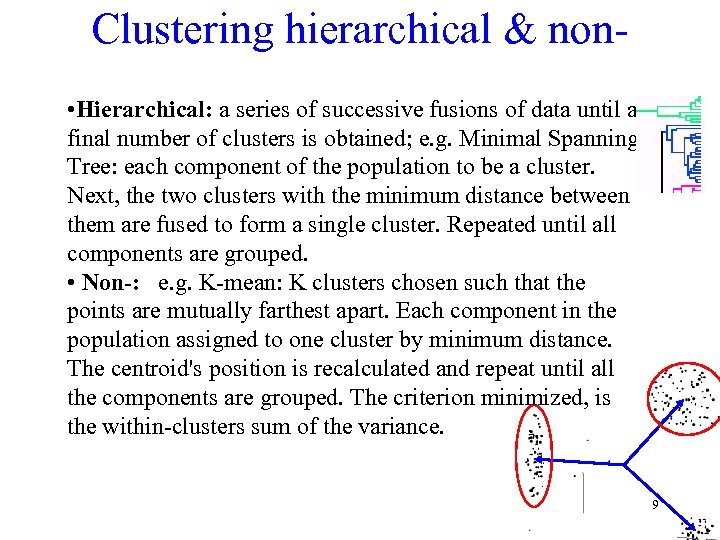 Clustering hierarchical & non • Hierarchical: a series of successive fusions of data until a final number of clusters is obtained; e. g. Minimal Spanning Tree: each component of the population to be a cluster. Next, the two clusters with the minimum distance between them are fused to form a single cluster. Repeated until all components are grouped. • Non-: e. g. K-mean: K clusters chosen such that the points are mutually farthest apart. Each component in the population assigned to one cluster by minimum distance. The centroid's position is recalculated and repeat until all the components are grouped. The criterion minimized, is the within-clusters sum of the variance. 9
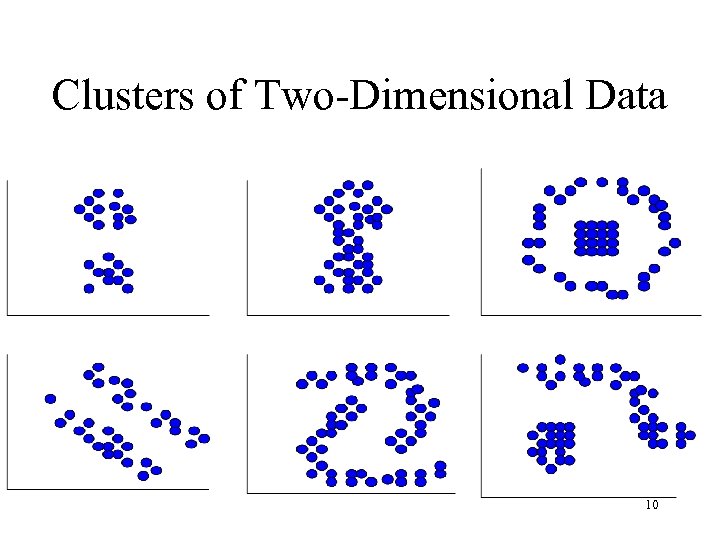 Clusters of Two-Dimensional Data 10
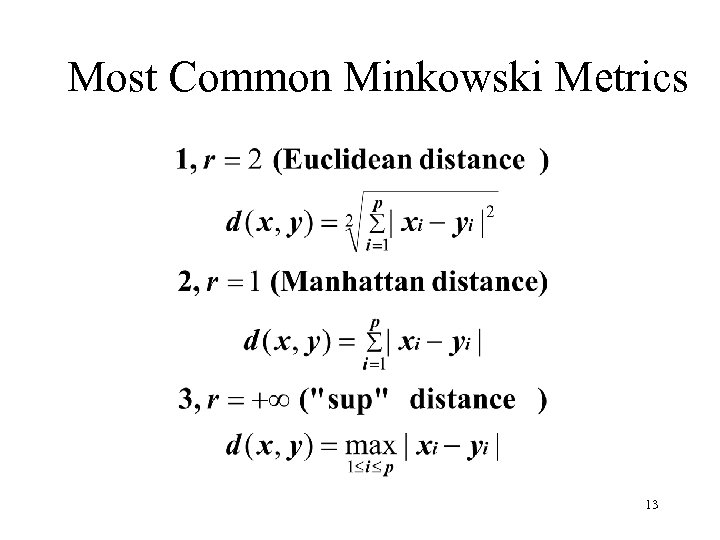
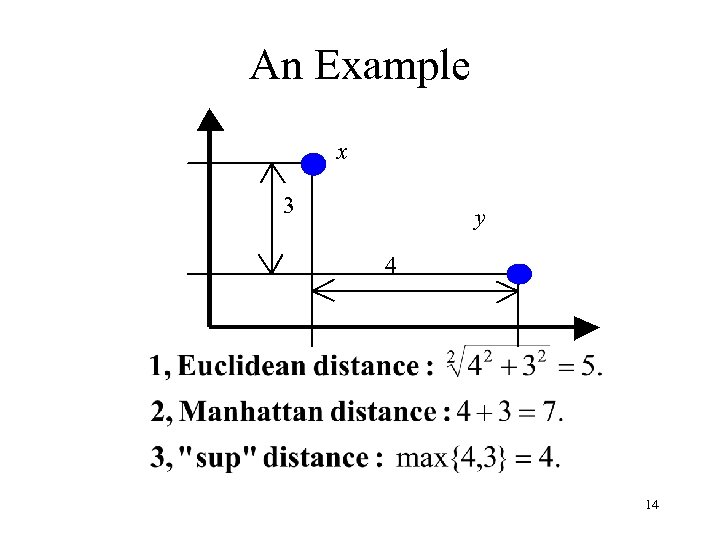
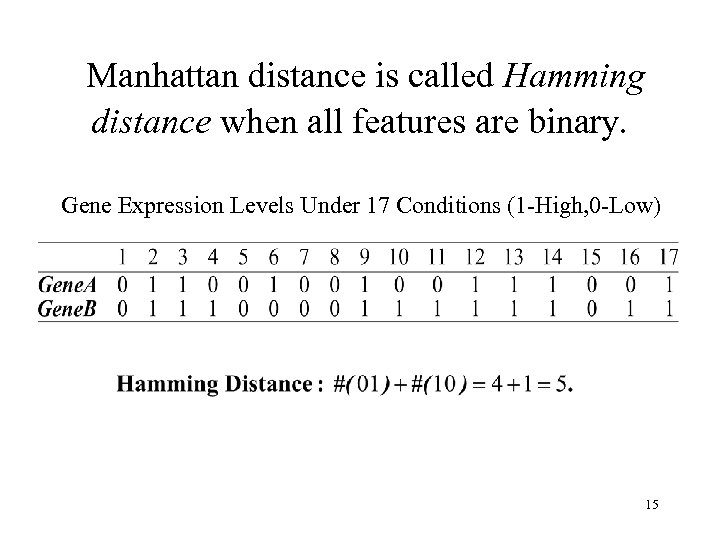
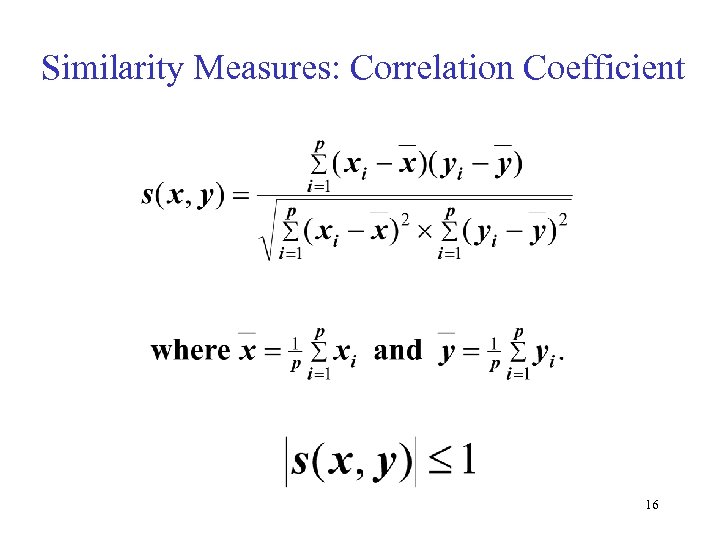
 Key Terms in Cluster Analysis • • • Distance measures Similarity measures Hierarchical and non-hierarchical Single/complete/average linkage Dendrogram 11
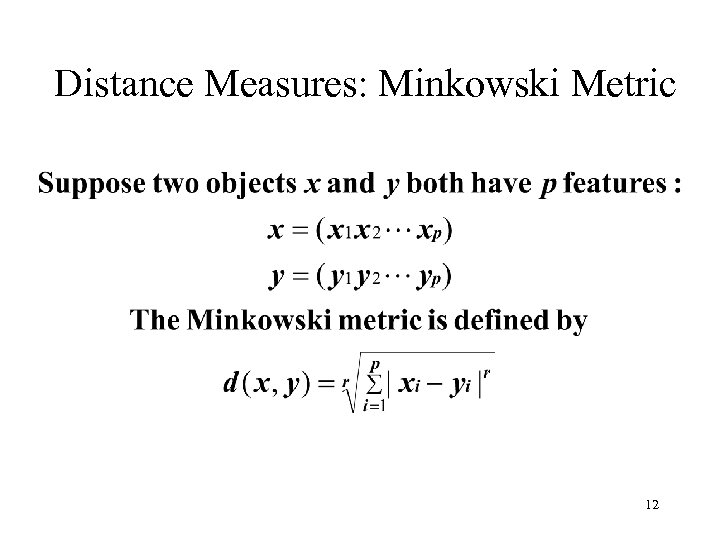 Distance Measures: Minkowski Metric 12
 Most Common Minkowski Metrics 13
 An Example x 3 y 4 14
 Manhattan distance is called Hamming distance when all features are binary. Gene Expression Levels Under 17 Conditions (1 -High, 0 -Low) 15
 Similarity Measures: Correlation Coefficient 16
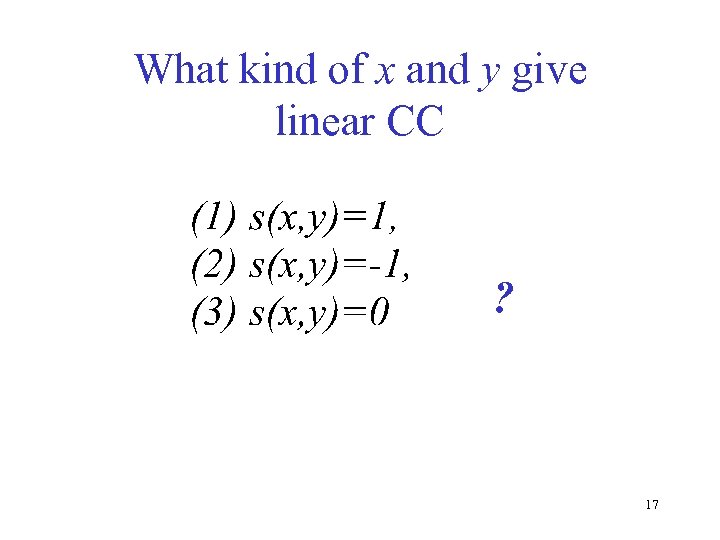 What kind of x and y give linear CC ? 17
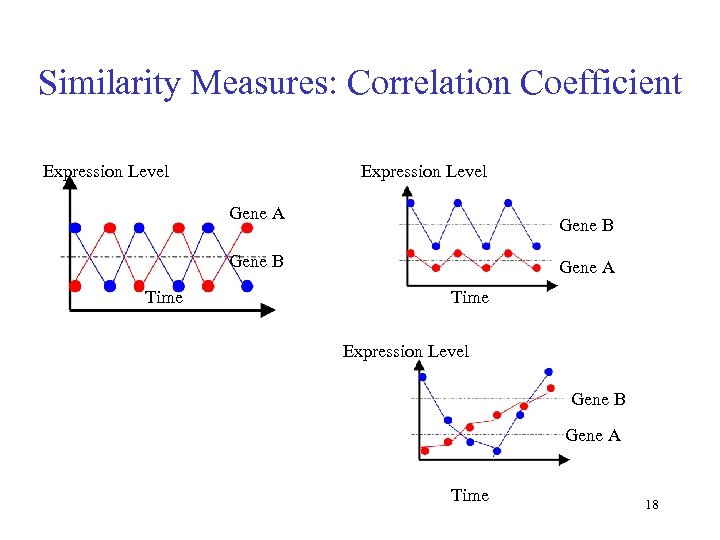 Similarity Measures: Correlation Coefficient Expression Level Gene A Gene B Time Gene A Time Expression Level Gene B Gene A Time 18
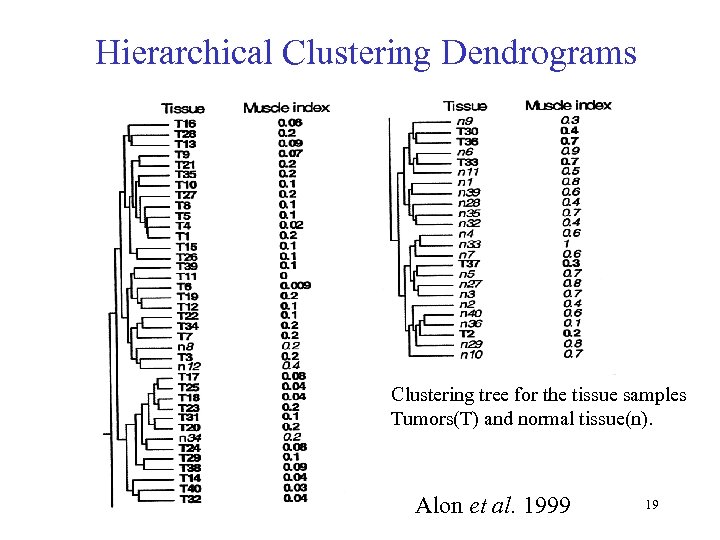 Hierarchical Clustering Dendrograms Clustering tree for the tissue samples Tumors(T) and normal tissue(n). Alon et al. 1999 19
 Hierarchical Clustering Techniques 20
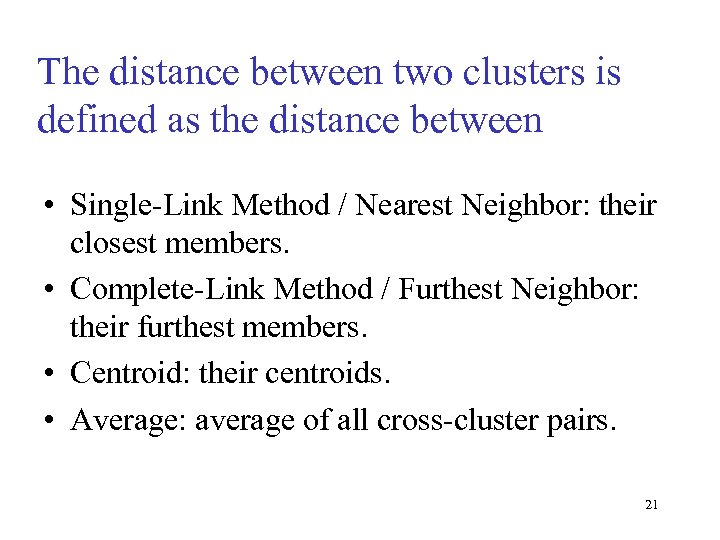 The distance between two clusters is defined as the distance between • Single-Link Method / Nearest Neighbor: their closest members. • Complete-Link Method / Furthest Neighbor: their furthest members. • Centroid: their centroids. • Average: average of all cross-cluster pairs. 21
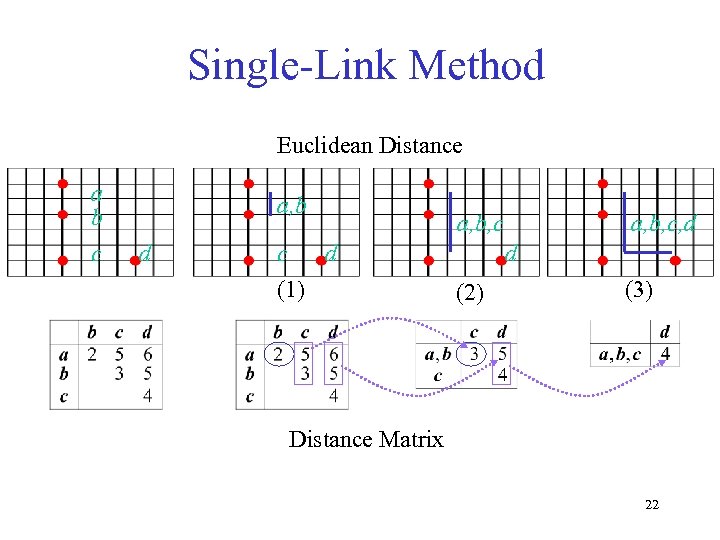 Single-Link Method Euclidean Distance a b c a, b d c d (1) a, b, c, d d (2) (3) Distance Matrix 22
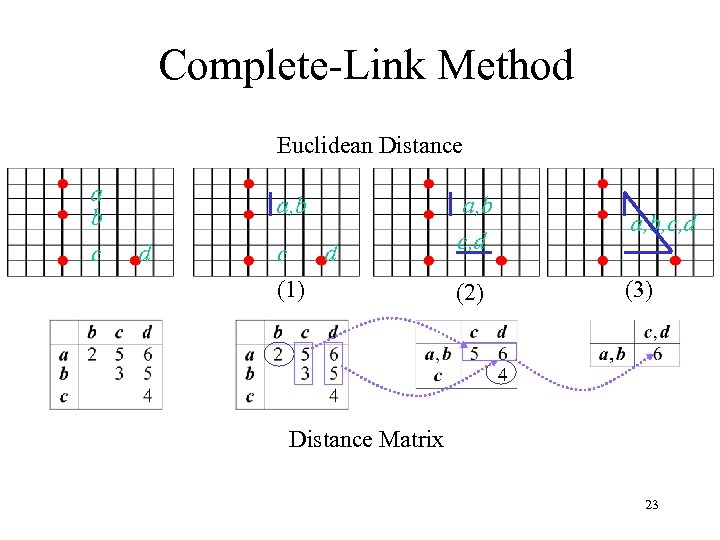 Complete-Link Method Euclidean Distance a b c a, b d c d (1) a, b c, d a, b, c, d (2) (3) Distance Matrix 23
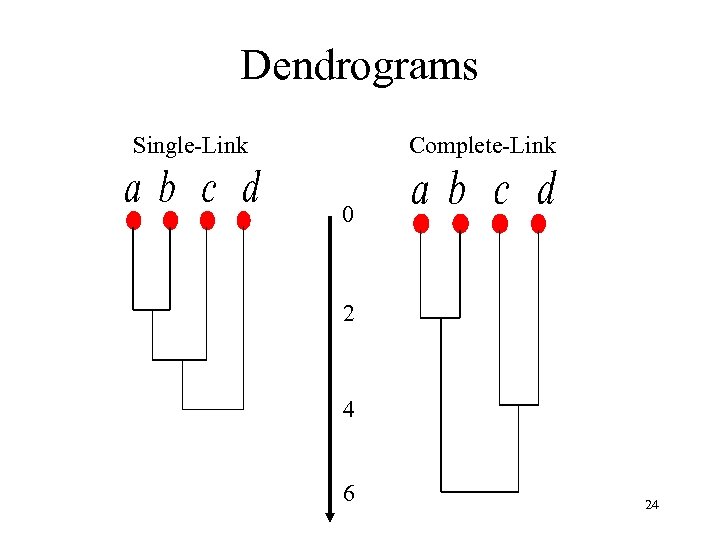 Dendrograms Single-Link Complete-Link 0 2 4 6 24
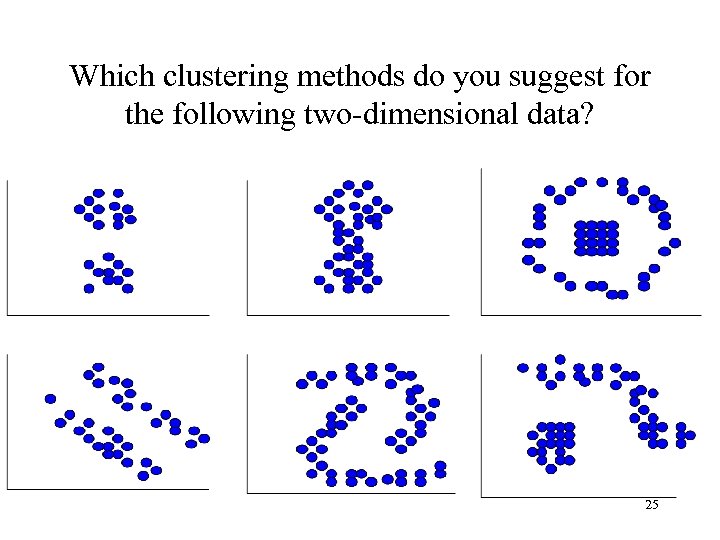 Which clustering methods do you suggest for the following two-dimensional data? 25
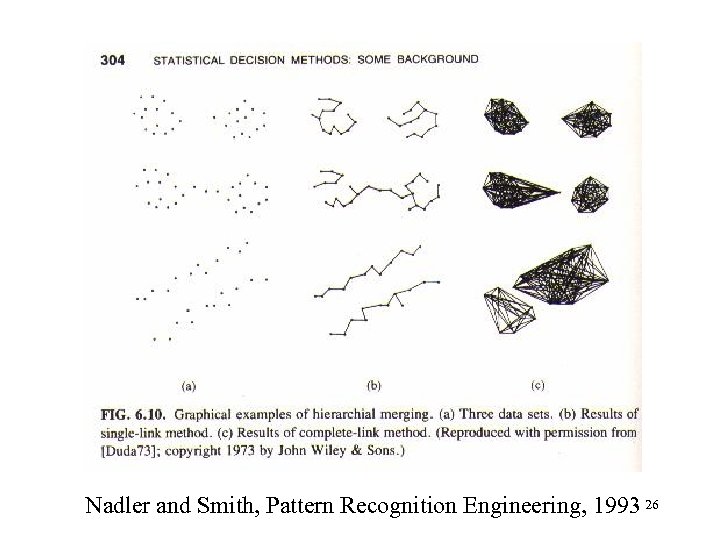 Nadler and Smith, Pattern Recognition Engineering, 1993 26
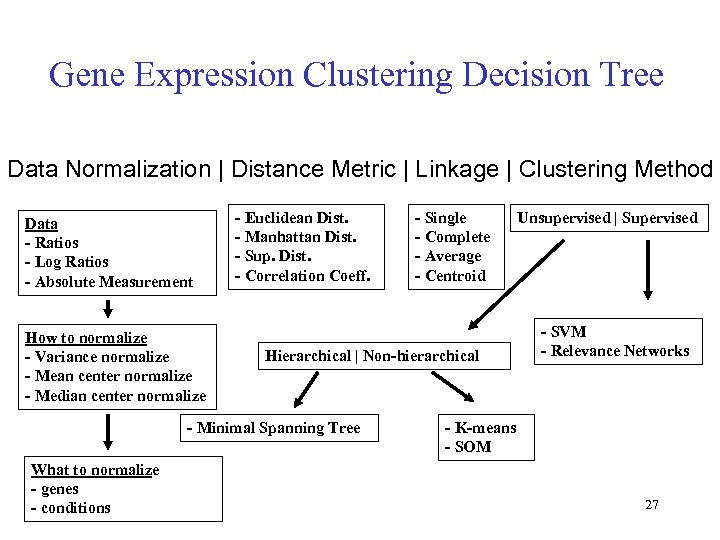 Gene Expression Clustering Decision Tree Data Normalization | Distance Metric | Linkage | Clustering Method Data - Ratios - Log Ratios - Absolute Measurement How to normalize - Variance normalize - Mean center normalize - Median center normalize - Euclidean Dist. - Manhattan Dist. - Sup. Dist. - Correlation Coeff. Hierarchical | Non-hierarchical - Minimal Spanning Tree What to normalize - genes - conditions - Single - Complete - Average - Centroid Unsupervised | Supervised - SVM - Relevance Networks - K-means - SOM 27
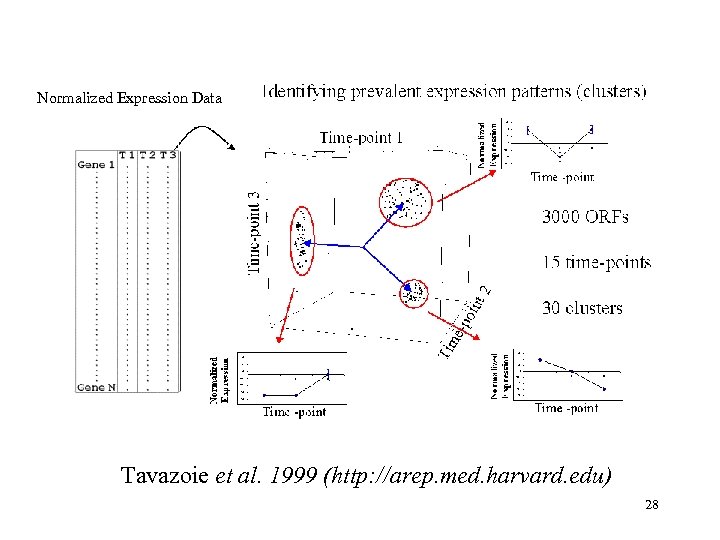 Normalized Expression Data Tavazoie et al. 1999 (http: //arep. med. harvard. edu) 28
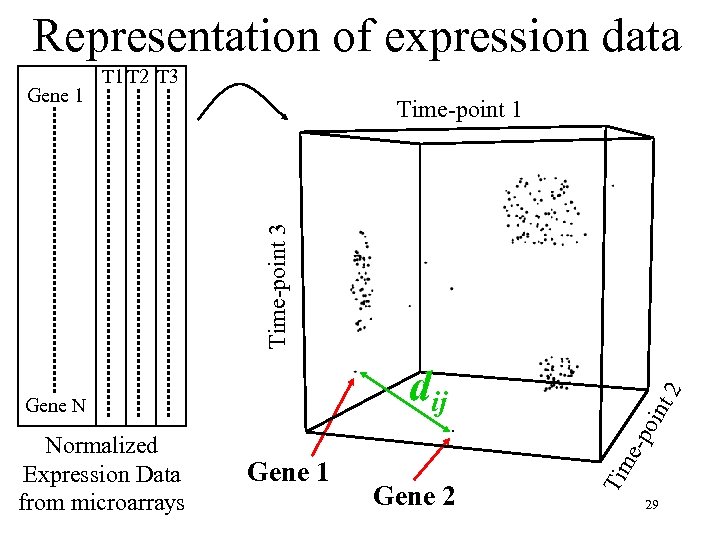 Representation of expression data Time-point 1 Gene 2 oin t e-p Normalized Expression Data from microarrays . Tim dij Gene N 2 Time-point 3 Gene 1 T 2 T 3 29
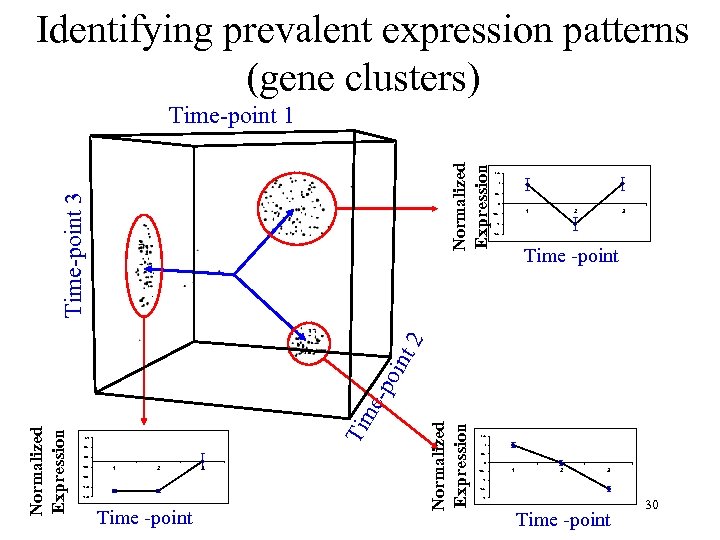 Identifying prevalent expression patterns (gene clusters) 1. 5 1 0. 5 0 1 -0. 5 2 3 -1 -1. 5 Time -point 1. 2 0. 7 0. 2 -0. 3 1 2 -0. 8 -1. 3 -1. 8 Time -point 3 Normalized Expression Tim Normalized Expression e-p oin t 2 Time-point 3 Normalized Expression Time-point 1 1. 5 1 0. 5 0 -0. 5 1 2 3 -1 -1. 5 -2 Time -point 30
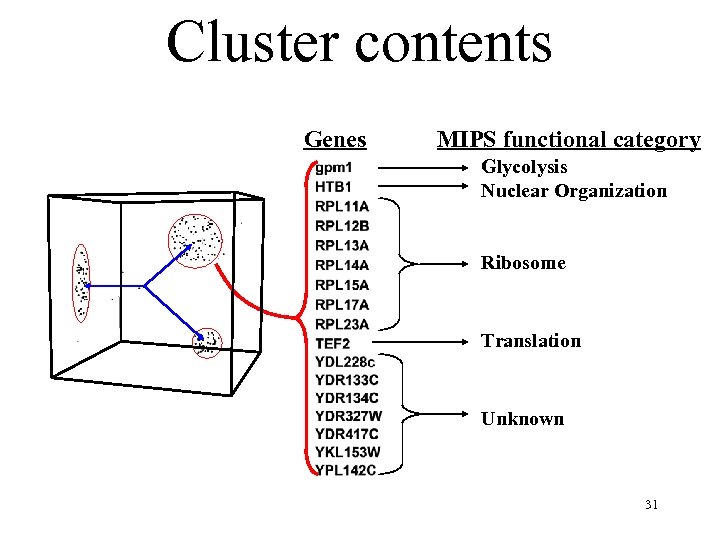 Cluster contents Genes MIPS functional category Glycolysis Nuclear Organization Ribosome Translation Unknown 31
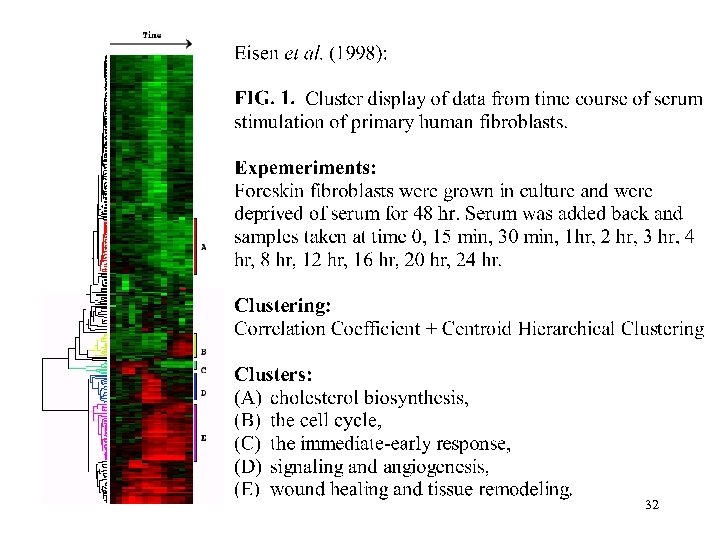 32
32
 33
33
 RNA 2: Clusters & Motifs • • • Clustering by gene and/or condition Distance and similarity measures Clustering & classification Applications DNA & RNA motif discovery & search 34
 Motif-finding algorithms • • • oligonucleotide frequencies Gibbs sampling (e. g. Align. ACE) MEME (Motif Expectation Maximum for motif Elicitation) Clustal. W MACAW 35
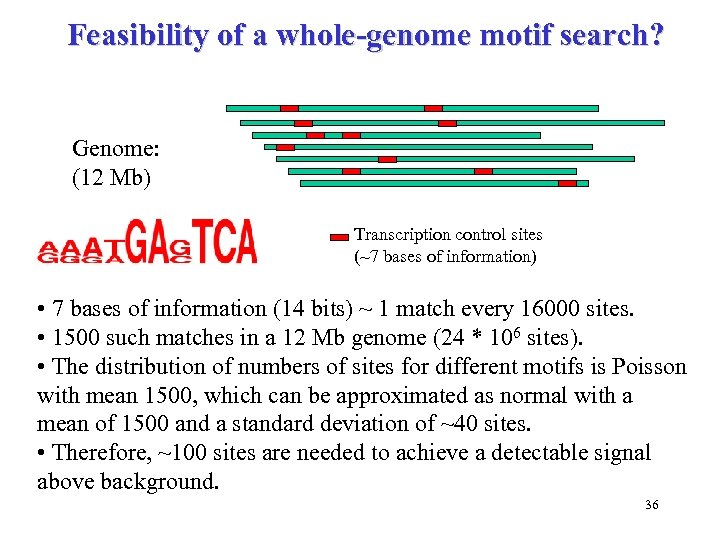 Feasibility of a whole-genome motif search? Genome: (12 Mb) Transcription control sites (~7 bases of information) • 7 bases of information (14 bits) ~ 1 match every 16000 sites. • 1500 such matches in a 12 Mb genome (24 * 106 sites). • The distribution of numbers of sites for different motifs is Poisson with mean 1500, which can be approximated as normal with a mean of 1500 and a standard deviation of ~40 sites. • Therefore, ~100 sites are needed to achieve a detectable signal above background. 36
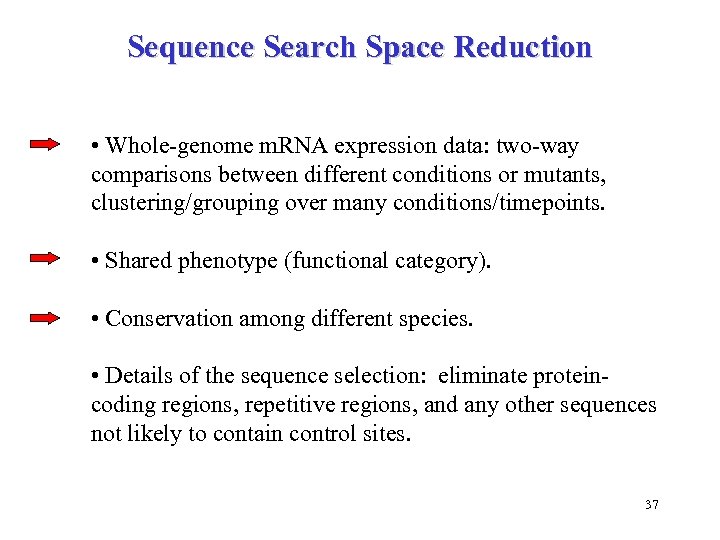 Sequence Search Space Reduction • Whole-genome m. RNA expression data: two-way comparisons between different conditions or mutants, clustering/grouping over many conditions/timepoints. • Shared phenotype (functional category). • Conservation among different species. • Details of the sequence selection: eliminate proteincoding regions, repetitive regions, and any other sequences not likely to contain control sites. 37
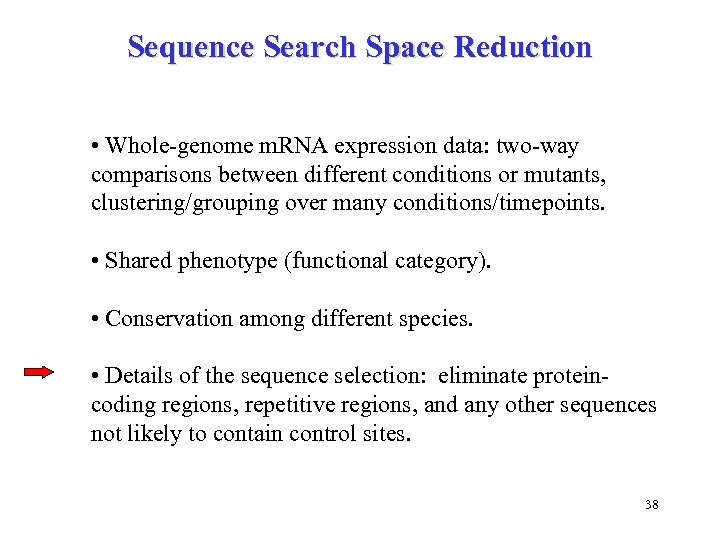 Sequence Search Space Reduction • Whole-genome m. RNA expression data: two-way comparisons between different conditions or mutants, clustering/grouping over many conditions/timepoints. • Shared phenotype (functional category). • Conservation among different species. • Details of the sequence selection: eliminate proteincoding regions, repetitive regions, and any other sequences not likely to contain control sites. 38
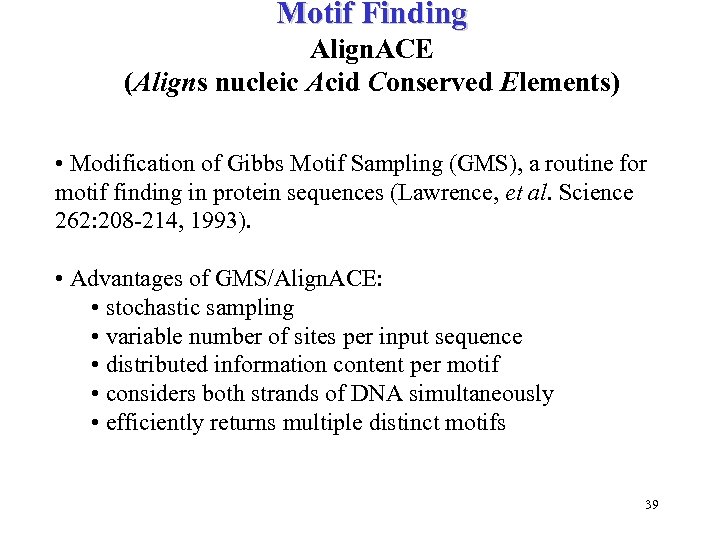 Motif Finding Align. ACE (Aligns nucleic Acid Conserved Elements) • Modification of Gibbs Motif Sampling (GMS), a routine for motif finding in protein sequences (Lawrence, et al. Science 262: 208 -214, 1993). • Advantages of GMS/Align. ACE: • stochastic sampling • variable number of sites per input sequence • distributed information content per motif • considers both strands of DNA simultaneously • efficiently returns multiple distinct motifs 39
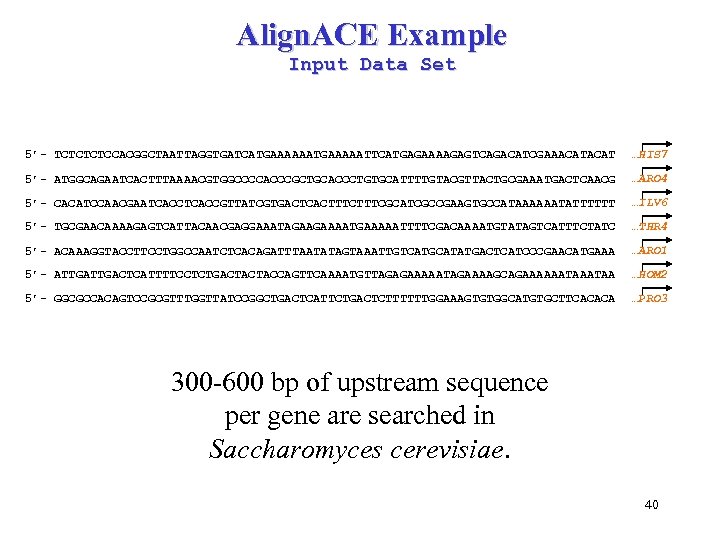 Align. ACE Example Input Data Set 5’- TCTCCACGGCTAATTAGGTGATCATGAAAAATTCATGAGAAAAGAGTCAGACATCGAAACAT …HIS 7 5’- ATGGCAGAATCACTTTAAAACGTGGCCCCACCCGCTGCACCCTGTGCATTTTGTACGTTACTGCGAAATGACTCAACG …ARO 4 5’- CACATCCAACGAATCACCGTTATCGTGACTCACTTTCGCATCGCCGAAGTGCCATAAAAAATATTTTTT …ILV 6 5’- TGCGAACAAAAGAGTCATTACAACGAGGAAATAGAAGAAAATGAAAAATTTTCGACAAAATGTATAGTCATTTCTATC …THR 4 5’- ACAAAGGTACCTTCCTGGCCAATCTCACAGATTTAATATAGTAAATTGTCATGCATATGACTCATCCCGAACATGAAA …ARO 1 5’- ATTGACTCATTTTCCTCTGACTACTACCAGTTCAAAATGTTAGAGAAAAATAGAAAAGCAGAAAAAATAA …HOM 2 5’- GGCGCCACAGTCCGCGTTTGGTTATCCGGCTGACTCATTCTGACTCTTTTTTGGAAAGTGTGGCATGTGCTTCACACA …PRO 3 300 -600 bp of upstream sequence per gene are searched in Saccharomyces cerevisiae. 40
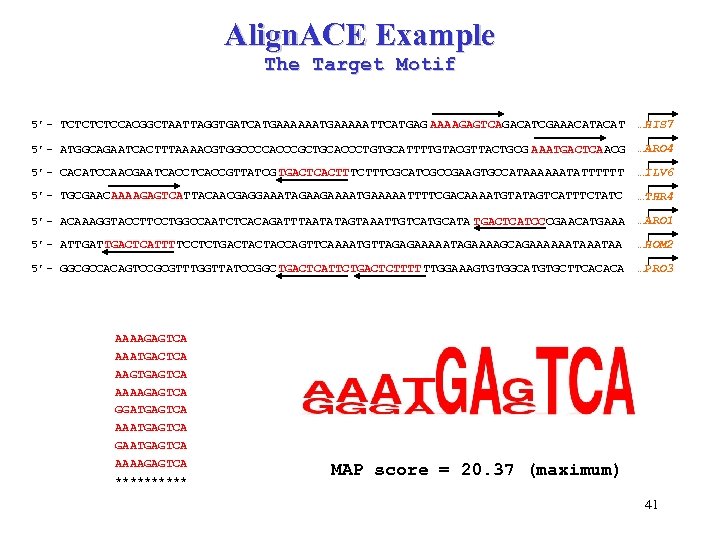 Align. ACE Example The Target Motif 5’- TCTCCACGGCTAATTAGGTGATCATGAAAAATTCATGAG AAAAGAGTCAGACATCGAAACAT …HIS 7 5’- ATGGCAGAATCACTTTAAAACGTGGCCCCACCCGCTGCACCCTGTGCATTTTGTACGTTACTGCG AAATGACTCAACG …ARO 4 5’- CACATCCAACGAATCACCGTTATCG TGACTCACTTTCGCATCGCCGAAGTGCCATAAAAAATATTTTTT …ILV 6 5’- TGCGAACAAAAGAGTCATTACAACGAGGAAATAGAAGAAAATGAAAAATTTTCGACAAAATGTATAGTCATTTCTATC …THR 4 5’- ACAAAGGTACCTTCCTGGCCAATCTCACAGATTTAATATAGTAAATTGTCATGCATA TGACTCATCCCGAACATGAAA …ARO 1 5’- ATTGACTCATTTTCCTCTGACTACTACCAGTTCAAAATGTTAGAGAAAAATAGAAAAGCAGAAAAAATAA …HOM 2 5’- GGCGCCACAGTCCGCGTTTGGTTATCCGGC TGACTCATTCTGACTCTTTTTTGGAAAGTGTGGCATGTGCTTCACACA …PRO 3 AAAAGAGTCA AAATGACTCA AAGTGAGTCA AAAAGAGTCA GGATGAGTCA AAATGAGTCA GAATGAGTCA AAAAGAGTCA ***** MAP score = 20. 37 (maximum) 41
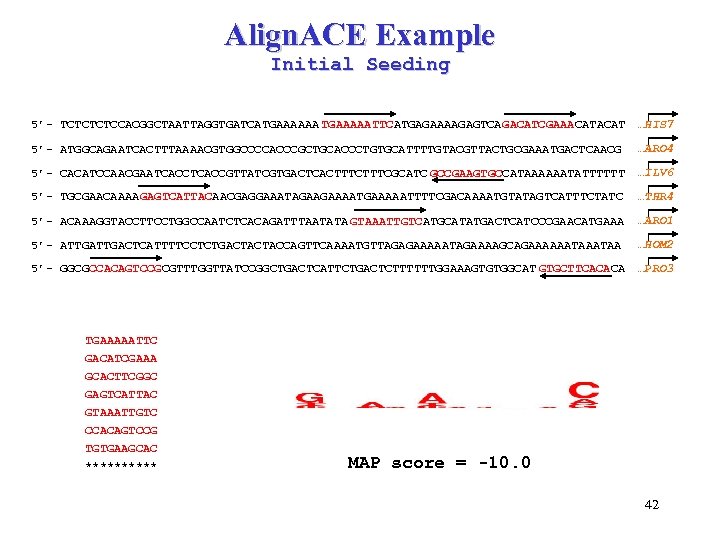 Align. ACE Example Initial Seeding 5’- TCTCCACGGCTAATTAGGTGATCATGAAAAAA TGAAAAATTCATGAGAAAAGAGTCAGACATCGAAACAT …HIS 7 5’- ATGGCAGAATCACTTTAAAACGTGGCCCCACCCGCTGCACCCTGTGCATTTTGTACGTTACTGCGAAATGACTCAACG …ARO 4 5’- CACATCCAACGAATCACCGTTATCGTGACTCACTTTCGCATC GCCGAAGTGCCATAAAAAATATTTTTT …ILV 6 5’- TGCGAACAAAAGAGTCATTACAACGAGGAAATAGAAGAAAATGAAAAATTTTCGACAAAATGTATAGTCATTTCTATC …THR 4 5’- ACAAAGGTACCTTCCTGGCCAATCTCACAGATTTAATATA GTAAATTGTCATGCATATGACTCATCCCGAACATGAAA …ARO 1 5’- ATTGACTCATTTTCCTCTGACTACTACCAGTTCAAAATGTTAGAGAAAAATAGAAAAGCAGAAAAAATAA …HOM 2 5’- GGCGCCACAGTCCGCGTTTGGTTATCCGGCTGACTCATTCTGACTCTTTTTTGGAAAGTGTGGCAT GTGCTTCACACA …PRO 3 TGAAAAATTC GACATCGAAA GCACTTCGGC GAGTCATTAC GTAAATTGTC CCACAGTCCG TGTGAAGCAC ***** MAP score = -10. 0 42
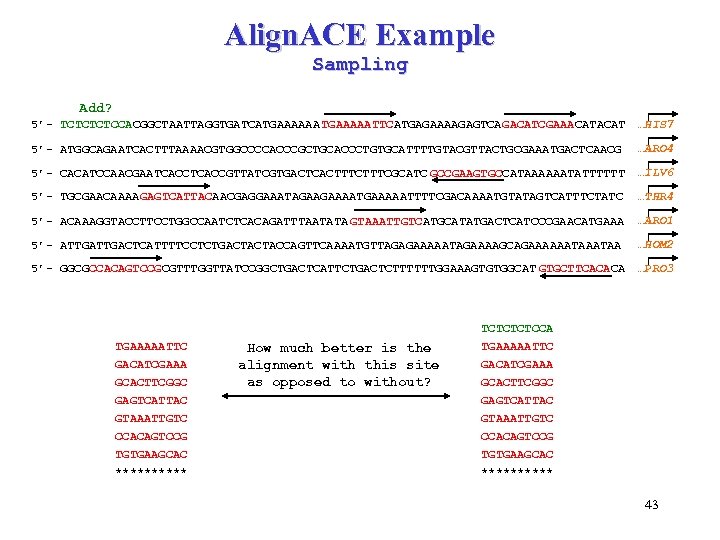 Align. ACE Example Sampling Add? 5’- TCTCCACGGCTAATTAGGTGATCATGAAAAAA TGAAAAATTCATGAGAAAAGAGTCAGACATCGAAACAT …HIS 7 5’- ATGGCAGAATCACTTTAAAACGTGGCCCCACCCGCTGCACCCTGTGCATTTTGTACGTTACTGCGAAATGACTCAACG …ARO 4 5’- CACATCCAACGAATCACCGTTATCGTGACTCACTTTCGCATC GCCGAAGTGCCATAAAAAATATTTTTT …ILV 6 5’- TGCGAACAAAAGAGTCATTACAACGAGGAAATAGAAGAAAATGAAAAATTTTCGACAAAATGTATAGTCATTTCTATC …THR 4 5’- ACAAAGGTACCTTCCTGGCCAATCTCACAGATTTAATATA GTAAATTGTCATGCATATGACTCATCCCGAACATGAAA …ARO 1 5’- ATTGACTCATTTTCCTCTGACTACTACCAGTTCAAAATGTTAGAGAAAAATAGAAAAGCAGAAAAAATAA …HOM 2 5’- GGCGCCACAGTCCGCGTTTGGTTATCCGGCTGACTCATTCTGACTCTTTTTTGGAAAGTGTGGCAT GTGCTTCACACA …PRO 3 TGAAAAATTC GACATCGAAA GCACTTCGGC GAGTCATTAC GTAAATTGTC CCACAGTCCG TGTGAAGCAC ***** How much better is the alignment with this site as opposed to without? TCTCCA TGAAAAATTC GACATCGAAA GCACTTCGGC GAGTCATTAC GTAAATTGTC CCACAGTCCG TGTGAAGCAC ***** 43
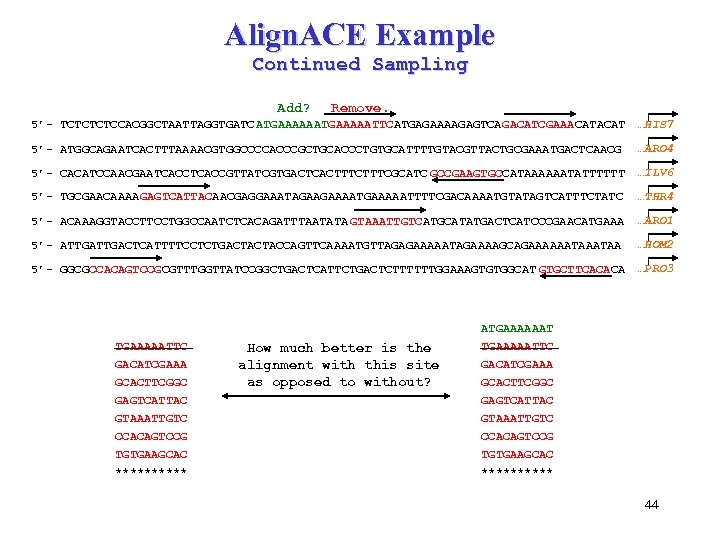 Align. ACE Example Continued Sampling Add? Remove. 5’- TCTCCACGGCTAATTAGGTGATC ATGAAAAATTCATGAGAAAAGAGTCAGACATCGAAACAT …HIS 7 5’- ATGGCAGAATCACTTTAAAACGTGGCCCCACCCGCTGCACCCTGTGCATTTTGTACGTTACTGCGAAATGACTCAACG …ARO 4 5’- CACATCCAACGAATCACCGTTATCGTGACTCACTTTCGCATC GCCGAAGTGCCATAAAAAATATTTTTT …ILV 6 5’- TGCGAACAAAAGAGTCATTACAACGAGGAAATAGAAGAAAATGAAAAATTTTCGACAAAATGTATAGTCATTTCTATC …THR 4 5’- ACAAAGGTACCTTCCTGGCCAATCTCACAGATTTAATATA GTAAATTGTCATGCATATGACTCATCCCGAACATGAAA …ARO 1 5’- ATTGACTCATTTTCCTCTGACTACTACCAGTTCAAAATGTTAGAGAAAAATAGAAAAGCAGAAAAAATAA …HOM 2 5’- GGCGCCACAGTCCGCGTTTGGTTATCCGGCTGACTCATTCTGACTCTTTTTTGGAAAGTGTGGCAT GTGCTTCACACA …PRO 3 TGAAAAATTC GACATCGAAA GCACTTCGGC GAGTCATTAC GTAAATTGTC CCACAGTCCG TGTGAAGCAC ***** How much better is the alignment with this site as opposed to without? ATGAAAAAAT TGAAAAATTC GACATCGAAA GCACTTCGGC GAGTCATTAC GTAAATTGTC CCACAGTCCG TGTGAAGCAC ***** 44
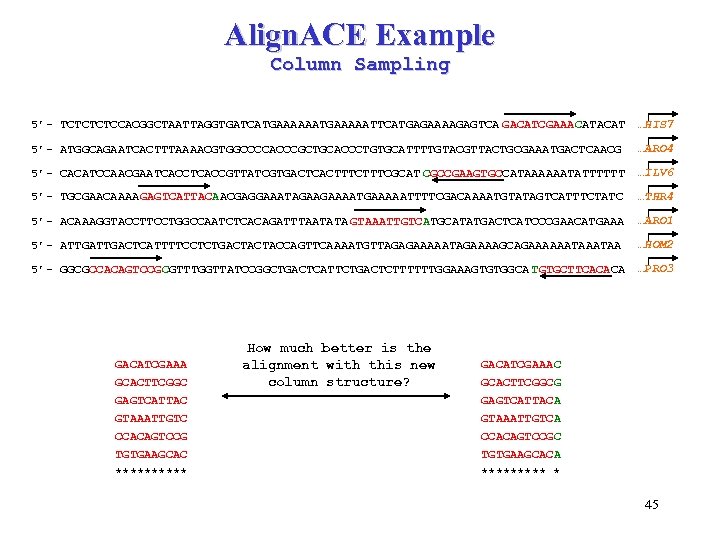 Align. ACE Example Column Sampling 5’- TCTCCACGGCTAATTAGGTGATCATGAAAAATTCATGAGAAAAGAGTCA GACATCGAAACAT …HIS 7 5’- ATGGCAGAATCACTTTAAAACGTGGCCCCACCCGCTGCACCCTGTGCATTTTGTACGTTACTGCGAAATGACTCAACG …ARO 4 5’- CACATCCAACGAATCACCGTTATCGTGACTCACTTTCGCAT CGCCGAAGTGCCATAAAAAATATTTTTT …ILV 6 5’- TGCGAACAAAAGAGTCATTACAACGAGGAAATAGAAGAAAATGAAAAATTTTCGACAAAATGTATAGTCATTTCTATC …THR 4 5’- ACAAAGGTACCTTCCTGGCCAATCTCACAGATTTAATATA GTAAATTGTCATGCATATGACTCATCCCGAACATGAAA …ARO 1 5’- ATTGACTCATTTTCCTCTGACTACTACCAGTTCAAAATGTTAGAGAAAAATAGAAAAGCAGAAAAAATAA …HOM 2 5’- GGCGCCACAGTCCGCGTTTGGTTATCCGGCTGACTCATTCTGACTCTTTTTTGGAAAGTGTGGCA TGTGCTTCACACA …PRO 3 GACATCGAAA GCACTTCGGC GAGTCATTAC GTAAATTGTC CCACAGTCCG TGTGAAGCAC ***** How much better is the alignment with this new column structure? GACATCGAAAC GCACTTCGGCG GAGTCATTACA GTAAATTGTCA CCACAGTCCGC TGTGAAGCACA ***** * 45
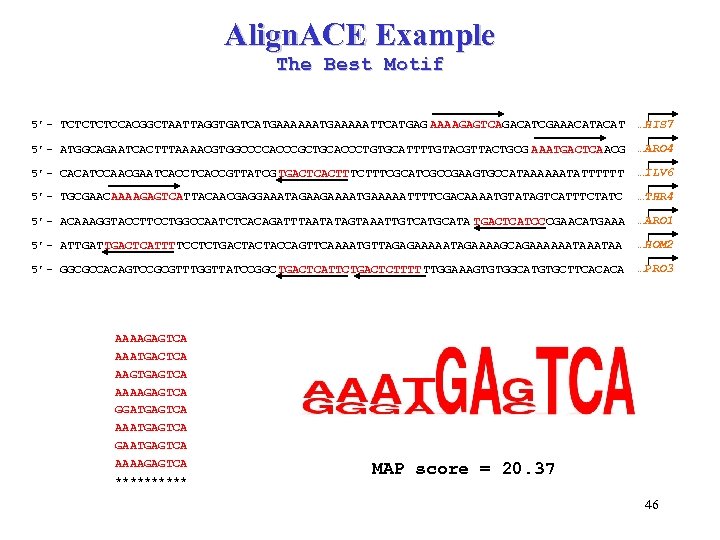 Align. ACE Example The Best Motif 5’- TCTCCACGGCTAATTAGGTGATCATGAAAAATTCATGAG AAAAGAGTCAGACATCGAAACAT …HIS 7 5’- ATGGCAGAATCACTTTAAAACGTGGCCCCACCCGCTGCACCCTGTGCATTTTGTACGTTACTGCG AAATGACTCAACG …ARO 4 5’- CACATCCAACGAATCACCGTTATCG TGACTCACTTTCGCATCGCCGAAGTGCCATAAAAAATATTTTTT …ILV 6 5’- TGCGAACAAAAGAGTCATTACAACGAGGAAATAGAAGAAAATGAAAAATTTTCGACAAAATGTATAGTCATTTCTATC …THR 4 5’- ACAAAGGTACCTTCCTGGCCAATCTCACAGATTTAATATAGTAAATTGTCATGCATA TGACTCATCCCGAACATGAAA …ARO 1 5’- ATTGACTCATTTTCCTCTGACTACTACCAGTTCAAAATGTTAGAGAAAAATAGAAAAGCAGAAAAAATAA …HOM 2 5’- GGCGCCACAGTCCGCGTTTGGTTATCCGGC TGACTCATTCTGACTCTTTTTTGGAAAGTGTGGCATGTGCTTCACACA …PRO 3 AAAAGAGTCA AAATGACTCA AAGTGAGTCA AAAAGAGTCA GGATGAGTCA AAATGAGTCA GAATGAGTCA AAAAGAGTCA ***** MAP score = 20. 37 46
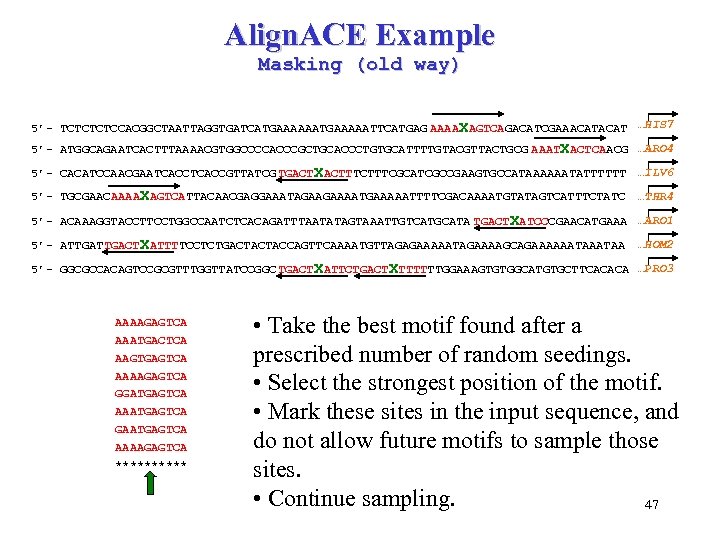 Align. ACE Example Masking (old way) 5’- TCTCCACGGCTAATTAGGTGATCATGAAAAATTCATGAG AAAAXAGTCAGACATCGAAACAT …HIS 7 5’- ATGGCAGAATCACTTTAAAACGTGGCCCCACCCGCTGCACCCTGTGCATTTTGTACGTTACTGCG AAATXACTCAACG …ARO 4 5’- CACATCCAACGAATCACCGTTATCG TGACTXACTTTCGCATCGCCGAAGTGCCATAAAAAATATTTTTT …ILV 6 5’- TGCGAACAAAAXAGTCATTACAACGAGGAAATAGAAGAAAATGAAAAATTTTCGACAAAATGTATAGTCATTTCTATC …THR 4 5’- ACAAAGGTACCTTCCTGGCCAATCTCACAGATTTAATATAGTAAATTGTCATGCATA TGACTXATCCCGAACATGAAA …ARO 1 5’- ATTGACTXATTTTCCTCTGACTACTACCAGTTCAAAATGTTAGAGAAAAATAGAAAAGCAGAAAAAATAA …HOM 2 5’- GGCGCCACAGTCCGCGTTTGGTTATCCGGC TGACTXATTCTGACT XTTTTTTGGAAAGTGTGGCATGTGCTTCACACA …PRO 3 AAAAGAGTCA AAATGACTCA AAGTGAGTCA AAAAGAGTCA GGATGAGTCA AAATGAGTCA GAATGAGTCA AAAAGAGTCA ***** • Take the best motif found after a prescribed number of random seedings. • Select the strongest position of the motif. • Mark these sites in the input sequence, and do not allow future motifs to sample those sites. • Continue sampling. 47
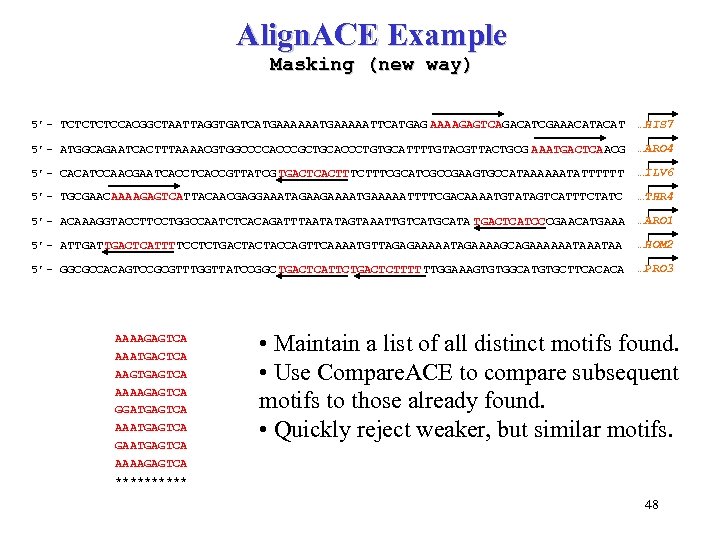 Align. ACE Example Masking (new way) 5’- TCTCCACGGCTAATTAGGTGATCATGAAAAATTCATGAG AAAAGAGTCAGACATCGAAACAT …HIS 7 5’- ATGGCAGAATCACTTTAAAACGTGGCCCCACCCGCTGCACCCTGTGCATTTTGTACGTTACTGCG AAATGACTCAACG …ARO 4 5’- CACATCCAACGAATCACCGTTATCG TGACTCACTTTCGCATCGCCGAAGTGCCATAAAAAATATTTTTT …ILV 6 5’- TGCGAACAAAAGAGTCATTACAACGAGGAAATAGAAGAAAATGAAAAATTTTCGACAAAATGTATAGTCATTTCTATC …THR 4 5’- ACAAAGGTACCTTCCTGGCCAATCTCACAGATTTAATATAGTAAATTGTCATGCATA TGACTCATCCCGAACATGAAA …ARO 1 5’- ATTGACTCATTTTCCTCTGACTACTACCAGTTCAAAATGTTAGAGAAAAATAGAAAAGCAGAAAAAATAA …HOM 2 5’- GGCGCCACAGTCCGCGTTTGGTTATCCGGC TGACTCATTCTGACTCTTTTTTGGAAAGTGTGGCATGTGCTTCACACA …PRO 3 AAAAGAGTCA AAATGACTCA AAGTGAGTCA AAAAGAGTCA GGATGAGTCA AAATGAGTCA GAATGAGTCA AAAAGAGTCA ***** • Maintain a list of all distinct motifs found. • Use Compare. ACE to compare subsequent motifs to those already found. • Quickly reject weaker, but similar motifs. 48
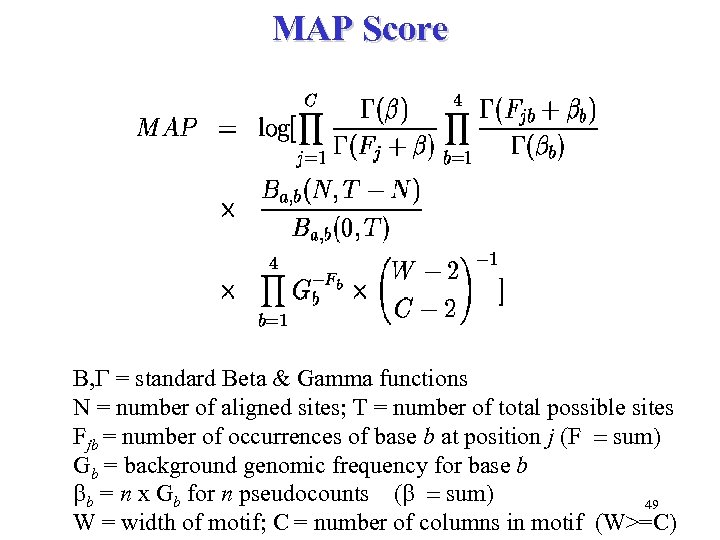 MAP Score B, G = standard Beta & Gamma functions N = number of aligned sites; T = number of total possible sites Fjb = number of occurrences of base b at position j (F = sum) Gb = background genomic frequency for base b bb = n x Gb for n pseudocounts (b = sum) 49 W = width of motif; C = number of columns in motif (W>=C)
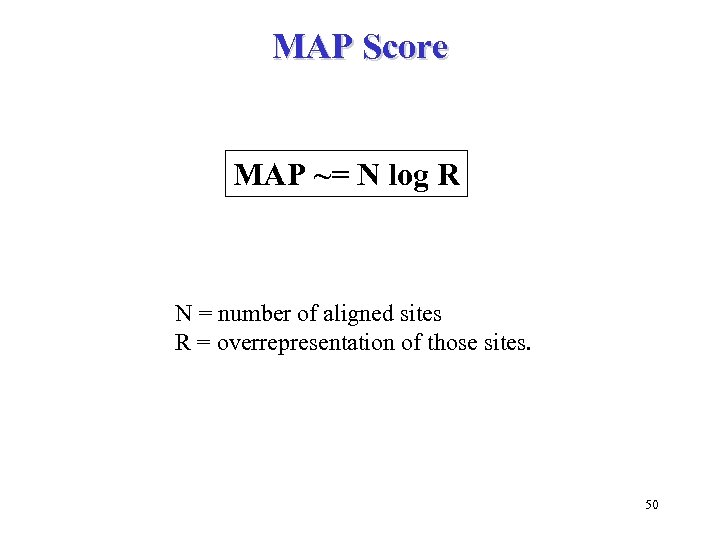 MAP Score MAP ~= N log R N = number of aligned sites R = overrepresentation of those sites. 50
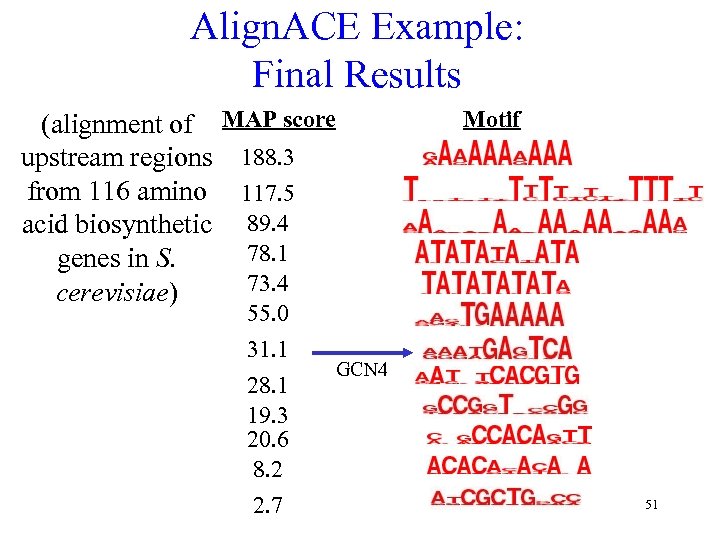 Align. ACE Example: Final Results (alignment of MAP score upstream regions 188. 3 from 116 amino 117. 5 acid biosynthetic 89. 4 78. 1 genes in S. 73. 4 cerevisiae) 55. 0 31. 1 28. 1 19. 3 20. 6 8. 2 2. 7 Motif GCN 4 51
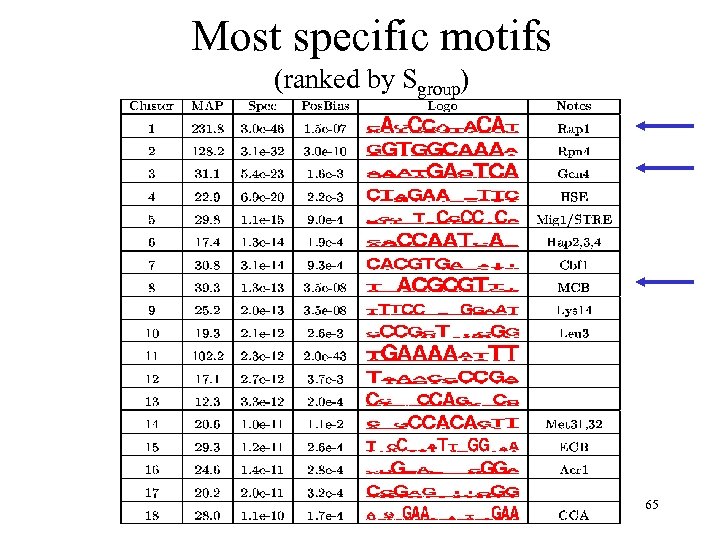
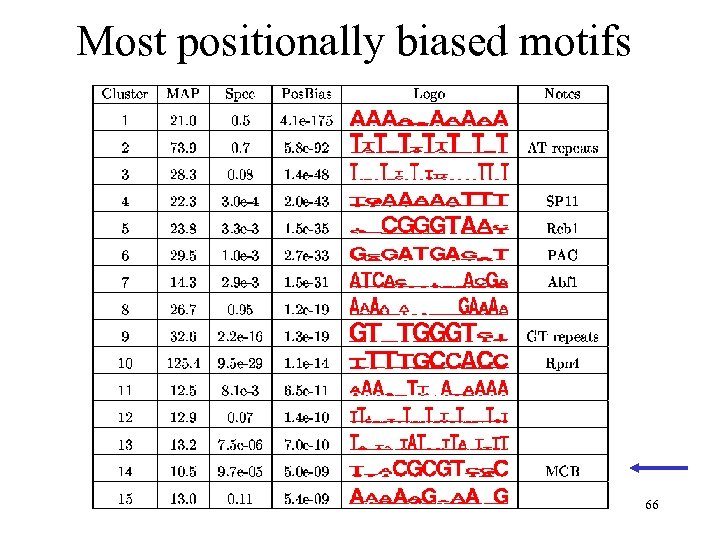
 Indices used to evaluate motif significance • • • Group specificity Functional enrichment Positional bias Palindromicity Known motifs (Compare. ACE) 52
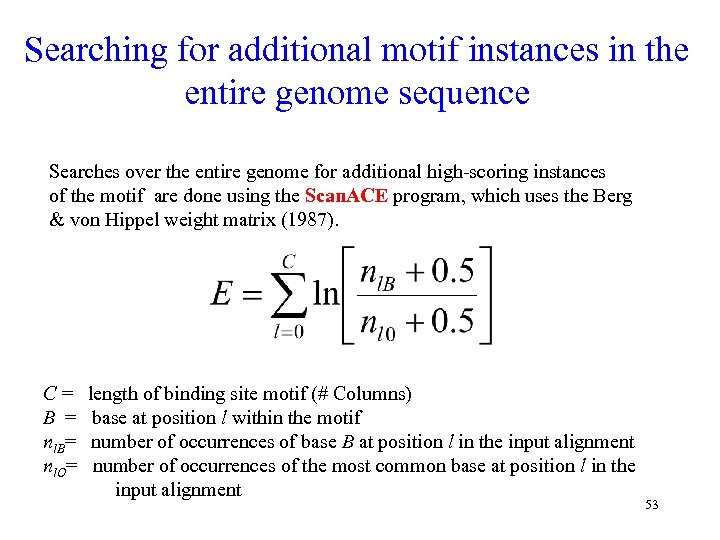 Searching for additional motif instances in the entire genome sequence Searches over the entire genome for additional high-scoring instances of the motif are done using the Scan. ACE program, which uses the Berg & von Hippel weight matrix (1987). C= B = nl. B= nl. O= length of binding site motif (# Columns) base at position l within the motif number of occurrences of base B at position l in the input alignment number of occurrences of the most common base at position l in the input alignment 53
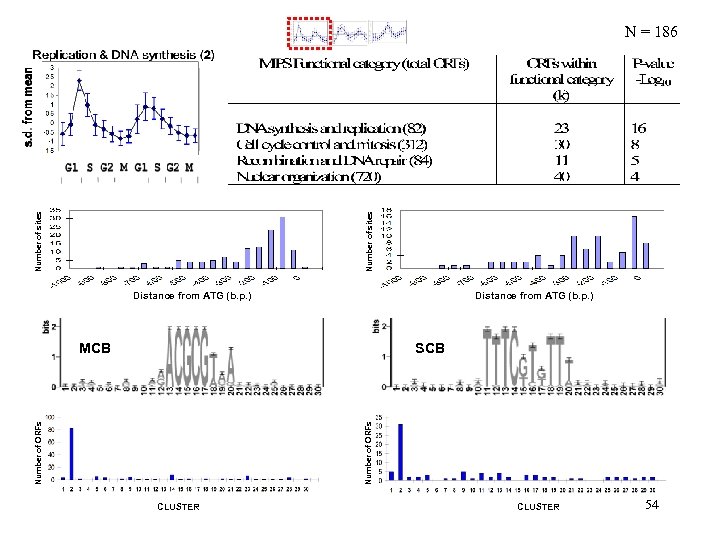 Number of sites N = 186 Distance from ATG (b. p. ) Number of ORFs SCB Number of ORFs MCB CLUSTER 54
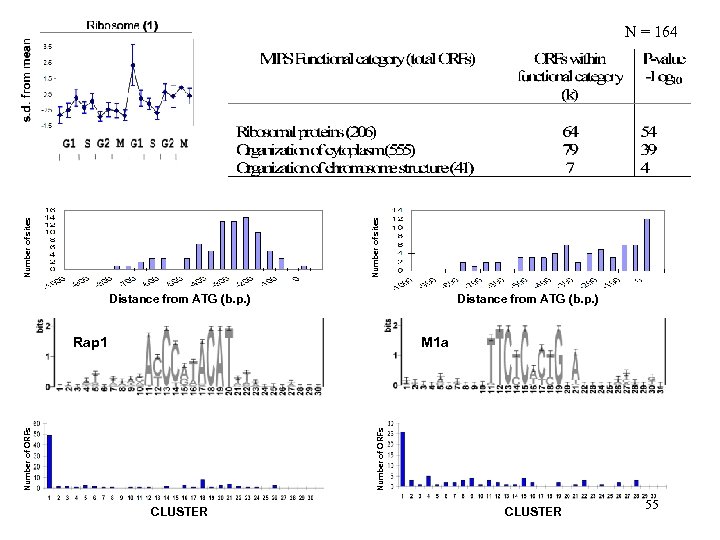 Number of sites N = 164 Distance from ATG (b. p. ) M 1 a Number of ORFs Rap 1 CLUSTER 55
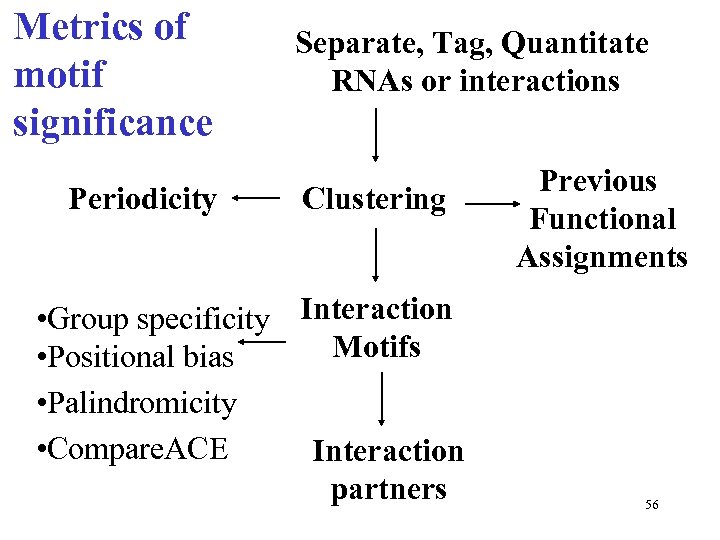 Metrics of motif significance Periodicity Separate, Tag, Quantitate RNAs or interactions Clustering • Group specificity Interaction Motifs • Positional bias • Palindromicity • Compare. ACE Interaction partners Previous Functional Assignments 56
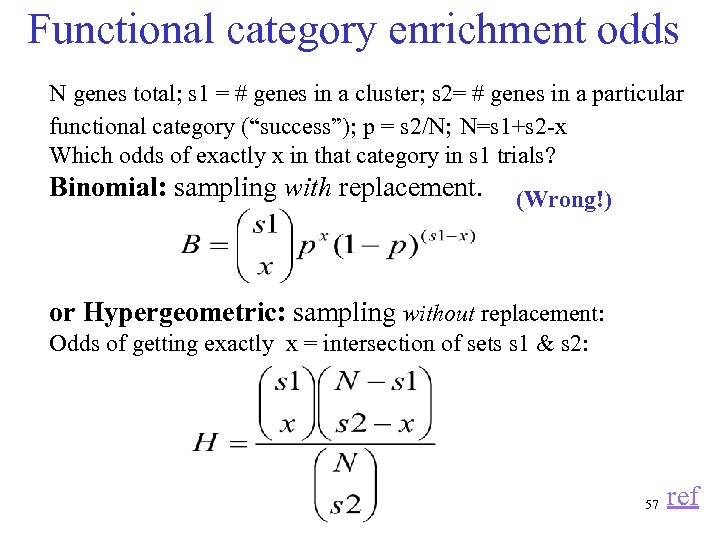 Functional category enrichment odds N genes total; s 1 = # genes in a cluster; s 2= # genes in a particular functional category (“success”); p = s 2/N; N=s 1+s 2 -x Which odds of exactly x in that category in s 1 trials? Binomial: sampling with replacement. (Wrong!) or Hypergeometric: sampling without replacement: Odds of getting exactly x = intersection of sets s 1 & s 2: 57 ref
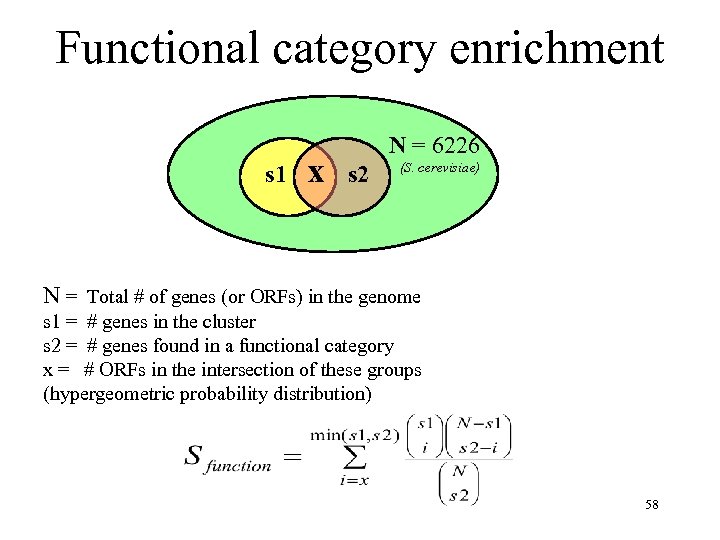 Functional category enrichment s 1 x N = 6226 s 2 (S. cerevisiae) N = Total # of genes (or ORFs) in the genome s 1 = # genes in the cluster s 2 = # genes found in a functional category x = # ORFs in the intersection of these groups (hypergeometric probability distribution) 58
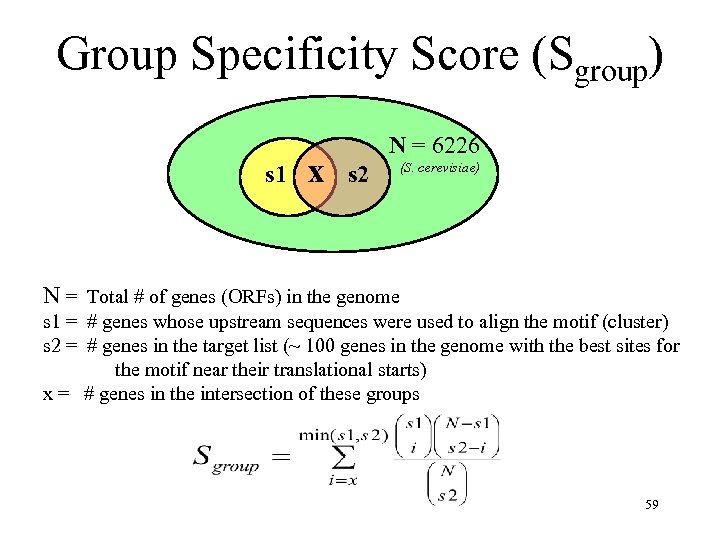 Group Specificity Score (Sgroup) s 1 x N = 6226 s 2 (S. cerevisiae) N = Total # of genes (ORFs) in the genome s 1 = # genes whose upstream sequences were used to align the motif (cluster) s 2 = # genes in the target list (~ 100 genes in the genome with the best sites for the motif near their translational starts) x = # genes in the intersection of these groups 59
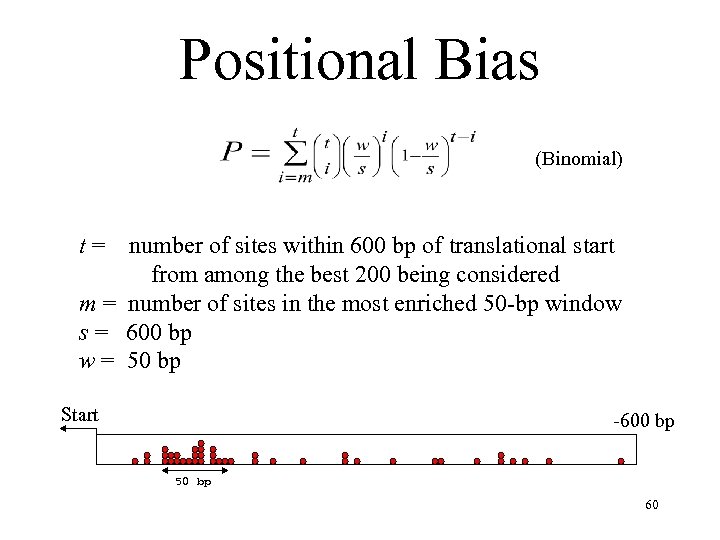 Positional Bias (Binomial) t= number of sites within 600 bp of translational start from among the best 200 being considered m = number of sites in the most enriched 50 -bp window s = 600 bp w = 50 bp Start -600 bp 50 bp 60
 Comparisons of motifs • The Compare. ACE program finds best alignment between two motifs and calculates the correlation between the two position-specific scoring matrices • Similar motifs: Compare. ACE score > 0. 7 61
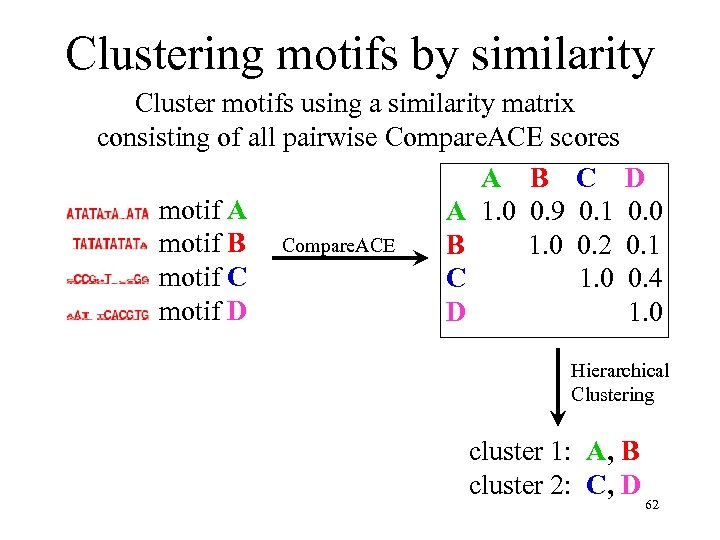 Clustering motifs by similarity Cluster motifs using a similarity matrix consisting of all pairwise Compare. ACE scores A B C D motif A A 1. 0 0. 9 0. 1 0. 0 motif B Compare. ACE B 1. 0 0. 2 0. 1 motif C C 1. 0 0. 4 motif D D 1. 0 Hierarchical Clustering cluster 1: A, B cluster 2: C, D 62
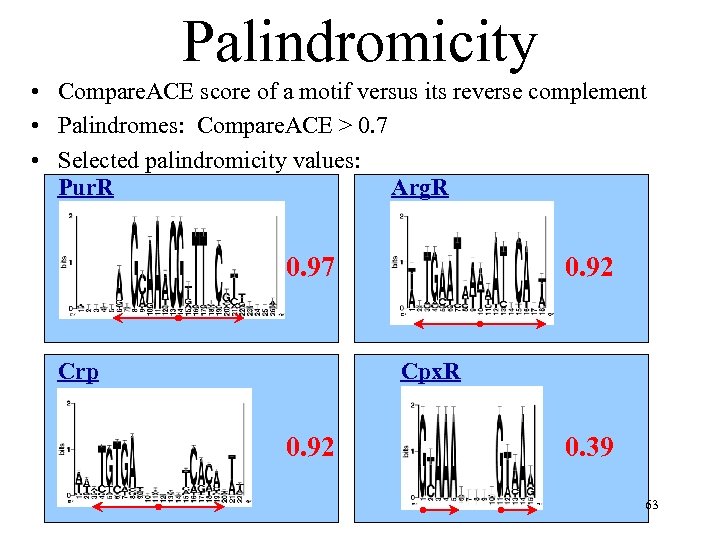 Palindromicity • Compare. ACE score of a motif versus its reverse complement • Palindromes: Compare. ACE > 0. 7 • Selected palindromicity values: Pur. R Arg. R 0. 97 Crp 0. 92 Cpx. R 0. 92 0. 39 63
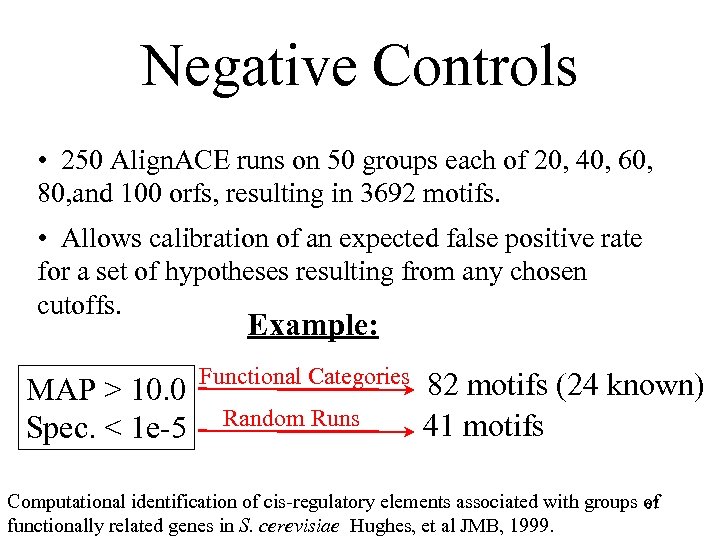
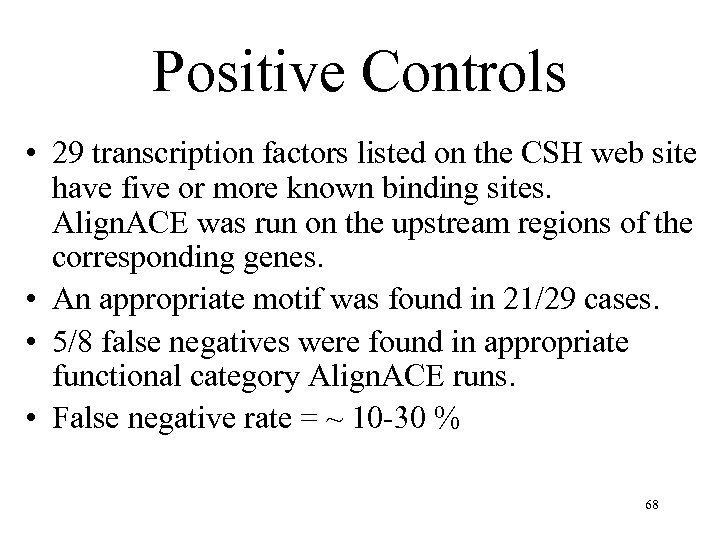
 S. cerevisiae Align. ACE test set 64
 Most specific motifs (ranked by Sgroup) 65
 Most positionally biased motifs 66
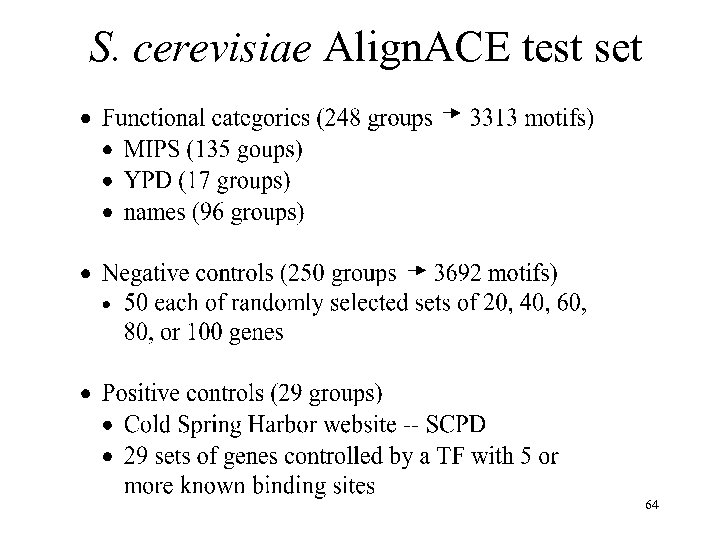
 Negative Controls • 250 Align. ACE runs on 50 groups each of 20, 40, 60, 80, and 100 orfs, resulting in 3692 motifs. • Allows calibration of an expected false positive rate for a set of hypotheses resulting from any chosen cutoffs. Example: MAP > 10. 0 Spec. < 1 e-5 Functional Categories Random Runs 82 motifs (24 known) 41 motifs Computational identification of cis-regulatory elements associated with groups of 67 functionally related genes in S. cerevisiae Hughes, et al JMB, 1999.
 Positive Controls • 29 transcription factors listed on the CSH web site have five or more known binding sites. Align. ACE was run on the upstream regions of the corresponding genes. • An appropriate motif was found in 21/29 cases. • 5/8 false negatives were found in appropriate functional category Align. ACE runs. • False negative rate = ~ 10 -30 % 68
 Establishing regulatory connections • • Generalizing & reducing assumptions: Motif Interactions: (Pilpel et al 2001 Nat Gen ) Which protein(s): in vivo crosslinking Interdependence of column in weight matrices: array binding (Bulyk et al 2001 PNAS 98: 7158) 69
 RNA 2: Clusters & Motifs • • • Clustering by gene and/or condition Distance and similarity measures Clustering & classification Applications DNA & RNA motif discovery & search 70