


 Скачать презентацию Risk Management and the CCA Insurance Manual New
193e65434992600b54adfe22cac0dd3e.ppt
- Количество слайдов: 45
 Risk Management and the CCA Insurance Manual New York State Council of Contracting Agencies (CCA) Procedure Manual November, 2011
 Objectives of this Presentation 1. 2. 3. 4. 5. 6. Introduce basic risk management principles. Describe contractual protection. Introduce the CCA Procedure Manual. Using the Manual to draft specifications. Using the Manual to set limits. Ensuring compliance with specifications.
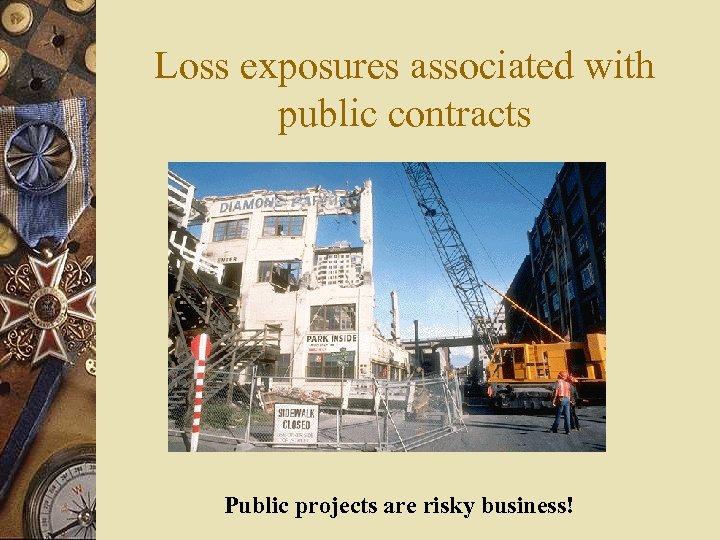 Loss exposures associated with public contracts Public projects are risky business!
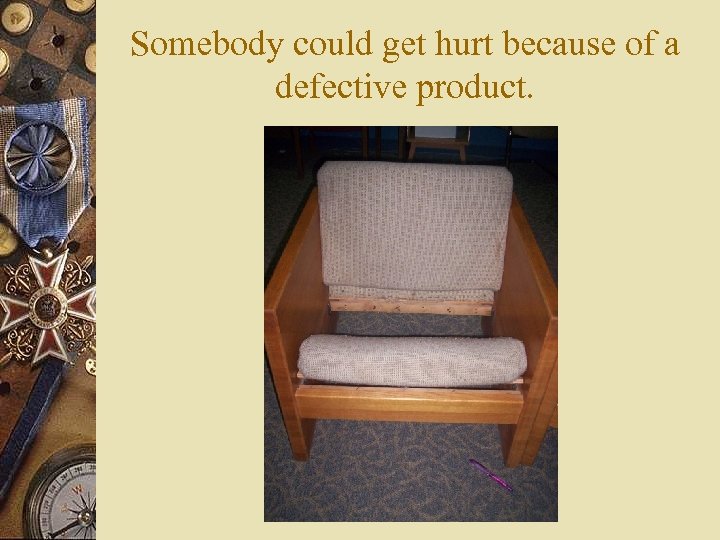 Somebody could get hurt because of a defective product.
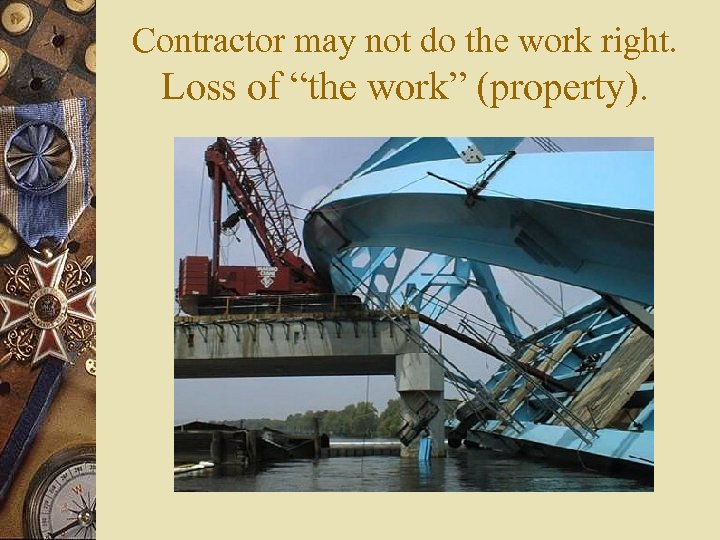 Contractor may not do the work right. Loss of “the work” (property).
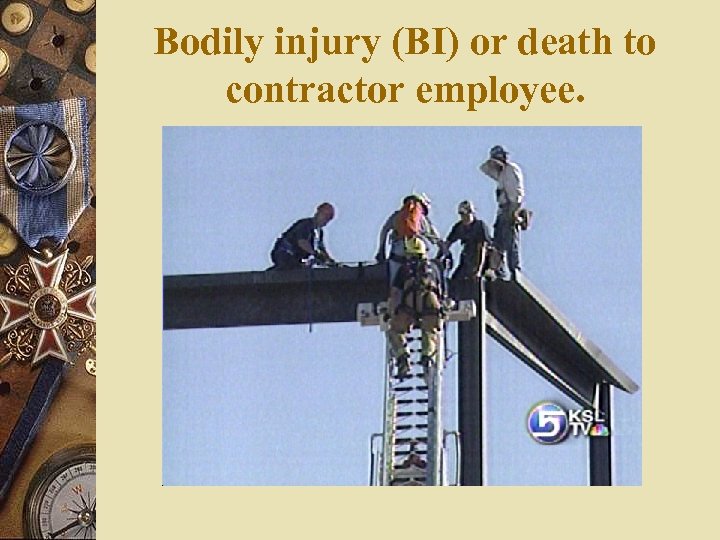 Bodily injury (BI) or death to contractor employee.
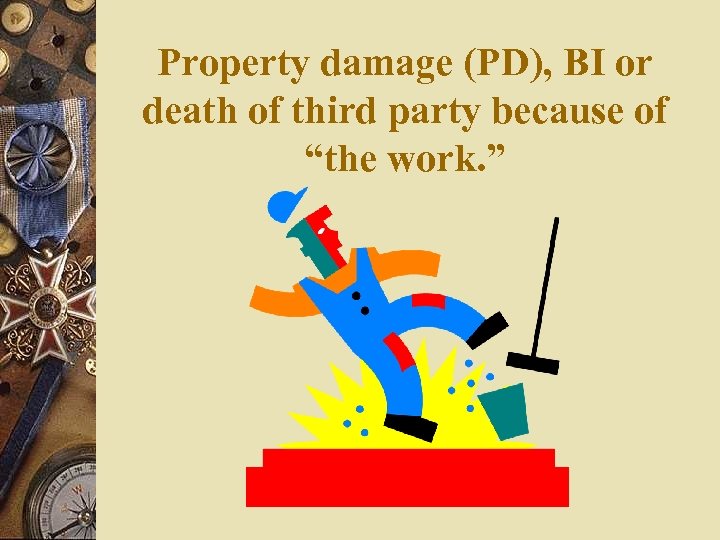 Property damage (PD), BI or death of third party because of “the work. ”
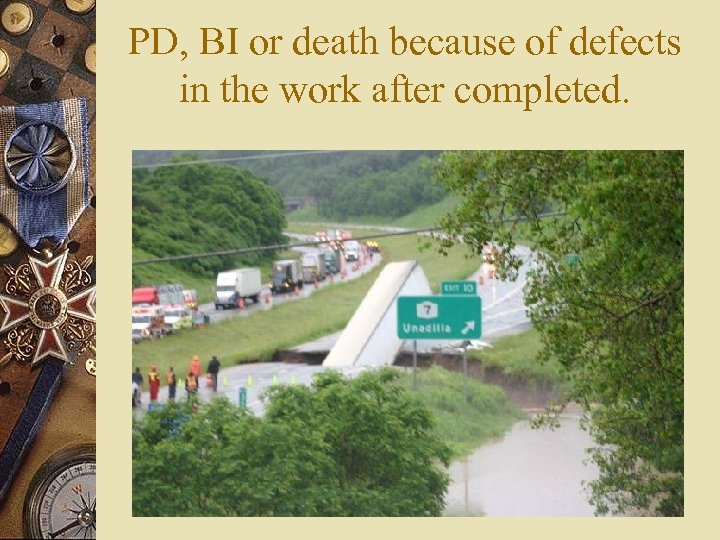 PD, BI or death because of defects in the work after completed.
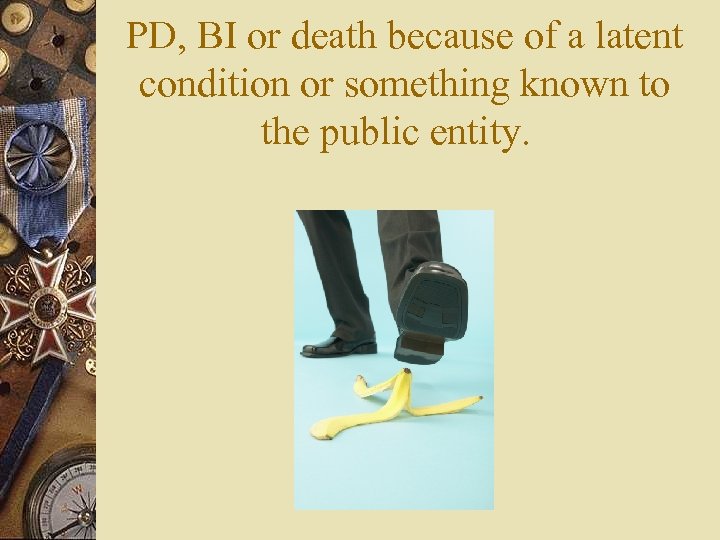 PD, BI or death because of a latent condition or something known to the public entity.
 Risk Management The process for making and carrying out decisions that will minimize the adverse effects of accidental loss. The organized treatment of loss exposures by…
 Exposure Avoidance Just Don’t Do It!
 Retention w Going bare-back w Retain any loss exposure that can be controlled when you can absorb the loss. Those who fail to plan… …plan to fail.
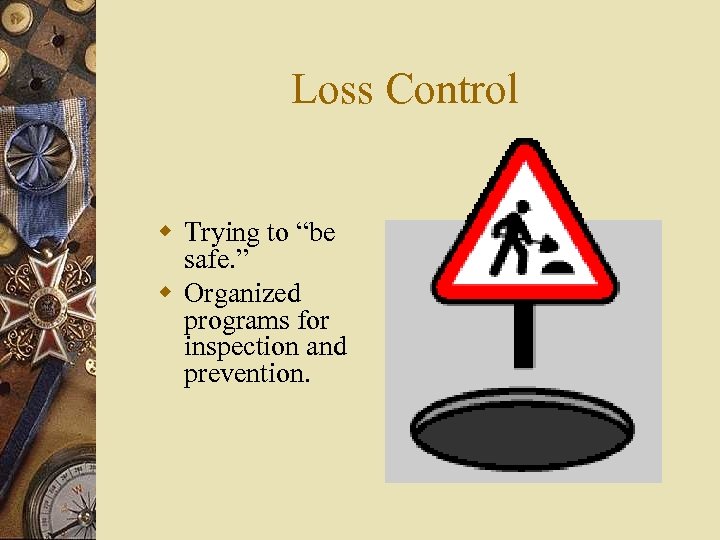 Loss Control w Trying to “be safe. ” w Organized programs for inspection and prevention.
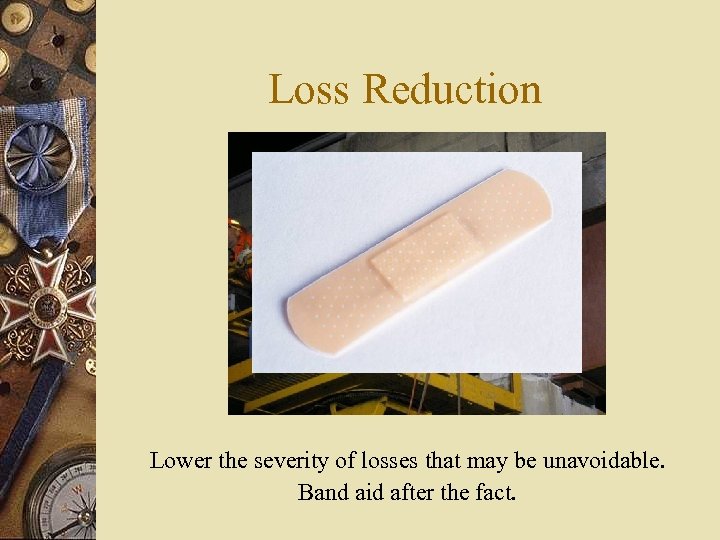 Loss Reduction Lower the severity of losses that may be unavoidable. Band aid after the fact.
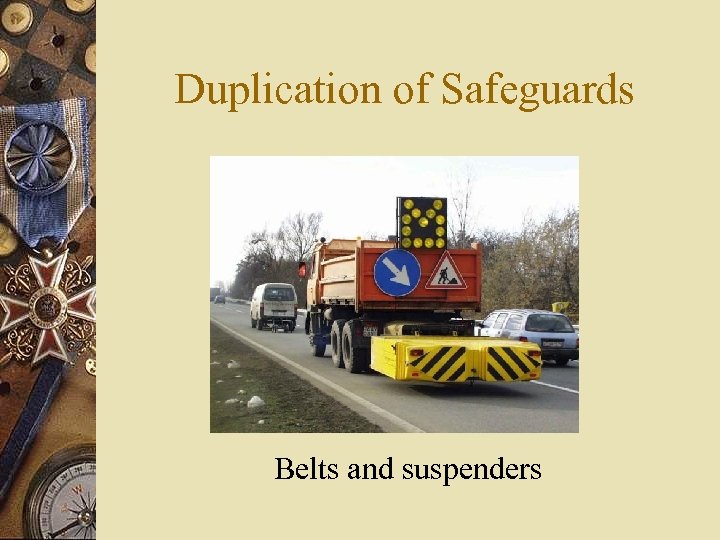 Duplication of Safeguards Belts and suspenders
 Contracting the Loss Exposures to Others w Control of the premises or the work w Delegating the means and methods to independent contractor w Indemnity provisions
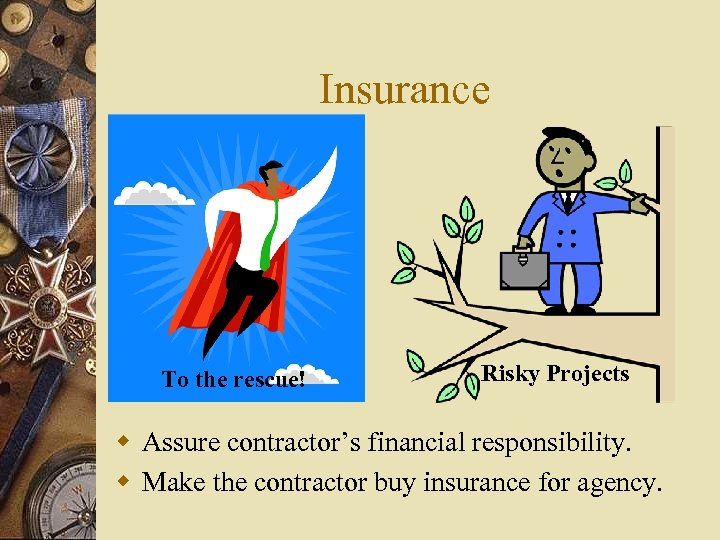 Insurance To the rescue! Risky Projects w Assure contractor’s financial responsibility. w Make the contractor buy insurance for agency.
 Contractual Protection w Assure that vendors stand behind products. w Central to all public contracts. w Contractor controls site, means and methods of work. w Contractor is independent. w Contractor is financially responsible. w Contractor must save public entity harmless.
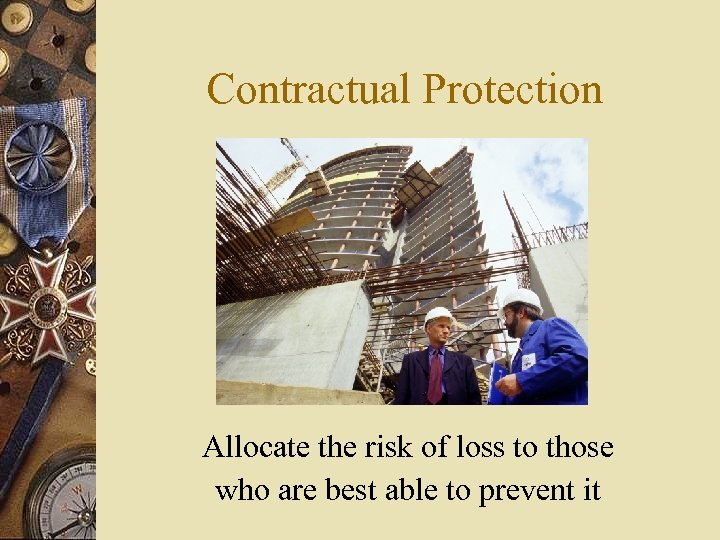 Contractual Protection Allocate the risk of loss to those who are best able to prevent it
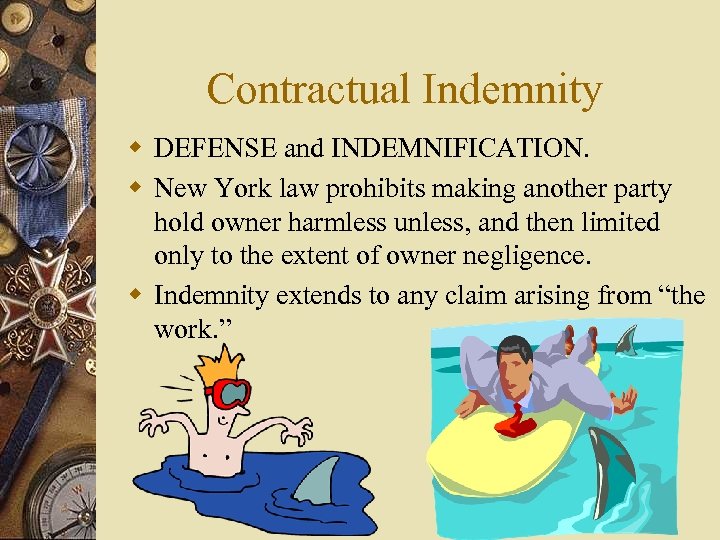 Contractual Indemnity w DEFENSE and INDEMNIFICATION. w New York law prohibits making another party hold owner harmless unless, and then limited only to the extent of owner negligence. w Indemnity extends to any claim arising from “the work. ”
 Contractual Indemnity w Works in most cases where work being delegated. w Few unpleasant cases of “finger pointing. ” w We avoid many disputes by requiring insurance. “To the fullest extent permitted by law, the Contractor shall indemnify and save harmless the State… from … claims… arising from the contractor’s work under this contract…”
 Insurance Transfer of the financial consequences of a loss exposure to the insurer in exchange for the payment of a premium.
 Insurance Works Where… w There is a pure risk beyond control. w Losses of predictable value occur at a known probability and regularity. w Losses can be spread between a large number of insureds. w Everybody won’t have a loss at once.
 Insurance Necessary Where… w There is any question about the financial responsibility of a contractor. w There the expertise of professional risk management and adjustment are required or will add value.
 Claim Services
 Insurance: The Dark Side
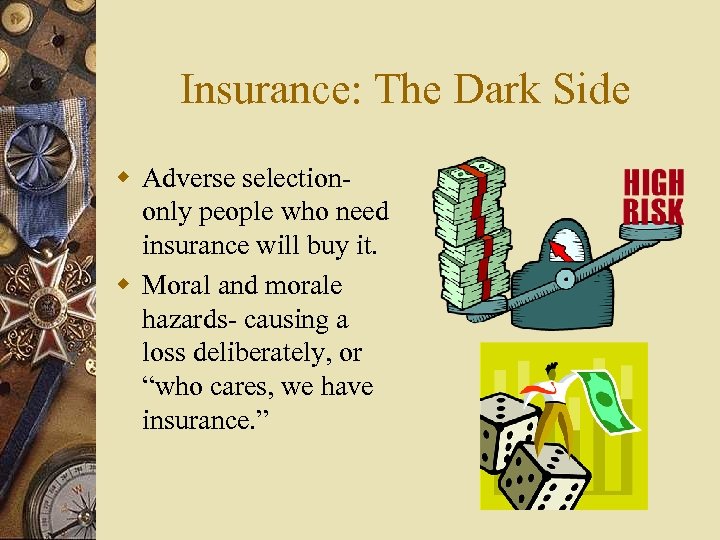 Insurance: The Dark Side w Adverse selectiononly people who need insurance will buy it. w Moral and morale hazards- causing a loss deliberately, or “who cares, we have insurance. ”
 Insurance: The Dark Side w It adds cost- about 15% of the cost of the insurance goes to underwriting. w Defending claims is expensive too.
 Insurance: The Dark Side Denial of Coverage w After a claim, if…. w Agency fails to comply with a policy condition. w Denial must be timely (10 -30 days). w Notice of claim requirement.
 Insurance: The Dark Side Disclaimer of Coverage w After a claim, if…. w Claim is “excluded. ” w Denial must be timely (10 -30 days). w Pollution. w Not arising from “work” or “operations. ”
 Insurance Doesn’t Always Pay
 Types of Insurance for Public Entity Contracts w Contractors often have MORE insurance. w Agency requires only what Agency needs. w Agency requires only what is available. w These are the basic types.
 Review and Discussion of the Manual and how to use it.
 Council of Contracting Agencies (CCA) w Created within the Executive Department by Executive Order Number 125 on May 22, 1989 to ensure the systematic collection and timely exchange of information relevant to agency determinations of responsibility and reliability of bidders, contractors 1 and proposed subcontractors. w On June 24, 2004 the Council of Contracting Agencies established the Insurance Subcommittee for the purposes of establishing general insurance standards and practices among participating Council Agency members.
 Council of Contracting Agencies (CCA) Mission Statement Provide a standard for consistent insurance-related language and requirements for use in Agency contract documents. While the standards referenced in the manual have been developed via a collaborative effort involving all of the participating agencies and insurance industry representatives, and the Council believes these standards to best meet the needs of the Agencies operating in the current contract and insurance industry environments, the Council also recognizes that each agency faces its own unique operations and contracting needs. Therefore, it is understood that each Agency may find a need to deviate from the standards presented here as it deems necessary.
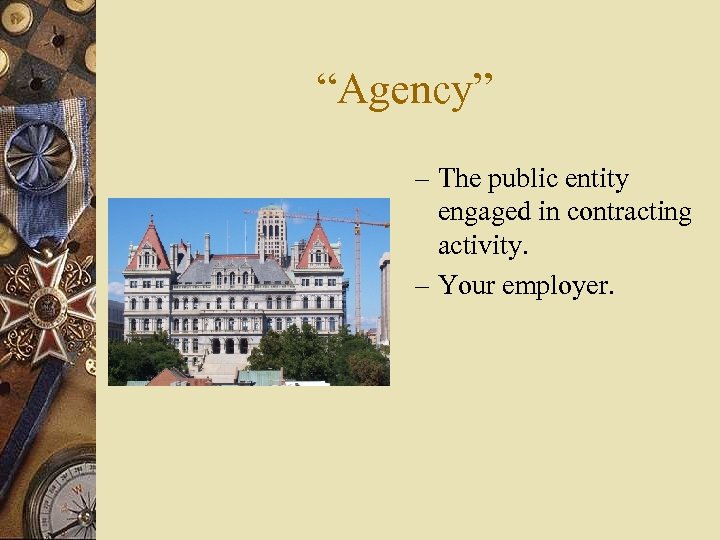 “Agency” – The public entity engaged in contracting activity. – Your employer.
 “Insurance Analyst” – Recommends insurance language and/or requirements for use in contract documents – Evaluates and approves proof of insurance.
 “Contractor” Persons who provide. . – Services (contractor or consultant). – Goods (vendor). – Tenants. – Permitees/licensees. – Revenue contracts.
 How This Manual Is Organized Chapter 1 - Summary w A summary w Steps to completing and tracking insurance information w Reference materials that are available in this manual.
 How This Manual Is Organized Chapter 2 - Insurance Requirements w Insurance Requirements need to be considered as part of the procurement process. w Remember, this manual addresses only the most common exposures for our organizations. w You will run into situations that are not covered here. w Choosing insurance requirements in those cases will require some assistance from the Insurance Analyst.
 How This Manual Is Organized Chapter 3 - Model Insurance Specifications w Provides model insurance language. w Including requirements that pertain to all forms of insurance. w This language is not to be used without some thought to the scope of work and applicability.
 You can cut and paste – w with CAUTION. w Consult your Legal Dept and/or risk manager…. this manual is NOT the final word on insurance requirements and limits.
 How This Manual Is Organized Chapter 4 - Matrices w Provides matrices of insurance limits. w Address common exposures. w Thought should be given to increasing or decreasing these limits as appropriate to the scope of work. w Again, consult your Insurance Analyst as needed.
 How This Manual Is Organized Chapter 5 - Model Procedures & Forms w Provides model procedures, sample letters, insurance review checklists, and other information that CCA agencies have found helpful in their operations. w It is best to provide the Contractor with instructions and sample documents as part of the procurement process to minimize errors. However, errors will always exist and the agency should conduct reviews of the insurance documents at appropriate times. w Each agency will have to devise its own process, specific to its needs and operations. The materials here are offered to assist in that process.
 How This Manual Is Organized Chapter 6 & Exhibits- Reference Purposes w These materials are offered for your reference. w The Glossary is not all inclusive, nor is it limited to those terms that are included in this manual. w Rather, it covers a wide variety of terms that are used in the insurance industry. w Sample policy and endorsement forms are also included, as well as materials produced by the NYS Workers’ Compensation Board.