


 Скачать презентацию Rise of ultra-nationalism and WW II 1920
a6cf38cc2a089d5e0d8d2ad2ddfc9c83.ppt
- Количество слайдов: 14
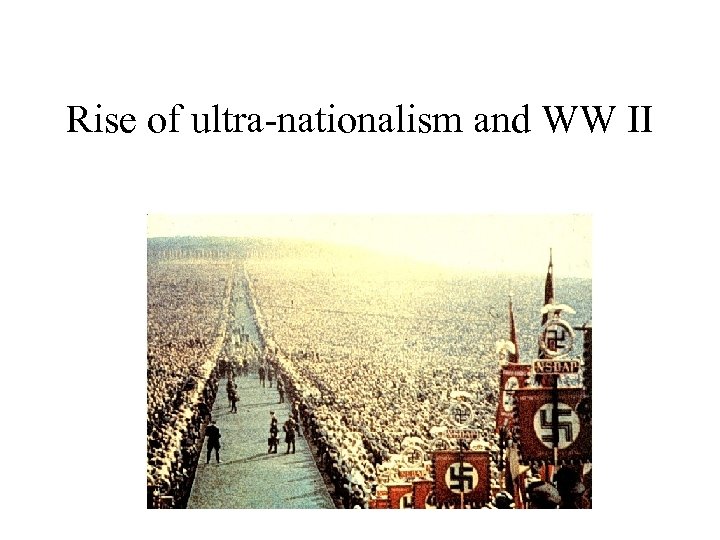 Rise of ultra-nationalism and WW II
 1920 s in Germany • The new democracy is saddled with admitting responsibility, giving up reparations and territory, and suffering inflation. • When Germany is unable to make payments, French occupy the Ruhr • German state prints more money to pay its bills
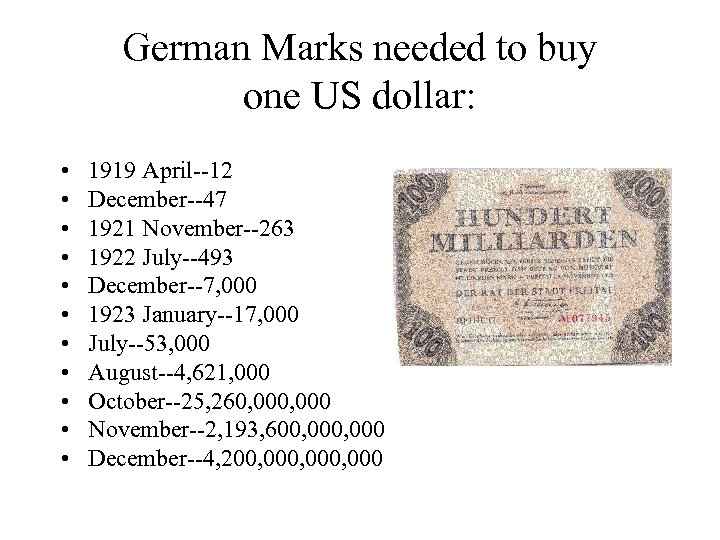 German Marks needed to buy one US dollar: • • • 1919 April--12 December--47 1921 November--263 1922 July--493 December--7, 000 1923 January--17, 000 July--53, 000 August--4, 621, 000 October--25, 260, 000 November--2, 193, 600, 000 December--4, 200, 000, 000
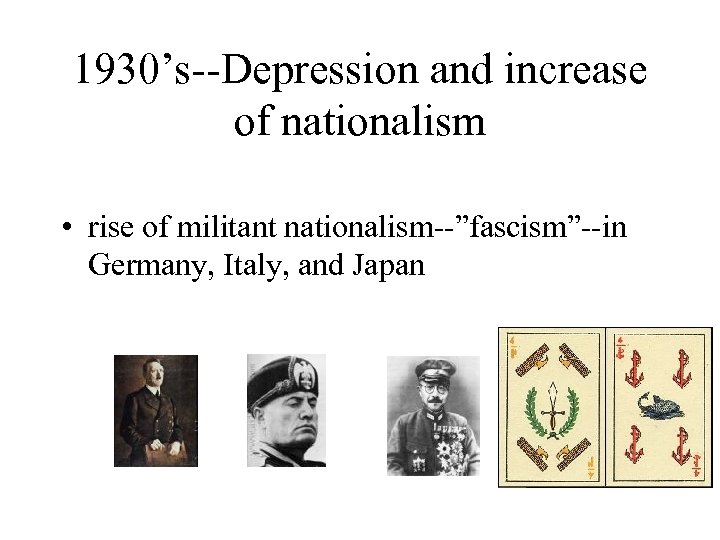 1930’s--Depression and increase of nationalism • rise of militant nationalism--”fascism”--in Germany, Italy, and Japan
 In Germany • Depression hits especially hard • 1932 Hitler and Nazis claiming Germany had been “stabbed in the back” in WWI and after, gains about 1/3 of electorate • January 1933 Hitler becomes Chancellor • February—responding to mysterious Reichstag fire, receives emergency powers, ending the democracy
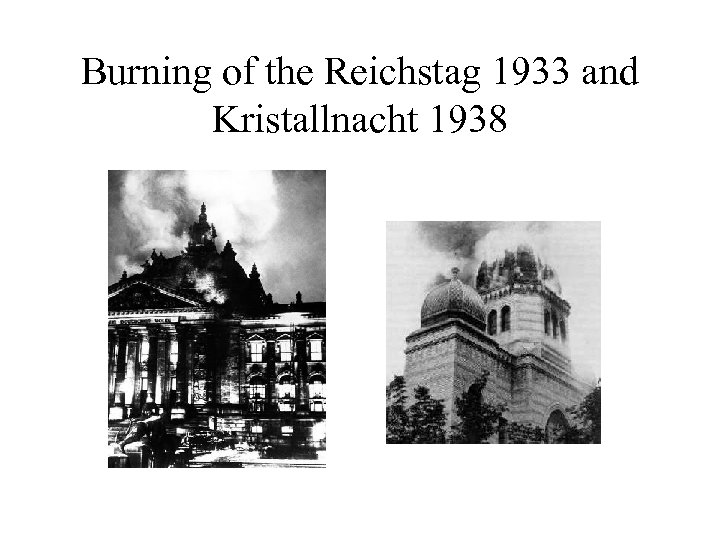 Burning of the Reichstag 1933 and Kristallnacht 1938
 German Expansion • Under Hitler, Germany rebuilds military • 1938 Germany annexes Austria, justified with bogus plebiscite • Then invades Czechoslovakia • France and England do nothing--for “peace in our time”
 World War II begins • Hitler-Stalin Pact allows partition of Poland between Soviet Union and Germany • 1939 they invade, and Britain and France declare war • 1940 Germany occupies France • 1941 Germany attacks Soviet Union • months later, Japan attacks at Pearl Harbor
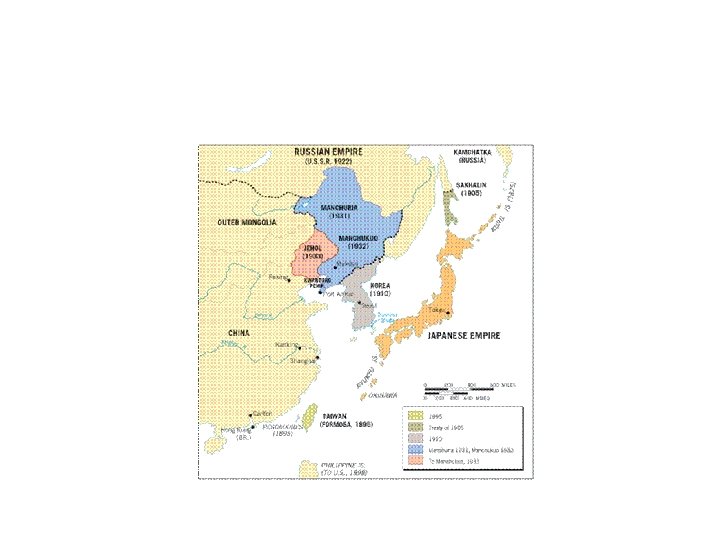
 In the East • since 1910 Japan had colonized Korea • 1931 Japan occupied Manchuria • 1937 Japan invades China proper
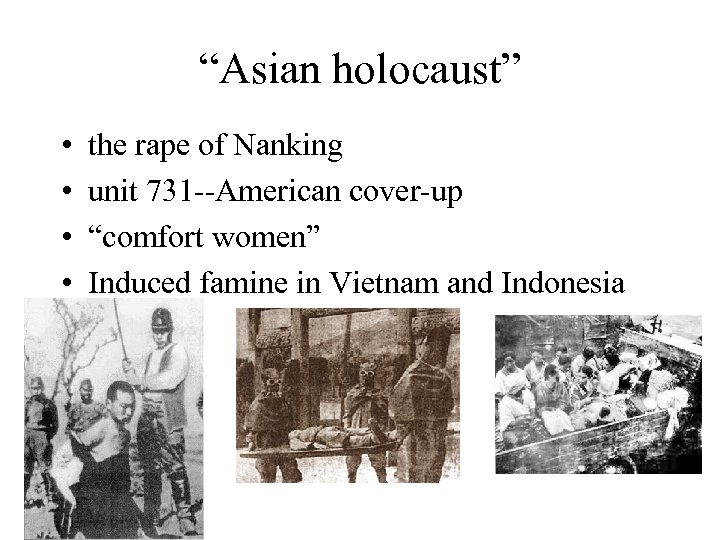 “Asian holocaust” • • the rape of Nanking unit 731 --American cover-up “comfort women” Induced famine in Vietnam and Indonesia
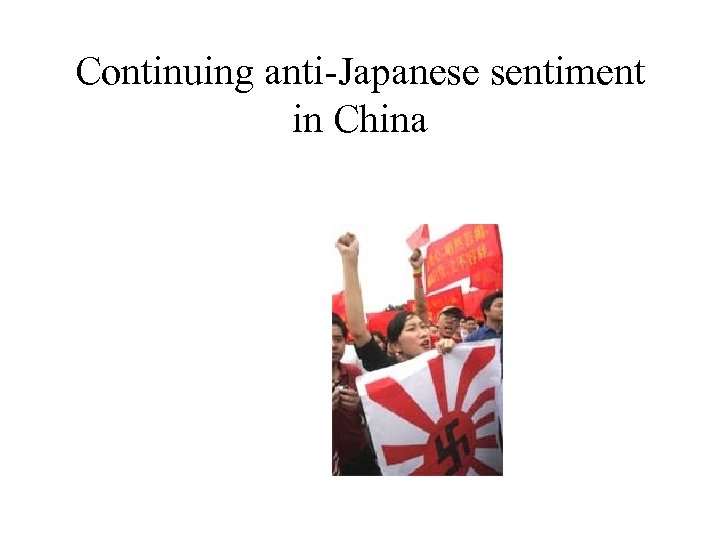 Continuing anti-Japanese sentiment in China
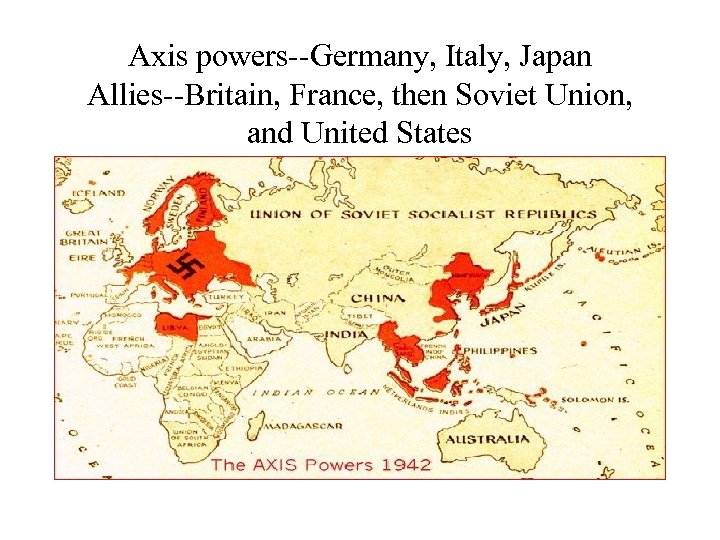 Axis powers--Germany, Italy, Japan Allies--Britain, France, then Soviet Union, and United States
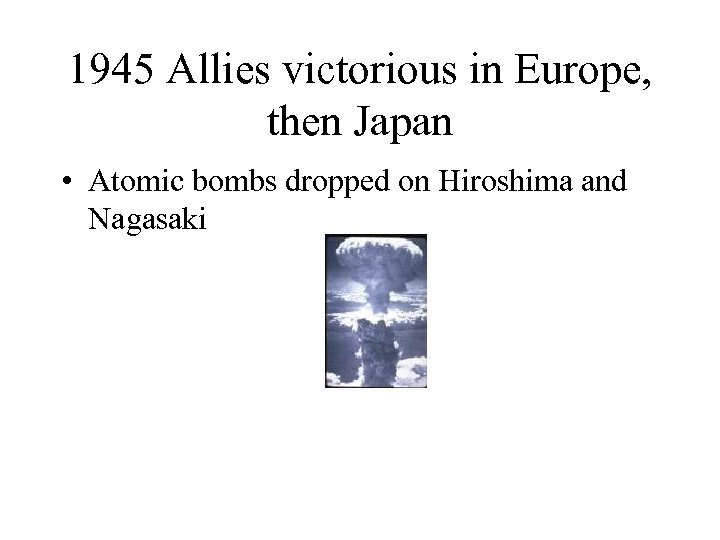 1945 Allies victorious in Europe, then Japan • Atomic bombs dropped on Hiroshima and Nagasaki