 Скачать презентацию RICYT Red Iberoamericana de Indicadores de Ciencia y
a43a0d7fd6dac808e32d2caa85836e71.ppt
- Количество слайдов: 13



RICYT Red Iberoamericana de Indicadores de Ciencia y Tecnología Innovation in Latin-America: indicators and surveys Diana Suárez Innovation Indicators for Latin America Workshop 19 March, 2009 Paris, France
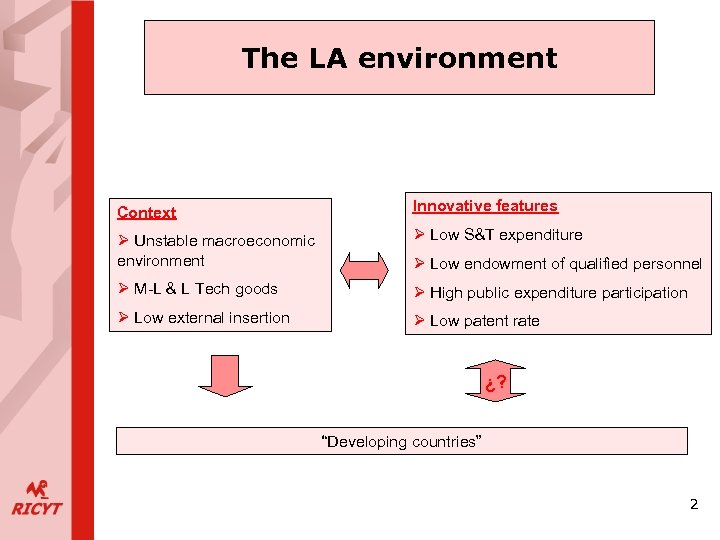
The LA environment Context Innovative features Ø Unstable macroeconomic environment Ø Low S&T expenditure Ø M-L & L Tech goods Ø High public expenditure participation Ø Low external insertion Ø Low patent rate Ø Low endowment of qualified personnel ¿? “Developing countries” 2
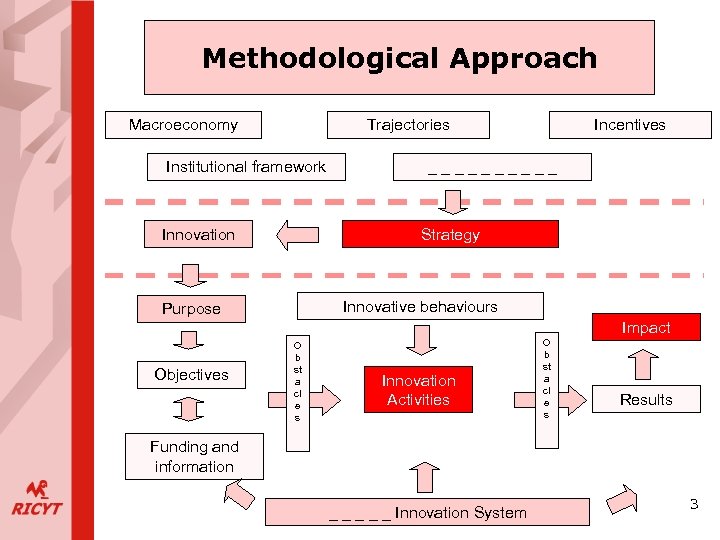
Methodological Approach Macroeconomy Trajectories Institutional framework Innovation Incentives _____ Strategy Innovative behaviours Purpose Impact Objectives O b st a cl e s Innovation Activities O b st a cl e s Results Funding and information _ _ _ Innovation System 3
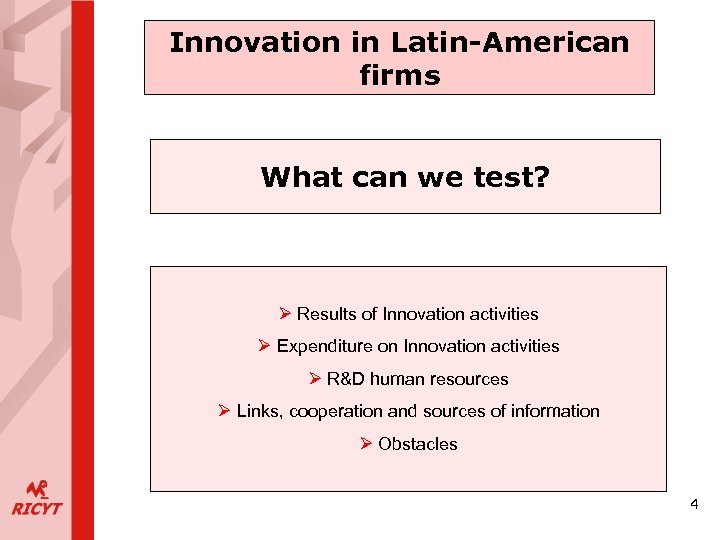
Innovation in Latin-American firms What can we test? Ø Results of Innovation activities Ø Expenditure on Innovation activities Ø R&D human resources Ø Links, cooperation and sources of information Ø Obstacles 4
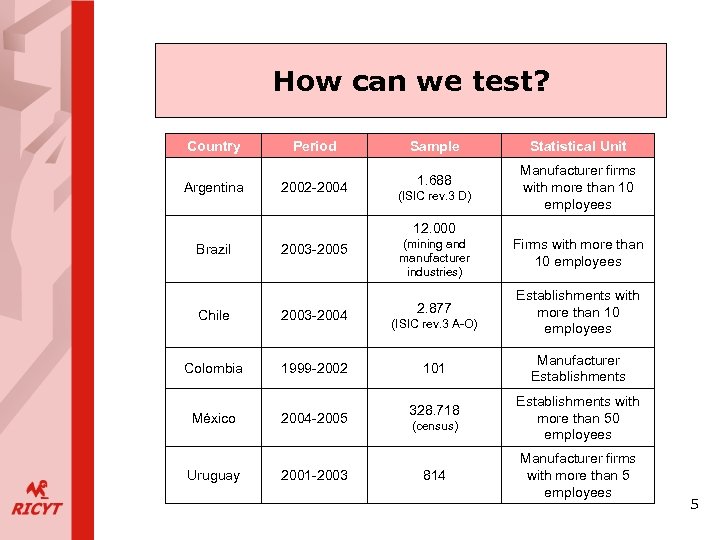
How can we test? Country Argentina Period 2002 -2004 Sample 1. 688 (ISIC rev. 3 D) Statistical Unit Manufacturer firms with more than 10 employees 12. 000 Brazil 2003 -2005 Chile 2003 -2004 Colombia 1999 -2002 México Uruguay 2004 -2005 2001 -2003 (mining and manufacturer industries) Firms with more than 10 employees 2. 877 Establishments with more than 10 employees (ISIC rev. 3 A-O) 101 328. 718 (census) 814 Manufacturer Establishments with more than 50 employees Manufacturer firms with more than 5 employees 5
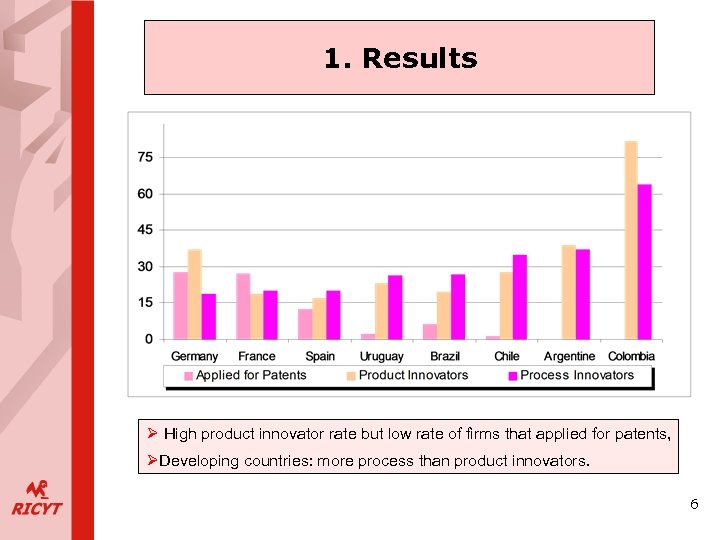
1. Results Ø High product innovator rate but low rate of firms that applied for patents, ØDeveloping countries: more process than product innovators. 6
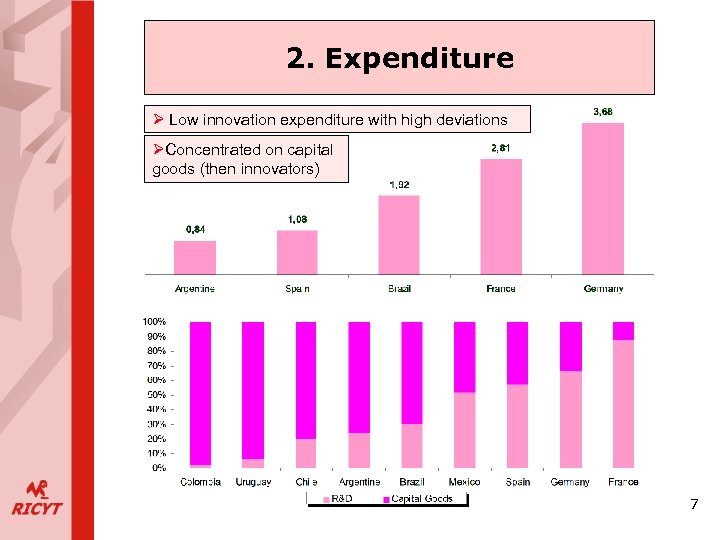
2. Expenditure Ø Low innovation expenditure with high deviations ØConcentrated on capital goods (then innovators) 7
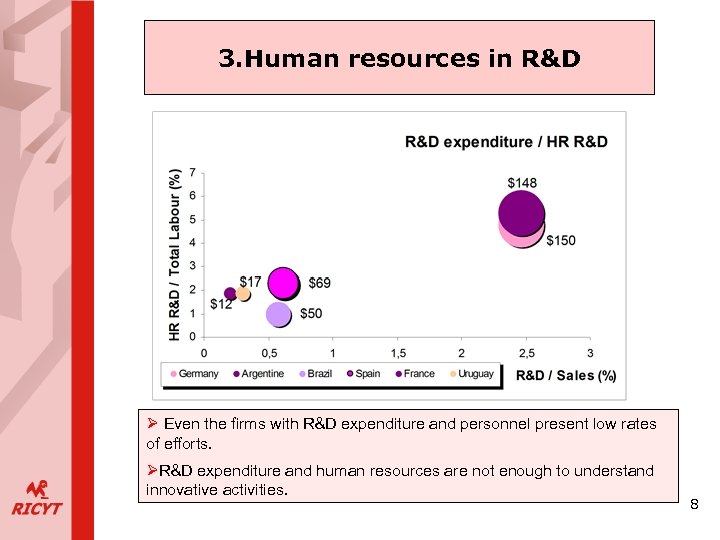
3. Human resources in R&D Ø Even the firms with R&D expenditure and personnel present low rates of efforts. ØR&D expenditure and human resources are not enough to understand innovative activities. 8
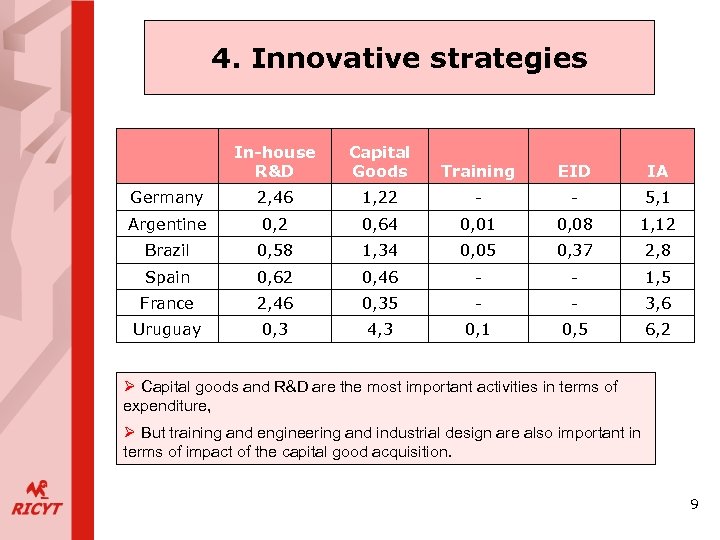
4. Innovative strategies In-house R&D Capital Goods Training EID IA Germany 2, 46 1, 22 - - 5, 1 Argentine 0, 2 0, 64 0, 01 0, 08 1, 12 Brazil 0, 58 1, 34 0, 05 0, 37 2, 8 Spain 0, 62 0, 46 - - 1, 5 France 2, 46 0, 35 - - 3, 6 Uruguay 0, 3 4, 3 0, 1 0, 5 6, 2 Ø Capital goods and R&D are the most important activities in terms of expenditure, Ø But training and engineering and industrial design are also important in terms of impact of the capital good acquisition. 9
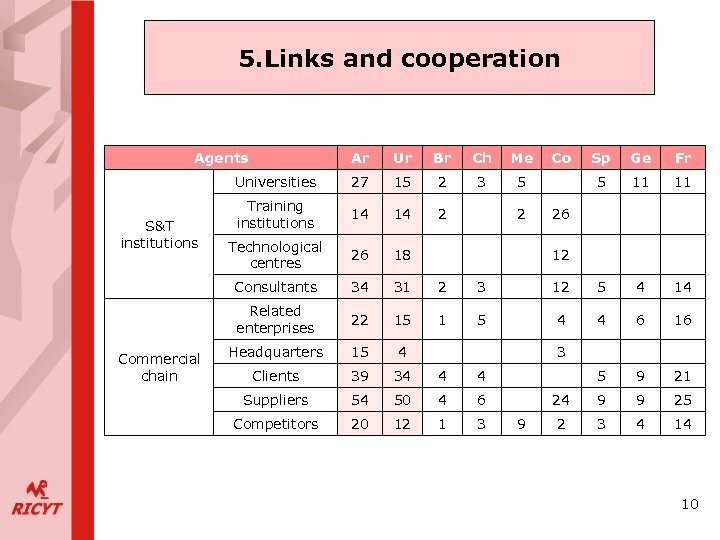
5. Links and cooperation Agents Br Ch Me 27 15 2 3 5 Training institutions 14 14 2 Technological centres 26 18 Consultants 34 31 2 3 Related enterprises Commercial chain Ur Universities S&T institutions Ar 22 15 1 5 Headquarters 15 4 Clients 39 34 4 4 Suppliers 54 50 4 6 Competitors 20 12 1 3 Sp Ge Fr 5 11 11 12 5 4 14 4 4 6 16 5 9 21 24 2 Co 9 9 25 2 3 4 14 26 12 3 9 10
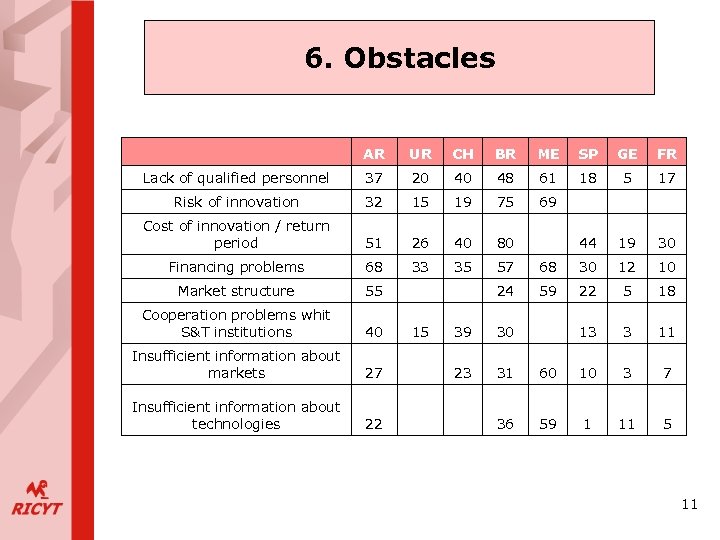
6. Obstacles AR UR CH BR ME SP GE FR Lack of qualified personnel 37 20 40 48 61 18 5 17 Risk of innovation 32 15 19 75 69 Cost of innovation / return period 51 26 40 80 44 19 30 Financing problems 68 33 35 57 68 30 12 10 Market structure 55 24 59 22 5 18 Cooperation problems whit S&T institutions 40 15 39 30 13 3 11 Insufficient information about markets 27 23 31 60 10 3 7 Insufficient information about technologies 22 36 59 1 11 5 11
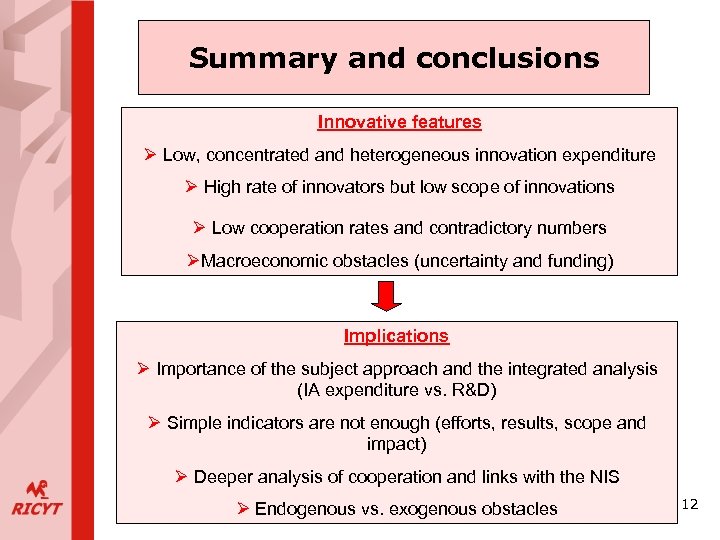
Summary and conclusions Innovative features Ø Low, concentrated and heterogeneous innovation expenditure Ø High rate of innovators but low scope of innovations Ø Low cooperation rates and contradictory numbers ØMacroeconomic obstacles (uncertainty and funding) Implications Ø Importance of the subject approach and the integrated analysis (IA expenditure vs. R&D) Ø Simple indicators are not enough (efforts, results, scope and impact) Ø Deeper analysis of cooperation and links with the NIS Ø Endogenous vs. exogenous obstacles 12

www. ricyt. org dsuarez@ricyt. edu. ar
Скачать презентацию RICYT Red Iberoamericana de Indicadores de Ciencia y
a43a0d7fd6dac808e32d2caa85836e71.ppt