


 Скачать презентацию Richard Serra The Matter of Time 2005 varying
f37530d02823618f498c47555380961a.ppt
- Количество слайдов: 44
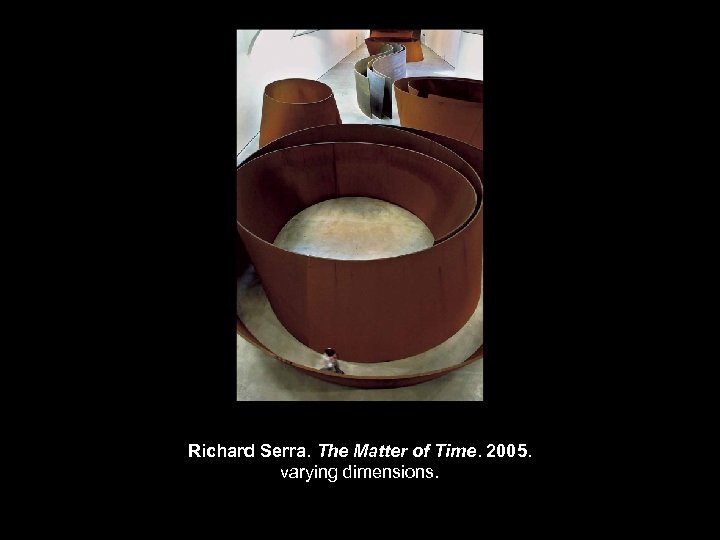 Richard Serra. The Matter of Time. 2005. varying dimensions.
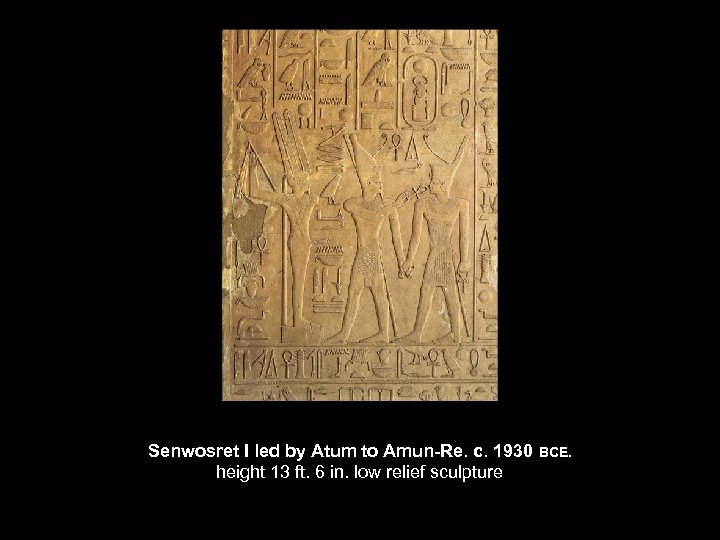 Senwosret I led by Atum to Amun-Re. c. 1930 BCE. height 13 ft. 6 in. low relief sculpture
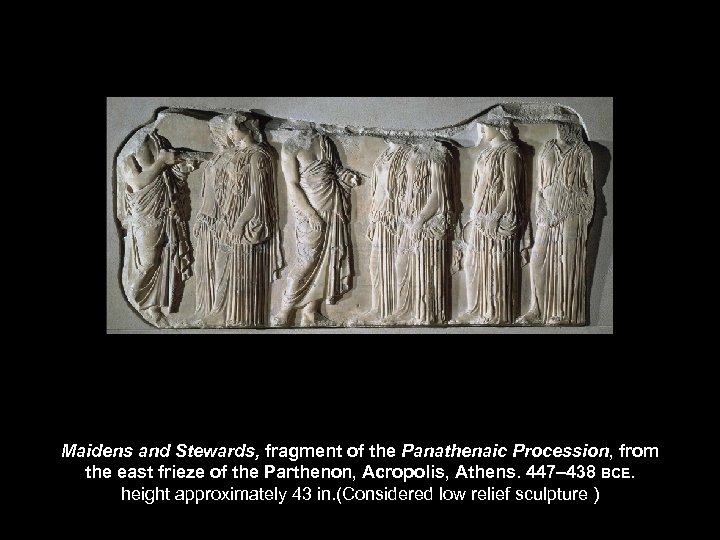 Maidens and Stewards, fragment of the Panathenaic Procession, from the east frieze of the Parthenon, Acropolis, Athens. 447– 438 BCE. height approximately 43 in. (Considered low relief sculpture )
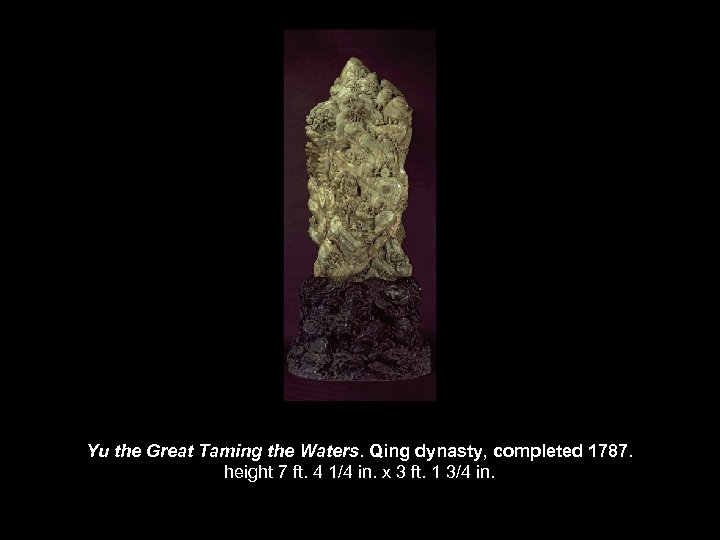 Yu the Great Taming the Waters. Qing dynasty, completed 1787. height 7 ft. 4 1/4 in. x 3 ft. 1 3/4 in.
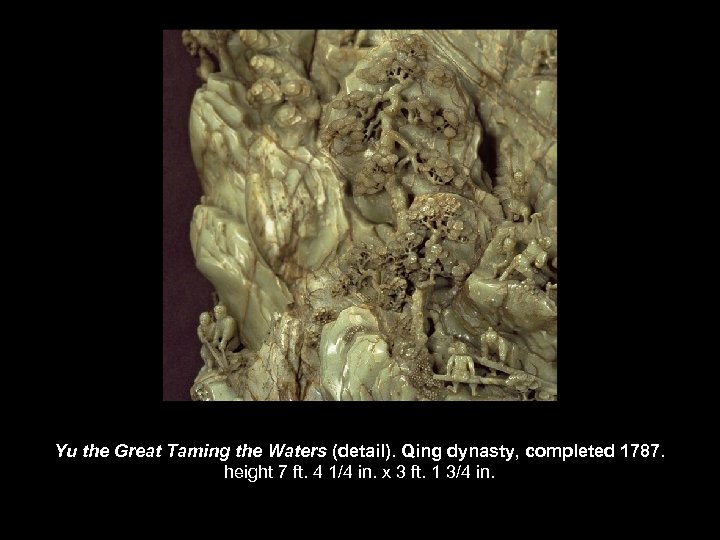 Yu the Great Taming the Waters (detail). Qing dynasty, completed 1787. height 7 ft. 4 1/4 in. x 3 ft. 1 3/4 in.
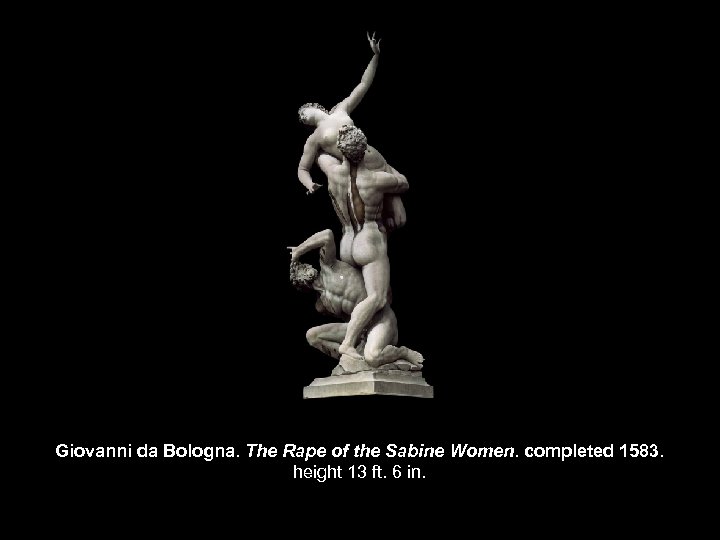 Giovanni da Bologna. The Rape of the Sabine Women. completed 1583. height 13 ft. 6 in.
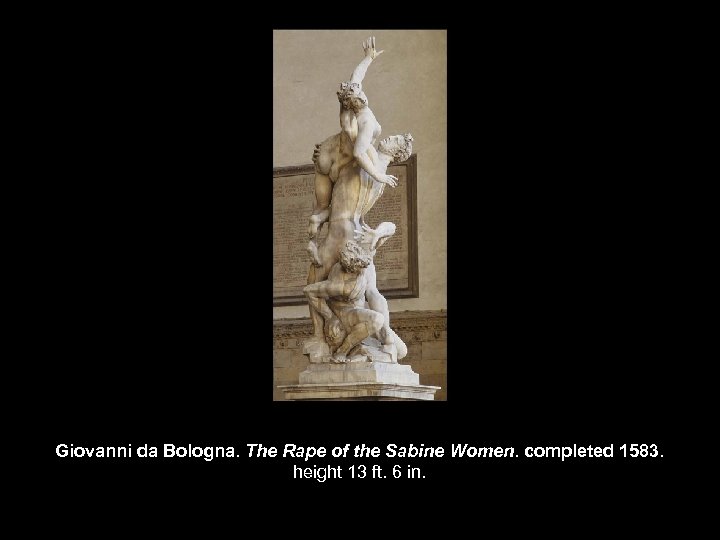 Giovanni da Bologna. The Rape of the Sabine Women. completed 1583. height 13 ft. 6 in.
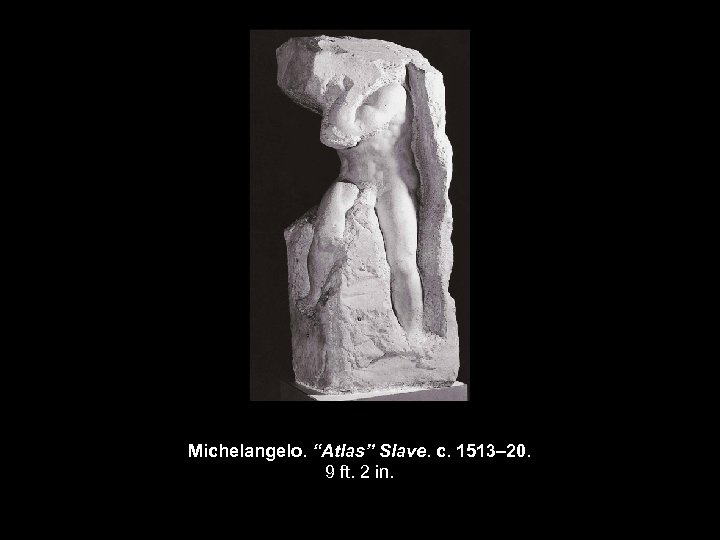 Michelangelo. “Atlas” Slave. c. 1513– 20. 9 ft. 2 in.
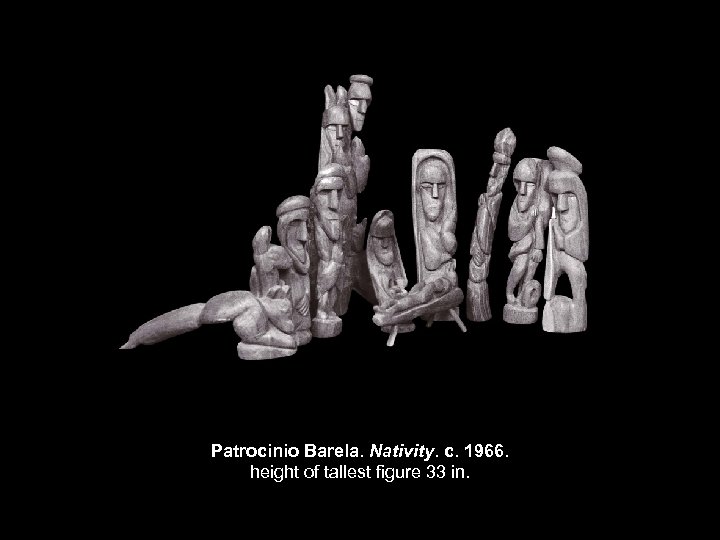 Patrocinio Barela. Nativity. c. 1966. height of tallest figure 33 in.
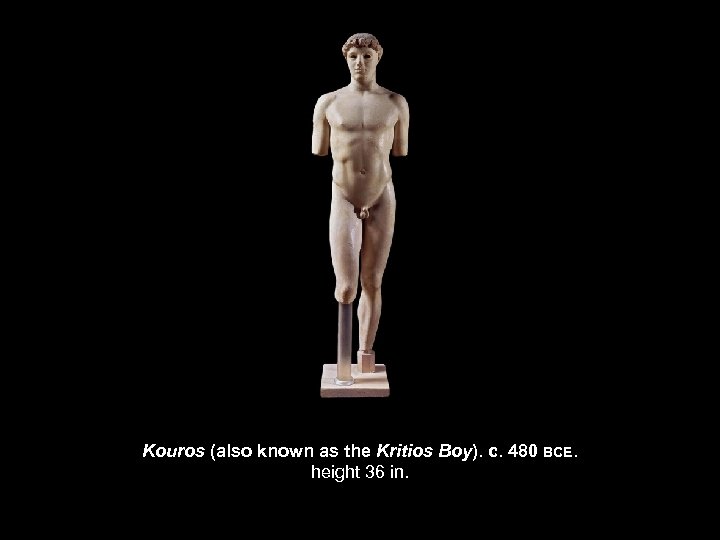 Kouros (also known as the Kritios Boy). c. 480 BCE. height 36 in.
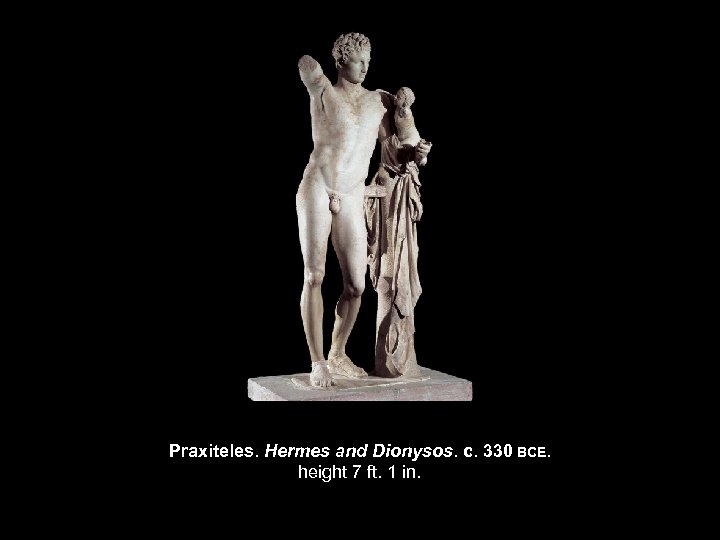 Praxiteles. Hermes and Dionysos. c. 330 BCE. height 7 ft. 1 in.
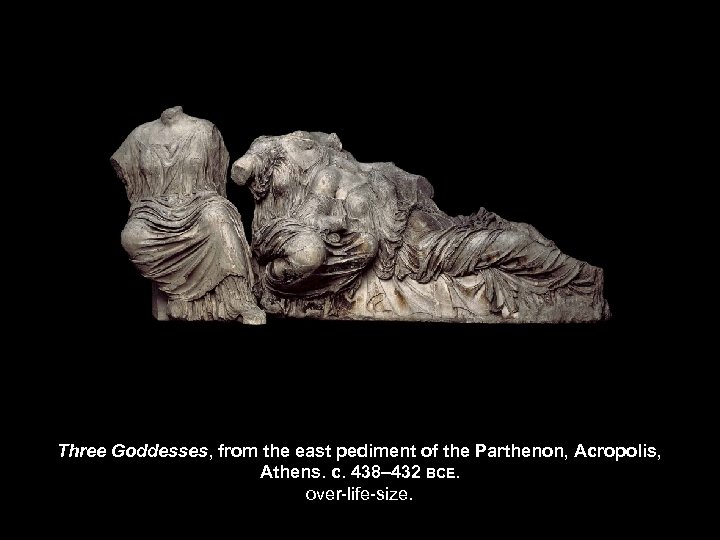 Three Goddesses, from the east pediment of the Parthenon, Acropolis, Athens. c. 438– 432 BCE. over-life-size.
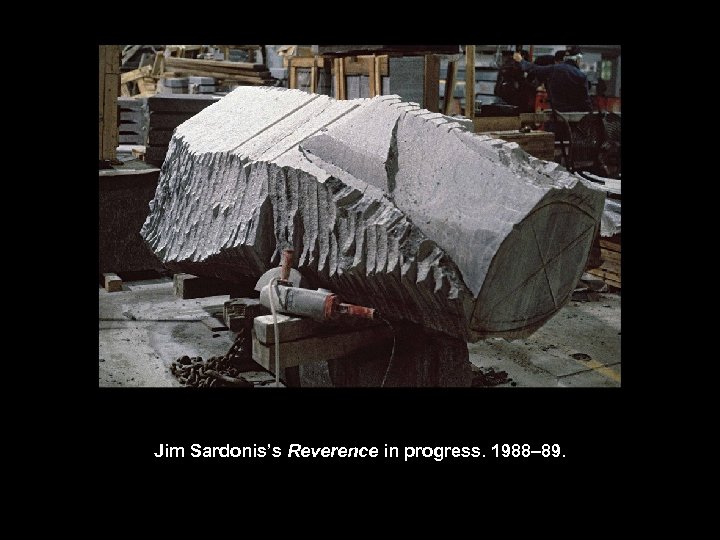 Jim Sardonis’s Reverence in progress. 1988– 89.
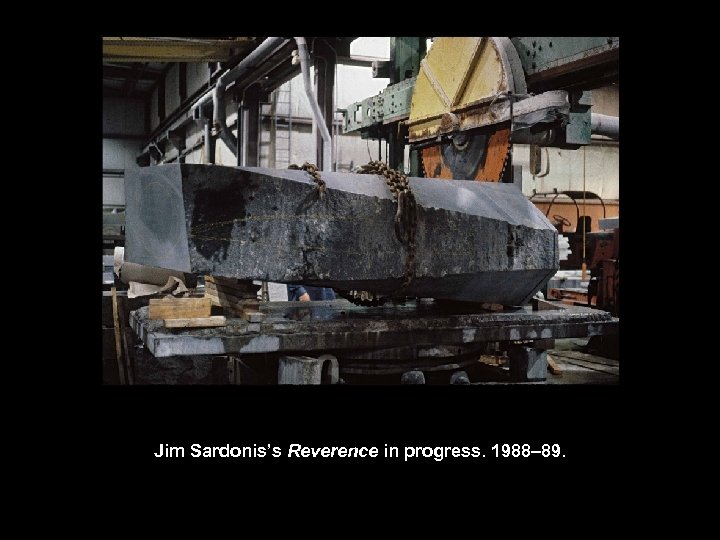 Jim Sardonis’s Reverence in progress. 1988– 89.
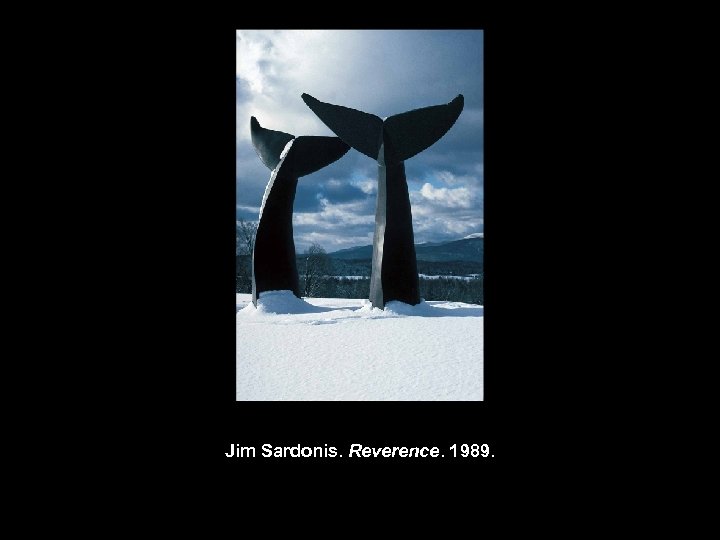 Jim Sardonis. Reverence. 1989.
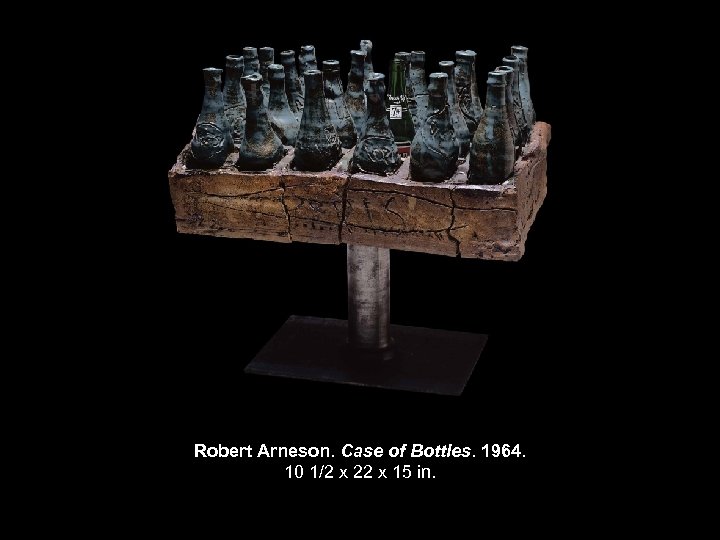 Robert Arneson. Case of Bottles. 1964. 10 1/2 x 22 x 15 in.
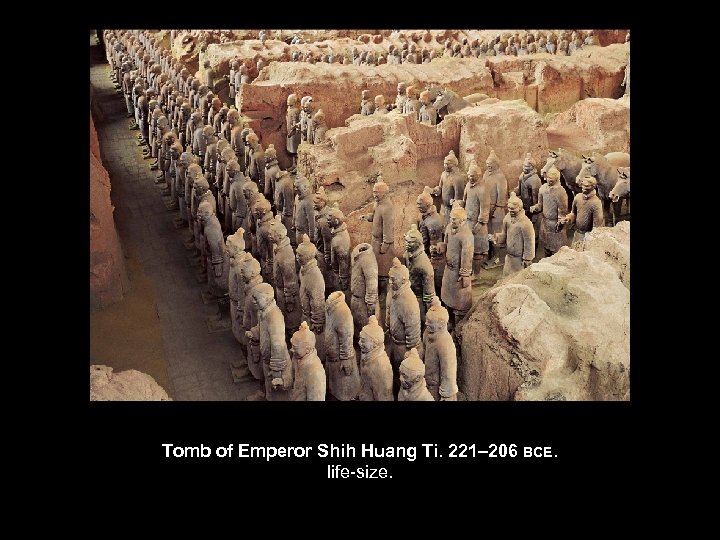 Tomb of Emperor Shih Huang Ti. 221– 206 BCE. life-size.
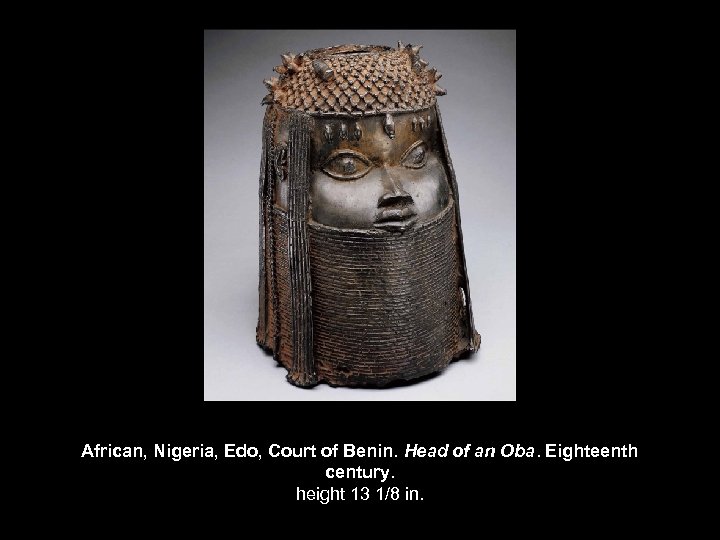 African, Nigeria, Edo, Court of Benin. Head of an Oba. Eighteenth century. height 13 1/8 in.
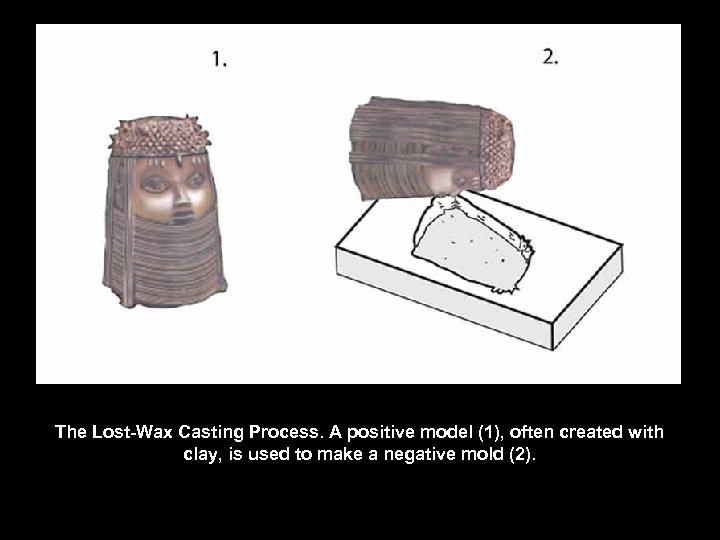 The Lost-Wax Casting Process. A positive model (1), often created with clay, is used to make a negative mold (2).
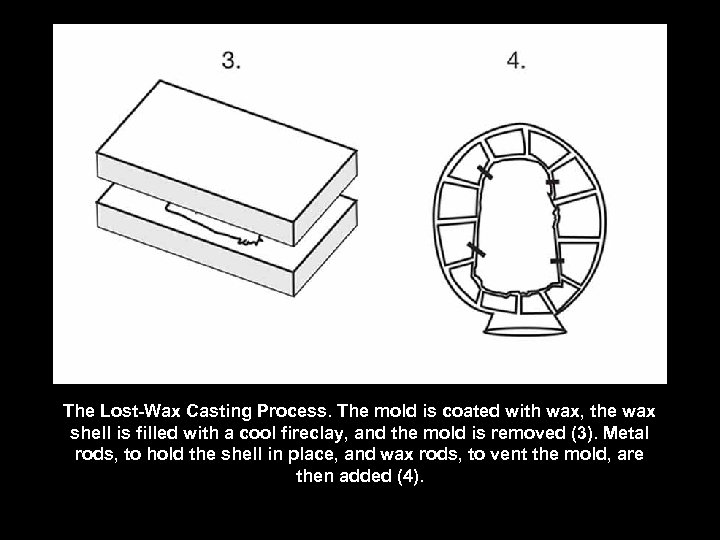 The Lost-Wax Casting Process. The mold is coated with wax, the wax shell is filled with a cool fireclay, and the mold is removed (3). Metal rods, to hold the shell in place, and wax rods, to vent the mold, are then added (4).
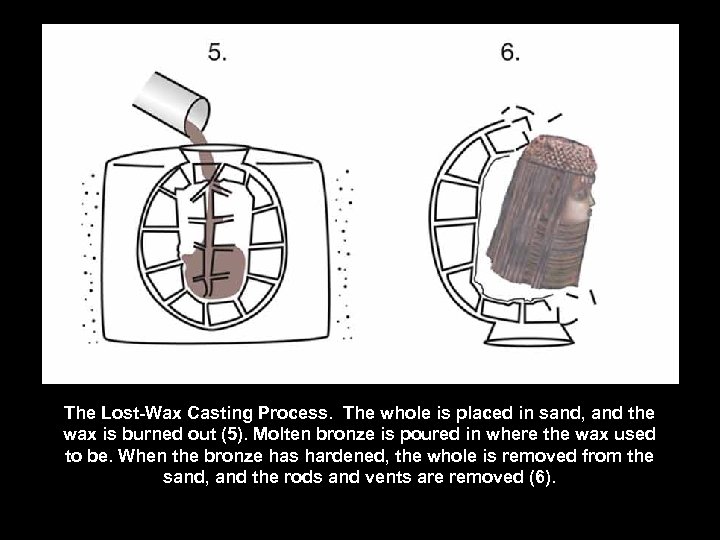 The Lost-Wax Casting Process. The whole is placed in sand, and the wax is burned out (5). Molten bronze is poured in where the wax used to be. When the bronze has hardened, the whole is removed from the sand, and the rods and vents are removed (6).
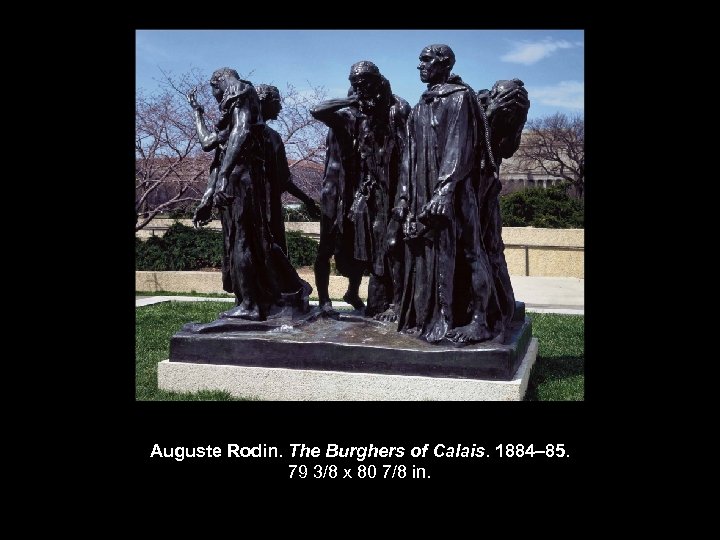 Auguste Rodin. The Burghers of Calais. 1884– 85. 79 3/8 x 80 7/8 in.
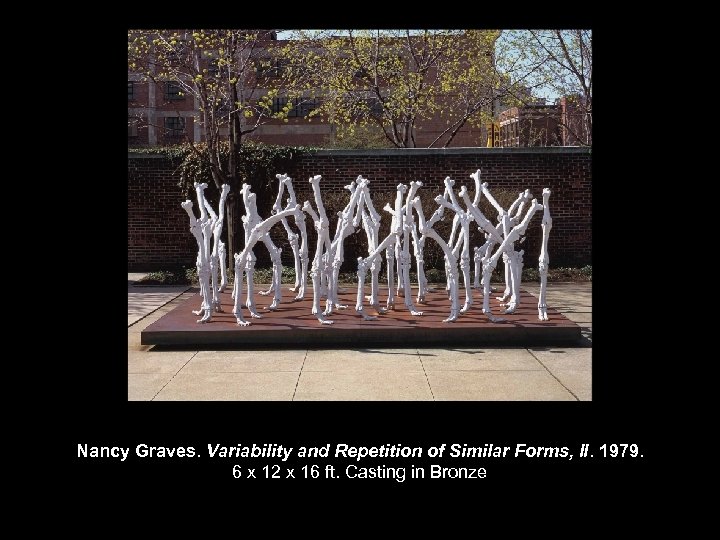 Nancy Graves. Variability and Repetition of Similar Forms, II. 1979. 6 x 12 x 16 ft. Casting in Bronze
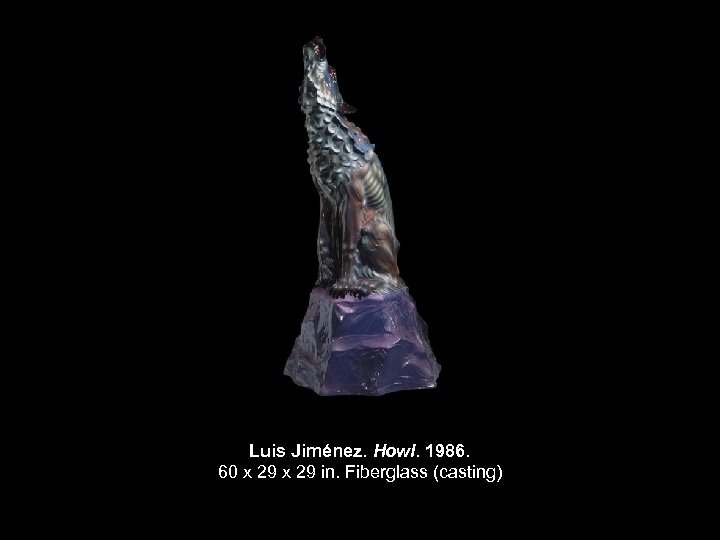 Luis Jiménez. Howl. 1986. 60 x 29 in. Fiberglass (casting)
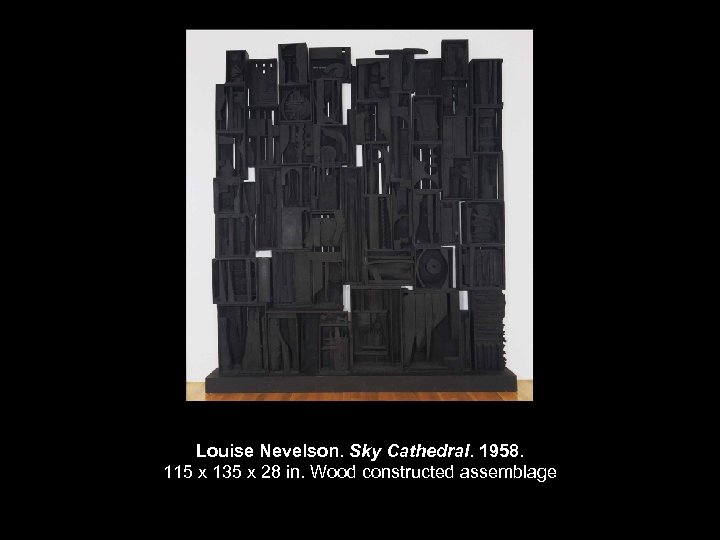 Louise Nevelson. Sky Cathedral. 1958. 115 x 135 x 28 in. Wood constructed assemblage
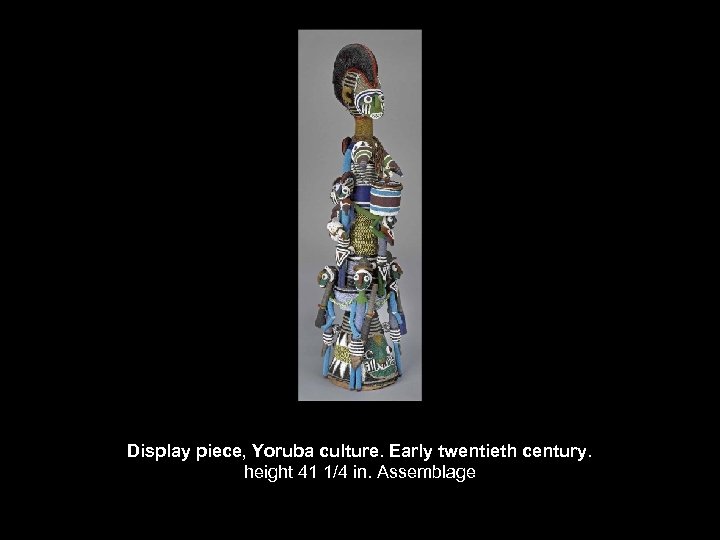 Display piece, Yoruba culture. Early twentieth century. height 41 1/4 in. Assemblage
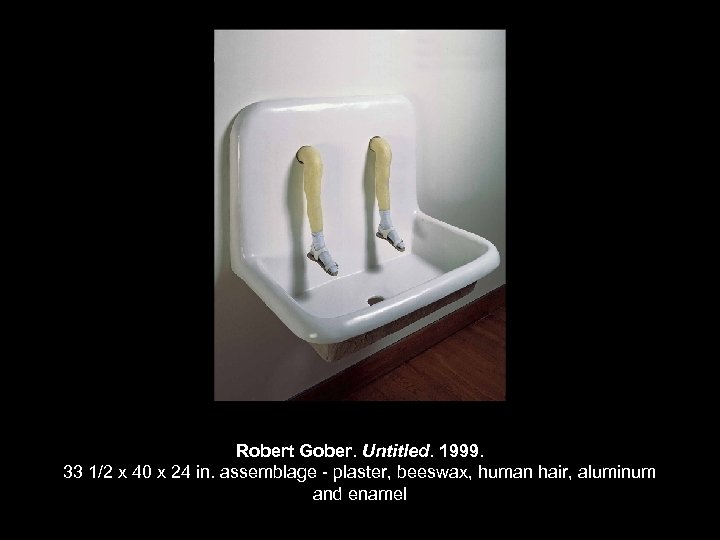 Robert Gober. Untitled. 1999. 33 1/2 x 40 x 24 in. assemblage - plaster, beeswax, human hair, aluminum and enamel
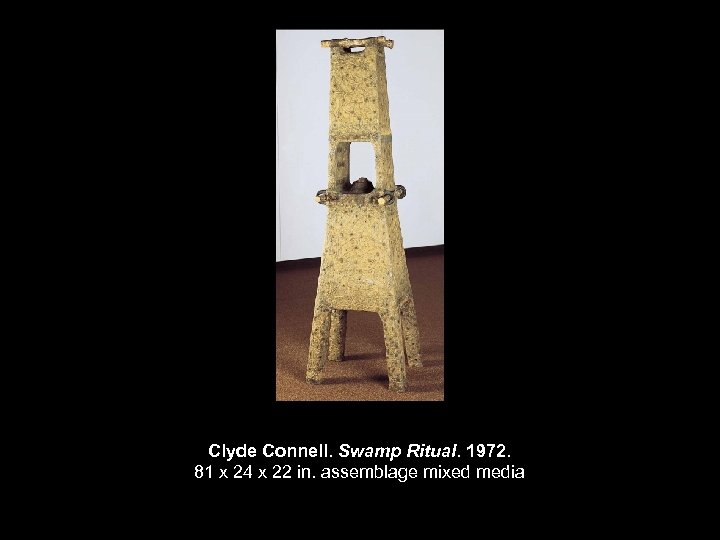 Clyde Connell. Swamp Ritual. 1972. 81 x 24 x 22 in. assemblage mixed media
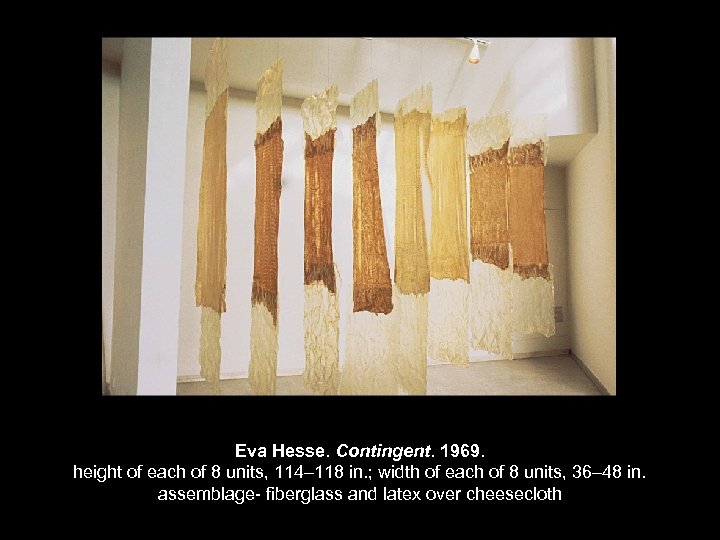 Eva Hesse. Contingent. 1969. height of each of 8 units, 114– 118 in. ; width of each of 8 units, 36– 48 in. assemblage- fiberglass and latex over cheesecloth
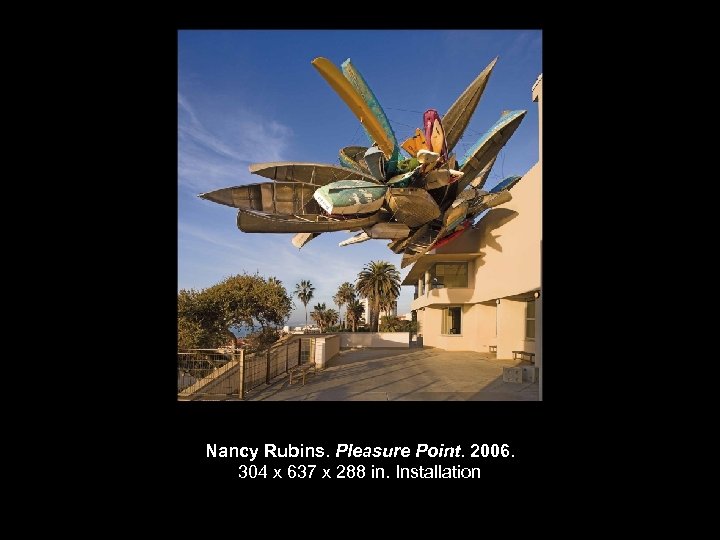 Nancy Rubins. Pleasure Point. 2006. 304 x 637 x 288 in. Installation
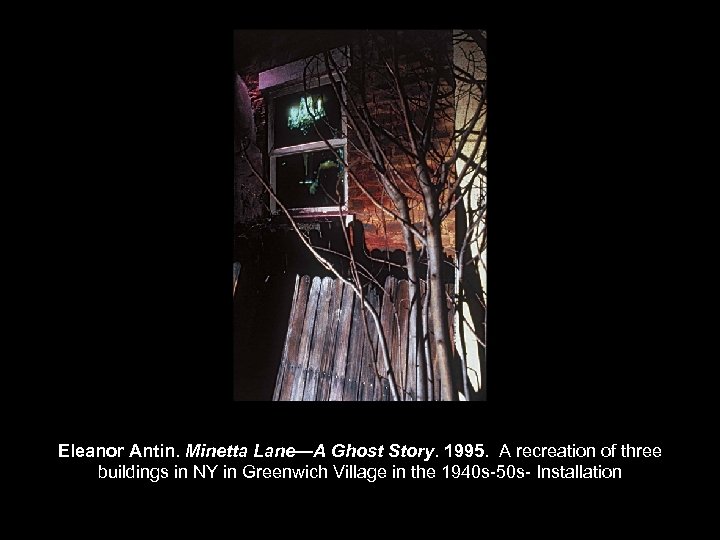 Eleanor Antin. Minetta Lane—A Ghost Story. 1995. A recreation of three buildings in NY in Greenwich Village in the 1940 s-50 s- Installation
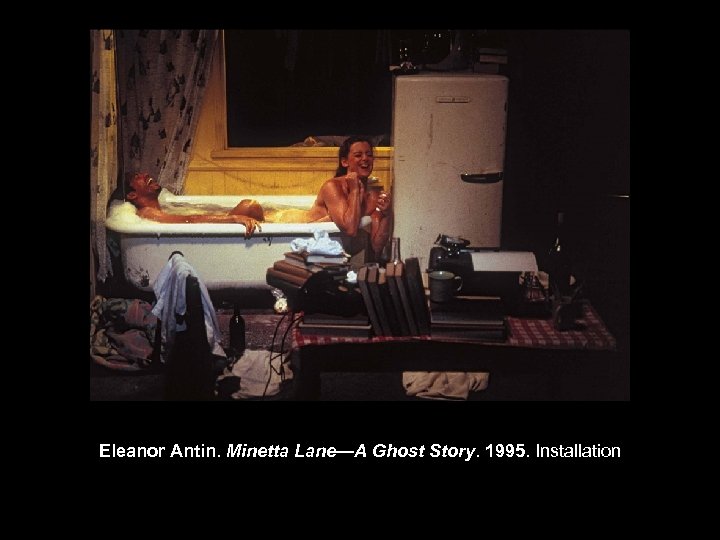 Eleanor Antin. Minetta Lane—A Ghost Story. 1995. Installation
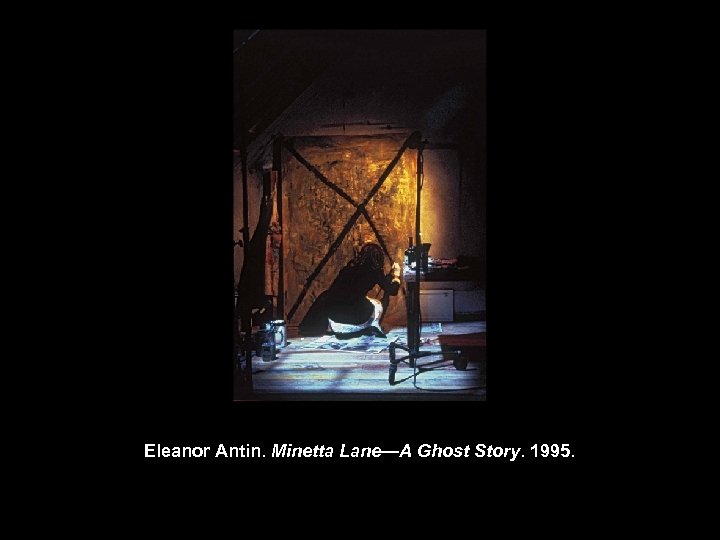 Eleanor Antin. Minetta Lane—A Ghost Story. 1995.
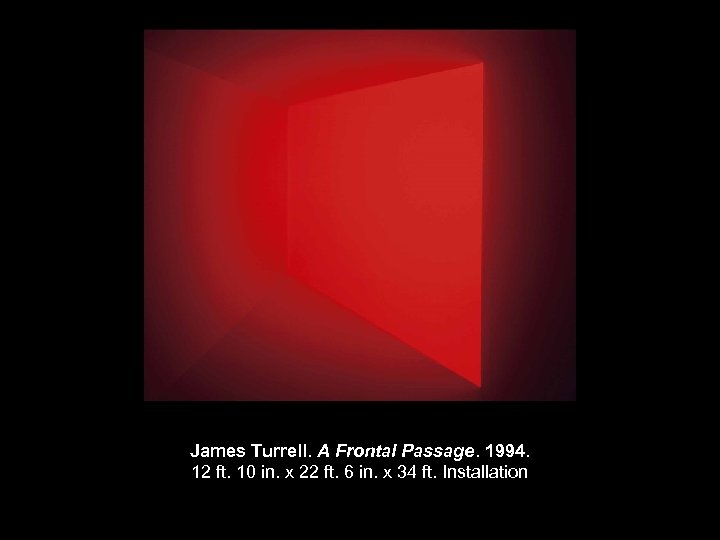 James Turrell. A Frontal Passage. 1994. 12 ft. 10 in. x 22 ft. 6 in. x 34 ft. Installation
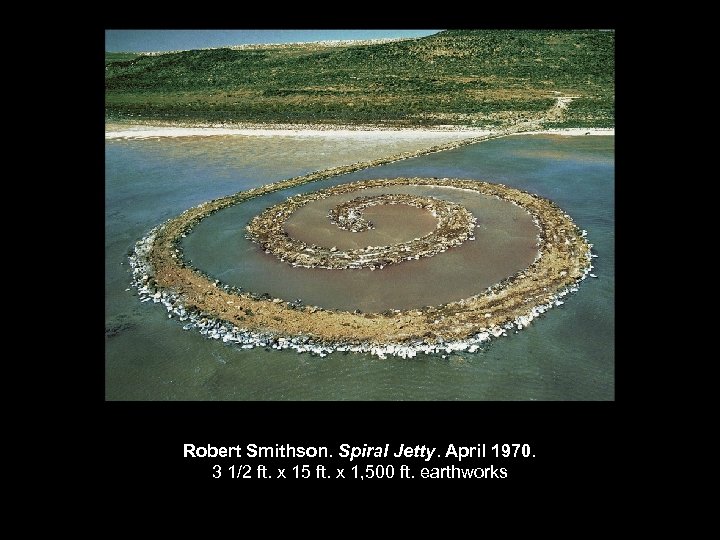 Robert Smithson. Spiral Jetty. April 1970. 3 1/2 ft. x 15 ft. x 1, 500 ft. earthworks
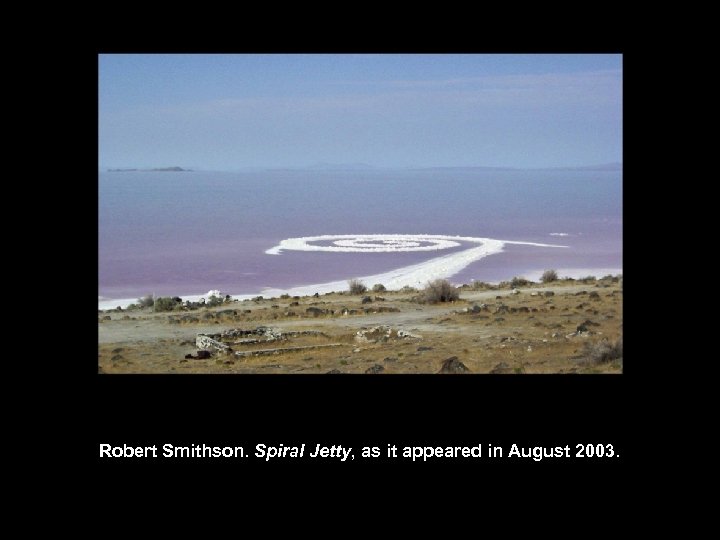 Robert Smithson. Spiral Jetty, as it appeared in August 2003.
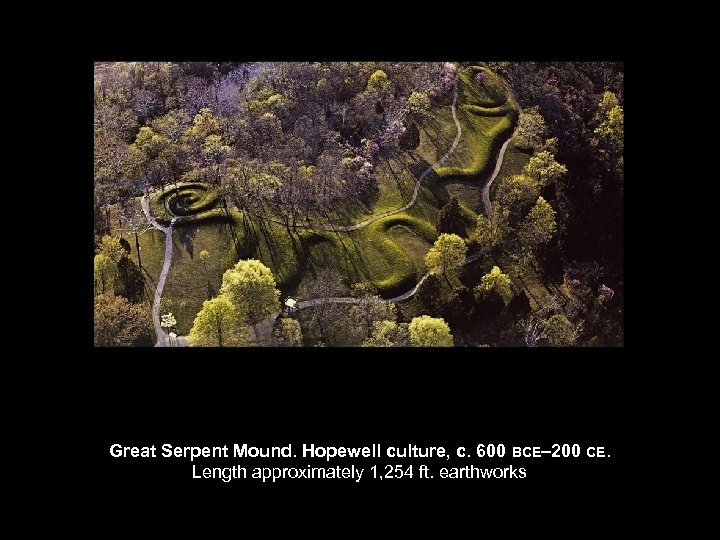 Great Serpent Mound. Hopewell culture, c. 600 BCE– 200 CE. Length approximately 1, 254 ft. earthworks
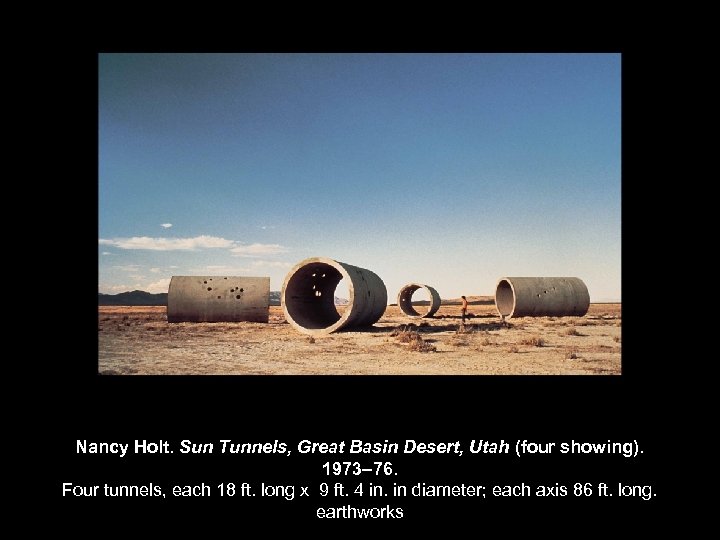 Nancy Holt. Sun Tunnels, Great Basin Desert, Utah (four showing). 1973– 76. Four tunnels, each 18 ft. long x 9 ft. 4 in. in diameter; each axis 86 ft. long. earthworks
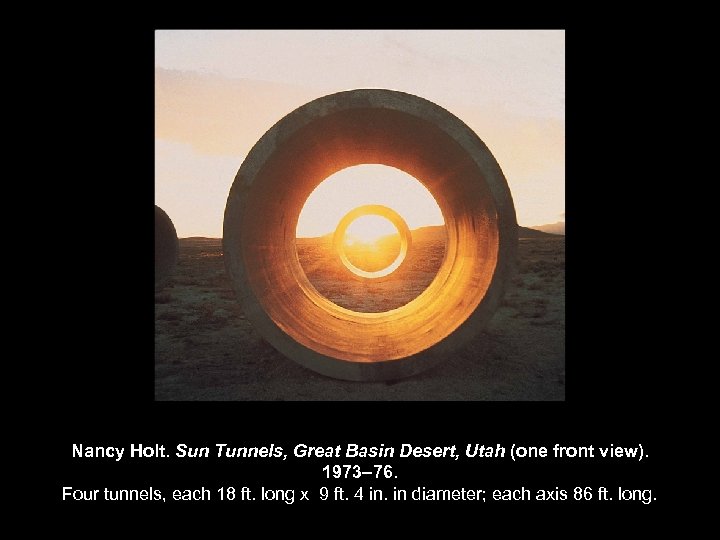 Nancy Holt. Sun Tunnels, Great Basin Desert, Utah (one front view). 1973– 76. Four tunnels, each 18 ft. long x 9 ft. 4 in. in diameter; each axis 86 ft. long.
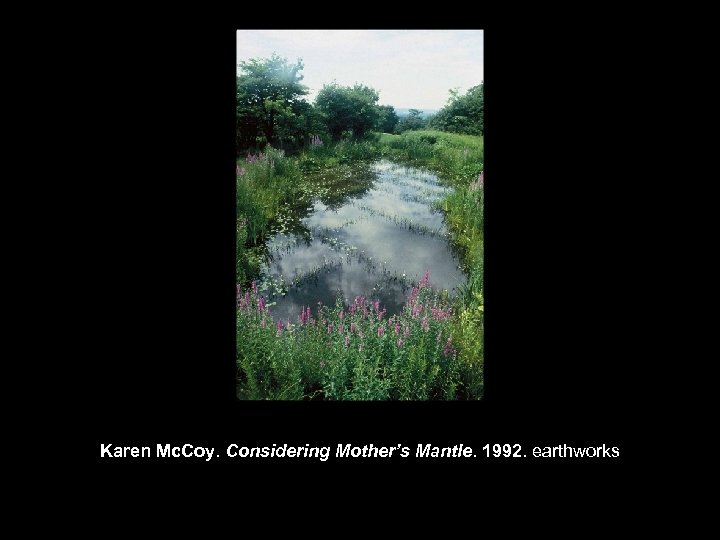 Karen Mc. Coy. Considering Mother’s Mantle. 1992. earthworks
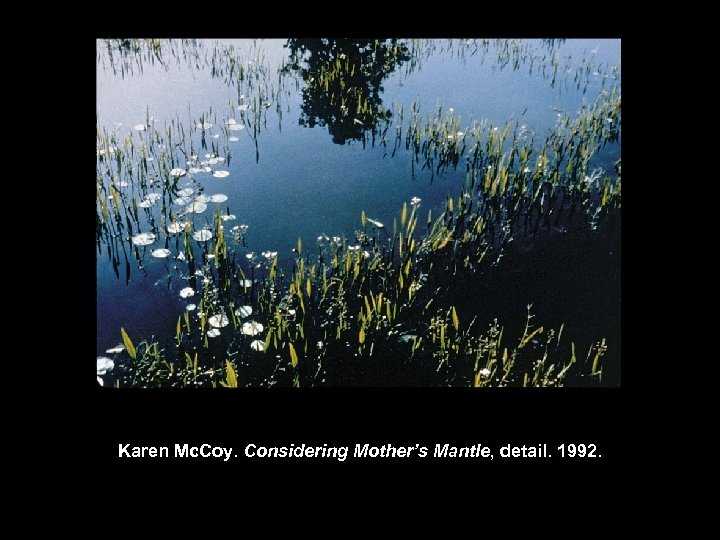 Karen Mc. Coy. Considering Mother’s Mantle, detail. 1992.
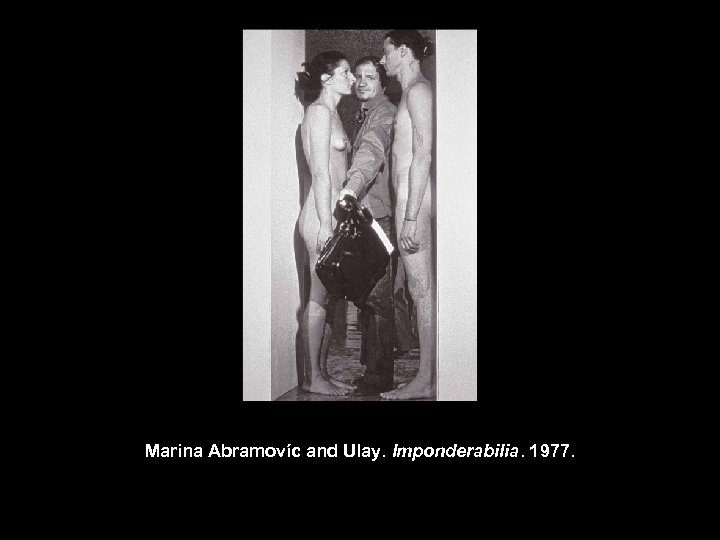 Marina Abramovíc and Ulay. Imponderabilia. 1977.
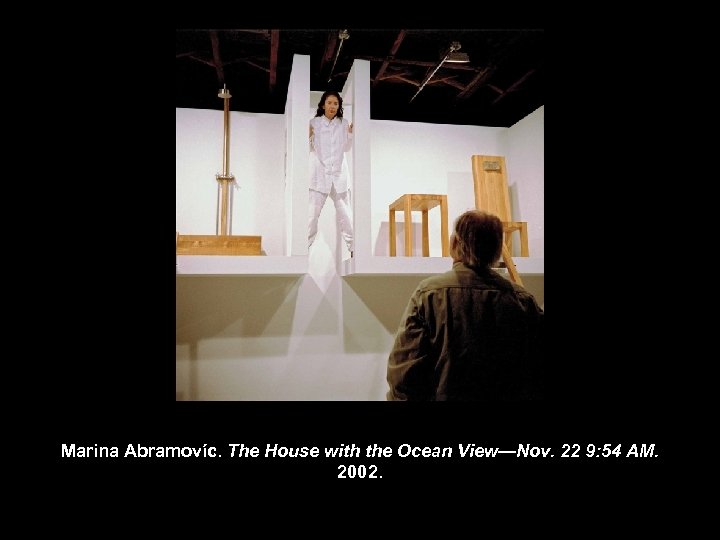 Marina Abramovíc. The House with the Ocean View—Nov. 22 9: 54 AM. 2002.
 Closer Look: Choose an artist(s) from this chapter that you find the most interesting. Is it a relief, sculpture, earth work, etc. ? Write a detailed paragraph about the work. Is it additive or subtractive work? What is the artist's intentions and what the work means to you.