


 Скачать презентацию Richard O Neill richard oneill ferc gov Chief Economic Advisor
4ec94baf7c21a7b3c980e575b44802cb.ppt
- Количество слайдов: 56
 Richard O’Neill richard. oneill@ferc. gov Chief Economic Advisor Federal Energy Regulation Commission NAS Resource Allocation: Economics and Equity The Aspen Institute Queenstown, MD March 20, 2002 This does not necessarily reflect the view of the Commission.
 Richard P. O’Neill Federal Energy Regulatory Commission Benjamin F. Hobbs The Johns Hopkins University and Energieonderzoek Centrum Nederland Paul M. Sotkiewicz University of Florida William Stewart College of William and Mary Michael Rothkopf Rutgers University Udi Helman Federal Energy Regulatory Commission and The Johns Hopkins University
 menu gin scotch hot dog burger $4 $6 $3 $5 You must order from the menu value gin $5 scotch $9 hot dog $3 burger $5 ï$5
 Adam Smith on network regulation “The tolls for the maintenance of a high road, cannot with any safety be made the property of private persons. . It is proper, therefore, that the tolls for the maintenance of such work should be put under the management of commissioners or trustees. ” [Wealth of Nations , Book V, Chap 1, p. 684]
 [If Adam Smith is not enough, why intervene? þTo provide for reliability þTo ensure revenue adequacy (no subsidies) þTo facilitate entry generation, transmission, consumption þTo mitigate market power þTo provide competitive price signals þTo protect property rights BHow to intervene?
 é nondiscriminatory é lower transactions costs é more not less options é control market power é highly efficient é “just” prices é will prices be too low? é Are low prices bad? é are market prices unconstitutional? All power corrupts, but we need the electricity.
 Electric markets are incomplete and complex Mincomplete if not pricing all desired products Masymmetric markets: vertical demand curve Mbidding nonconvexities MSupply: start-up and no-load Mdemand: for y continuous hours at < $x Mintertemporal dependencies Mreactive (imaginary/orthogonal) power Msocialize transient stability/ voltage Msocialize generation and load characteristics Mcan decentralized markets handle this?
 Basics of market design BContracts (not compacts) BMarginal/incremental cost bidding BStart-up and min run BTrading rules BFinancially sound BMarket clearing prices BIncentives BFor doing “good” things BFor not doing “bad” things(socal gas, no withholding) BWith collars for political reasons BInformation
 Auction Design Principles "Everything should be made as simple as possible. . . but not simpler. " Einstein ò Don'ts =22/7 ò Create gaming opportunities in the name of simplicity ò Foreclose marginal (incremental) cost bids ò Assume away non-convexities ò increase risk ò Allow bids that are not firm offers ò favor large players ñ Do's = 4[1 -1/3 + 1/5 – 1/7 + …] ñ Allow marginal cost bidding ñ market clearing price (with scarcity rents) ñ make the process internally consistent ñ Create property rights and simple alternatives ñ Allow self scheduling
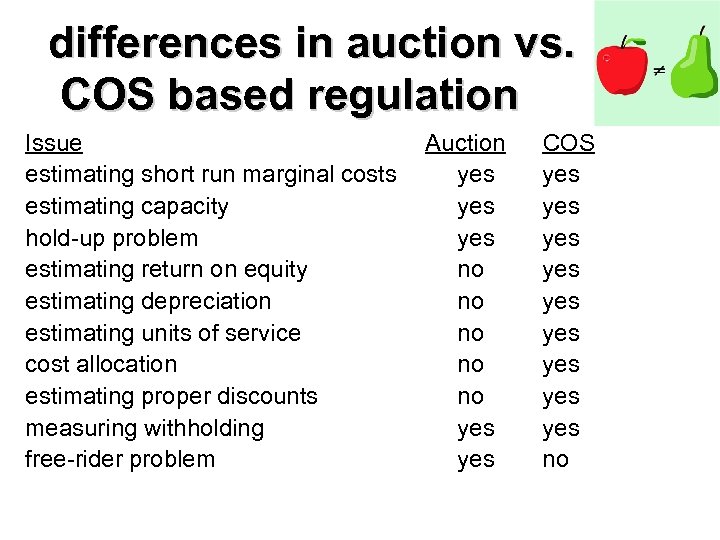 differences in auction vs. COS based regulation Issue estimating short run marginal costs estimating capacity hold-up problem estimating return on equity estimating depreciation estimating units of service cost allocation estimating proper discounts measuring withholding free-rider problem Auction yes yes no no no yes COS yes yes yes no
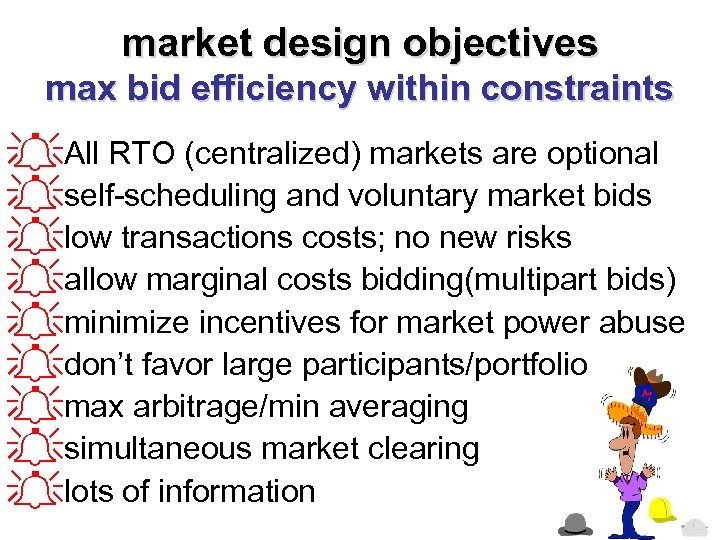 market design objectives max bid efficiency within constraints AAll RTO (centralized) markets are optional Aself-scheduling and voluntary market bids Alow transactions costs; no new risks Aallow marginal costs bidding(multipart bids) Aminimize incentives for market power abuse Adon’t favor large participants/portfolio Amax arbitrage/min averaging Asimultaneous market clearing Alots of information
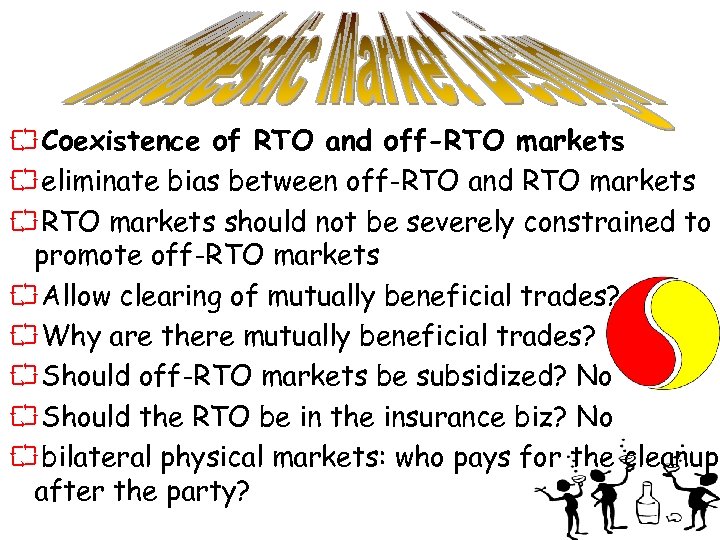 `Coexistence of RTO and off-RTO markets `eliminate bias between off-RTO and RTO markets `RTO markets should not be severely constrained to promote off-RTO markets `Allow clearing of mutually beneficial trades? `Why are there mutually beneficial trades? `Should off-RTO markets be subsidized? No `Should the RTO be in the insurance biz? No `bilateral physical markets: who pays for the cleanup after the party?
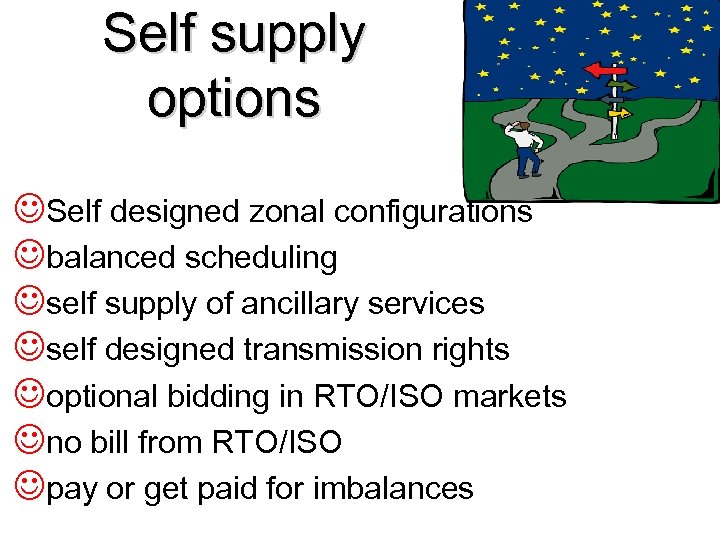 Self supply options JSelf designed zonal configurations Jbalanced scheduling Jself supply of ancillary services Jself designed transmission rights Joptional bidding in RTO/ISO markets Jno bill from RTO/ISO Jpay or get paid for imbalances
 e. Pre-day-ahead markets efor transmission rights: CRT/TCC/TRCs/FGRs efor generation capacity/resevres (ICAP) emarket power mitigation via options contracts eday-ahead market for reliability(valium substitute) esimultaneous nodal market-clearing auctions for energy, ancillary services and congestion eallow multi-part bidding ehigher of market or bid cost recovery eallow self scheduling eallow price limit bids on ancillary and congestion e. Real-time balancing myopic market emarkets are nodal-based LMP with fish protection
 Pre-day-ahead markets þ Annual, seasonal, monthly, weekly þ Simultaneous clearing of all products þ Demand side bidding or capacity options (physical? ) þ Capacity markets (two year ahead for entry) þ Transmission contracts þenergy forward contracts: FCCs, FTCs þenergy options contracts: CRTs þflow gate options: FGRs þFTR options for reserves þUnbalanced contracts! þ market power mitigation contracts þbid marginal costs including start up and no load þpay higher of market clearing price or costs
 Day-ahead reliability management BOptimize system topology over large areas Breserves, real and reactive power balanced Bclear most congestion Breserves in place including tx capacity Bset imports Bclear mutually beneficial trades Binterperiod interdependencies: start-up, ramp rate and minimum load
 Design principles for dayahead RTO market AObjective: max efficiency within reliability Aallow marginal cost bids(start-up/min load) Aself-scheduling with optional bidding Asimultaneous clearing of all services at LMP Apay higher of bid costs or market clearing price Afinancially binding/physically if needed Alow risk and transactions costs
 Can the real-time market handle reliability by itself? 6 Is a real-time market enough? In theory yes 6 can too much real-time scheduling threaten system stability? 6 Neighborhood reliability of the AC load flow What if it was a DC load flow? Simple 6 should there be an incentive not to be more than x% out of balance? 6 first, eliminate all bias to be in the RTM
 Design principles for real-time RTO market 1. No other markets need be in real-time balance 2. max efficiency within system balance 3. deviations from day-ahead priced at market 4. those operating as scheduled in day-ahead pay nothing 5. physically binding 6. pay market clearing price 7. low risk and transactions costs
 non-simultaneous auctions without LMP and marginal cost bidding N Socialize not privatize cost N higher cost passthroughs: uplift N create incentives for market power to lower the risks of the market design N higher transactions cost of bid preparation N market power mitigation is more difficult N constant redesign to correct flaws N problems in England, Columbia, California N Australia moving from zonal to nodal
 ¢Zonal markets (Cal, PJM, NE, UK) ¢Sequential markets for energy and anc services ¢One settlement systems ¢Infeasible markets (Cal PX and UK) ¢Ignore nonconvexities (start-up and no-load) ¢Ignore market power ¢As-bid pricing ¢all ended in administrative intervention ¢No property rights to market power or poor market design
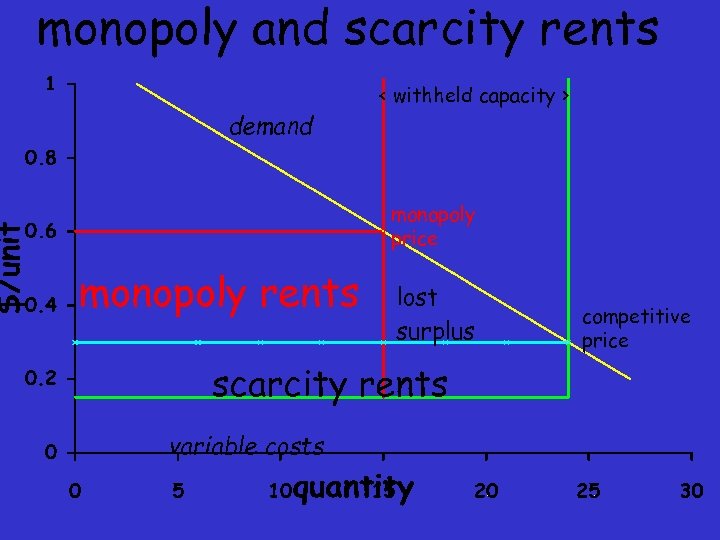 monopoly and scarcity rents < withheld capacity > demand monopoly price monopoly rents lost surplus scarcity rents variable costs competitive price
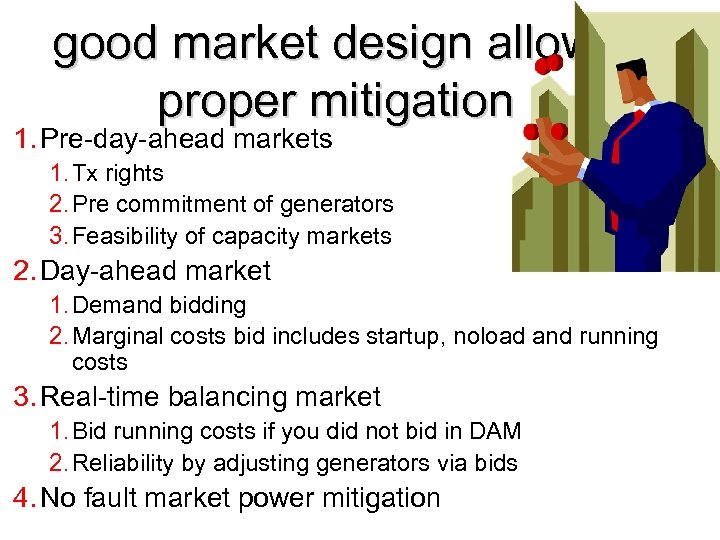 good market design allows proper mitigation 1. Pre-day-ahead markets 1. Tx rights 2. Pre commitment of generators 3. Feasibility of capacity markets 2. Day-ahead market 1. Demand bidding 2. Marginal costs bid includes startup, noload and running costs 3. Real-time balancing market 1. Bid running costs if you did not bid in DAM 2. Reliability by adjusting generators via bids 4. No fault market power mitigation
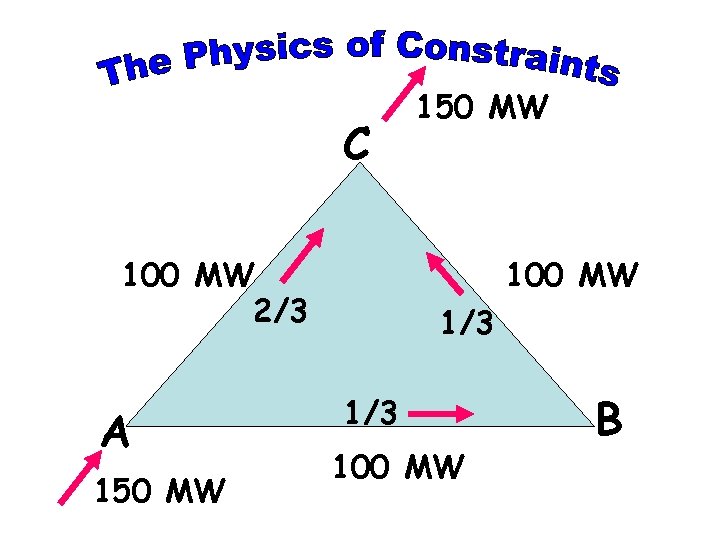 C 100 MW 2/3 A 150 MW 100 MW 1/3 100 MW B
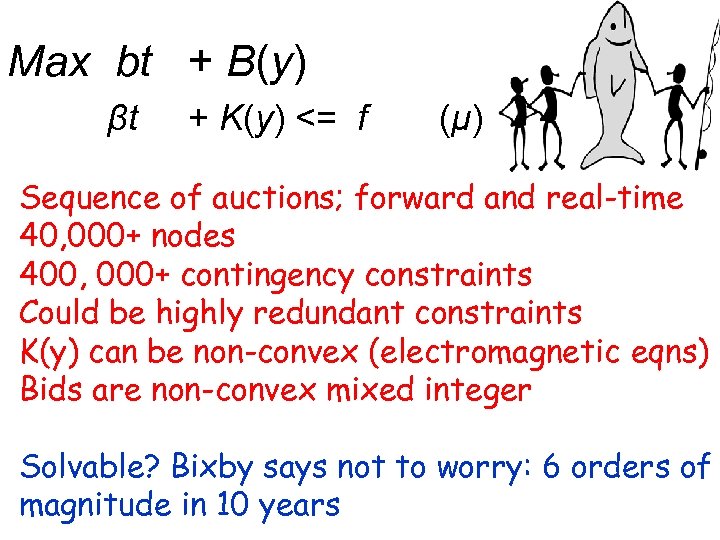 Max bt + B(y) βt + K(y) <= f (μ) Sequence of auctions; forward and real-time 40, 000+ nodes 400, 000+ contingency constraints Could be highly redundant constraints K(y) can be non-convex (electromagnetic eqns) Bids are non-convex mixed integer Solvable? Bixby says not to worry: 6 orders of magnitude in 10 years
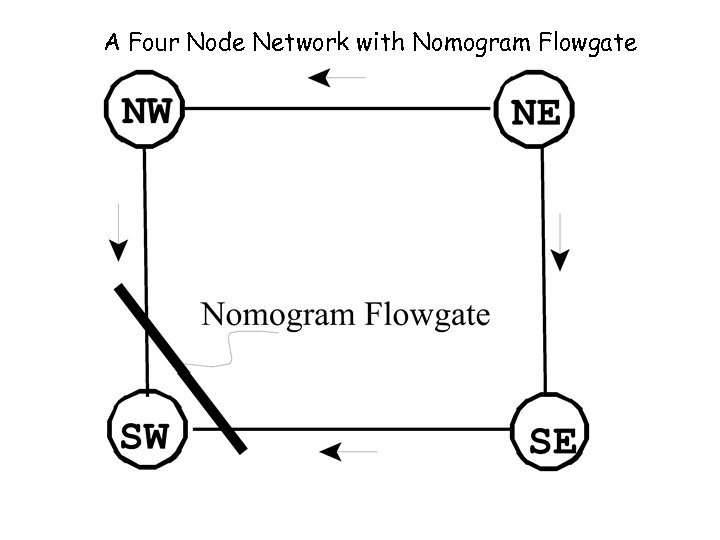 A Four Node Network with Nomogram Flowgate
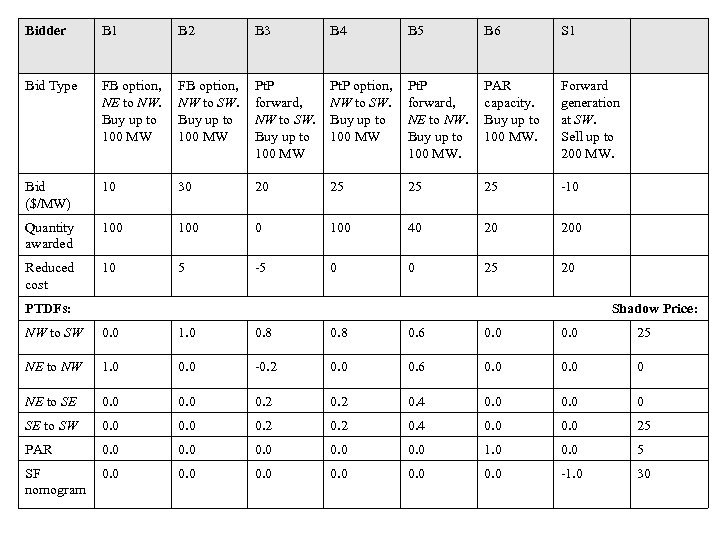 Bidder B 1 B 2 B 3 B 4 B 5 B 6 S 1 Bid Type FB option, NE to NW. Buy up to 100 MW FB option, NW to SW. Buy up to 100 MW Pt. P forward, NW to SW. Buy up to 100 MW Pt. P option, NW to SW. Buy up to 100 MW Pt. P forward, NE to NW. Buy up to 100 MW. PAR capacity. Buy up to 100 MW. Forward generation at SW. Sell up to 200 MW. Bid ($/MW) 10 30 20 25 25 25 -10 Quantity awarded 100 0 100 40 20 200 Reduced cost 10 5 -5 0 0 25 20 PTDFs: Shadow Price: NW to SW 0. 0 1. 0 0. 8 0. 6 0. 0 25 NE to NW 1. 0 0. 0 -0. 2 0. 0 0. 6 0. 0 0 NE to SE 0. 0 0. 2 0. 4 0. 0 0 SE to SW 0. 0 0. 2 0. 4 0. 0 25 PAR 0. 0 0. 0 1. 0 0. 0 5 SF nomogram 0. 0 0. 0 -1. 0 30
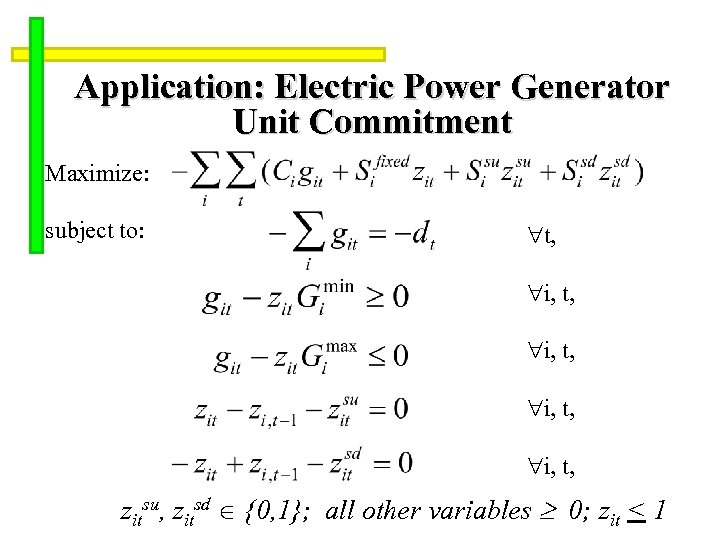 Application: Electric Power Generator Unit Commitment Maximize: subject to: t, i, t, zitsu, zitsd {0, 1}; all other variables 0; zit < 1
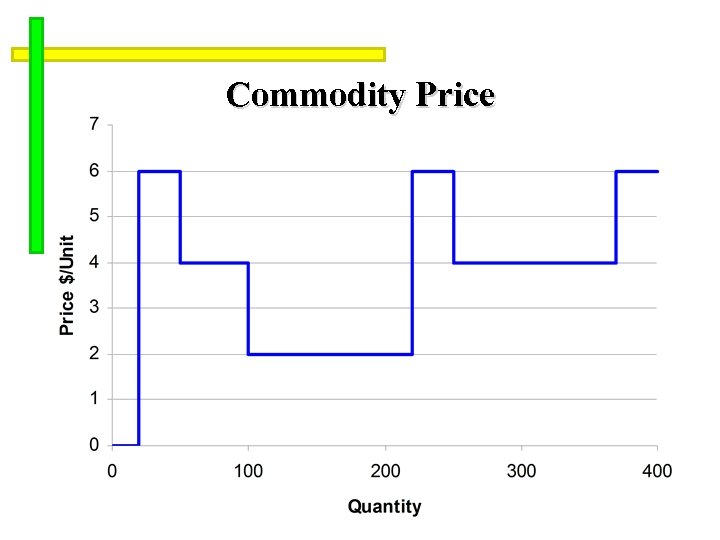
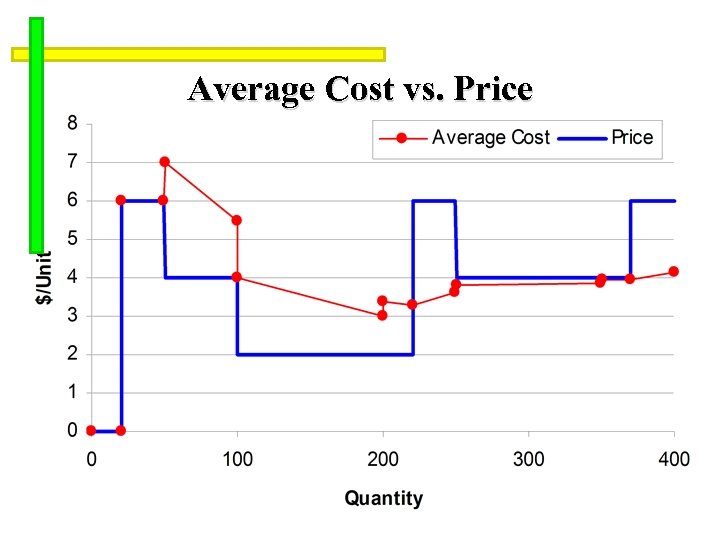
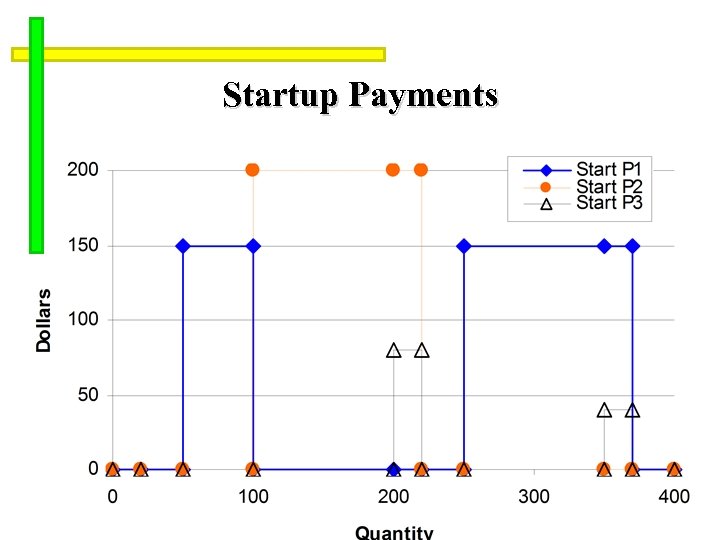
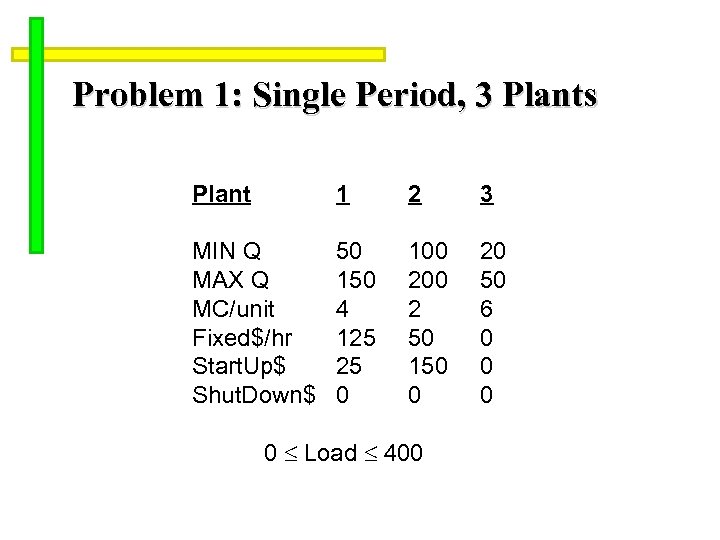 Problem 1: Single Period, 3 Plants Plant 1 2 3 MIN Q MAX Q MC/unit Fixed$/hr Start. Up$ Shut. Down$ 50 150 4 125 25 0 100 2 50 150 0 20 50 6 0 0 Load 400
 Commodity Price
 Average Cost vs. Price
 Startup Payments
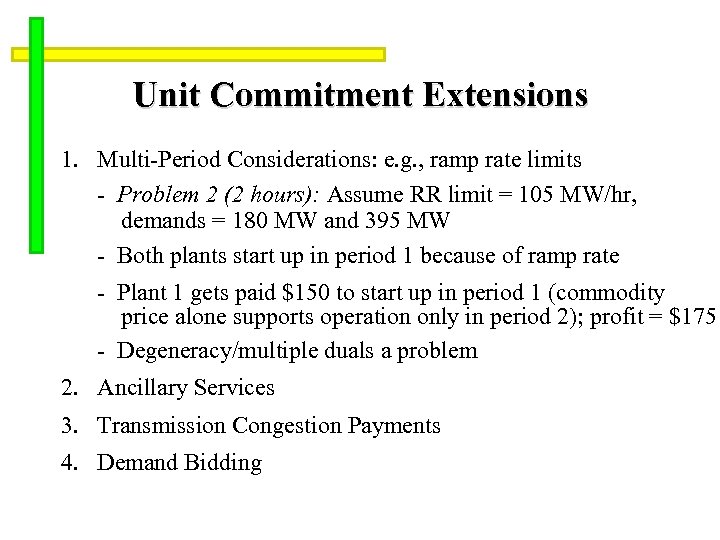 Unit Commitment Extensions 1. Multi-Period Considerations: e. g. , ramp rate limits - Problem 2 (2 hours): Assume RR limit = 105 MW/hr, demands = 180 MW and 395 MW - Both plants start up in period 1 because of ramp rate - Plant 1 gets paid $150 to start up in period 1 (commodity price alone supports operation only in period 2); profit = $175 - Degeneracy/multiple duals a problem 2. Ancillary Services 3. Transmission Congestion Payments 4. Demand Bidding
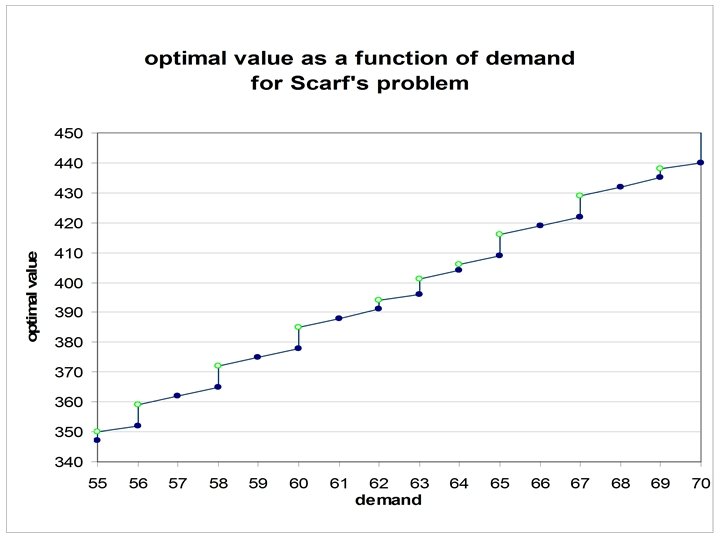
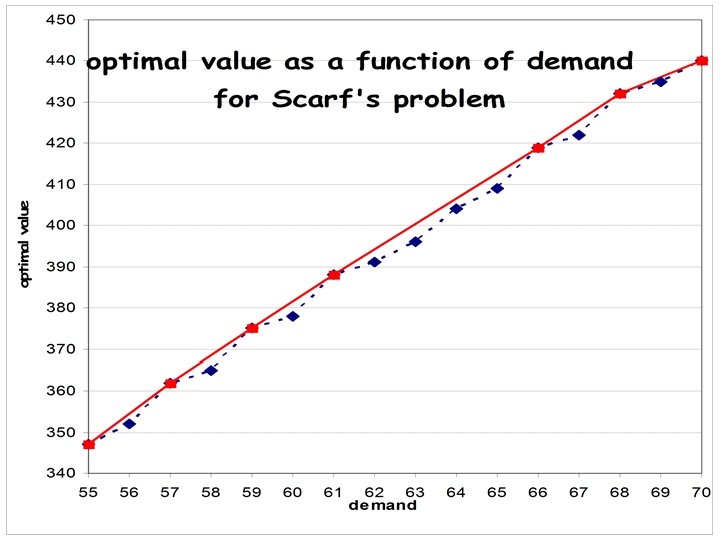
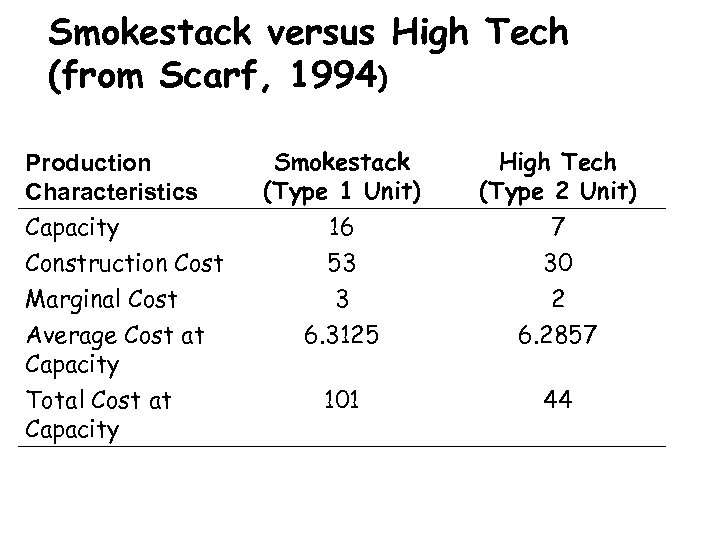 Smokestack versus High Tech (from Scarf, 1994) Production Characteristics Capacity Construction Cost Marginal Cost Average Cost at Capacity Total Cost at Capacity Smokestack (Type 1 Unit) High Tech (Type 2 Unit) 16 53 3 6. 3125 7 30 2 6. 2857 101 44
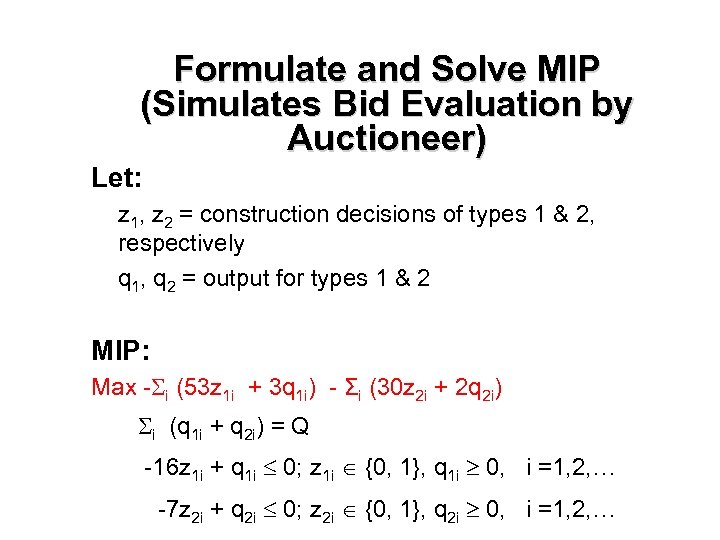 Formulate and Solve MIP (Simulates Bid Evaluation by Auctioneer) Let: z 1, z 2 = construction decisions of types 1 & 2, respectively q 1, q 2 = output for types 1 & 2 MIP: Max - i (53 z 1 i + 3 q 1 i) - Σi (30 z 2 i + 2 q 2 i) i (q 1 i + q 2 i) = Q -16 z 1 i + q 1 i 0; z 1 i {0, 1}, q 1 i 0, i =1, 2, … -7 z 2 i + q 2 i 0; z 2 i {0, 1}, q 2 i 0, i =1, 2, …
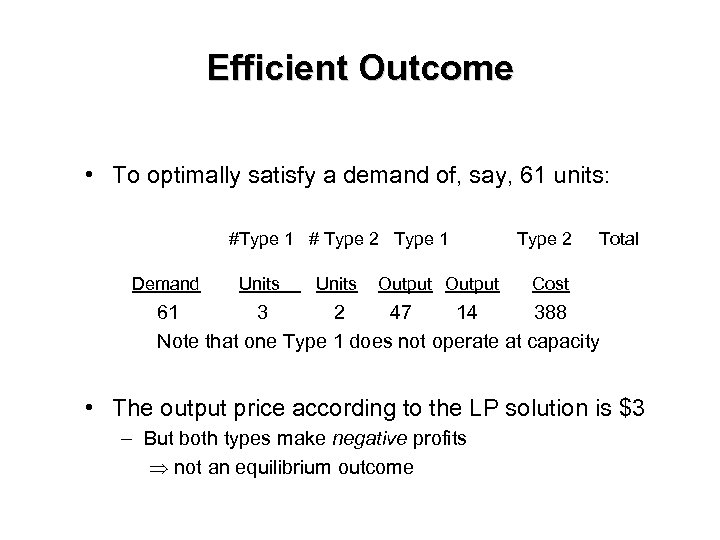 Efficient Outcome • To optimally satisfy a demand of, say, 61 units: #Type 1 # Type 2 Type 1 Demand Units Output Type 2 Total Cost 61 3 2 47 14 388 Note that one Type 1 does not operate at capacity • The output price according to the LP solution is $3 – But both types make negative profits not an equilibrium outcome
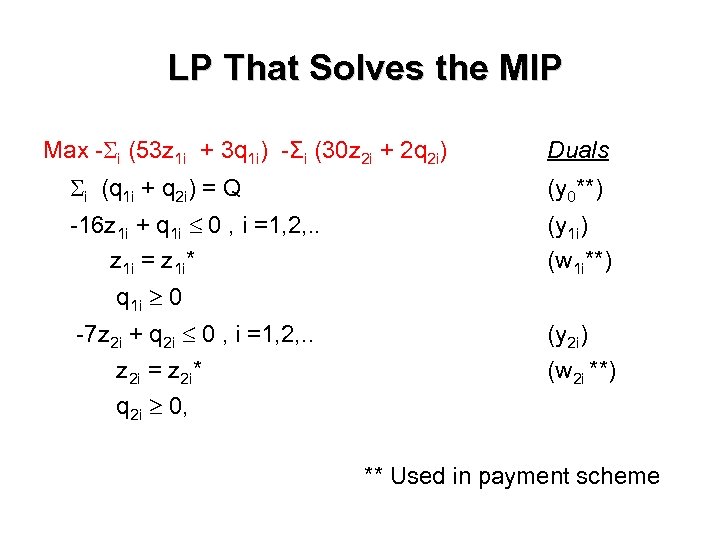 LP That Solves the MIP Max - i (53 z 1 i + 3 q 1 i) -Σi (30 z 2 i + 2 q 2 i) Duals i (q 1 i + q 2 i) = Q (y 0**) -16 z 1 i + q 1 i 0 , i =1, 2, . . z 1 i = z 1 i* (y 1 i) (w 1 i**) q 1 i 0 -7 z 2 i + q 2 i 0 , i =1, 2, . . z 2 i = z 2 i* (y 2 i) (w 2 i **) q 2 i 0, ** Used in payment scheme
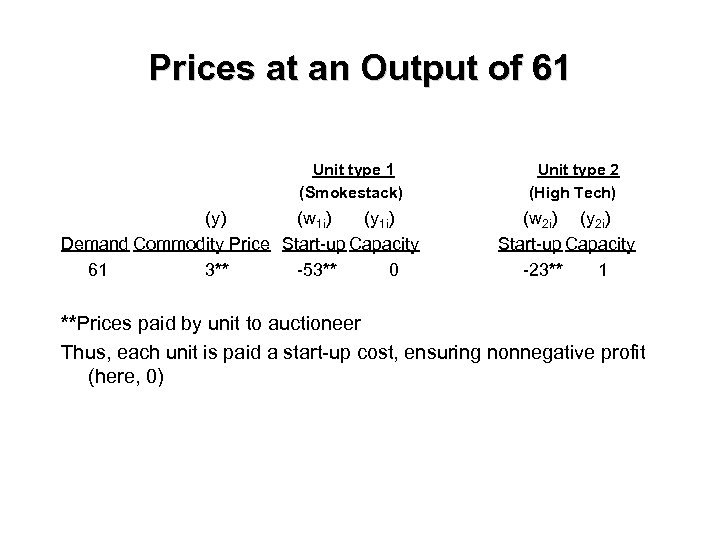 Prices at an Output of 61 Unit type 1 (Smokestack) (y) (w 1 i) (y 1 i) Demand Commodity Price Start-up Capacity 61 3** -53** 0 Unit type 2 (High Tech) (w 2 i) (y 2 i) Start-up Capacity -23** 1 **Prices paid by unit to auctioneer Thus, each unit is paid a start-up cost, ensuring nonnegative profit (here, 0)
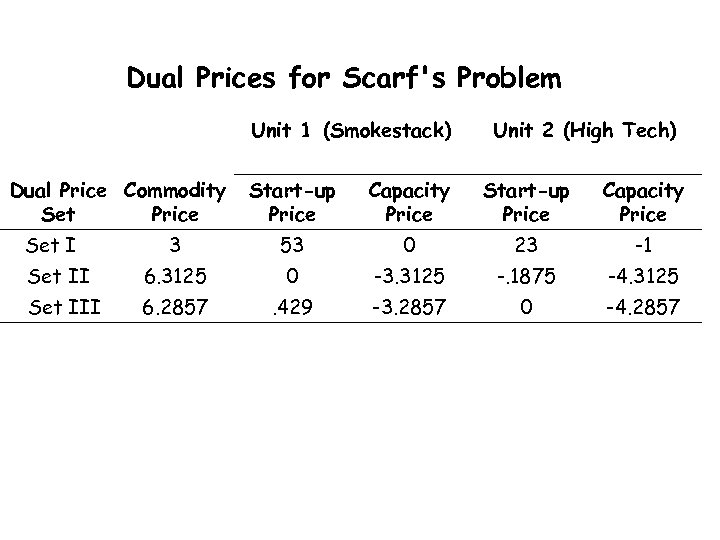 Dual Prices for Scarf's Problem Unit 1 (Smokestack) Dual Price Commodity Set Price Unit 2 (High Tech) Start-up Price Capacity Price 3 53 0 23 -1 Set II 6. 3125 0 -3. 3125 -. 1875 -4. 3125 Set III 6. 2857 . 429 -3. 2857 0 -4. 2857 Set I
 Non-Convexities in Markets • While market models often assume away non-convexities (e. g. , integral decisions and economies of scale), … they exist! • Electric utility industry: – Still economies of scale in generation and especially transmission – Unit commitment: start-up, shut-down costs; minimum run levels • Why disregard non-convexities in market models? … with convex profit maximization problems (concave objective, convex feasible region), we can usually: – define linear (“one-part”) market clearing prices – establish existence, uniqueness properties for market equilibria – create tests for entering activities
 The Problem with Non-Convexities • Linear prices can no longer clear the market … an equilibrium cannot be guaranteed to exist • E. g. , electric power operations: – At P < P*, inadequate supply – At P > P*, a lump of additional supply enters that breaks even (covers fixed costs), but supply exceeds demand. If force any generator to back off, its profit < 0 – “Administrative” solution to reach the optimum: • Adjust outputs to restore feasibility • Side payments to ensure no one loses money • As Scarf (1990, 1994) then points out, there is no price test for Pareto improving entry of new production processes
 Why Address Non-Convexities in Auctions Now? 1) New markets for electric power have non-convexities 2) A debate surrounding these power markets: the use of prices to induce efficient, decentralized decisions a la Walrasian auctions 3) Auction mechanisms in the NYISO and PJM attempt to account for integer decisions 4) California said no to such an auction because of complaints: - these prices are not “equilibrium supporting” and - administrative adjustments appear arbitrary (e. g. , Johnson, Oren, Svoboda 1998) 5) Our result: If integral decisions can be priced, a market equilibrium can be supported
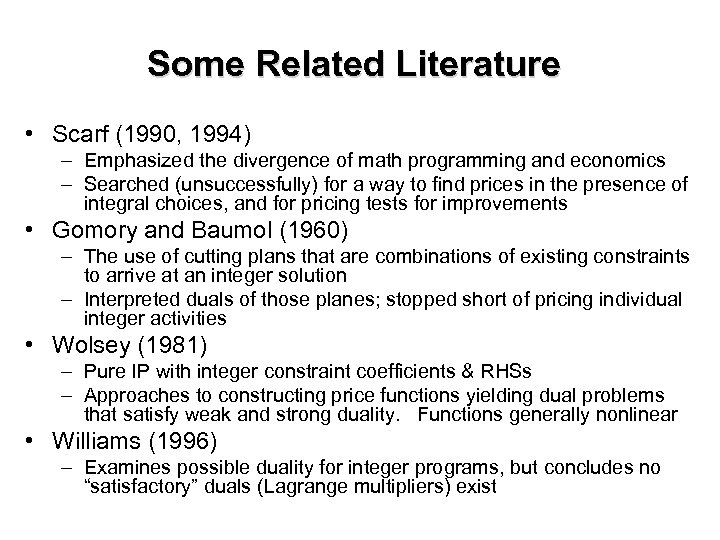 Some Related Literature • Scarf (1990, 1994) – Emphasized the divergence of math programming and economics – Searched (unsuccessfully) for a way to find prices in the presence of integral choices, and for pricing tests for improvements • Gomory and Baumol (1960) – The use of cutting plans that are combinations of existing constraints to arrive at an integer solution – Interpreted duals of those planes; stopped short of pricing individual integer activities • Wolsey (1981) – Pure IP with integer constraint coefficients & RHSs – Approaches to constructing price functions yielding dual problems that satisfy weak and strong duality. Functions generally nonlinear • Williams (1996) – Examines possible duality for integer programs, but concludes no “satisfactory” duals (Lagrange multipliers) exist
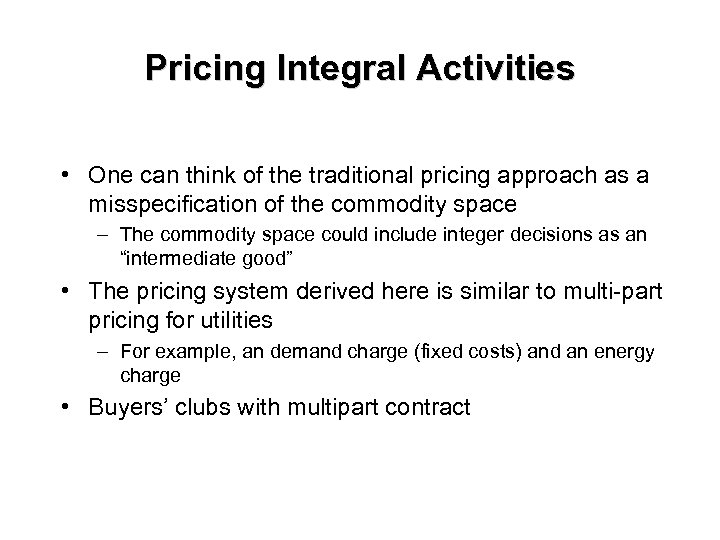 Pricing Integral Activities • One can think of the traditional pricing approach as a misspecification of the commodity space – The commodity space could include integer decisions as an “intermediate good” • The pricing system derived here is similar to multi-part pricing for utilities – For example, an demand charge (fixed costs) and an energy charge • Buyers’ clubs with multipart contract
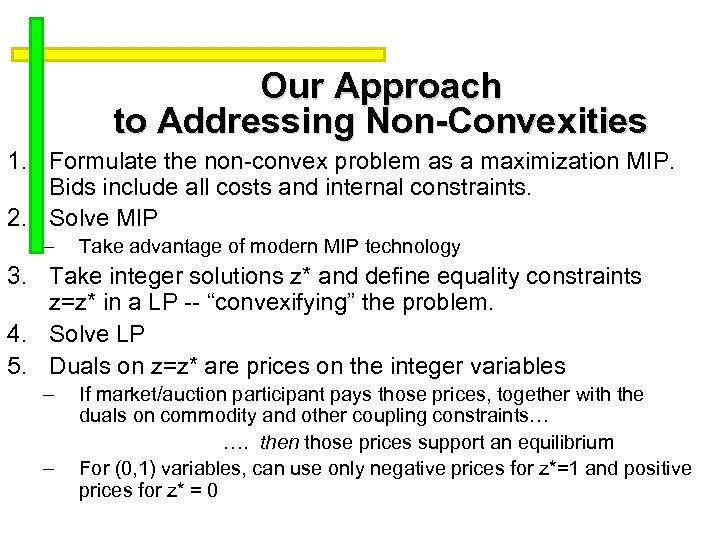 Our Approach to Addressing Non-Convexities 1. Formulate the non-convex problem as a maximization MIP. Bids include all costs and internal constraints. 2. Solve MIP – Take advantage of modern MIP technology 3. Take integer solutions z* and define equality constraints z=z* in a LP -- “convexifying” the problem. 4. Solve LP 5. Duals on z=z* are prices on the integer variables – – If market/auction participant pays those prices, together with the duals on commodity and other coupling constraints… …. then those prices support an equilibrium For (0, 1) variables, can use only negative prices for z*=1 and positive prices for z* = 0
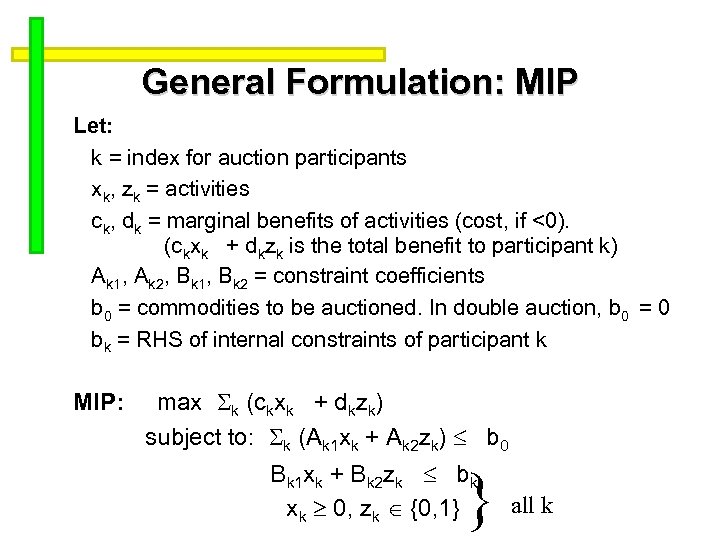 General Formulation: MIP Let: k = index for auction participants xk, zk = activities ck, dk = marginal benefits of activities (cost, if <0). (ckxk + dkzk is the total benefit to participant k) Ak 1, Ak 2, Bk 1, Bk 2 = constraint coefficients b 0 = commodities to be auctioned. In double auction, b 0 = 0 bk = RHS of internal constraints of participant k MIP: max k (ckxk + dkzk) subject to: k (Ak 1 xk + Ak 2 zk) b 0 Bk 1 xk + Bk 2 zk bk xk 0, zk {0, 1} } all k
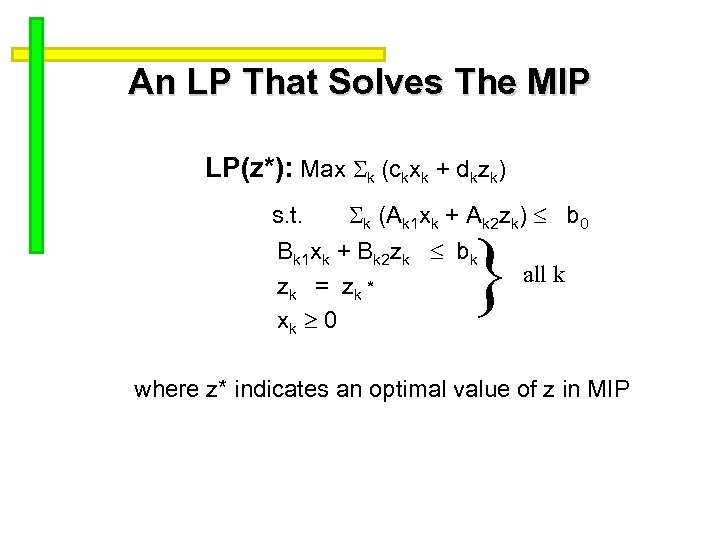 An LP That Solves The MIP LP(z*): Max k (ckxk + dkzk) s. t. k (Ak 1 xk + Ak 2 zk) b 0 } Bk 1 xk + Bk 2 zk bk zk = zk * xk 0 all k where z* indicates an optimal value of z in MIP
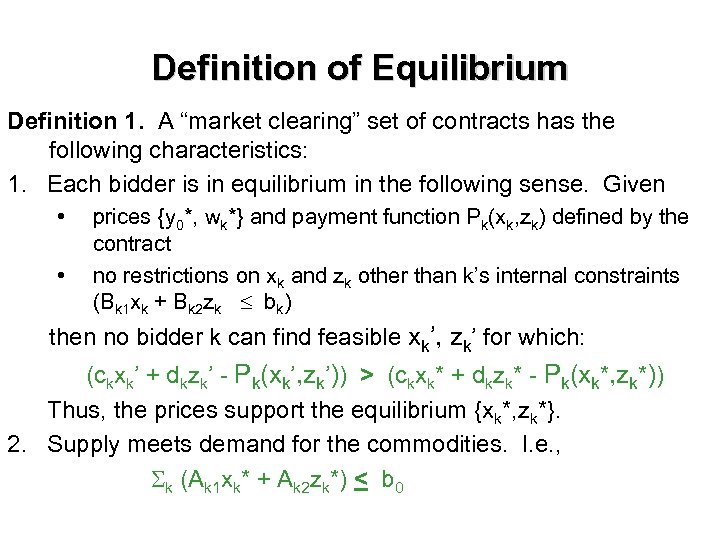 Definition of Equilibrium Definition 1. A “market clearing” set of contracts has the following characteristics: 1. Each bidder is in equilibrium in the following sense. Given • • prices {y 0*, wk*} and payment function Pk(xk, zk) defined by the contract no restrictions on xk and zk other than k’s internal constraints (Bk 1 xk + Bk 2 zk bk) then no bidder k can find feasible xk’, zk’ for which: (ckxk’ + dkzk’ - Pk(xk’, zk’)) > (ckxk* + dkzk* - Pk(xk*, zk*)) Thus, the prices support the equilibrium {xk*, zk*}. 2. Supply meets demand for the commodities. I. e. , k (Ak 1 xk* + Ak 2 zk*) < b 0
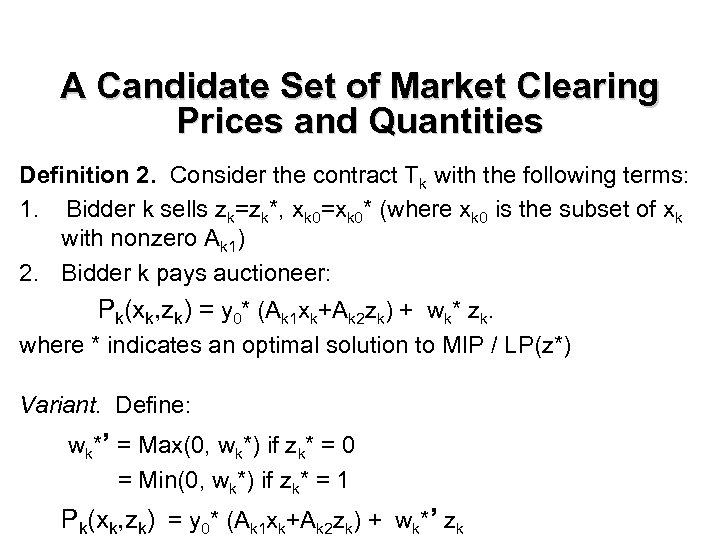 A Candidate Set of Market Clearing Prices and Quantities Definition 2. Consider the contract Tk with the following terms: 1. Bidder k sells zk=zk*, xk 0=xk 0* (where xk 0 is the subset of xk with nonzero Ak 1) 2. Bidder k pays auctioneer: Pk(xk, zk) = y 0* (Ak 1 xk+Ak 2 zk) + wk* zk. where * indicates an optimal solution to MIP / LP(z*) Variant. Define: wk*’ = Max(0, wk*) if zk* = 0 = Min(0, wk*) if zk* = 1 Pk(xk, zk) = y 0* (Ak 1 xk+Ak 2 zk) + wk*’ zk
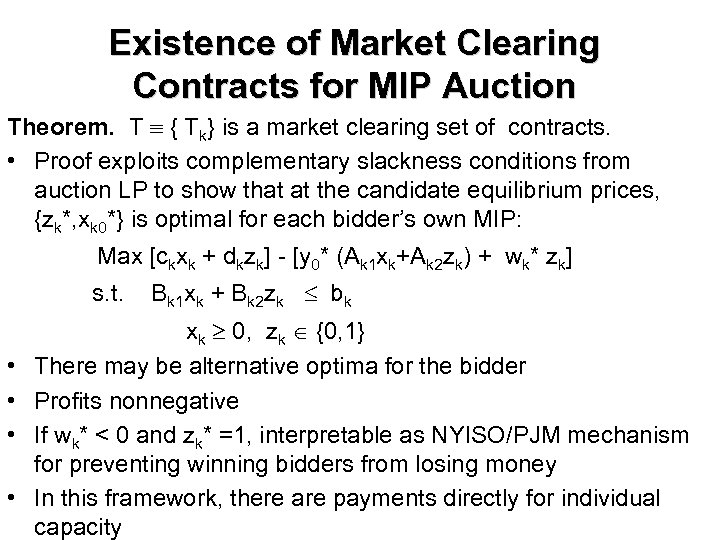 Existence of Market Clearing Contracts for MIP Auction Theorem. T { Tk} is a market clearing set of contracts. • Proof exploits complementary slackness conditions from auction LP to show that at the candidate equilibrium prices, {zk*, xk 0*} is optimal for each bidder’s own MIP: Max [ckxk + dkzk] - [y 0* (Ak 1 xk+Ak 2 zk) + wk* zk] s. t. • • Bk 1 xk + Bk 2 zk bk xk 0, zk {0, 1} There may be alternative optima for the bidder Profits nonnegative If wk* < 0 and zk* =1, interpretable as NYISO/PJM mechanism for preventing winning bidders from losing money In this framework, there are payments directly for individual capacity
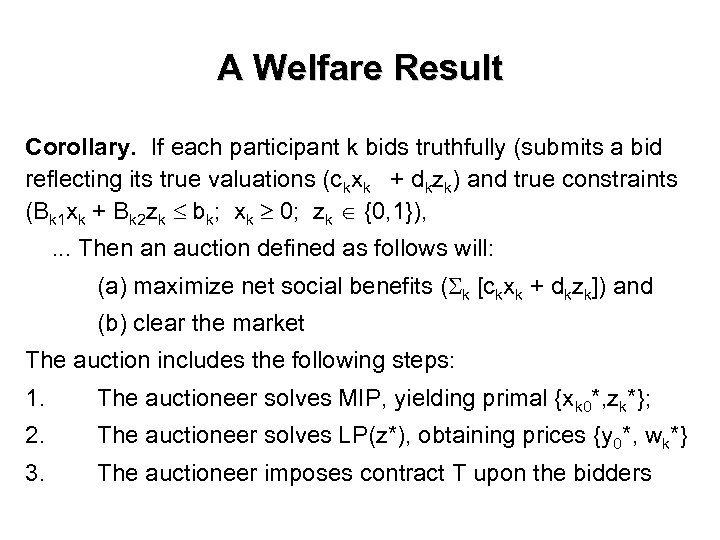 A Welfare Result Corollary. If each participant k bids truthfully (submits a bid reflecting its true valuations (ckxk + dkzk) and true constraints (Bk 1 xk + Bk 2 zk bk; xk 0; zk {0, 1}), . . . Then an auction defined as follows will: (a) maximize net social benefits ( k [ckxk + dkzk]) and (b) clear the market The auction includes the following steps: 1. The auctioneer solves MIP, yielding primal {xk 0*, zk*}; 2. The auctioneer solves LP(z*), obtaining prices {y 0*, wk*} 3. The auctioneer imposes contract T upon the bidders
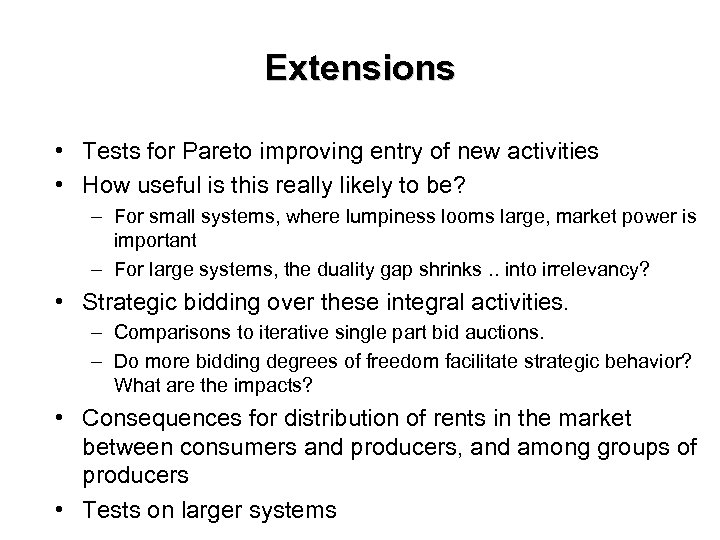 Extensions • Tests for Pareto improving entry of new activities • How useful is this really likely to be? – For small systems, where lumpiness looms large, market power is important – For large systems, the duality gap shrinks. . into irrelevancy? • Strategic bidding over these integral activities. – Comparisons to iterative single part bid auctions. – Do more bidding degrees of freedom facilitate strategic behavior? What are the impacts? • Consequences for distribution of rents in the market between consumers and producers, and among groups of producers • Tests on larger systems
 Wholestic Market Design AGORAPHOBIA You don’t always get it right the first time. Now you have experience Try LMP Are you a Copernican or a Ptolemain? We had to destroy the market to save it