


 Скачать презентацию RFID in a 3 PL Enviornment Dick Pocek
90900b740494a8d5e6aaaa873748d82a.ppt
- Количество слайдов: 33
 RFID in a 3 PL Enviornment Dick Pocek, Director of Logistics Jim Dean, Manager of Customer Supply Chain
 About Energizer
 - Energizer Holdings Inc. - (Eveready Battery Company & Schick-Wilkinson Sword ) èEnergizer Holdings, Inc. (Energizer), incorporated in 1999, is one of the world's largest manufacturer of dry cell batteries and flashlights, and a global leader in the dynamic business of providing portable power èEnergizer is the successor to over 100 years of expertise in the battery and lighting products industry, formerly Eveready Battery Company 1905 -1999 èPrior to Eveready name, known as National Carbon Company from 1886 -1905 èEnergizer’s battery and flashlight subsidiaries offer a full line of products in five major categories: alkaline, carbon zinc, miniatures and rechargeable batteries; and lighting products èIn January 2003 Energizer announced purchase of Schick-Wilkinson Sword razor business from Pfizer Inc. for $930 million èSchick-Wilkinson Sword is the second-largest shaving-products company in the world èEnergizer, Eveready and Schick-Wilkinson Sword brands are marketed and sold in over 140 countries
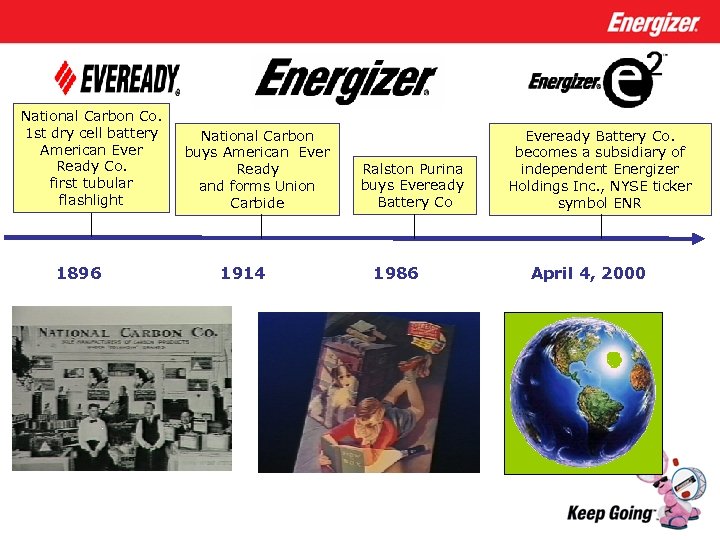 National Carbon Co. 1 st dry cell battery American Ever Ready Co. first tubular flashlight 1896 National Carbon buys American Ever Ready and forms Union Carbide 1914 Ralston Purina buys Eveready Battery Co 1986 Eveready Battery Co. becomes a subsidiary of independent Energizer Holdings Inc. , NYSE ticker symbol ENR April 4, 2000
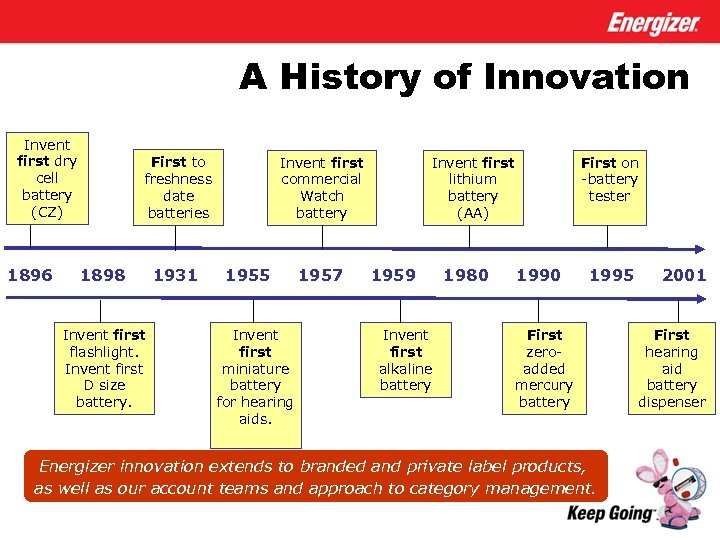 A History of Innovation Invent first dry cell battery (CZ) 1896 First to freshness date batteries 1898 Invent first flashlight. Invent first D size battery. 1931 Invent first commercial Watch battery 1955 Invent first miniature battery for hearing aids. 1957 Invent first lithium battery (AA) 1959 Invent first alkaline battery 1980 First on -battery tester 1990 1995 First zeroadded mercury battery Energizer innovation extends to branded and private label products, as well as our account teams and approach to category management. 2001 First hearing aid battery dispenser
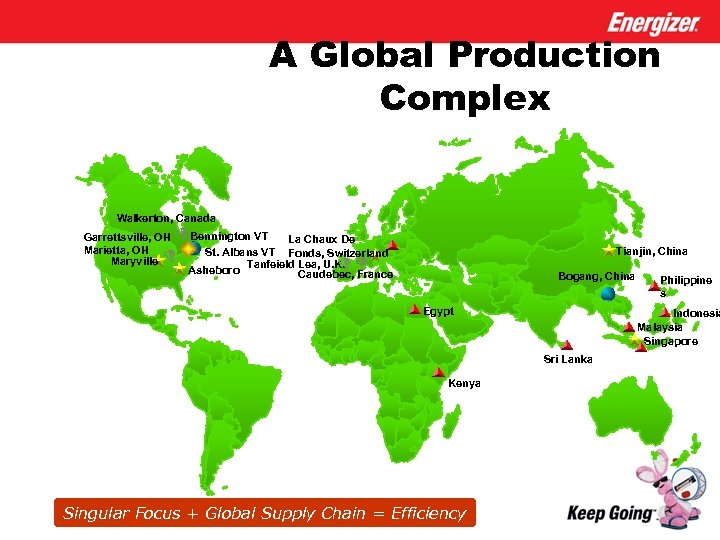 A Global Production Complex Walkerton, Canada Bennington VT La Chaux De Switzerland St. Albans VT Fonds, U. K. Tanfeield Lea, Garrettsville, OH Marietta, OH Maryville Asheboro Tianjin, China Caudebec, France Bogang, China Egypt Indonesia Malaysia Singapore Sri Lanka Kenya Singular Focus + Global Supply Chain = Efficiency Philippine s
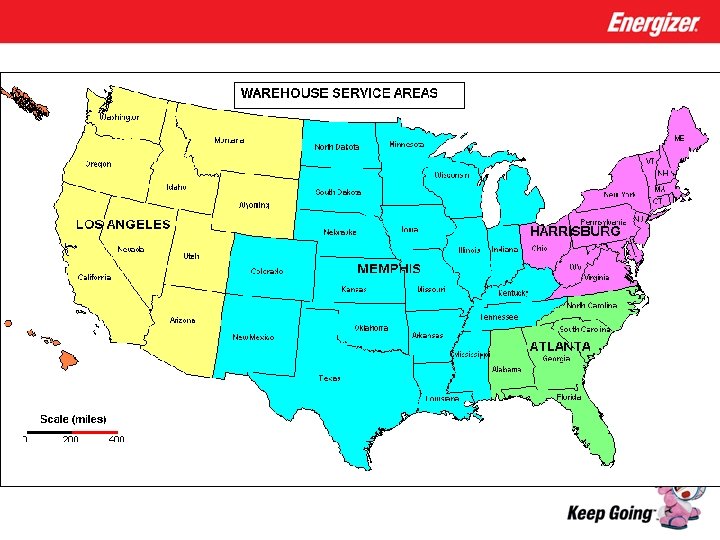
 Wal-Mart Pilot
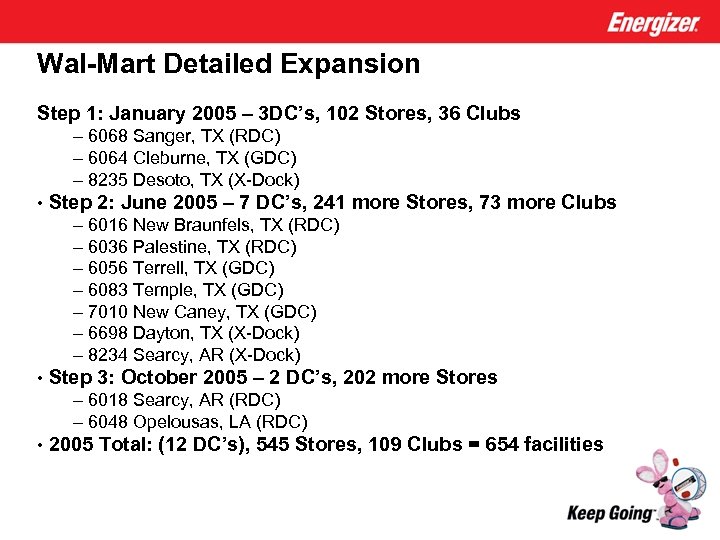 Wal-Mart Detailed Expansion Step 1: January 2005 – 3 DC’s, 102 Stores, 36 Clubs – 6068 Sanger, TX (RDC) – 6064 Cleburne, TX (GDC) – 8235 Desoto, TX (X-Dock) • Step 2: June 2005 – 7 DC’s, 241 more Stores, 73 more Clubs – 6016 New Braunfels, TX (RDC) – 6036 Palestine, TX (RDC) – 6056 Terrell, TX (GDC) – 6083 Temple, TX (GDC) – 7010 New Caney, TX (GDC) – 6698 Dayton, TX (X-Dock) – 8234 Searcy, AR (X-Dock) • Step 3: October 2005 – 2 DC’s, 202 more Stores – 6018 Searcy, AR (RDC) – 6048 Opelousas, LA (RDC) • 2005 Total: (12 DC’s), 545 Stores, 109 Clubs = 654 facilities
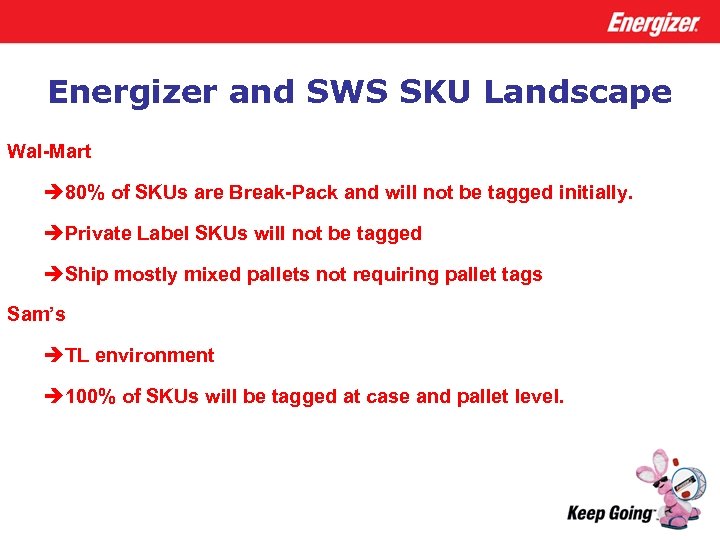 Energizer and SWS SKU Landscape Wal-Mart è 80% of SKUs are Break-Pack and will not be tagged initially. èPrivate Label SKUs will not be tagged èShip mostly mixed pallets not requiring pallet tags Sam’s èTL environment è 100% of SKUs will be tagged at case and pallet level.
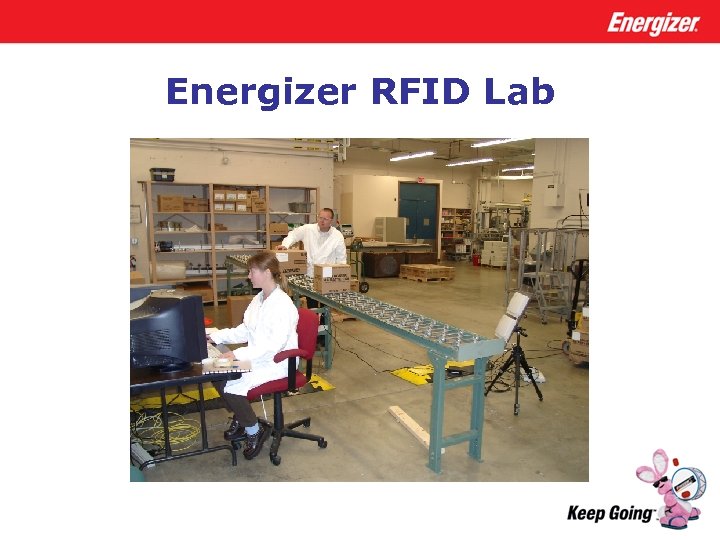 Energizer RFID Lab
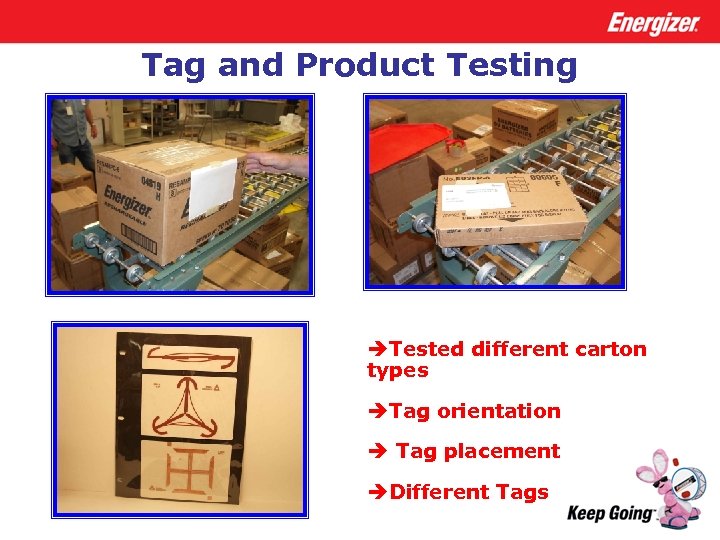 Tag and Product Testing èTested different carton types èTag orientation è Tag placement èDifferent Tags
 Energizer’s 3 PL RFID Expectations è“Slap and Ship” implementation èProcesses that are easy to transfer between sites èCosts spread over customer base èFlexible systems èTracking capability
 RFID Energizer/3 PL Issues èCartons cannot be opened at the warehouse due to the use of wrap-around automated carton forming upstream èSize limitation of some cartons èOrder cycle time issues
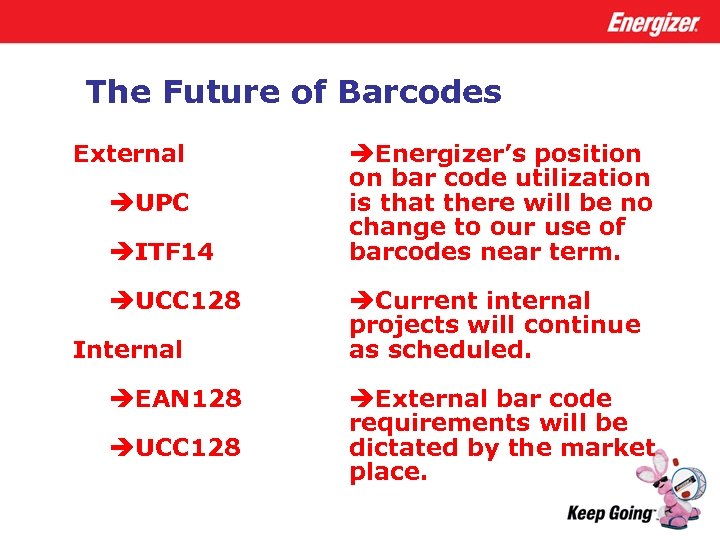 The Future of Barcodes External èUPC èITF 14 èUCC 128 Internal èEAN 128 èUCC 128 èEnergizer’s position on bar code utilization is that there will be no change to our use of barcodes near term. èCurrent internal projects will continue as scheduled. èExternal bar code requirements will be dictated by the market place.
 Energizer’s 3 PL Expectations èDistribution technology leader èInnovator èValue added services èStable management team èGlobal capabilities èPartnership
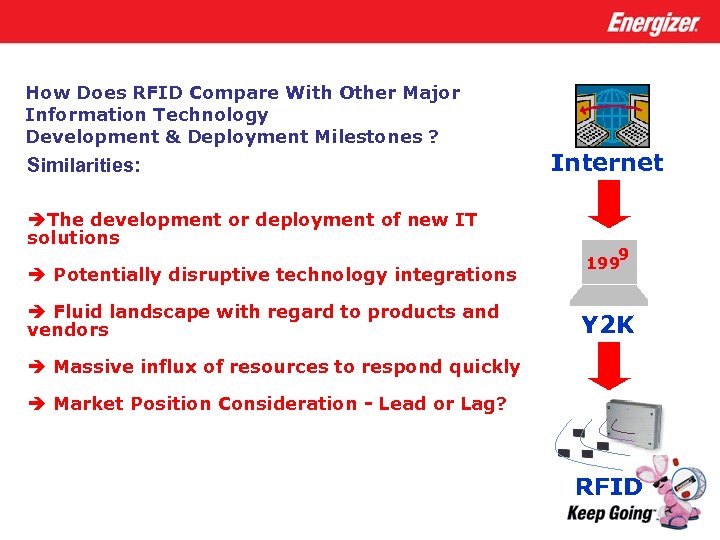 How Does RFID Compare With Other Major Information Technology Development & Deployment Milestones ? Similarities: èThe development or deployment of new IT solutions è Potentially disruptive technology integrations è Fluid landscape with regard to products and vendors Internet 9 199 Y 2 K è Massive influx of resources to respond quickly è Market Position Consideration - Lead or Lag? RFID
 Manufacturers Issues Regarding RFID Deployment In Supply Chain Applications èCustomers Are Starting To Require RFID Use • Retailers • Government (i. e. Do. D & FDA) èLimited Resources are available to meet the challenge • Personnel • Financial Resources • Time èMany companies have varying degrees of success when using consultants èCan I really find an ROI for implementing RFID in my business? èHow can you make RFID deployments operationally viable? èFew companies have real experience with this emerging technology èWho are my strategic partners that could help with this initiative?
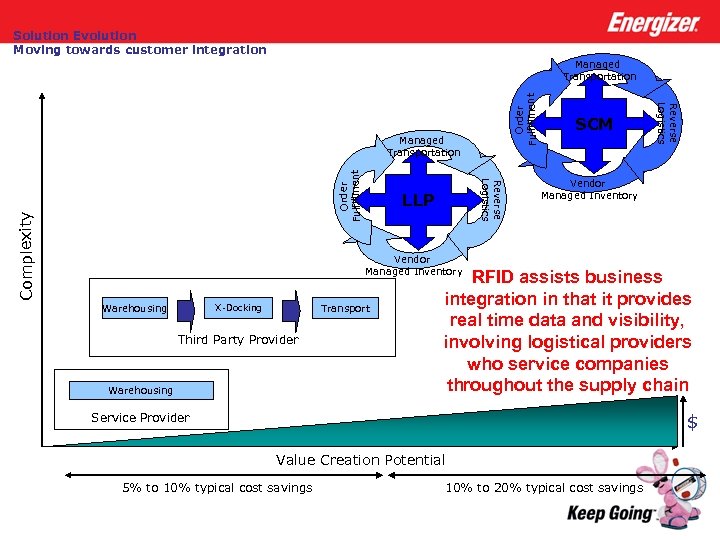 Solution Evolution Moving towards customer integration Complexity Reverse Logistics Order Fulfillment Managed Transportation LLP SCM Reverse Logistics Order Fulfillment Managed Transportation Vendor Managed Inventory Warehousing Transport X-Docking Third Party Provider Warehousing RFID assists business integration in that it provides real time data and visibility, involving logistical providers who service companies throughout the supply chain Service Provider $ Value Creation Potential 5% to 10% typical cost savings 10% to 20% typical cost savings
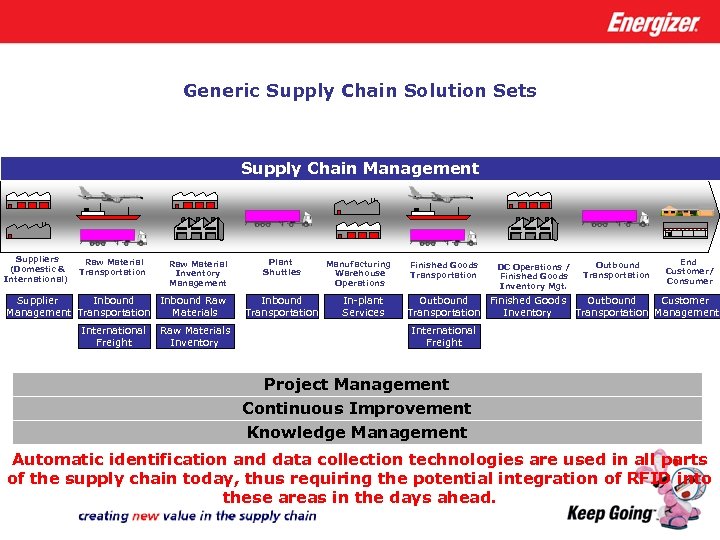 Generic Supply Chain Solution Sets Supply Chain Management Suppliers (Domestic & International) Raw Material Transportation Raw Material Inventory Management Supplier Inbound Raw Management Transportation Materials International Freight Raw Materials Inventory Plant Shuttles Inbound Transportation Manufacturing Warehouse Operations In-plant Services Finished Goods Transportation DC Operations / Finished Goods Inventory Mgt. Outbound Transportation End Customer/ Consumer Outbound Finished Goods Outbound Customer Transportation Inventory Transportation Management International Freight Project Management Continuous Improvement Knowledge Management Automatic identification and data collection technologies are used in all parts of the supply chain today, thus requiring the potential integration of RFID into these areas in the days ahead.
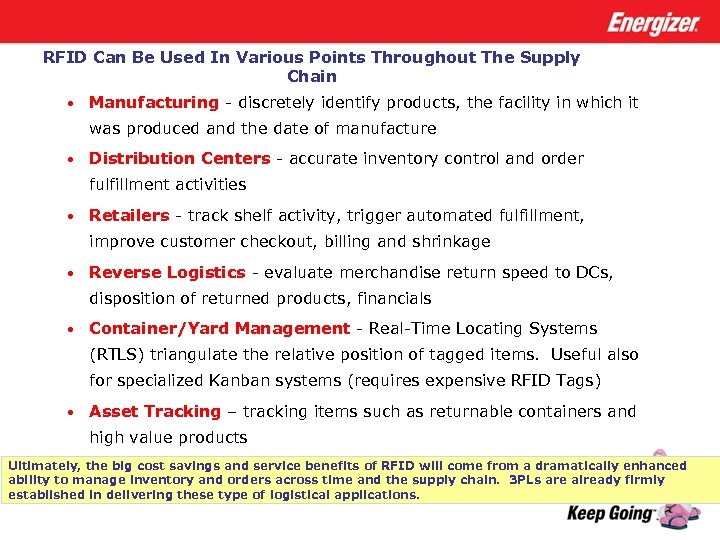 RFID Can Be Used In Various Points Throughout The Supply Chain • Manufacturing - discretely identify products, the facility in which it was produced and the date of manufacture • Distribution Centers - accurate inventory control and order fulfillment activities • Retailers - track shelf activity, trigger automated fulfillment, improve customer checkout, billing and shrinkage • Reverse Logistics - evaluate merchandise return speed to DCs, disposition of returned products, financials • Container/Yard Management - Real-Time Locating Systems (RTLS) triangulate the relative position of tagged items. Useful also for specialized Kanban systems (requires expensive RFID Tags) • Asset Tracking – tracking items such as returnable containers and high value products Ultimately, the big cost savings and service benefits of RFID will come from a dramatically enhanced ability to manage inventory and orders across time and the supply chain. 3 PLs are already firmly established in delivering these type of logistical applications.
 RFID – How Can It Affect Supply Chain Partners In The Future? • Customers will likely keep requesting the use of RFID and other emerging supply chain technologies. • Resources throughout the supply chain could possibly be positively or negatively impacted by RFID deployments (i. e. personnel, inventory, money, equipment, space …). • Supply Chain information technology implementations will have special focus placed on RFID integration • Trading partners will have to figure out how to manage the data collected from RFID applications and use it for advanced demand planning strategies. • 3 PLs with RFID experience will be able to assist companies across the entire supply chain.
 3 PL RFID Case Study: Exel PLC Presentation courtesy of Exel PLC
 Executive Summary (RFID) The current state of RFID: è An emerging technology è Many critical issues è Ready for wide adoption in the supply chain? As supply chain leaders, Exel is responding to this technology by directing global and local teams to work with customers, RFID experts, and vendors to understand the value, cost, challenges and opportunities related to this technology. Given Exel’s market position, we have a unique opportunity to understand technology from multiple business applications, across different supply chains.
 Factors Driving Exel’s Response to RFID Exel’s RFID strategy positions Exel to better understand RFID and create value: è Customers - Retailer compliance - Opportunity to provide customer channel solutions è Operations efficiency - To be proven è Supply chain visibility in certain services… - Global freight management - Demand planning - Track/trace - Returnable containers è …and broader future visibility leading to enhanced supply chain performance and solutions
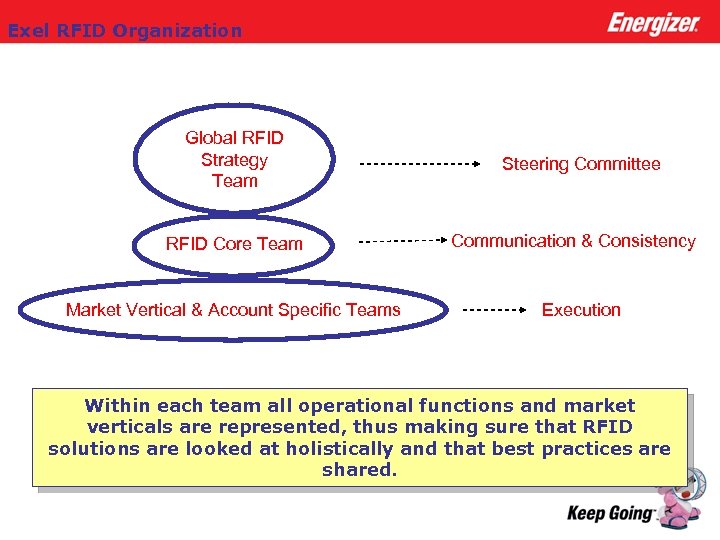 Exel RFID Organization Global RFID Strategy Team RFID Core Team Market Vertical & Account Specific Teams Steering Committee Communication & Consistency Execution Within each team all operational functions and market verticals are represented, thus making sure that RFID solutions are looked at holistically and that best practices are shared.
 So what has Exel done to date. . . • Participated in some 8 – 10 major pilots globally üTheatres – Americas, EMEA & APAC üIndustry Verticals – Retail, Consumer & Technology üStandards – EPCglobal and non-EPCglobal RFID • Became a member of EPCglobal • RFID deployments/applications inclusive of: ü Numerous pieces of material handling equipment ü Dock doors ü Staging areas and pallet racking ü Pallets ü Stretch wrappers ü Containers and high value assets
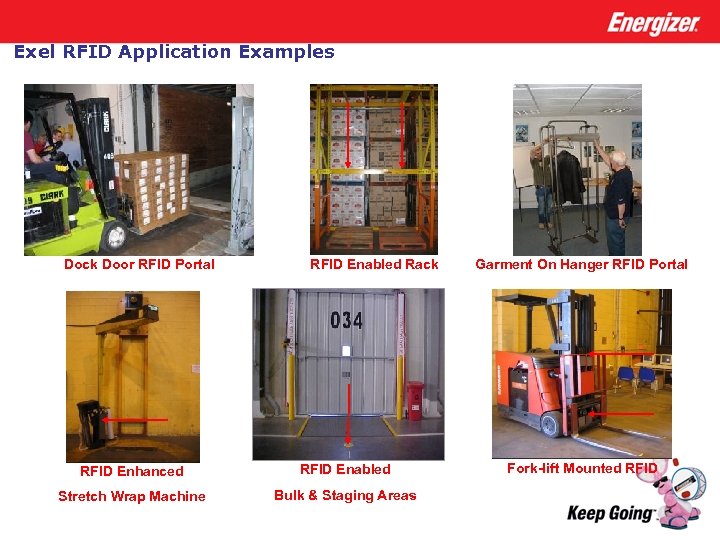 Exel RFID Application Examples Dock Door RFID Portal RFID Enabled Rack RFID Enhanced RFID Enabled Stretch Wrap Machine Bulk & Staging Areas Garment On Hanger RFID Portal Fork-lift Mounted RFID
 RFID Centers of Excellence Overview • Create a theatre specific RFID laboratories where Exel and partners can test RFID application – Americas, Europe and Asia • • Involve RFID, WMS, system integration, material handling and other technology vendors as partners Multiple applications of the technology will be reviewed in these centers Vendor and technology “agnostic” due to fluid RFID landscape (standards and technology in a state of flux) Open to customers to test their RFID applications Centers of Excellence activities will help our clients and our account teams determine the best applications for RFID in supply chain applications.
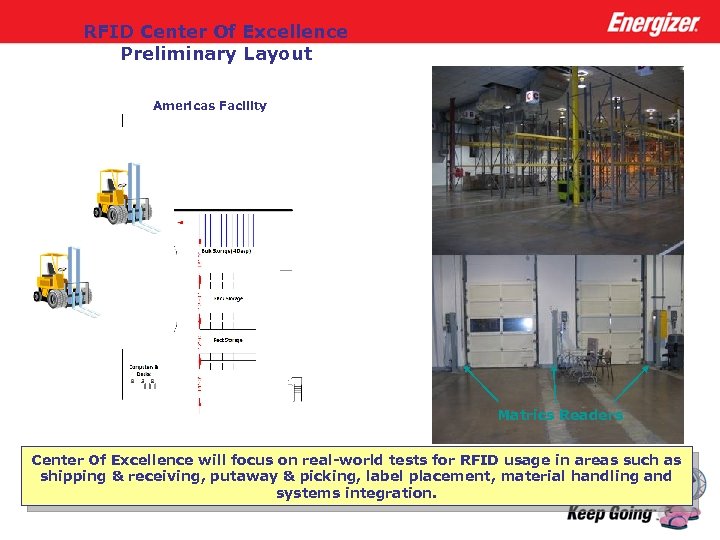 RFID Center Of Excellence Preliminary Layout Americas Facility Matrics Readers Center Of Excellence will focus on real-world tests for RFID usage in areas such as shipping & receiving, putaway & picking, label placement, material handling and systems integration.
 RFID Project Challenges • New and existing RFID products are not necessarily interoperable with other RFID vendor offerings • Product availability and product development can delay pilots • Many companies are selling RFID products, but total RFID integration can be a challenge (tags, readers, printers, middleware) • UHF RFID hardware can interfere with existing 900 MHz RF systems operating within DCs, requiring countermeasures or upgrades • Specific product & packaging combinations frequently prevent reading of cases at the center of a pallet • EPCglobal Generation 2 RFID Standard Ratification Date ? ? ? • 6 -12 month product development cycle after EPCglobal Gen. 2 approved • ROIs for RFID technology deployments can be difficult to obtain • Data management (EDI, visibility, order management) is not currently a requirement from mass retailers even though this will be important
 Exel Client RFID Activities & Observations • Mass Retailer RFID mandates have generated the following: – Manual “slap & ship” of RFID tagged skus – Semi-automated tagging of skus (e. g. conveyor augmented solutions) • Automated/semi-automated RFID tagging solutions need scalability and flexibility as part of a long-term solution • SKU quantities used in RFID trials have been limited (20 or less typ. ) • RFID tagging is being pushed further into the supply chain based on the difficulty and expense of RFID tagging products at the plants • Asset tracking is the primary means of deploying RFID outside of current mass retailer mandates • Outside of the Retail/CPG Market activities, Pharmaceutical and Technology Market RFID applications are on the rise • Exel has been and continues to be brought into RFID projects to assure operational viability and proper execution of RFID projects
 QUESTIONS ? ? ?