


 Скачать презентацию Revolutionary Economics Lessons For World History Classes Social
a68cc1b2f3ed7be3463bc1c7a96e3258.ppt
- Количество слайдов: 30
 Revolutionary Economics Lessons For World History Classes Social Studies Staff Development Austin ISD Austin, TX February 12, 2010
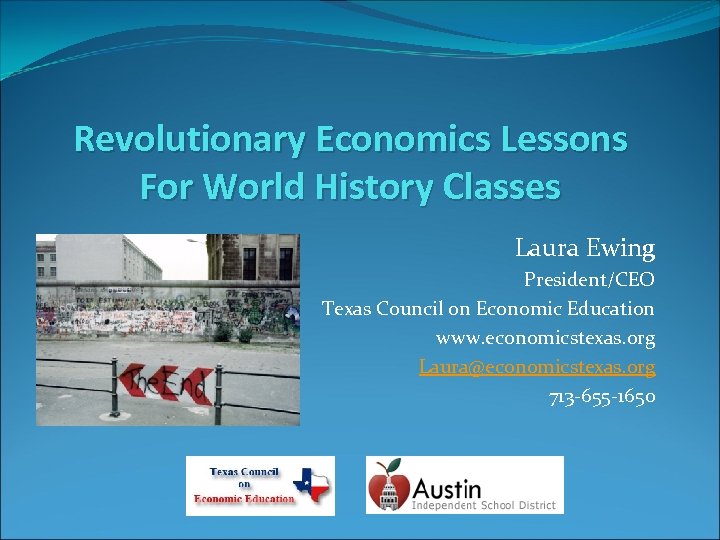
 Revolutionary Economics Lessons For World History Classes Laura Ewing President/CEO Texas Council on Economic Education www. economicstexas. org Laura@economicstexas. org 713 -655 -1650
 TCEE Provides – Interesting hands-on lessons that develop critical thinking skills for students in Economics, Social Studies, Math, and Career/Technical Education classes.
 Professional Development • • • Economics Personal Financial Literacy Investor Education Student Activities www. economicstexas. org
 Stock Market Game Began February 8 • • • Team Fees are covered by Fidelity Investments 10 week live simulation Virtual $100, 000 Trade stocks, bonds and mutual funds Grades 4 – 12
 Upcoming FREE TCEE Events • • Stock Market Game Economic Challenge Virtual Economics All Events are listed at www. economicstexas. org
 Virtual Economics • • FREE through 2/28/10 79 publications, 1200 lessons 28 publications 500 economic terms
 Economics Challenge March 29 -April 2 Online competition April 13 State Finals Capitol April 26 National Finals Online David Ricardo Division National Semi-finals Online Adam Smith Division National Finals NYC Adam Smith Division
 Personal Financial Literacy and SMG Conference San Antonio Third or fourth week in June
 And The World History TEKS Say: Identify the historic origins of the economic systems of Capitalism and communism
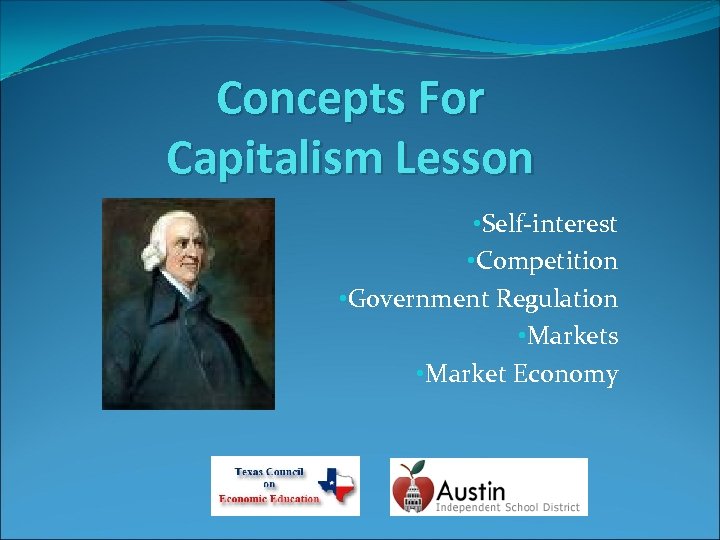 Concepts For Capitalism Lesson • Self-interest • Competition • Government Regulation • Markets • Market Economy
 Lesson 8: Adam Smith and the Market Economy Focus: Think, Pair, Share 1. What types of products do you like to buy? 2. What attracts you to those products?
 Market Economy What role do price and quality play in a market economy?
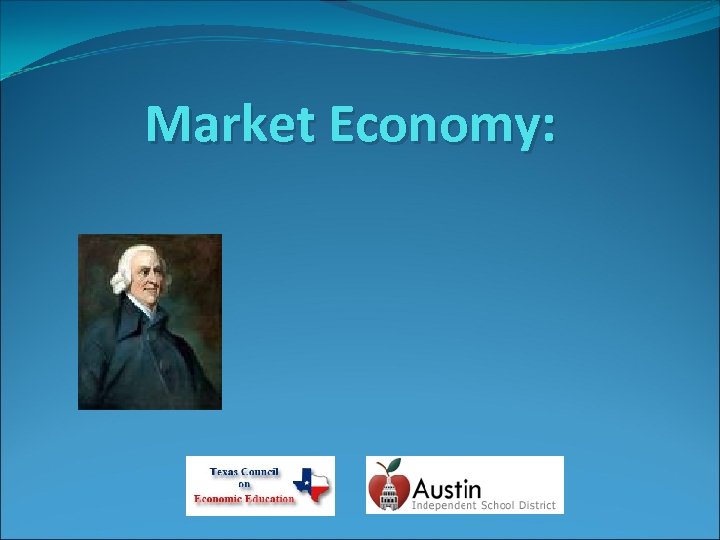
 Adam Smith 1. Wealth of Nations, 1776 2. Invisible Hand 3. Self-interest
 Market Economy 1. As you read the article, look for Smith’s major points. 2. Read Adam Smith and the Concept of Individual Self-Interest 3. Discuss the article, particularly the role of self-interest.
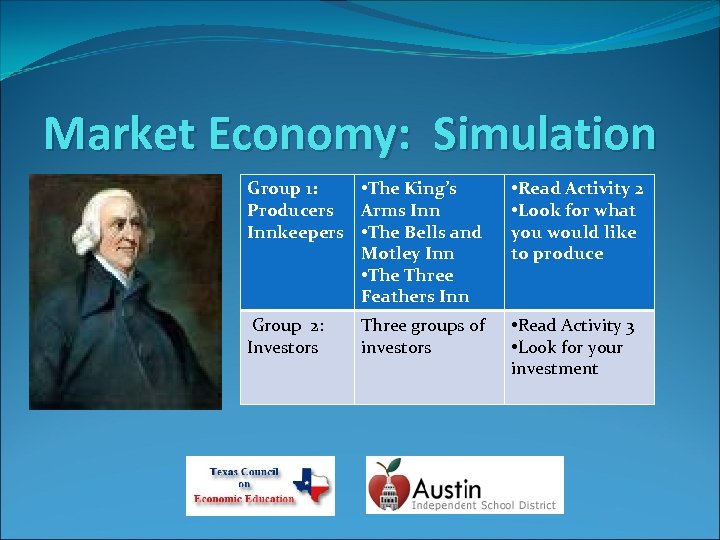 Market Economy: Simulation Group 1: • The King’s Producers Arms Innkeepers • The Bells and Motley Inn • The Three Feathers Inn • Read Activity 2 • Look for what you would like to produce Group 2: Investors • Read Activity 3 • Look for your investment Three groups of investors
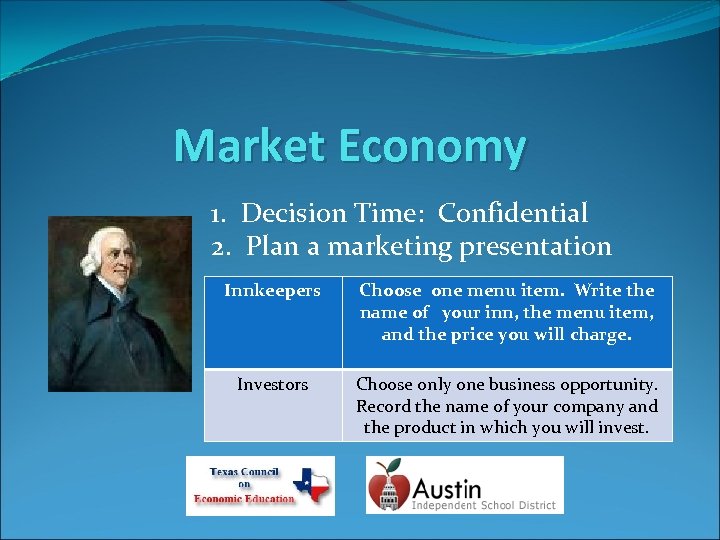 Market Economy 1. Decision Time: Confidential 2. Plan a marketing presentation Innkeepers Choose one menu item. Write the name of your inn, the menu item, and the price you will charge. Investors Choose only one business opportunity. Record the name of your company and the product in which you will invest.
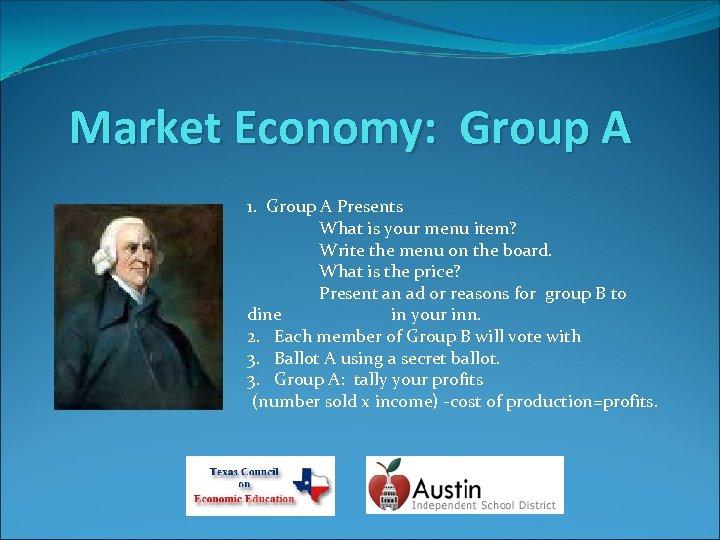 Market Economy: Group A 1. Group A Presents What is your menu item? Write the menu on the board. What is the price? Present an ad or reasons for group B to dine in your inn. 2. Each member of Group B will vote with 3. Ballot A using a secret ballot. 3. Group A: tally your profits (number sold x income) -cost of production=profits.
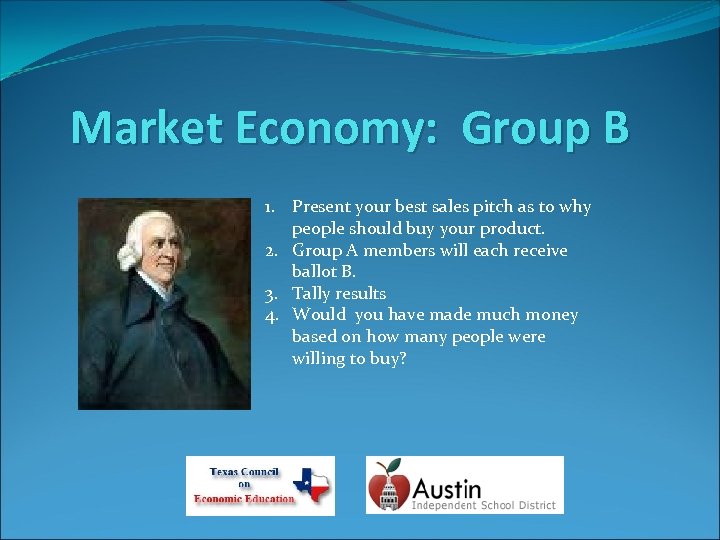 Market Economy: Group B 1. Present your best sales pitch as to why people should buy your product. 2. Group A members will each receive ballot B. 3. Tally results 4. Would you have made much money based on how many people were willing to buy?
 Market Economy: Strategy Will you reconsider your menu/investment? Why or why not? Answer the questions on Activity 5. Discuss your answers.
 Lesson 12: The Fall of Communism Objective: Analyze the effects of incentives present in the Soviet communist economic system upon the performance of the Soviet economy prior to market reforms.
 The Fall of Communism Concepts Economic System Command Economy Market Economy Incentives
 Focus: Think, pair, share: What are incentives that encourage you to work, do your homework and school work?
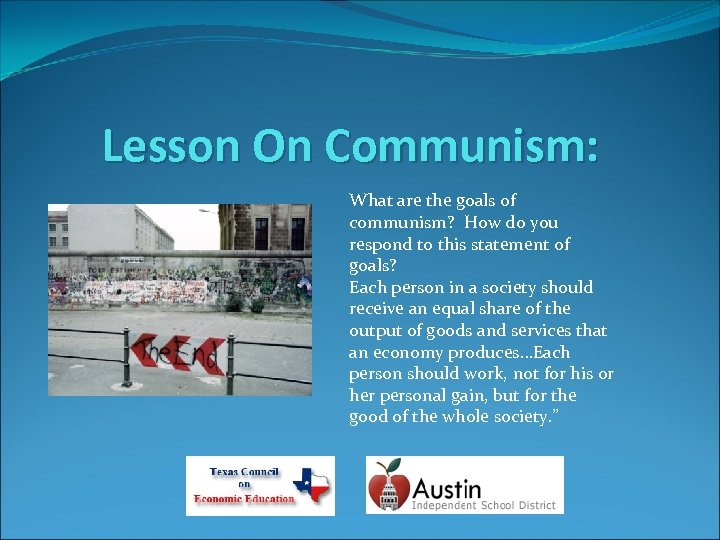 Lesson On Communism: What are the goals of communism? How do you respond to this statement of goals? Each person in a society should receive an equal share of the output of goods and services that an economy produces…Each person should work, not for his or her personal gain, but for the good of the whole society. ”
 How Do Market and Command Economies Answer These Questions? What & how much to produce Market Command How to produce (method of production) How to distribute
 Readings on Soviet Union Market Economies and Command Economies Shopping in the Soviet Union Workers’ Lives in the Soviet Union Read the three articles individually, then pair and share. 1. How are economic decisions made? 2. What role do incentives play? 3. What are your thoughts?
 What Are The Advantages and Disadvantages? U. S. Market Economy Advantages Disadvantages USSR Command Economy
 Market and Command/Communist Economies: Will you use these lessons in your classroom? If so, how will you use them? What was helpful about them?
 Revolutionary Economics Lessons For World History Classes Laura Ewing President/CEO Texas Council on Economic Education www. economicstexas. org Laura@economicstexas. org 713 -655 -1650
 Market Economy: