Скачать презентацию REVELATION Introduction HERMENEUTICS Study and Interpretation of
13b011c8aba9c78d179c38d514b4af9f.ppt
- Количество слайдов: 8
 REVELATION Introduction
 HERMENEUTICS Study and Interpretation of Scriptures
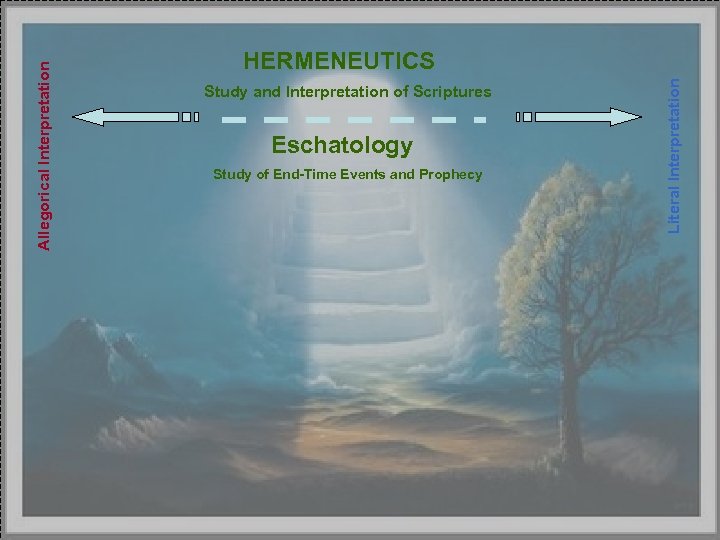 Study and Interpretation of Scriptures Eschatology Study of End-Time Events and Prophecy Literal Interpretation Allegorical Interpretation HERMENEUTICS
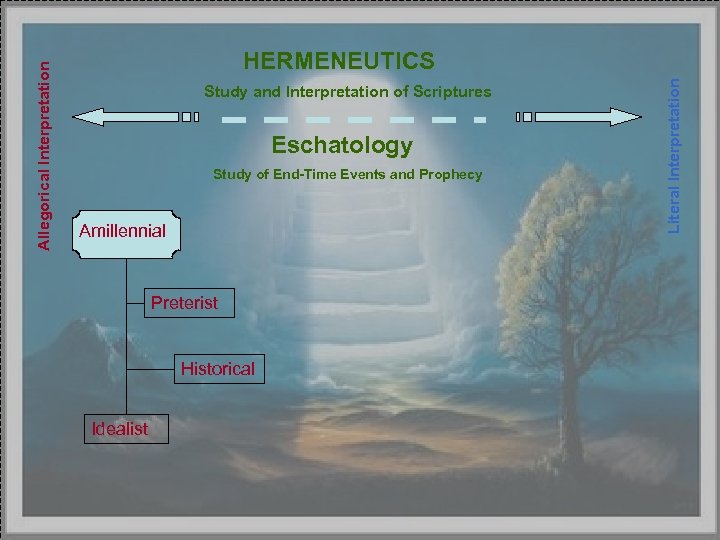 Study and Interpretation of Scriptures Eschatology Study of End-Time Events and Prophecy Amillennial Preterist Historical Idealist Literal Interpretation Allegorical Interpretation HERMENEUTICS
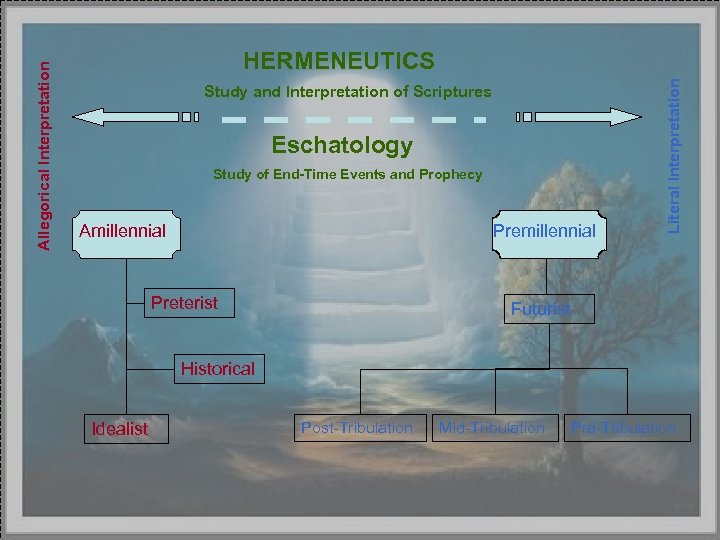 Study and Interpretation of Scriptures Eschatology Study of End-Time Events and Prophecy Amillennial Preterist Literal Interpretation Allegorical Interpretation HERMENEUTICS Futurist Historical Idealist Post-Tribulation Mid-Tribulation Pre-Tribulation
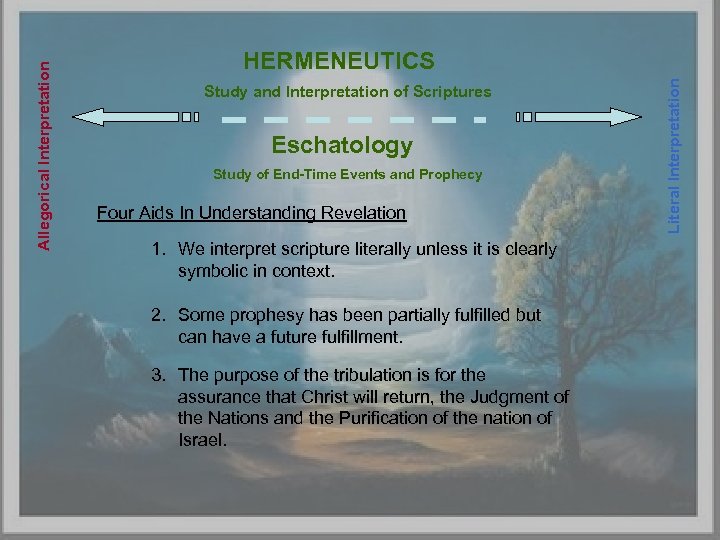 Study and Interpretation of Scriptures Eschatology Study of End-Time Events and Prophecy Four Aids In Understanding Revelation 1. We interpret scripture literally unless it is clearly symbolic in context. 2. Some prophesy has been partially fulfilled but can have a future fulfillment. 3. The purpose of the tribulation is for the assurance that Christ will return, the Judgment of the Nations and the Purification of the nation of Israel. Literal Interpretation Allegorical Interpretation HERMENEUTICS
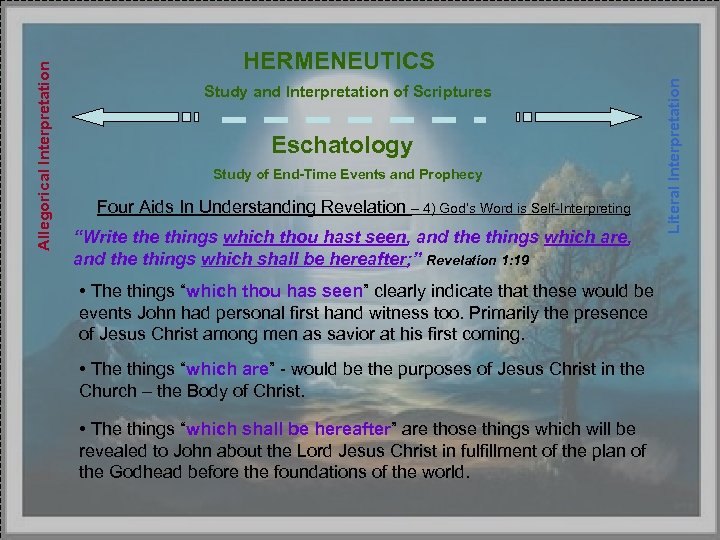 Study and Interpretation of Scriptures Eschatology Study of End-Time Events and Prophecy Four Aids In Understanding Revelation – 4) God’s Word is Self-Interpreting “Write things which thou hast seen, and the things which are, and the things which shall be hereafter; ” Revelation 1: 19 • The things “which thou has seen” clearly indicate that these would be events John had personal first hand witness too. Primarily the presence of Jesus Christ among men as savior at his first coming. • The things “which are” - would be the purposes of Jesus Christ in the Church – the Body of Christ. • The things “which shall be hereafter” are those things which will be revealed to John about the Lord Jesus Christ in fulfillment of the plan of the Godhead before the foundations of the world. Literal Interpretation Allegorical Interpretation HERMENEUTICS