


 Скачать презентацию Revalidation Wessex Educators Conference 2013 Medical Revalidation for
415fe5994a31aa52872153954453aabf.ppt
- Количество слайдов: 9
 Revalidation Wessex Educators Conference 2013 Medical Revalidation for Doctors in Training Ben Fleat – Assistant Programme Manager for Revalidation Mr Mark Goodwin – Associate Dean for Revalidation Emma Torbé – O&G Trainee
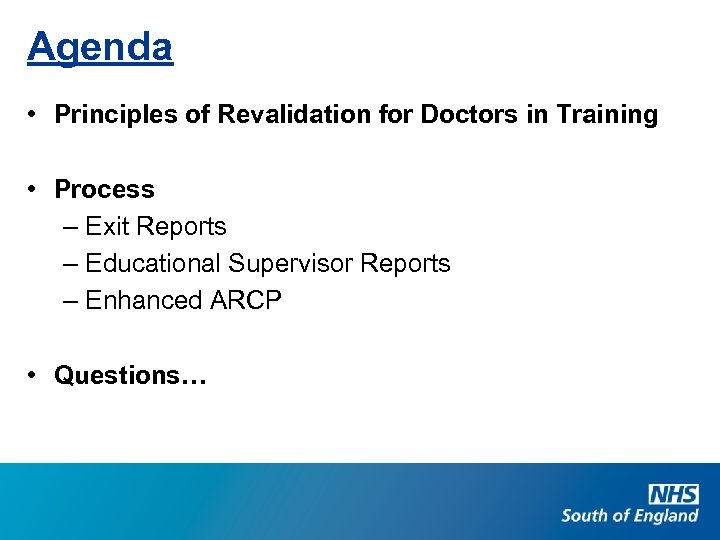 Agenda • Principles of Revalidation for Doctors in Training • Process – Exit Reports – Educational Supervisor Reports – Enhanced ARCP • Questions…
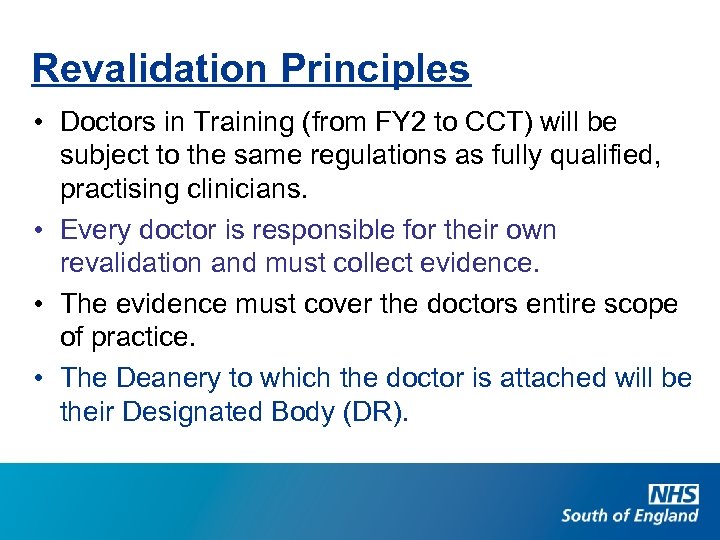 Revalidation Principles • Doctors in Training (from FY 2 to CCT) will be subject to the same regulations as fully qualified, practising clinicians. • Every doctor is responsible for their own revalidation and must collect evidence. • The evidence must cover the doctors entire scope of practice. • The Deanery to which the doctor is attached will be their Designated Body (DR).
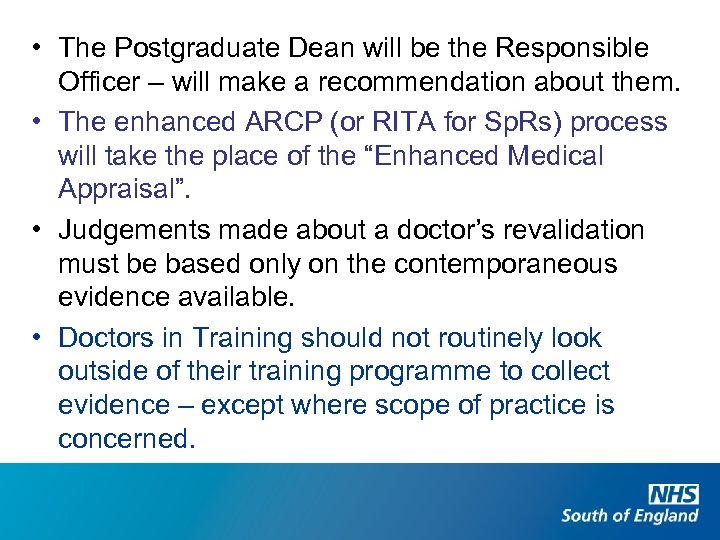 • The Postgraduate Dean will be the Responsible Officer – will make a recommendation about them. • The enhanced ARCP (or RITA for Sp. Rs) process will take the place of the “Enhanced Medical Appraisal”. • Judgements made about a doctor’s revalidation must be based only on the contemporaneous evidence available. • Doctors in Training should not routinely look outside of their training programme to collect evidence – except where scope of practice is concerned.
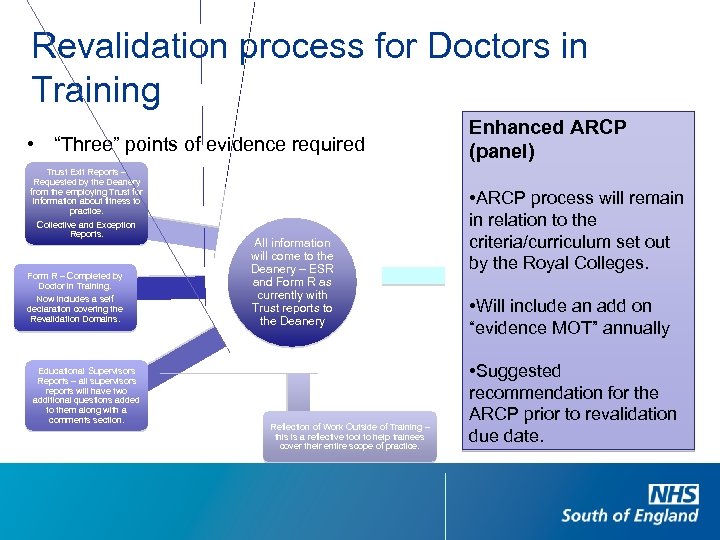 Revalidation process for Doctors in Training • “Three” points of evidence required Trust Exit Reports – Requested by the Deanery from the employing Trust for information about fitness to practice. Collective and Exception Reports. Form R – Completed by Doctor in Training. Now includes a self declaration covering the Revalidation Domains. Educational Supervisors Reports – all supervisors reports will have two additional questions added to them along with a comments section. All information will come to the Deanery – ESR and Form R as currently with Trust reports to the Deanery Reflection of Work Outside of Training – this is a reflective tool to help trainees cover their entire scope of practice. Enhanced ARCP (panel) • ARCP process will remain in relation to the criteria/curriculum set out by the Royal Colleges. • Will include an add on “evidence MOT” annually • Suggested recommendation for the ARCP prior to revalidation due date.
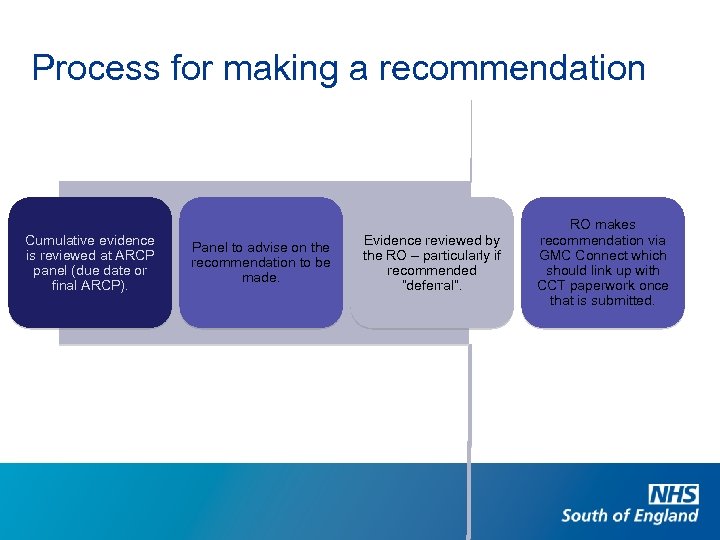 Process for making a recommendation Cumulative evidence is reviewed at ARCP panel (due date or final ARCP). Panel to advise on the recommendation to be made. Evidence reviewed by the RO – particularly if recommended “deferral”. RO makes recommendation via GMC Connect which should link up with CCT paperwork once that is submitted.
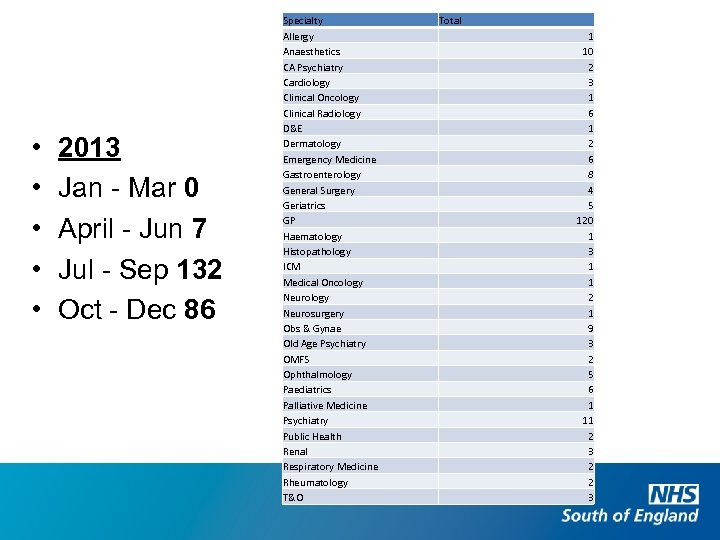 • • • 2013 Jan - Mar 0 April - Jun 7 Jul - Sep 132 Oct - Dec 86 Specialty Allergy Anaesthetics CA Psychiatry Cardiology Clinical Oncology Clinical Radiology D&E Dermatology Emergency Medicine Gastroenterology General Surgery Geriatrics GP Haematology Histopathology ICM Medical Oncology Neurosurgery Obs & Gynae Old Age Psychiatry OMFS Ophthalmology Paediatrics Palliative Medicine Psychiatry Public Health Renal Respiratory Medicine Rheumatology T&O Total 1 10 2 3 1 6 1 2 6 8 4 5 120 1 3 1 1 2 1 9 3 2 5 6 1 11 2 3 2 2 3
 Trainee perspective • Overall awareness of what is required is minimal • Awareness varies significantly between specialties • Trainees looking to/ relying on deanery for information and guidance • Concerns over communication between trusts, trainee and RO
 Any questions?