


 Скачать презентацию Reuse of Data Coded with High-Quality Terminologies Practical
246927d9cf132ce2305e19e2e1590808.ppt
- Количество слайдов: 53
 Reuse of Data Coded with High-Quality Terminologies: Practical Examples from Patient Care Settings James J. Cimino, M. D. Department of Biomedical Informatics Columbia University College of Physicians and Surgeons
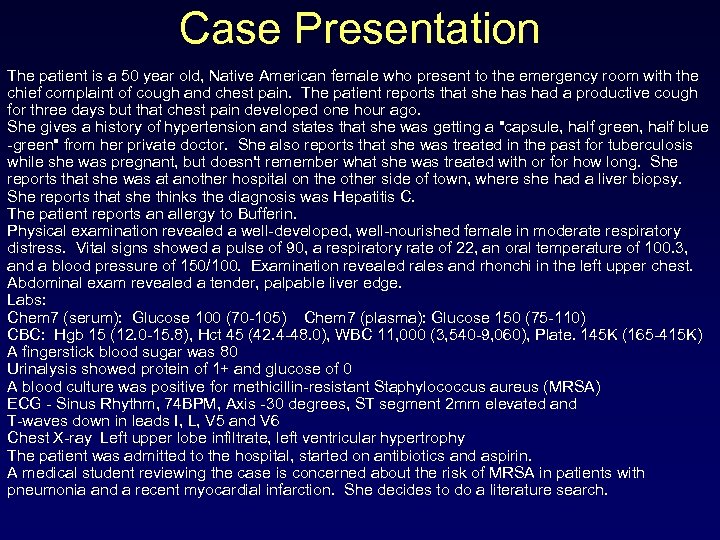 Case Presentation The patient is a 50 year old, Native American female who present to the emergency room with the chief complaint of cough and chest pain. The patient reports that she has had a productive cough for three days but that chest pain developed one hour ago. She gives a history of hypertension and states that she was getting a "capsule, half green, half blue -green" from her private doctor. She also reports that she was treated in the past for tuberculosis while she was pregnant, but doesn't remember what she was treated with or for how long. She reports that she was at another hospital on the other side of town, where she had a liver biopsy. She reports that she thinks the diagnosis was Hepatitis C. The patient reports an allergy to Bufferin. Physical examination revealed a well-developed, well-nourished female in moderate respiratory distress. Vital signs showed a pulse of 90, a respiratory rate of 22, an oral temperature of 100. 3, and a blood pressure of 150/100. Examination revealed rales and rhonchi in the left upper chest. Abdominal exam revealed a tender, palpable liver edge. Labs: Chem 7 (serum): Glucose 100 (70 -105) Chem 7 (plasma): Glucose 150 (75 -110) CBC: Hgb 15 (12. 0 -15. 8), Hct 45 (42. 4 -48. 0), WBC 11, 000 (3, 540 -9, 060), Plate. 145 K (165 -415 K) A fingerstick blood sugar was 80 Urinalysis showed protein of 1+ and glucose of 0 A blood culture was positive for methicillin-resistant Staphylococcus aureus (MRSA) ECG - Sinus Rhythm, 74 BPM, Axis -30 degrees, ST segment 2 mm elevated and T-waves down in leads I, L, V 5 and V 6 Chest X-ray Left upper lobe infiltrate, left ventricular hypertrophy The patient was admitted to the hospital, started on antibiotics and aspirin. A medical student reviewing the case is concerned about the risk of MRSA in patients with pneumonia and a recent myocardial infarction. She decides to do a literature search.
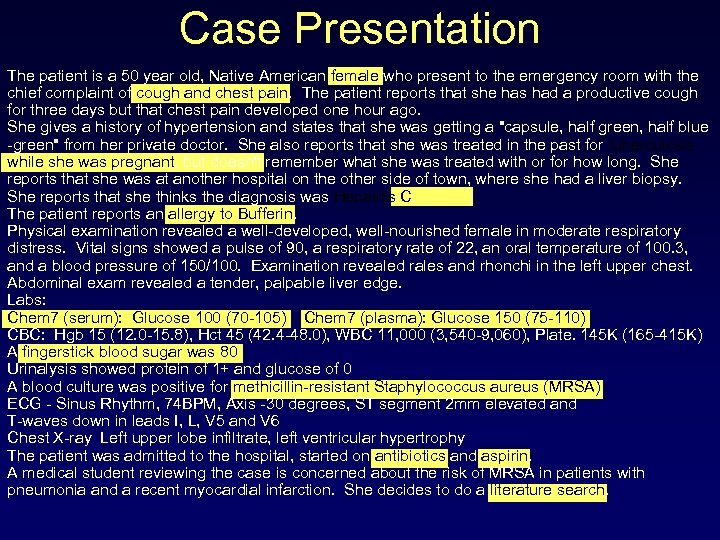 Case Presentation The patient is a 50 year old, Native American female who present to the emergency room with the chief complaint of cough and chest pain. The patient reports that she has had a productive cough for three days but that chest pain developed one hour ago. She gives a history of hypertension and states that she was getting a "capsule, half green, half blue -green" from her private doctor. She also reports that she was treated in the past for tuberculosis while she was pregnant, but doesn't remember what she was treated with or for how long. She reports that she was at another hospital on the other side of town, where she had a liver biopsy. She reports that she thinks the diagnosis was Hepatitis C. The patient reports an allergy to Bufferin. Physical examination revealed a well-developed, well-nourished female in moderate respiratory distress. Vital signs showed a pulse of 90, a respiratory rate of 22, an oral temperature of 100. 3, and a blood pressure of 150/100. Examination revealed rales and rhonchi in the left upper chest. Abdominal exam revealed a tender, palpable liver edge. Labs: Chem 7 (serum): Glucose 100 (70 -105) Chem 7 (plasma): Glucose 150 (75 -110) CBC: Hgb 15 (12. 0 -15. 8), Hct 45 (42. 4 -48. 0), WBC 11, 000 (3, 540 -9, 060), Plate. 145 K (165 -415 K) A fingerstick blood sugar was 80 Urinalysis showed protein of 1+ and glucose of 0 A blood culture was positive for methicillin-resistant Staphylococcus aureus (MRSA) ECG - Sinus Rhythm, 74 BPM, Axis -30 degrees, ST segment 2 mm elevated and T-waves down in leads I, L, V 5 and V 6 Chest X-ray Left upper lobe infiltrate, left ventricular hypertrophy The patient was admitted to the hospital, started on antibiotics and aspirin. A medical student reviewing the case is concerned about the risk of MRSA in patients with pneumonia and a recent myocardial infarction. She decides to do a literature search.
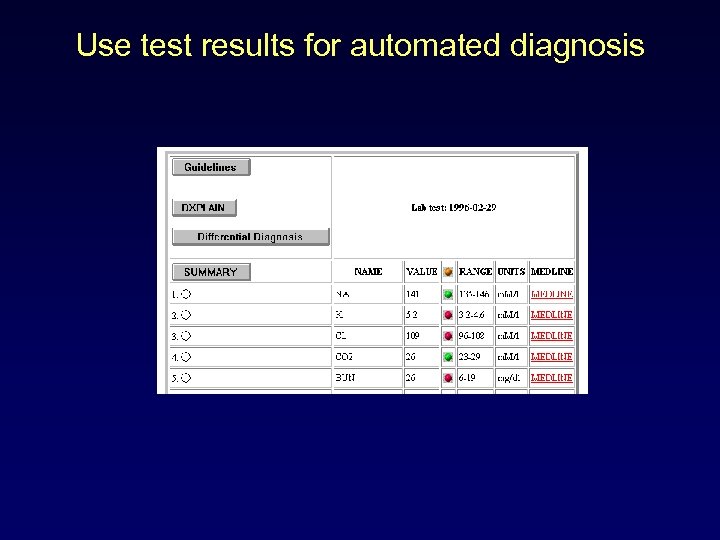
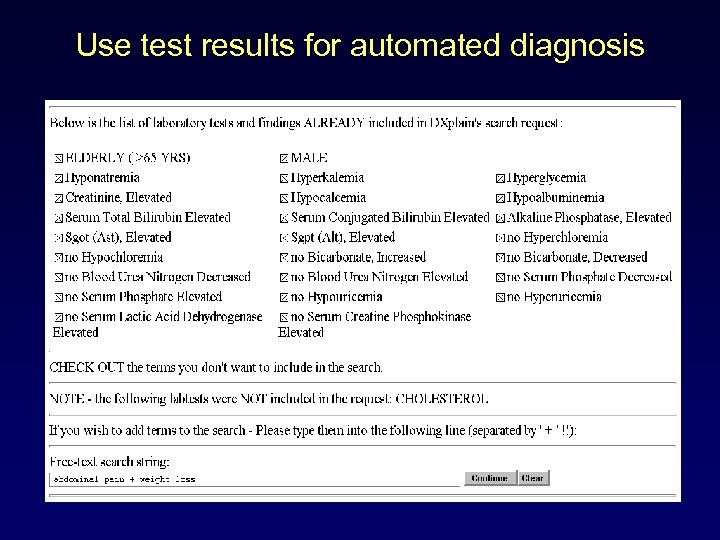
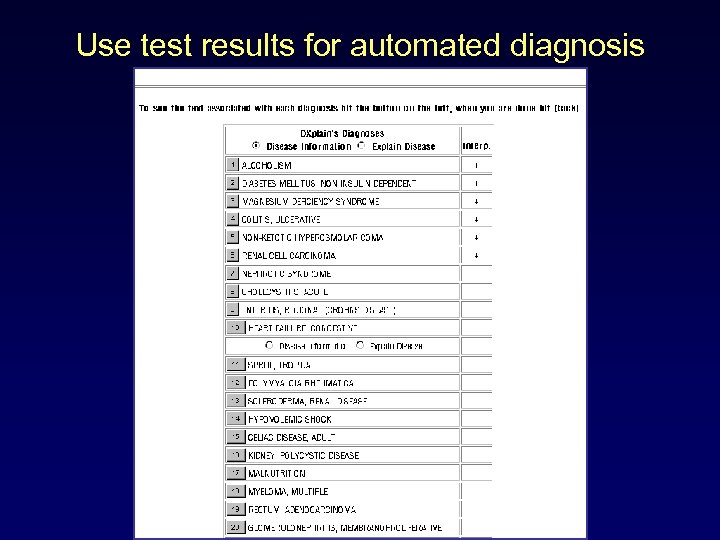
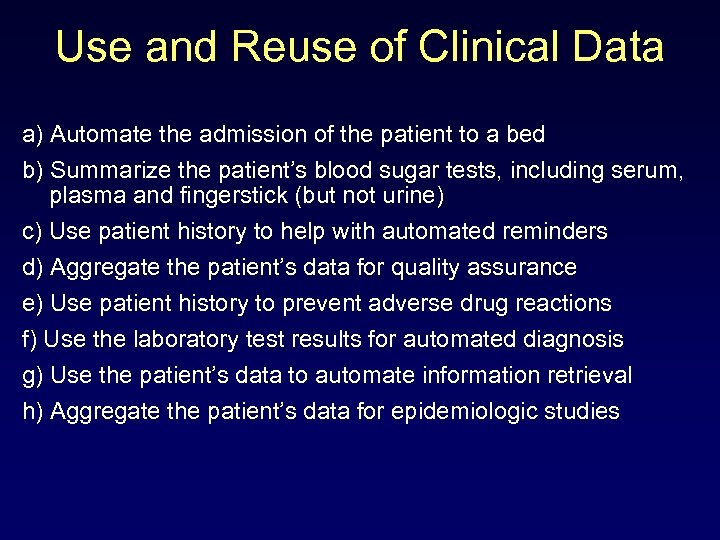
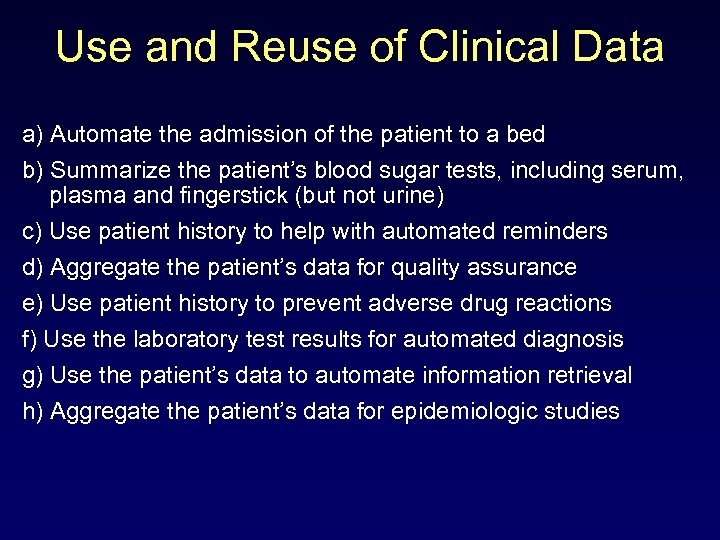 Use and Reuse of Clinical Data a) Automate the admission of the patient to a bed b) Summarize the patient’s blood sugar tests, including serum, plasma and fingerstick (but not urine) c) Use patient history to help with automated reminders d) Aggregate the patient’s data for quality assurance e) Use patient history to prevent adverse drug reactions f) Use the laboratory test results for automated diagnosis g) Use the patient’s data to automate information retrieval h) Aggregate the patient’s data for epidemiologic studies
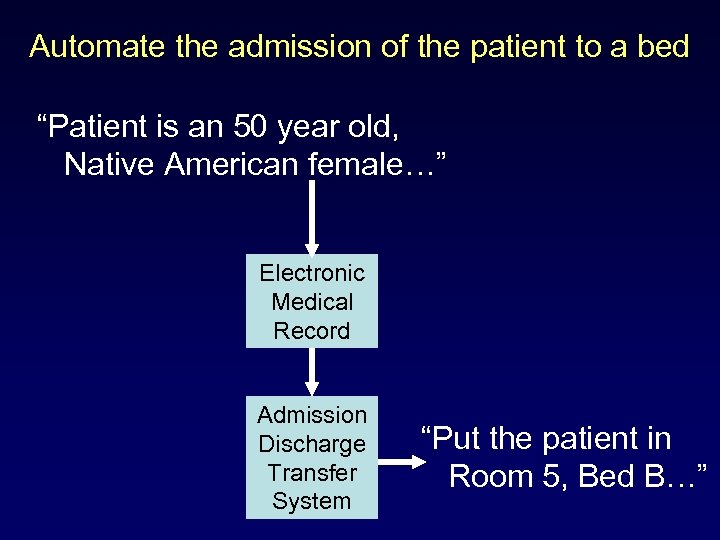 Automate the admission of the patient to a bed “Patient is an 50 year old, Native American female…” Electronic Medical Record Admission Discharge Transfer System “Put the patient in Room 5, Bed B…”
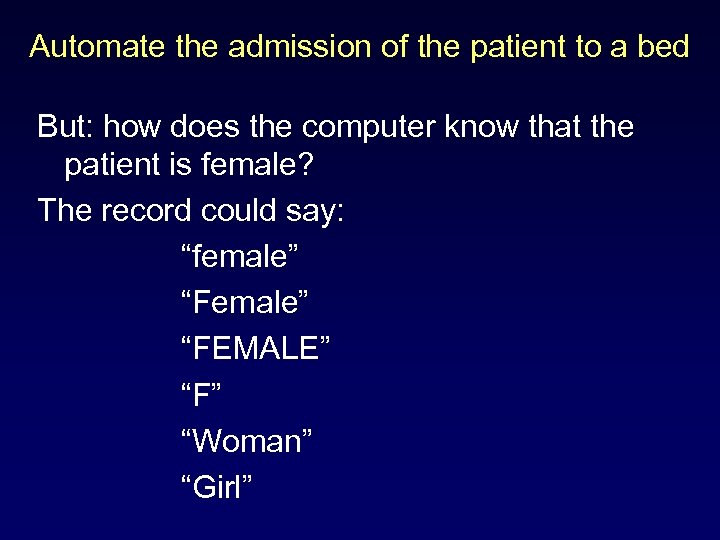 Automate the admission of the patient to a bed But: how does the computer know that the patient is female? The record could say: “female” “FEMALE” “F” “Woman” “Girl”
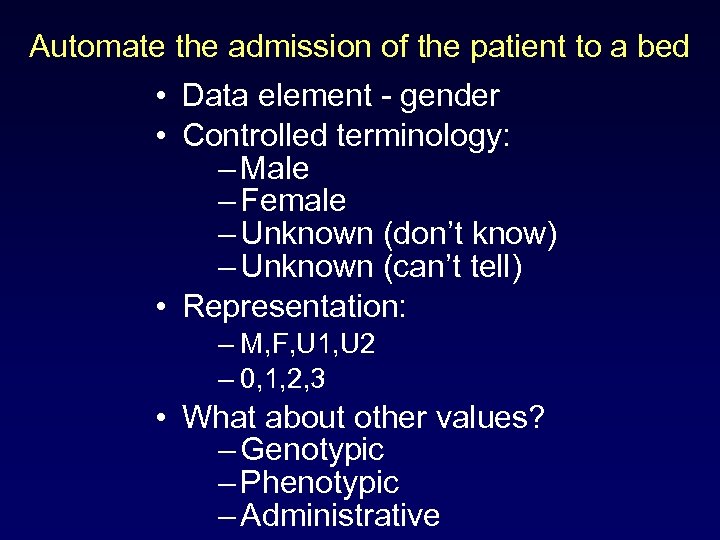 Automate the admission of the patient to a bed • Data element - gender • Controlled terminology: – Male – Female – Unknown (don’t know) – Unknown (can’t tell) • Representation: – M, F, U 1, U 2 – 0, 1, 2, 3 • What about other values? – Genotypic – Phenotypic – Administrative
 Automate the admission of the patient to a bed
 Requirements for High-Quality Terminology • Synonymy (not redundancy) • Multiple levels of granularity
 Information Form and Reuse
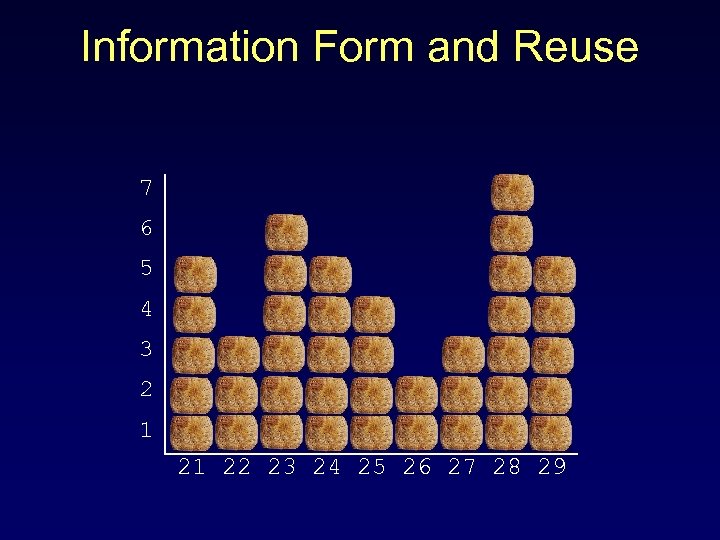 Information Form and Reuse 7 6 5 4 3 2 1 21 22 23 24 25 26 27 28 29
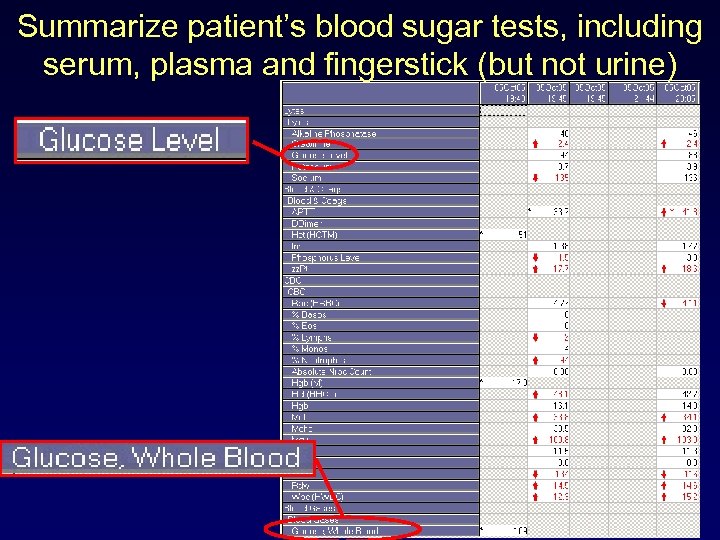 Summarize patient’s blood sugar tests, including serum, plasma and fingerstick (but not urine)
 Requirements for High-Quality Terminology • Synonymy (not redundancy) • Multiple levels of granularity • Data model has terms too
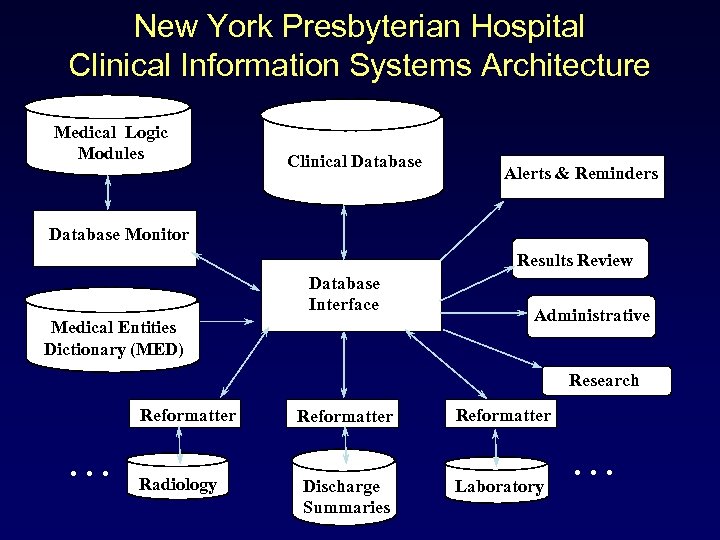 New York Presbyterian Hospital Clinical Information Systems Architecture Medical Logic Modules Clinical Database Alerts & Reminders Database Monitor Results Review Database Interface Medical Entities Dictionary (MED) Administrative Research Reformatter . . . Radiology Reformatter Discharge Summaries Reformatter Laboratory . . .
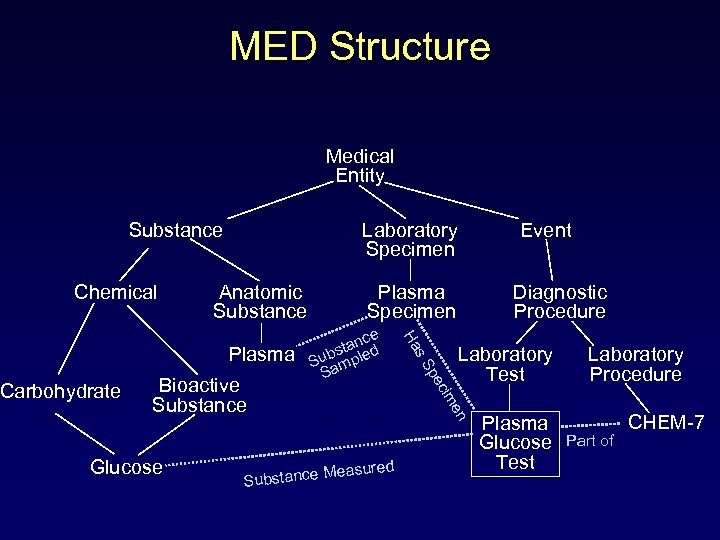 MED Structure Medical Entity Substance Chemical Laboratory Specimen Anatomic Substance sured stance Mea Sub Laboratory Test en Glucose Diagnostic Procedure Laboratory Procedure im Bioactive Substance c pe Carbohydrate ce taned s Sub mpl Sa s. S Ha Plasma Specimen Event Plasma Glucose Test Part of CHEM-7
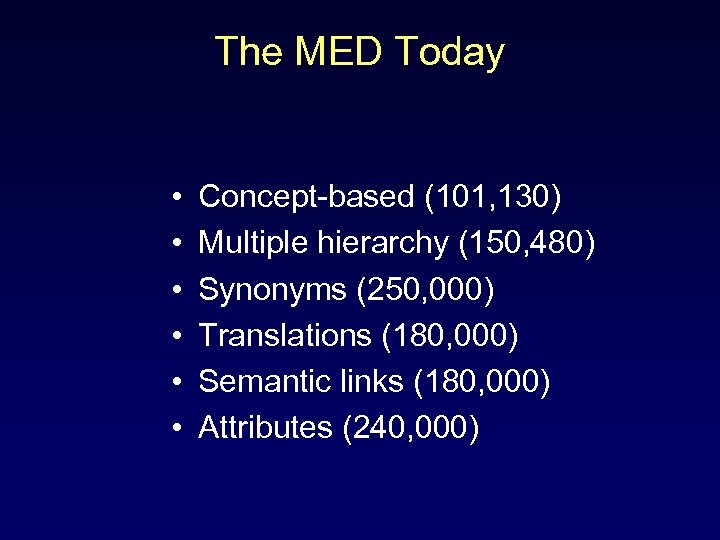 The MED Today • • • Concept-based (101, 130) Multiple hierarchy (150, 480) Synonyms (250, 000) Translations (180, 000) Semantic links (180, 000) Attributes (240, 000)
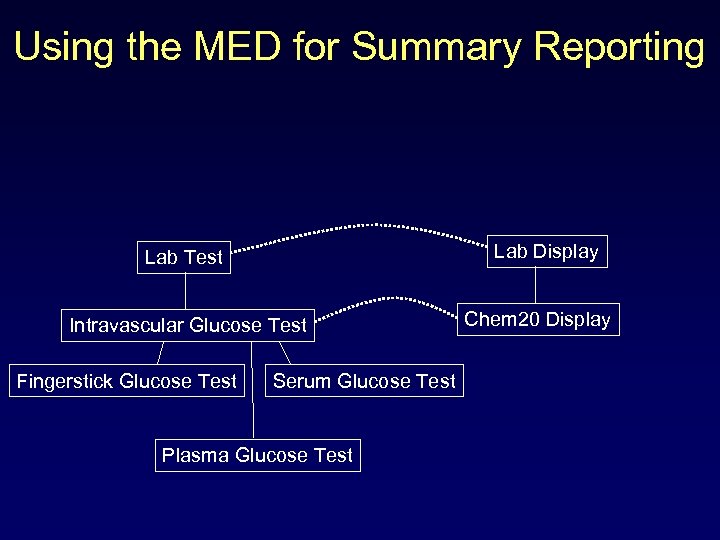 Using the MED for Summary Reporting Lab Display Lab Test Intravascular Glucose Test Fingerstick Glucose Test Serum Glucose Test Plasma Glucose Test Chem 20 Display
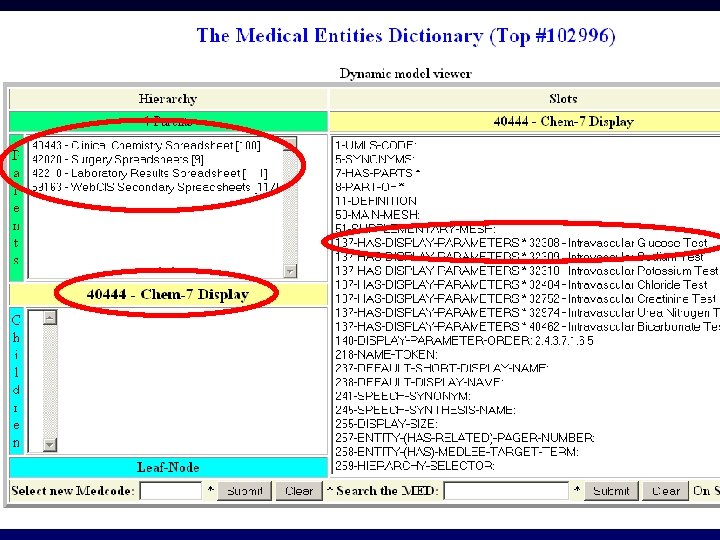
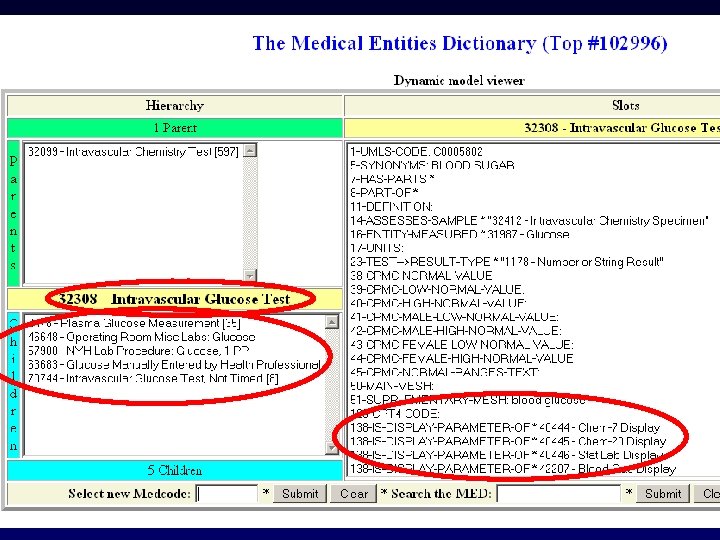
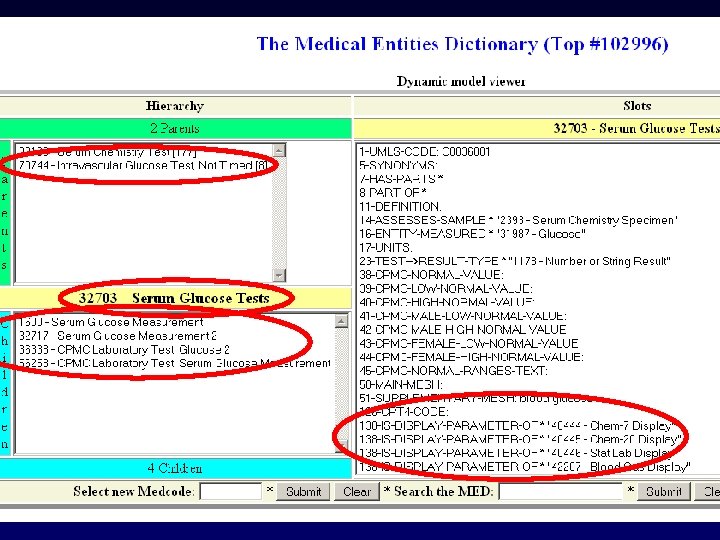
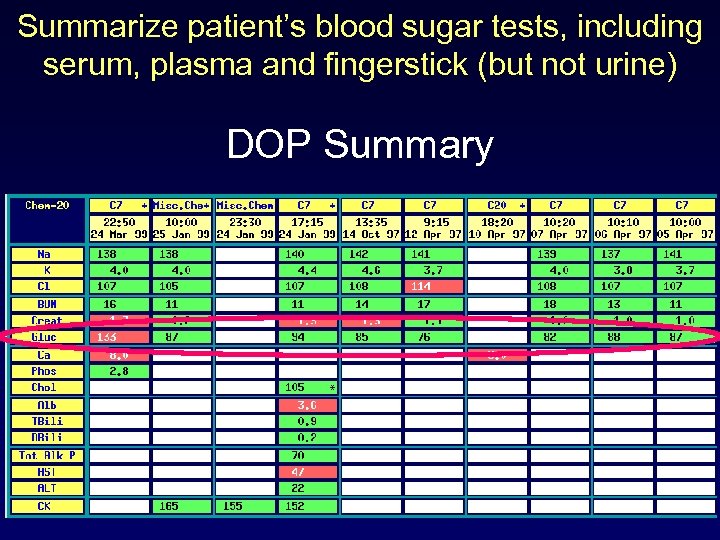 Summarize patient’s blood sugar tests, including serum, plasma and fingerstick (but not urine) DOP Summary
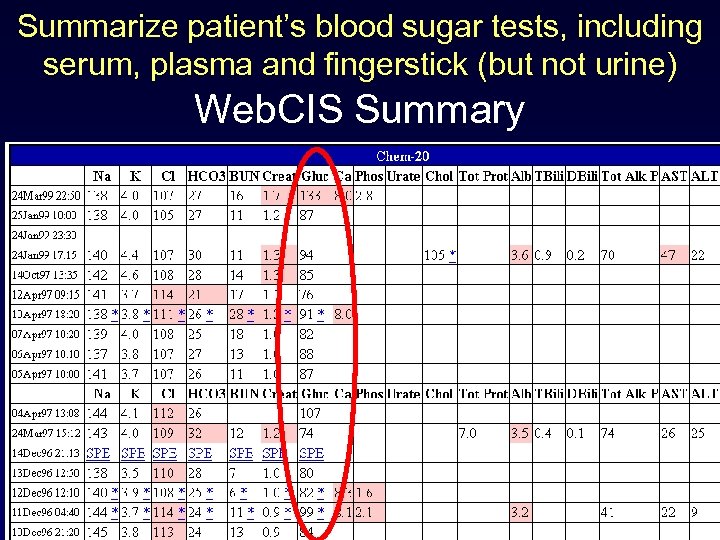 Summarize patient’s blood sugar tests, including serum, plasma and fingerstick (but not urine) Web. CIS Summary
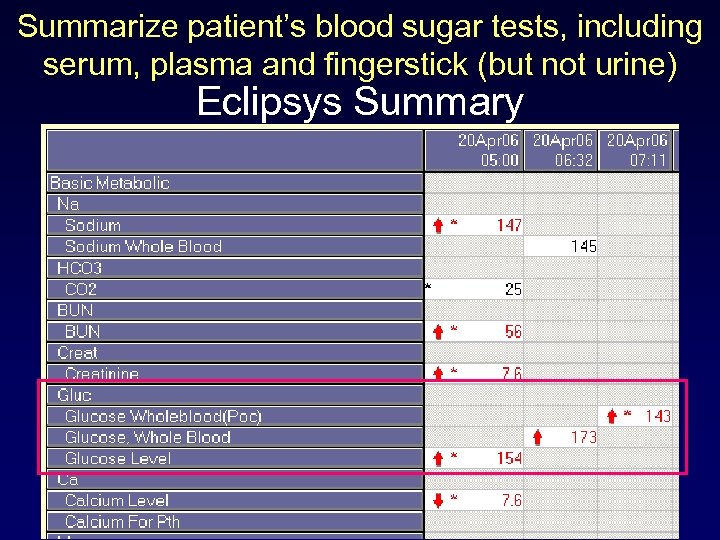 Summarize patient’s blood sugar tests, including serum, plasma and fingerstick (but not urine) Eclipsys Summary
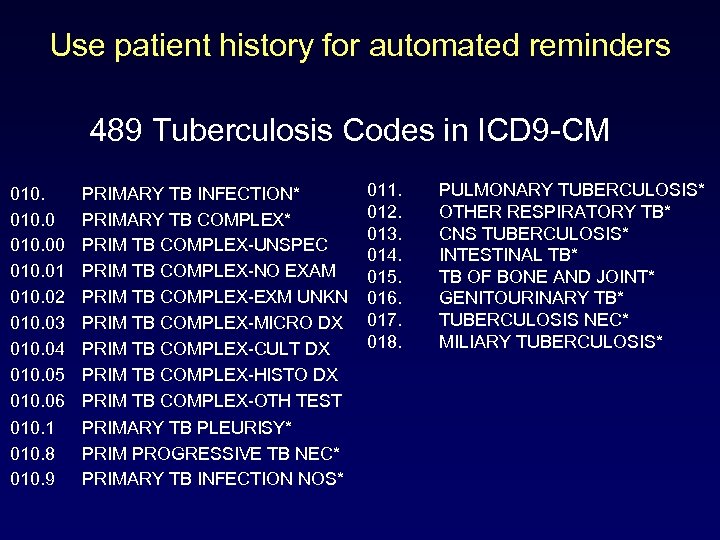 Use patient history for automated reminders 489 Tuberculosis Codes in ICD 9 -CM 010. 01 010. 02 010. 03 010. 04 010. 05 010. 06 010. 1 010. 8 010. 9 PRIMARY TB INFECTION* PRIMARY TB COMPLEX* PRIM TB COMPLEX-UNSPEC PRIM TB COMPLEX-NO EXAM PRIM TB COMPLEX-EXM UNKN PRIM TB COMPLEX-MICRO DX PRIM TB COMPLEX-CULT DX PRIM TB COMPLEX-HISTO DX PRIM TB COMPLEX-OTH TEST PRIMARY TB PLEURISY* PRIM PROGRESSIVE TB NEC* PRIMARY TB INFECTION NOS* 011. 012. 013. 014. 015. 016. 017. 018. PULMONARY TUBERCULOSIS* OTHER RESPIRATORY TB* CNS TUBERCULOSIS* INTESTINAL TB* TB OF BONE AND JOINT* GENITOURINARY TB* TUBERCULOSIS NEC* MILIARY TUBERCULOSIS*
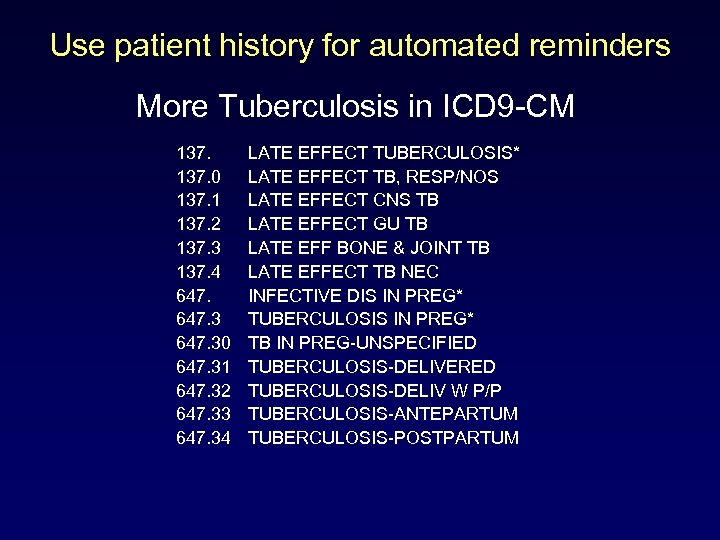 Use patient history for automated reminders More Tuberculosis in ICD 9 -CM 137. 0 137. 1 137. 2 137. 3 137. 4 647. 30 647. 31 647. 32 647. 33 647. 34 LATE EFFECT TUBERCULOSIS* LATE EFFECT TB, RESP/NOS LATE EFFECT CNS TB LATE EFFECT GU TB LATE EFF BONE & JOINT TB LATE EFFECT TB NEC INFECTIVE DIS IN PREG* TUBERCULOSIS IN PREG* TB IN PREG-UNSPECIFIED TUBERCULOSIS-DELIVERED TUBERCULOSIS-DELIV W P/P TUBERCULOSIS-ANTEPARTUM TUBERCULOSIS-POSTPARTUM
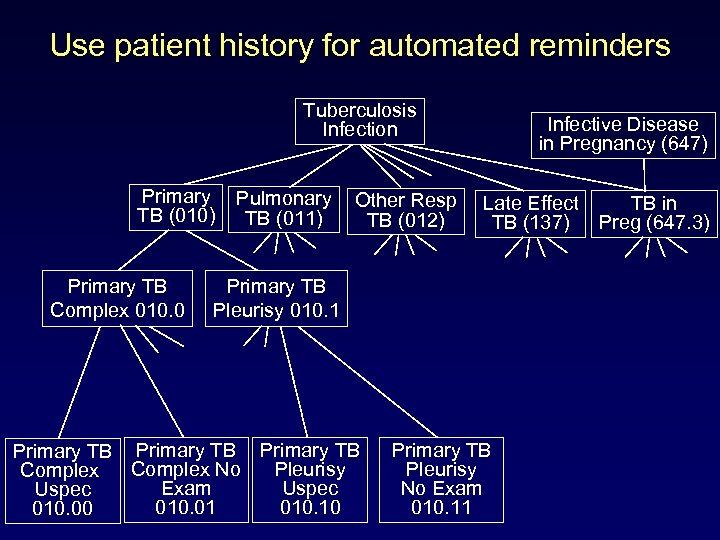 Use patient history for automated reminders Tuberculosis Infection Primary TB (010) Primary TB Complex 010. 0 Pulmonary TB (011) Other Resp TB (012) Infective Disease in Pregnancy (647) Late Effect TB (137) Primary TB Pleurisy 010. 1 Primary TB Complex No Pleurisy Complex Exam Uspec 010. 01 010. 10 010. 00 Primary TB Pleurisy No Exam 010. 11 TB in Preg (647. 3)
 Requirements for High-Quality Terminology • • Synonymy (not redundancy) Multiple levels of granularity Data model has terms too Multiple hierarchies
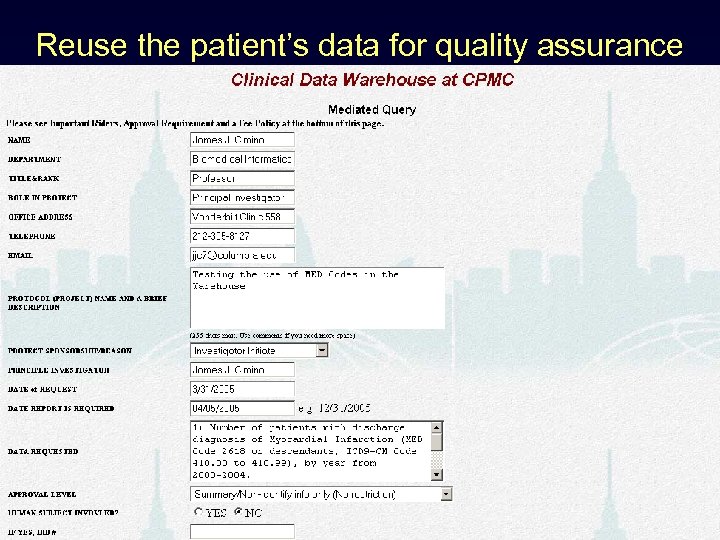 Reuse the patient’s data for quality assurance
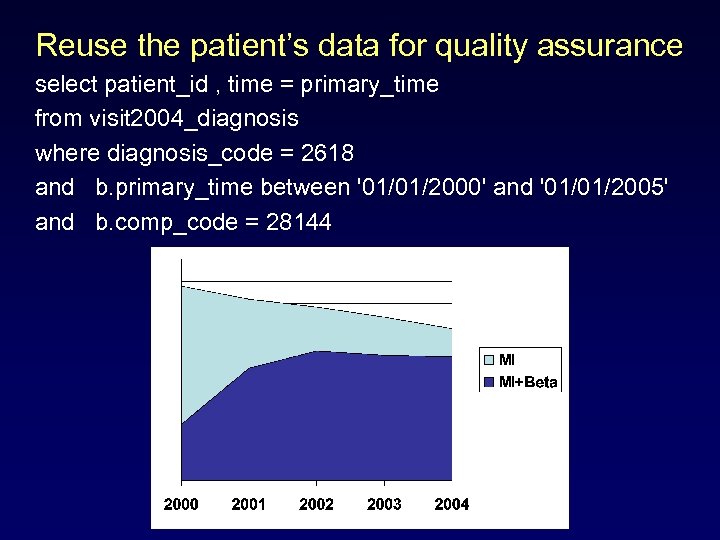 Reuse the patient’s data for quality assurance select patient_id , time = primary_time from visit 2004_diagnosis where diagnosis_code = 2618 and b. primary_time between '01/01/2000' and '01/01/2005' and b. comp_code = 28144
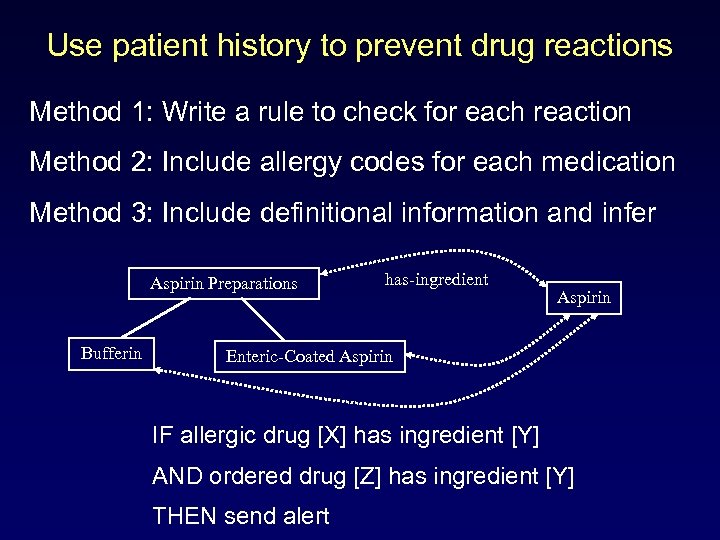 Use patient history to prevent drug reactions Method 1: Write a rule to check for each reaction Method 2: Include allergy codes for each medication Method 3: Include definitional information and infer Aspirin Preparations Bufferin has-ingredient Aspirin Enteric-Coated Aspirin IF allergic drug [X] has ingredient [Y] AND ordered drug [Z] has ingredient [Y] THEN send alert
 Requirements for High-Quality Terminology • • • Synonymy (not redundancy) Multiple levels of granularity Data model has terms too Multiple hierarchies Include definitional knowledge
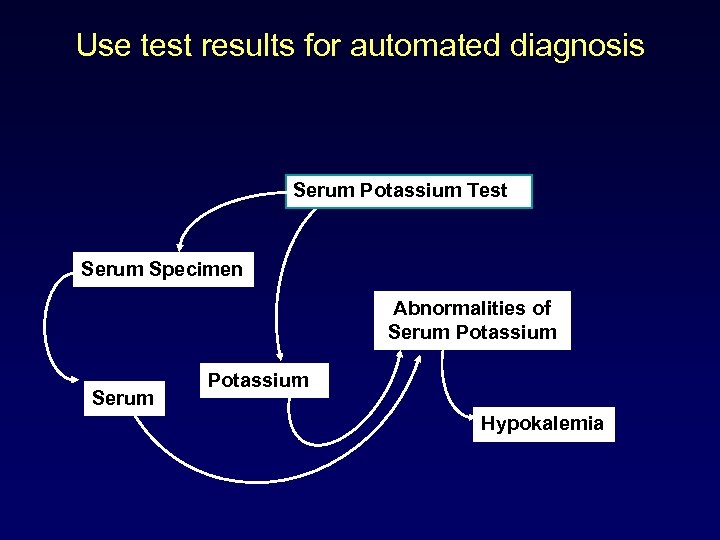 Use test results for automated diagnosis Serum Potassium Test Serum Specimen Abnormalities of Serum Potassium Hypokalemia
 Use test results for automated diagnosis
 Use test results for automated diagnosis
 Use test results for automated diagnosis
 Requirements for High-Quality Terminology • • • Synonymy (not redundancy) Multiple levels of granularity Data model has terms too Multiple hierarchies Include definitional knowledge Support automated translation
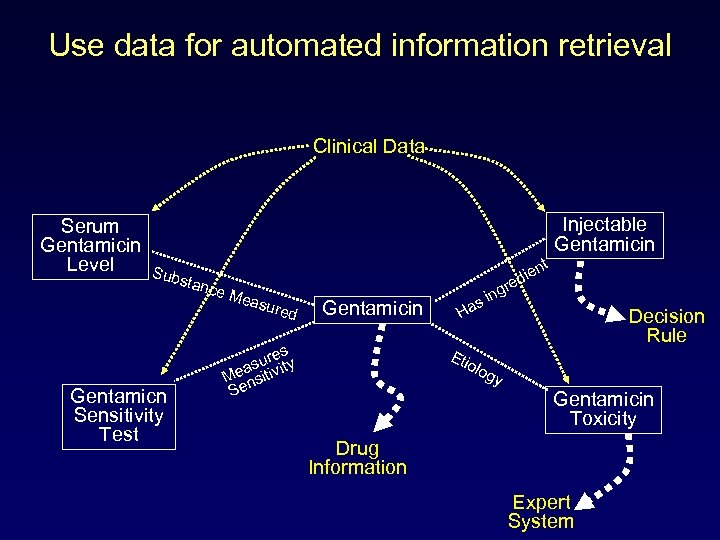 Use data for automated information retrieval Clinical Data Serum Gentamicin Level Injectable Gentamicin Sub stan t re ce M easu r ed Gentamicn Sensitivity Test n die Gentamicin es sur vity a Me nsiti Se g s in Ha Decision Rule Eti ol og y Gentamicin Toxicity Drug Information Expert System
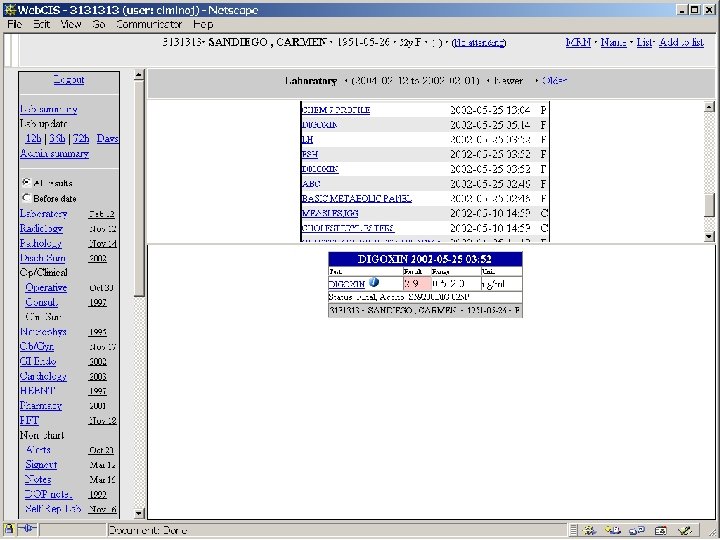
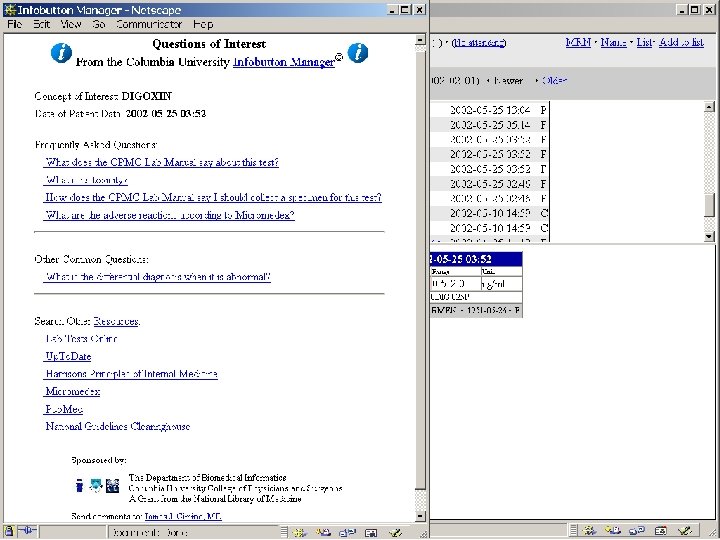
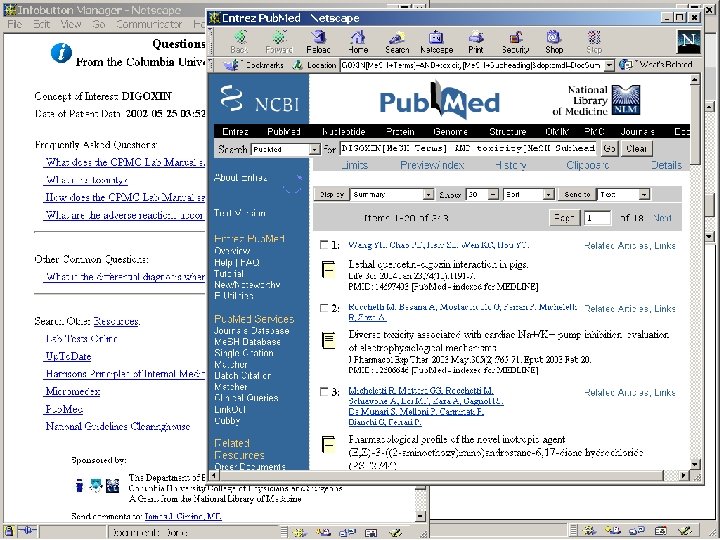
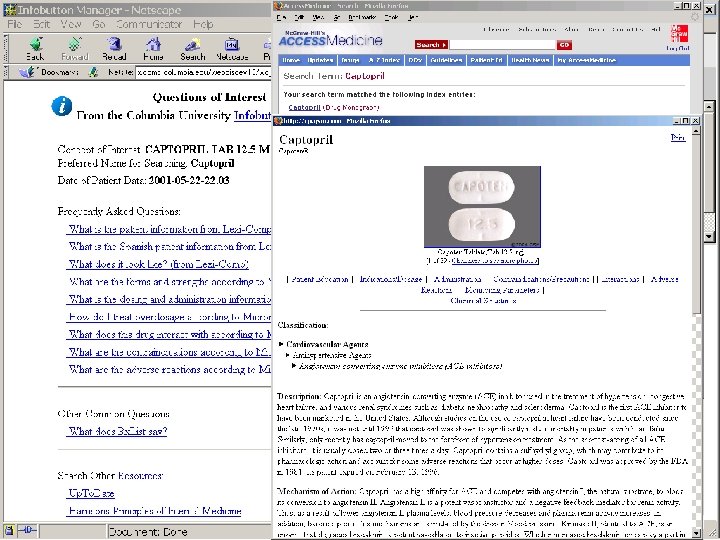
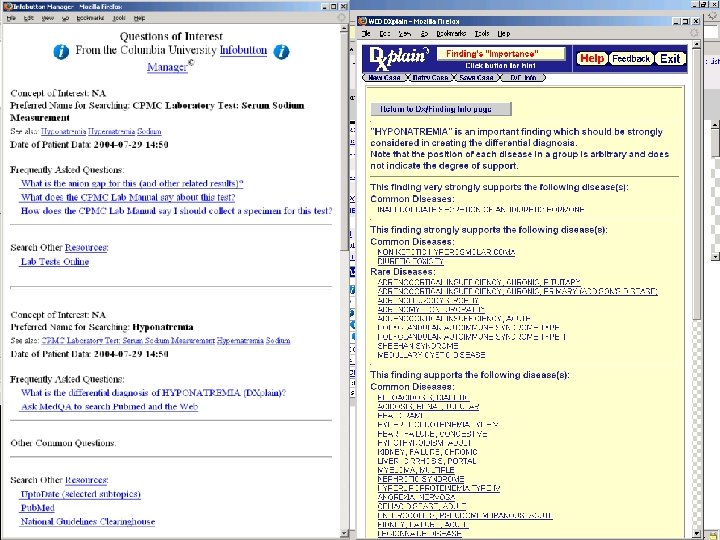
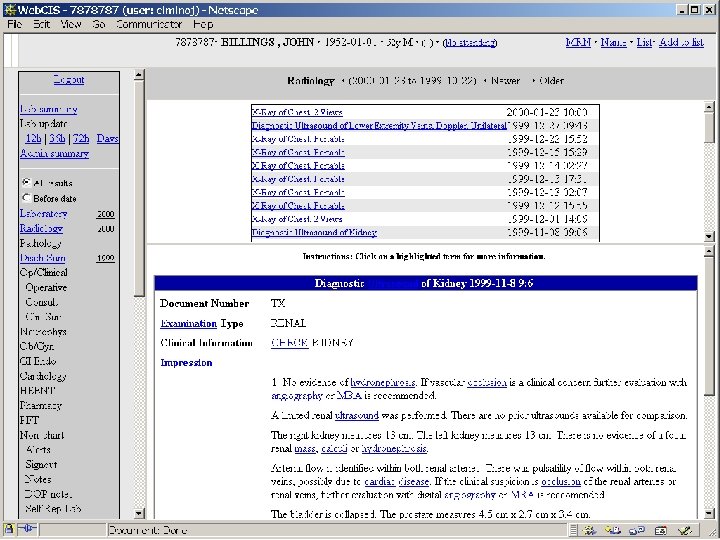
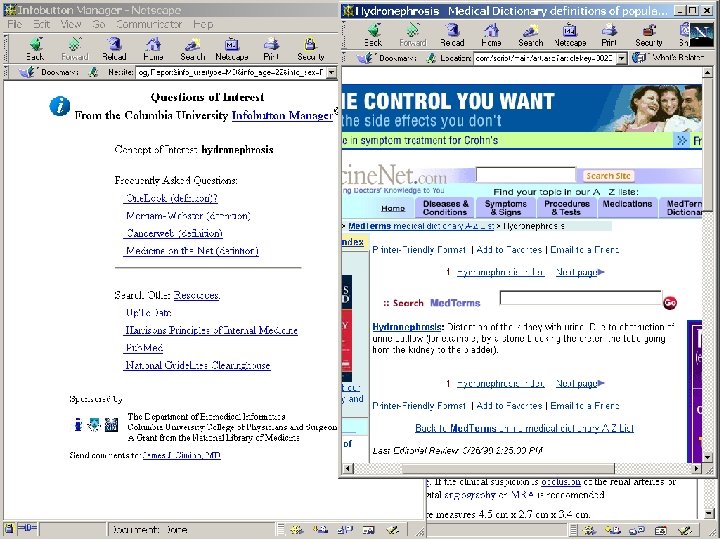
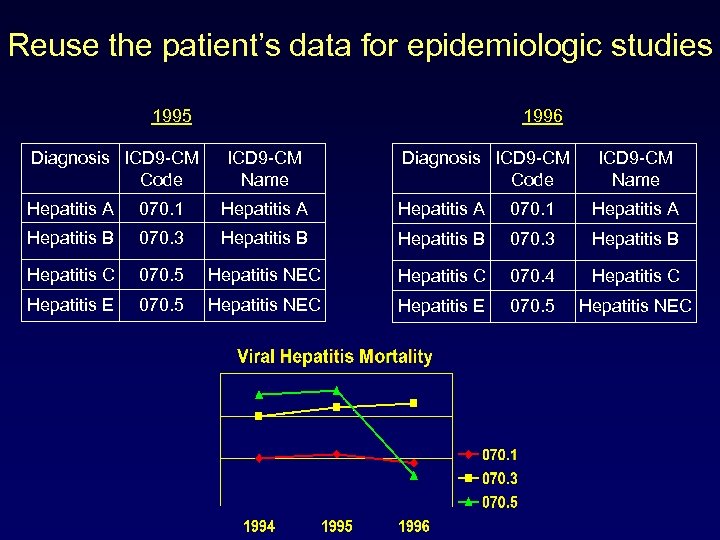 Reuse the patient’s data for epidemiologic studies 1995 Diagnosis ICD 9 -CM Code 1996 ICD 9 -CM Name Diagnosis ICD 9 -CM Code ICD 9 -CM Name Hepatitis A 070. 1 Hepatitis A Hepatitis B 070. 3 Hepatitis B Hepatitis C 070. 5 Hepatitis NEC Hepatitis C 070. 4 Hepatitis C Hepatitis E 070. 5 Hepatitis NEC
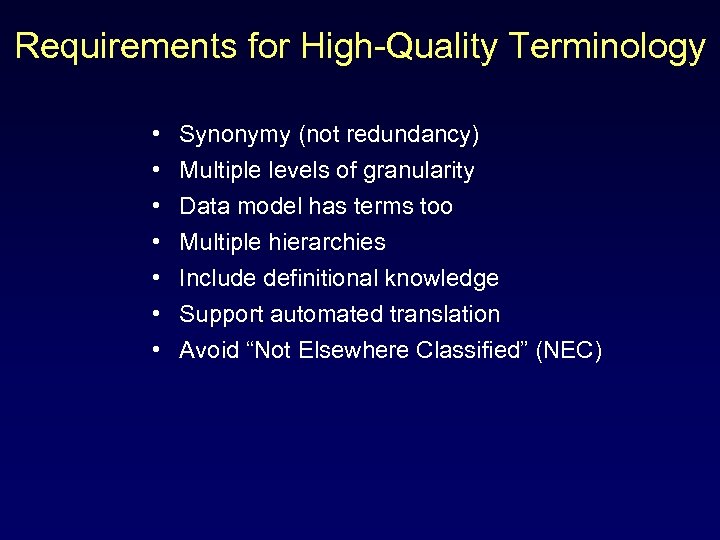
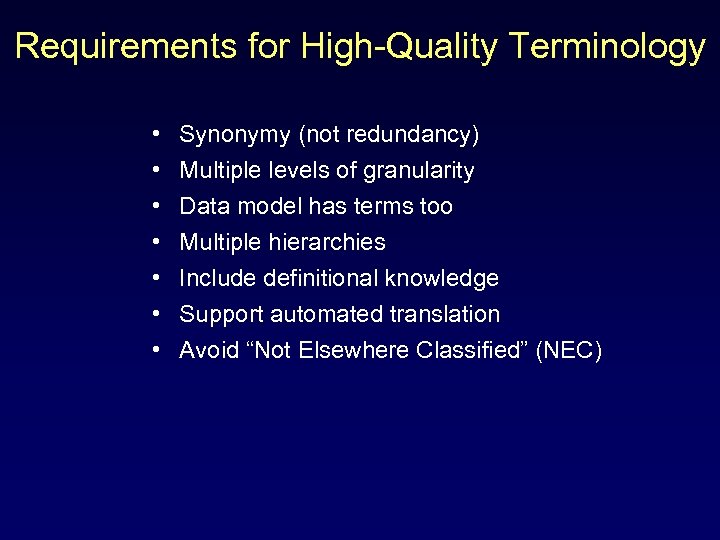 Requirements for High-Quality Terminology • • Synonymy (not redundancy) Multiple levels of granularity Data model has terms too Multiple hierarchies Include definitional knowledge Support automated translation Avoid “Not Elsewhere Classified” (NEC)
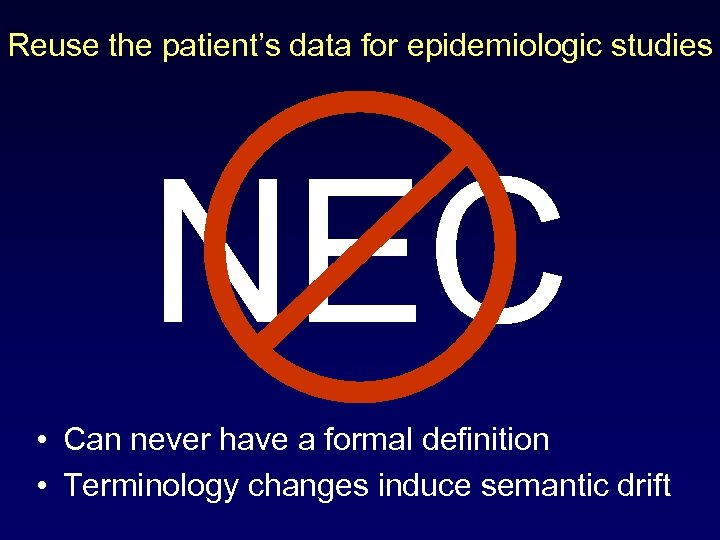 Reuse the patient’s data for epidemiologic studies NEC • Can never have a formal definition • Terminology changes induce semantic drift
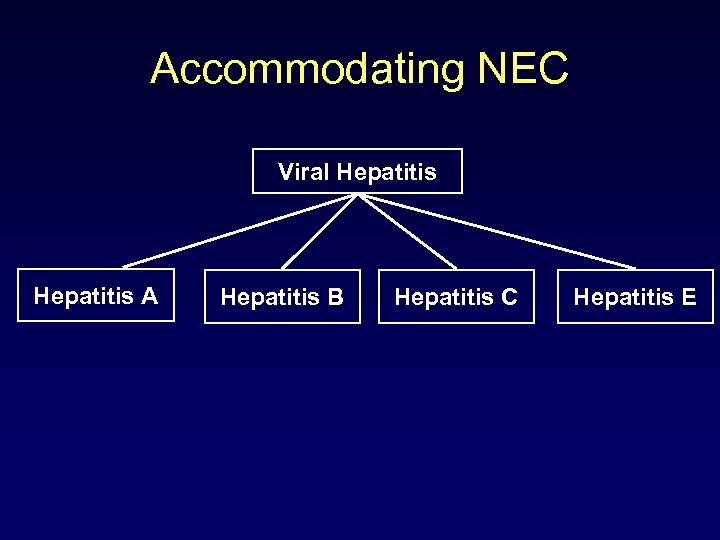 Accommodating NEC Viral Hepatitis A Hepatitis B Hepatitis C Hepatitis E
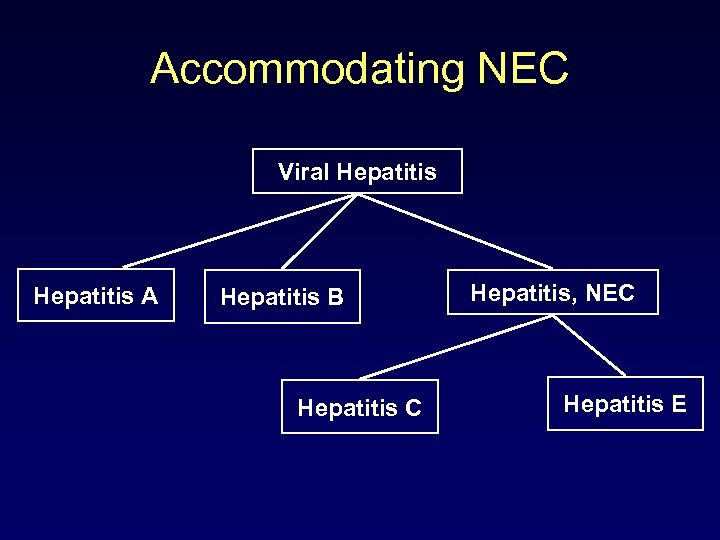 Accommodating NEC Viral Hepatitis A Hepatitis B Hepatitis C Hepatitis, NEC Hepatitis E
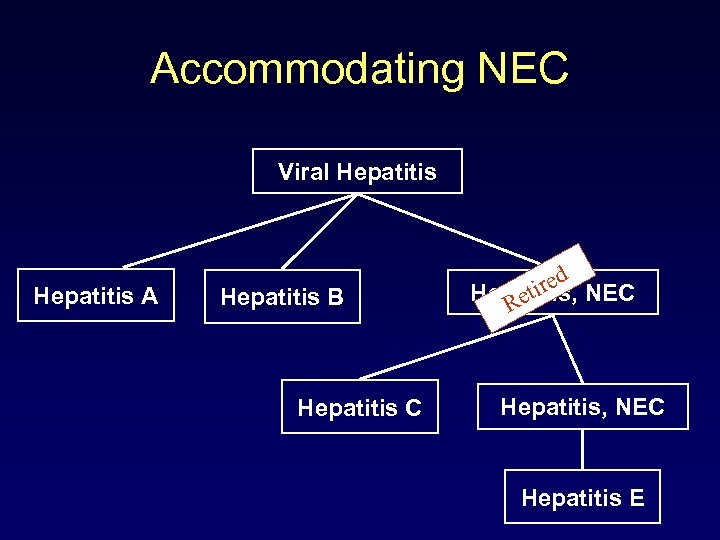 Accommodating NEC Viral Hepatitis A Hepatitis B Hepatitis C d tire NEC Hepatitis, Re Hepatitis, NEC Hepatitis E
 Use and Reuse of Clinical Data a) Automate the admission of the patient to a bed b) Summarize the patient’s blood sugar tests, including serum, plasma and fingerstick (but not urine) c) Use patient history to help with automated reminders d) Aggregate the patient’s data for quality assurance e) Use patient history to prevent adverse drug reactions f) Use the laboratory test results for automated diagnosis g) Use the patient’s data to automate information retrieval h) Aggregate the patient’s data for epidemiologic studies
 Requirements for High-Quality Terminology • • Synonymy (not redundancy) Multiple levels of granularity Data model has terms too Multiple hierarchies Include definitional knowledge Support automated translation Avoid “Not Elsewhere Classified” (NEC)
 Requirements for High-Quality Terminology • MED has features of a high-quality terminology • MED supports reuse of clinical data • Try to find high-quality standards • How do you determine terminology quality?