


 Скачать презентацию Returning to Your Home the First Time Make
57b34862ed59712e01be9f3adf5b016f.ppt
- Количество слайдов: 41
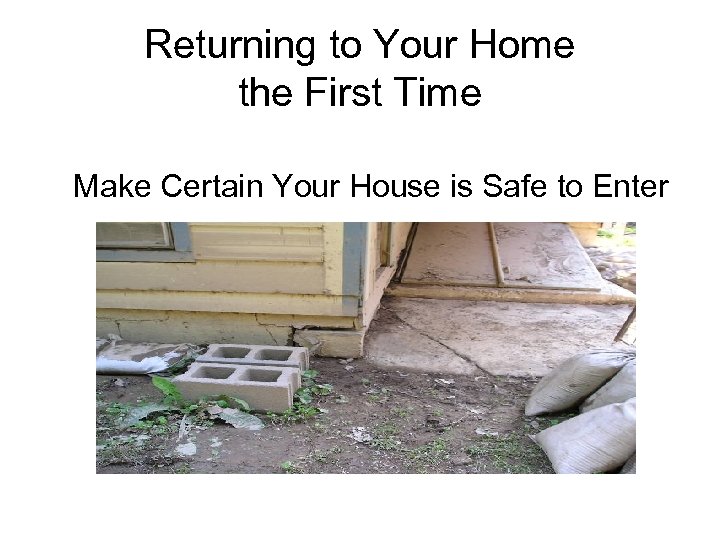 Returning to Your Home the First Time Make Certain Your House is Safe to Enter
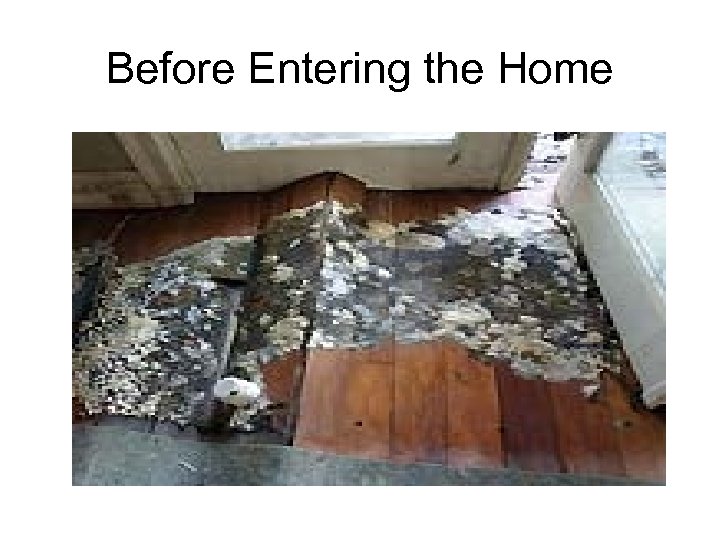 Before Entering the Home
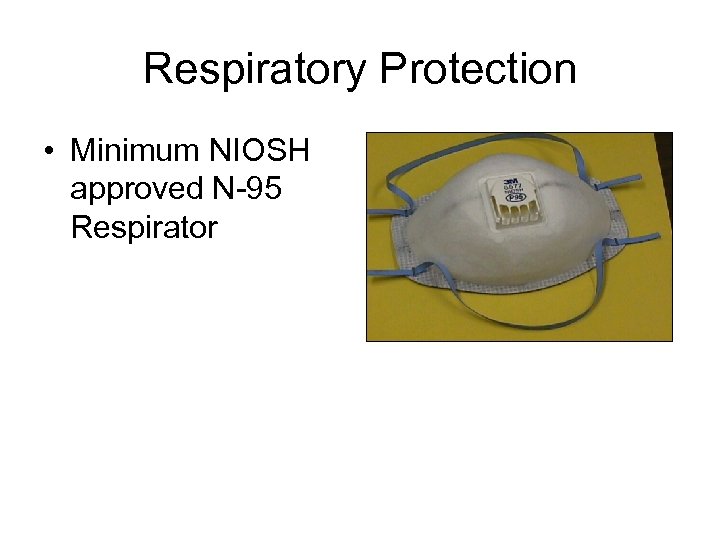 Respiratory Protection • Minimum NIOSH approved N-95 Respirator
 Control Who Goes in The Home Some people need to stay away till the house has been completely cleaned and dried out • • Small Children & Pregnant Women People with Asthma/severe allergies Those with Heart Problems Those with compromised immune systems
 Once in the Home • Turn off Electricity at Main Panel Box • Turn off Natural Gas at Meter • If you have Fuel Oil/Kerosene or Propane turn off the fuel valve at the tank
 Protect Your Home from Further Damage • Get fresh air moving through your home – Open all windows and doors – Open all closet & cabinet doors • Make temporary repairs needed – Brace and secure sagging floors & roofs – Check for broken or leaking water pipes
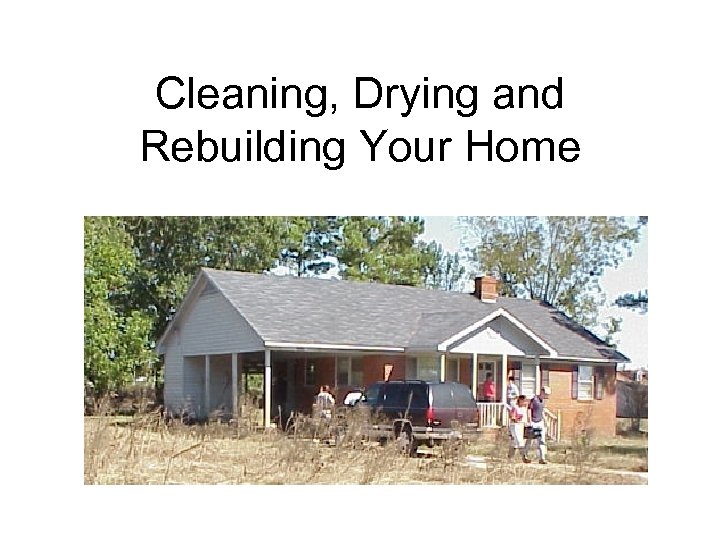 Cleaning, Drying and Rebuilding Your Home
 Before Repairing or Rebuilding Ask the Big Questions • Do I really want to be flooded again? • Is it worth rebuilding? • Is Home “Substantially Damaged”?
 6 Essential Steps • • • Protect Yourself and Your Helpers Air Out Move Out Tear Out Clean Out Dry Out
 Protect Yourself and Your Helpers Personal Protective Equipment • N-95 Respirator • Gloves • Goggles • Rubber Boots • Tetanus shots up to date • Who should not be allowed to help
 Air Out Get fresh air moving through your home • • • Open all windows and exterior doors Open all interior doors Open closet & cabinet doors Open attic access door/panel 1 Fans 2
 Move Out Remove Salvageable Items from affected area first • Valuables • Important Papers • Valuable Solid Wood Furniture
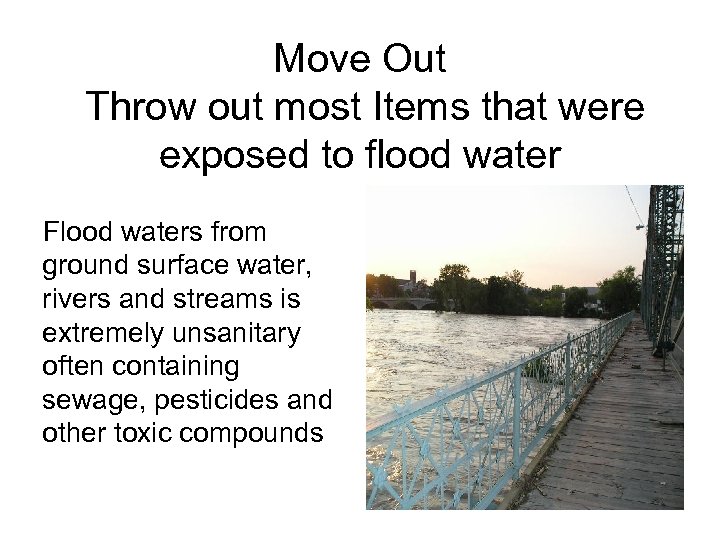 Move Out Throw out most Items that were exposed to flood water Flood waters from ground surface water, rivers and streams is extremely unsanitary often containing sewage, pesticides and other toxic compounds
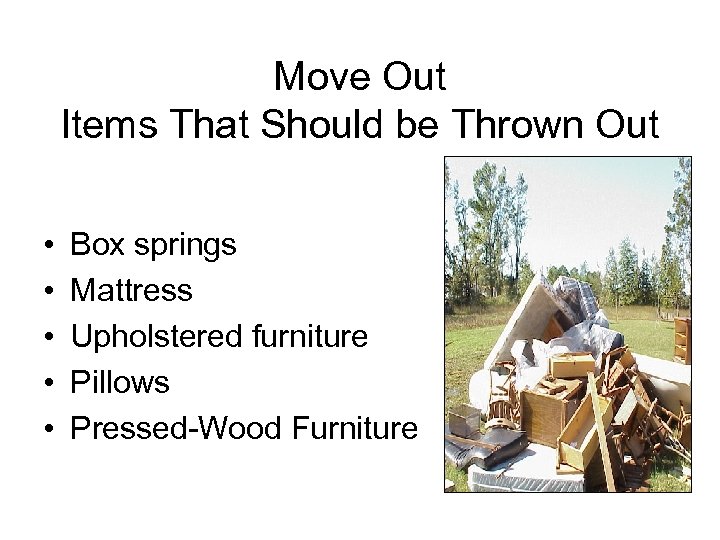 Move Out Items That Should be Thrown Out • • • Box springs Mattress Upholstered furniture Pillows Pressed-Wood Furniture
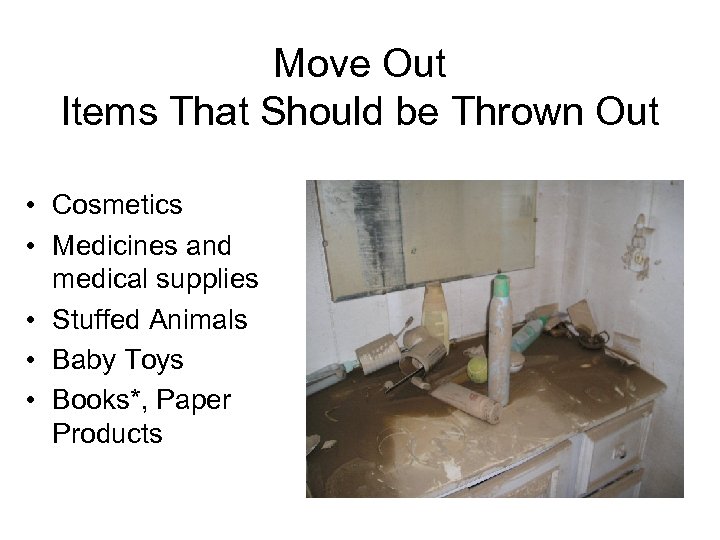 Move Out Items That Should be Thrown Out • Cosmetics • Medicines and medical supplies • Stuffed Animals • Baby Toys • Books*, Paper Products
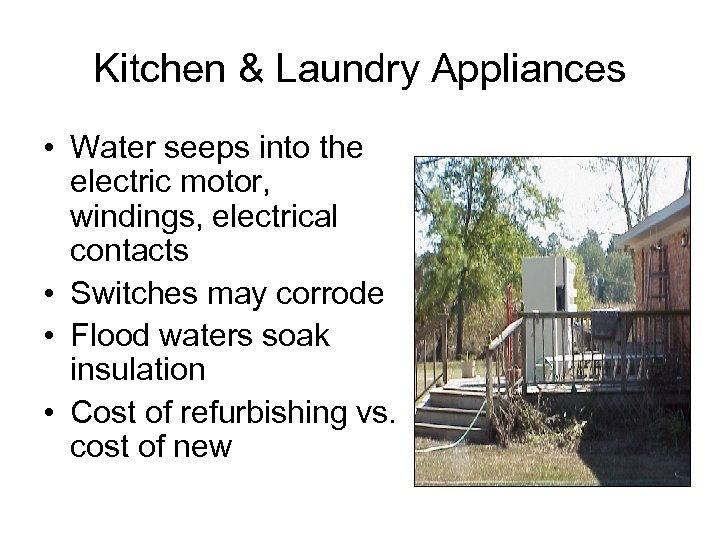 Kitchen & Laundry Appliances • Water seeps into the electric motor, windings, electrical contacts • Switches may corrode • Flood waters soak insulation • Cost of refurbishing vs. cost of new
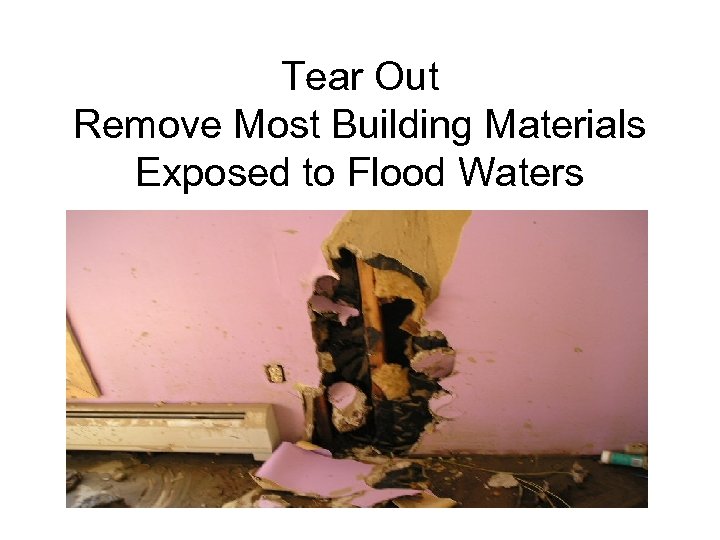 Tear Out Remove Most Building Materials Exposed to Flood Waters
 Tear Out • Carpet & padding • Vinyl or Linoleum over wood* sub-floor • Drywall & Plaster – Flood Water < 2. 5 feet up the wall – Flood Water >2. 5 feet up the wall • Fibrous Wall Insulation – Fiberglass – Cellulose
 Electrical System Components • Main Panel Box • Flooded electrical receptacles • Electrical wiring
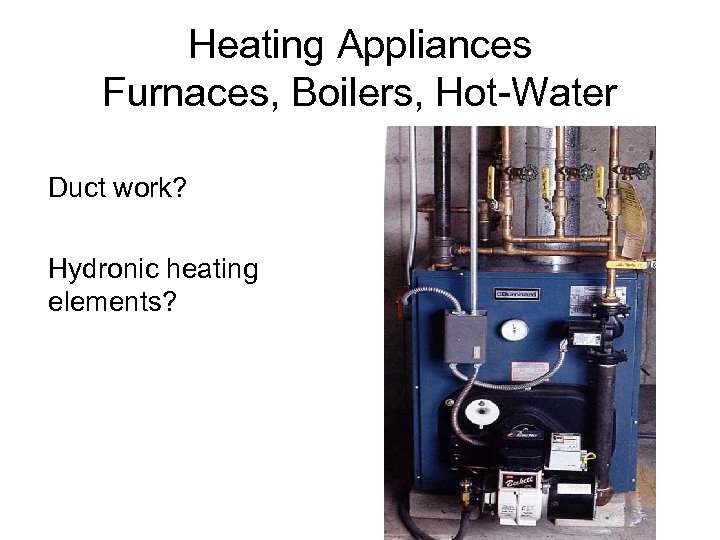 Heating Appliances Furnaces, Boilers, Hot-Water Duct work? Hydronic heating elements?
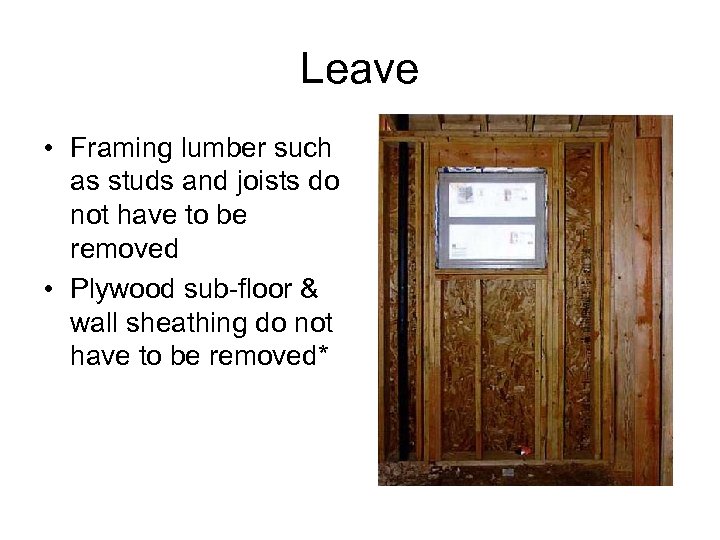 Leave • Framing lumber such as studs and joists do not have to be removed • Plywood sub-floor & wall sheathing do not have to be removed*
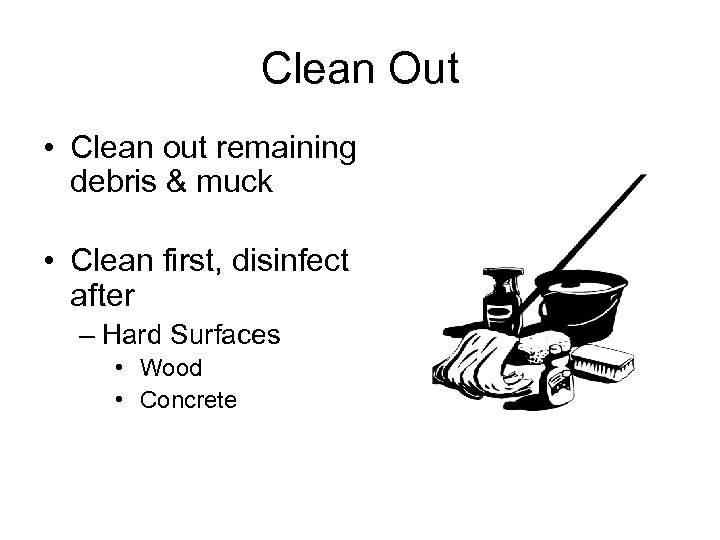 Clean Out • Clean out remaining debris & muck • Clean first, disinfect after – Hard Surfaces • Wood • Concrete
 Clean Solid Wood Furniture • Hose off • Don’t force doors and drawers • Remove back • Allow to dry slowly and out of sunlight – Place in a garage, or similar sheltered area to dry slowly
 Disinfect Two common disinfects: • Quaternary Ammonium based (Shockwave) • Sodium Hypochlorite (Bleach)
 Disinfect: How • Disinfect After thoroughly cleaning – A separate step Surfaces should remain wetted with the solution for at least 10 minutes Mix solution as you need it
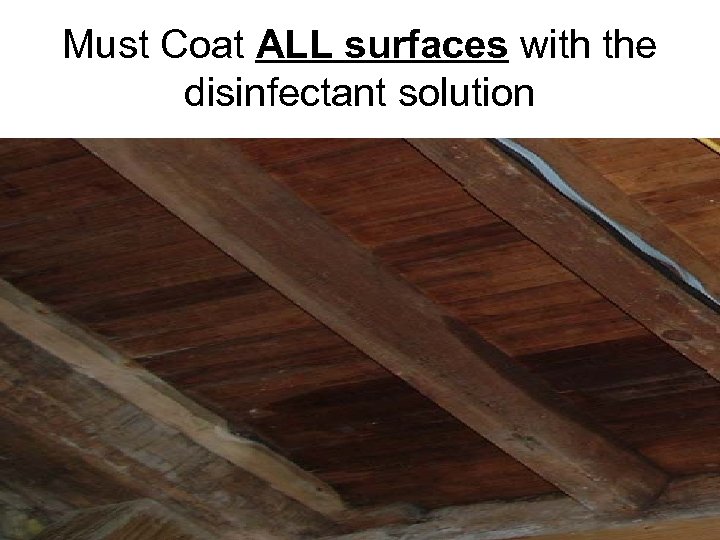 Must Coat ALL surfaces with the disinfectant solution
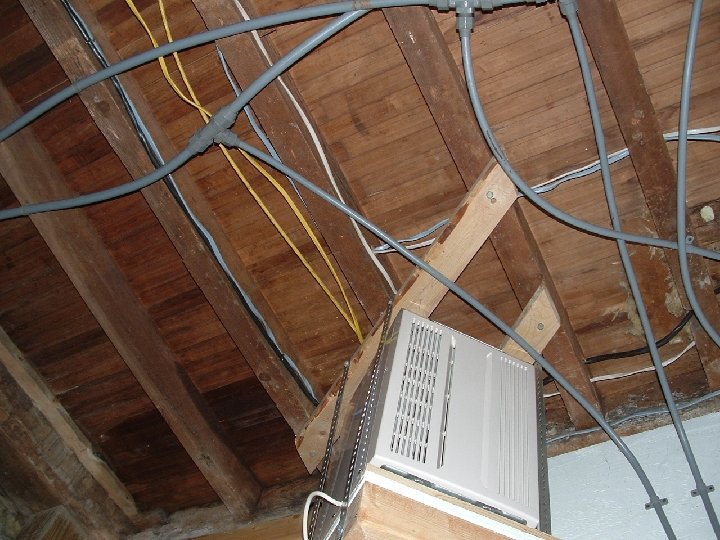
 Thoroughly Dry House Before Rebuilding • Failing to properly clean and dry a home after flooding does have health risks – Foodborne & Waterborne Diarrhea – Hepatitis A – Parasites – Leptospirosis – Mold Growth
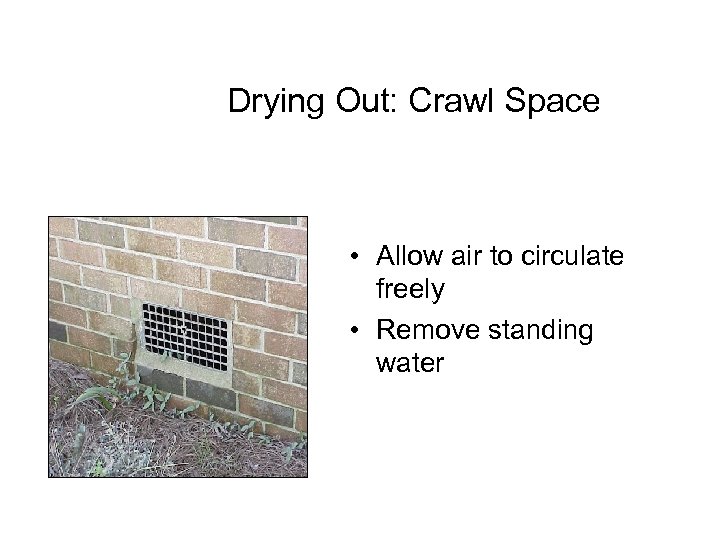 Drying Out: Crawl Space • Allow air to circulate freely • Remove standing water
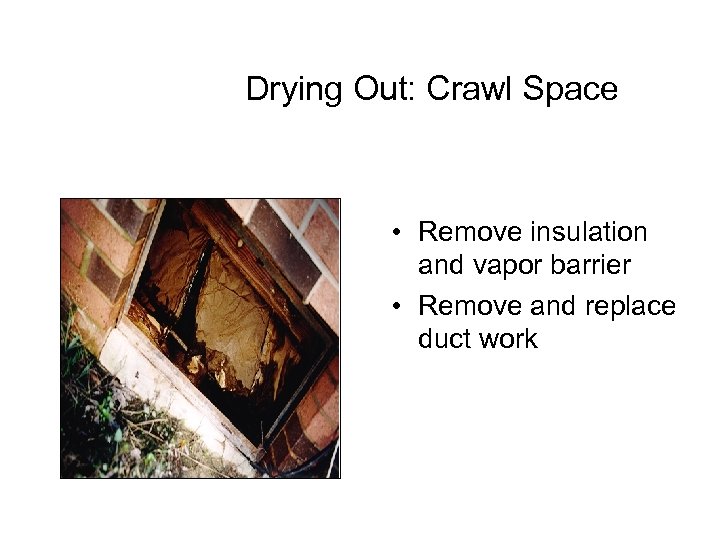 Drying Out: Crawl Space • Remove insulation and vapor barrier • Remove and replace duct work
 How do you know when your house is dry enough? The only way you can tell is to test building components with a moisture meter A Probe Type meter is most accurate
 Testing Solid Wood for Moisture Content • No individual piece of wood should have a moisture content greater than 14% • The average moisture content of all the wood framing members should not be greater than 12%.
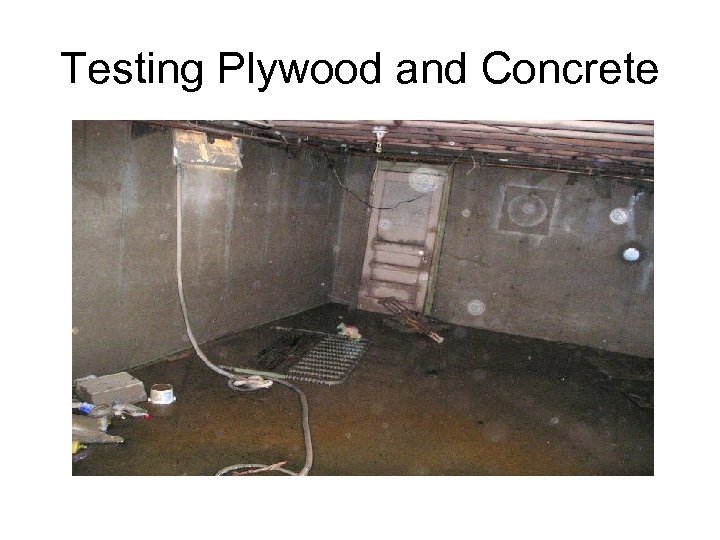 Testing Plywood and Concrete
 Rebuild & Flood-proof Five Methods for Flood-proofing 1) Elevation 2) Relocation 3) Floodwalls 4) Dry Flood-proofing 5) Wet Flood-proofing
 Flood Proofing Elevation Raise the structure so that lowest floor is above flood level*
 Flood Proofing Move The House Move House to a higher spot on the property or acquire a nearby lot that is higher.
 Flood Proofing Floodwalls Surround the structure with walls built to a height above 100 year flood level Works best in areas where flooding is less than 3 feet deep
 Flood Proofing Dry Flood-proofing Sealing the building to keep flood waters out Works best in areas where flooding is less than 3 feet deep Not recommended for houses with crawl spaces or basements
 Flood Proofing Wet Flood-proofing Modifying a building so flood waters cause only minimal damage to building and its contents (let the water in, but minimize damage water will do)
 Additional Sources of Information • Handout Packet –Pg. 51 of Repairing your Flooded Home Booklet • Association of Specialists in Cleaning & Restoration (http: //www. ascr. org) Phone: 443 -878 -1000