


 Скачать презентацию Return to ACA Return to Portfolio TOC link
17a35a27dcf85ded1bd1f747c008c7c0.ppt
- Количество слайдов: 46
 Return to ACA Return to Portfolio TOC (link will only work if in “view show” mode Brown vs. The Board of Education Dave Baniszewski Mike Bryant Helen Reyes David Rutledge EDUC 845 Liberty University
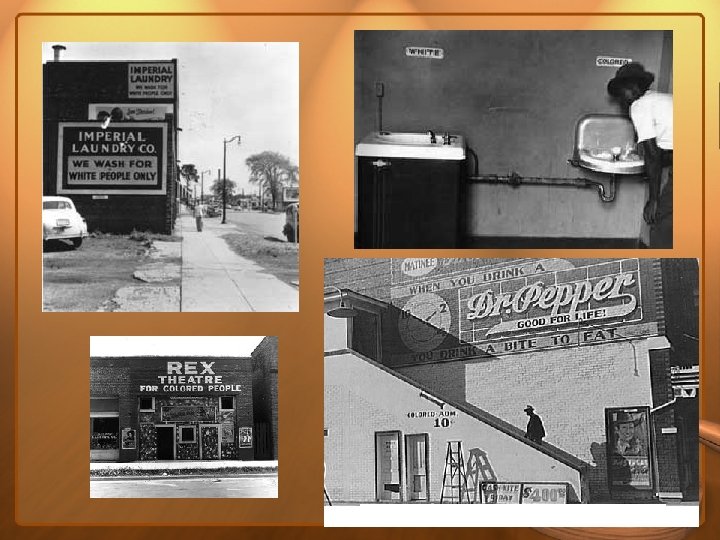
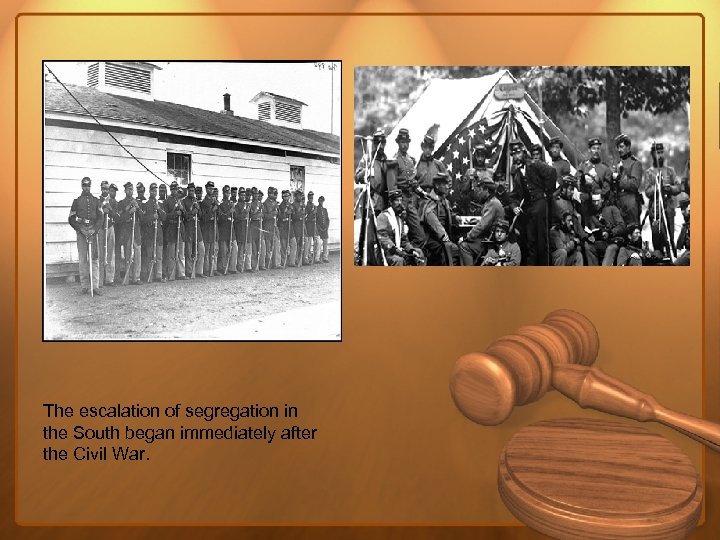 The escalation of segregation in the South began immediately after the Civil War.
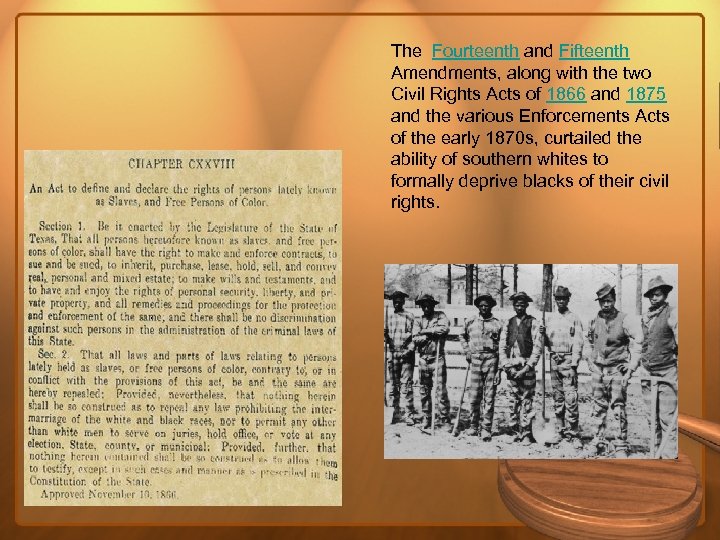 The Fourteenth and Fifteenth Amendments, along with the two Civil Rights Acts of 1866 and 1875 and the various Enforcements Acts of the early 1870 s, curtailed the ability of southern whites to formally deprive blacks of their civil rights.
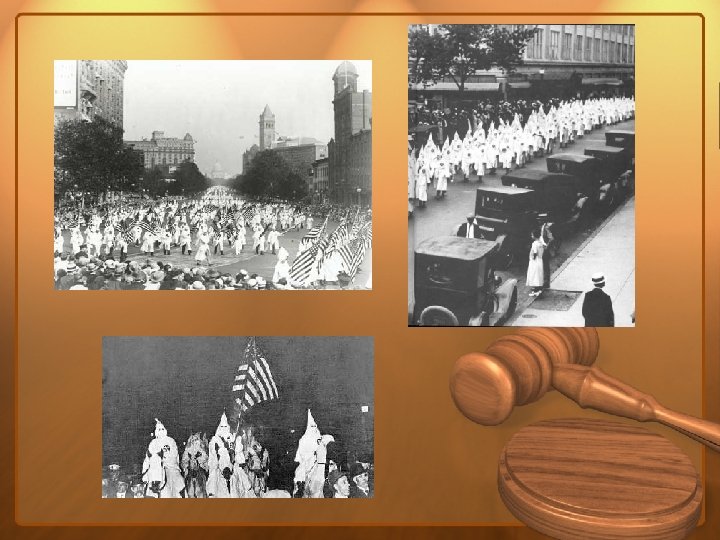
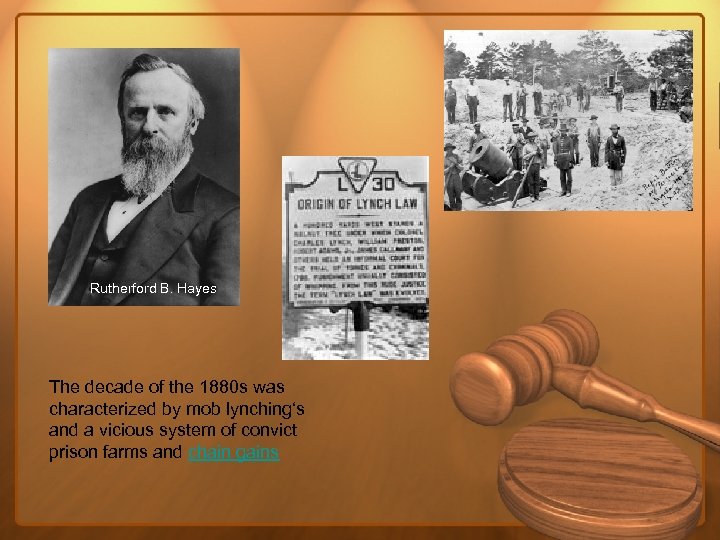 Rutherford B. Hayes The decade of the 1880 s was characterized by mob lynching‘s and a vicious system of convict prison farms and chain gains
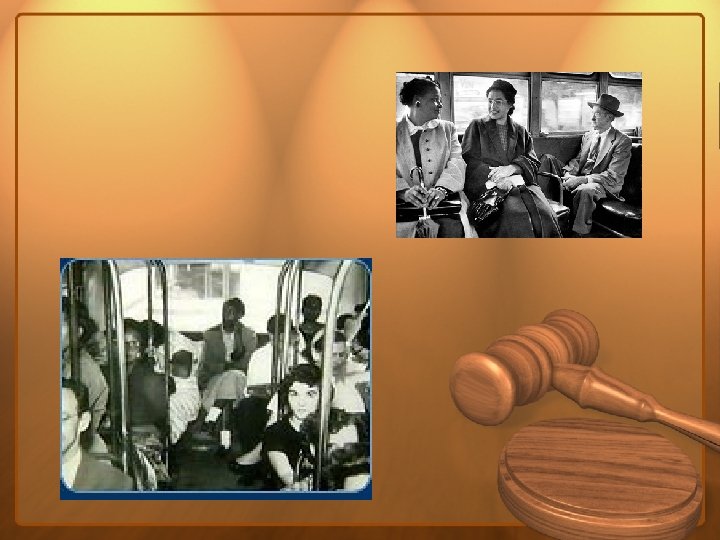
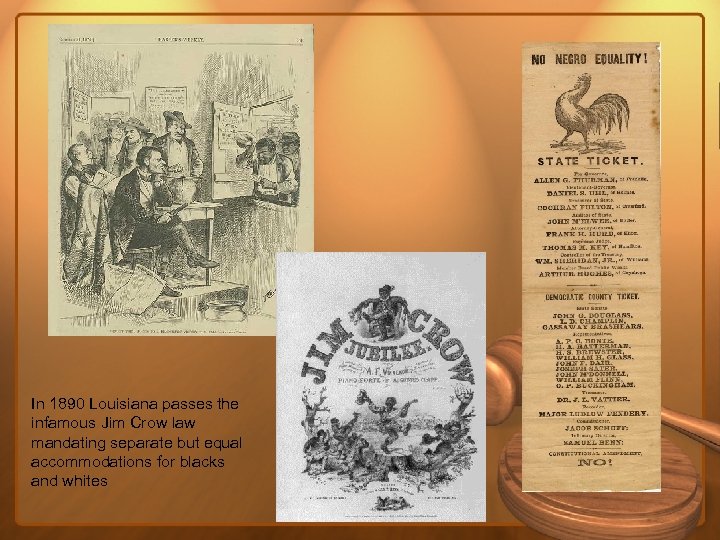 In 1890 Louisiana passes the infamous Jim Crow law mandating separate but equal accommodations for blacks and whites
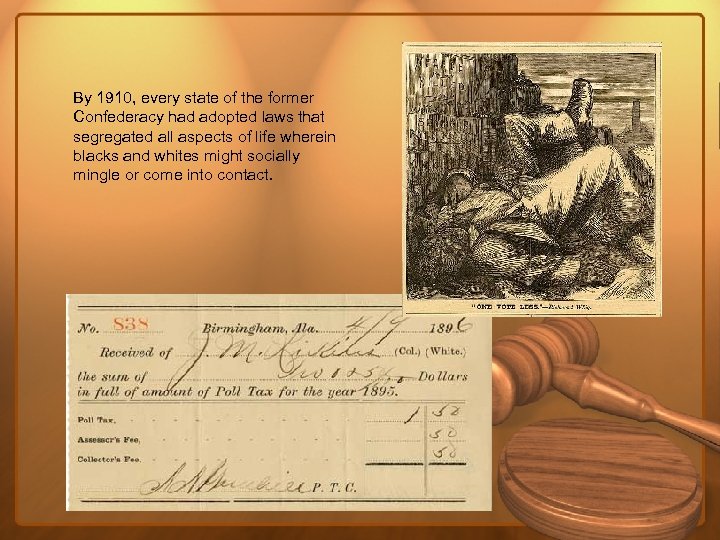 By 1910, every state of the former Confederacy had adopted laws that segregated all aspects of life wherein blacks and whites might socially mingle or come into contact.
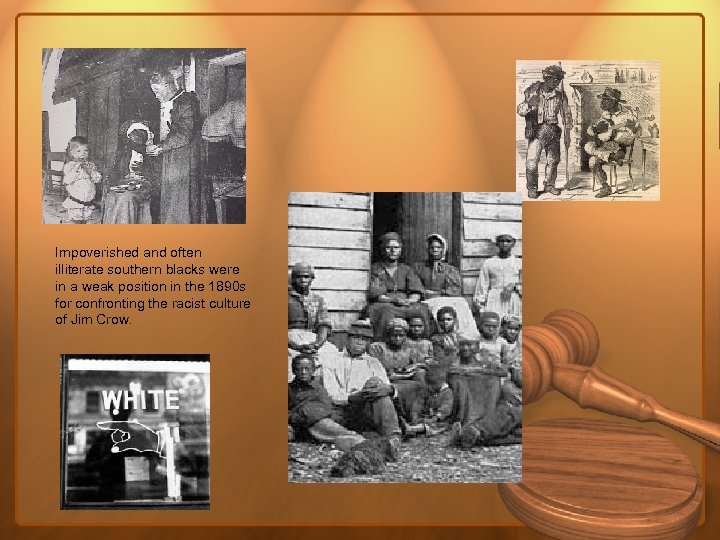 Impoverished and often illiterate southern blacks were in a weak position in the 1890 s for confronting the racist culture of Jim Crow.
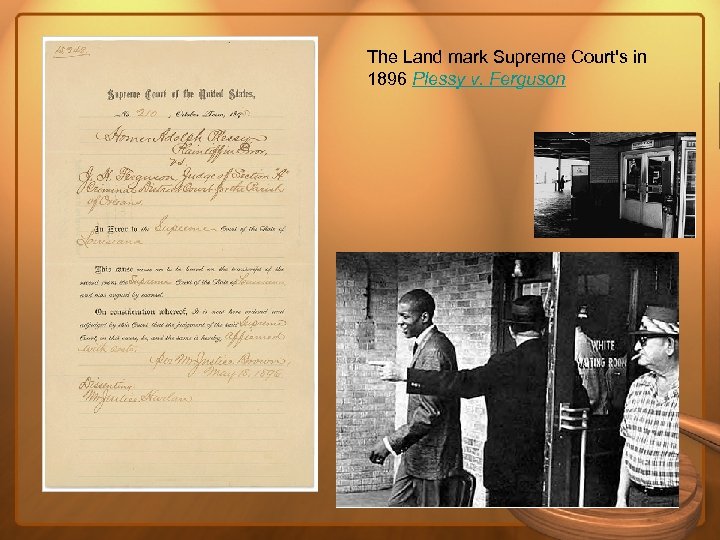 The Land mark Supreme Court's in 1896 Plessy v. Ferguson
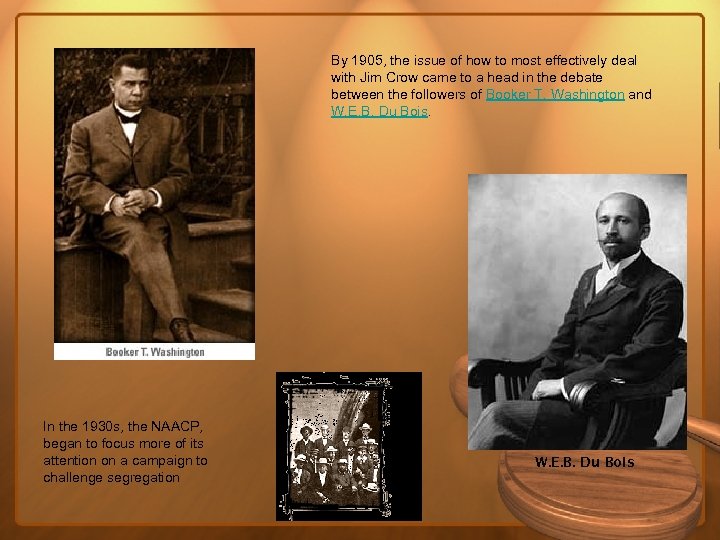 By 1905, the issue of how to most effectively deal with Jim Crow came to a head in the debate between the followers of Booker T. Washington and W. E. B. Du Bois. In the 1930 s, the NAACP, began to focus more of its attention on a campaign to challenge segregation W. E. B. Du Bois
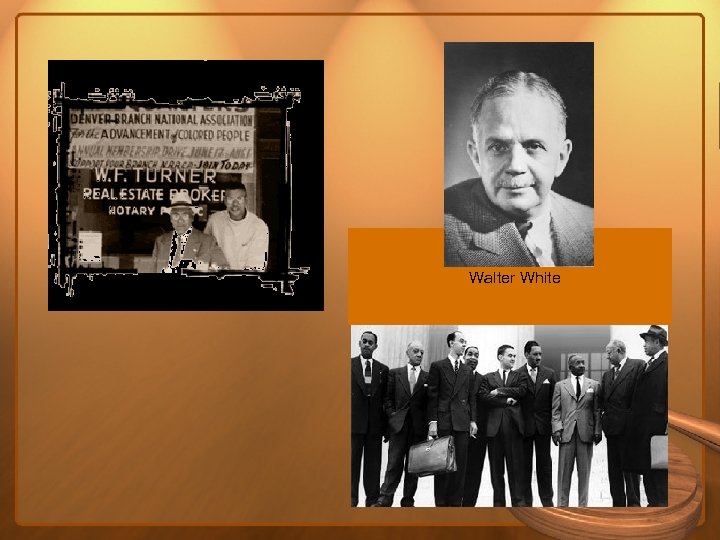 Walter White
 Segregation in Education
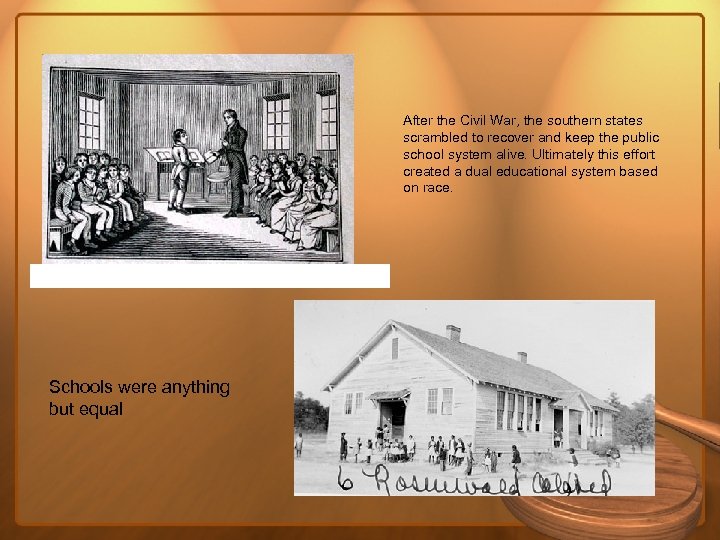 After the Civil War, the southern states scrambled to recover and keep the public school system alive. Ultimately this effort created a dual educational system based on race. Schools were anything but equal
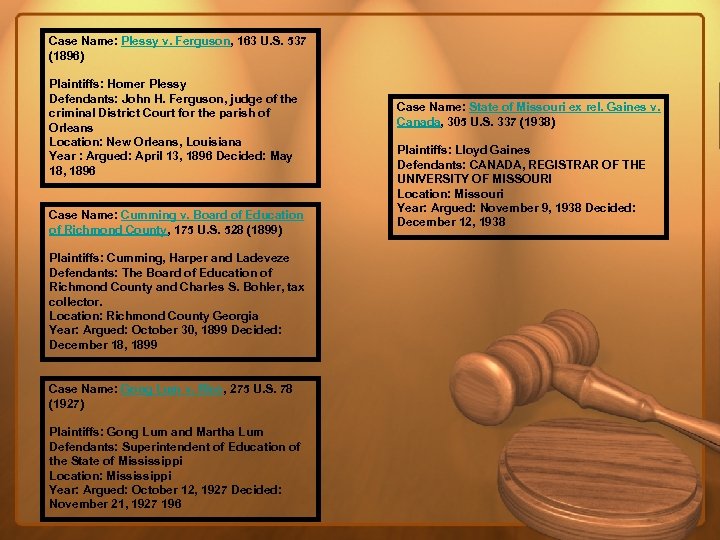 Case Name: Plessy v. Ferguson, 163 U. S. 537 (1896) Plaintiffs: Homer Plessy Defendants: John H. Ferguson, judge of the criminal District Court for the parish of Orleans Location: New Orleans, Louisiana Year : Argued: April 13, 1896 Decided: May 18, 1896 Case Name: Cumming v. Board of Education of Richmond County, 175 U. S. 528 (1899) Plaintiffs: Cumming, Harper and Ladeveze Defendants: The Board of Education of Richmond County and Charles S. Bohler, tax collector. Location: Richmond County Georgia Year: Argued: October 30, 1899 Decided: December 18, 1899 Case Name: Gong Lum v. Rice, 275 U. S. 78 (1927) Plaintiffs: Gong Lum and Martha Lum Defendants: Superintendent of Education of the State of Mississippi Location: Mississippi Year: Argued: October 12, 1927 Decided: November 21, 1927 196 Case Name: State of Missouri ex rel. Gaines v. Canada, 305 U. S. 337 (1938) Plaintiffs: Lloyd Gaines Defendants: CANADA, REGISTRAR OF THE UNIVERSITY OF MISSOURI Location: Missouri Year: Argued: November 9, 1938 Decided: December 12, 1938
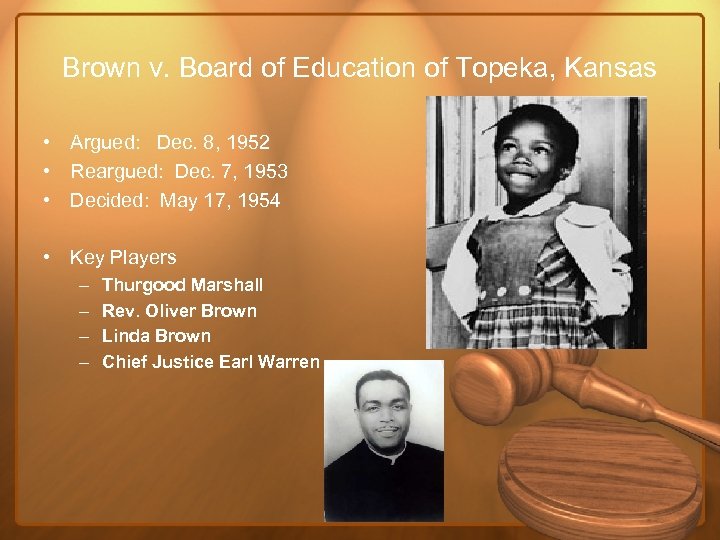 Brown v. Board of Education of Topeka, Kansas • Argued: Dec. 8, 1952 • Reargued: Dec. 7, 1953 • Decided: May 17, 1954 • Key Players – – Thurgood Marshall Rev. Oliver Brown Linda Brown Chief Justice Earl Warren
 Brown v. Board of Education of Topeka, Kansas Several Cases Were Combined into One • • Delaware – Belton v Gebhart Kansas – Brown v Board of Education South Carolina – Briggs v Elliot Virginia – Davis v County School Board of Prince Edward County • Washington, DC – Bolling v Melvin Sharpe
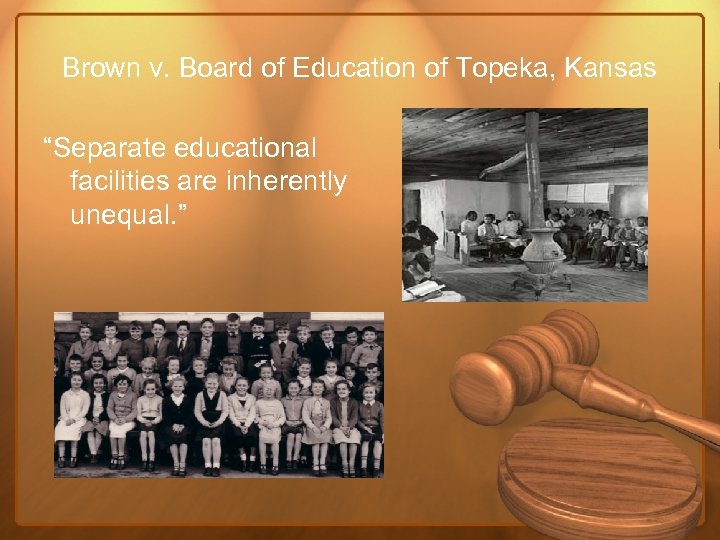 Brown v. Board of Education of Topeka, Kansas “Separate educational facilities are inherently unequal. ”
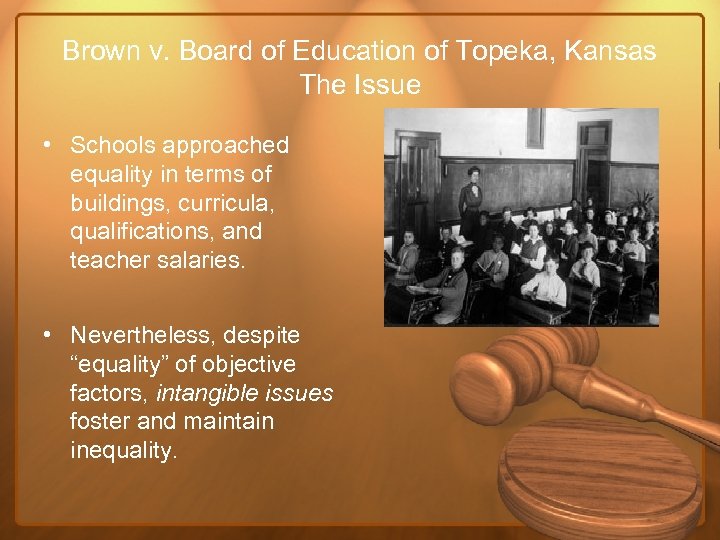 Brown v. Board of Education of Topeka, Kansas The Issue • Schools approached equality in terms of buildings, curricula, qualifications, and teacher salaries. • Nevertheless, despite “equality” of objective factors, intangible issues foster and maintain inequality.
 Brown v. Board of Education of Topeka, Kansas • This case was not simply about children and education. • This new law had far reaching social and ideological implications that continue to be felt throughout the nation and the world. • The struggle for Human Rights throughout the world can trace its roots back to this case. • Reinforced the supremacy of the power of the people in protecting natural rights from arbitrary limitations imposed by governments.
 Brown v. Board of Education of Topeka, Kansas • The case did not abolish segregation in other public areas, such as restaurants and restrooms, nor did it place a time frame for implementation of the law. • Other pioneers would take up the torch of freedom and carry on the challenge.
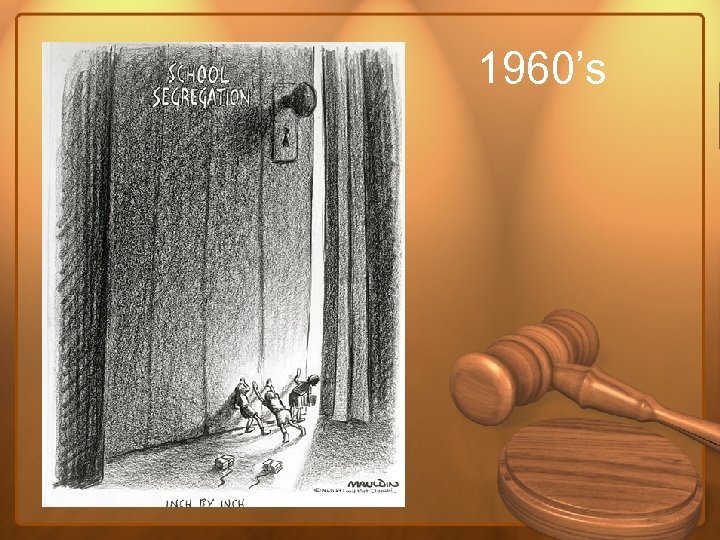 1960’s
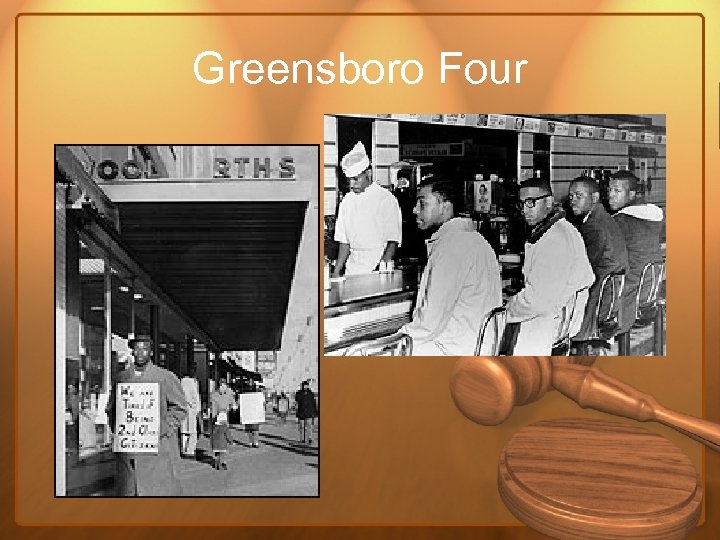 Greensboro Four
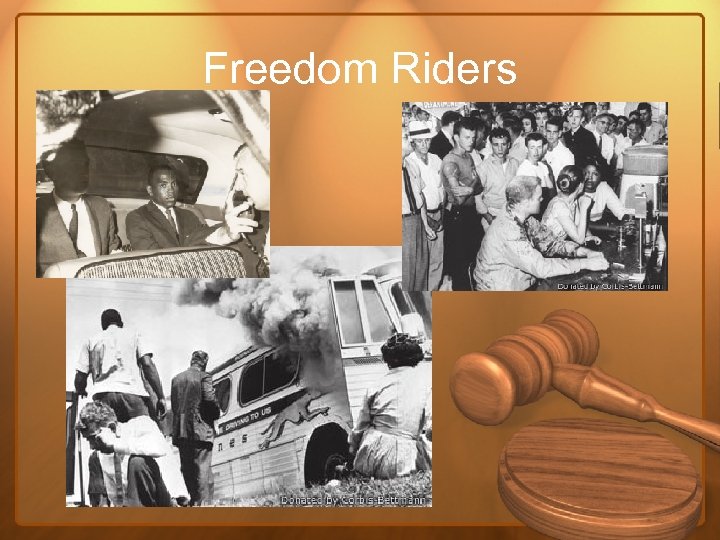 Freedom Riders
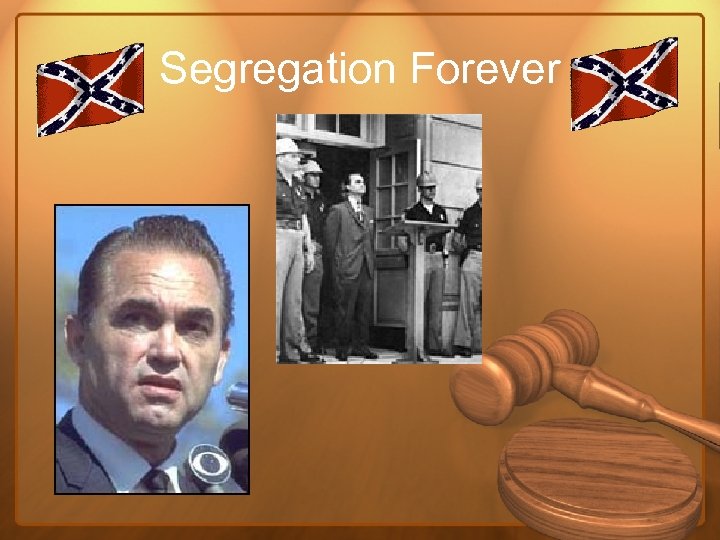 Segregation Forever
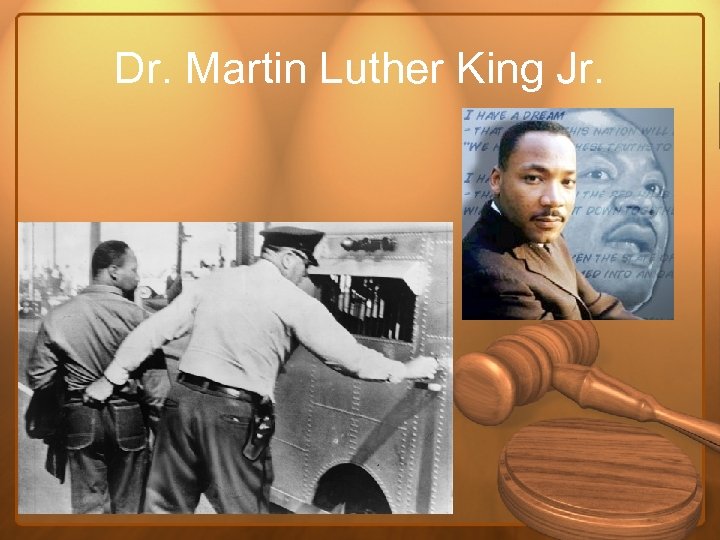 Dr. Martin Luther King Jr.
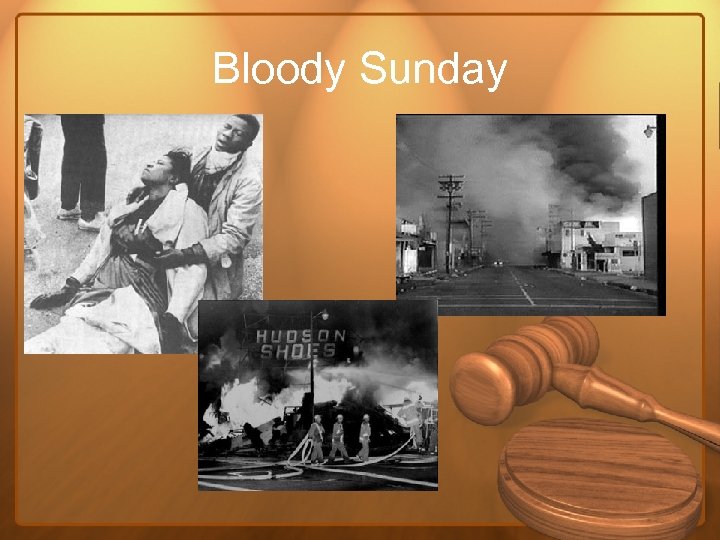 Bloody Sunday
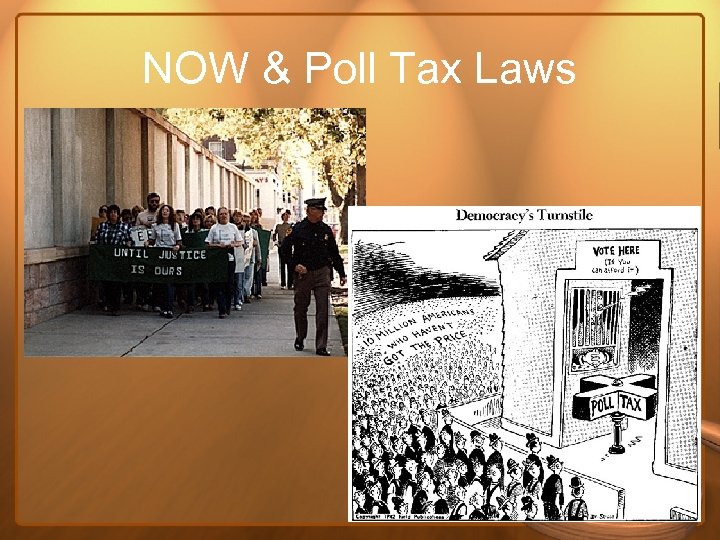 NOW & Poll Tax Laws
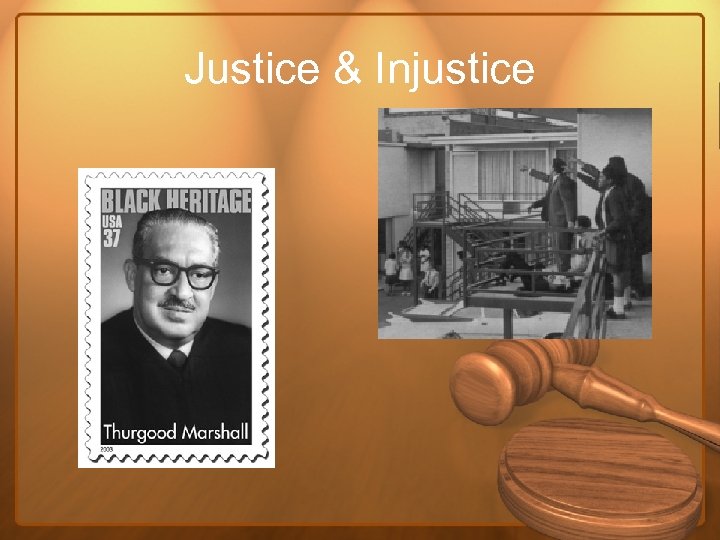 Justice & Injustice
 Court Cases & Legislation • March Griggs v. Duke Power Company • Swann v. Charlotte-Mecklenberg Board of Education • Palmer v. Thompson • ERA • Title IX Education Amendments
 Court Cases • San Antonio Independent School District v. Rodriguez • State Constitutional Challenges • Public School Race Riots • Education for All Handicapped Children Act
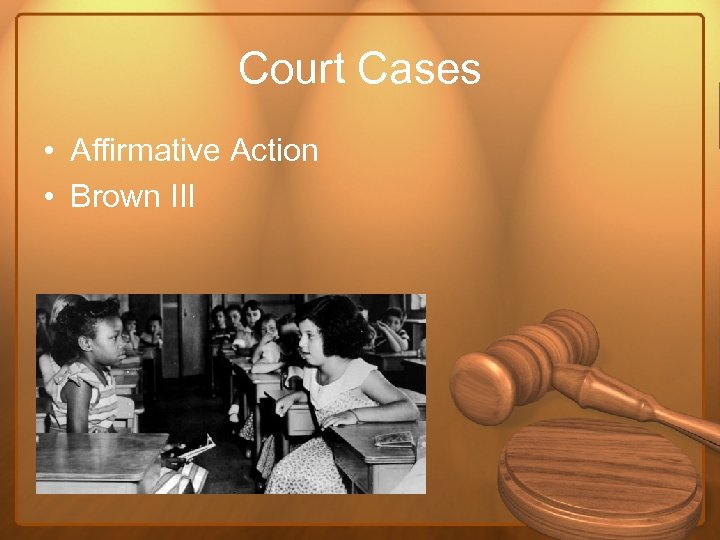 Court Cases • Affirmative Action • Brown III
 Reagan Administration • • • Emergency School Aid Act Los Angeles Segregation Desegregation Segregation Again
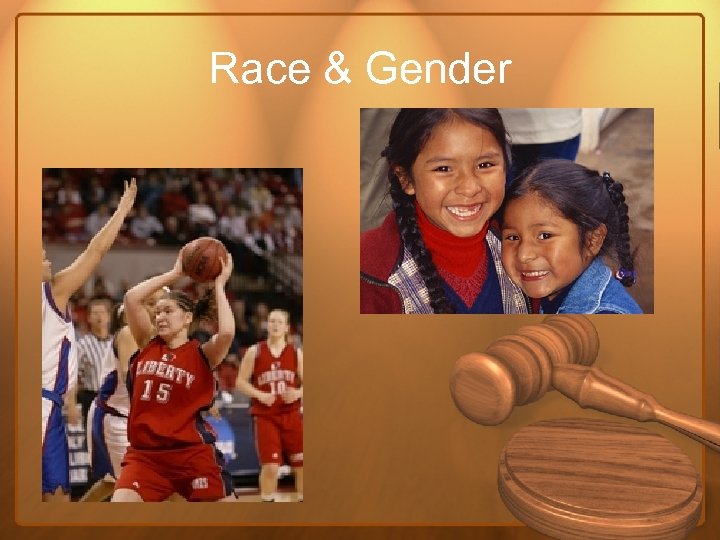 Race & Gender
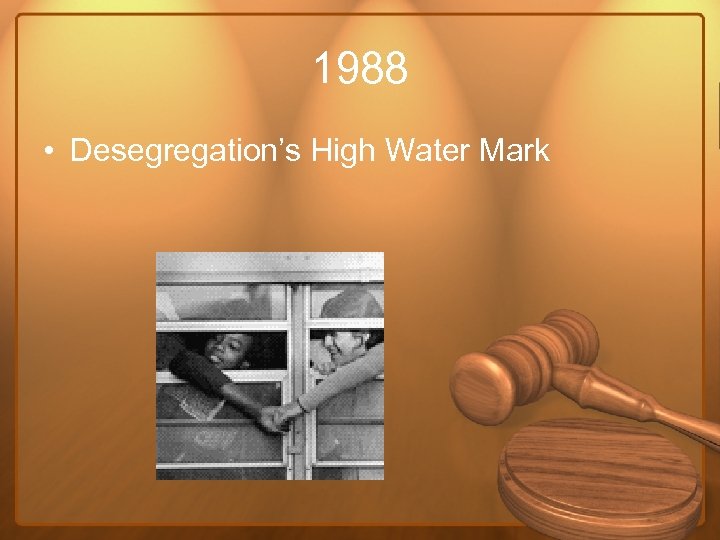 1988 • Desegregation’s High Water Mark
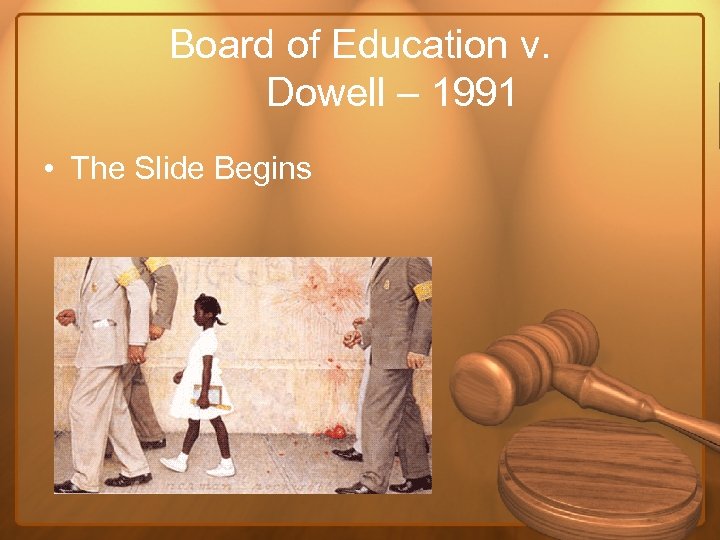 Board of Education v. Dowell – 1991 • The Slide Begins
 Reality vs. Assumptions
 Survey Says…. . • Don’t Do as I Do, Do As I Say
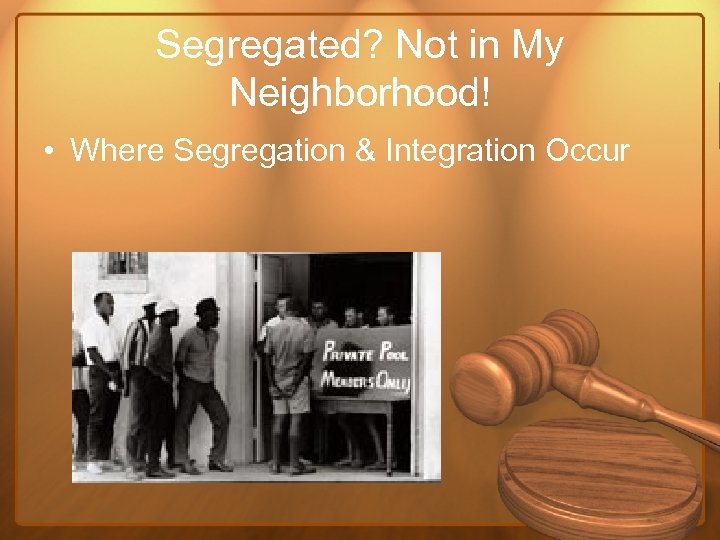 Segregated? Not in My Neighborhood! • Where Segregation & Integration Occur
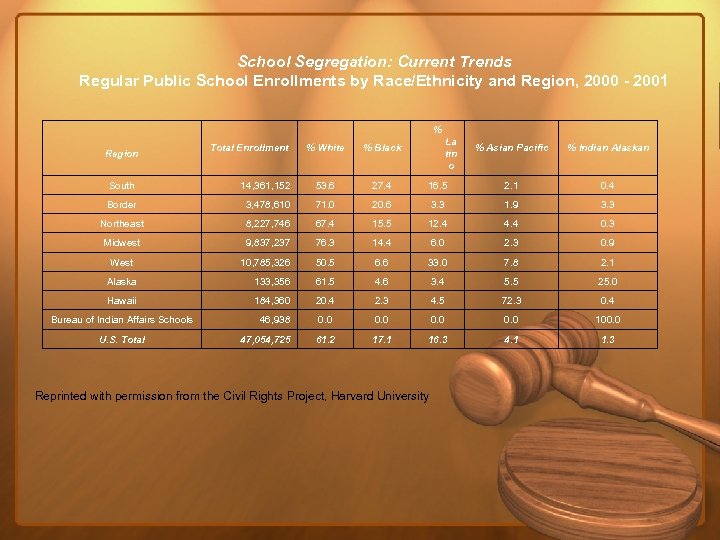 School Segregation: Current Trends Regular Public School Enrollments by Race/Ethnicity and Region, 2000 - 2001 % Region Total Enrollment % White La tin o % Black % Asian Pacific % Indian Alaskan South 14, 361, 152 53. 6 27. 4 16. 5 2. 1 0. 4 Border 3, 478, 610 71. 0 20. 6 3. 3 1. 9 3. 3 Northeast 8, 227, 746 67. 4 15. 5 12. 4 4. 4 0. 3 Midwest 9, 837, 237 76. 3 14. 4 6. 0 2. 3 0. 9 West 10, 785, 326 50. 5 6. 6 33. 0 7. 8 2. 1 Alaska 133, 356 61. 5 4. 6 3. 4 5. 5 25. 0 Hawaii 184, 360 20. 4 2. 3 4. 5 72. 3 0. 4 Bureau of Indian Affairs Schools 46, 938 0. 0 100. 0 47, 054, 725 61. 2 17. 1 16. 3 4. 1 1. 3 U. S. Total Reprinted with permission from the Civil Rights Project, Harvard University
 The Affect of Shifting Demographics
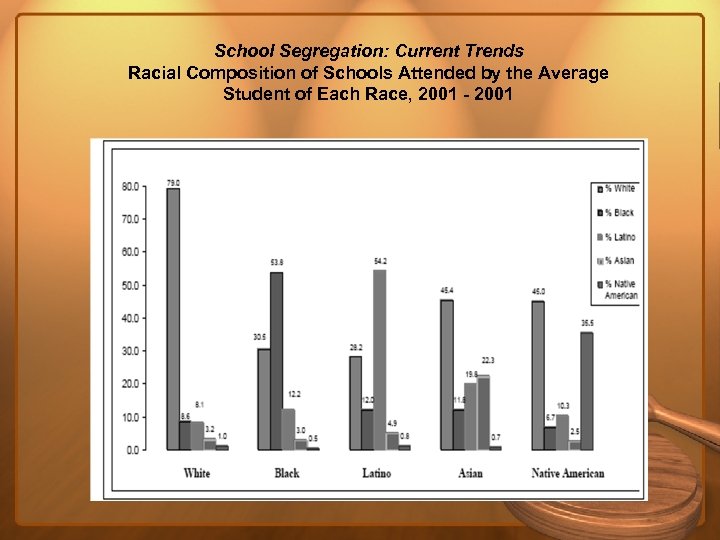 School Segregation: Current Trends Racial Composition of Schools Attended by the Average Student of Each Race, 2001 - 2001
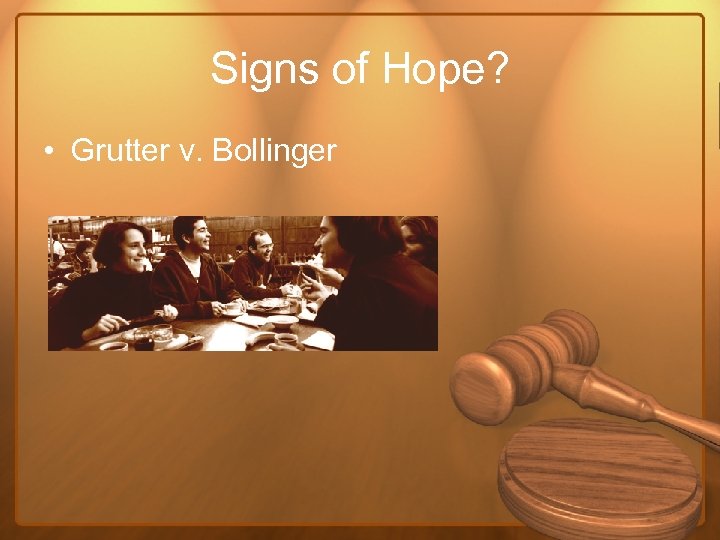 Signs of Hope? • Grutter v. Bollinger
 Thirty Years and Counting….
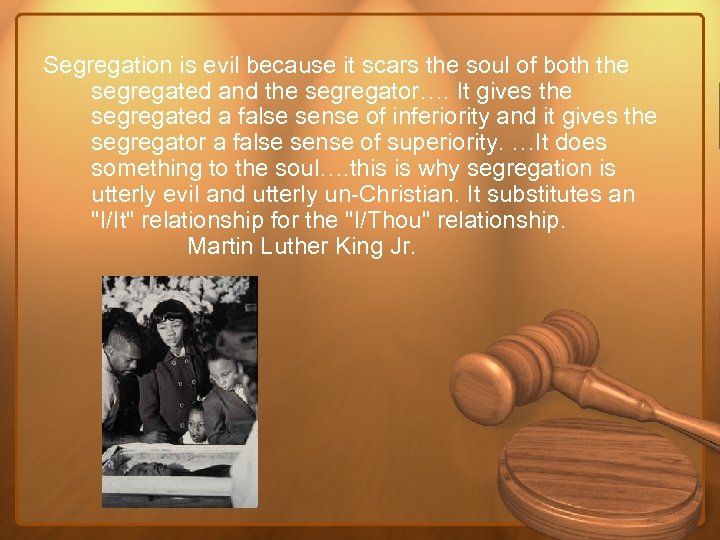 Segregation is evil because it scars the soul of both the segregated and the segregator…. It gives the segregated a false sense of inferiority and it gives the segregator a false sense of superiority. …It does something to the soul…. this is why segregation is utterly evil and utterly un-Christian. It substitutes an "I/It" relationship for the "I/Thou" relationship. Martin Luther King Jr.