


 Скачать презентацию Retirement Patterns in Europe the Effect of Health
847acf03e543ef0989c0037b1a81b2ee.ppt
- Количество слайдов: 21
 Retirement Patterns in Europe: the Effect of Health Agar Brugiavini Enrica Croda Franco Peracchi
 Motivation § Europe is aging faster than other parts of the world: – the highest proportion of population aged 65 or over (about 15%) – The old-age dependency ratio is expected to increase from about 27% in 2000 to 39% in 2025, and to 53% in 2050 § Reforms throughout Europe § Need to know more about retirement behavior 2
 This paper § This paper uses SHARE (Survey of Health Ageing and Retirement in Europe) to investigate the retirement decisions of older Europeans § In particular: – retirement (and labor force participation) decisions may depend on a number of factors, including health – individual factors matter, but we also hypothesize that institutions matter as well 3
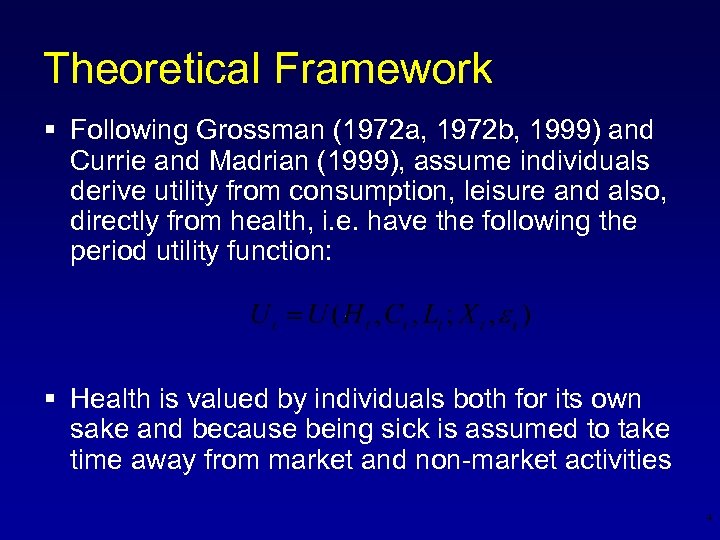 Theoretical Framework § Following Grossman (1972 a, 1972 b, 1999) and Currie and Madrian (1999), assume individuals derive utility from consumption, leisure and also, directly from health, i. e. have the following the period utility function: § Health is valued by individuals both for its own sake and because being sick is assumed to take time away from market and non-market activities 4
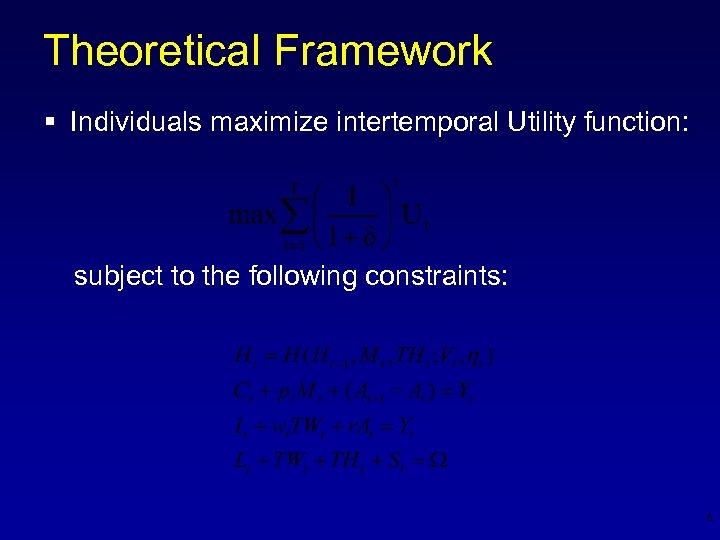 Theoretical Framework § Individuals maximize intertemporal Utility function: subject to the following constraints: 5
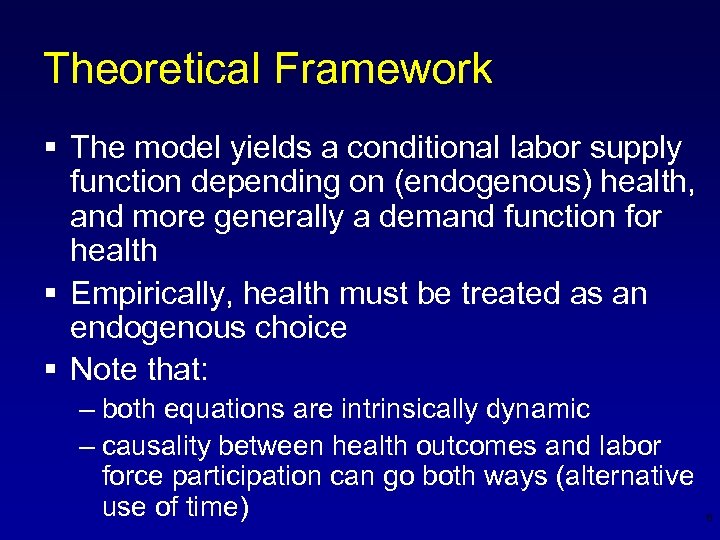 Theoretical Framework § The model yields a conditional labor supply function depending on (endogenous) health, and more generally a demand function for health § Empirically, health must be treated as an endogenous choice § Note that: – both equations are intrinsically dynamic – causality between health outcomes and labor force participation can go both ways (alternative use of time) 6
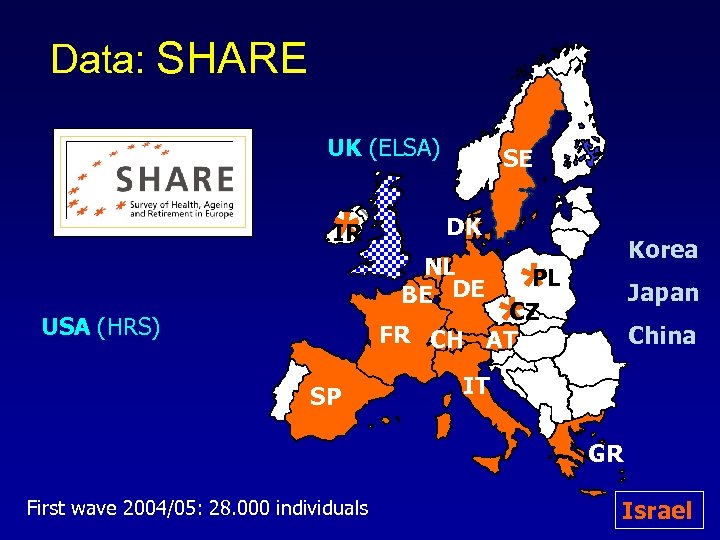 Data: SHARE UK (ELSA) * IR USA (HRS) SP SE DK NL BE DE Korea * * PL CZ FR CH AT Japan China IT GR First wave 2004/05: 28. 000 individuals Israel
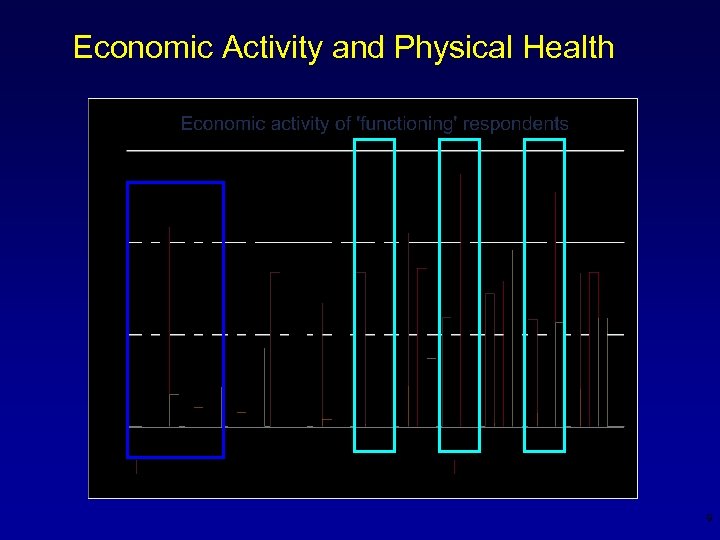
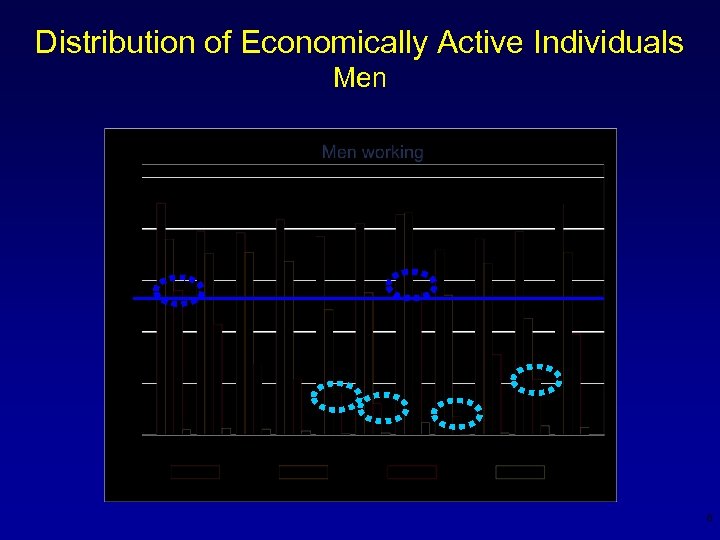 Distribution of Economically Active Individuals Men 8
 Economic Activity and Physical Health 9
 Generosity of Pension Systems § Measure of Social Security and Pension Wealth (SSW): – SSW defined as present discounted value of expected future benefits from social security and pensions, discounted by both a given interest rate and the conditional survival probability – In the absence of longitudinal data, one cannot measure dynamic incentives of the welfare system 10
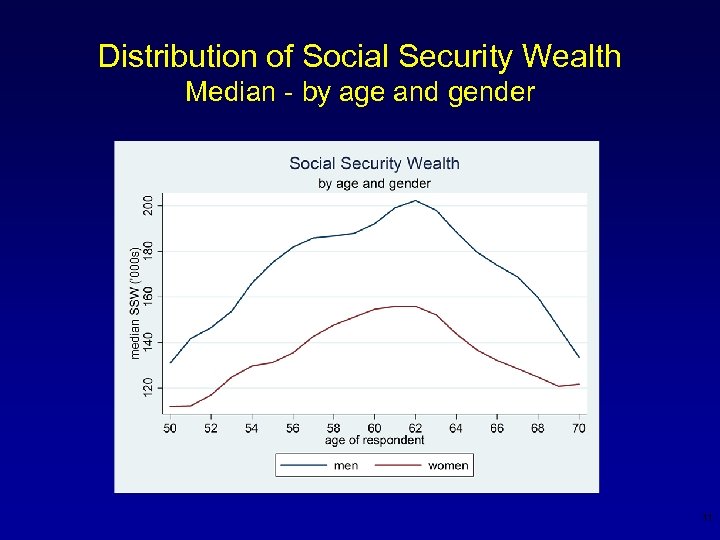 Distribution of Social Security Wealth Median - by age and gender 11
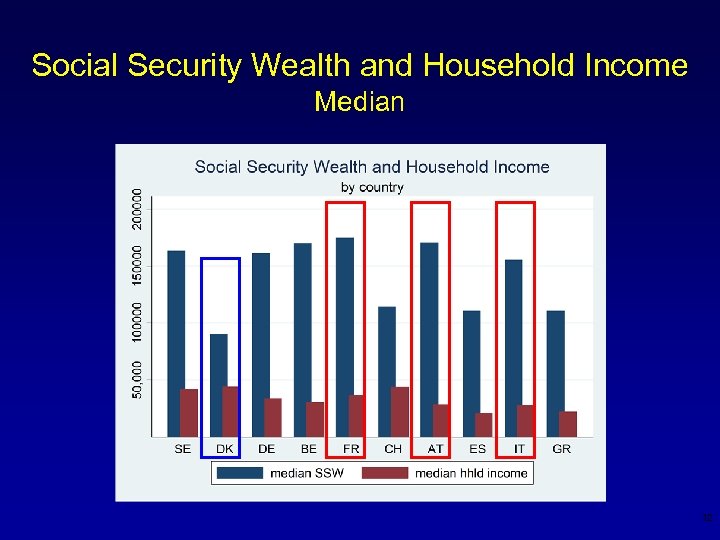 Social Security Wealth and Household Income Median 12
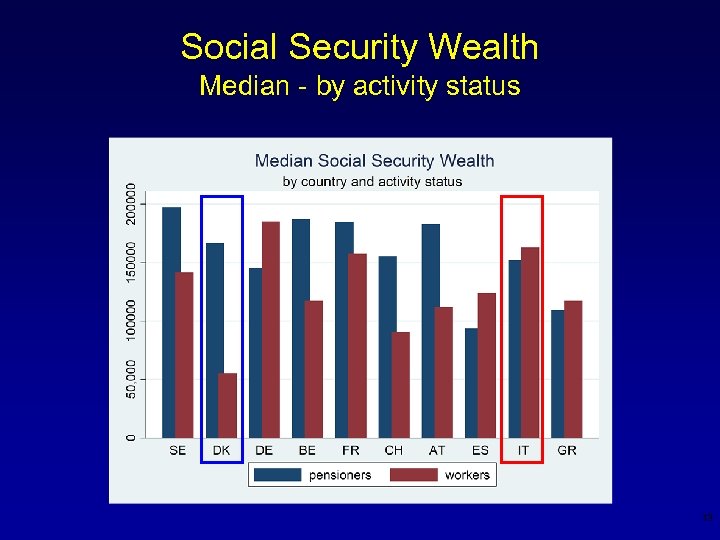 Social Security Wealth Median - by activity status 13
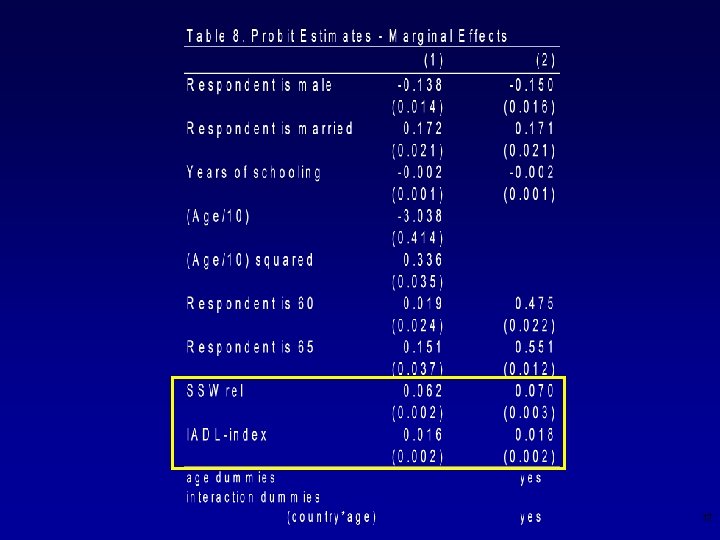
![Econometric Evidence § Probability [being Retired] Dependent variable: – Retired indicator = 1 if](https://present5.com/presentation/847acf03e543ef0989c0037b1a81b2ee/image-14.jpg "Econometric Evidence § Probability [being Retired] Dependent variable: – Retired indicator = 1 if") Econometric Evidence § Probability [being Retired] Dependent variable: – Retired indicator = 1 if (self-reported as) currently retired 0 otherwise – Sample: Workers and Pensioners - aged 50 -70 about 13, 000 observations § IV-probit 14
Econometric Evidence § Probability [being Retired] Dependent variable: – Retired indicator = 1 if (self-reported as) currently retired 0 otherwise – Sample: Workers and Pensioners - aged 50 -70 about 13, 000 observations § IV-probit 14
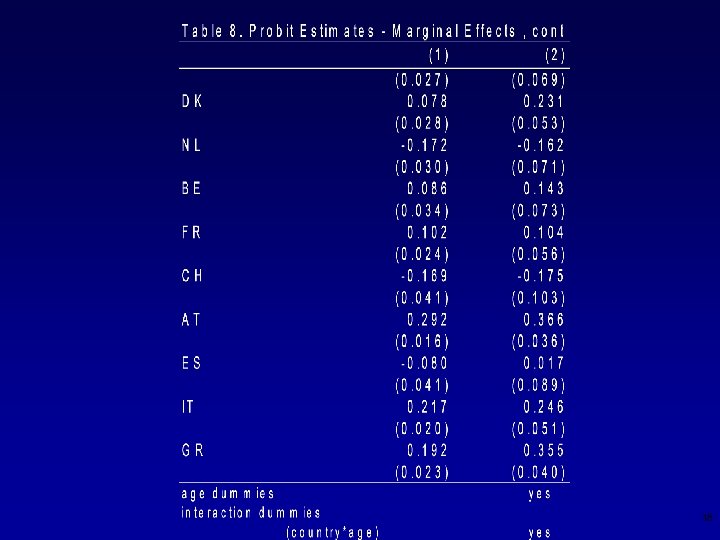
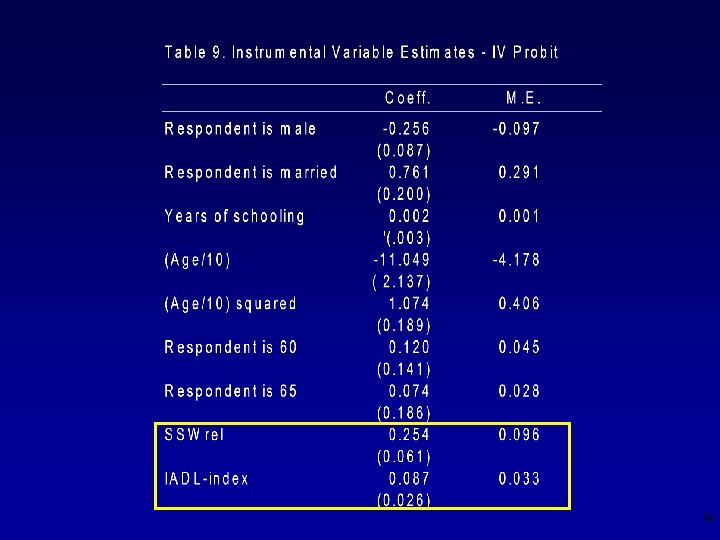
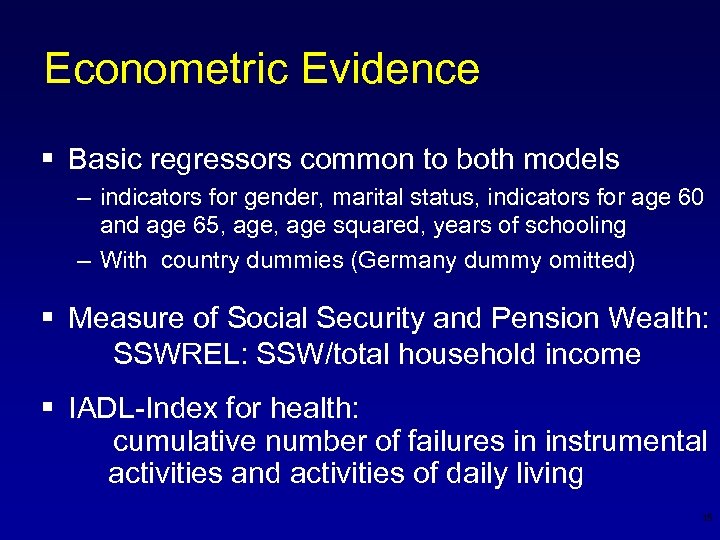 Econometric Evidence § Basic regressors common to both models – indicators for gender, marital status, indicators for age 60 and age 65, age squared, years of schooling – With country dummies (Germany dummy omitted) § Measure of Social Security and Pension Wealth: SSWREL: SSW/total household income § IADL-Index for health: cumulative number of failures in instrumental activities and activities of daily living 15
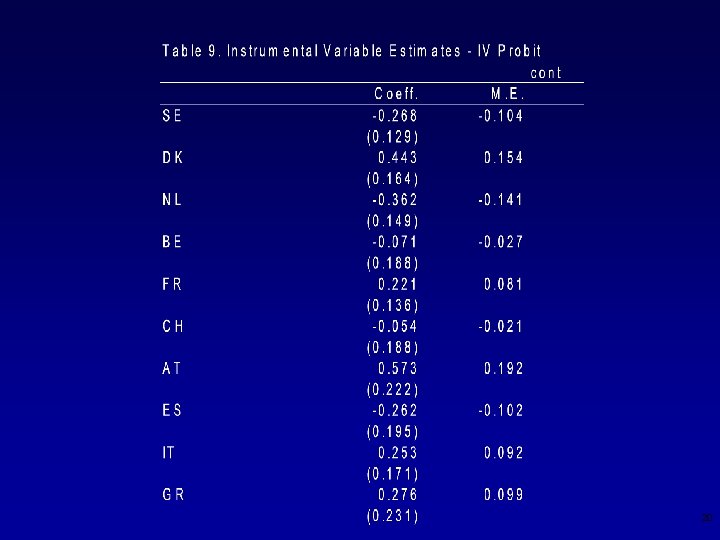
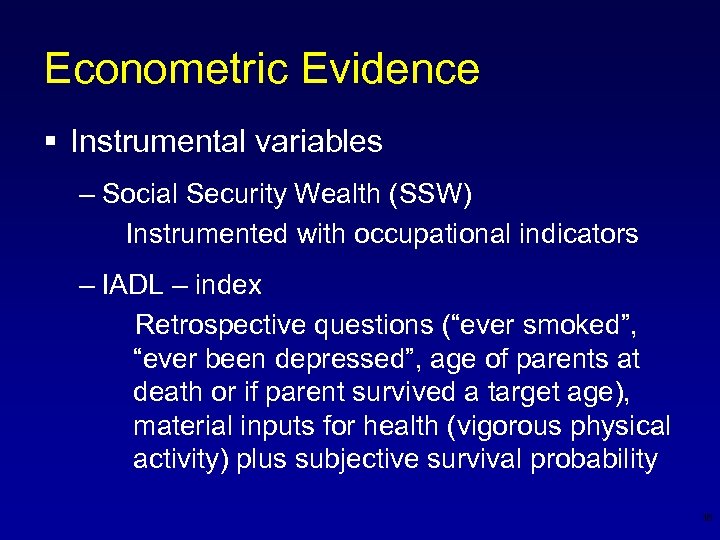 Econometric Evidence § Instrumental variables – Social Security Wealth (SSW) Instrumented with occupational indicators – IADL – index Retrospective questions (“ever smoked”, “ever been depressed”, age of parents at death or if parent survived a target age), material inputs for health (vigorous physical activity) plus subjective survival probability 16
 17
17
 18
18
 19
19
 20
20
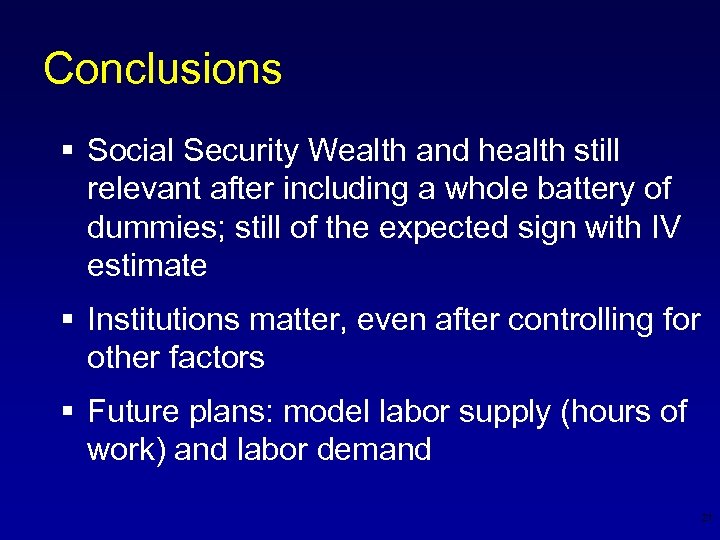 Conclusions § Social Security Wealth and health still relevant after including a whole battery of dummies; still of the expected sign with IV estimate § Institutions matter, even after controlling for other factors § Future plans: model labor supply (hours of work) and labor demand 21