


 Скачать презентацию Retention in HIV Medical Care or The Gorilla
f0558ed09cc001ec0326061b1d9e7b8c.ppt
- Количество слайдов: 61
 Retention in HIV Medical Care or The Gorilla by Thomas P. Giordano, MD, MPH Baylor College of Medicine De. Bakey VA Medical Center Thomas Street Health Center Houston, TX
 OBJECTIVES • Review the importance of retention in HIV care • Learn approaches to measuring retention in care suitable for routine HIV care • Learn approaches to improving retention in care suitable for routine HIV care • Review studies underway focused on retention in HIV care
 CASES • Mr. W: 28 year-old Black man – Diagnosed with HIV in late 1998 – CNS toxoplasmosis, wasting, dementia, CMV esophagitis – CD 4 cell count = 6 • Mr. T: 26 year-old Black man – Diagnosed with HIV while in Ben Taub in 1999 – Pulmonary tuberculosis – CD 4 cell count = 265
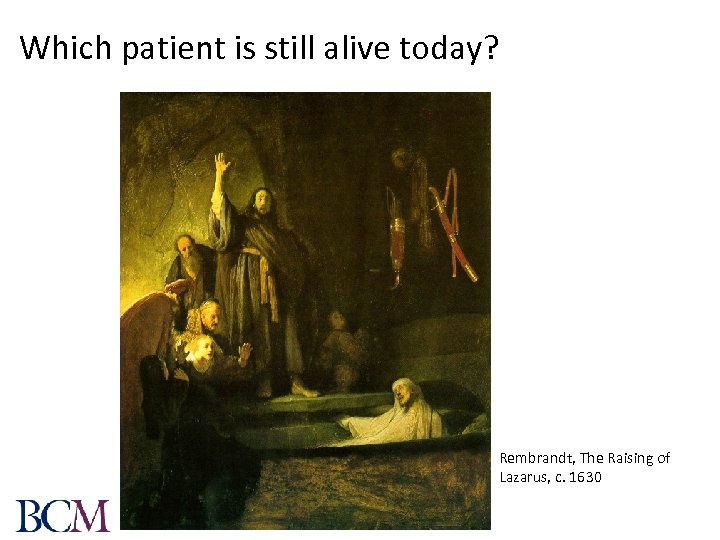 Which patient is still alive today? Rembrandt, The Raising of Lazarus, c. 1630
 AUDIENCE RESPONSE: WHAT PROPORTION OF RETURN PATIENTS TO YOUR CLINIC FAIL TO ATTEND THEIR SCHEDULED VISIT (“NO SHOW”)? 1. 2. 3. 4. 5. 6. 0 -10% 11 -20% 21 -30% 31 -40% 41 -50% > 50%
 Prevalence and impact of poor retention in care
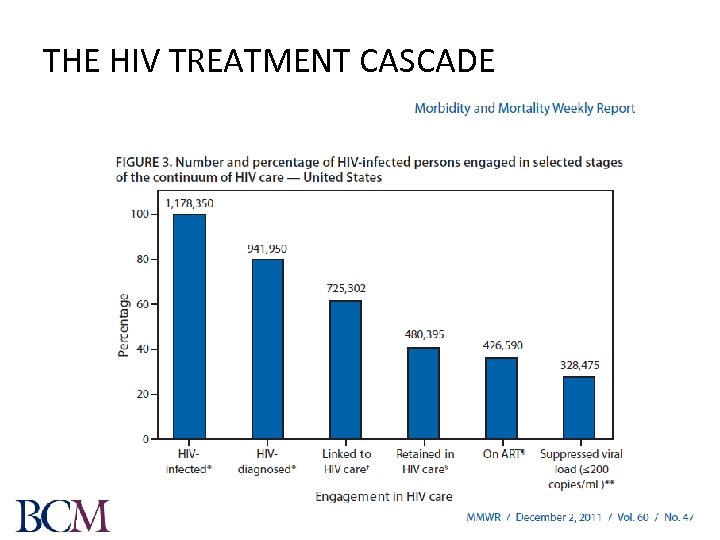 THE HIV TREATMENT CASCADE
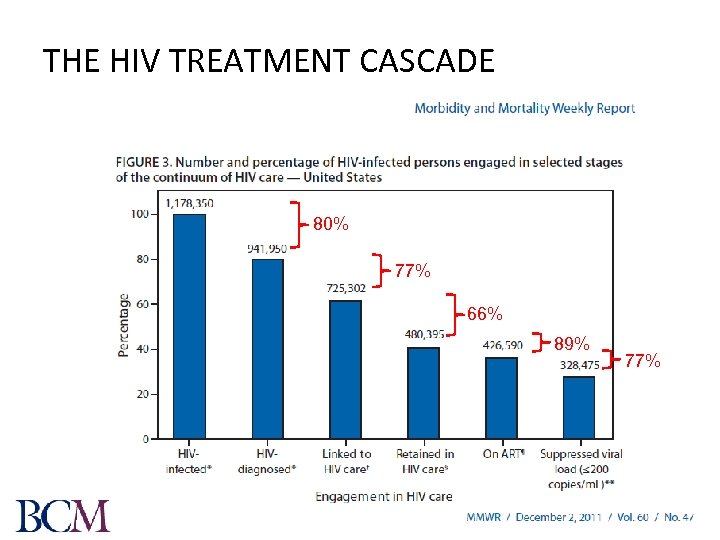 THE HIV TREATMENT CASCADE 80% 77% 66% 89% 77%
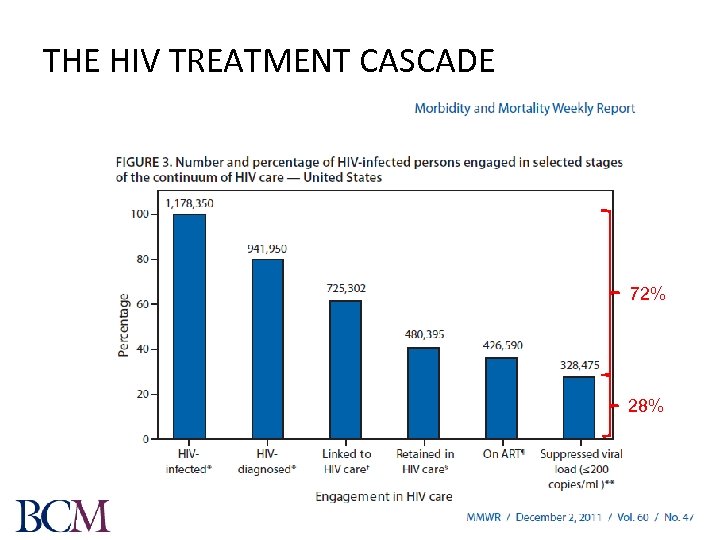 THE HIV TREATMENT CASCADE 72% 28%
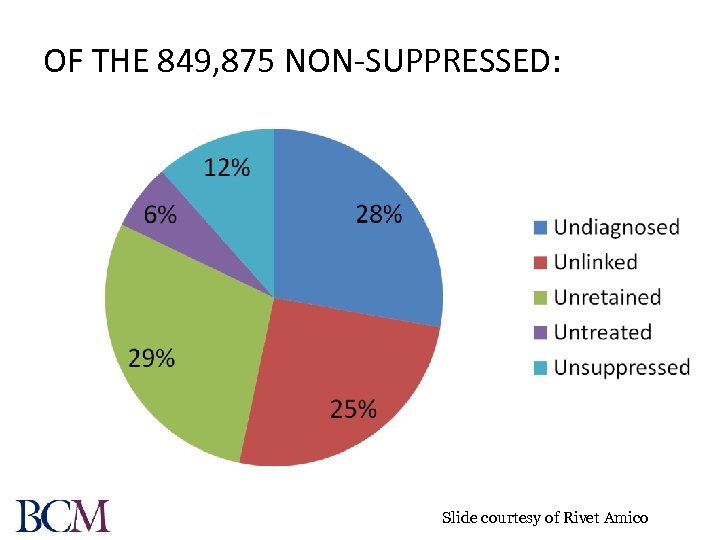 OF THE 849, 875 NON-SUPPRESSED: Slide courtesy of Rivet Amico
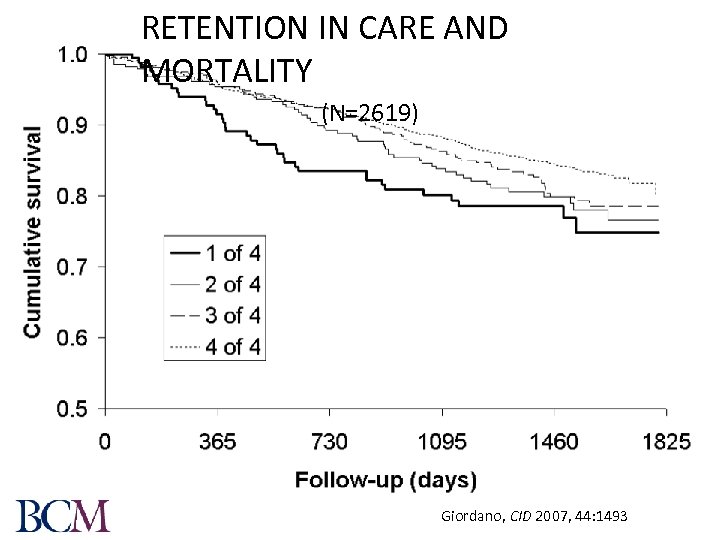 RETENTION IN CARE AND MORTALITY (N=2619) Giordano, CID 2007, 44: 1493
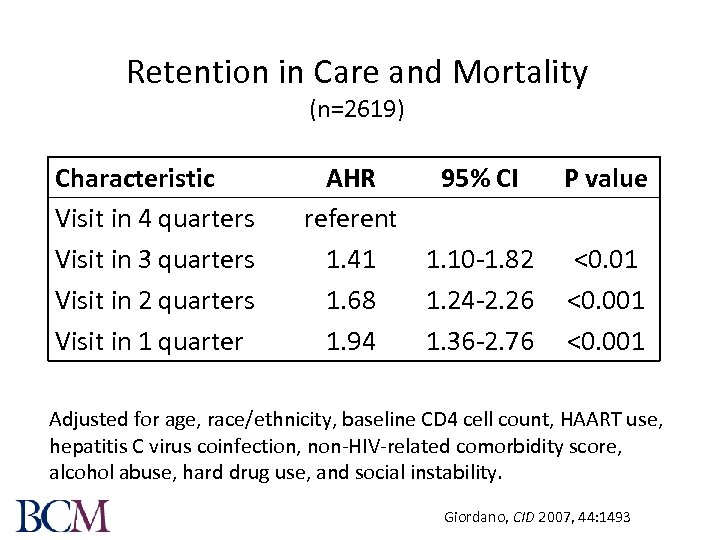 Retention in Care and Mortality (n=2619) Characteristic Visit in 4 quarters Visit in 3 quarters Visit in 2 quarters Visit in 1 quarter AHR referent 1. 41 1. 68 1. 94 95% CI P value 1. 10 -1. 82 1. 24 -2. 26 1. 36 -2. 76 <0. 01 <0. 001 Adjusted for age, race/ethnicity, baseline CD 4 cell count, HAART use, hepatitis C virus coinfection, non-HIV-related comorbidity score, alcohol abuse, hard drug use, and social instability. Giordano, CID 2007, 44: 1493
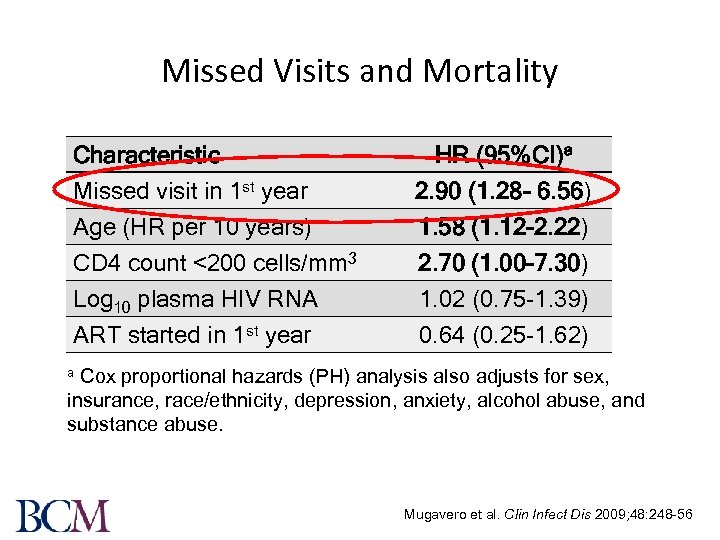 Missed Visits and Mortality Characteristic Missed visit in 1 st year Age (HR per 10 years) CD 4 count <200 cells/mm 3 Log 10 plasma HIV RNA ART started in 1 st year HR (95%CI)a 2. 90 (1. 28 - 6. 56) 1. 58 (1. 12 -2. 22) 2. 70 (1. 00 -7. 30) 1. 02 (0. 75 -1. 39) 0. 64 (0. 25 -1. 62) Cox proportional hazards (PH) analysis also adjusts for sex, insurance, race/ethnicity, depression, anxiety, alcohol abuse, and substance abuse. a Mugavero et al. Clin Infect Dis 2009; 48: 248 -56
 Retention in Care
 Measuring Retention in Care
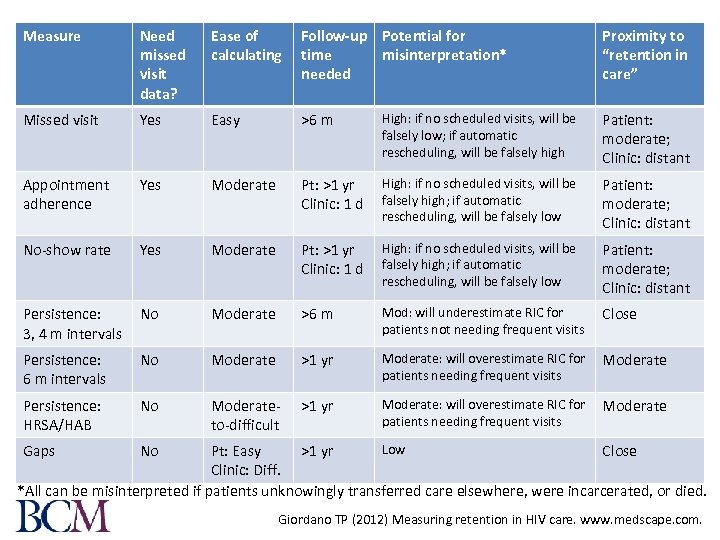 Measure Need missed visit data? Ease of Follow-up Potential for calculating time misinterpretation* needed Proximity to “retention in care” Missed visit Yes Easy >6 m High: if no scheduled visits, will be falsely low; if automatic rescheduling, will be falsely high Patient: moderate; Clinic: distant Appointment adherence Yes Moderate Pt: >1 yr Clinic: 1 d High: if no scheduled visits, will be falsely high; if automatic rescheduling, will be falsely low Patient: moderate; Clinic: distant No-show rate Yes Moderate Pt: >1 yr Clinic: 1 d High: if no scheduled visits, will be falsely high; if automatic rescheduling, will be falsely low Patient: moderate; Clinic: distant Persistence: 3, 4 m intervals No Moderate >6 m Mod: will underestimate RIC for patients not needing frequent visits Close Persistence: 6 m intervals No Moderate >1 yr Moderate: will overestimate RIC for patients needing frequent visits Moderate Persistence: HRSA/HAB No Moderateto-difficult >1 yr Moderate: will overestimate RIC for patients needing frequent visits Moderate Gaps No Low Pt: Easy >1 yr Close Clinic: Diff. *All can be misinterpreted if patients unknowingly transferred care elsewhere, were incarcerated, or died. Giordano TP (2012) Measuring retention in HIV care. www. medscape. com.
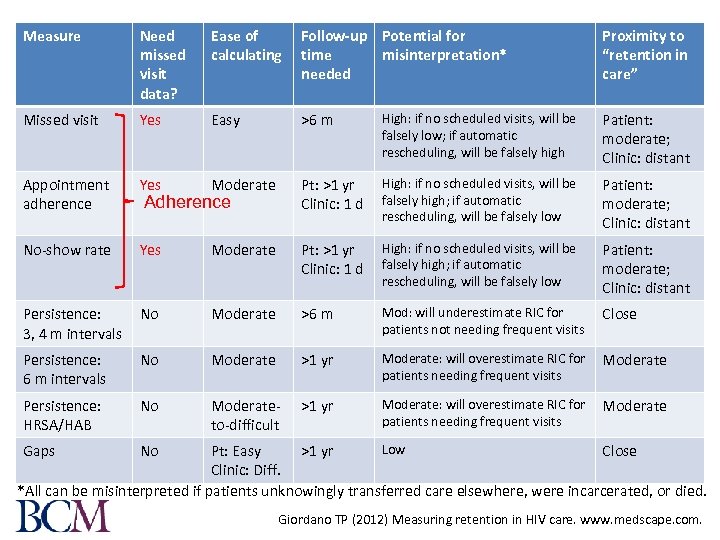 Measure Need missed visit data? Ease of Follow-up Potential for calculating time misinterpretation* needed Proximity to “retention in care” Missed visit Yes Easy >6 m High: if no scheduled visits, will be falsely low; if automatic rescheduling, will be falsely high Patient: moderate; Clinic: distant Appointment adherence Yes Moderate Pt: >1 yr Clinic: 1 d High: if no scheduled visits, will be falsely high; if automatic rescheduling, will be falsely low Patient: moderate; Clinic: distant No-show rate Yes Moderate Pt: >1 yr Clinic: 1 d High: if no scheduled visits, will be falsely high; if automatic rescheduling, will be falsely low Patient: moderate; Clinic: distant Persistence: 3, 4 m intervals No Moderate >6 m Mod: will underestimate RIC for patients not needing frequent visits Close Persistence: 6 m intervals No Moderate >1 yr Moderate: will overestimate RIC for patients needing frequent visits Moderate Persistence: HRSA/HAB No Moderateto-difficult >1 yr Moderate: will overestimate RIC for patients needing frequent visits Moderate Gaps No Adherence Low Pt: Easy >1 yr Close Clinic: Diff. *All can be misinterpreted if patients unknowingly transferred care elsewhere, were incarcerated, or died. Giordano TP (2012) Measuring retention in HIV care. www. medscape. com.
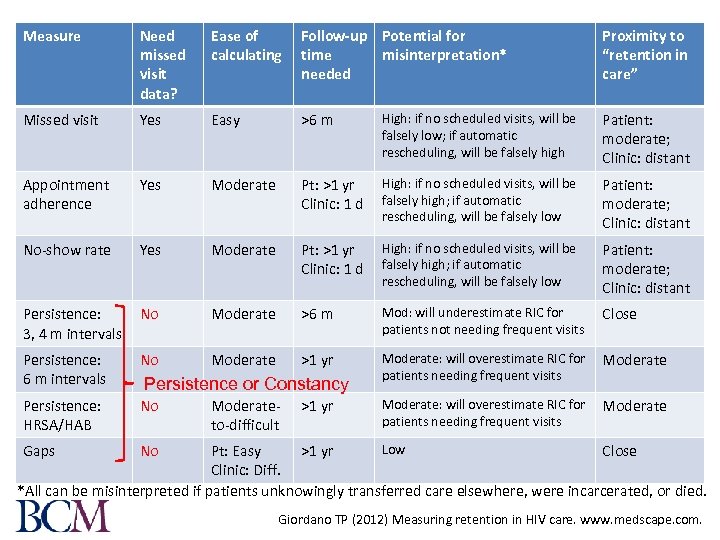 Measure Need missed visit data? Ease of Follow-up Potential for calculating time misinterpretation* needed Proximity to “retention in care” Missed visit Yes Easy >6 m High: if no scheduled visits, will be falsely low; if automatic rescheduling, will be falsely high Patient: moderate; Clinic: distant Appointment adherence Yes Moderate Pt: >1 yr Clinic: 1 d High: if no scheduled visits, will be falsely high; if automatic rescheduling, will be falsely low Patient: moderate; Clinic: distant No-show rate Yes Moderate Pt: >1 yr Clinic: 1 d High: if no scheduled visits, will be falsely high; if automatic rescheduling, will be falsely low Patient: moderate; Clinic: distant Persistence: 3, 4 m intervals No Moderate >6 m Mod: will underestimate RIC for patients not needing frequent visits Close Persistence: 6 m intervals No Moderate >1 yr Moderate: will overestimate RIC for patients needing frequent visits Moderate Persistence: HRSA/HAB No Moderate: will overestimate RIC for patients needing frequent visits Moderate Gaps No Persistence or Constancy Moderateto-difficult >1 yr Low Pt: Easy >1 yr Close Clinic: Diff. *All can be misinterpreted if patients unknowingly transferred care elsewhere, were incarcerated, or died. Giordano TP (2012) Measuring retention in HIV care. www. medscape. com.
 AUDIENCE RESPONSE: EPISTEMOLOGY IS: 1. 2. 3. 4. The study of letters The study of how we know The study of urine “Damn it Giordano, I’m a doctor, not a philosopher!”
 Verrocchio, Florence (Orsanmichele) 147683.
 Verrocchio, Florence (Orsanmichele) 1476 -83.
 WHY DON’T PEOPLE STAY IN HIV CARE? • If untreated, HIV is fatal • Good treatments are available • Why would you not avail yourself of them?
 AUDIENCE RESPONSE: IF YOU HEAT WATER PAST A CERTAIN POINT, YOU WILL SEE A SUBSTANCE RISING FROM THE WATER. THAT SUBSTANCE IS: 1. Smoke from the water burning 2. Water in the gaseous phase
 AUDIENCE RESPONSE: IF YOU HEAT WOOD PAST A CERTAIN POINT, YOU WILL SEE A SUBSTANCE RISING FROM THE WOOD. THAT SUBSTANCE IS: 1. Smoke from the wood burning 2. Wood in the gaseous phase
 WHY DON’T PEOPLE STAY IN HIV CARE? • If untreated, HIV is fatal • Good treatments are available • Why would you not avail yourself of them? Patients don’t “know” it the way we do
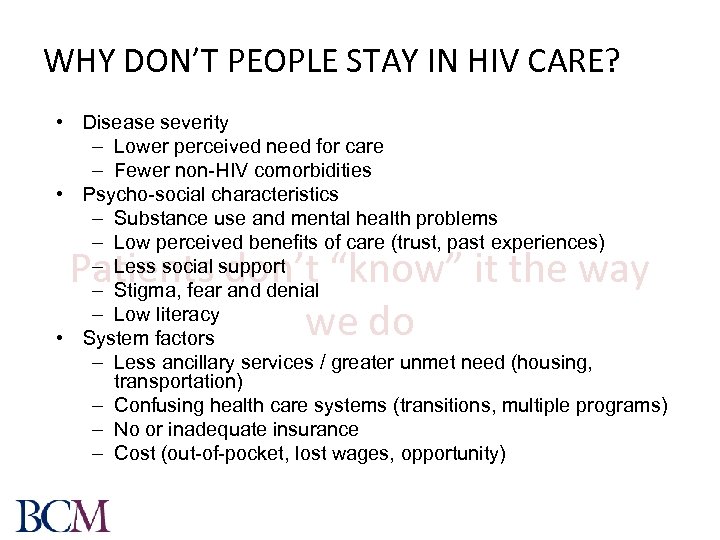 WHY DON’T PEOPLE STAY IN HIV CARE? • Disease severity – Lower perceived need for care – Fewer non-HIV comorbidities • Psycho-social characteristics – Substance use and mental health problems – Low perceived benefits of care (trust, past experiences) – Less social support – Stigma, fear and denial – Low literacy • System factors – Less ancillary services / greater unmet need (housing, transportation) – Confusing health care systems (transitions, multiple programs) – No or inadequate insurance – Cost (out-of-pocket, lost wages, opportunity) Patients don’t “know” it the way we do
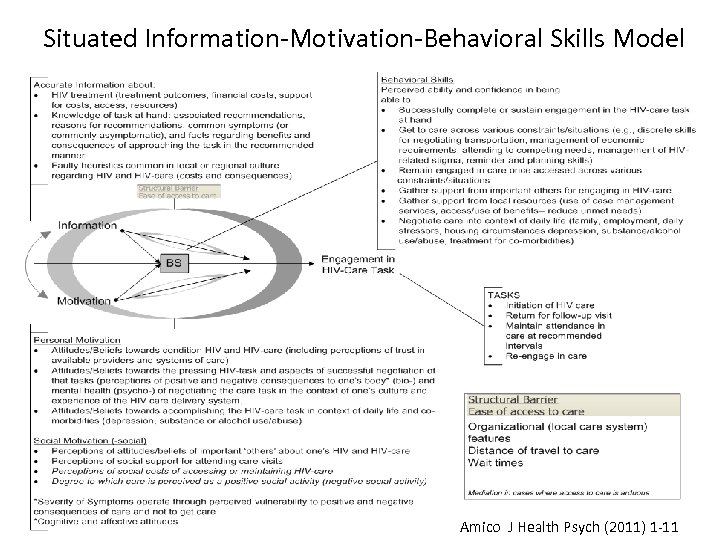 Situated Information-Motivation-Behavioral Skills Model Amico J Health Psych (2011) 1 -11
 Randomized, controlled trials of interventions to improve retention in care
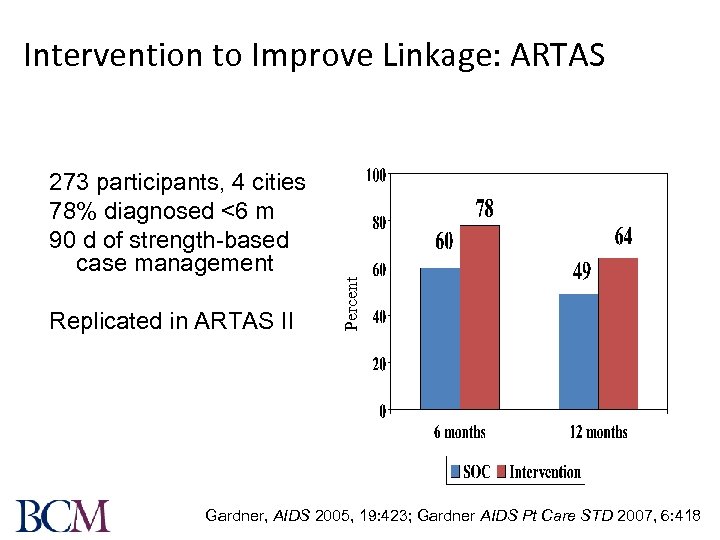 Intervention to Improve Linkage: ARTAS Replicated in ARTAS II Percent 273 participants, 4 cities 78% diagnosed <6 m 90 d of strength-based case management Gardner, AIDS 2005, 19: 423; Gardner AIDS Pt Care STD 2007, 6: 418
 Preliminary Findings From CDC/HRSA Retention in Care Project CDC: Lytt Gardner, Gary Marks, Jason Craw HRSA: Faye Malitz, Laura Cheever, Robert Mills Mountain Plains AETC: Lucy Bradley-Springer, Marla Corwin Baltimore: Richard Moore, Jeanne Keruly Birmingham: Mike Mugavero, Mike Saag Boston: Meg Sullivan, Mari-Lynn Drainoni Houston: Tom Giordano, Jessica Davila Miami: Allan Rodriguez, Lisa Metsch New York City: Tracey Wilson, Susan Holman Gardner, 7 th International Conf on HIV Treatment and Adh, June 2012
 Gardner, 7 th International Conf on HIV Treatment and Adh, June 2012
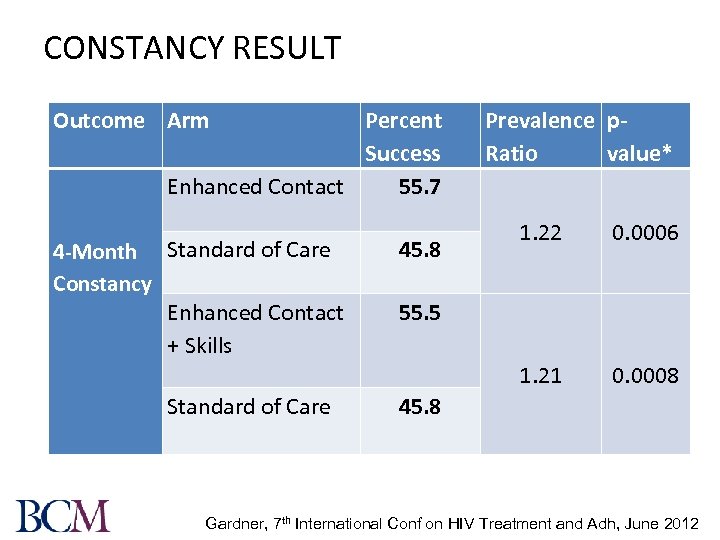 CONSTANCY RESULT Outcome Arm Percent Success Enhanced Contact 55. 7 Prevalence p. Ratio value* Standard of Care 45. 8 0. 0006 1. 21 4 -Month Standard of Care Constancy Enhanced Contact + Skills 1. 22 0. 0008 55. 5 45. 8 * Log binomial Gardner, 7 th International Conf on HIV Treatment and Adh, June 2012
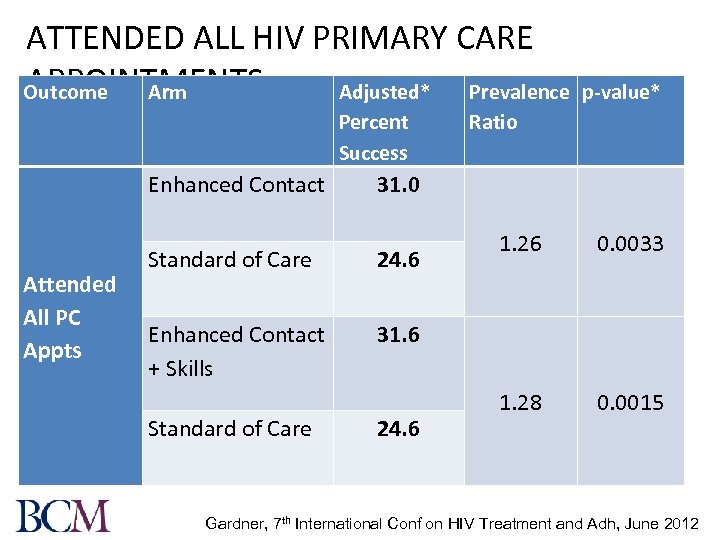 ATTENDED ALL HIV PRIMARY CARE APPOINTMENTS Outcome Arm Adjusted* Prevalence p-value* Percent Success Enhanced Contact Attended All PC Appts Ratio 31. 0 Standard of Care 24. 6 Enhanced Contact + Skills 1. 26 0. 0033 1. 28 0. 0015 31. 6 Standard of Care 24. 6 * Log binomial, adjusted for # scheduled appointments Gardner, 7 th International Conf on HIV Treatment and Adh, June 2012
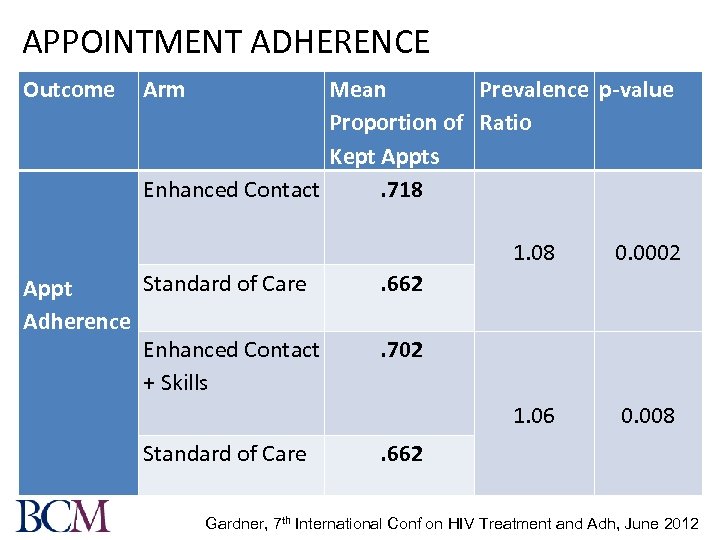 APPOINTMENT ADHERENCE Outcome Arm Mean Prevalence p-value Proportion of Ratio Kept Appts Enhanced Contact. 718 1. 06 Standard of Care Appt Adherence Enhanced Contact + Skills Standard of Care 0. 0002 0. 008 . 662 . 702 . 662 Gardner, 7 th International Conf on HIV Treatment and Adh, June 2012
 THAT IS IT.
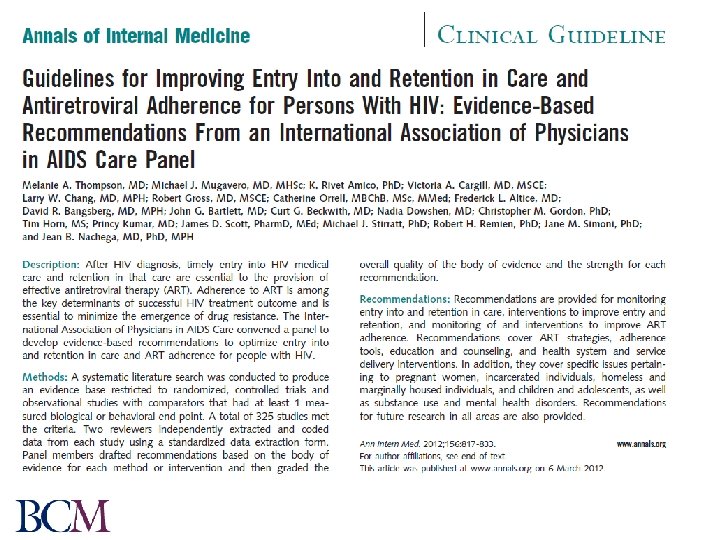
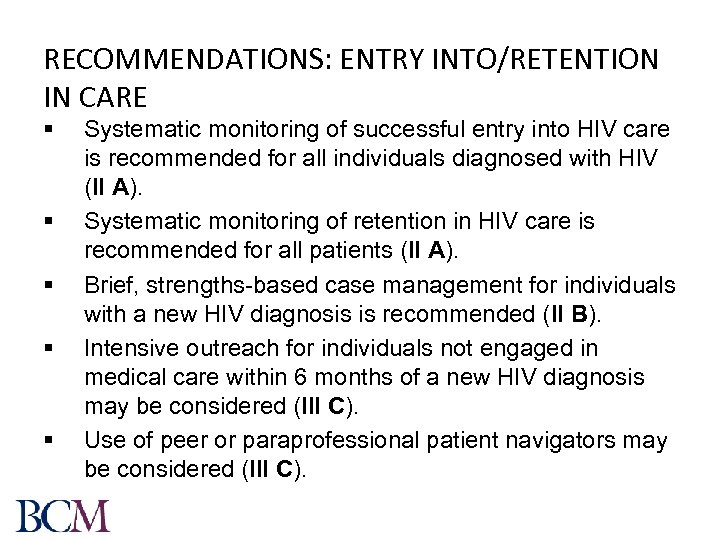 RECOMMENDATIONS: ENTRY INTO/RETENTION IN CARE § § § Systematic monitoring of successful entry into HIV care is recommended for all individuals diagnosed with HIV (II A). Systematic monitoring of retention in HIV care is recommended for all patients (II A). Brief, strengths-based case management for individuals with a new HIV diagnosis is recommended (II B). Intensive outreach for individuals not engaged in medical care within 6 months of a new HIV diagnosis may be considered (III C). Use of peer or paraprofessional patient navigators may be considered (III C).
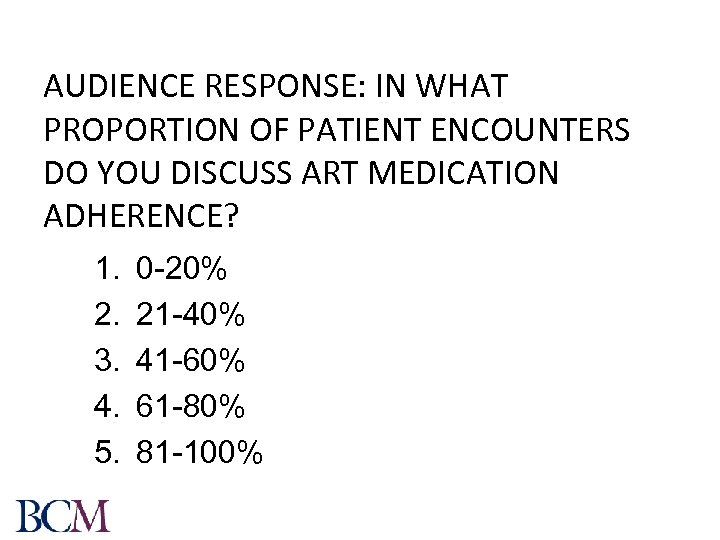 AUDIENCE RESPONSE: IN WHAT PROPORTION OF PATIENT ENCOUNTERS DO YOU DISCUSS ART MEDICATION ADHERENCE? 1. 2. 3. 4. 5. 0 -20% 21 -40% 41 -60% 61 -80% 81 -100%
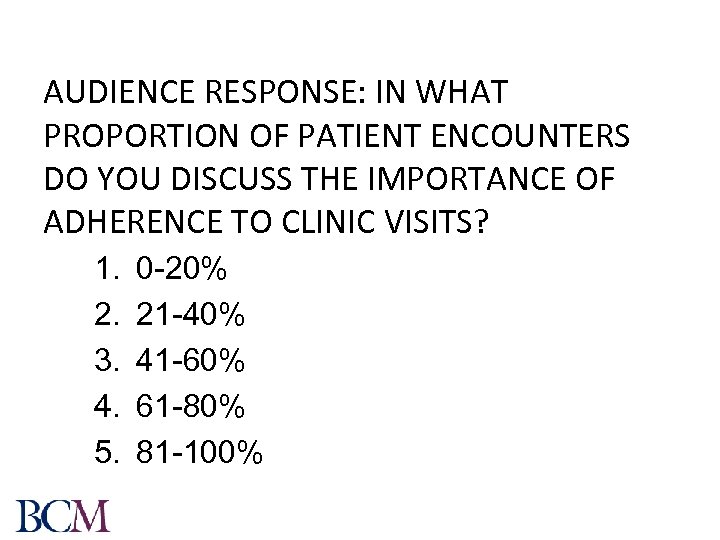 AUDIENCE RESPONSE: IN WHAT PROPORTION OF PATIENT ENCOUNTERS DO YOU DISCUSS THE IMPORTANCE OF ADHERENCE TO CLINIC VISITS? 1. 2. 3. 4. 5. 0 -20% 21 -40% 41 -60% 61 -80% 81 -100%
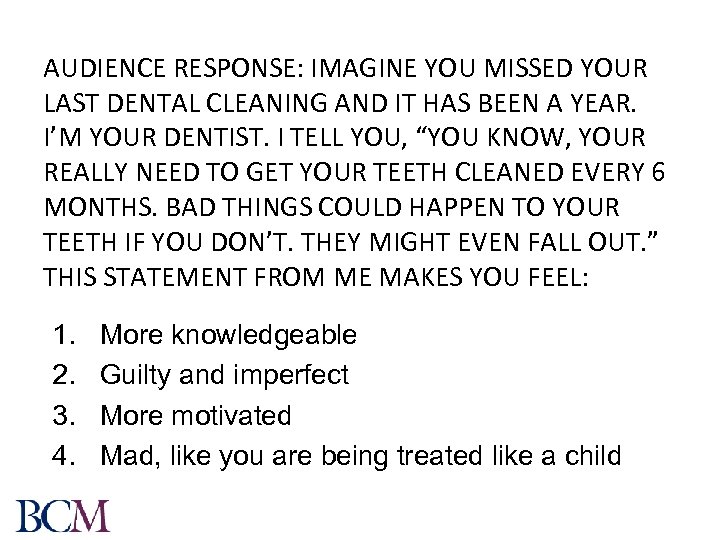 AUDIENCE RESPONSE: IMAGINE YOU MISSED YOUR LAST DENTAL CLEANING AND IT HAS BEEN A YEAR. I’M YOUR DENTIST. I TELL YOU, “YOU KNOW, YOUR REALLY NEED TO GET YOUR TEETH CLEANED EVERY 6 MONTHS. BAD THINGS COULD HAPPEN TO YOUR TEETH IF YOU DON’T. THEY MIGHT EVEN FALL OUT. ” THIS STATEMENT FROM ME MAKES YOU FEEL: 1. 2. 3. 4. More knowledgeable Guilty and imperfect More motivated Mad, like you are being treated like a child
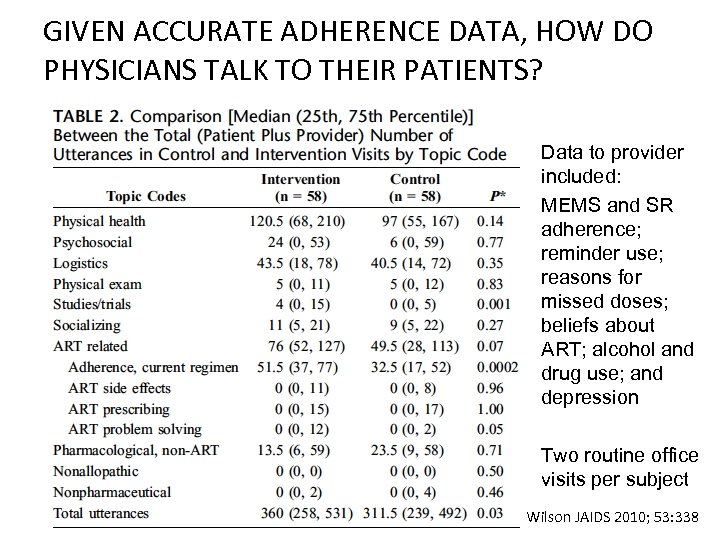 GIVEN ACCURATE ADHERENCE DATA, HOW DO PHYSICIANS TALK TO THEIR PATIENTS? Data to provider included: MEMS and SR adherence; reminder use; reasons for missed doses; beliefs about ART; alcohol and drug use; and depression Two routine office visits per subject Wilson JAIDS 2010; 53: 338
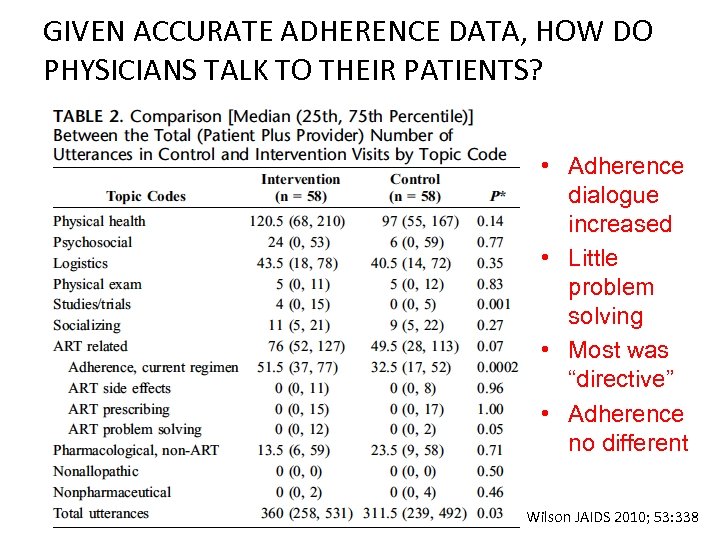 GIVEN ACCURATE ADHERENCE DATA, HOW DO PHYSICIANS TALK TO THEIR PATIENTS? • Adherence dialogue increased • Little problem solving • Most was “directive” • Adherence no different Wilson JAIDS 2010; 53: 338
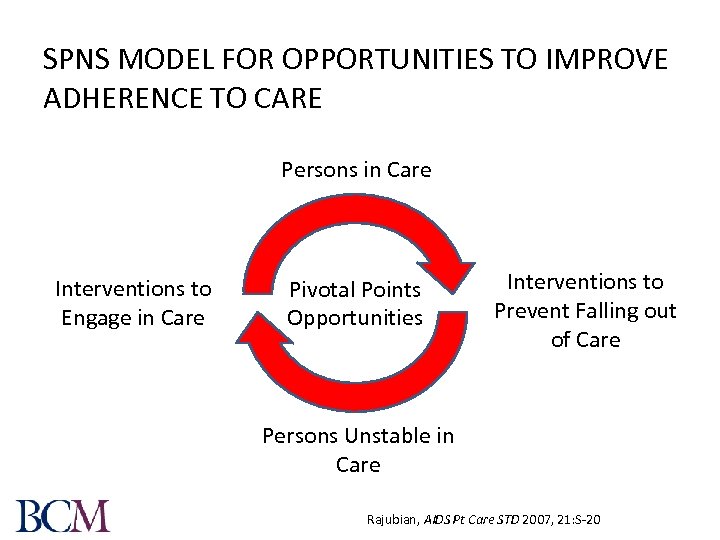 SPNS MODEL FOR OPPORTUNITIES TO IMPROVE ADHERENCE TO CARE Persons in Care Interventions to Engage in Care Pivotal Points Opportunities Interventions to Prevent Falling out of Care Persons Unstable in Care Rajubian, AIDS Pt Care STD 2007, 21: S-20
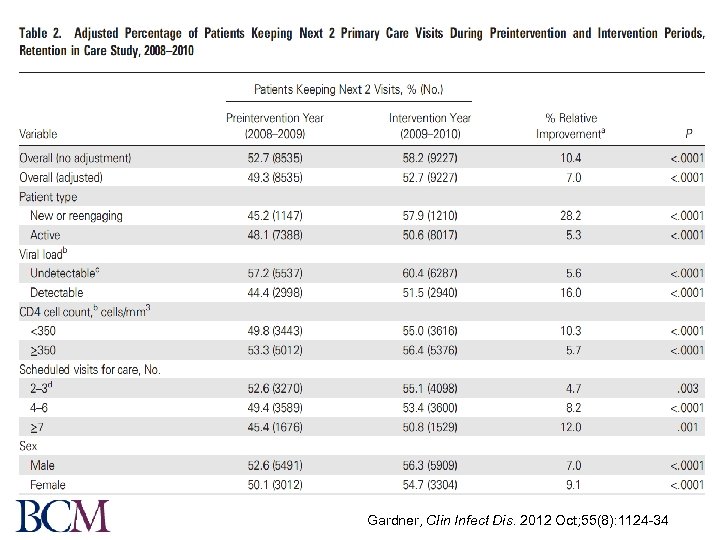
 3/16/20 18 Gardner, Clin Infect Dis. 2012 Oct; 55(8): 1124 -34
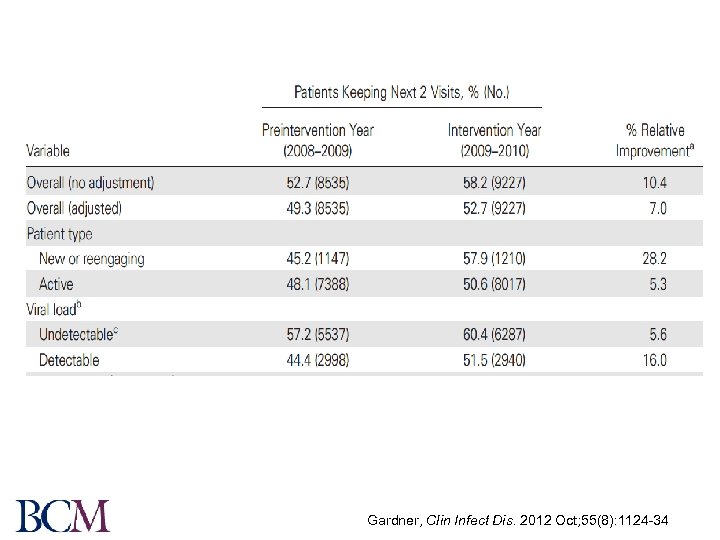
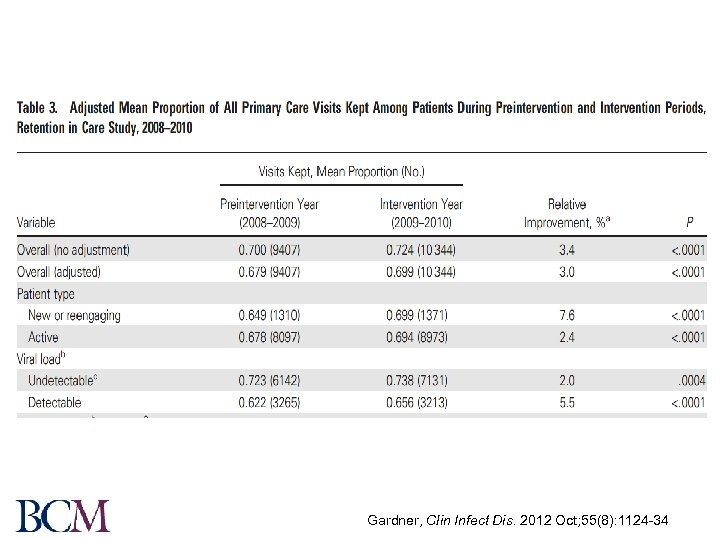
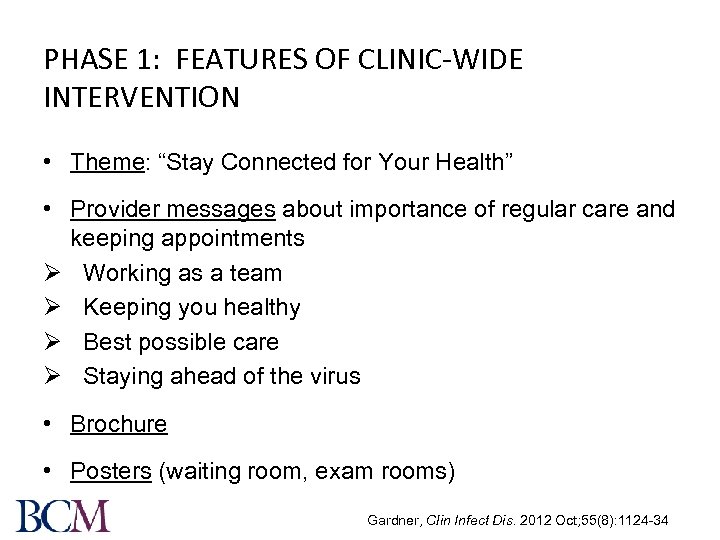 PHASE 1: FEATURES OF CLINIC-WIDE INTERVENTION • Theme: “Stay Connected for Your Health” • Provider messages about importance of regular care and keeping appointments Ø Working as a team Ø Keeping you healthy Ø Best possible care Ø Staying ahead of the virus • Brochure • Posters (waiting room, exam rooms) Gardner, Clin Infect Dis. 2012 Oct; 55(8): 1124 -34
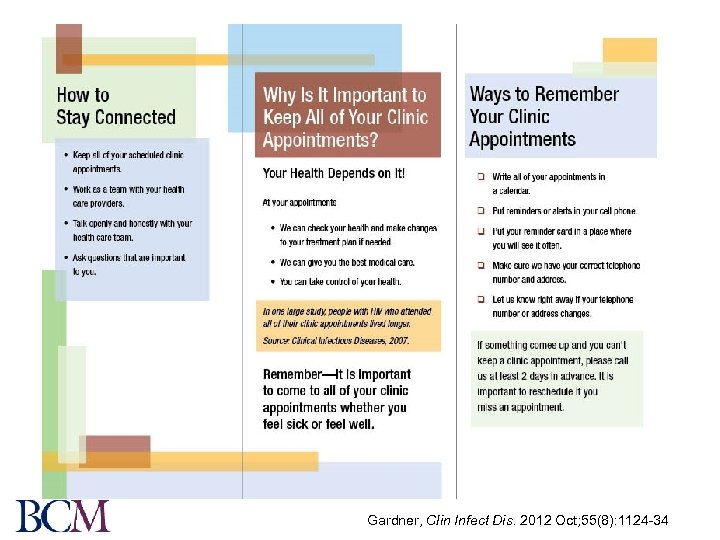 Gardner, Clin Infect Dis. 2012 Oct; 55(8): 1124 -34
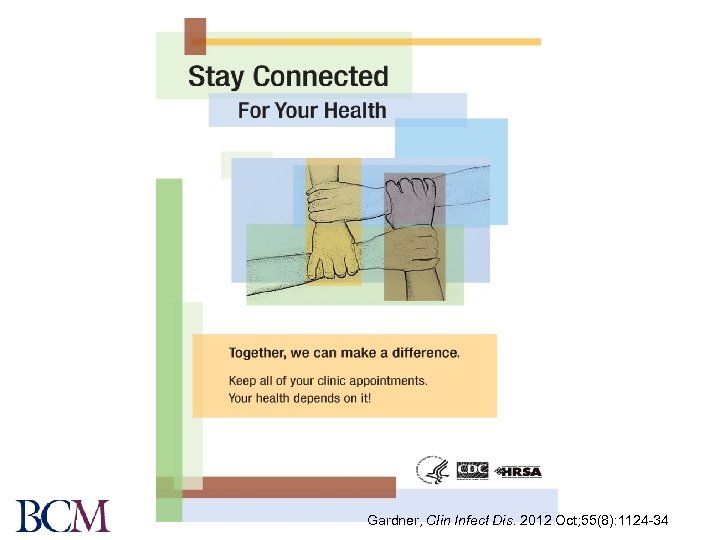 Gardner, Clin Infect Dis. 2012 Oct; 55(8): 1124 -34
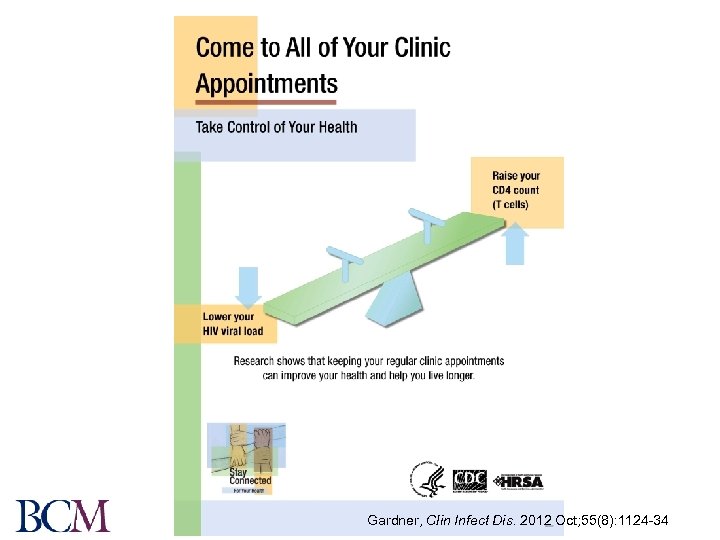 Gardner, Clin Infect Dis. 2012 Oct; 55(8): 1124 -34
 Gardner, Clin Infect Dis. 2012 Oct; 55(8): 1124 -34
 Gardner, Clin Infect Dis. 2012 Oct; 55(8): 1124 -34
 Gardner, Clin Infect Dis. 2012 Oct; 55(8): 1124 -34
 Gardner, Clin Infect Dis. 2012 Oct; 55(8): 1124 -34
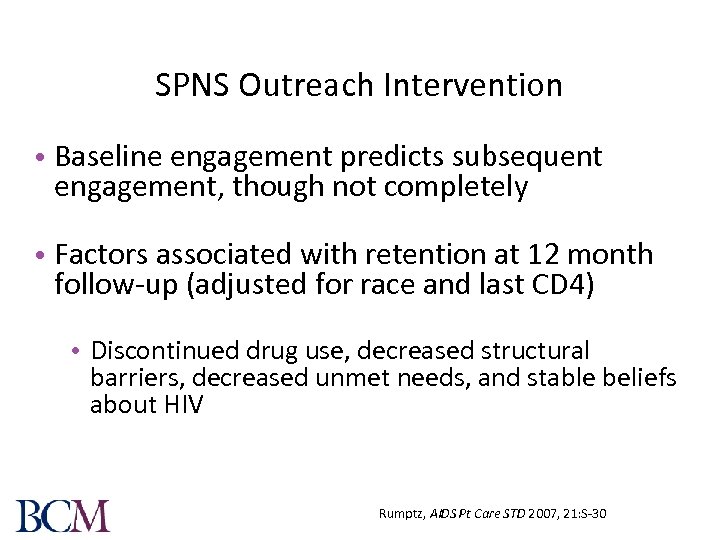 SPNS Outreach Intervention • Baseline engagement predicts subsequent engagement, though not completely • Factors associated with retention at 12 month follow-up (adjusted for race and last CD 4) • Discontinued drug use, decreased structural barriers, decreased unmet needs, and stable beliefs about HIV Rumptz, AIDS Pt Care STD 2007, 21: S-30
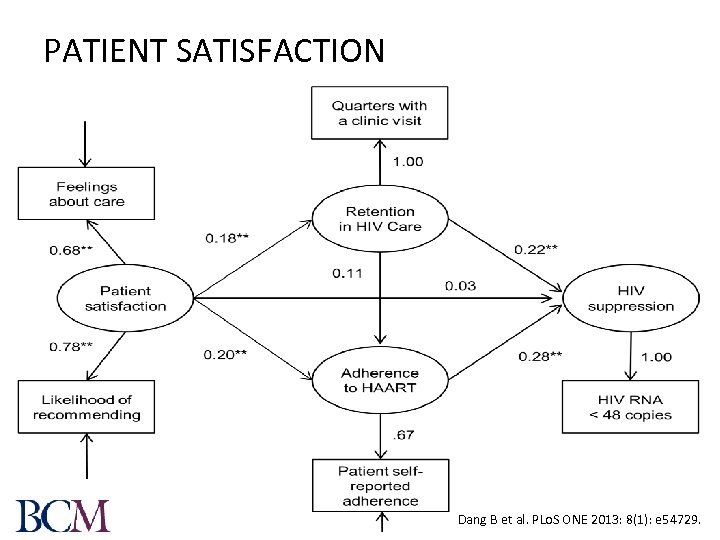 PATIENT SATISFACTION Dang B et al. PLo. S ONE 2013: 8(1): e 54729.
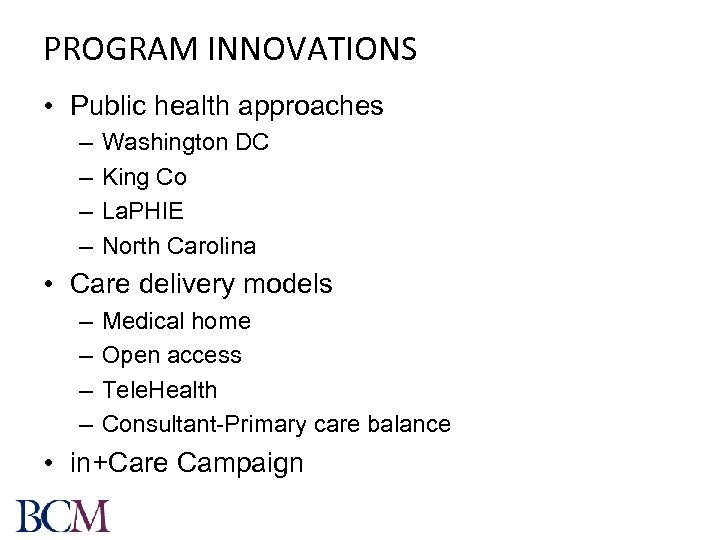 PROGRAM INNOVATIONS • Public health approaches – – Washington DC King Co La. PHIE North Carolina • Care delivery models – – Medical home Open access Tele. Health Consultant-Primary care balance • in+Care Campaign
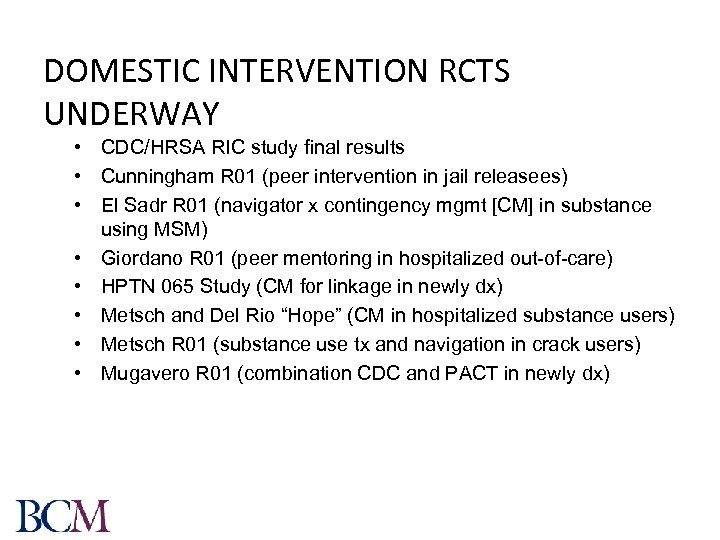 DOMESTIC INTERVENTION RCTS UNDERWAY • CDC/HRSA RIC study final results • Cunningham R 01 (peer intervention in jail releasees) • El Sadr R 01 (navigator x contingency mgmt [CM] in substance using MSM) • Giordano R 01 (peer mentoring in hospitalized out-of-care) • HPTN 065 Study (CM for linkage in newly dx) • Metsch and Del Rio “Hope” (CM in hospitalized substance users) • Metsch R 01 (substance use tx and navigation in crack users) • Mugavero R 01 (combination CDC and PACT in newly dx)
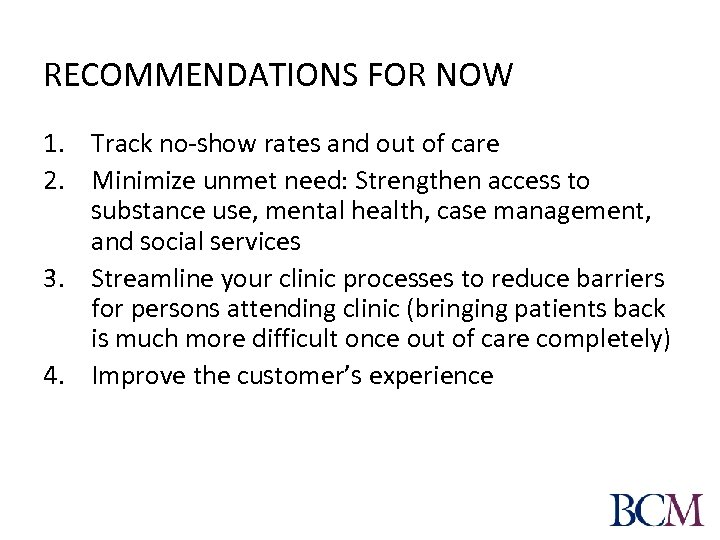 RECOMMENDATIONS FOR NOW 1. Track no-show rates and out of care 2. Minimize unmet need: Strengthen access to substance use, mental health, case management, and social services 3. Streamline your clinic processes to reduce barriers for persons attending clinic (bringing patients back is much more difficult once out of care completely) 4. Improve the customer’s experience
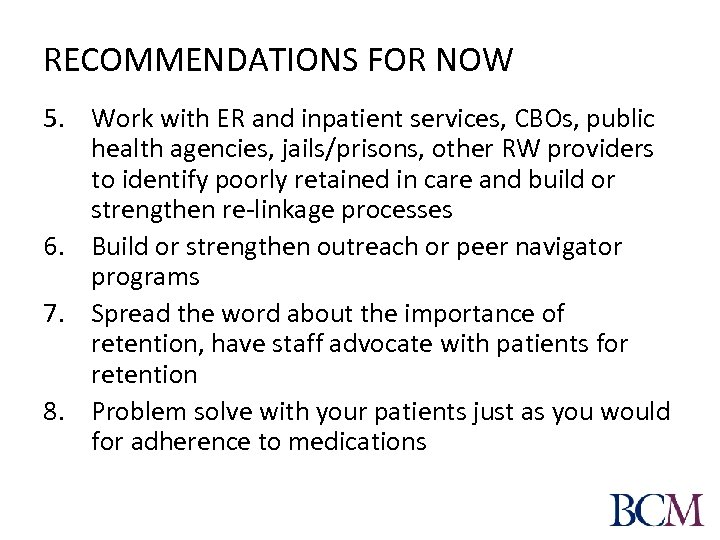 RECOMMENDATIONS FOR NOW 5. Work with ER and inpatient services, CBOs, public health agencies, jails/prisons, other RW providers to identify poorly retained in care and build or strengthen re-linkage processes 6. Build or strengthen outreach or peer navigator programs 7. Spread the word about the importance of retention, have staff advocate with patients for retention 8. Problem solve with your patients just as you would for adherence to medications
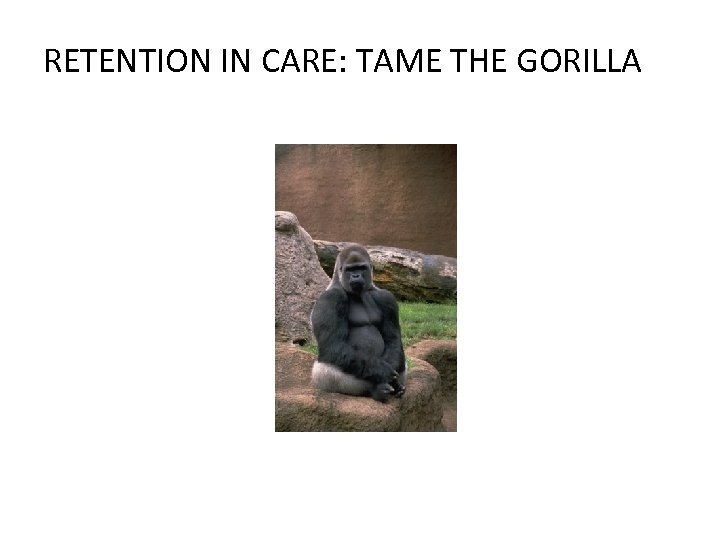 RETENTION IN CARE: TAME THE GORILLA
 ACKNOWLEDGEMENTS Patients Institutions Baylor College of Medicine Thomas Street Health Center Harris Health System De. Bakey VA Medical Center M. D. Anderson Cancer Center Funding/Support NIH R 34 MH 074360 HRSA H 97 HA 03786 Contract 200 -2007 -23685 (CDC HRSA) NIH R 01 MH 085527 NIH U 18 HS 016093 BCM/UTH CFAR Colleagues Rivet Amico, Ph. D April Buscher, MD, MPH Jeff Cully, Ph. D Jessica Davila, Ph. D Michael Kallen, Ph. D Nancy Miertschin, MPH Michael Mugavero, MD, MPH William Slaughter Melinda Stanley, Ph. D Research Staff Sallye Stapleton Elizabeth Soriano Christine Hartman Hina Budhwani Marisela Weaver
 Leonardo da Vinci, Genevra de’ Benci, 1474