 Скачать презентацию Results of epidemiological studies Contribution from occupationally exposed
bcf8fcb35556eccdf94b1c298165d341.ppt
- Количество слайдов: 38



Results of epidemiological studies Contribution from occupationally exposed populations to quantification of risk at low doses Margot Tirmarche IRSN France DRPH/SRBE/LEPID
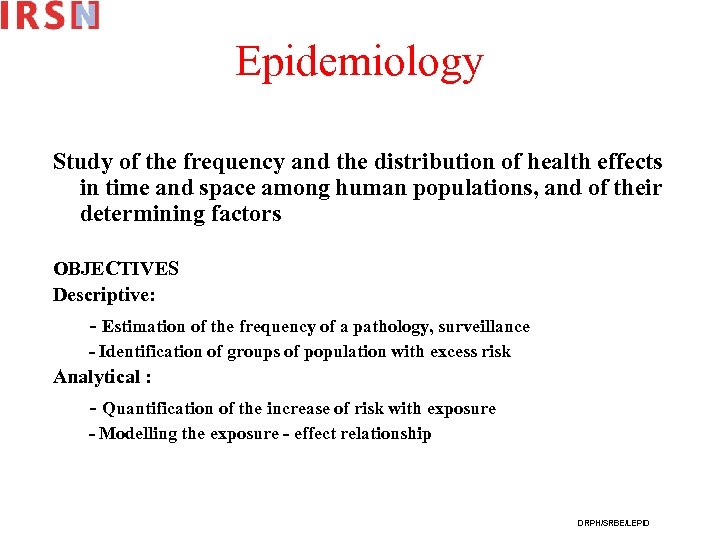
Epidemiology Study of the frequency and the distribution of health effects in time and space among human populations, and of their determining factors OBJECTIVES Descriptive: - Estimation of the frequency of a pathology, surveillance - Identification of groups of population with excess risk Analytical : - Quantification of the increase of risk with exposure - Modelling the exposure - effect relationship DRPH/SRBE/LEPID
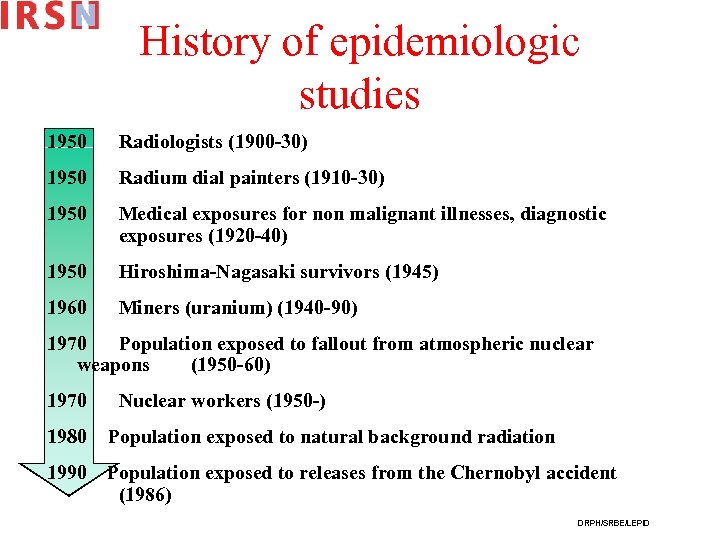
History of epidemiologic studies 1950 Radiologists (1900 -30) 1950 Radium dial painters (1910 -30) 1950 Medical exposures for non malignant illnesses, diagnostic exposures (1920 -40) 1950 Hiroshima-Nagasaki survivors (1945) 1960 Miners (uranium) (1940 -90) 1970 Population exposed to fallout from atmospheric nuclear weapons (1950 -60) 1970 Nuclear workers (1950 -) 1980 Population exposed to natural background radiation 1990 Population exposed to releases from the Chernobyl accident (1986) DRPH/SRBE/LEPID
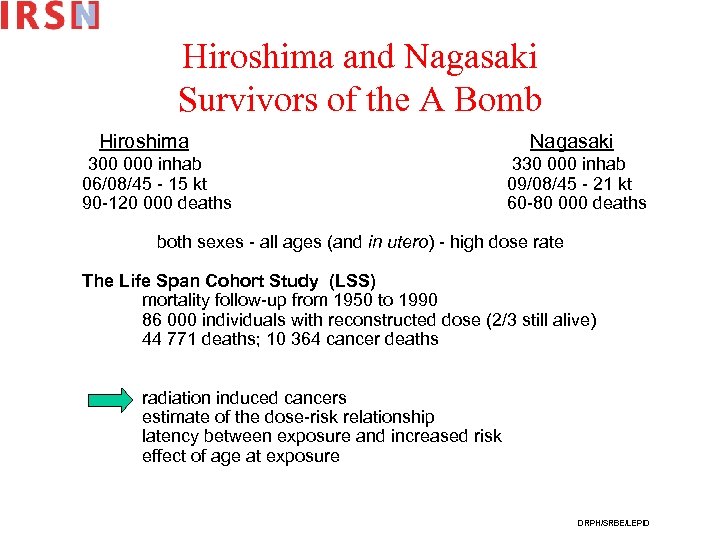
Hiroshima and Nagasaki Survivors of the A Bomb Hiroshima 300 000 inhab 06/08/45 - 15 kt 90 -120 000 deaths Nagasaki 330 000 inhab 09/08/45 - 21 kt 60 -80 000 deaths both sexes - all ages (and in utero) - high dose rate The Life Span Cohort Study (LSS) mortality follow-up from 1950 to 1990 86 000 individuals with reconstructed dose (2/3 still alive) 44 771 deaths; 10 364 cancer deaths radiation induced cancers estimate of the dose-risk relationship latency between exposure and increased risk effect of age at exposure DRPH/SRBE/LEPID
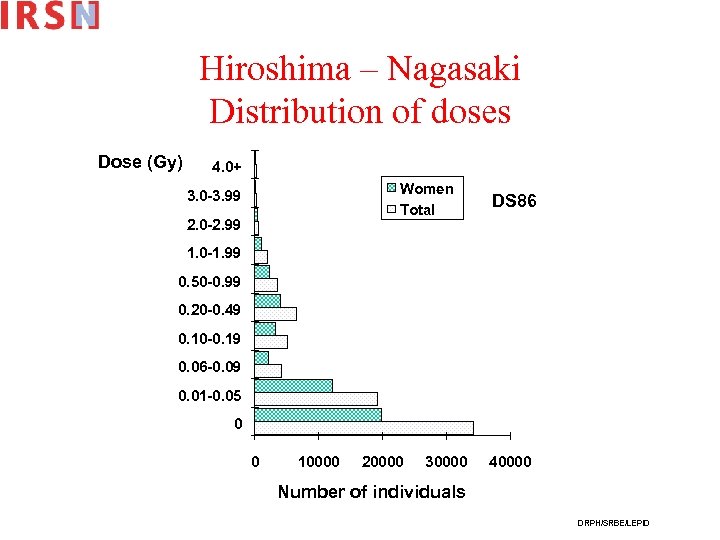
Hiroshima – Nagasaki Distribution of doses Dose (Gy) 4. 0+ Women Total 3. 0 -3. 99 2. 0 -2. 99 DS 86 1. 0 -1. 99 0. 50 -0. 99 0. 20 -0. 49 0. 10 -0. 19 0. 06 -0. 09 0. 01 -0. 05 0 0 10000 20000 30000 40000 Number of individuals DRPH/SRBE/LEPID
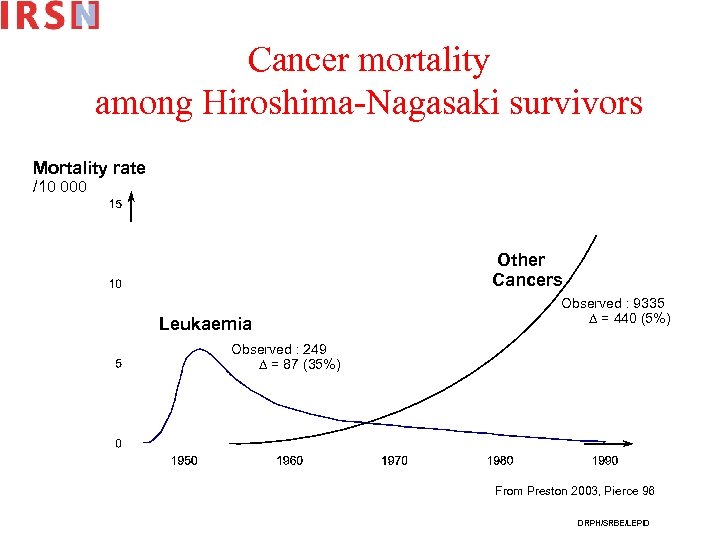
Cancer mortality among Hiroshima-Nagasaki survivors Mortality rate /10 000 Other Cancers Leukaemia Observed : 9335 D = 440 (5%) Observed : 249 D = 87 (35%) From Preston 2003, Pierce 96 DRPH/SRBE/LEPID
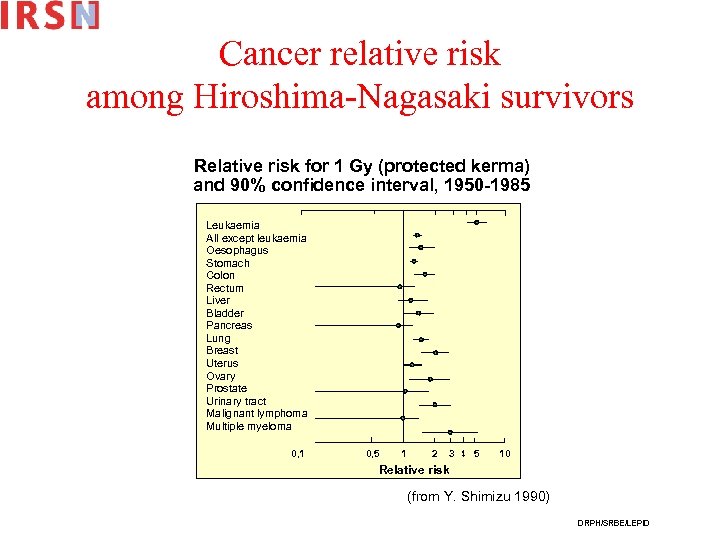
Cancer relative risk among Hiroshima-Nagasaki survivors Relative risk for 1 Gy (protected kerma) and 90% confidence interval, 1950 -1985 Leukaemia All except leukaemia Oesophagus Stomach Colon Rectum Liver Bladder Pancreas Lung Breast Uterus Ovary Prostate Urinary tract Malignant lymphoma Multiple myeloma 0, 1 0, 5 1 2 3 4 5 10 Relative risk (from Y. Shimizu 1990) DRPH/SRBE/LEPID
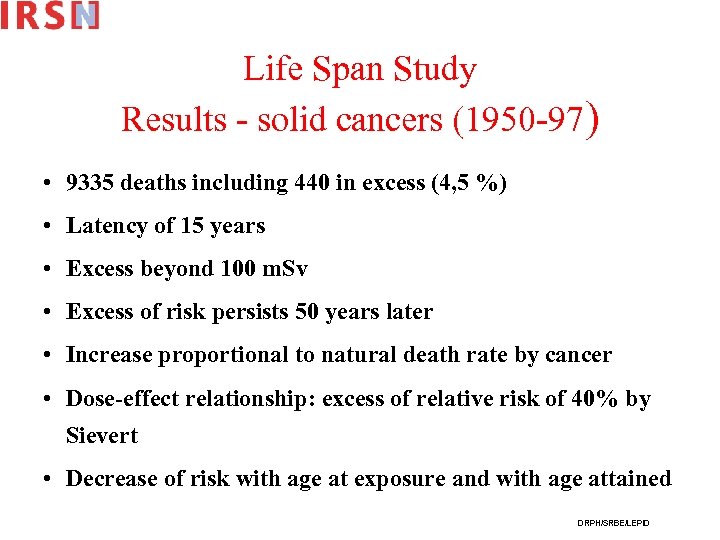
Life Span Study Results - solid cancers (1950 -97) • 9335 deaths including 440 in excess (4, 5 %) • Latency of 15 years • Excess beyond 100 m. Sv • Excess of risk persists 50 years later • Increase proportional to natural death rate by cancer • Dose-effect relationship: excess of relative risk of 40% by Sievert • Decrease of risk with age at exposure and with age attained DRPH/SRBE/LEPID
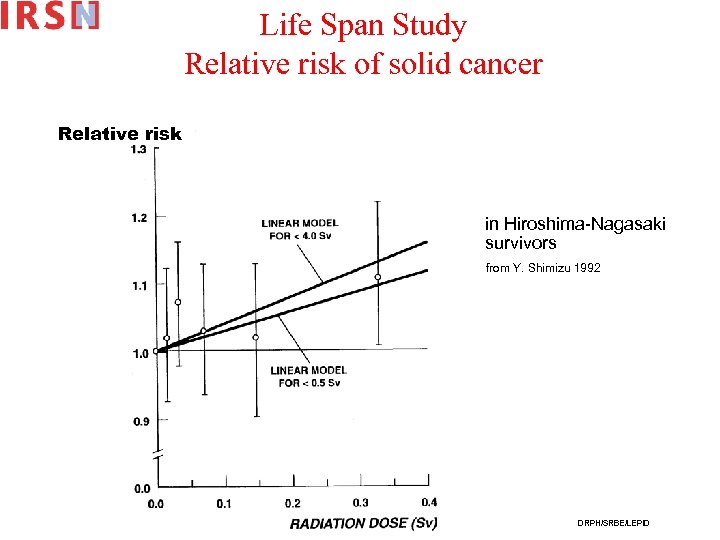
Life Span Study Relative risk of solid cancer Relative risk in Hiroshima-Nagasaki survivors from Y. Shimizu 1992 DRPH/SRBE/LEPID
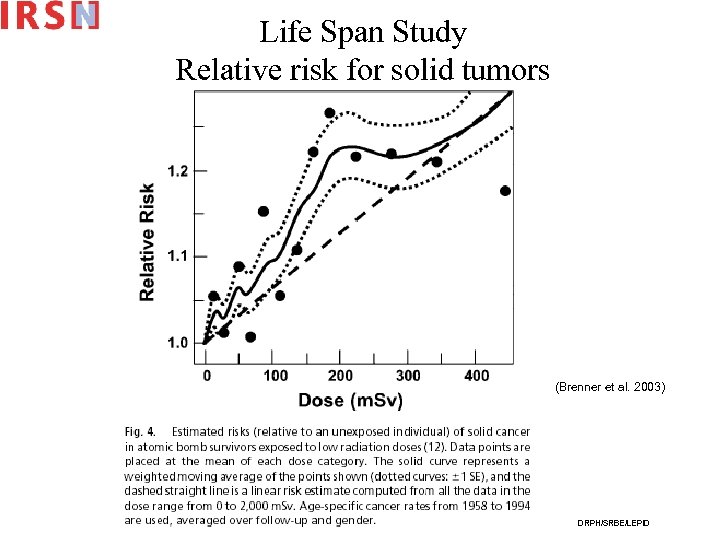
Life Span Study Relative risk for solid tumors (Brenner et al. 2003) DRPH/SRBE/LEPID
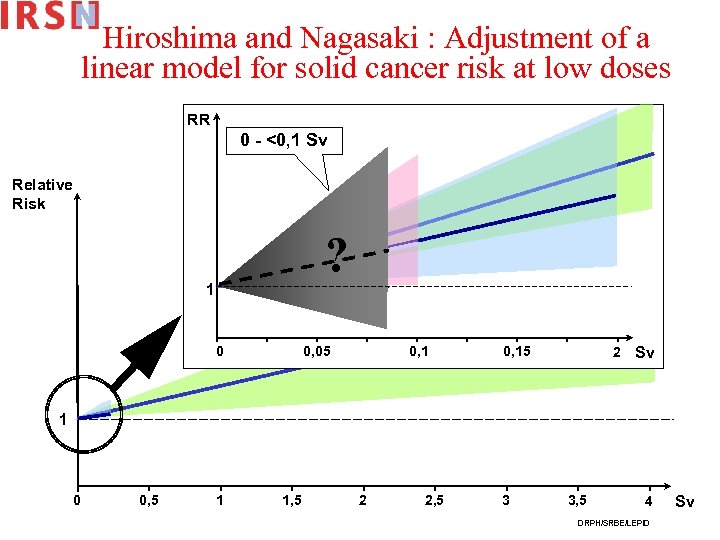
Hiroshima and Nagasaki : Adjustment of a linear model for solid cancer risk at low doses RR 0 Sv 0 – 0, 1 – 0, 2 Sv 0 - <0, 1 Sv 0 – 4 Sv Relative Risk ? 1 0 – 0, 2 Sv 0 0, 05 0, 15 2 Sv 1 0 0, 5 1 1, 5 2 2, 5 3 3, 5 4 DRPH/SRBE/LEPID Sv
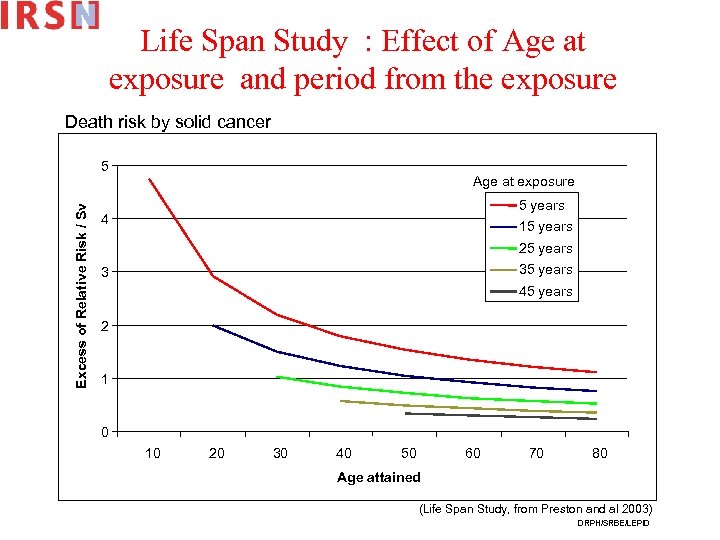
Life Span Study : Effect of Age at exposure and period from the exposure Death risk by solid cancer Excess of Relative Risk / Sv. 5 Age at exposure 5 years 4 15 years 25 years 3 45 years 2 1 0 10 20 30 40 50 60 70 80 Age attained (Life Span Study, from Preston and al 2003) DRPH/SRBE/LEPID
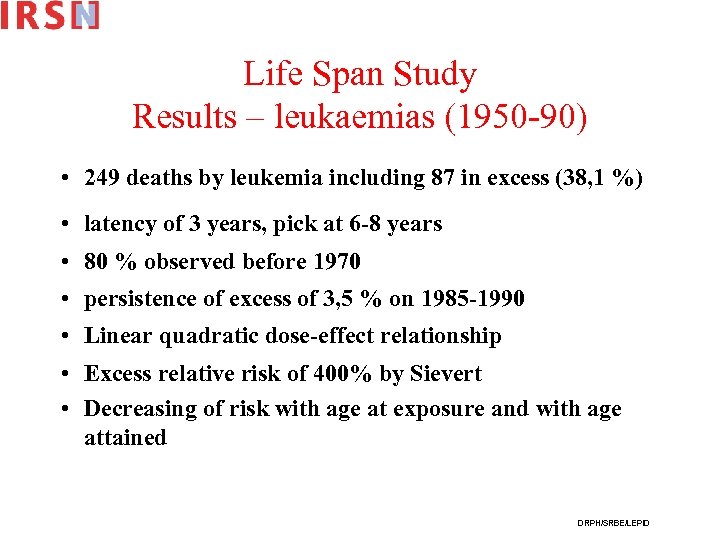
Life Span Study Results – leukaemias (1950 -90) • 249 deaths by leukemia including 87 in excess (38, 1 %) • latency of 3 years, pick at 6 -8 years • 80 % observed before 1970 • persistence of excess of 3, 5 % on 1985 -1990 • Linear quadratic dose-effect relationship • Excess relative risk of 400% by Sievert • Decreasing of risk with age at exposure and with age attained DRPH/SRBE/LEPID
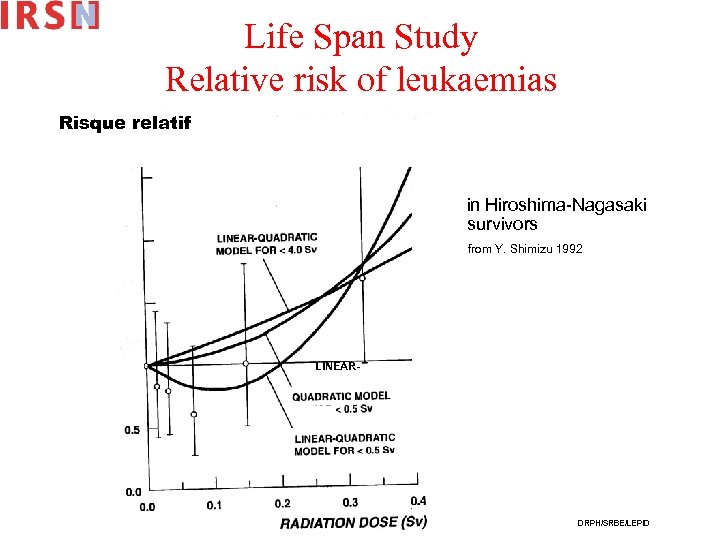
Life Span Study Relative risk of leukaemias Risque relatif in Hiroshima-Nagasaki survivors from Y. Shimizu 1992 LINEAR- DRPH/SRBE/LEPID
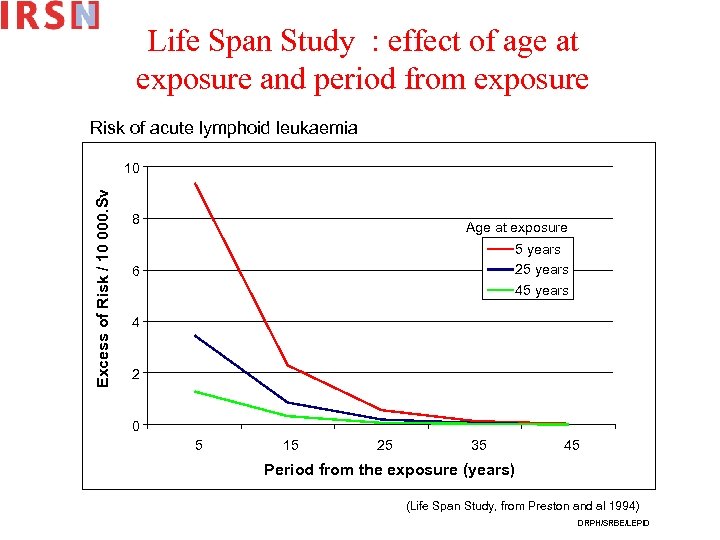
Life Span Study : effect of age at exposure and period from exposure Excess of Risk / 10 000. Sv. Risk of acute lymphoid leukaemia 10 8 Age at exposure 5 years 25 years 45 years 6 4 2 0 5 15 25 35 45 Period from the exposure (years) (Life Span Study, from Preston and al 1994) DRPH/SRBE/LEPID
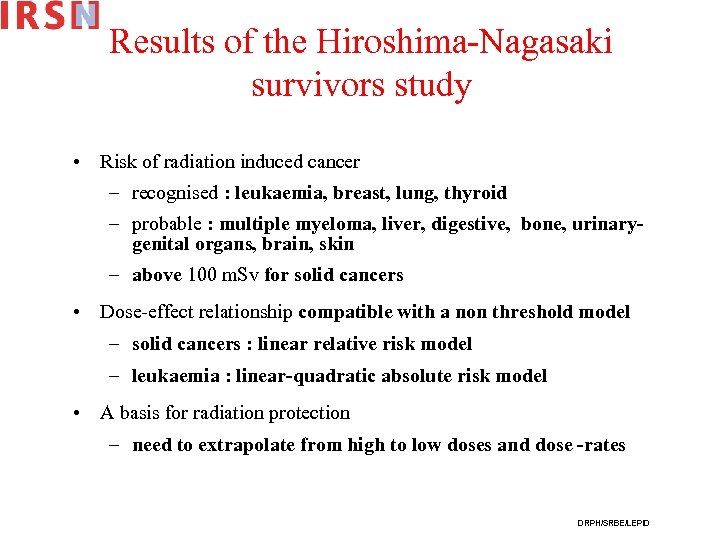
Results of the Hiroshima-Nagasaki survivors study • Risk of radiation induced cancer – recognised : leukaemia, breast, lung, thyroid – probable : multiple myeloma, liver, digestive, bone, urinarygenital organs, brain, skin – above 100 m. Sv for solid cancers • Dose-effect relationship compatible with a non threshold model – solid cancers : linear relative risk model – leukaemia : linear-quadratic absolute risk model • A basis for radiation protection – need to extrapolate from high to low doses and dose -rates DRPH/SRBE/LEPID
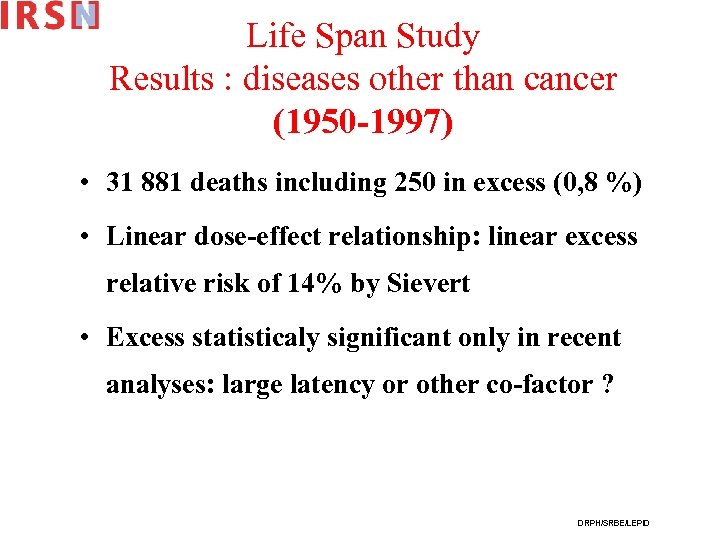
Life Span Study Results : diseases other than cancer (1950 -1997) • 31 881 deaths including 250 in excess (0, 8 %) • Linear dose-effect relationship: linear excess relative risk of 14% by Sievert • Excess statisticaly significant only in recent analyses: large latency or other co-factor ? DRPH/SRBE/LEPID
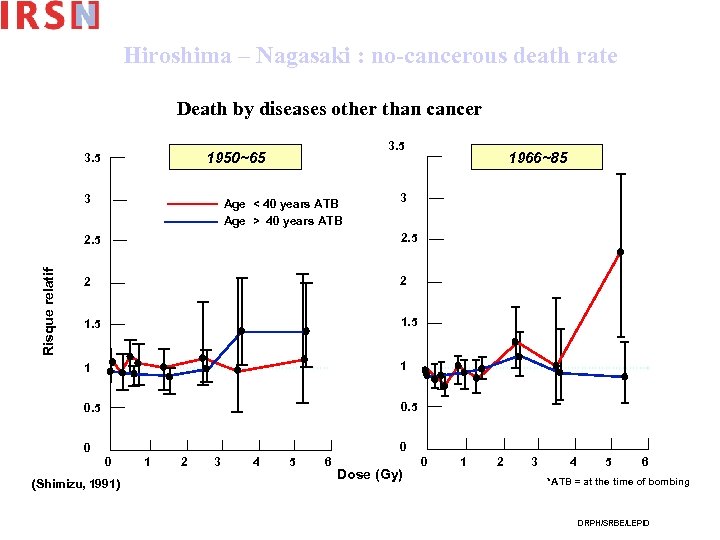
Hiroshima – Nagasaki : no-cancerous death rate Death by diseases other than cancer 3. 5 1950~65 3. 5 3 Age < 40 years ATB Age > 40 years ATB 3 2. 5 2 2 1. 5 1 1 0. 5 0 Risque relatif 1966~85 0 0 (Shimizu, 1991) 1 2 3 4 5 6 Dose (Gy) 0 1 2 3 4 5 6 *ATB = at the time of bombing DRPH/SRBE/LEPID
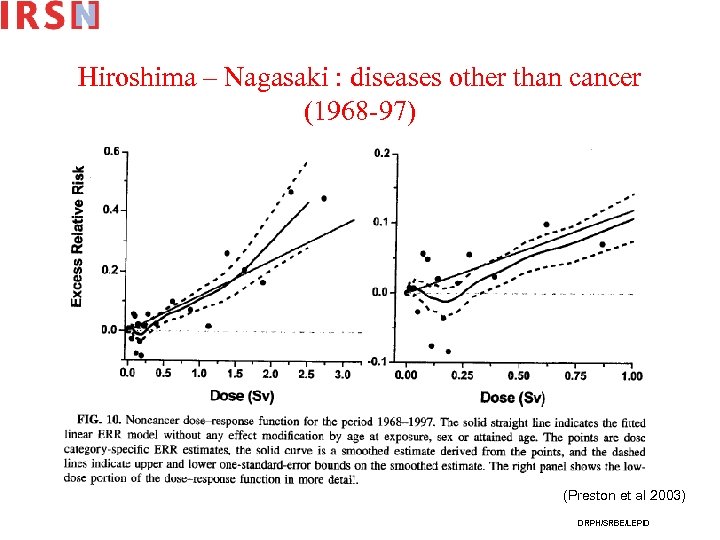
Hiroshima – Nagasaki : diseases other than cancer (1968 -97) (Preston et al 2003) DRPH/SRBE/LEPID
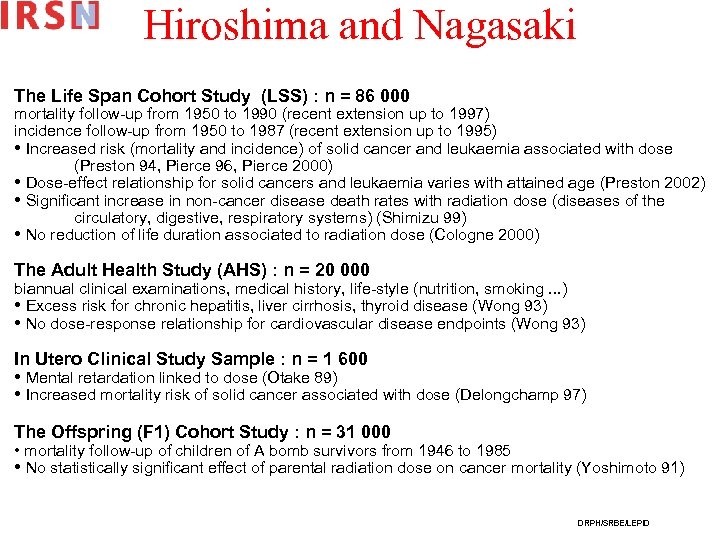
Hiroshima and Nagasaki The Life Span Cohort Study (LSS) : n = 86 000 mortality follow-up from 1950 to 1990 (recent extension up to 1997) incidence follow-up from 1950 to 1987 (recent extension up to 1995) • Increased risk (mortality and incidence) of solid cancer and leukaemia associated with dose (Preston 94, Pierce 96, Pierce 2000) • Dose-effect relationship for solid cancers and leukaemia varies with attained age (Preston 2002) • Significant increase in non-cancer disease death rates with radiation dose (diseases of the circulatory, digestive, respiratory systems) (Shimizu 99) • No reduction of life duration associated to radiation dose (Cologne 2000) The Adult Health Study (AHS) : n = 20 000 biannual clinical examinations, medical history, life-style (nutrition, smoking. . . ) • Excess risk for chronic hepatitis, liver cirrhosis, thyroid disease (Wong 93) • No dose-response relationship for cardiovascular disease endpoints (Wong 93) In Utero Clinical Study Sample : n = 1 600 • Mental retardation linked to dose (Otake 89) • Increased mortality risk of solid cancer associated with dose (Delongchamp 97) The Offspring (F 1) Cohort Study : n = 31 000 • mortality follow-up of children of A bomb survivors from 1946 to 1985 • No statistically significant effect of parental radiation dose on cancer mortality (Yoshimoto 91) DRPH/SRBE/LEPID
Life span study limits • Death certificates : under-recording of cancer • Particularities of Japaneese population: basic rate of breast and stomach cancer (transposition problem) • Exposure rate very high • Only external exposure Studies in other populations and at various dose rates are necessary DRPH/SRBE/LEPID
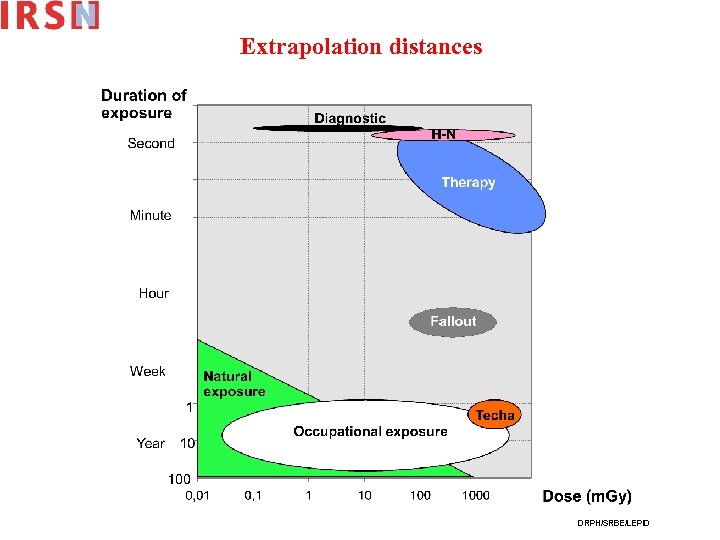
Extrapolation distances DRPH/SRBE/LEPID
Power and epidemiological studies at low doses Single studies are in general limited in size limited statistical power Development of joint analyses: analysis of data of different studies presenting similar protocols • advantage: large size (several hundred or thousands individuals) increase of the capability to detect a small excess risk • limits: internal variability (methods and quality of data collection, background rates, …) International collaborations: • joint analysis of miners cohort studies (US, NIH and Europe) • joint analysis of indoor radon case-control studies in Europe (EC); joint analysis on world level in near future • joint analysis of nuclear workers cohort studies (IARC) DRPH/SRBE/LEPID
Occupational studies • Nuclear workers studies : external radiation at low doses and at low annual dose rates • Uranium miners studies : inhalation of radon decay products from risk estimation at low cumulative exposures to general public concern DRPH/SRBE/LEPID
Main contribution from occupational studies • Registered individual dosimetry on annual basis • Over long working periods ( historical reconstruction) Able to express a long-term risk , by taking in account the protaction of the individual exposure over time DRPH/SRBE/LEPID
Nuclear workers: joint analysis 1995 Data from several cohorts : (Cardis 95) Mortality study on 95 700 workers USA, GB, Canada (15% of women) mean duration of follow-up : 22 ans low mean cumulated exposure : 40 m. Sv Solid tumor deaths : 3976 (expected > 4000) leukemia deaths : 119 (expected < 90) No dose-response relationship for solid tumors for leukemia deaths : ERR at 1 Sv = 2. 2 [0. 1 – 5. 7] DRPH/SRBE/LEPID
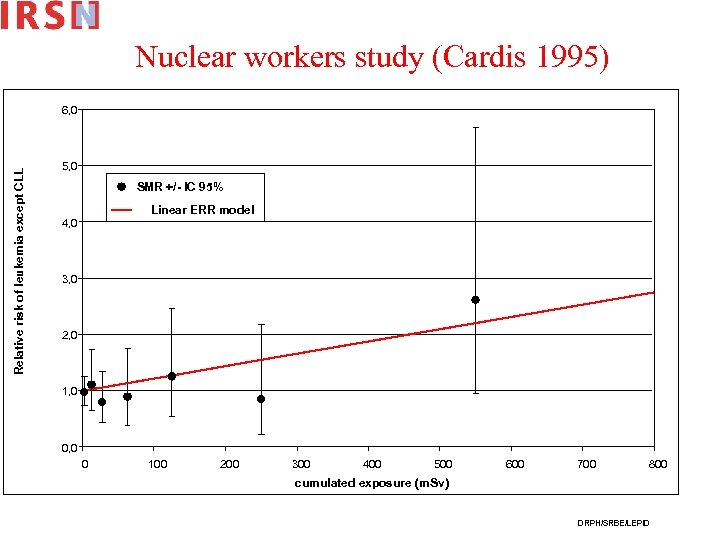
Nuclear workers study (Cardis 1995) Relative risk of leukemia except CLL 6, 0 5, 0 SMR +/- IC 95% Linear ERR model 4, 0 3, 0 2, 0 1, 0 0 100 200 300 400 500 600 700 800 cumulated exposure (m. Sv) DRPH/SRBE/LEPID
Cohort study of nuclear workers in France (CEA-COGEMA group) Published Results : 50 000 workers • All causes mortality lower than in the French male general population ( « Healthy worker effect » ) • No excess of mortality from leukaemia • Elevated mortality risk observed for pleura cancer and skin melanoma (men) and breast and brain cancer (women) Achievements in 2003: • Integration in the international joint analysis of nuclear workers (IARC): 17 countries (Germany, Australia, Belgium, Canada, Spain, Finland, France, Hungary, Japan, Slovakia, Sweden, Switzerland, UK, USA, Russia, Lithuania, South Korea) Cohort of 400 000 individuals • Analysis of mortality risk associated to cumulated doses : main hypothesis to be tested : potential leukemia risk increasing with exposure Future EC program • Analysis of mortality risk associated to multiple exposures DRPH/SRBE/LEPID
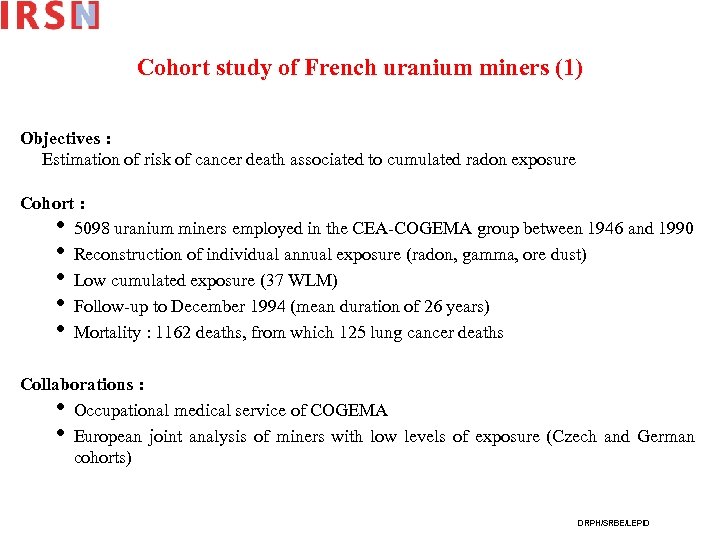
Cohort study of French uranium miners (1) Objectives : Estimation of risk of cancer death associated to cumulated radon exposure Cohort : • 5098 uranium miners employed in the CEA-COGEMA group between 1946 and 1990 • Reconstruction of individual annual exposure (radon, gamma, ore dust) • Low cumulated exposure (37 WLM) • Follow-up to December 1994 (mean duration of 26 years) • Mortality : 1162 deaths, from which 125 lung cancer deaths Collaborations : • Occupational medical service of COGEMA • European joint analysis of miners with low levels of exposure (Czech and German cohorts) DRPH/SRBE/LEPID
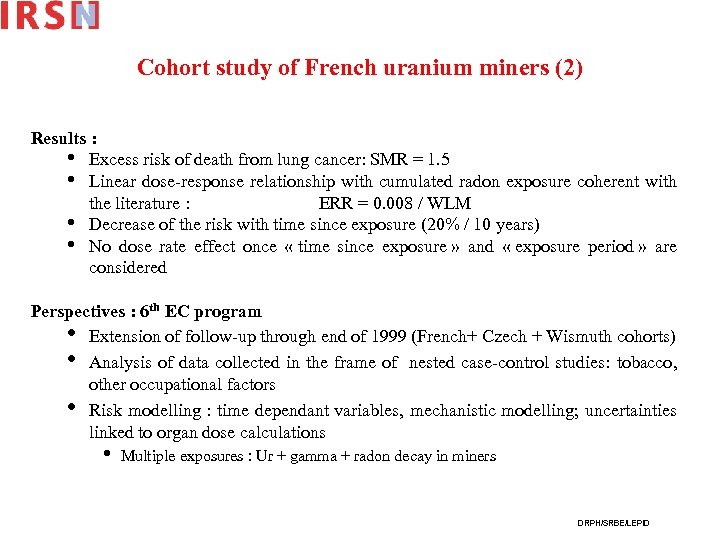
Cohort study of French uranium miners (2) Results : • Excess risk of death from lung cancer: SMR = 1. 5 • Linear dose-response relationship with cumulated radon exposure coherent with the literature : ERR = 0. 008 / WLM • Decrease of the risk with time since exposure (20% / 10 years) • No dose rate effect once « time since exposure » and « exposure period » are considered Perspectives : 6 th EC program • Extension of follow-up through end of 1999 (French+ Czech + Wismuth cohorts) • Analysis of data collected in the frame of nested case-control studies: tobacco, other occupational factors • Risk modelling : time dependant variables, mechanistic modelling; uncertainties linked to organ dose calculations • Multiple exposures : Ur + gamma + radon decay in miners DRPH/SRBE/LEPID
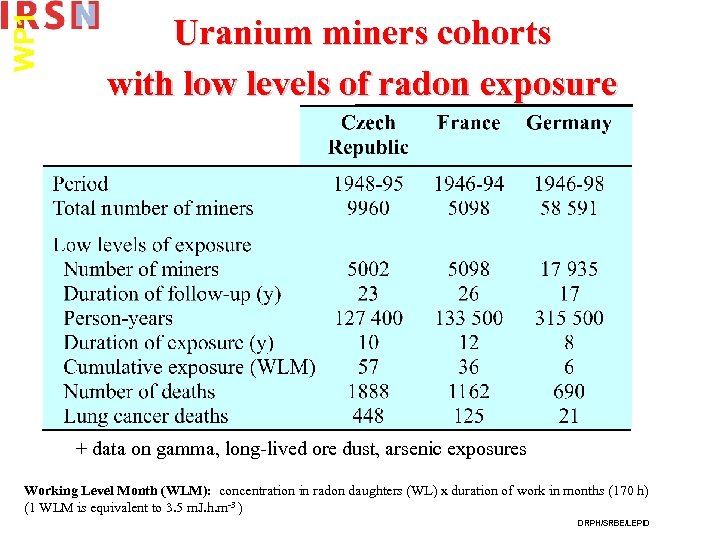
WP 1 Uranium miners cohorts with low levels of radon exposure + data on gamma, long-lived ore dust, arsenic exposures Working Level Month (WLM): concentration in radon daughters (WL) x duration of work in months (170 h) (1 WLM is equivalent to 3. 5 m. J. h. m-3 ) DRPH/SRBE/LEPID
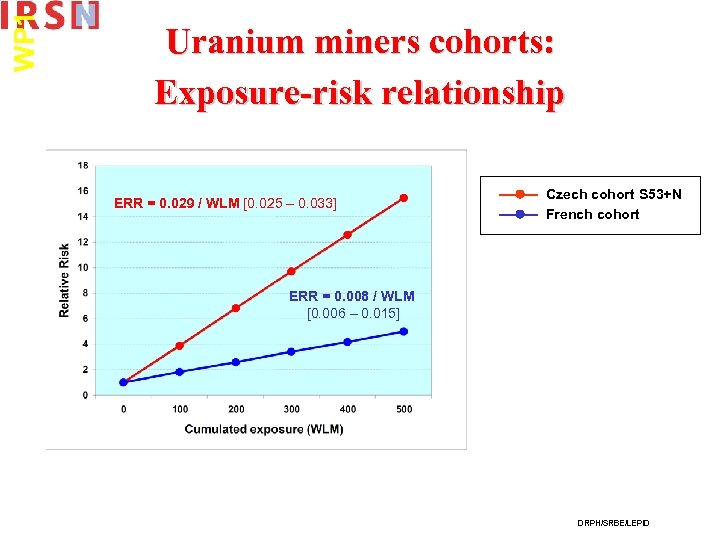
WP 1 Uranium miners cohorts: Exposure-risk relationship ERR = 0. 029 / WLM [0. 025 – 0. 033] Czech cohort S 53+N French cohort ERR = 0. 008 / WLM [0. 006 – 0. 015] DRPH/SRBE/LEPID
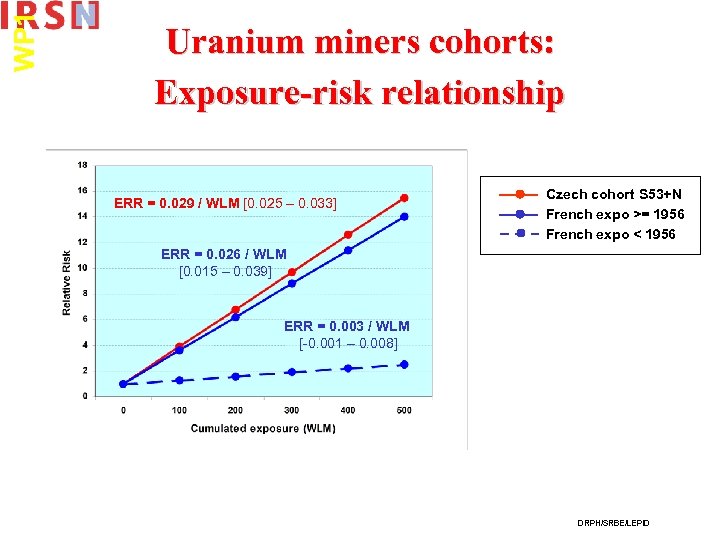
WP 1 Uranium miners cohorts: Exposure-risk relationship ERR = 0. 029 / WLM [0. 025 – 0. 033] Czech cohort S 53+N French expo >= 1956 cohort French expo < 1956 ERR = 0. 026 / WLM [0. 015 – 0. 039] ERR = 0. 008 / WLM [0. 006 – 0. 015] ERR = 0. 003 / WLM [-0. 001 – 0. 008] DRPH/SRBE/LEPID
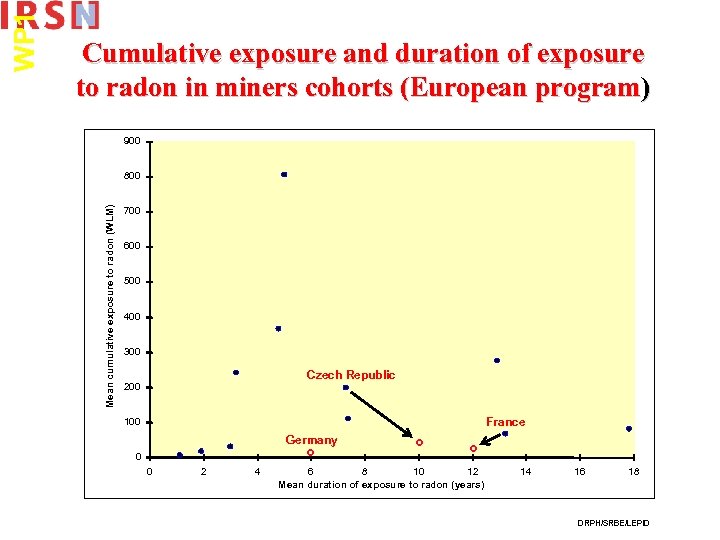
900 800 Mean cumulative exposure to radon (WLM) WP 1 Cumulative exposure and duration of exposure to radon in miners cohorts (European program) 700 600 500 400 300 Czech Republic 200 France 100 Germany 0 0 2 CZ : S 52 + N studies (N=5002) 4 ° 6 ° ° 8 10 12 Mean duration of exposure to radon (years) 14 16 18 Fr : extended cohort (N=5098) G : Wismut cohort C (N=17935) DRPH/SRBE/LEPID
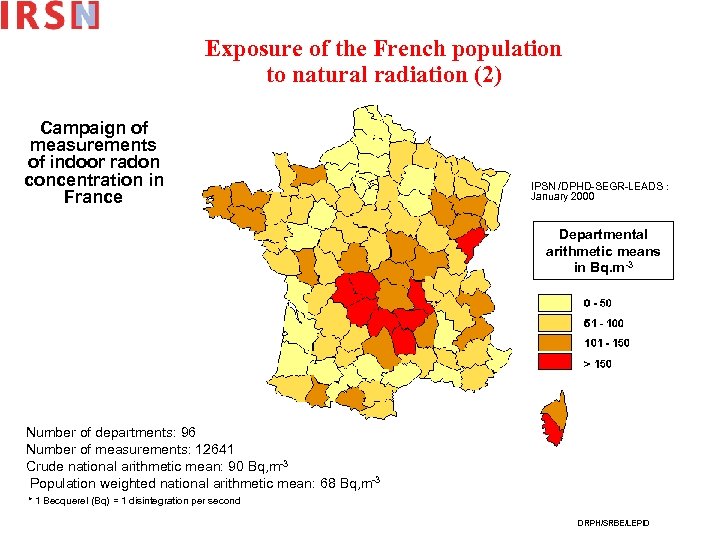
Exposure of the French population to natural radiation (2) Campaign of measurements of indoor radon concentration in France IPSN /DPHD-SEGR-LEADS : January 2000 Departmental arithmetic means in Bq. m-3 Number of departments: 96 Number of measurements: 12641 Crude national arithmetic mean: 90 Bq, m-3 Population weighted national arithmetic mean: 68 Bq, m-3 * 1 Becquerel (Bq) = 1 disintegration per second DRPH/SRBE/LEPID
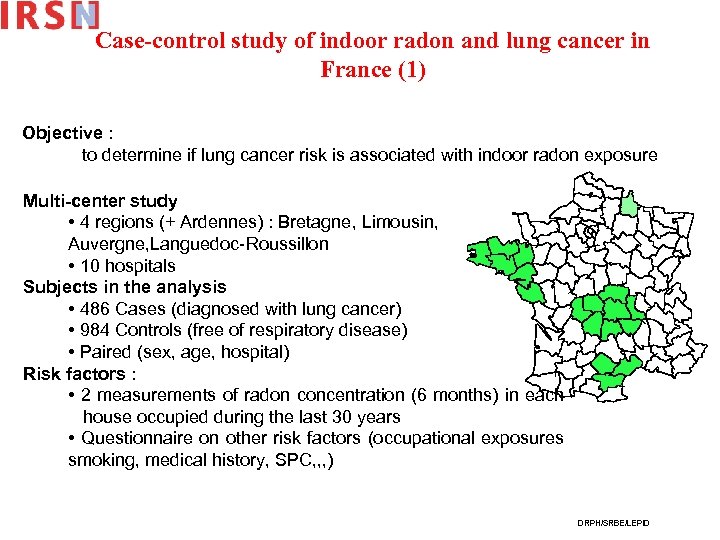
Case-control study of indoor radon and lung cancer in France (1) Objective : to determine if lung cancer risk is associated with indoor radon exposure Multi-center study • 4 regions (+ Ardennes) : Bretagne, Limousin, Auvergne, Languedoc-Roussillon • 10 hospitals Subjects in the analysis • 486 Cases (diagnosed with lung cancer) • 984 Controls (free of respiratory disease) • Paired (sex, age, hospital) Risk factors : • 2 measurements of radon concentration (6 months) in each house occupied during the last 30 years • Questionnaire on other risk factors (occupational exposures smoking, medical history, SPC, , , ) DRPH/SRBE/LEPID
Case-control study of indoor radon and lung cancer in France (2) Results : • Past exposure to radon reconstructed over a mean duration of 20 years • Lung cancer risk increases with exposure to radon RR = 1. 04 per 100 Bq, m-3 CI 95% = [0. 99 – 1. 11] (adjusted on age, sex, region, smoking and occupational exposure) • This risk is low when compared to the risk associated to smoking • This result is concordant with those from previous studies and with the risk extrapolated from miners studies • Accepted for publication in Epidemiology Integration in the European joint analysis (France, Belgium, Germany, UK, Sweden, Italy, , , ) => about 10 000 cases : submitted for publication DRPH/SRBE/LEPID
Conclusion • Epidemiological studies results are closely related to quality of past exposure data, • Analytical studies need individual information on the main risk factor (radiation) and on potential co -factors (occupational and others) • At low doses : interaction with other cocarcinogenic factors : mechanistic models • Good quality of health indicator is absolutely necessary (incidence versus mortality studies) DRPH/SRBE/LEPID
Скачать презентацию Results of epidemiological studies Contribution from occupationally exposed
bcf8fcb35556eccdf94b1c298165d341.ppt