 Скачать презентацию Responsible Renewable Recyclable Reliable Energy Division Jörgen Persson
bb8ec3fda2b1e2a93a63c7626ddbd505.ppt
- Количество слайдов: 18



Responsible Renewable Recyclable Reliable Energy Division Jörgen Persson ESS Science for Society
A normal facility Carbone dioxide: 150 000 ton/y El consumption: 300 GWh/y Carbone dioxide: 15 000 ton/y ESS Science for Society
ESS Science for Society
ESS Science for Society
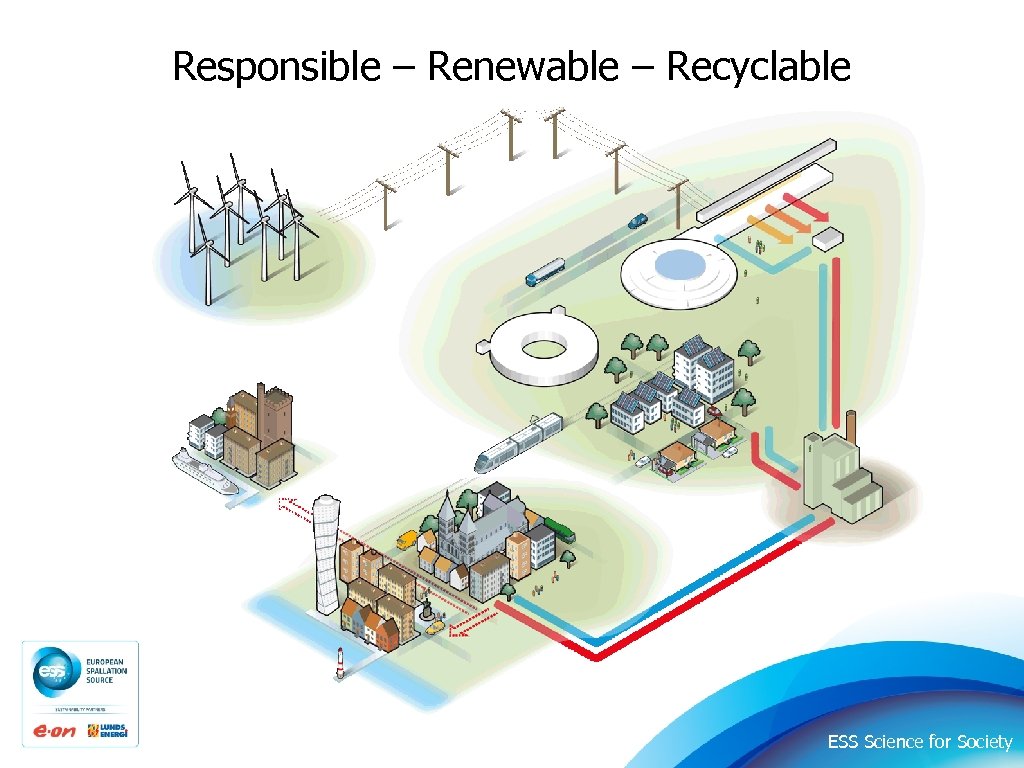
Responsible – Renewable – Recyclable ESS Science for Society
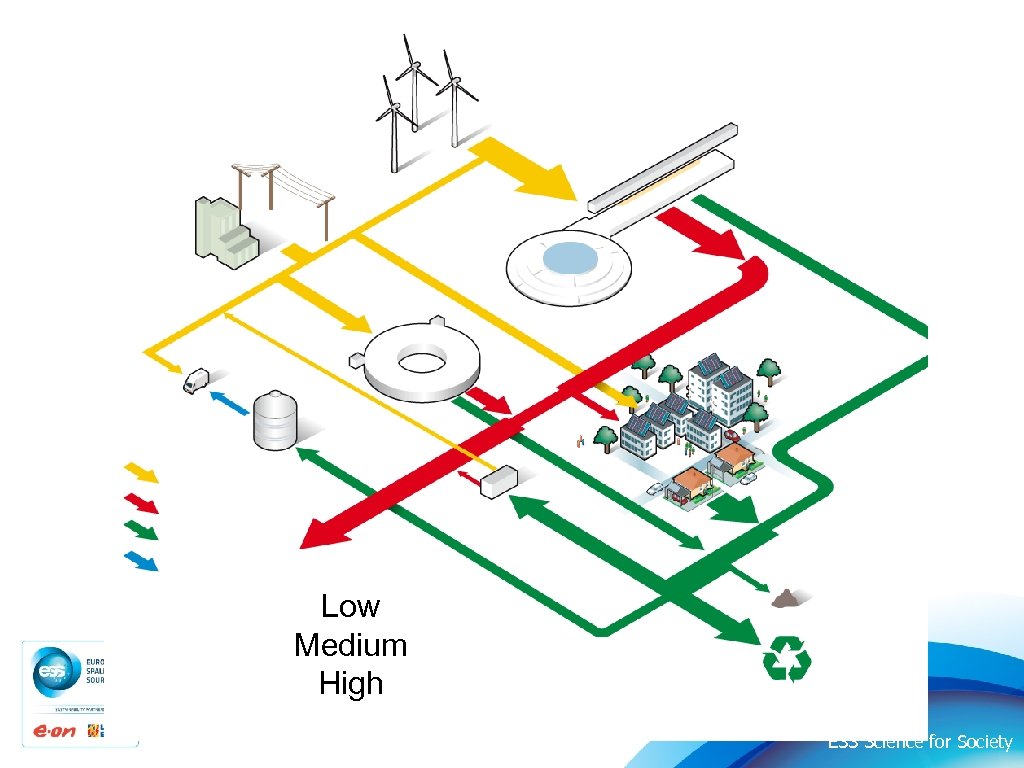
Low Medium High ESS Science for Society
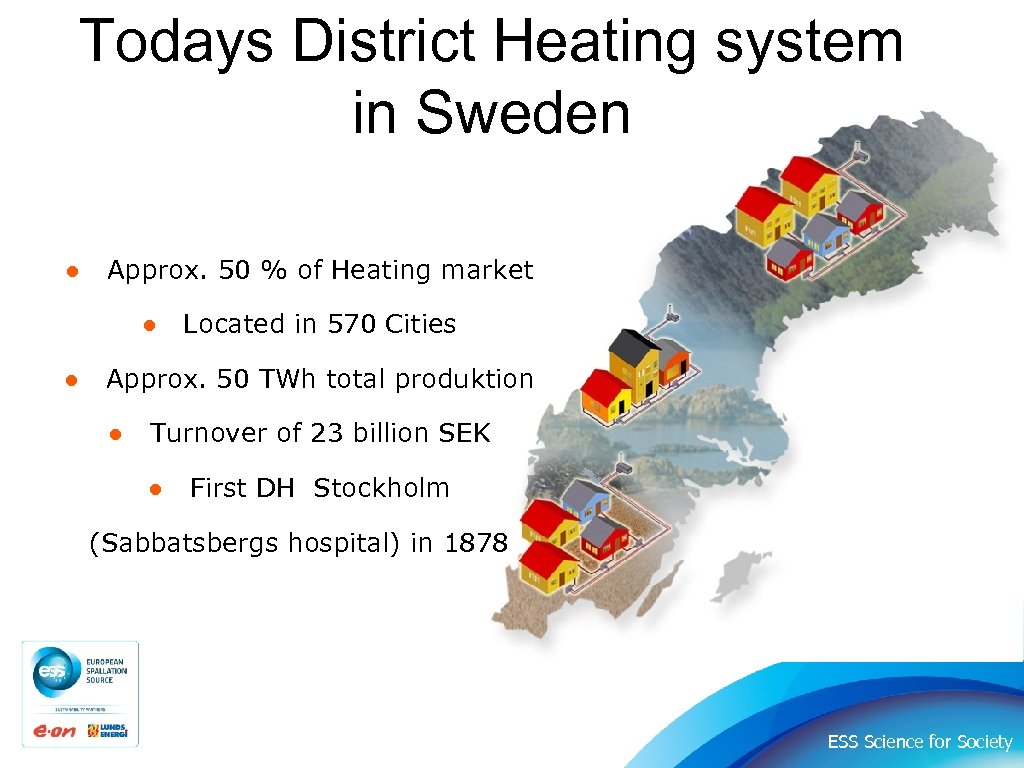
Todays District Heating system in Sweden ● Approx. 50 % of Heating market ● ● Located in 570 Cities Approx. 50 TWh total produktion ● Turnover of 23 billion SEK ● First DH Stockholm (Sabbatsbergs hospital) in 1878 ESS Science for Society
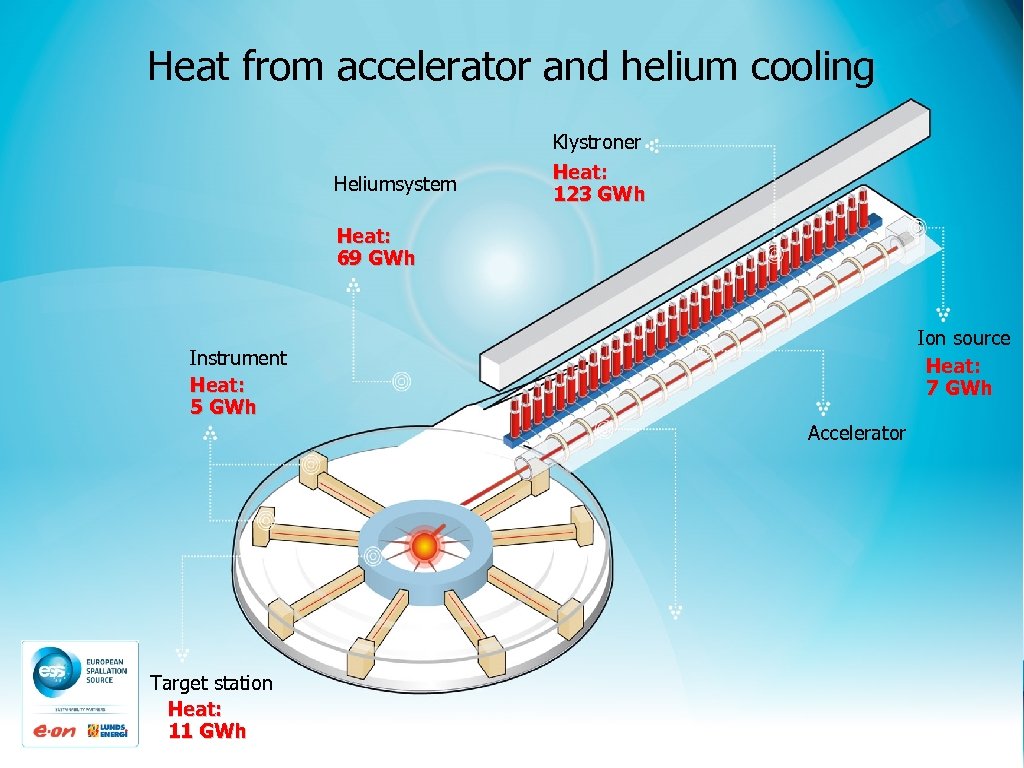
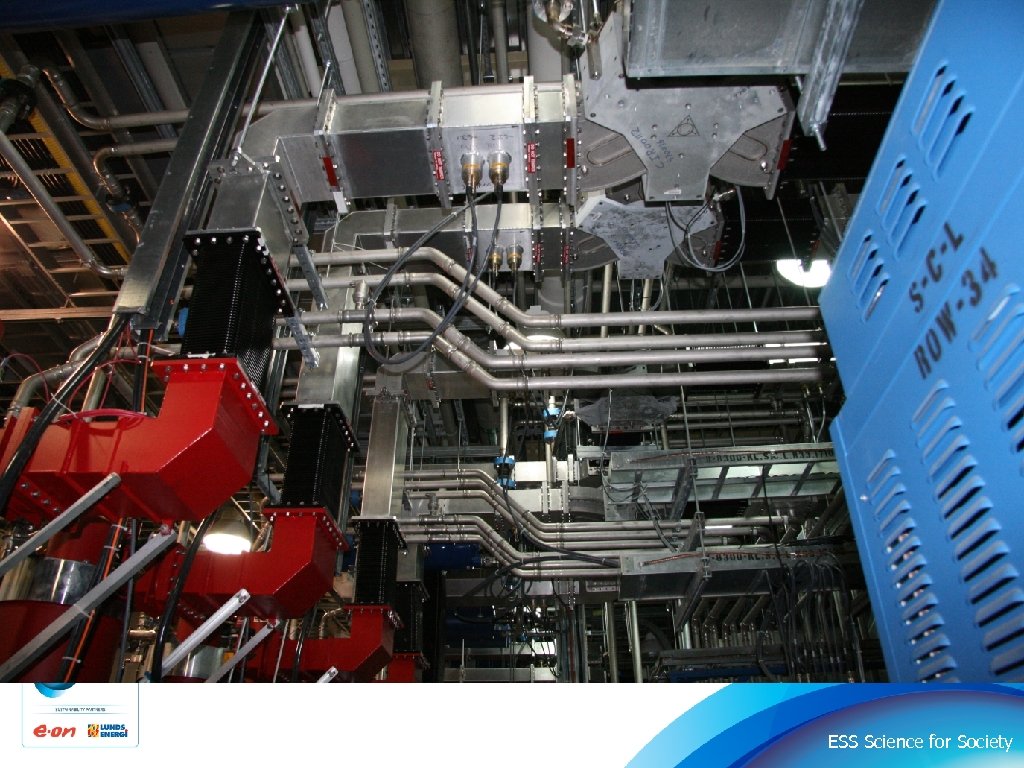
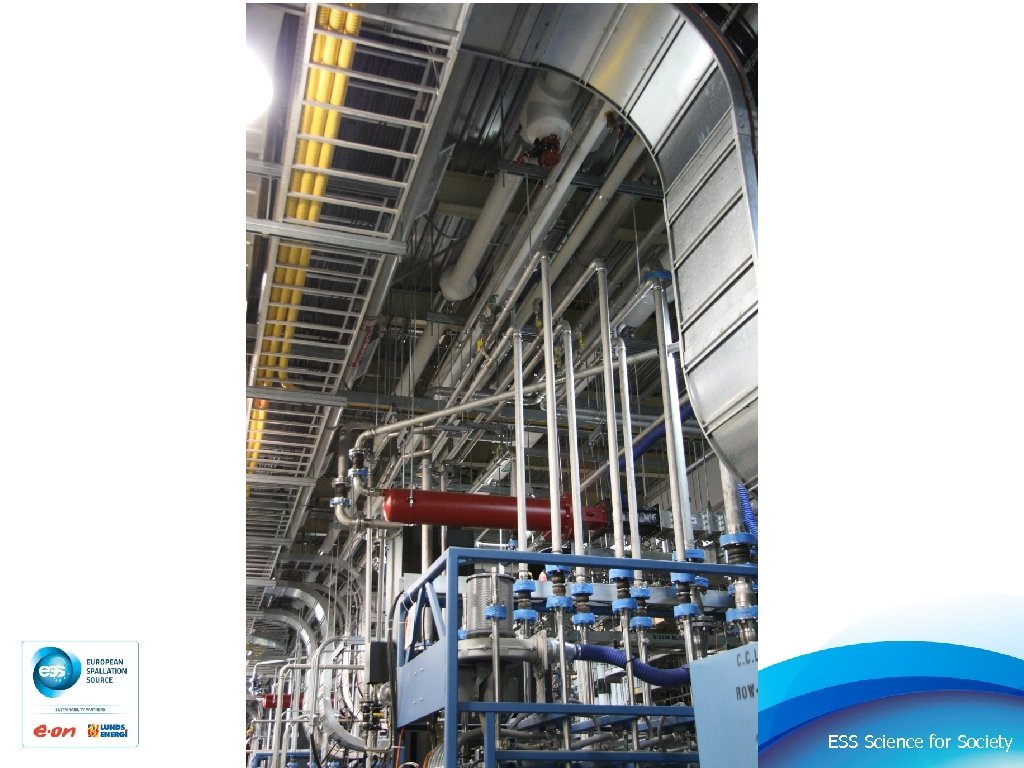
Heat from accelerator and helium cooling Heliumsystem Klystroner Heat: 123 GWh Heat: 69 GWh Ion source Heat: 7 GWh Instrument Heat: 5 GWh Accelerator Target station Heat: 11 GWh ESS Science for Society
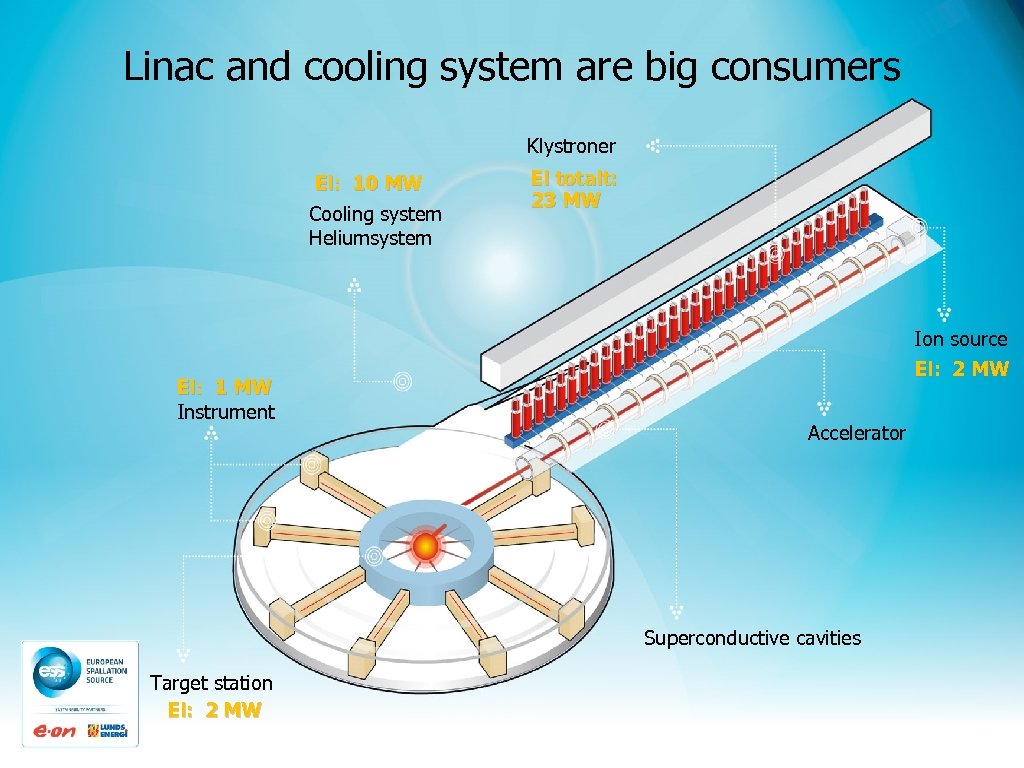
Linac and cooling system are big consumers Klystroner El: 10 MW Cooling system Heliumsystem El: 1 MW Instrument El totalt: 23 MW Ion source El: 2 MW Accelerator Superconductive cavities Target station El: 2 MW ESS Science for Society
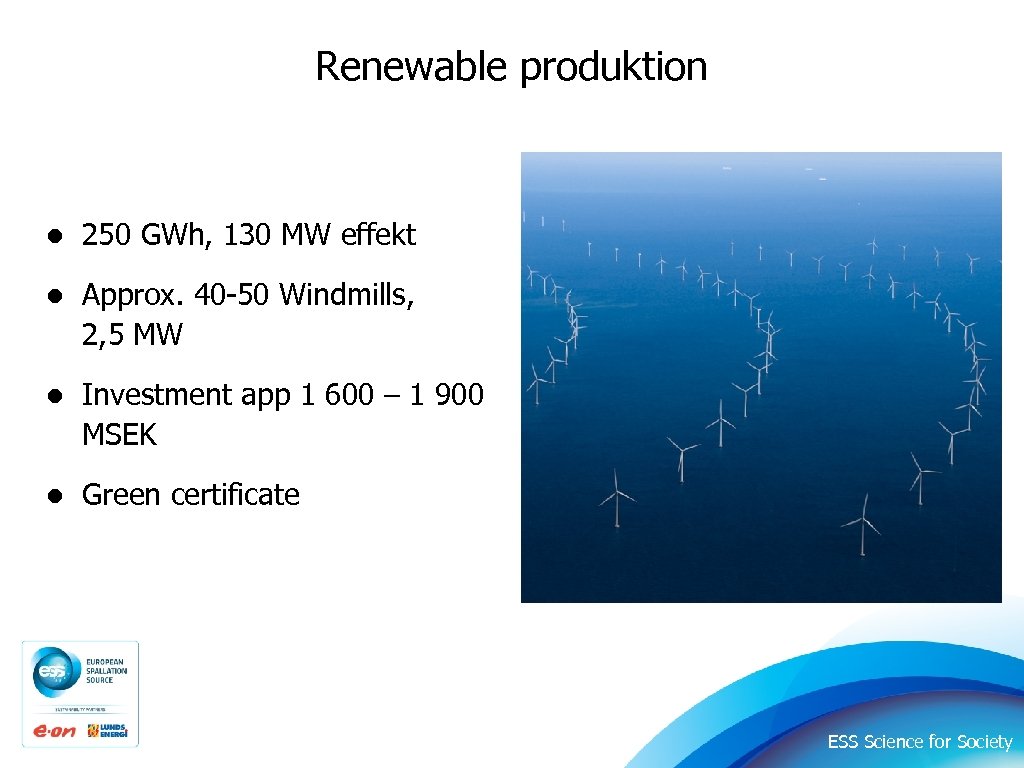
Renewable produktion ● 250 GWh, 130 MW effekt ● Approx. 40 -50 Windmills, 2, 5 MW ● Investment app 1 600 – 1 900 MSEK ● Green certificate ESS Science for Society
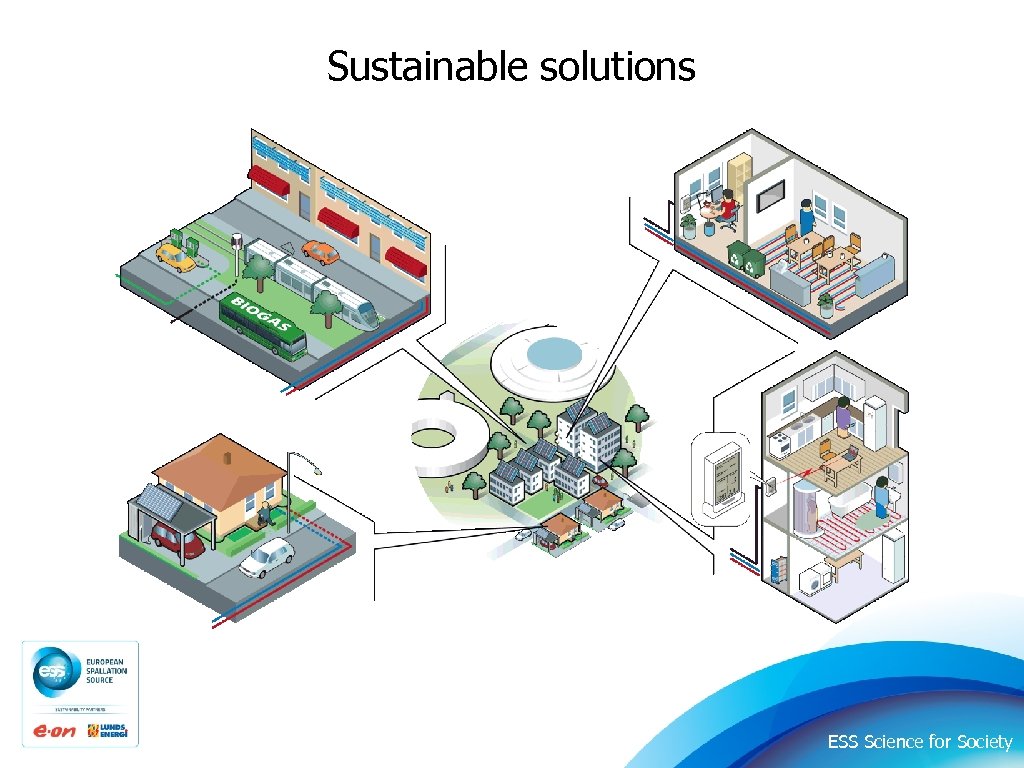
Sustainable solutions ESS Science for Society
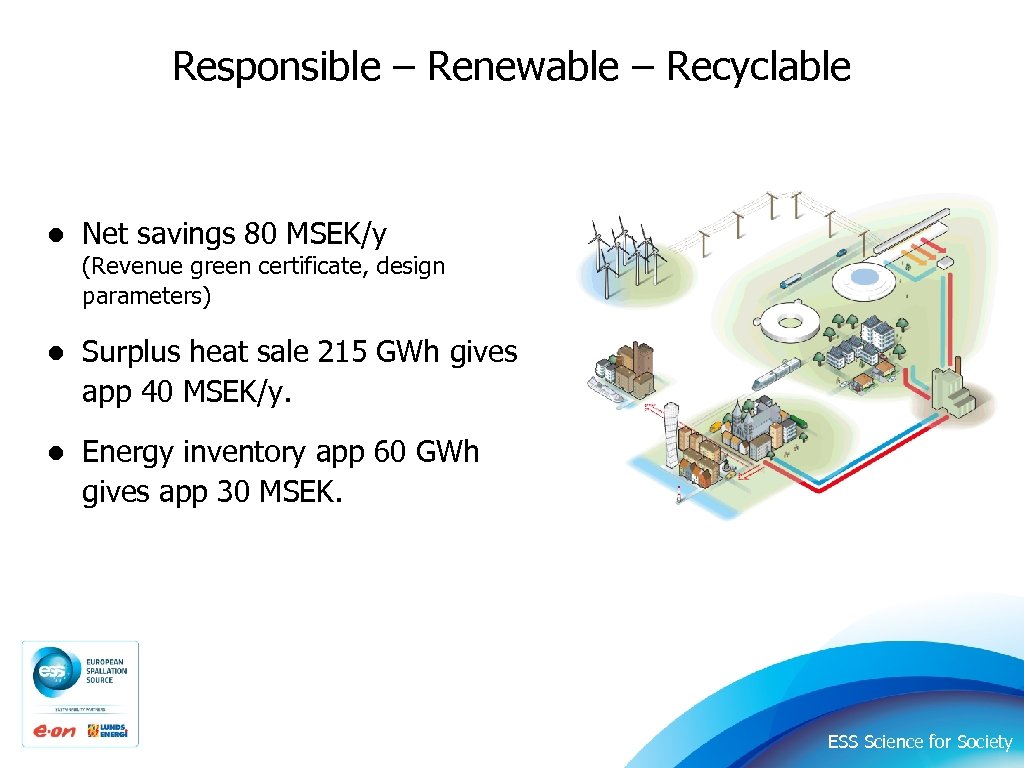
Responsible – Renewable – Recyclable ● Net savings 80 MSEK/y (Revenue green certificate, design parameters) ● Surplus heat sale 215 GWh gives app 40 MSEK/y. ● Energy inventory app 60 GWh gives app 30 MSEK. ESS Science for Society
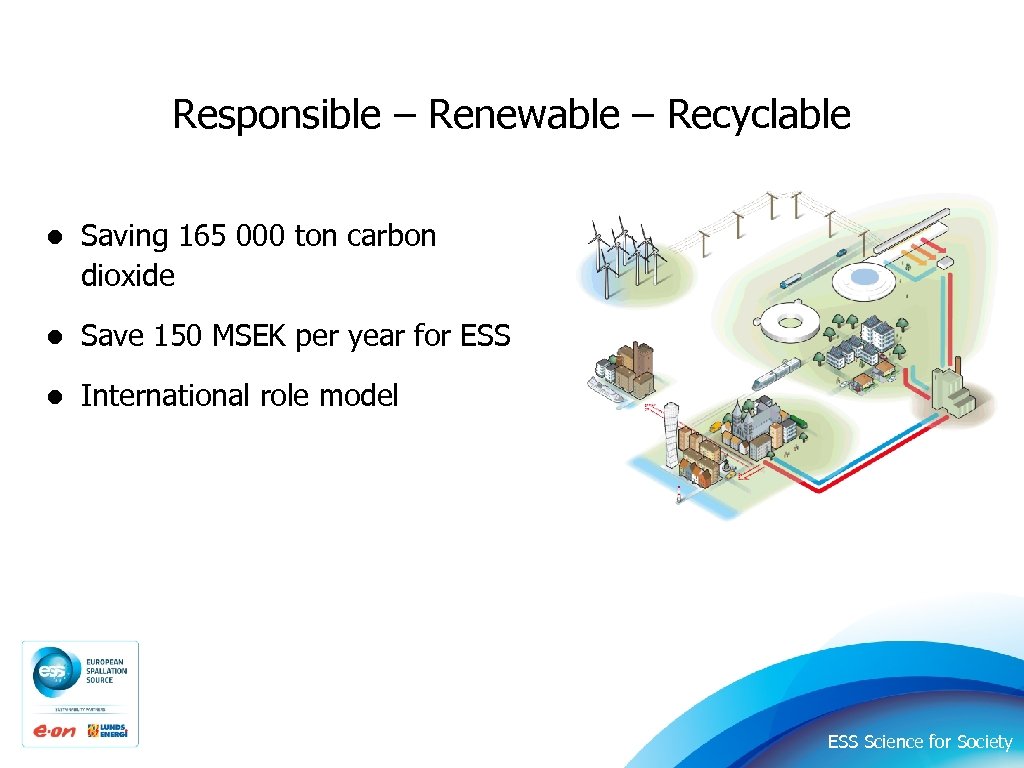
Responsible – Renewable – Recyclable ● Saving 165 000 ton carbon dioxide ● Save 150 MSEK per year for ESS ● International role model ESS Science for Society
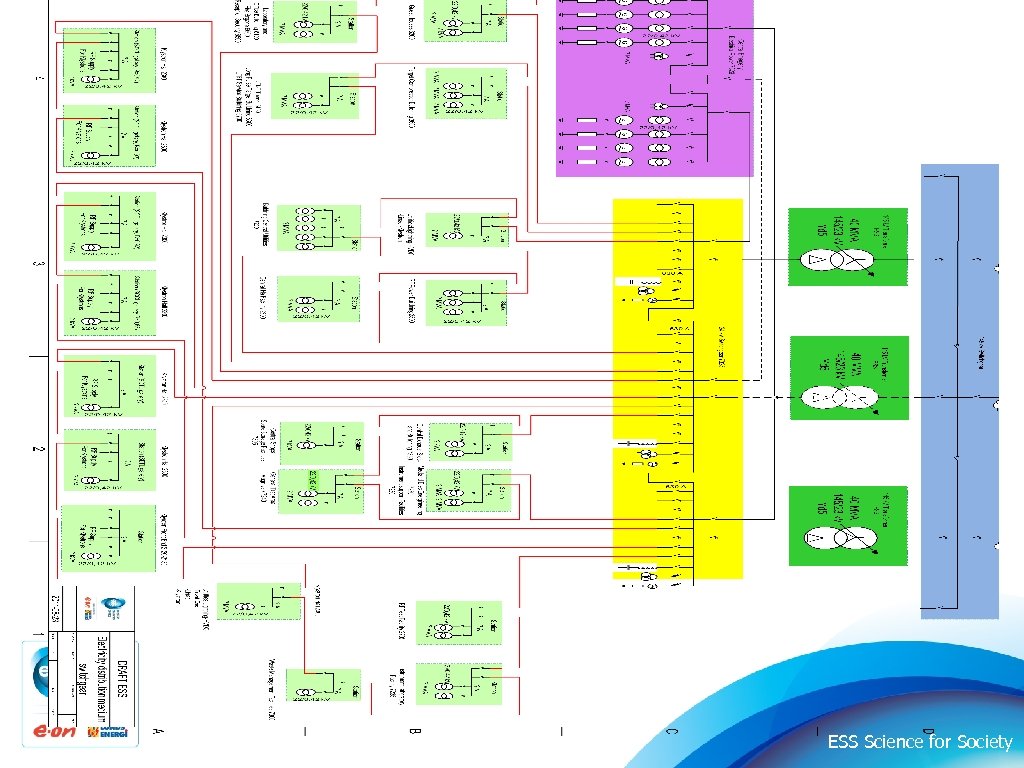
Simulations • District Heating system How do the system cope with the heat load • Klystron Cooling system Different delta P, delta T, High-pressure system, Low, Medium, High • Power station with backup systems UPS, Emergency power, Power quality, Redundancy ESS Science for Society
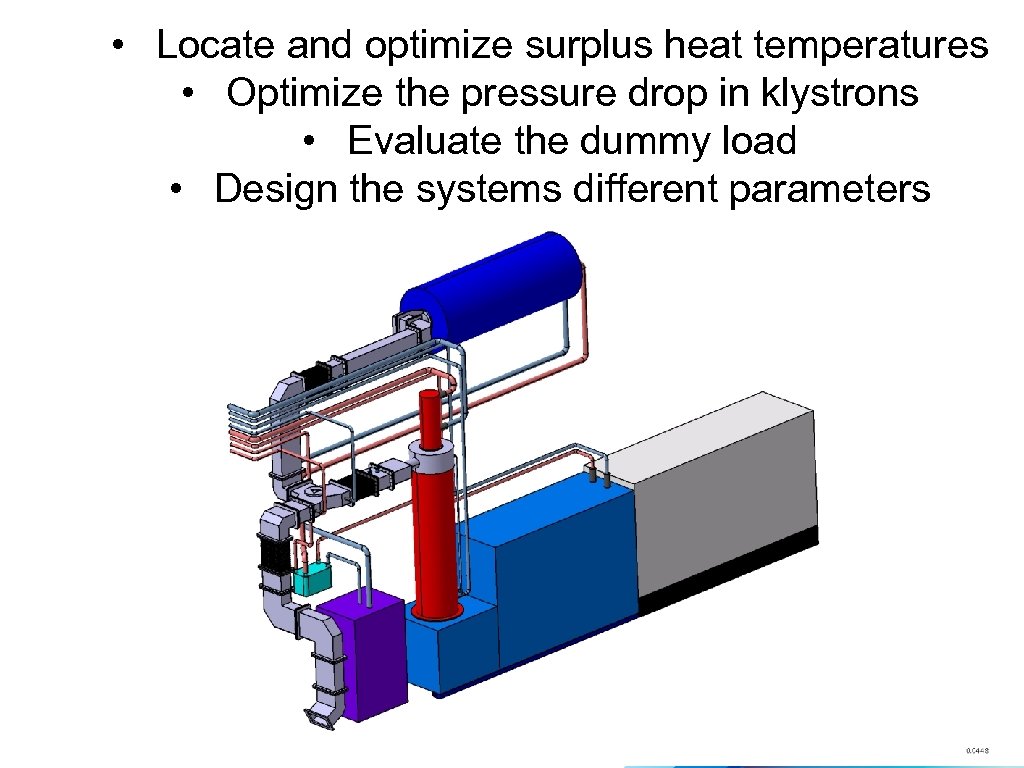
• Locate and optimize surplus heat temperatures • Optimize the pressure drop in klystrons • Evaluate the dummy load • Design the systems different parameters ESS Science for Society
ESS Science for Society
ESS Science for Society
Thanks ESS Science for Society
Скачать презентацию Responsible Renewable Recyclable Reliable Energy Division Jörgen Persson
bb8ec3fda2b1e2a93a63c7626ddbd505.ppt