


 Скачать презентацию Responses to climate change from a reinsurer s perspective
03cbd84e04eae12ff61649d1d9c683c3.ppt
- Количество слайдов: 20
 Responses to climate change from a reinsurer’s perspective Eberhard Faust, Munich Re Copenhagen, 22 nd January 2008
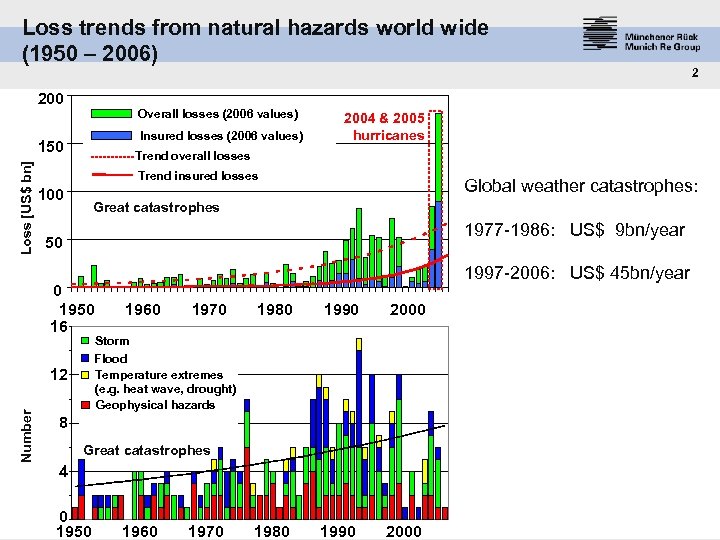 Loss trends from natural hazards world wide (1950 – 2006) 2 200 Overall losses (2006 values) Insured losses (2006 values) Loss [US$ bn] 150 Trend overall losses Trend insured losses 100 Global weather catastrophes: Great catastrophes 1977 -1986: US$ 9 bn/year 50 0 1950 16 1997 -2006: US$ 45 bn/year 1960 1970 1980 1990 2000 Storm Flood Temperature extremes (e. g. heat wave, drought) Geophysical hazards 12 Number 2004 & 2005 hurricanes 8 Great catastrophes 4 0 1950 1960 1970
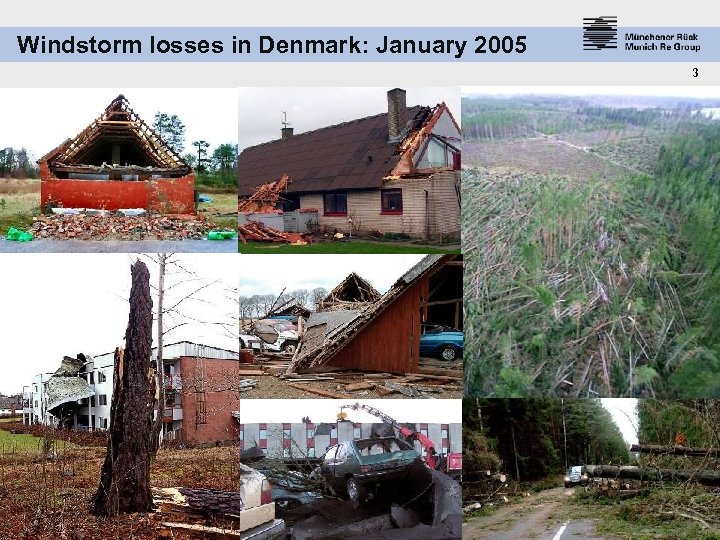 Windstorm losses in Denmark: January 2005 3 - High susceptibility of modern societies, infrastructures and industrial technologies to natural hazards.
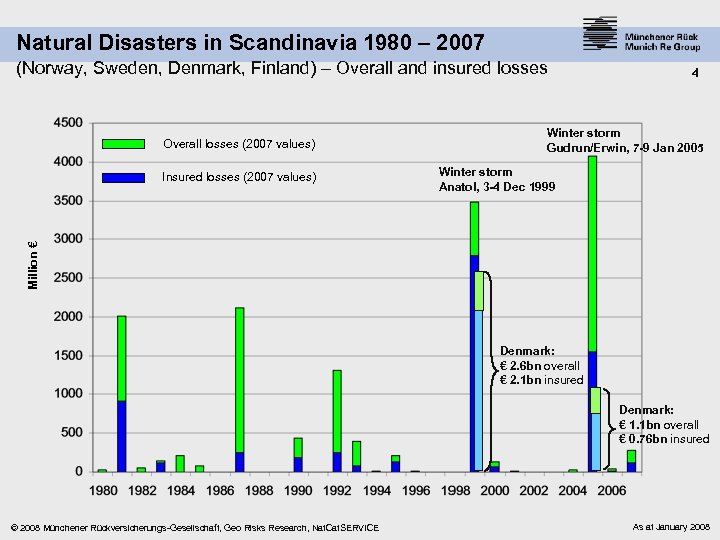 Natural Disasters in Scandinavia 1980 – 2007 (Norway, Sweden, Denmark, Finland) – Overall and insured losses Overall losses (2007 values) Winter storm Gudrun/Erwin, 7 -9 Jan 2005 Winter storm Anatol, 3 -4 Dec 1999 Million € Insured losses (2007 values) 4 Denmark: € 2. 6 bn overall € 2. 1 bn insured Denmark: € 1. 1 bn overall € 0. 76 bn insured © 2008 Münchener Rückversicherungs-Gesellschaft, Geo Risks Research, Nat. Cat. SERVICE As at January 2008
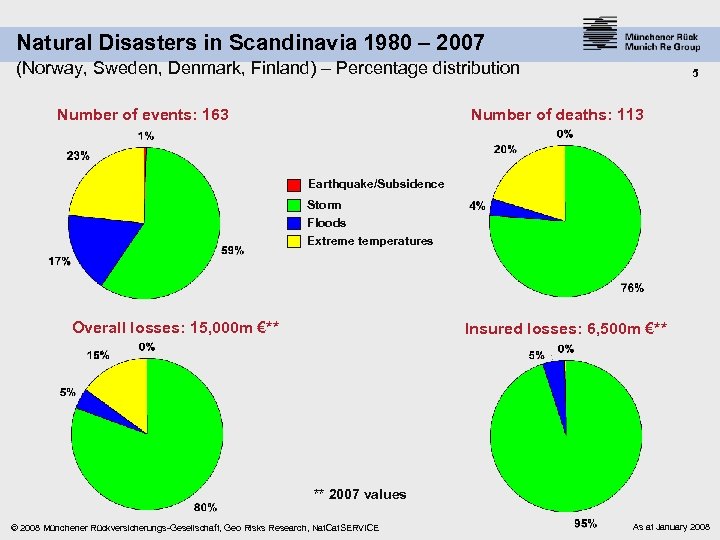 Natural Disasters in Scandinavia 1980 – 2007 (Norway, Sweden, Denmark, Finland) – Percentage distribution Number of events: 163 5 Number of deaths: 113 Earthquake/Subsidence Storm Floods Extreme temperatures Overall losses: 15, 000 m €** Insured losses: 6, 500 m €** ** 2007 values © 2008 Münchener Rückversicherungs-Gesellschaft, Geo Risks Research, Nat. Cat. SERVICE As at January 2008
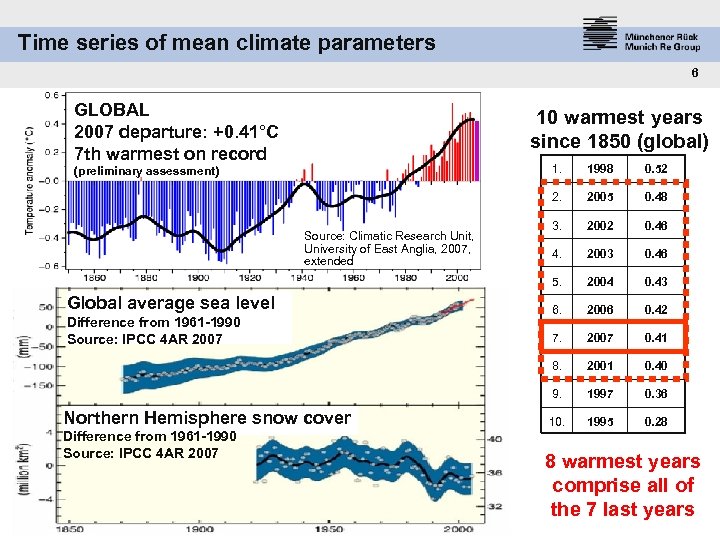 Time series of mean climate parameters 6 GLOBAL 2007 departure: +0. 41°C 7 th warmest on record 10 warmest years since 1850 (global) 1. Northern Hemisphere snow cover Difference from 1961 -1990 Source: IPCC 4 AR 2007 0. 48 3. 2002 0. 46 4. 2003 0. 46 2004 0. 43 6. 2006 0. 42 7. 2007 0. 41 2001 0. 40 9. Difference from 1961 -1990 Source: IPCC 4 AR 2007 2005 8. Global average sea level 0. 52 5. Source: Climatic Research Unit, University of East Anglia, 2007, extended 1998 2. (preliminary assessment) 1997 0. 36 10. 1995 0. 28 8 warmest years comprise all of the 7 last years
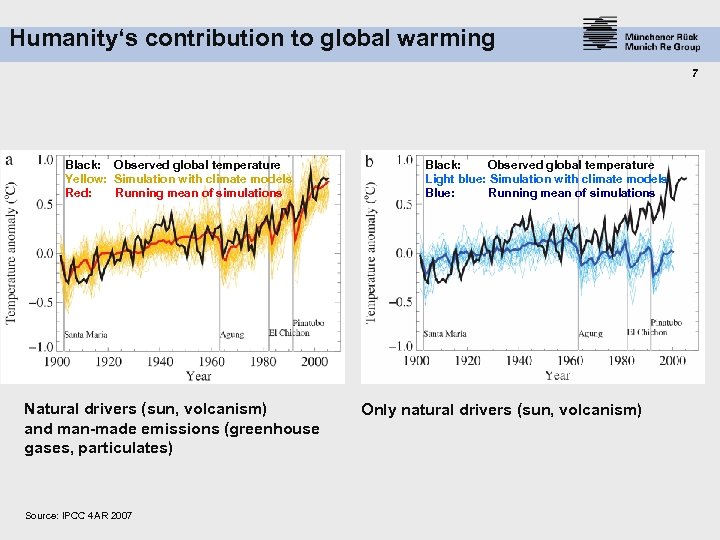 Humanity‘s contribution to global warming 7 Black: Observed global temperature Yellow: Simulation with climate models Red: Running mean of simulations Natural drivers (sun, volcanism) and man-made emissions (greenhouse gases, particulates) Source: IPCC 4 AR 2007 Black: Observed global temperature Light blue: Simulation with climate models Blue: Running mean of simulations Only natural drivers (sun, volcanism)
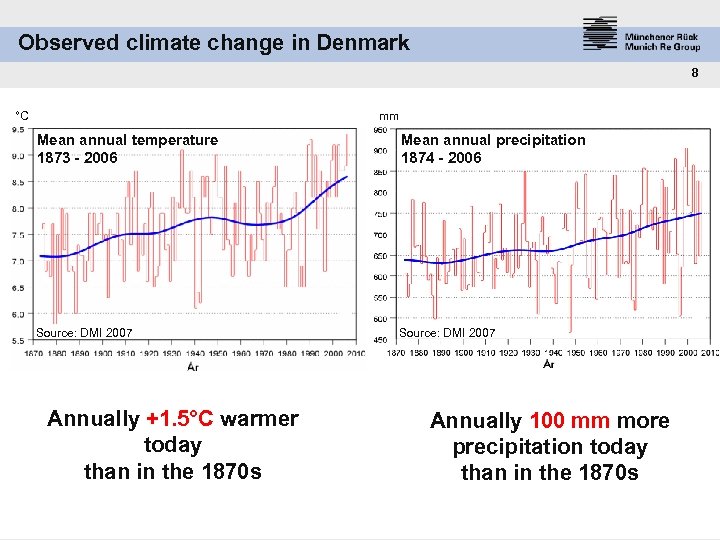 Observed climate change in Denmark 8 °C mm Mean annual temperature 1873 - 2006 Mean annual precipitation 1874 - 2006 Source: DMI 2007 Annually +1. 5°C warmer today than in the 1870 s Annually 100 mm more precipitation today than in the 1870 s
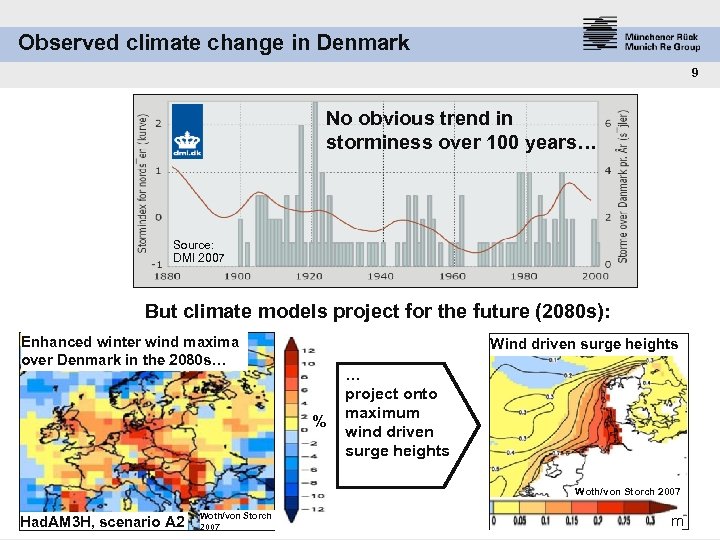 Observed climate change in Denmark 9 No obvious trend in storminess over 100 years… Source: DMI 2007 But climate models project for the future (2080 s): Enhanced winter wind maxima over Denmark in the 2080 s… Wind driven surge heights % … project onto maximum wind driven surge heights Woth/von Storch 2007 Had. AM 3 H, scenario A 2 Woth/von Storch 2007 m
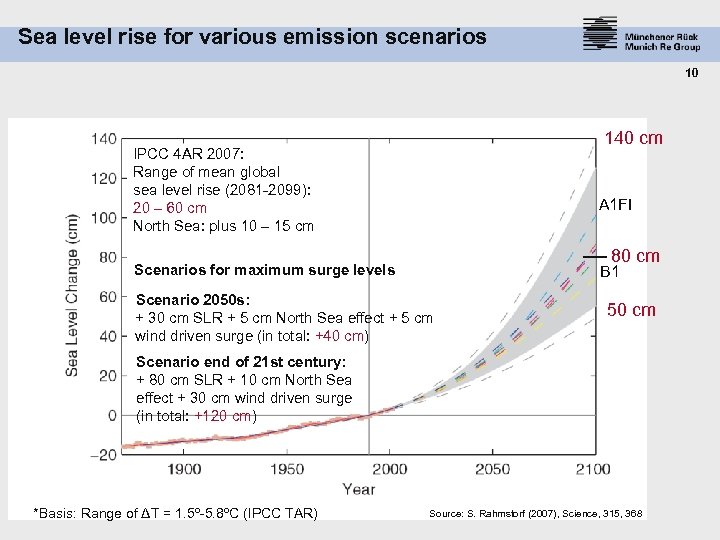 Sea level rise for various emission scenarios 10 140 cm IPCC 4 AR 2007: Range of mean global sea level rise (2081 -2099): 20 – 60 cm North Sea: plus 10 – 15 cm A 1 FI 80 cm Scenarios for maximum surge levels B 1 Scenario 2050 s: + 30 cm SLR + 5 cm North Sea effect + 5 cm wind driven surge (in total: +40 cm) 50 cm Scenario end of 21 st century: + 80 cm SLR + 10 cm North Sea effect + 30 cm wind driven surge (in total: +120 cm) *Basis: Range of ΔT = 1. 5º-5. 8ºC (IPCC TAR) Source: S. Rahmstorf (2007), Science, 315, 368
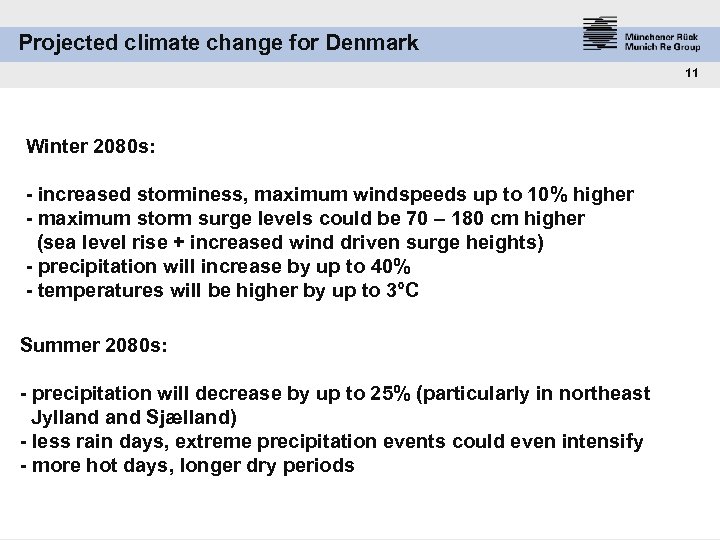 Projected climate change for Denmark 11 Winter 2080 s: - increased storminess, maximum windspeeds up to 10% higher - maximum storm surge levels could be 70 – 180 cm higher (sea level rise + increased wind driven surge heights) - precipitation will increase by up to 40% - temperatures will be higher by up to 3°C Summer 2080 s: - precipitation will decrease by up to 25% (particularly in northeast Jylland Sjælland) - less rain days, extreme precipitation events could even intensify - more hot days, longer dry periods
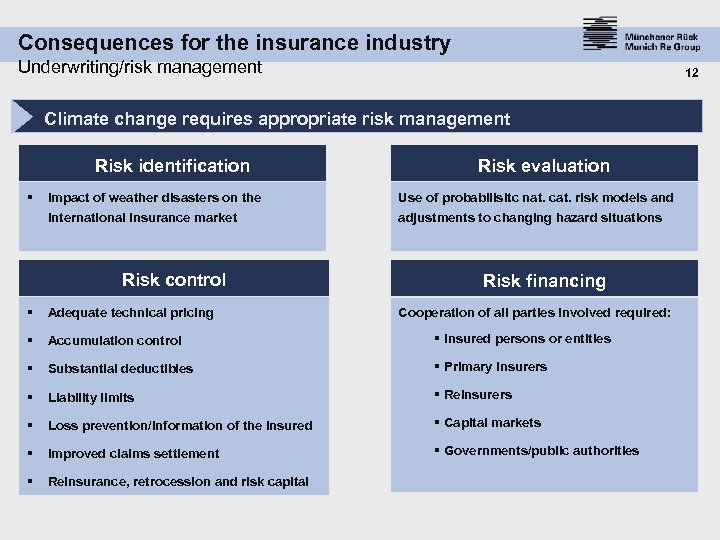 Consequences for the insurance industry Underwriting/risk management 12 Climate change requires appropriate risk management Risk identification § Risk evaluation Impact of weather disasters on the Use of probabilisitc nat. cat. risk models and international insurance market adjustments to changing hazard situations Risk control Risk financing Cooperation of all parties involved required: § Adequate technical pricing § Accumulation control § Insured persons or entities § Substantial deductibles § Primary insurers § Liability limits § Reinsurers § Loss prevention/information of the insured § Capital markets § Improved claims settlement § Governments/public authorities § Reinsurance, retrocession and risk capital
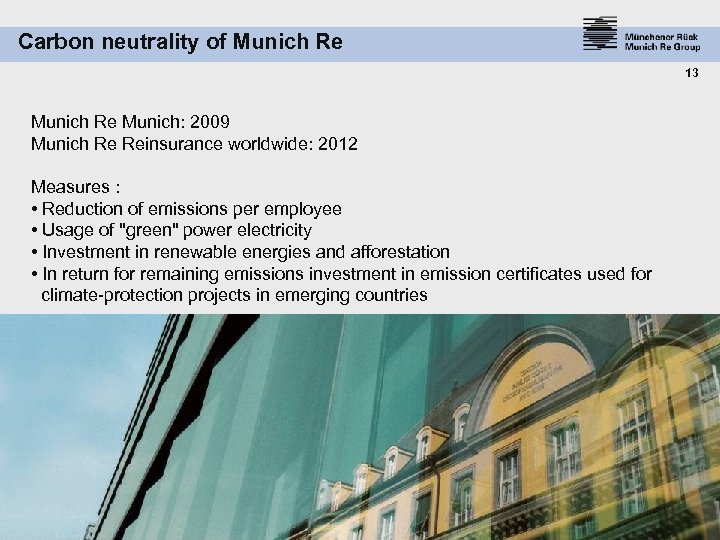 Carbon neutrality of Munich Re 13 Munich Re Munich: 2009 Munich Re Reinsurance worldwide: 2012 Measures : • Reduction of emissions per employee • Usage of "green" power electricity • Investment in renewable energies and afforestation • In return for remaining emissions investment in emission certificates used for climate-protection projects in emerging countries
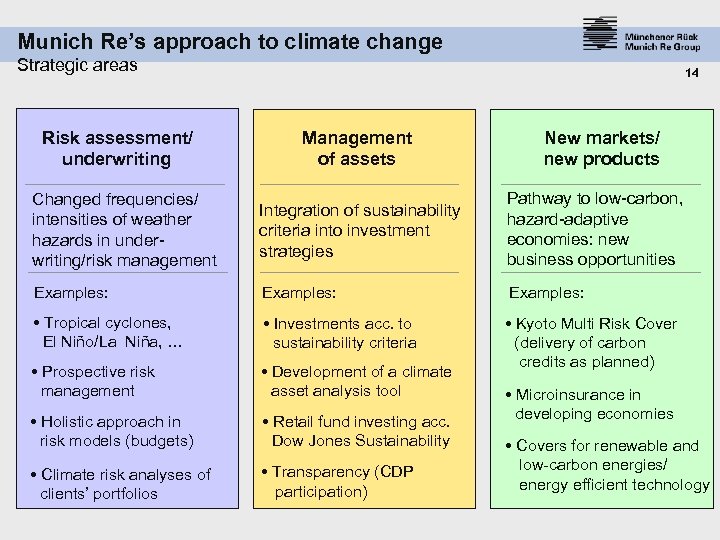 Munich Re’s approach to climate change Strategic areas Risk assessment/ underwriting 14 Management of assets New markets/ new products Changed frequencies/ intensities of weather hazards in underwriting/risk management Integration of sustainability criteria into investment strategies Pathway to low-carbon, hazard-adaptive economies: new business opportunities Examples: • Tropical cyclones, El Niño/La Niña, … • Investments acc. to sustainability criteria • Prospective risk management • Development of a climate asset analysis tool • Kyoto Multi Risk Cover (delivery of carbon credits as planned) • Holistic approach in risk models (budgets) • Retail fund investing acc. Dow Jones Sustainability • Climate risk analyses of clients’ portfolios • Transparency (CDP participation) • Microinsurance in developing economies • Covers for renewable and low-carbon energies/ energy efficient technology
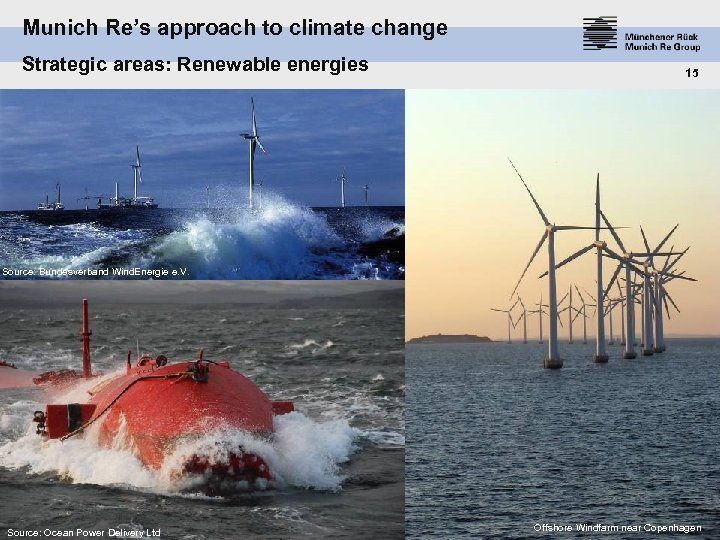 Munich Re’s approach to climate change Strategic areas: Renewable energies 15 Source: Bundesverband Wind. Energie e. V. Source: Ocean Power Delivery Ltd Offshore Windfarm near Copenhagen
 Munich Re’s approach to climate change The insurance sector’s role & required policy preconditions The role of insurance industry – in partnership with society - products enhancing society’s hazard-adaptive capability - products promoting society’s emissions reduction goals - transparency of risks via risk measurement & risk adequate premiums => sound actions, prevention, reduced loss loads for society - provision of data on weather-related losses to science, political decision makers and the public Required policy preconditions - regulatory frame (building codes, land use, prevention measures) 16
 To sum up … 17 Climate change - large global challenge, also for Denmark (sea level rise, storms, storm surge, floods …). Also provides substantial business opportunites for the insurance sector. Insurance industry’s role - products promoting society’s hazard-adaptive capability and emission reduction efforts - e. g. insurance solutions for renewable energies (off-shore wind, wave power plants, …) besides nat covers - societal transparency of risks - investment decisions due to sustainability criteria and climate sensitivity of enterprises Insurance industry aligned with societal interest - good match of the insurance industry’s business model and societal & clients’ interest (hazard-adaptive society, emissions mitigation)
 Thank you for your attention!
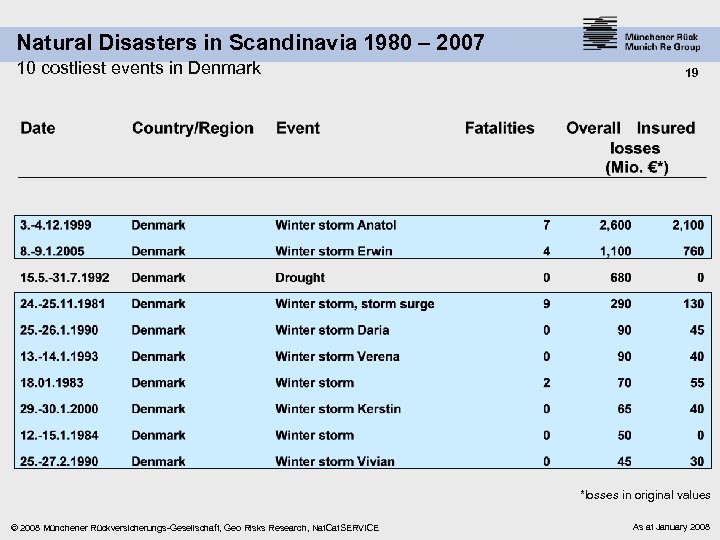 Natural Disasters in Scandinavia 1980 – 2007 10 costliest events in Denmark 19 *losses in original values © 2008 Münchener Rückversicherungs-Gesellschaft, Geo Risks Research, Nat. Cat. SERVICE As at January 2008
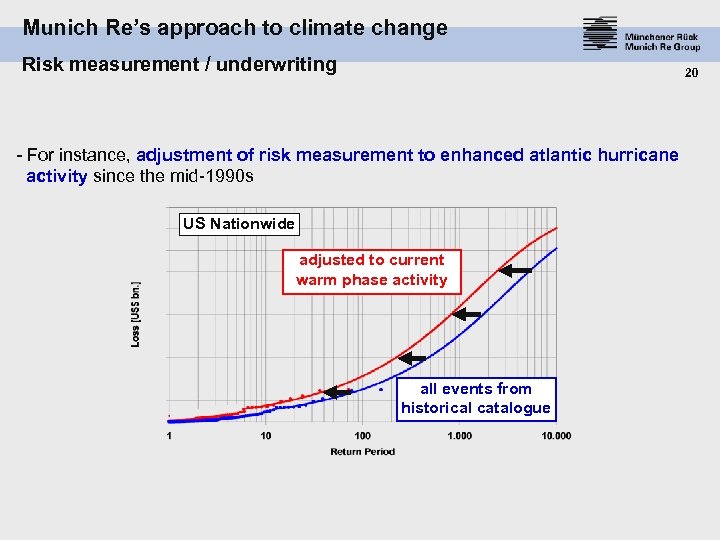 Munich Re’s approach to climate change Risk measurement / underwriting 20 - For instance, adjustment of risk measurement to enhanced atlantic hurricane activity since the mid-1990 s US Nationwide adjusted to current warm phase activity all events from historical catalogue