


 Скачать презентацию Response to Intervention What is it Rt
4f68ad594dde31254196ab329131fe83.ppt
- Количество слайдов: 28
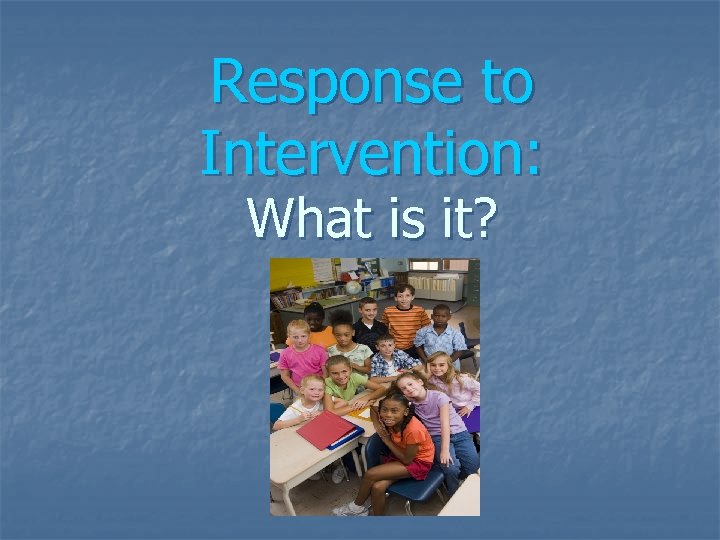 Response to Intervention: What is it?
 Rt. I is… A process for achieving higher levels of academic and behavioral success for all students through: n High Quality Instructional Practice n Continuous Review of Student Progress (multiple measures) n Collaboration
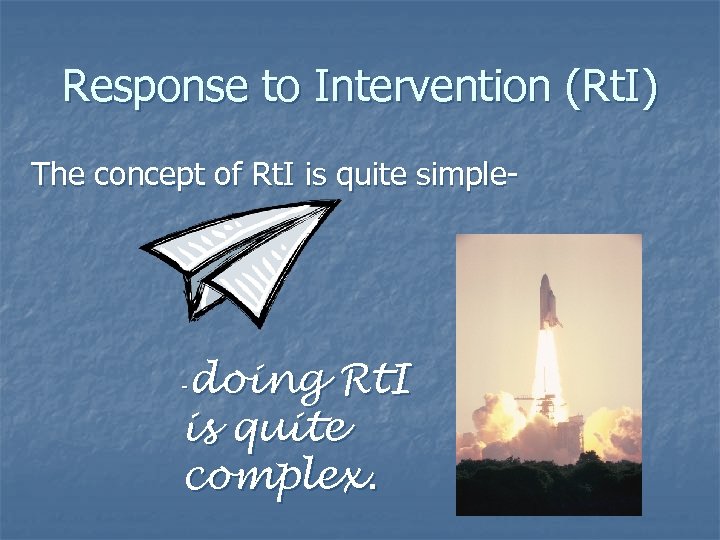 Response to Intervention (Rt. I) The concept of Rt. I is quite simple- doing Rt. I is quite complex. -
 Where did Rt. I come from? • • IDEA 2004 No Child Left Behind (NCLB) • National Center on Response to Intervention www. rti 4 success. org • Intervention Central- interventioncentral. org • Rt. I Action Network http: //www. rtinetwork. org/
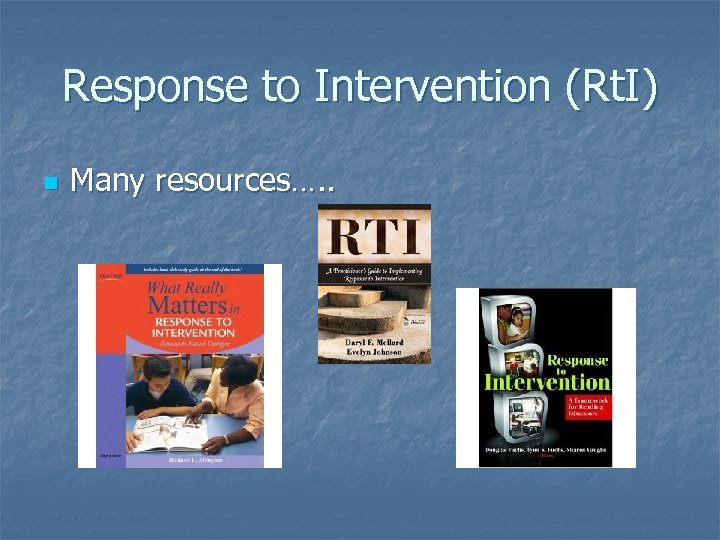 Response to Intervention (Rt. I) n Many resources…. . +
 purpose of rt. I • • Shifts from the deficit model to prevention model Screening for early identification and prevention Provide early intervening services An option for disability determination
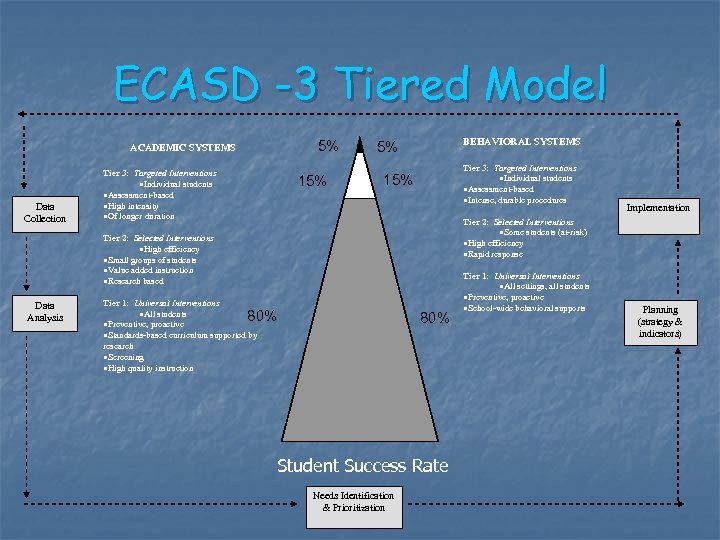 ECASD -3 Tiered Model 5% ACADEMIC SYSTEMS Data Collection Tier 3: Targeted Interventions ·Individual students ·Assessment-based ·High intensity ·Of longer duration 15% BEHAVIORAL SYSTEMS 5% Tier 3: Targeted Interventions ·Individual students ·Assessment-based ·Intense, durable procedures 15% Tier 2: Selected Interventions ·Some students (at-risk) ·High efficiency ·Rapid response Tier 2: Selected Interventions ·High efficiency ·Small groups of students ·Value added instruction ·Research based Data Analysis Implementation Tier 1: Universal Interventions ·All students ·Preventive, proactive ·Standards-based curriculum supported by research ·Screening ·High quality instruction 80% Student Success Rate Needs Identification & Prioritization Tier 1: Universal Interventions ·All settings, all students ·Preventive, proactive ·School-wide behavioral supports Planning (strategy & indicators)
 Tier 1 – Universal Options (80% of students successful at this tier) • • • Reducing barriers to learning for all students Standards-based core curriculum supported by research implemented with fidelity Differentiated instruction School wide behavioral supports Connections to community supports Assessment based & data driven (Universal screening, progress monitoring)
 Tier 2 – Selected Options (15% of students require interventions at this tier) • • • Provided to small groups of students in addition to the core curriculum High efficiency Rapid response (Ex: 4 -8 weeks, 3 -5 x per week) Value added instruction using research based interventions Connection to community supports Assessment based, data driven (progress monitoring, diagnostic assessments)
 Tier 3 – Targeted Options (5% of students require interventions at this tier) • • • Supplemental and/or Supplanted (replacement) instruction for individual students Individual plans to address barriers to learning Assessment based, data driven (Progress monitoring) • • High intensity Longer duration
 Building the Capacity How do we make it happen? Professional Learning Communities Ensure program coherence ü Use data systematically to inform and improve instruction ü Engage in continued professional development ü Build collaborative relationships that promote and support student achievement ü
 How does Rt. I connect to what we are already doing? • Focus on student learning ○ CIM building goals ○ Looking at data • High Quality curriculum ○ Standards based ○ Supported by research • • • Best practice instructional strategies Professional development Collaborative practice
 how is rti different from past practice? what could look different? • • • Universal screening and progress monitoring over time Focus on early interventions Data driven decisions directly related to individual student achievement Community, district and building resources identified and made accessible through resource mapping Collaborative decision making based on student data
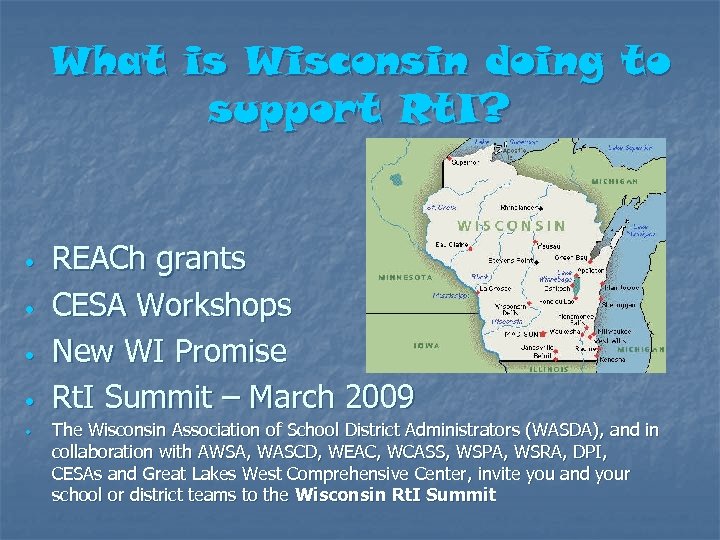 What is Wisconsin doing to support Rt. I? • • • REACh grants CESA Workshops New WI Promise Rt. I Summit – March 2009 The Wisconsin Association of School District Administrators (WASDA), and in collaboration with AWSA, WASCD, WEAC, WCASS, WSPA, WSRA, DPI, CESAs and Great Lakes West Comprehensive Center, invite you and your school or district teams to the Wisconsin Rt. I Summit
 Rt. I is a PK-12 Initiative for: n n n High Quality Instructional Practice Continuous Review of Student Progress Collaboration That has applications for: General Education n Special Education n English Language Learners n Gifted & Talented n Title 1 n
 Response to Intervention (Rt. I) Principles for the successful implementation of Rt. I in Wisconsin: n n n n Rti is for ALL children & ALL educators. Rt. I must support & provide value to effective practices. Success for Rt. I lies within the classroom through collaboration Rt. I applies to both academics & behavior. Rt. I supports & provides value to the use of multiple assessments to inform instructional practices. Rt. I is something you do and not necessarily something you buy. Rt. I emerges from and supports research and evidence based practice.
 How will the ECASD Division of Teaching & Learning support implementation of Rt. I?
 Focus on Student Learning Essential Questions Do we believe that ALL students can achieve at high levels? What do we want them to learn? How will we know when they have learned it? What will we do when they don’t? What will we do when they already know it?
 Embrace Rt. I as a means to increase achievement for all students. ü Systemic and systematic ü Documented
 Address barriers to learning. ü Social/emotional factors ü Curriculum and instructional overload ü DRIP (data rich, information poor) ü Infrastructure (time, reallocation of resources, etc) ü Instructional delivery
 Clarify and articulate grade level/course benchmarks.
 Develop a coordinated assessment plan. ü Analyze current assessments ü Identify/select assessments ▪ Universal screening ▪ Progress Monitoring ▪ Diagnostic
 Identify and map resources at each tier. üCommunity üDistrict üBuilding
 Build capacity. ü Focused staff development ▪ Administrators ▪ Educators ▪ Support staff • Community • Parents ü Support and collaborate with building leadership teams
 Provide access and communication. ü Skyward data management system ▪ Teachers ▪ Administrators ▪ Parents
 What assumptions can be made? • • All of us share a common mission focused on student learning. Each school is unique in their programs and needs. Implementing Rt. I is a journey. It will develop over time. T & L is working to provide a framework for Rt. I. Each school will add to the framework based on student needs.
 What do you need to do? • • Continue doing what you do best…providing quality instruction using district curriculum, assessments and resources. Keep an open mind. Use the language. Begin conversation in your school and community by asking the questions:
 Do we believe that ALL students can achieve at high levels? ü ü What do we want them to learn? ü ü ü How will we know when they have learned it? What will we do when they don’t? What will we do when they already know it?