


 Скачать презентацию Respiratory System Chapter 16 A FUNCTIONS -gas
6df79ba0c82c9501cbb4946b753d6e69.ppt
- Количество слайдов: 45
 Respiratory System Chapter 16
 A) FUNCTIONS -gas exchange (O 2 in & CO 2 out) -acid: base balance (maintaining p. H balance in body) There are two parts to respiration: 1) External = exchange of gases b/w atmosphere & blood 2) Internal = exchange of gases between blood & tissues
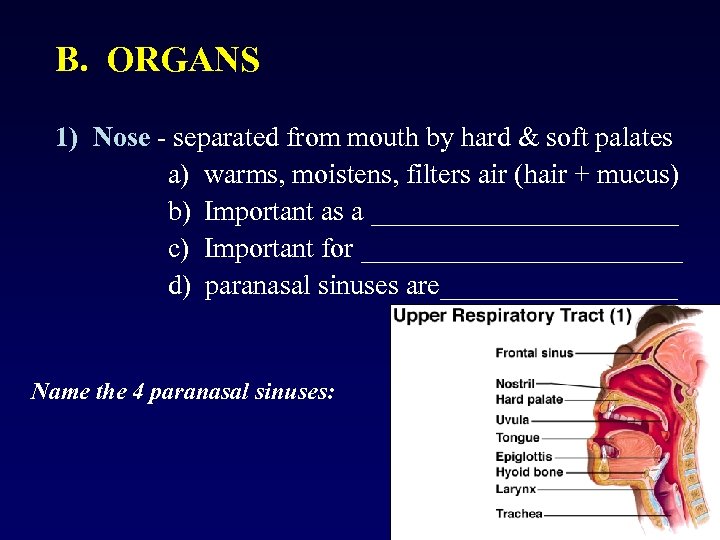 B. ORGANS 1) Nose - separated from mouth by hard & soft palates a) warms, moistens, filters air (hair + mucus) b) Important as a ___________ c) Important for ____________ d) paranasal sinuses are_________ Name the 4 paranasal sinuses:
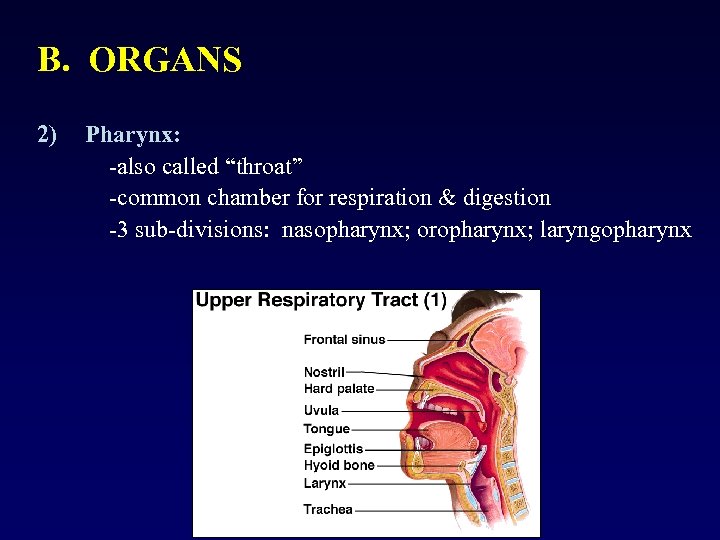 B. ORGANS 2) Pharynx: -also called “throat” -common chamber for respiration & digestion -3 sub-divisions: nasopharynx; oropharynx; laryngopharynx
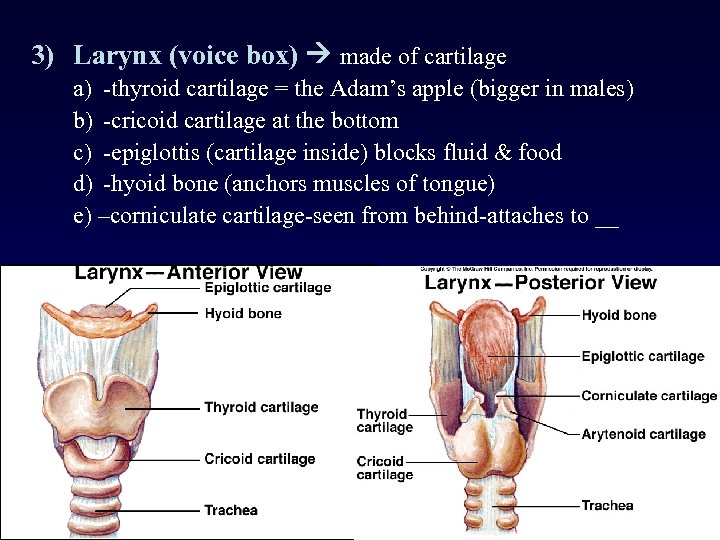 3) Larynx (voice box) made of cartilage a) -thyroid cartilage = the Adam’s apple (bigger in males) b) -cricoid cartilage at the bottom c) -epiglottis (cartilage inside) blocks fluid & food d) -hyoid bone (anchors muscles of tongue) e) –corniculate cartilage-seen from behind-attaches to __
 Swallowing deglutination Thyroid cartilage moves up. Epiglottis covers opening to trachea.
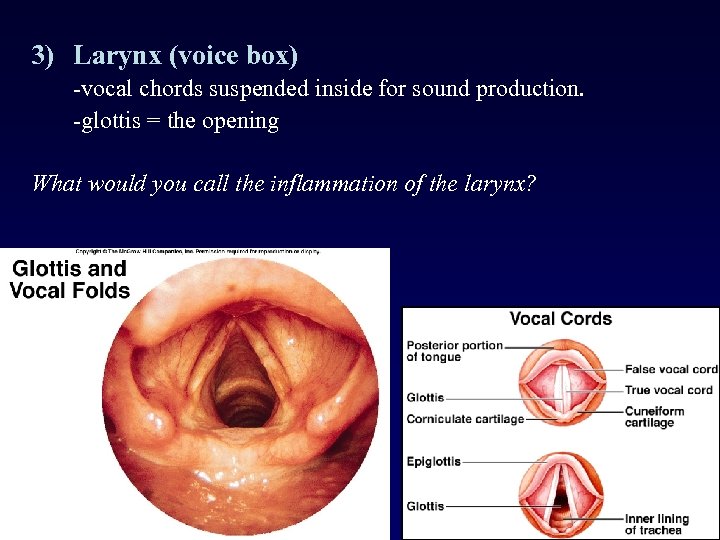 3) Larynx (voice box) -vocal chords suspended inside for sound production. -glottis = the opening What would you call the inflammation of the larynx?
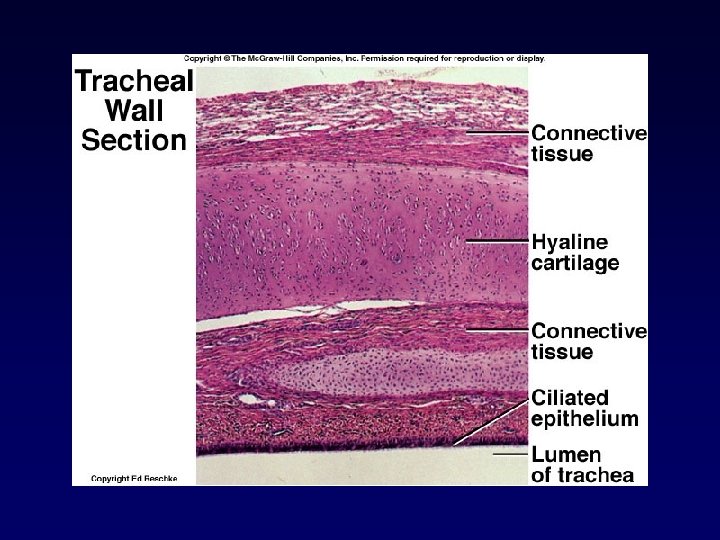
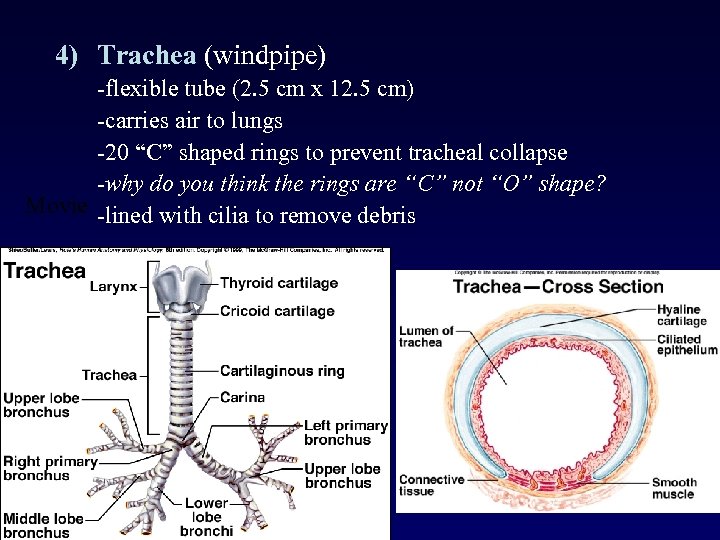 4) Trachea (windpipe) -flexible tube (2. 5 cm x 12. 5 cm) -carries air to lungs -20 “C” shaped rings to prevent tracheal collapse -why do you think the rings are “C” not “O” shape? Movie -lined with cilia to remove debris
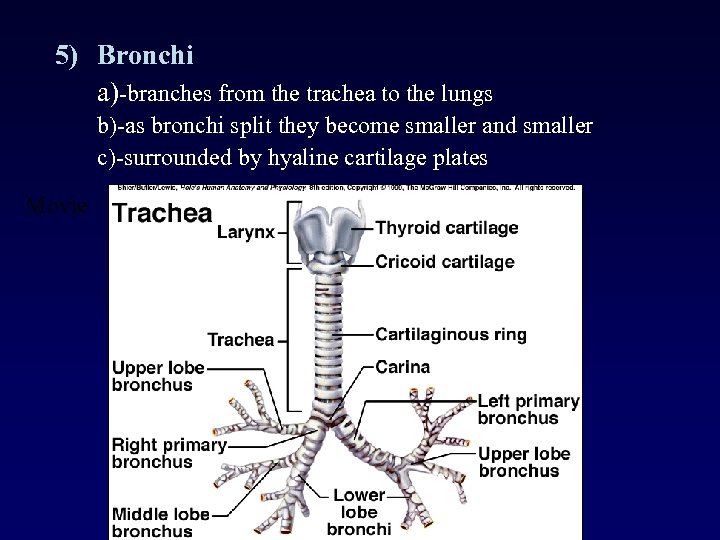 5) Bronchi a)-branches from the trachea to the lungs b)-as bronchi split they become smaller and smaller c)-surrounded by hyaline cartilage plates Movie
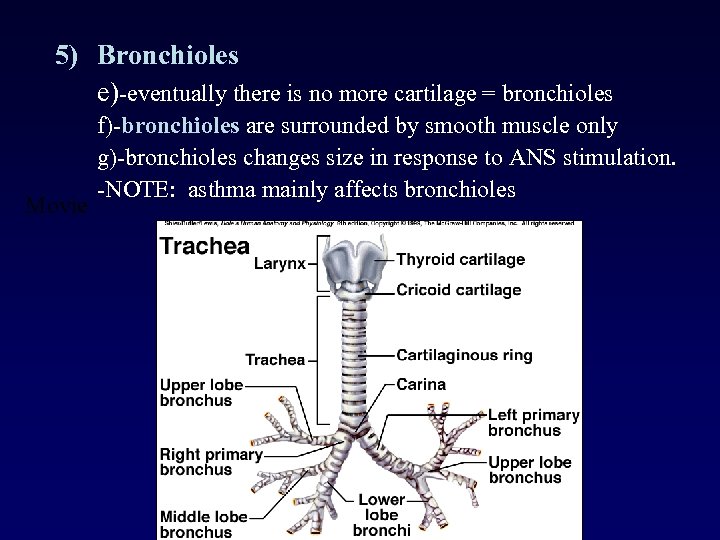 5) Bronchioles e)-eventually there is no more cartilage = bronchioles Movie f)-bronchioles are surrounded by smooth muscle only g)-bronchioles changes size in response to ANS stimulation. -NOTE: asthma mainly affects bronchioles
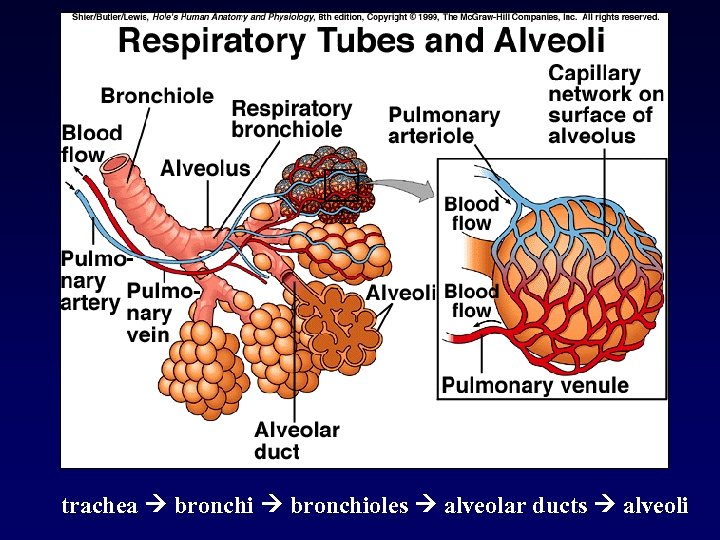 trachea bronchioles alveolar ducts alveoli
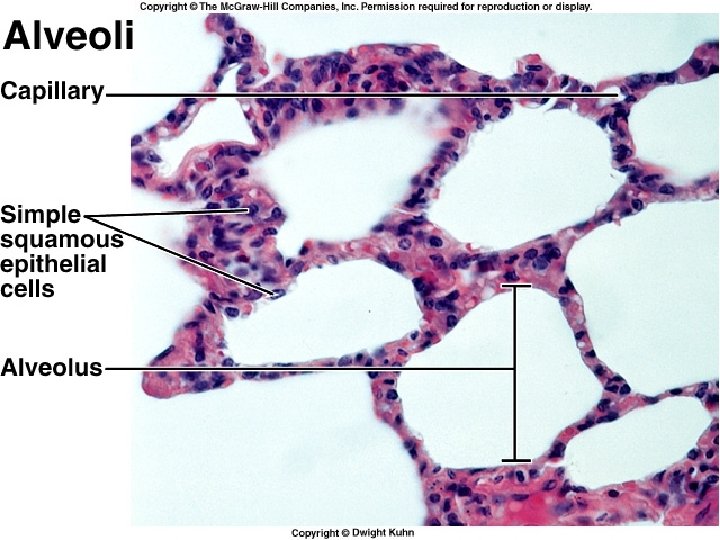
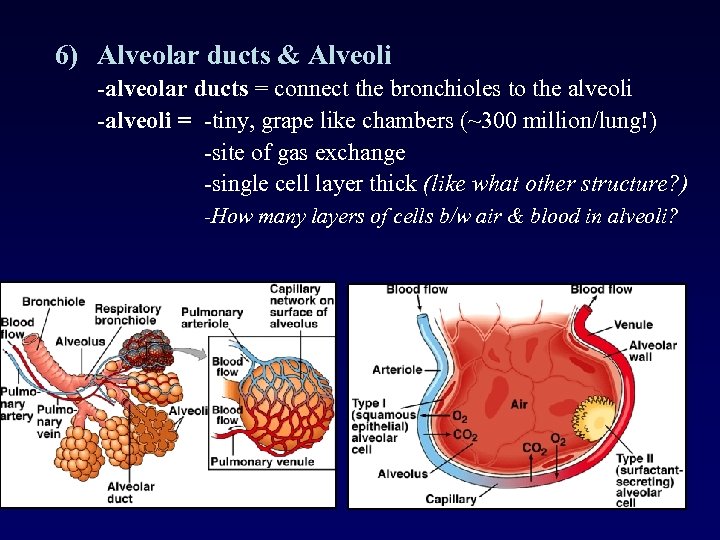 6) Alveolar ducts & Alveoli -alveolar ducts = connect the bronchioles to the alveoli -alveoli = -tiny, grape like chambers (~300 million/lung!) -site of gas exchange -single cell layer thick (like what other structure? ) -How many layers of cells b/w air & blood in alveoli?
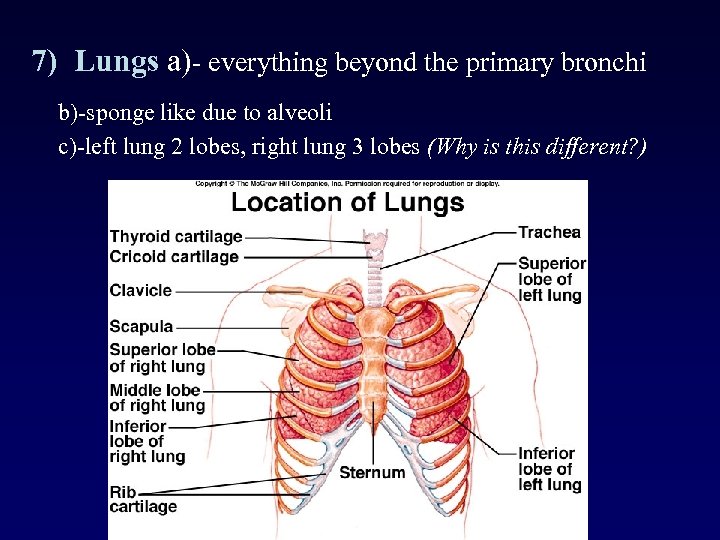 7) Lungs a)- everything beyond the primary bronchi b)-sponge like due to alveoli c)-left lung 2 lobes, right lung 3 lobes (Why is this different? )
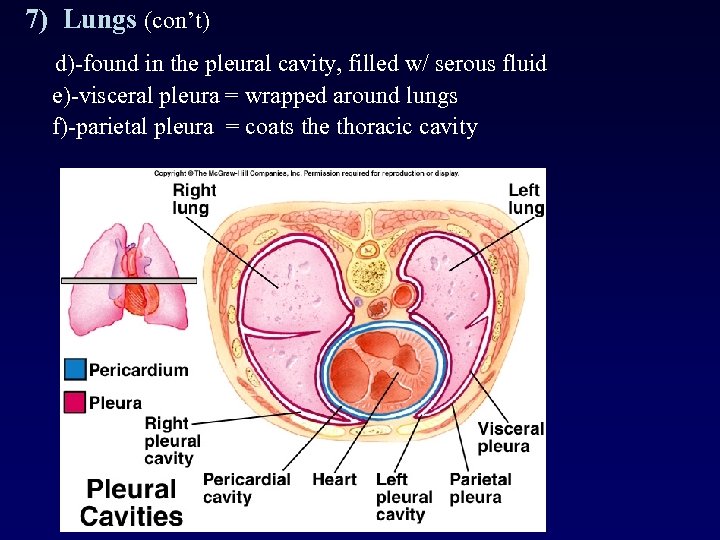 7) Lungs (con’t) d)-found in the pleural cavity, filled w/ serous fluid e)-visceral pleura = wrapped around lungs f)-parietal pleura = coats the thoracic cavity
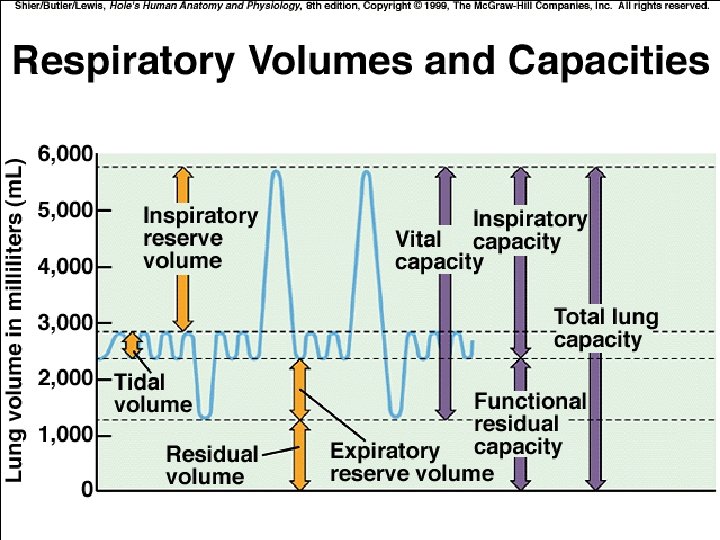
 C. PHYSIOLOGY OF RESPIRATION 1) Respiratory Volumes & Capacities -a respirometer can measure air flowing in & out of the lungs -pulmonary “capacities” = sum of 2+ respiratory “volumes” Tidal Volume(TV) = air that enters/leaves with every normal breath Vital Capacity (VC) = take the deepest inspiration & blow it “all” out Residual Volume (RV) = air that stays in the lungs Total Lung Capacity (TLC) = VC + RV
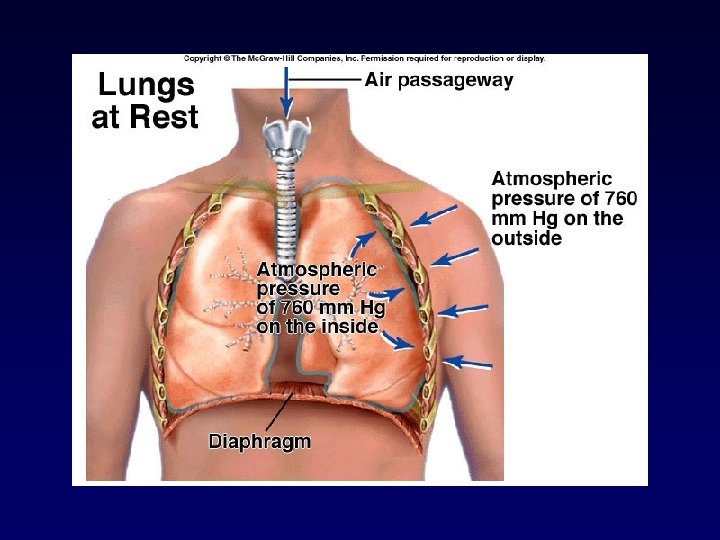
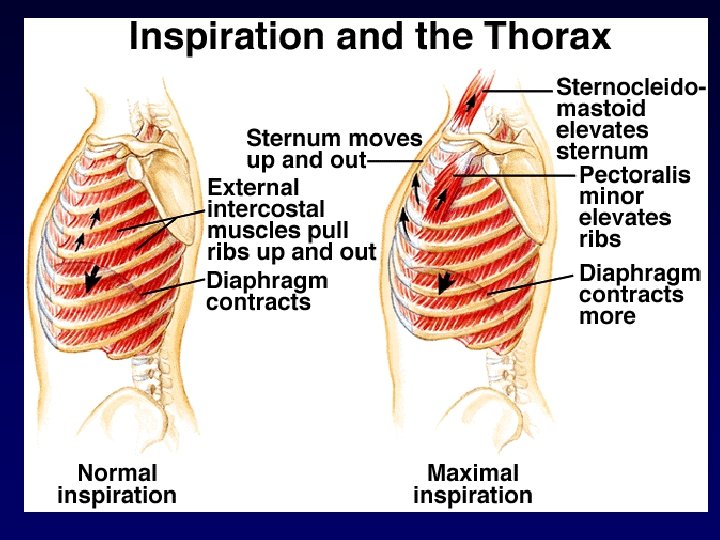
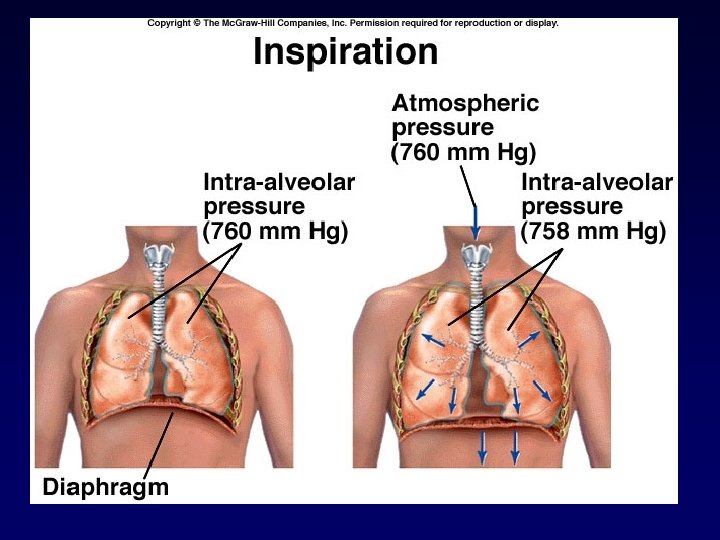
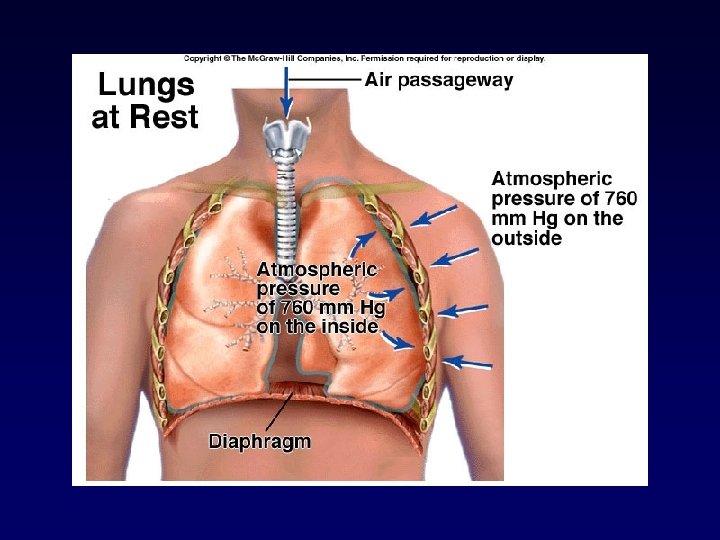
 2) Inspiration “how we get air into our lungs” -air is forced in by atmospheric pressure (760 mm. Hg at sea level) -air moves IN when pressure inside alveoli < atm. pressure How is pressure inside the alveoli reduced? *by increasing the size of the thoracic cavity How is the size of the thoracic cavity expanded? *diaphragm contracts and pulls down *external intercostal muscles contract pulling ribs out *pectoralis minor & sternocleidomastoid contract Thoracic cavity expands pressure dec. w/in alveoli (758 mm. Hg) air IN
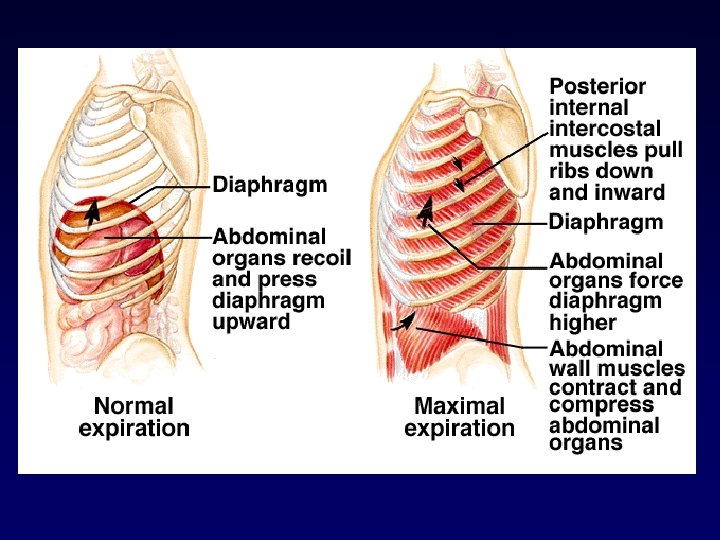
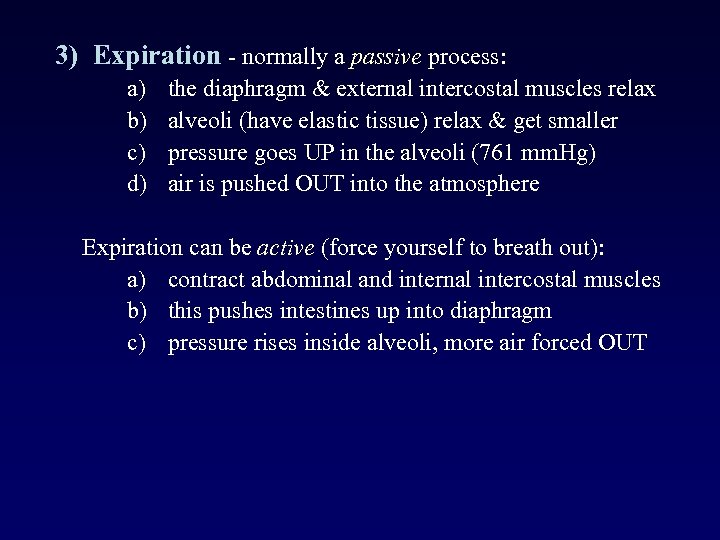 3) Expiration - normally a passive process: a) b) c) d) the diaphragm & external intercostal muscles relax alveoli (have elastic tissue) relax & get smaller pressure goes UP in the alveoli (761 mm. Hg) air is pushed OUT into the atmosphere Expiration can be active (force yourself to breath out): a) contract abdominal and internal intercostal muscles b) this pushes intestines up into diaphragm c) pressure rises inside alveoli, more air forced OUT
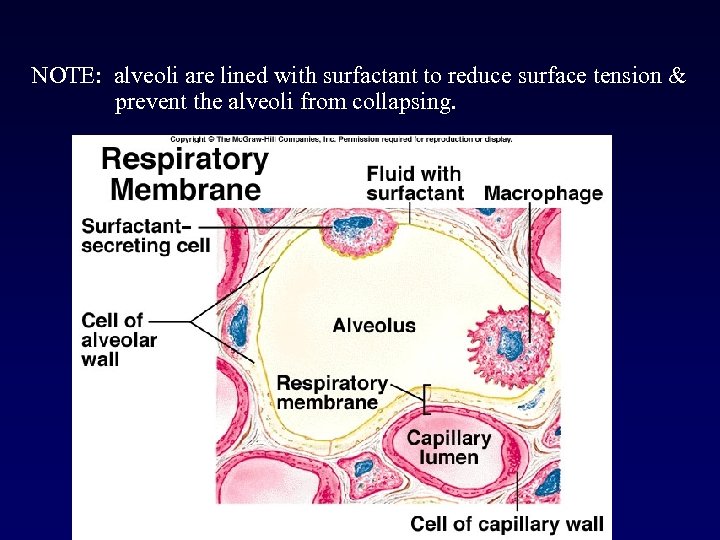 NOTE: alveoli are lined with surfactant to reduce surface tension & prevent the alveoli from collapsing.
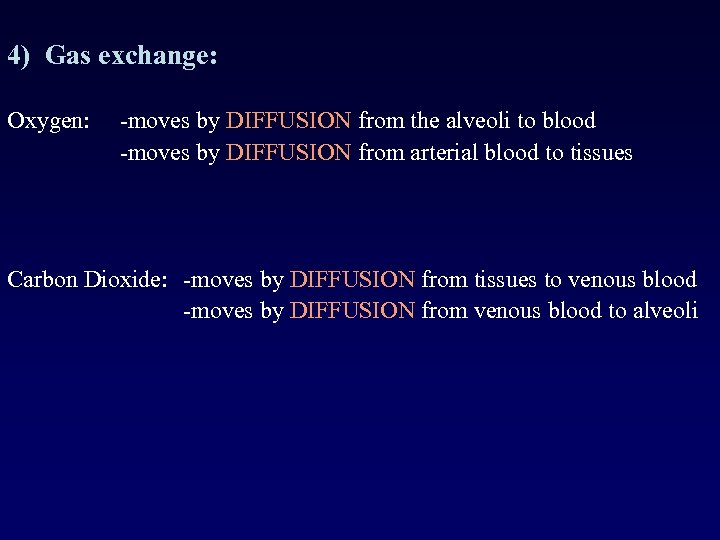 4) Gas exchange: Oxygen: -moves by DIFFUSION from the alveoli to blood -moves by DIFFUSION from arterial blood to tissues Carbon Dioxide: -moves by DIFFUSION from tissues to venous blood -moves by DIFFUSION from venous blood to alveoli
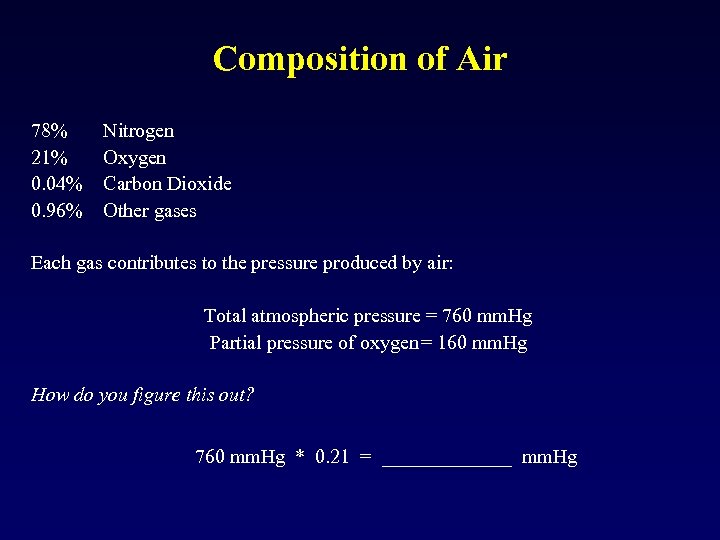 Composition of Air 78% Nitrogen 21% Oxygen 0. 04% Carbon Dioxide 0. 96% Other gases Each gas contributes to the pressure produced by air: Total atmospheric pressure = 760 mm. Hg Partial pressure of oxygen= 160 mm. Hg How do you figure this out? 760 mm. Hg * 0. 21 = _______ mm. Hg
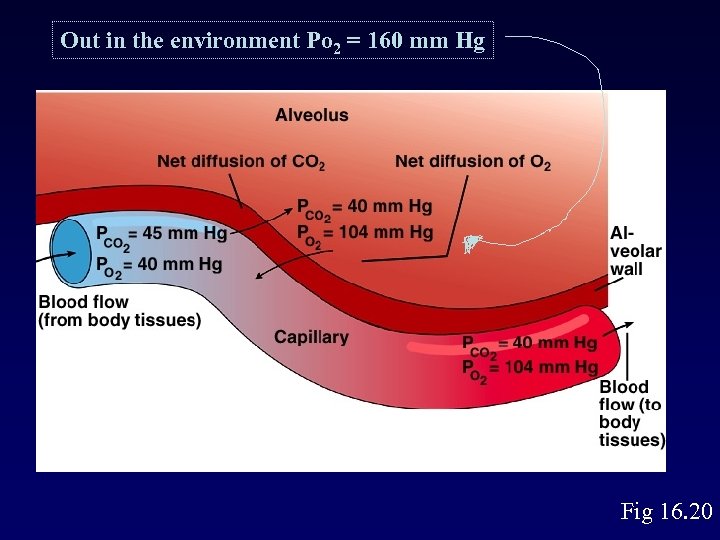 Out in the environment Po 2 = 160 mm Hg Fig 16. 20
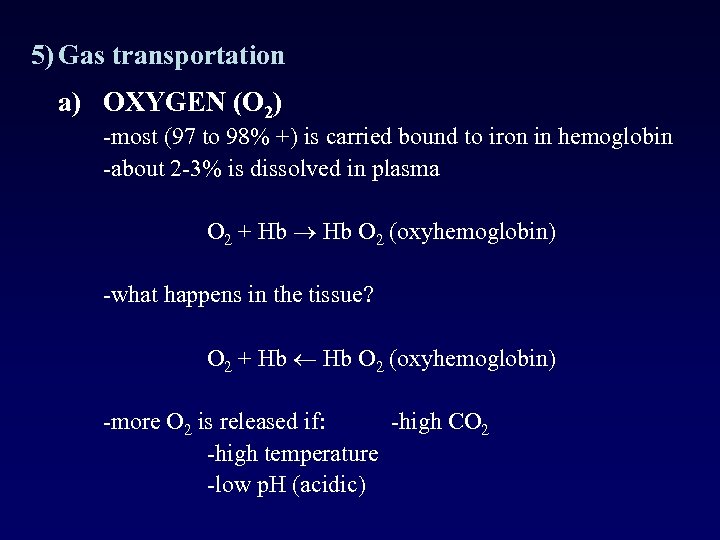 5) Gas transportation a) OXYGEN (O 2) -most (97 to 98% +) is carried bound to iron in hemoglobin -about 2 -3% is dissolved in plasma O 2 + Hb O 2 (oxyhemoglobin) -what happens in the tissue? O 2 + Hb O 2 (oxyhemoglobin) -more O 2 is released if: -high CO 2 -high temperature -low p. H (acidic)
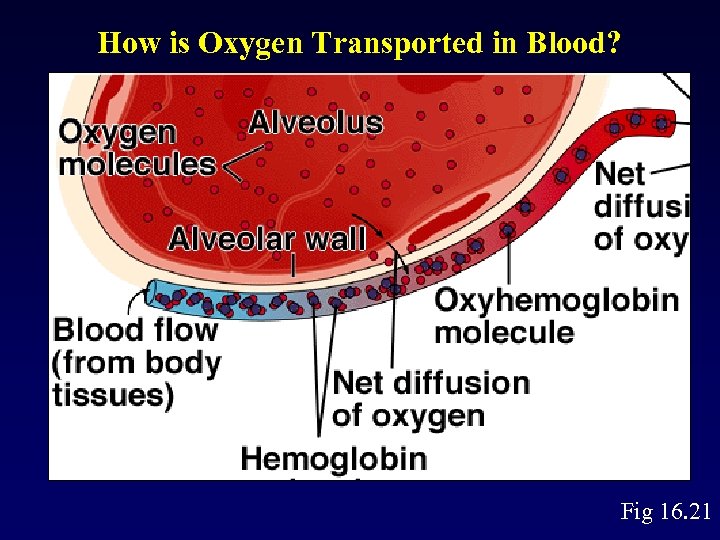 How is Oxygen Transported in Blood? Fig 16. 21
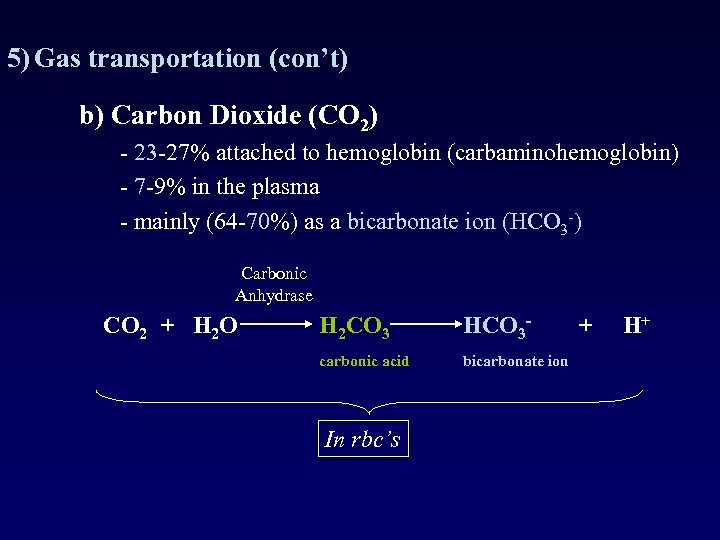 5) Gas transportation (con’t) b) Carbon Dioxide (CO 2) - 23 -27% attached to hemoglobin (carbaminohemoglobin) - 7 -9% in the plasma - mainly (64 -70%) as a bicarbonate ion (HCO 3 -) Carbonic Anhydrase CO 2 + H 2 O H 2 CO 3 HCO 3 - + H+ carbonic acid bicarbonate ion In rbc’s
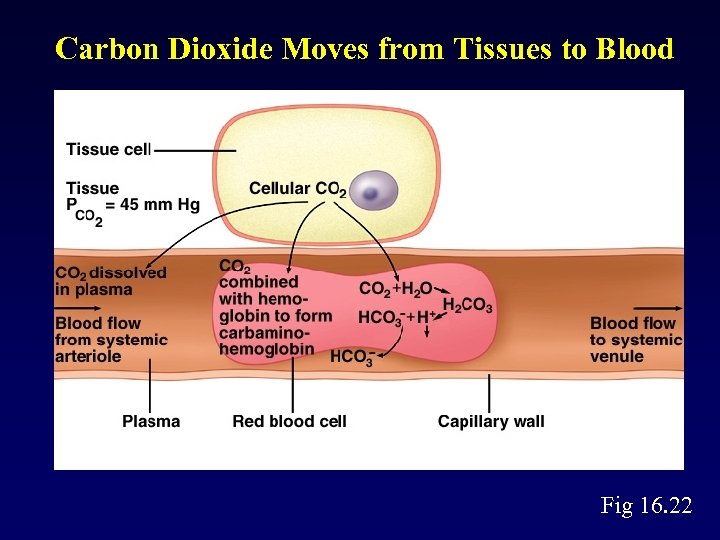 Carbon Dioxide Moves from Tissues to Blood Fig 16. 22
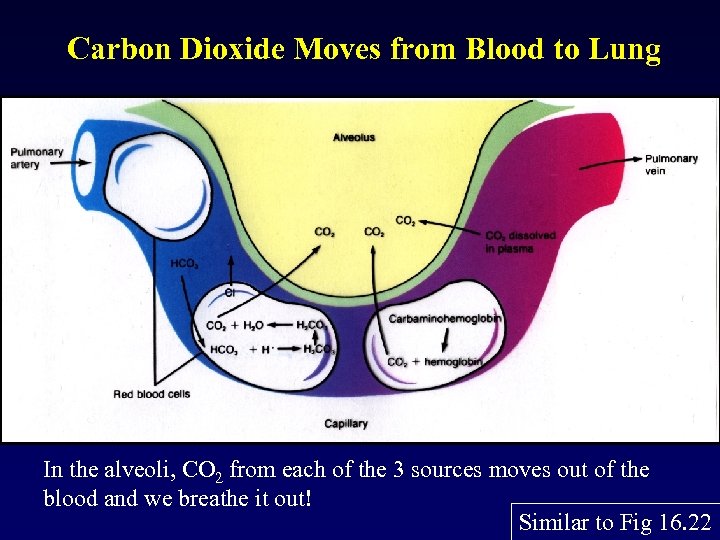 Carbon Dioxide Moves from Blood to Lung In the alveoli, CO 2 from each of the 3 sources moves out of the blood and we breathe it out! Similar to Fig 16. 22
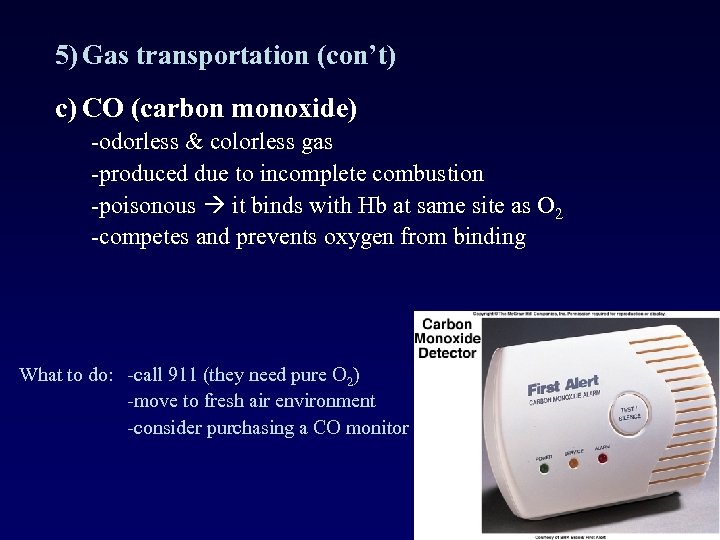 5) Gas transportation (con’t) c) CO (carbon monoxide) -odorless & colorless gas -produced due to incomplete combustion -poisonous it binds with Hb at same site as O 2 -competes and prevents oxygen from binding What to do: -call 911 (they need pure O 2) -move to fresh air environment -consider purchasing a CO monitor
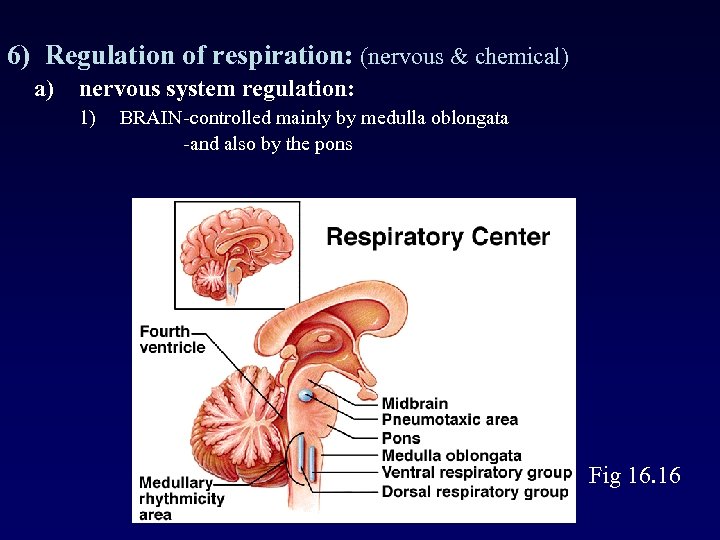 6) Regulation of respiration: (nervous & chemical) a) nervous system regulation: 1) BRAIN-controlled mainly by medulla oblongata -and also by the pons Fig 16. 16
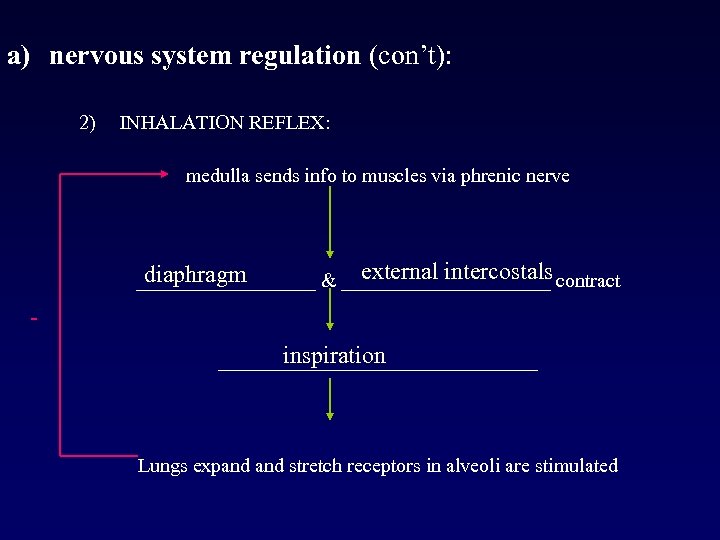 a) nervous system regulation (con’t): 2) INHALATION REFLEX: medulla sends info to muscles via phrenic nerve external intercostals diaphragm _________ & ___________ contract inspiration ________________ Lungs expand stretch receptors in alveoli are stimulated
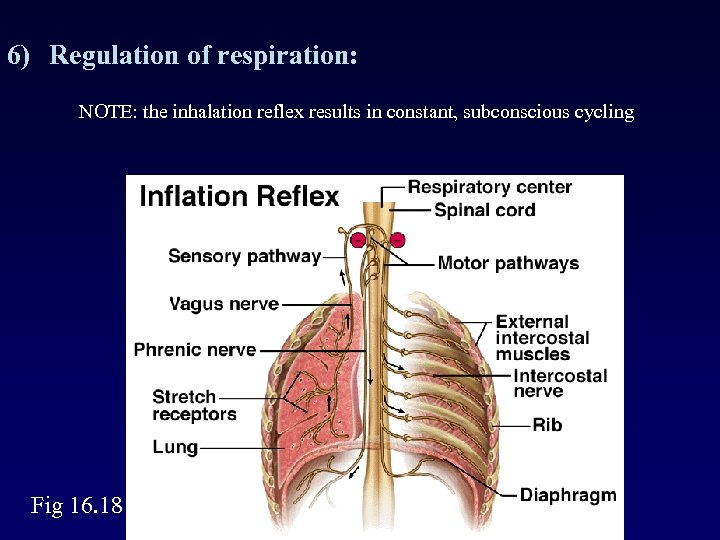 6) Regulation of respiration: NOTE: the inhalation reflex results in constant, subconscious cycling Fig 16. 18
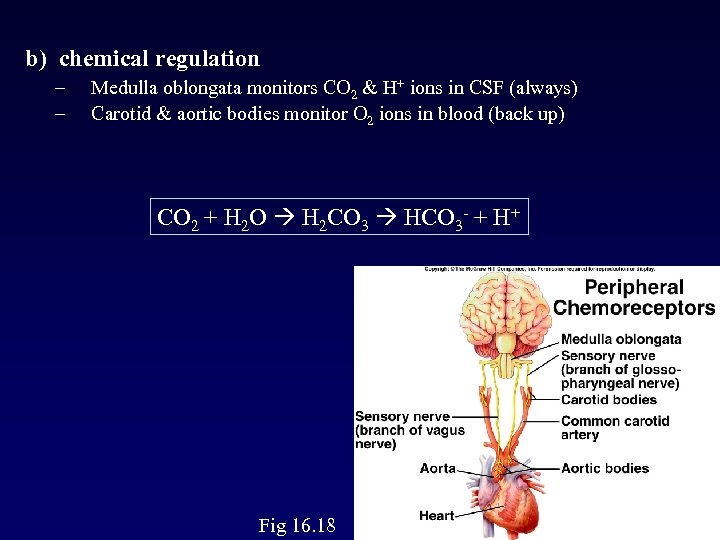 b) chemical regulation – – Medulla oblongata monitors CO 2 & H+ ions in CSF (always) Carotid & aortic bodies monitor O 2 ions in blood (back up) CO 2 + H 2 O H 2 CO 3 HCO 3 - + H+ Fig 16. 18
 D. ABNORMALITIES
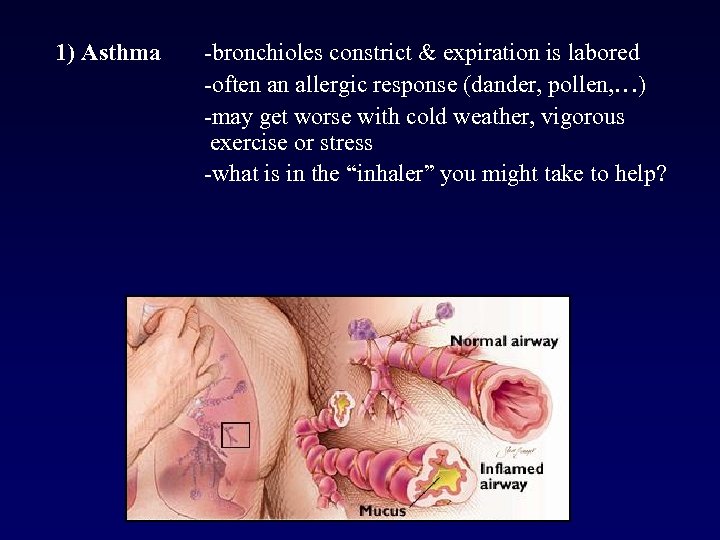 1) Asthma -bronchioles constrict & expiration is labored -often an allergic response (dander, pollen, …) -may get worse with cold weather, vigorous exercise or stress -what is in the “inhaler” you might take to help?
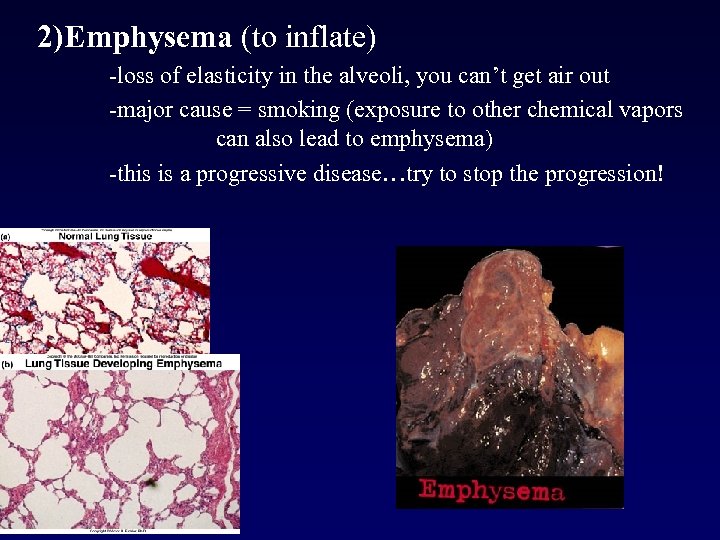 2)Emphysema (to inflate) -loss of elasticity in the alveoli, you can’t get air out -major cause = smoking (exposure to other chemical vapors can also lead to emphysema) -this is a progressive disease…try to stop the progression!
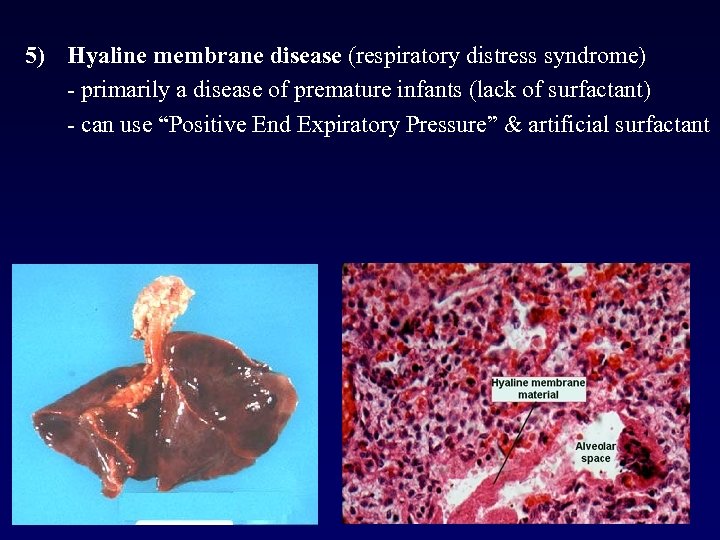 5) Hyaline membrane disease (respiratory distress syndrome) - primarily a disease of premature infants (lack of surfactant) - can use “Positive End Expiratory Pressure” & artificial surfactant
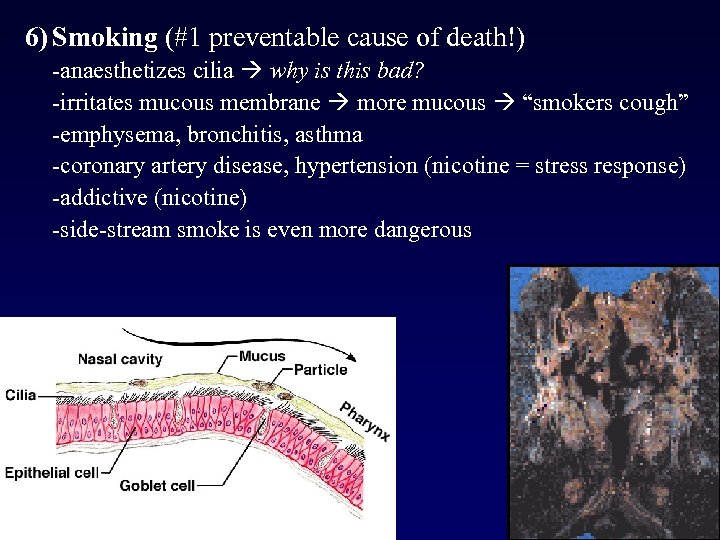 6) Smoking (#1 preventable cause of death!) -anaesthetizes cilia why is this bad? -irritates mucous membrane more mucous “smokers cough” -emphysema, bronchitis, asthma -coronary artery disease, hypertension (nicotine = stress response) -addictive (nicotine) -side-stream smoke is even more dangerous
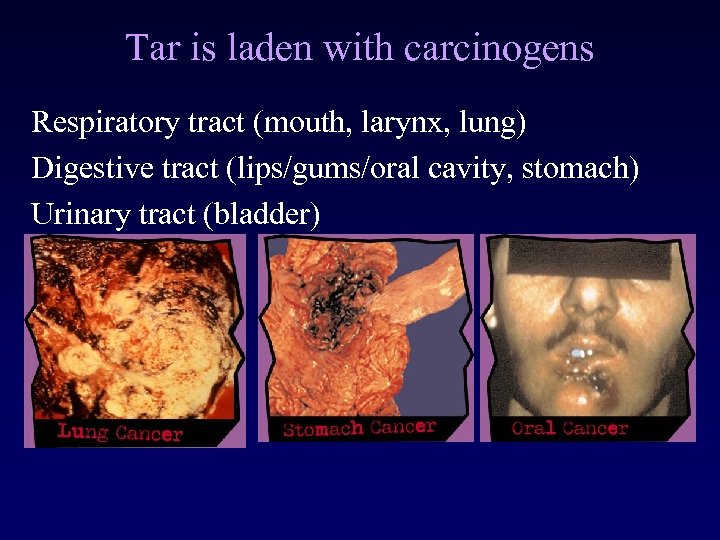 Tar is laden with carcinogens Respiratory tract (mouth, larynx, lung) Digestive tract (lips/gums/oral cavity, stomach) Urinary tract (bladder)