 Скачать презентацию Respiratory protection September 15 th 2010 Pillars
1d586ed5a94cd43fa92576bca4bc03ae.ppt
- Количество слайдов: 37



Respiratory protection September 15 th 2010
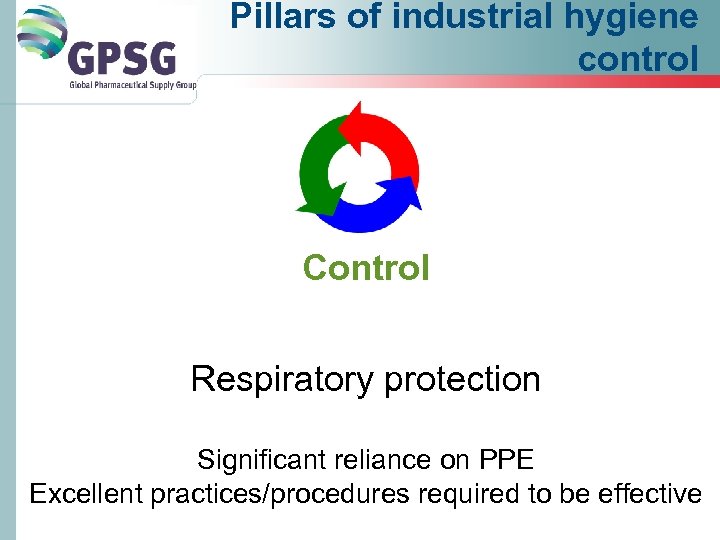
Pillars of industrial hygiene control Control Respiratory protection Significant reliance on PPE Excellent practices/procedures required to be effective
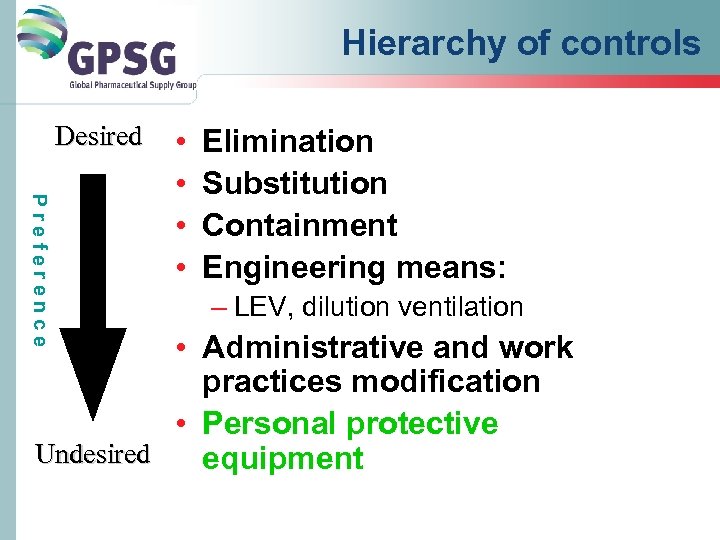
Hierarchy of controls Desired Preference • • Elimination Substitution Containment Engineering means: – LEV, dilution ventilation • Administrative and work practices modification • Personal protective Undesired equipment
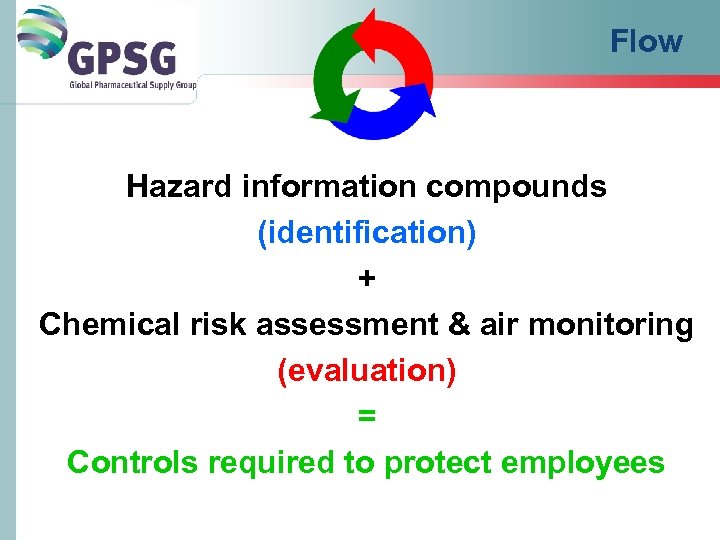
Flow Hazard information compounds (identification) + Chemical risk assessment & air monitoring (evaluation) = Controls required to protect employees
Very common RPE findings • Selection not based on risk/risk assessment • Worn incorrectly or not at all or only a part of the activity or removed too soon • Operator chooses type they like • Stored in area where would get contaminated • Damaged • Operators not trained in use • Managers do not enforce use • Interference from other PPE • Over confidence in amount of protection • Lack of procedures
Very common RPE findings - examples last weeks • SCBA: site has 3 SCBAs - 2 seem to be out for maintenance - 1 left on site we ask to put on - bottle seems to be empty • SCBA site bought some new SCBAs - we ask to put on - after 7 minutes not done yet • Hygiene masks: employees confuse hygiene masks with dust masks • Use mask for powders to protect against powders
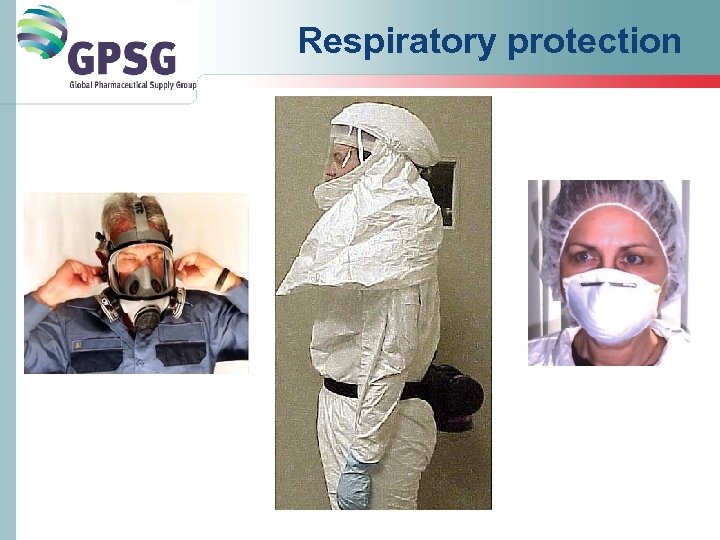
Respiratory protection
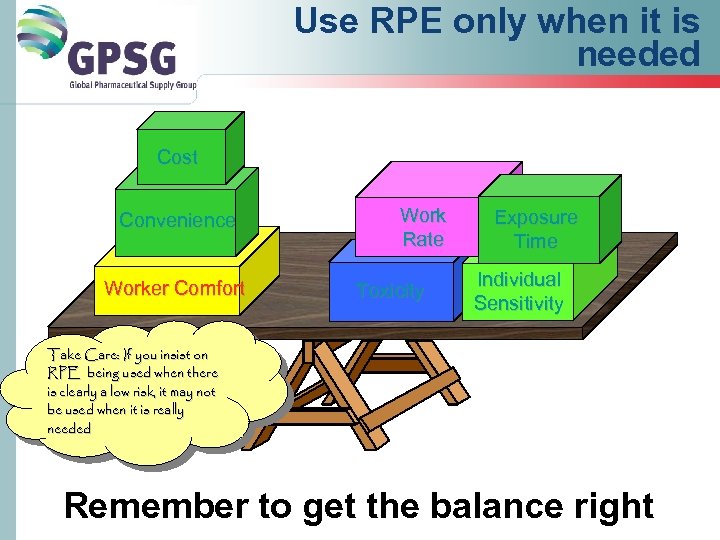
Use RPE only when it is needed Cost Convenience Worker Comfort Work Rate Toxicity Exposure Time Individual Sensitivity Take Care: If you insist on RPE being used when there is clearly a low risk, it may not be used when it is really needed Remember to get the balance right
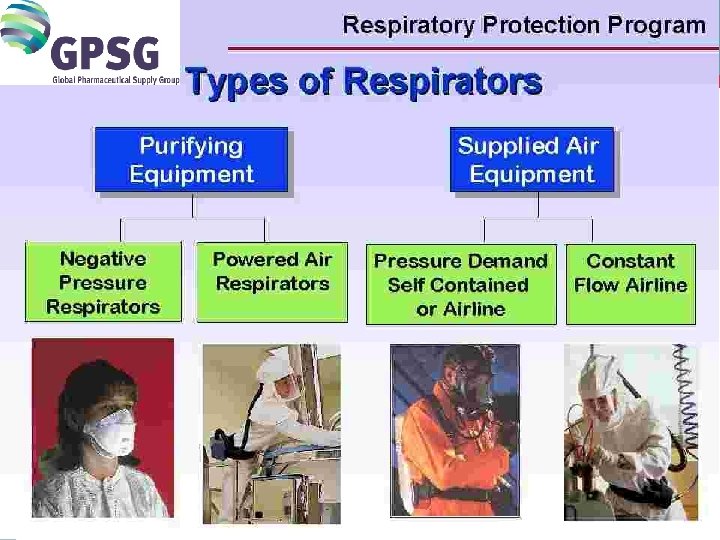
© Johnson & Johnson
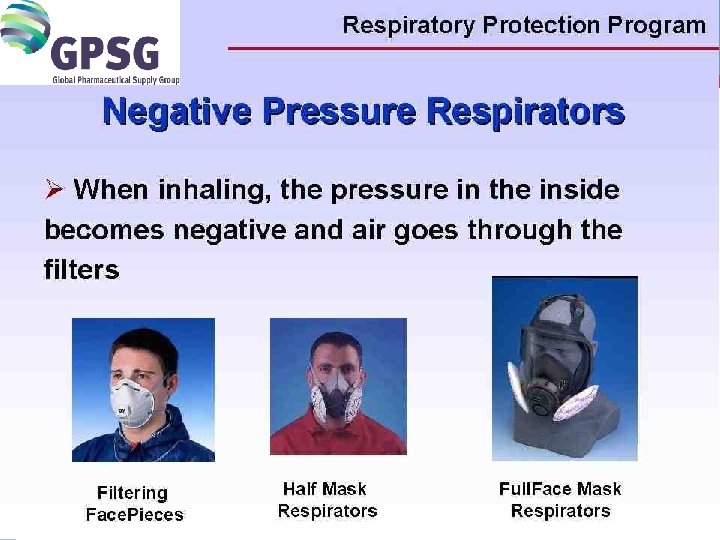
© Johnson & Johnson
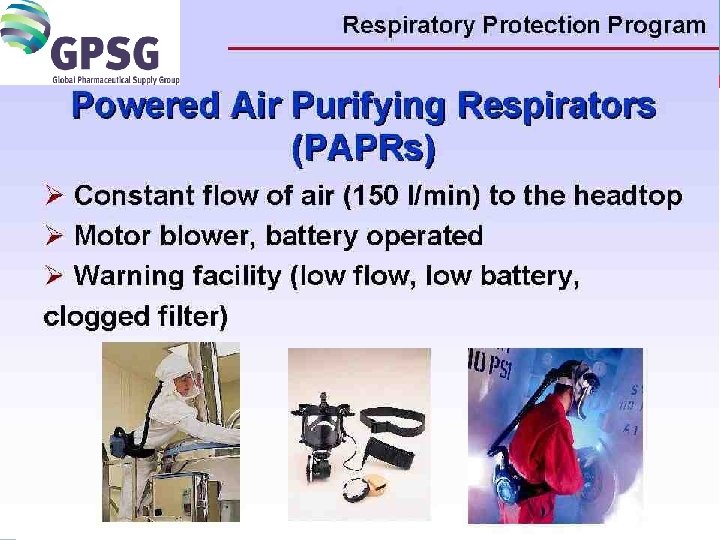
© Johnson & Johnson
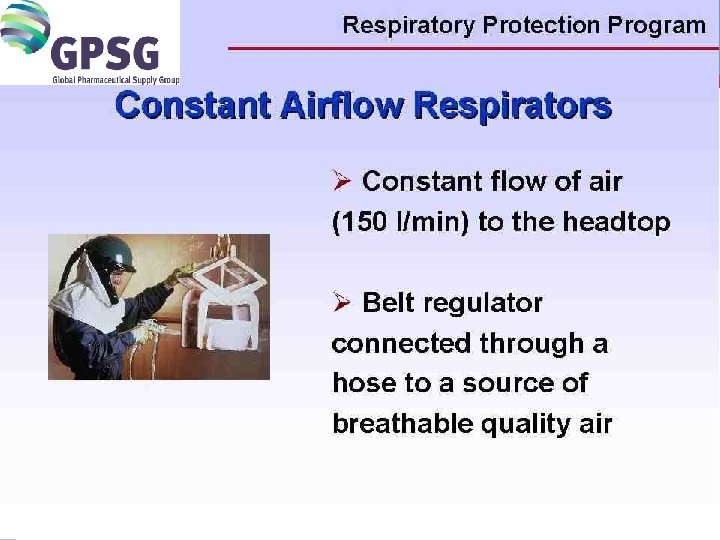
© Johnson & Johnson
© Johnson & Johnson
© Johnson & Johnson
© Johnson & Johnson
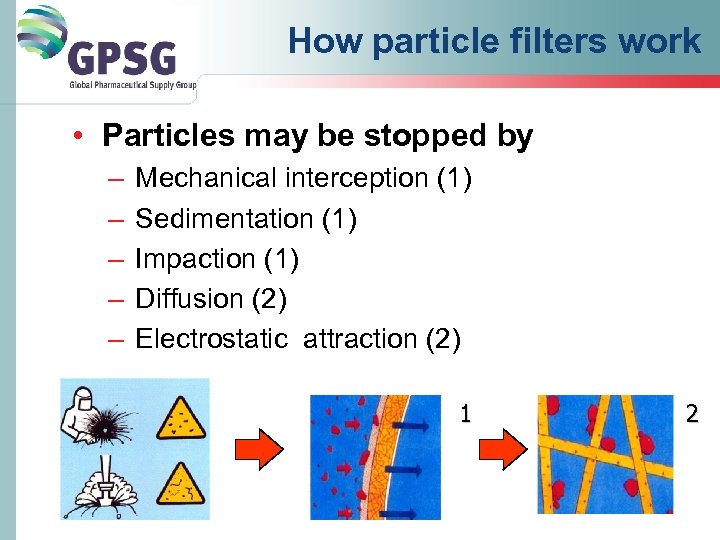
How particle filters work • Particles may be stopped by – – – Mechanical interception (1) Sedimentation (1) Impaction (1) Diffusion (2) Electrostatic attraction (2) 1 2 3 M
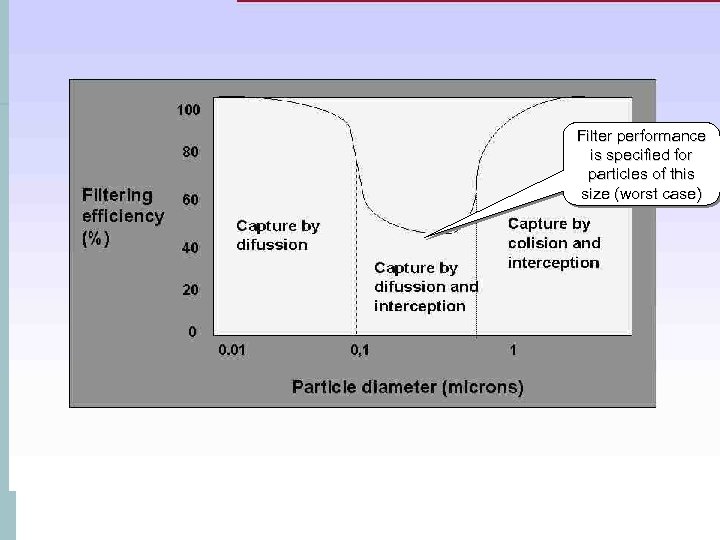
Filter performance is specified for particles of this size (worst case)
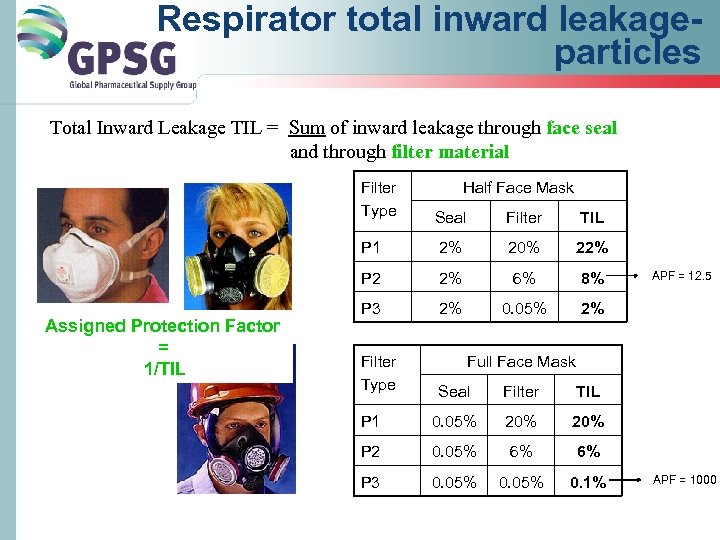
Respirator total inward leakageparticles Total Inward Leakage TIL = Sum of inward leakage through face seal and through filter material Filter Type Seal Filter TIL P 1 2% 20% 22% P 2 Assigned Protection Factor = 1/TIL 2% 6% 8% P 3 2% 0. 05% 2% Filter Type Half Face Mask APF = 12. 5 Full Face Mask Seal Filter TIL P 1 0. 05% 20% P 2 0. 05% 6% 6% P 3 0. 05% 0. 1% APF = 1000
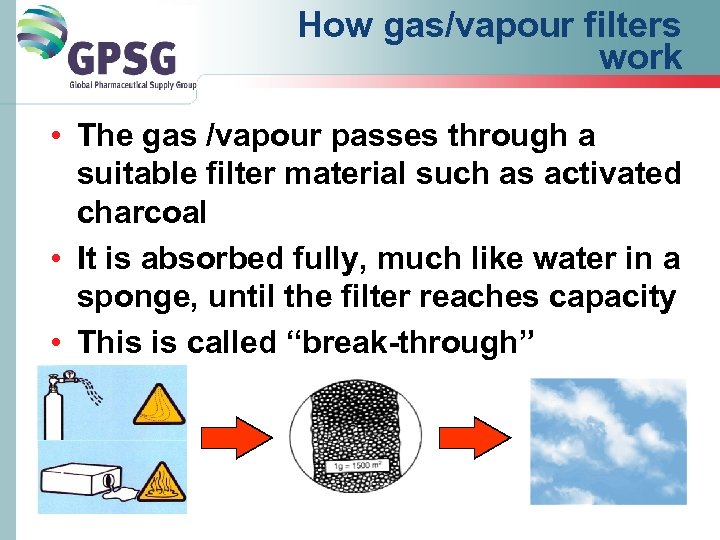
How gas/vapour filters work • The gas /vapour passes through a suitable filter material such as activated charcoal • It is absorbed fully, much like water in a sponge, until the filter reaches capacity • This is called “break-through”
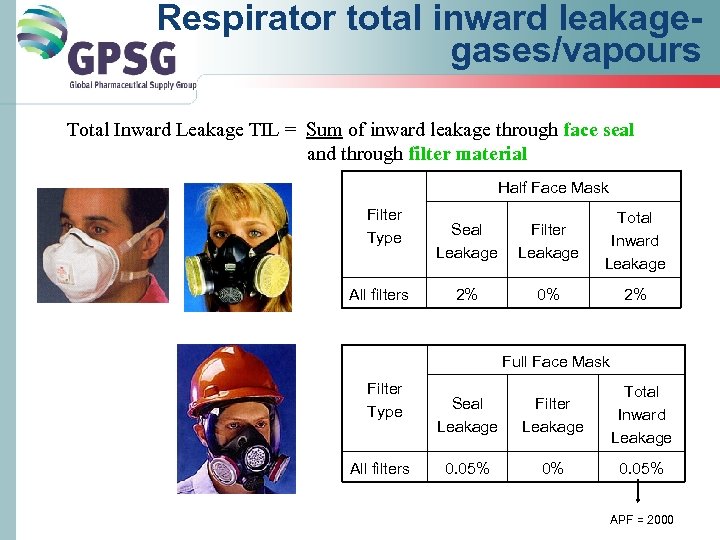
Respirator total inward leakagegases/vapours Total Inward Leakage TIL = Sum of inward leakage through face seal and through filter material Half Face Mask Filter Type All filters Seal Leakage Filter Leakage Total Inward Leakage 2% 0% 2% Full Face Mask Filter Type All filters Seal Leakage Filter Leakage Total Inward Leakage 0. 05% 0% 0. 05% APF = 2000
© Johnson & Johnson
© Johnson & Johnson
© Johnson & Johnson
© Johnson & Johnson
© Johnson & Johnson
© Johnson & Johnson
© Johnson & Johnson
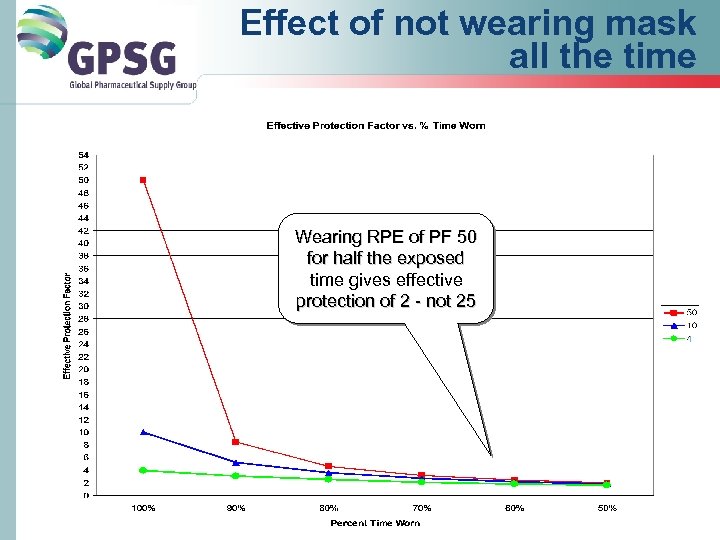
Effect of not wearing mask all the time Wearing RPE of PF 50 for half the exposed time gives effective protection of 2 - not 25
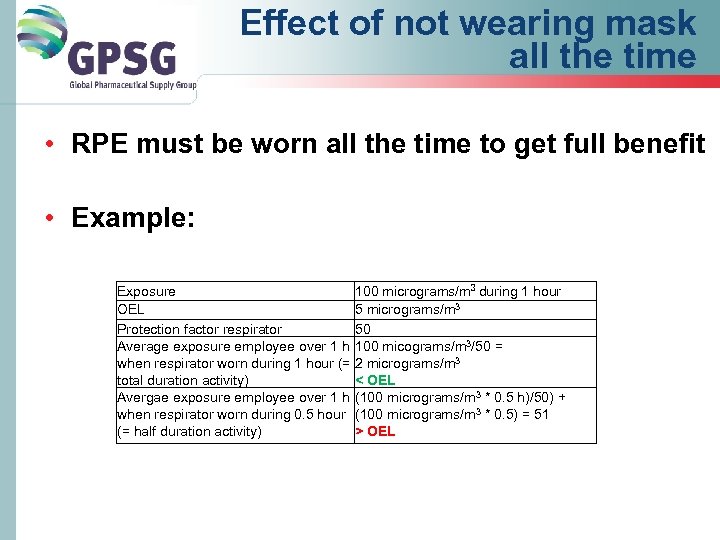
Effect of not wearing mask all the time • RPE must be worn all the time to get full benefit • Example: Exposure OEL Protection factor respirator Average exposure employee over 1 h when respirator worn during 1 hour (= total duration activity) Avergae exposure employee over 1 h when respirator worn during 0. 5 hour (= half duration activity) 100 micrograms/m 3 during 1 hour 5 micrograms/m 3 50 100 micograms/m 3/50 = 2 micrograms/m 3 < OEL (100 micrograms/m 3 * 0. 5 h)/50) + (100 micrograms/m 3 * 0. 5) = 51 > OEL
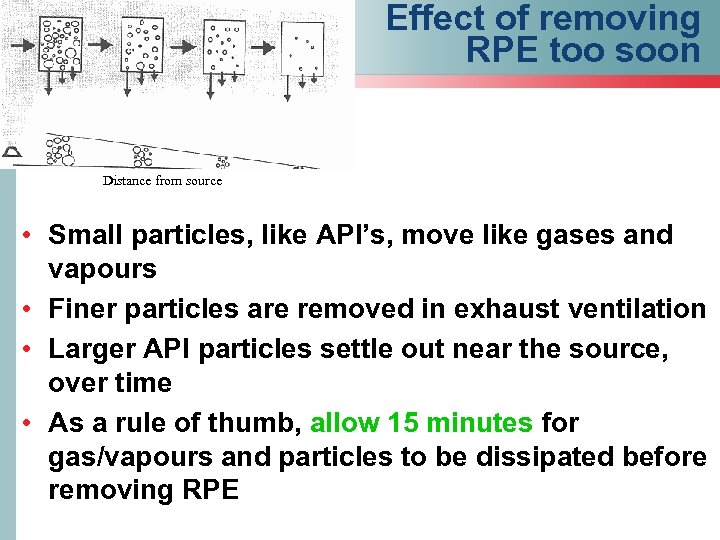
Effect of removing RPE too soon Distance from source • Small particles, like API’s, move like gases and vapours • Finer particles are removed in exhaust ventilation • Larger API particles settle out near the source, over time • As a rule of thumb, allow 15 minutes for gas/vapours and particles to be dissipated before removing RPE
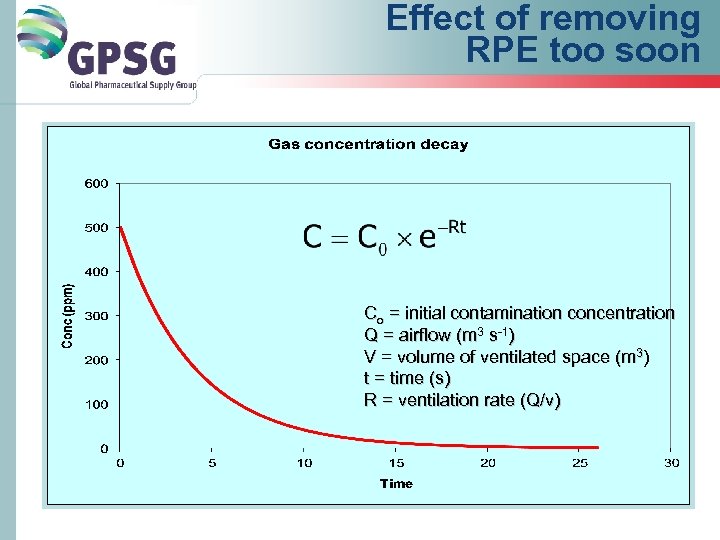
Effect of removing RPE too soon Co = initial contamination concentration Q = airflow (m 3 s-1) V = volume of ventilated space (m 3) t = time (s) R = ventilation rate (Q/v)
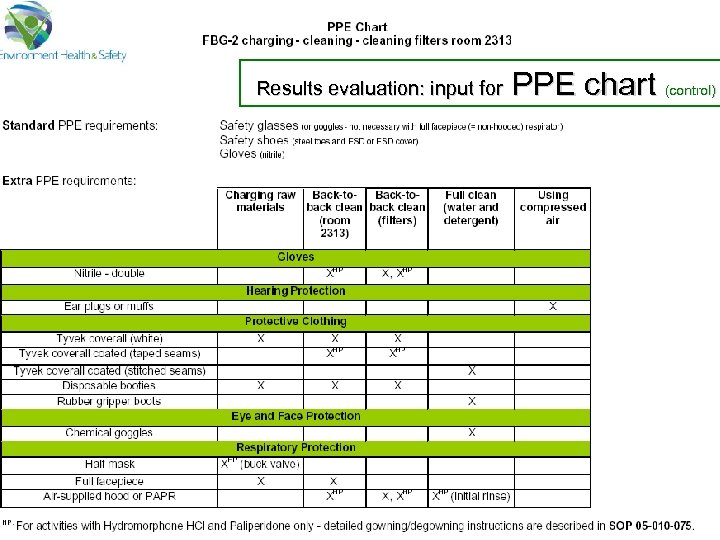
Results evaluation: input for PPE chart (control) 32
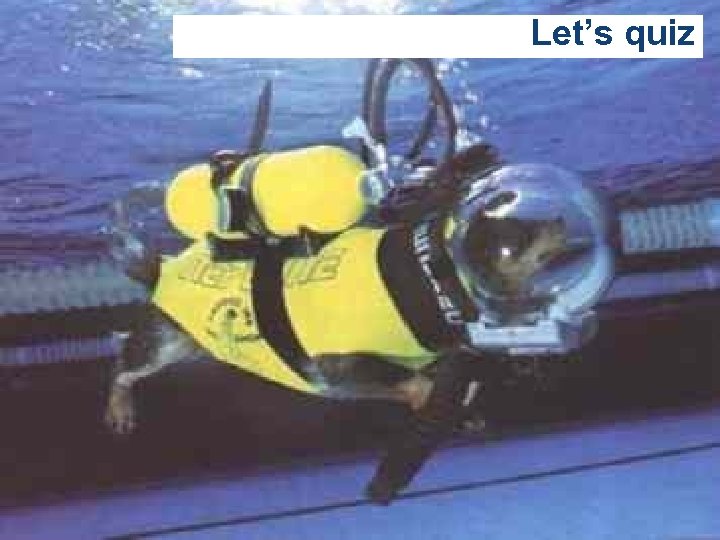
Let’s quiz © Johnson & Johnson
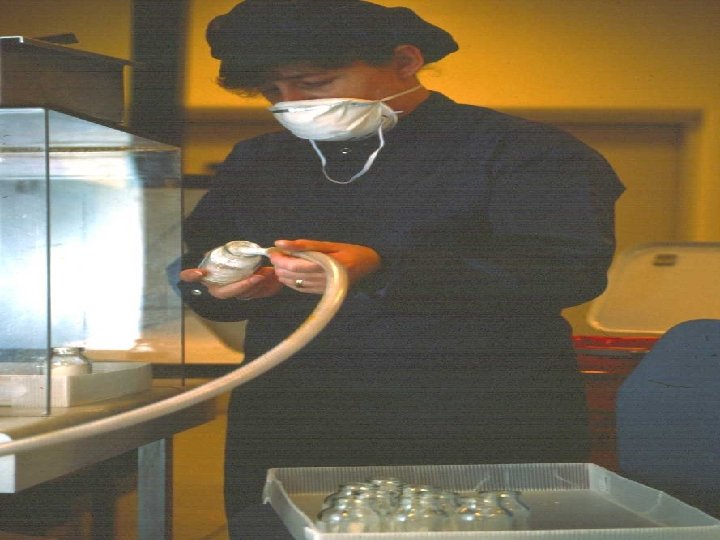
© Johnson & Johnson
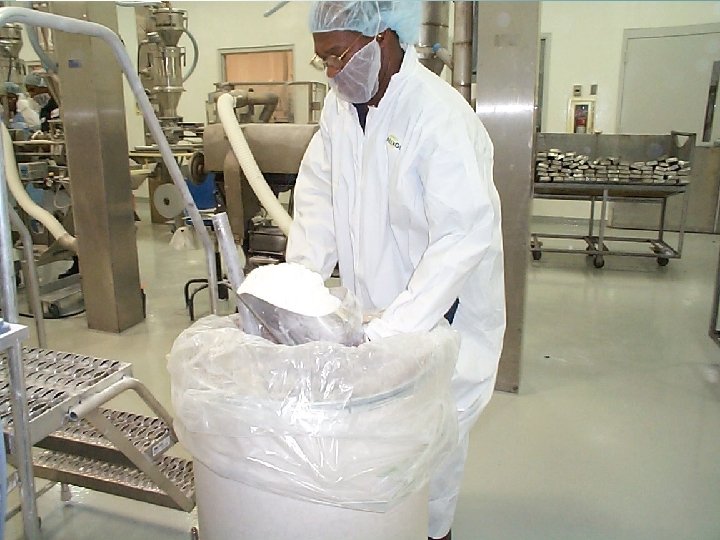
© Johnson & Johnson
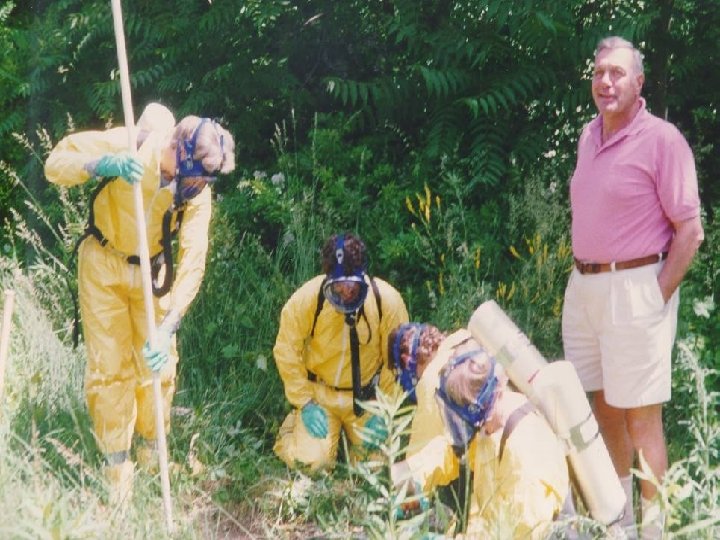
Conclusions and Q&A
Скачать презентацию Respiratory protection September 15 th 2010 Pillars
1d586ed5a94cd43fa92576bca4bc03ae.ppt