


 Скачать презентацию Resourcing and Alternatives Structures for Clinics Preferred
09087e519940a018cd1858e751d0806a.ppt
- Количество слайдов: 19
 Resourcing and Alternatives: Structures for Clinics
 Preferred Model
 Preferred Model
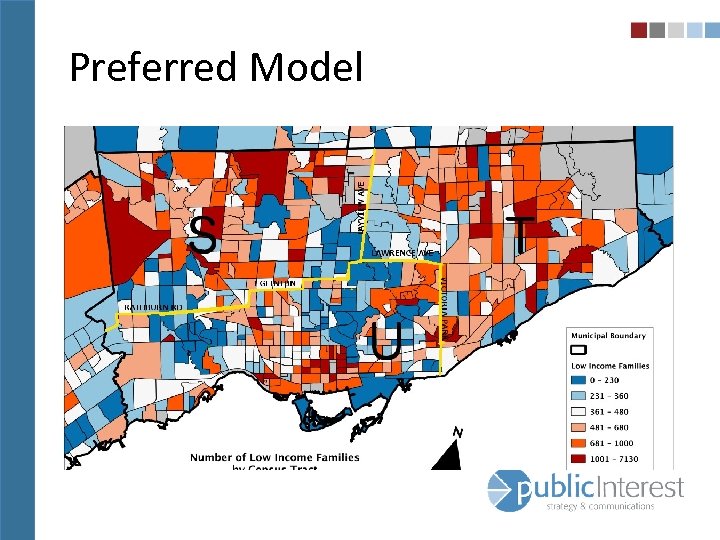
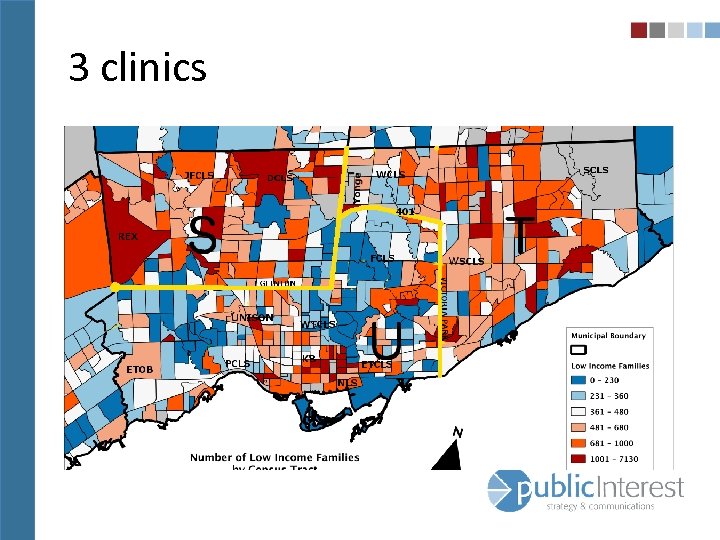
 3 Clinic Model • The three clinic model, divided along Bayview and Eglinton/Lawrence and Victoria Park, is the preferred model currently largely because: – It allows for transformational structures – It respects the distribution of low income populations and uses affluent areas as boundary lines – It respects jurisdictional boundaries
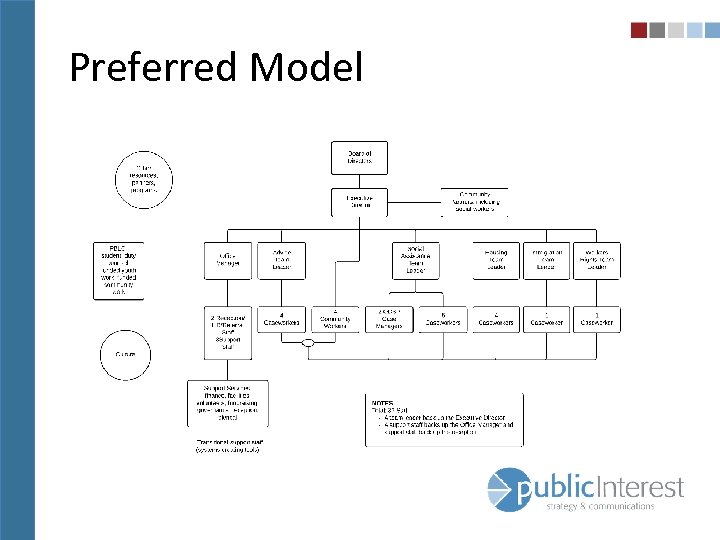
 Alternatives – more clinics • The 33 staff clinic can be reduced to allow for more clinics • Reductions come as the result of tradeoffs of aspects of the preferred model • With up to 104 staff in Toronto: – A 4 -clinic model needs a 26 person clinic – A 5 -clinic model needs a 21 person clinic – A 6 -clinic model needs a 16 person clinic
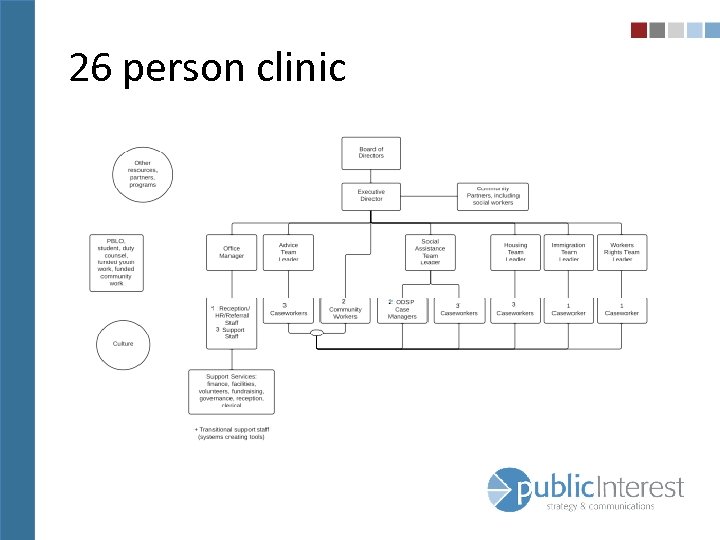 26 person clinic
 26 person clinic - implications • Smaller team overall through balanced reductions, plus: – Reduced ratio of income security – Reduced ratio of community workers
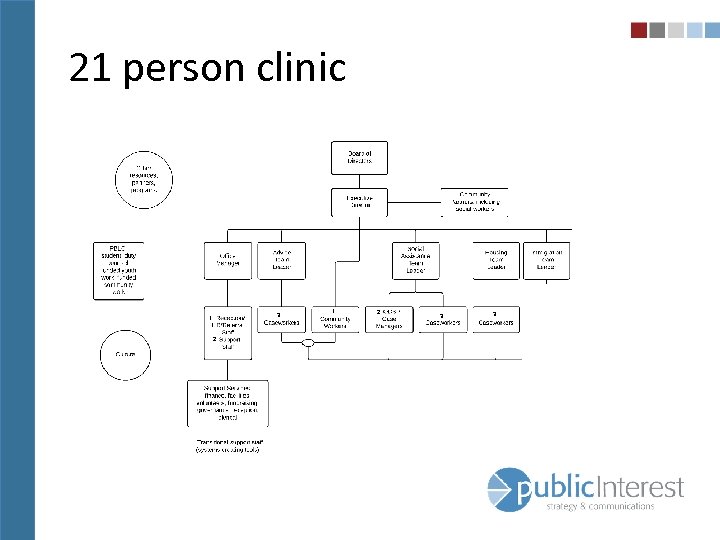 21 person clinic 3 1 2 3 3
 21 person clinic - implications • Smaller team overall through balanced reductions, plus: – Eliminate employment law – Reduce immigration law to one person – no team – Reduced ratio of community workers – Reduced ratio of support staff
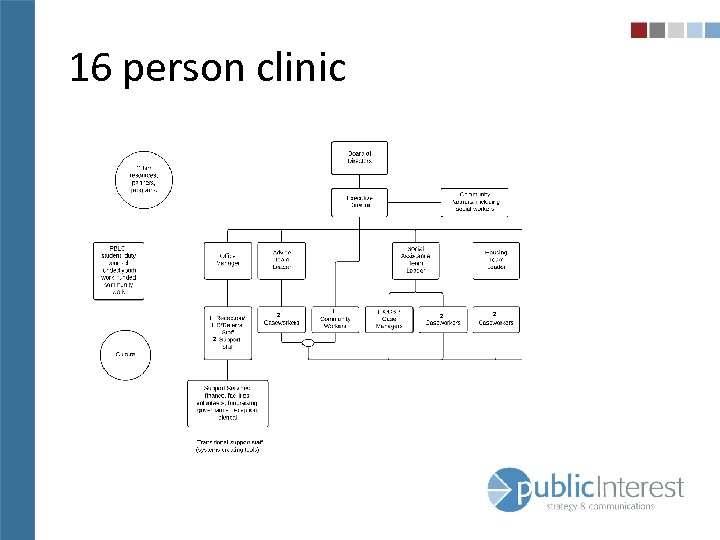 16 person clinic 2 1 1 2 2
 16 person clinic - implications • Smaller team overall through balanced reductions, plus: – Eliminate employment and immigration law – Reduced ratio of community workers
 Alternatives – Boundaries • Clinic map could be created out of existing clinics rather than a blank slate • Mergers replace new clinics
 3 clinics
 3 clinic merger implications • North West clinic largely unchanged • Scarborough/Don Mills clinic includes west Willowdale, excludes Parkview/Henry Farm • South Clinic very large, includes North Toronto/York Mills • Imbalance due to Yonge St. divide • S= 28, T=32, U=43
 4 clinics
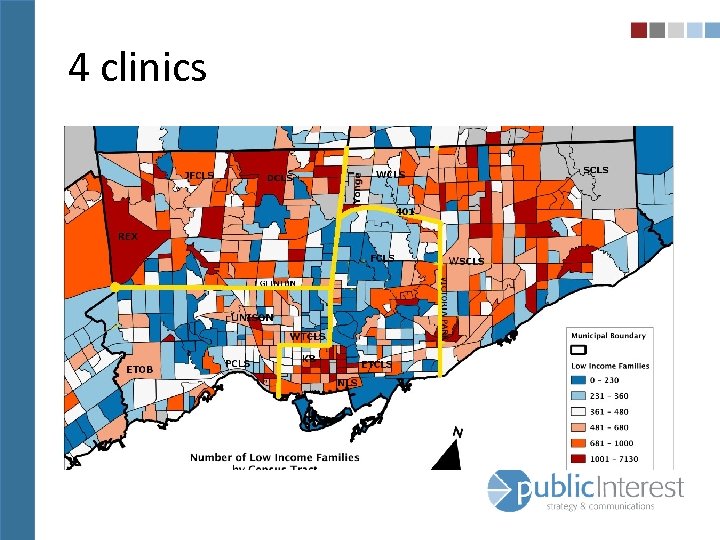
 4 clinic merger implications • North West clinic largely unchanged • Scarborough/Don Mills clinic includes west Willowdale, excludes Parkview/Henry Farm • South West Clinic excludes KB • South East clinic makes up numbers in KB rather than south Scarborough • Imbalance due to Yonge St. divide • NW= 25, SW=18 (+5), SE= 28, E=32
 Incremental Changes Options • Merge clinics gradually, in stages, over time • Merge components (e. g. back office) gradually, in stages, over time Implications • Literature indicates need for clear long term vision with wide buy-in, decisive changes, clear timelines, clear business case • Hard to do incrementally
 Alternate types of mergers Options • Merge with alternate service bases in the same community – CHCs – Community services – Hubs
 Alternate mergers - Implications • Literature & qualitative data show divergent service types face merger challenges • Variations in physical space needs, security requirements, intake procedures, and reporting requirements undermine cohesion • Access policies undermine service models • Specialized professional services less successful in mergers – boundary confusions