


 Скачать презентацию Resource Allocation Adequacy Chapter 13 in Guthrie Dr Len
ee248aed2e07155f77931a2716d37955.ppt
- Количество слайдов: 35
 Resource Allocation/Adequacy Chapter 13 in Guthrie Dr. Len Elovitz
 There’s plenty of money - It’s about how you’re going to spend it The Cartel JFK There’s plenty of money. It’s how you choose to spend it
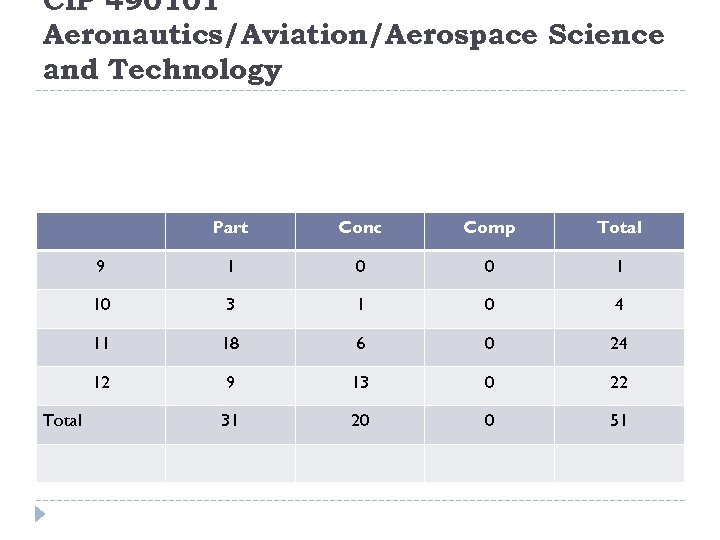 CIP 490101 Aeronautics/Aviation/Aerospace Science and Technology Part Comp Total 9 1 0 0 1 10 3 1 0 4 11 18 6 0 24 12 Total Conc 9 13 0 22 31 20 0 51
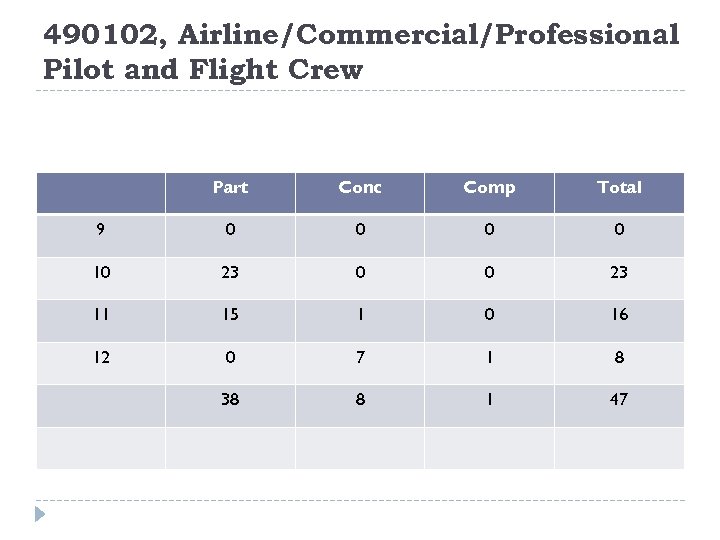 490102, Airline/Commercial/Professional Pilot and Flight Crew Part Conc Comp Total 9 0 0 10 23 0 0 23 11 15 1 0 16 12 0 7 1 8 38 8 1 47
 Resource Realignment Case Study – Morresville Graded School District – North Carolina Every Child, Every Day – A Digital Conversion Model for Student Achievement by Mark A. Edwards Digital conversion is the transformation from a paperbased system to primarily a digital world in which every student and every teacher has access to a personal computing device and the Internet 24/7
 Successes Graduation rate increased from 64% to 90% Decreased achievement gap on state testing Increased achievement of subgroups Number of dropouts decreased Number of suspensions decreased College attendance rate increased AP course enrollment more than doubled
 Critical success factors A commitment to every child A shared vision A culture of caring and collaboration Relentless focus on achievement Personalized, relevant, connected learning Deep transformation of instruction Joy, laughter, recognition and celebration Understanding of second order change High expectations Digital resource infrastructure Ongoing professional growth Ubiquitous leadership In-depth planning Data driven decision making Creative resource alignment All hands on deck
 “Funding digital conversion is mostly about prioritizing and repurposing, not about finding new or more monies. ” “It is essential to remember that students are always the number-one priority when making financial as well as other decisions. ”
 How can you afford it? Establish priorities and align resources to match goals Repurpose funds to meet goals Look for cost efficiencies and productivity gains Establish a commitment to 2 nd order change -
 Some 1 st steps Stopped buying textbooks – found digital resources to be cheaper and of better quality Reduced field trips – substituted virtual field trips Offered staff development on-line
 Cost-Benefit Analysis Total Cost of Ownership (TCO) Return on Investment (ROI) Academic return regarding student improvement Improved instructional experience for students and teachers Support for key drivers of student engagement Financial savings from reduced textbook, classroom space and paper costs Laptop costs Other efficiencies, such as web meetings and online grades
 Cost to Families pay $50 per year for laptop maintenance Educational foundation covers the cost for poor Family savings Many used to buy their own computers for student use No longer have to buy regular or graphing calculators Family availability of laptops Found that many more graduating seniors were receiving college scholorships
 Other Savings Computer labs are no longer necessary Space can be converted into regular classrooms Personnel savings Paper savings Equipment savings Instructional materials and supplies Textbooks Maps and globes Dictionaries, thesauruses, encyclopedias, periodicals Frogs Testing and student database Parent communications – Newsletters, flyers, etc.
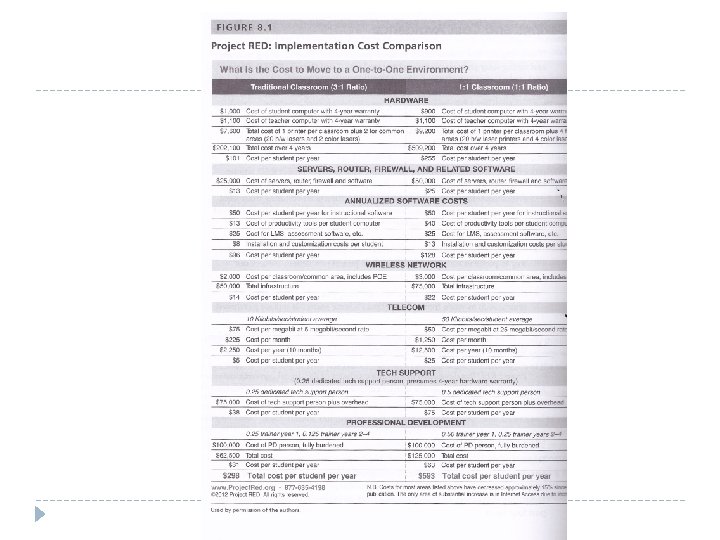
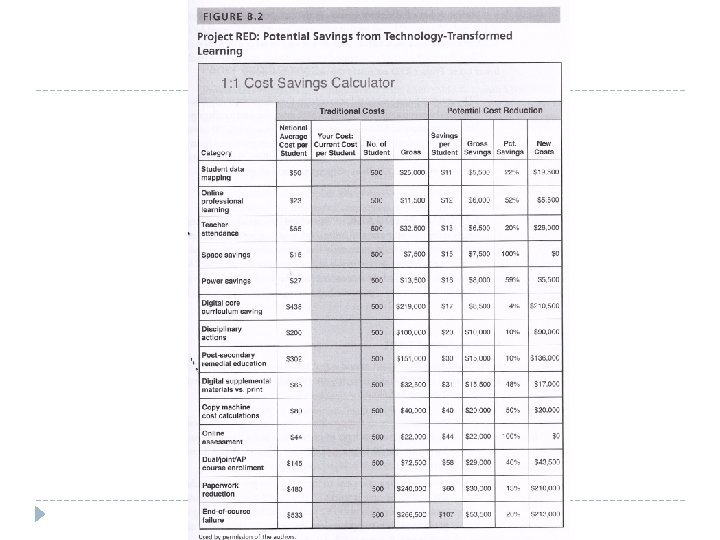
 In the End Edwards calculates the cost of digital conversion to be $1. 25 per student per day They spend $35 per student per day for everything Therefore, their daily expenditure per student for the huge benefits of digital conversion is 3. 5% of their daily expenditure
 Scheduling Student Class size policy Course Selection Do we fit the kids to the schedule or the schedule to the kids? How many teachers do we need? Teacher Are the adults more important than the kids?
 Adequacy Chapter 13 in Guthrie 18
 How much money do we really need? There is a lack of analytic capacity to construct credible answers to questions about adequacy. The era of education accountability has intensified a policy system quest to determine how much money is enough. All three levels of government strive to answer this question. 5 Minute University Peabody College Series. Copyright © Allyn & 19
 Definition of Adequacy Having enough funding “to teach the average student to state standards, and then to identify how much each district/school requires to teach students with special needs – the leaning disabled, those from poverty and thus from educationally deficient backgrounds, and those without English proficiency – to the same high and rigorous standards. Olden & Pincus
 Evolving Policy System Demands for Determining Schooling Costs Time was that with an elementary education an individual could aspire to the material components of the American Dream - a house, a car, and recreation. Currently, jobs requiring a minimum level of education have been automated or outsourced. Public perceptions of our education system have provoked political system expectations for heightened academic performance. Peabody College Series. Copyright © Allyn & 21
 The Era of Educational Accountability Standards based or systemic reform movement in education Political system response to intensified public concern for better schooling State learning objectives created Rigorous and codified state student achievement expectations and testing programs proliferate Statewide performance appraisals National Standards Peabody College Series. Copyright © Allyn & 22
 The Era of Educational Accountability (cont’d) No Child Left Behind Intensifies high expectations, high performance structures for states, districts, schools, administrators, and teachers through student achievement Consequences for funding if benchmarks no met Intrusion of state and federal entities into schools not making mandated benchmarks Peabody College Series. Copyright © Allyn & 23
 Debate over the “Opportunity to Learn” A concept that serves as a foundation for the notion of financial adequacy in public schools A modern consideration that students are provided with the instruction and equipment thought necessary to learn that which is expected by state learning standards. Peabody College Series. Copyright © Allyn & 24
 Resource Allocation Responsibilities Focused on the question of adequacy NEA filed suit for sufficient funds to meet the accountability benchmarks About 30 states have been involved in adequacy lawsuits since 2005. Peabody College Series. Copyright © Allyn & 25
 The $64, 000 question …. How much money will secure high student achievement for all students? How much should we allocate for at-risk students? Can money offset household or community poverty? What about language deficiencies? How do we provide an adequate education for those with disabilities? How much money will it take to fill the greatest gaps in these demographic groups? Peabody College Series. Copyright © Allyn & 26
 Historic Quests for Determining the Right Amount to Spend 1923 Strayer and Haig developed a financial conceptualization of education opportunity (EEO) The state should insure equal educational facilities to every child within its borders at a uniform effort throughout the state in terms of the burden of taxation The tax burden of education should throughout the state be uniform in relation to tax-paying ability, and the provision for schools should be uniform in relation to the educable population desiring education Peabody College Series. Copyright © Allyn & 27
 Strayer - Haig Tripartite Model State recapture - a proportion of property taxes reserved for local support of education and redirect these funds to poverty-poor districts providing an adequate amount of resources per student Establish schools or make other arrangements furnishing equal educational opportunities for all children up to a prescribed minimum Raising funds necessary for this purpose adjusting the rate in some manner to a citizen’s tax-paying ability Providing supervision and control of all schools or their direct administration by a state department of education Peabody College Series. Copyright © Allyn & 28
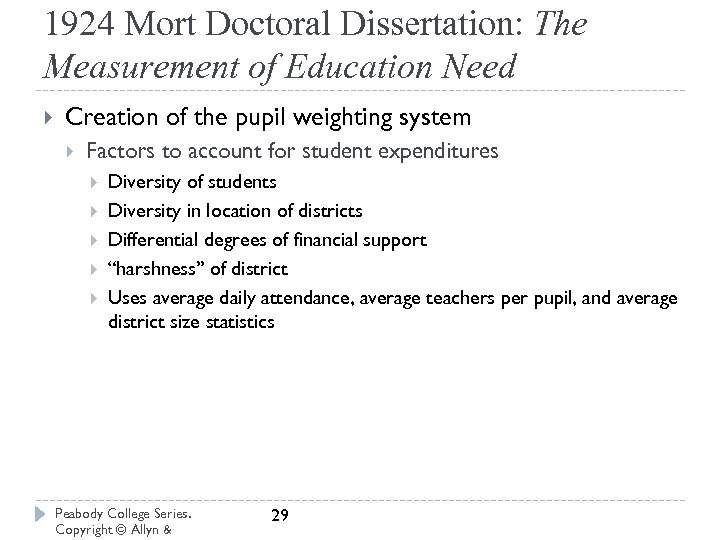 1924 Mort Doctoral Dissertation: The Measurement of Education Need Creation of the pupil weighting system Factors to account for student expenditures Diversity of students Diversity in location of districts Differential degrees of financial support “harshness” of district Uses average daily attendance, average teachers per pupil, and average district size statistics Peabody College Series. Copyright © Allyn & 29
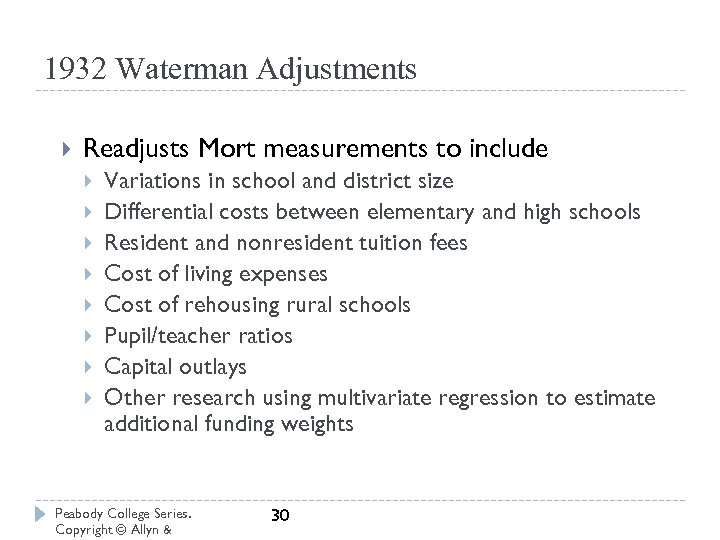 1932 Waterman Adjustments Readjusts Mort measurements to include Variations in school and district size Differential costs between elementary and high schools Resident and nonresident tuition fees Cost of living expenses Cost of rehousing rural schools Pupil/teacher ratios Capital outlays Other research using multivariate regression to estimate additional funding weights Peabody College Series. Copyright © Allyn & 30
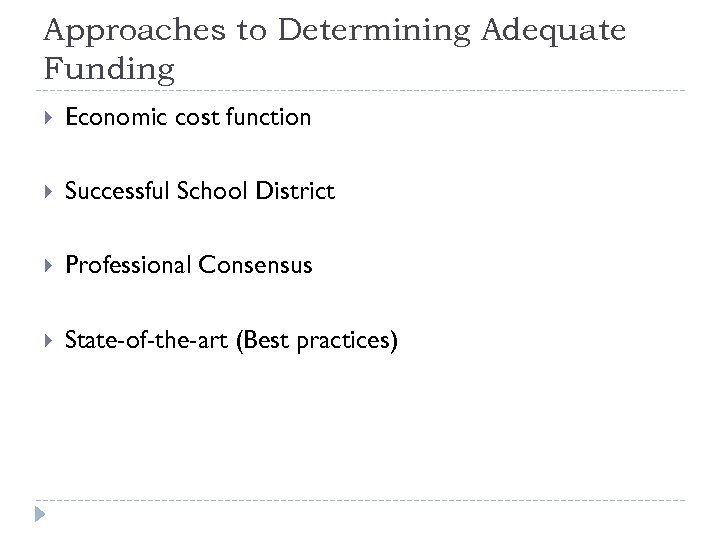 Approaches to Determining Adequate Funding Economic cost function Successful School District Professional Consensus State-of-the-art (Best practices)
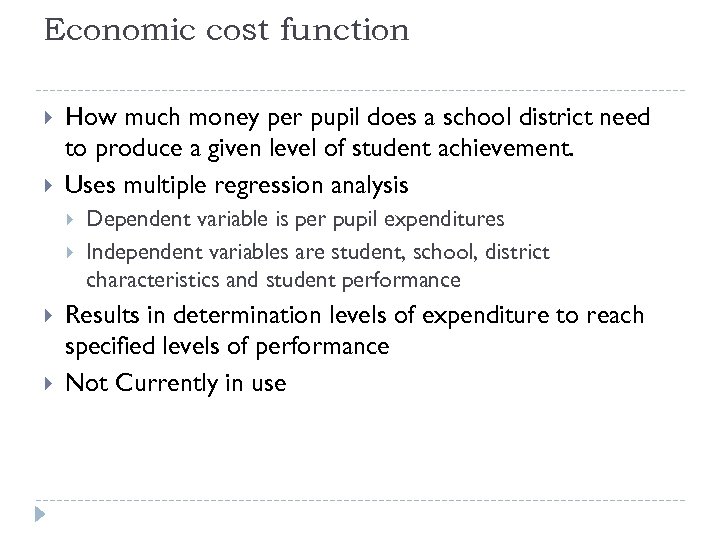 Economic cost function How much money per pupil does a school district need to produce a given level of student achievement. Uses multiple regression analysis Dependent variable is per pupil expenditures Independent variables are student, school, district characteristics and student performance Results in determination levels of expenditure to reach specified levels of performance Not Currently in use
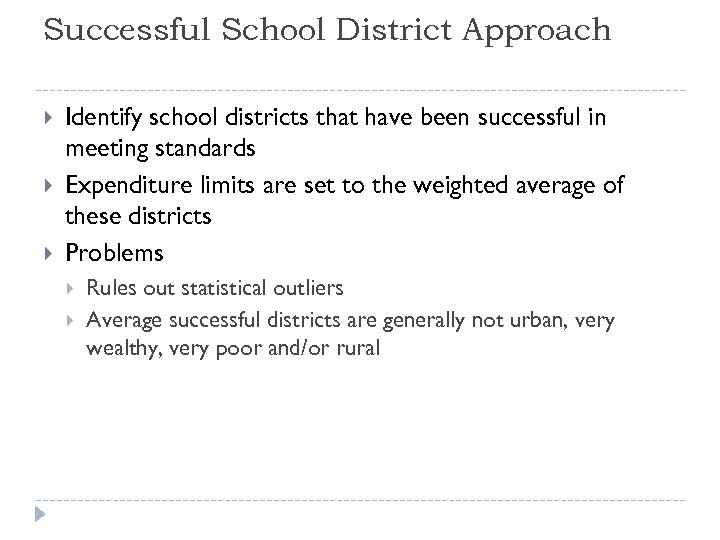 Successful School District Approach Identify school districts that have been successful in meeting standards Expenditure limits are set to the weighted average of these districts Problems Rules out statistical outliers Average successful districts are generally not urban, very wealthy, very poor and/or rural
 Professional Consensus Approach Panel of experts take all into consideration to develop a prototype district Student weightings are generally applied Used in NJ
 State-of-the-art approach Combines the other approaches into one Usually used at the school level