


 Скачать презентацию Research Councils Energy Programme Dr Clive Hayter Joint
b138da2bae46cef578bdb635e283932a.ppt
- Количество слайдов: 28
 Research Councils Energy Programme Dr Clive Hayter Joint Head of Energy & Climate Change Programme EPSRC
 PSA target • Improve the relative international performance of the UK research base and • improve the overall innovation performance of the UK economy including through effective knowledge transfer amongst universities, research institutions and business
 Energy – Why? • Energy is essential in almost every aspect of our lives and for the success of our economy. We face two long-term energy challenges: • tackling climate change by reducing carbon dioxide emissions both within the UK and abroad; and • ensuring secure, clean and affordable energy as we become increasingly dependent on imported fuel.
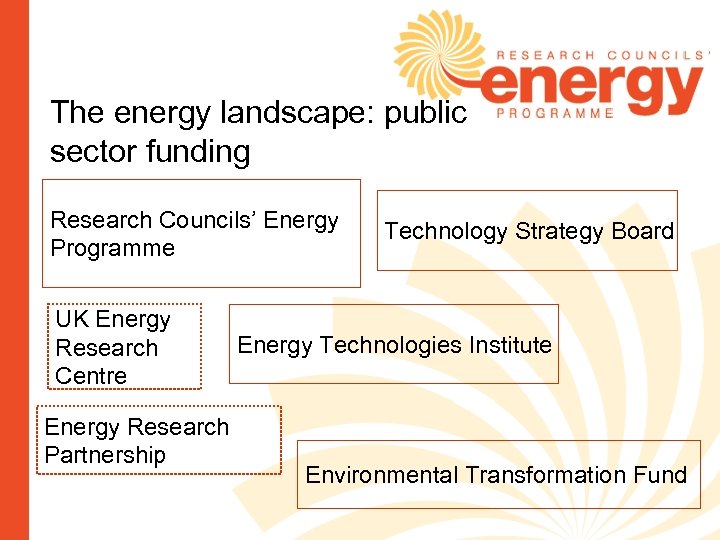 The energy landscape: public sector funding Research Councils’ Energy Programme UK Energy Research Centre Energy Research Partnership Technology Strategy Board Energy Technologies Institute Environmental Transformation Fund
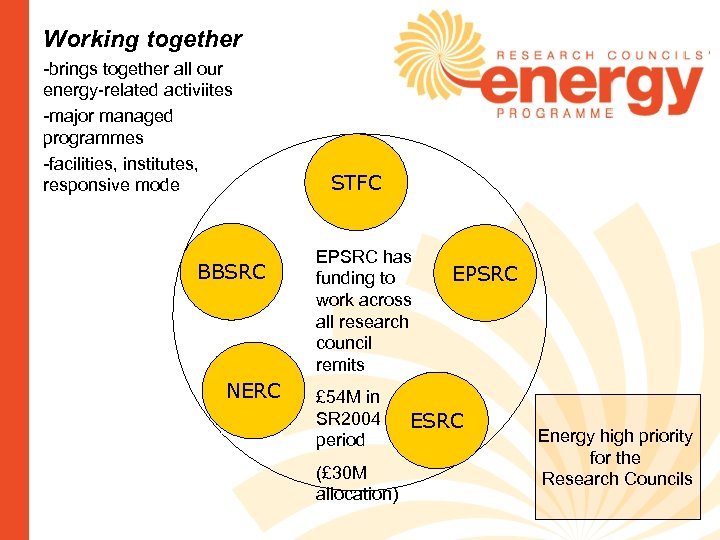 Working together -brings together all our energy-related activiites -major managed programmes -facilities, institutes, responsive mode BBSRC NERC STFC EPSRC has funding to work across all research council remits £ 54 M in SR 2004 period (£ 30 M allocation) EPSRC Energy high priority for the Research Councils
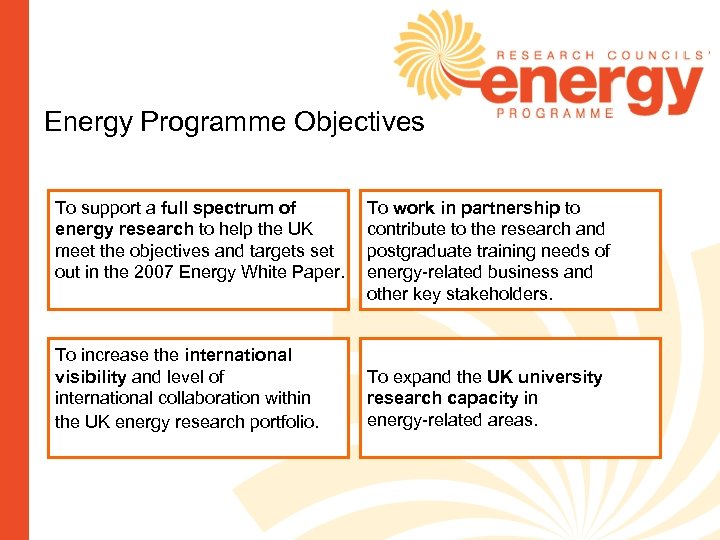 Energy Programme Objectives To support a full spectrum of energy research to help the UK meet the objectives and targets set out in the 2007 Energy White Paper. To increase the international visibility and level of international collaboration within the UK energy research portfolio. To work in partnership to contribute to the research and postgraduate training needs of energy-related business and other key stakeholders. To expand the UK university research capacity in energy-related areas.
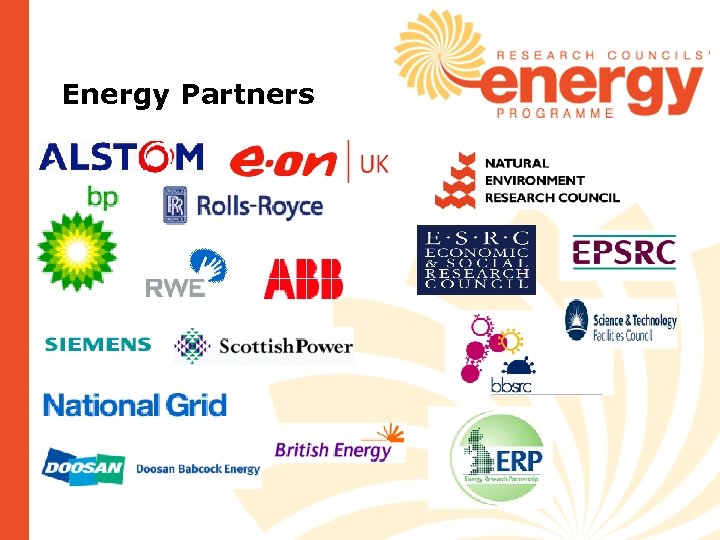 Energy Partners
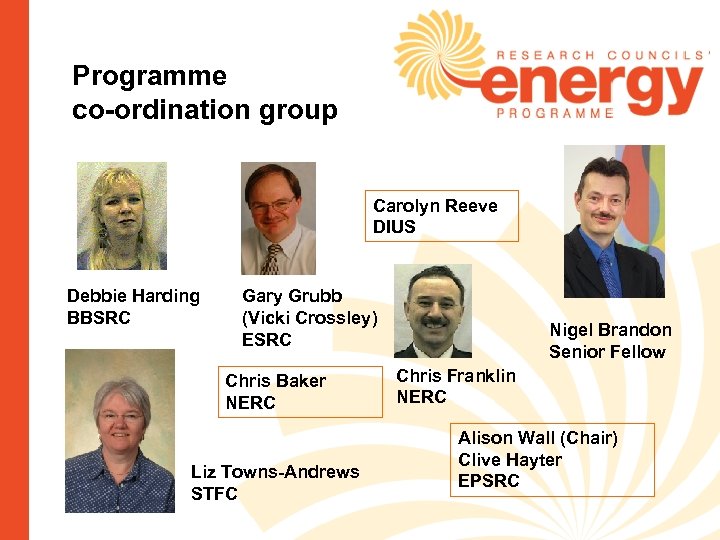 Programme co-ordination group Carolyn Reeve DIUS Debbie Harding BBSRC Gary Grubb (Vicki Crossley) ESRC Chris Baker NERC Liz Towns-Andrews STFC Nigel Brandon Senior Fellow Chris Franklin NERC Alison Wall (Chair) Clive Hayter EPSRC
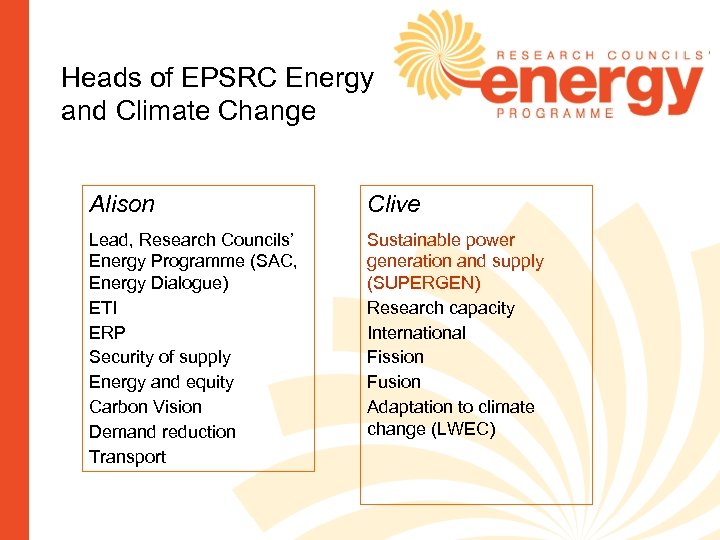 Heads of EPSRC Energy and Climate Change Alison Clive Lead, Research Councils’ Energy Programme (SAC, Energy Dialogue) ETI ERP Security of supply Energy and equity Carbon Vision Demand reduction Transport Sustainable power generation and supply (SUPERGEN) Research capacity International Fission Fusion Adaptation to climate change (LWEC)
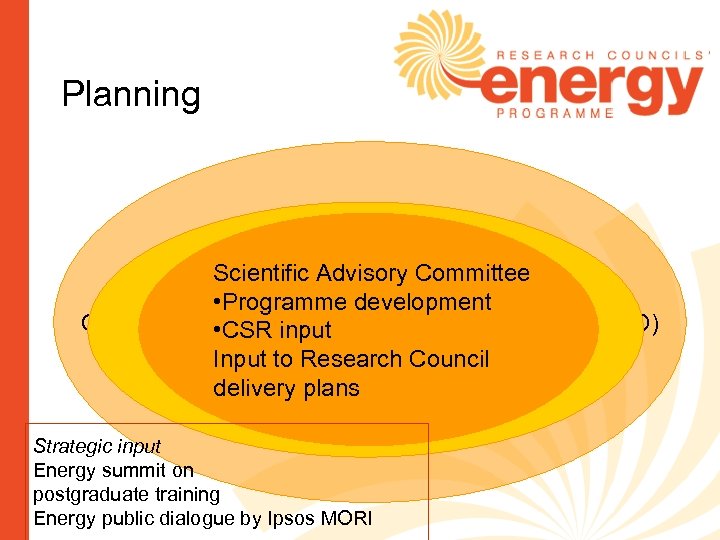 Planning Wide consultation: Research own processes Scientific Advisory Committee Research Councils groups International • Programme development EPSRC investment plan Government • departments (BERR, DEFRA, Df. T, DFID) CSR inputstrategic plan NERC Input Select Committees to Research Council BBSRC bioenergy review Learned and professional societies delivery plans Strategic input Energy summit on postgraduate training Energy public dialogue by Ipsos MORI
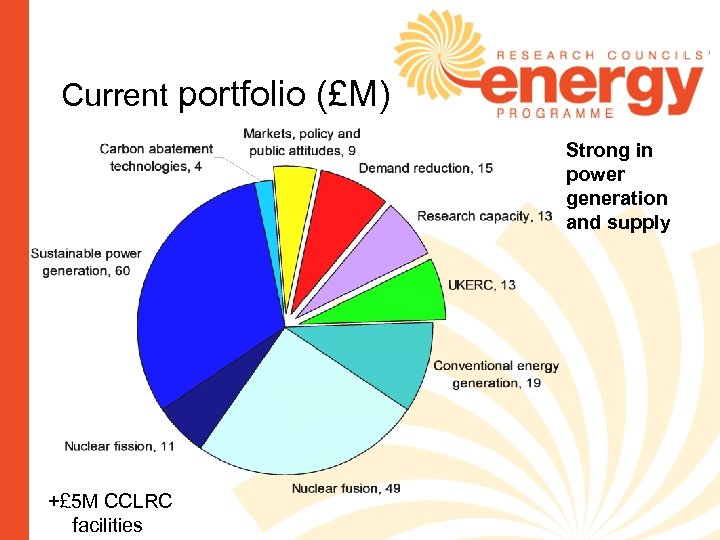 Current portfolio (£M) Strong in power generation and supply +£ 5 M CCLRC facilities
 SUPERGEN – Sustainable Power Generation & Supply ● Our flagship strategic programme in the area of energy supply. ● Currently 13 consortia with a total value in excess of £ 32 m covering the following areas: Ø hydrogen, biomass & bioenergy, marine energy, future network technologies, photovoltaic materials, conventional power plant lifetime extension, fuel cells, highly distributed power systems, excitonic solar cells, energy storage, biological fuel cells, wind energy, energy infrastructure. Ø Other SUPERGEN contributors include BBSRC, ESRC, NERC and the Carbon trust • Latest SUPERGEN Brochure is available at: http: //www. epsrc. ac. uk/Publications/Other/SUPERGENBrochure. htm
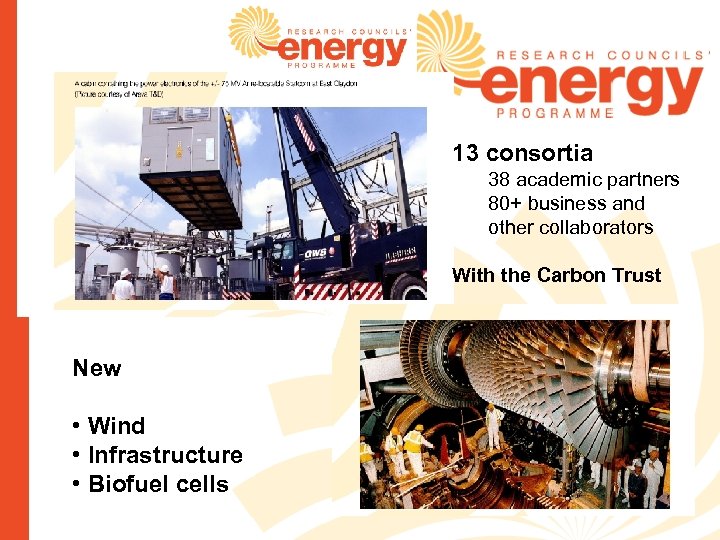 13 consortia 38 academic partners 80+ business and other collaborators With the Carbon Trust New • Wind • Infrastructure • Biofuel cells
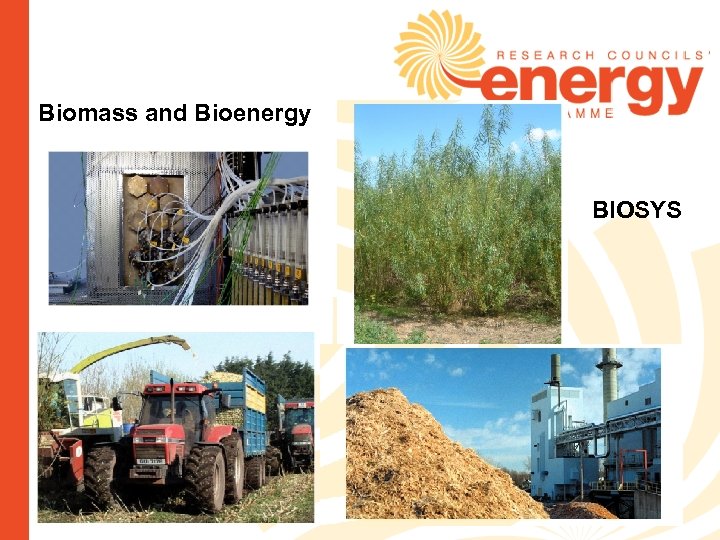 Biomass and Bioenergy BIOSYS
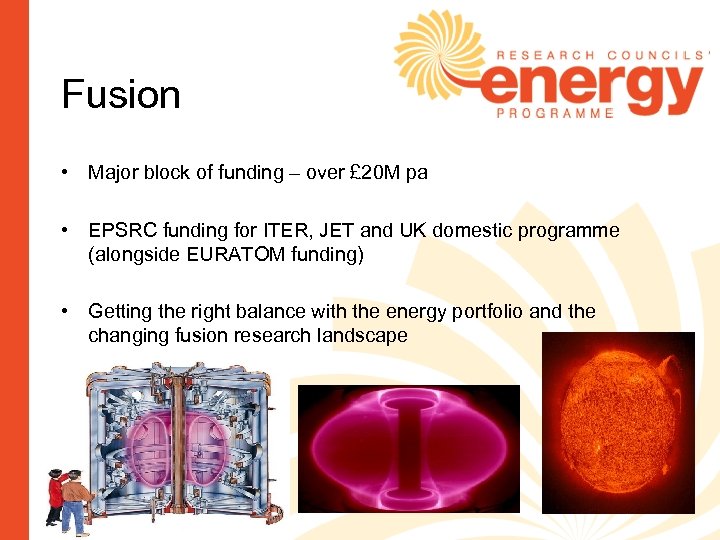 Fusion • Major block of funding – over £ 20 M pa • EPSRC funding for ITER, JET and UK domestic programme (alongside EURATOM funding) • Getting the right balance with the energy portfolio and the changing fusion research landscape
 UKERC Workstreams Research themes • Vertical: Demand Reduction, Future Sources of Energy, Energy Infrastructure and Supply • Cross-cutting: Energy Systems and Modelling, Environmental Sustainability, Materials for Advanced Energy Systems Functions • • • Coordination of National Energy Research Network The Meeting Place Technology and Policy Assessment The Energy Research Register (STFC) The Energy Data Centre (STFC)
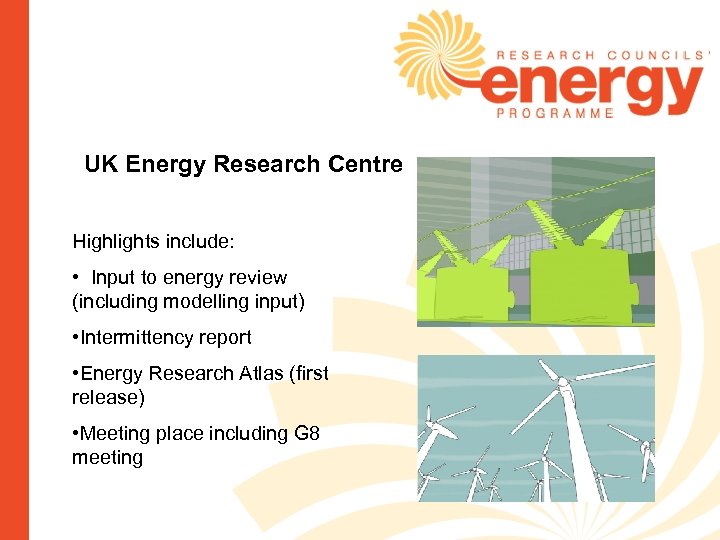 UK Energy Research Centre Highlights include: • Input to energy review (including modelling input) • Intermittency report • Energy Research Atlas (first release) • Meeting place including G 8 meeting
 Low Carbon Technologies ● Carbon Vision funded in association with the Carbon Trust, NERC and ESRC. Ø Low Carbon Buildings £ 5. 4 m Ø Working with the process industries: o Life cycle analysis £ 1 m - Carbon footprint calculation tool o Unlocking low carbon potential £ 0. 8 m – Drivers and barriers to uptake Ø Contribution to SUPERGEN • • Carbon Calculations – CCa. LC £ 0. 9 M Low Carbon Future - £ 0. 5 M Climate Change • The Tyndall Centre - www. tyndall. ac. uk
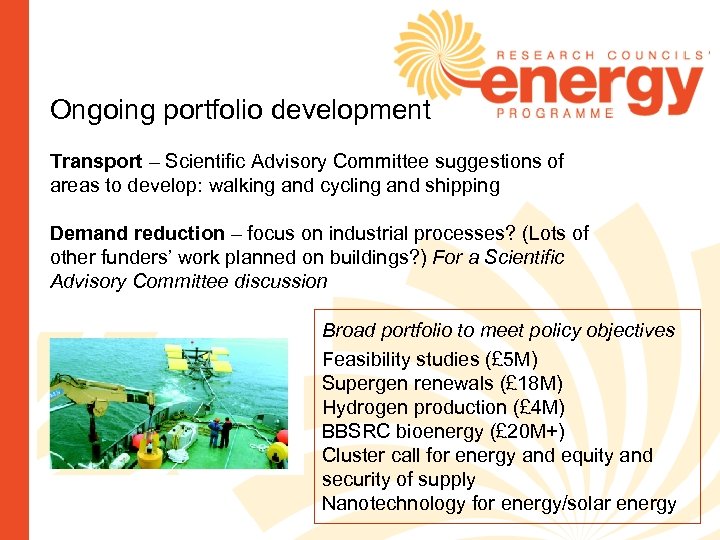 Ongoing portfolio development Transport – Scientific Advisory Committee suggestions of areas to develop: walking and cycling and shipping Demand reduction – focus on industrial processes? (Lots of other funders’ work planned on buildings? ) For a Scientific Advisory Committee discussion Broad portfolio to meet policy objectives Feasibility studies (£ 5 M) Supergen renewals (£ 18 M) Hydrogen production (£ 4 M) BBSRC bioenergy (£ 20 M+) Cluster call for energy and equity and security of supply Nanotechnology for energy/solar energy
 Ongoing portfolio development Working in partnership Nuclear sustainability (£ 2 M) E. ON strategic partnership (£ 10 M) Developing Power Networks Research Academy (£ 2 M) Developing: Nuclear waste management (£ 4 M) Developing: Materials UK research priorities (£ 5 M) International Strategic statement and action plan Partnership with MOST, China (£ 6 M) Cooperation with South Africa (£ 2 M) Bioenergy ERA-NET – gasification call International development – call next year
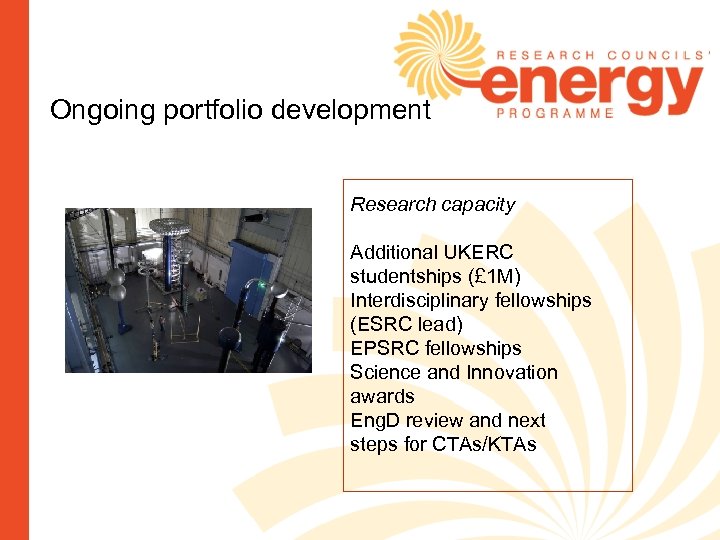 Ongoing portfolio development Research capacity Additional UKERC studentships (£ 1 M) Interdisciplinary fellowships (ESRC lead) EPSRC fellowships Science and Innovation awards Eng. D review and next steps for CTAs/KTAs
 The Energy Technologies Institute • Up to £ 1. 1 billion over 10 years, public/private partnership • Announced in the Budget 2006 • Focussed energy RD&D to accelerate new energy technologies to deployment • Core company partners (£ 5 M pa) • Public Sector: DIUS, BERR, EPSRC, TSB, (Df. T)
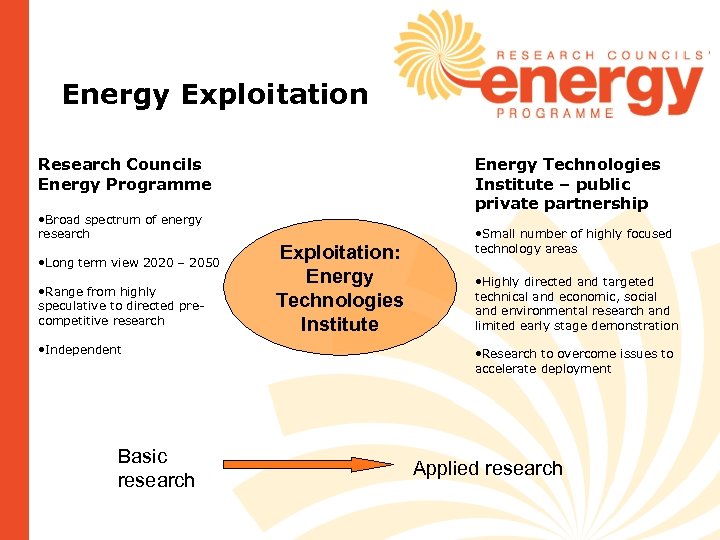 Energy Exploitation Research Councils Energy Programme • Broad spectrum of energy research • Long term view 2020 – 2050 • Range from highly speculative to directed precompetitive research • Independent Basic research Energy Technologies Institute – public private partnership Exploitation: Energy Technologies Institute • Small number of highly focused technology areas • Highly directed and targeted technical and economic, social and environmental research and limited early stage demonstration • Research to overcome issues to accelerate deployment Applied research
 Development of ETI • Heads of Agreement signed on 20 September – Legal structure – Limited Liability Partnership – Funding model – Core members and Programme Associates – IP model – under test! • • Chief Executive – David Clarke (RR; EPSRC Council) Host selection – Midlands Consortium RD&D priorities – being developed RD&D commissioning process – being developed • EPSRC funding contracts and costs until ETI is established
 CSR 2007 Energy Priorities • A whole system approach to energy options, supply and usage • Rapid Exploitation through collaboration with ETI
 CSR 2007 Energy Priorities Sustain work on: • power generation and supply (Supergen) • Fission & fusion • UKERC • Materials for energy • Strategic Partnerships with Industry • International Development & Collaboration
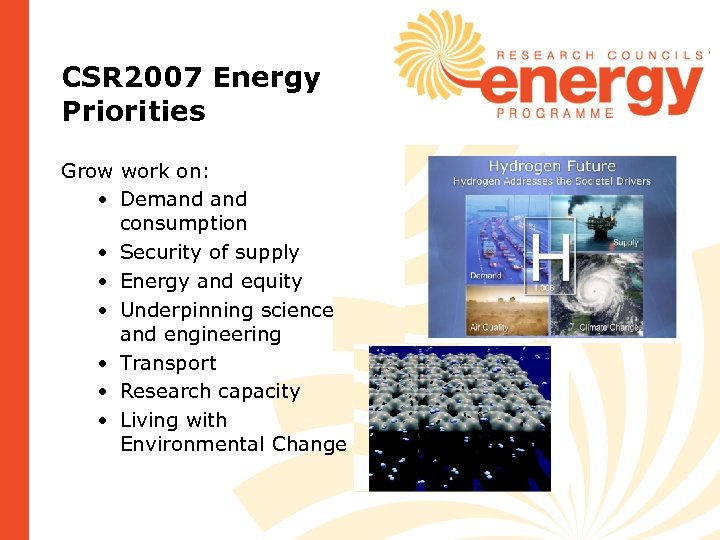 CSR 2007 Energy Priorities Grow work on: • Demand consumption • Security of supply • Energy and equity • Underpinning science and engineering • Transport • Research capacity • Living with Environmental Change
 • Comments, questions…. . ? • Thank you…… clive. hayter@epsrc. ac. uk