 Скачать презентацию Research Challenges in Wireless Networks of Biomedical Sensors
41c1ce2a6bf185ff8d97f82605c8e4dc.ppt
- Количество слайдов: 15



Research Challenges in Wireless Networks of Biomedical Sensors 1 Loren Schwiebert Wayne State University Department of Computer Science Sandeep K. S. Gupta Jennifer Weinmann Arizona State University Wayne State University Department of Computer Science and Engineering Department of Electrical and Computer Engineering Additional Authors: Ayad Salhieh, Vikram Shankar, Valliappan Annamalai, Manish Kochhal, and Greg Auner. 1 This material is based upon work supported by the National Science Foundation under Grants ANI-0086020 and DGE-9870720 and the Kresge Eye Institute.
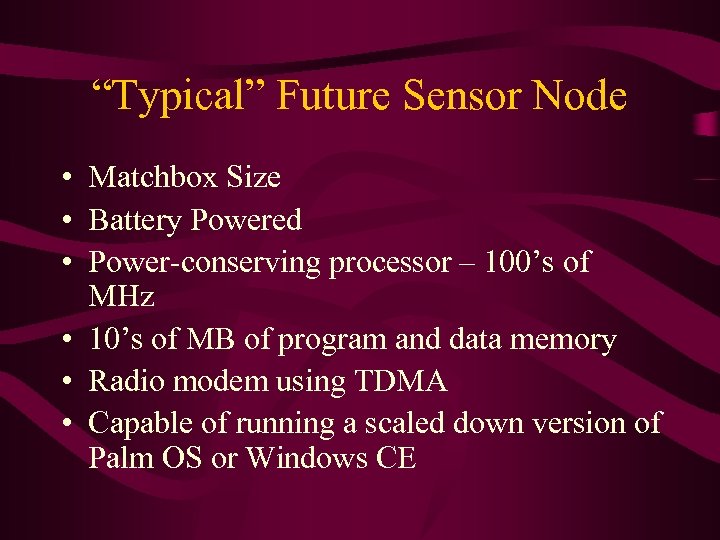
“Typical” Future Sensor Node • Matchbox Size • Battery Powered • Power-conserving processor – 100’s of MHz • 10’s of MB of program and data memory • Radio modem using TDMA • Capable of running a scaled down version of Palm OS or Windows CE
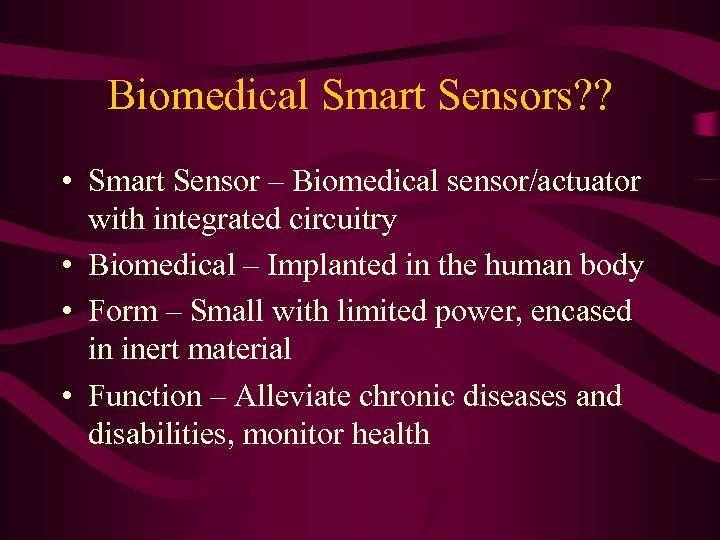
Biomedical Smart Sensors? ? • Smart Sensor – Biomedical sensor/actuator with integrated circuitry • Biomedical – Implanted in the human body • Form – Small with limited power, encased in inert material • Function – Alleviate chronic diseases and disabilities, monitor health
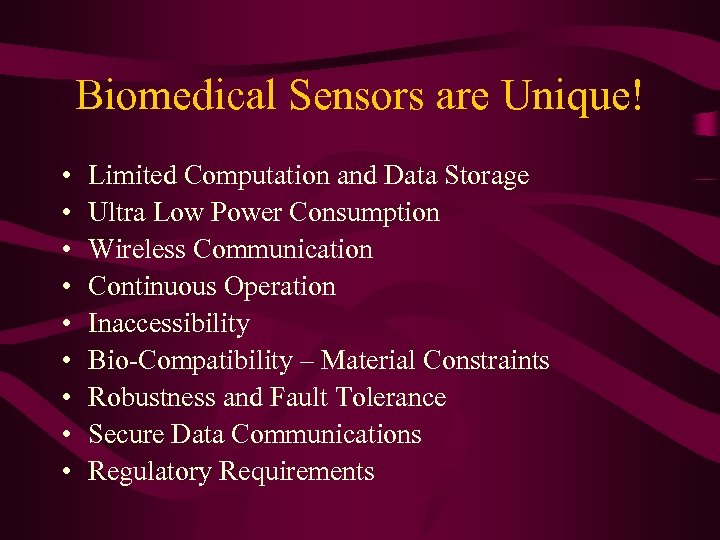
Biomedical Sensors are Unique! • • • Limited Computation and Data Storage Ultra Low Power Consumption Wireless Communication Continuous Operation Inaccessibility Bio-Compatibility – Material Constraints Robustness and Fault Tolerance Secure Data Communications Regulatory Requirements
Example Applications • • • Glucose Level Monitor Transplant Organ Viability Monitor Blood Monitor Retinal and Cortical Prosthesis Cancer Detection/Monitor Health Monitor
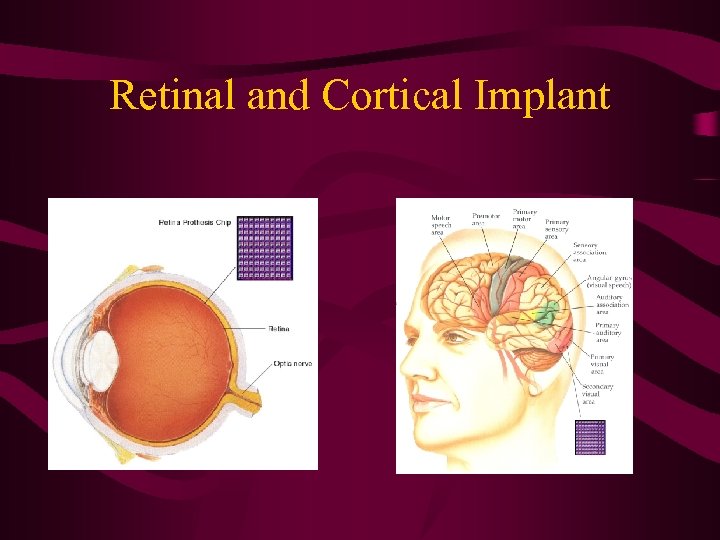
Retinal and Cortical Implant
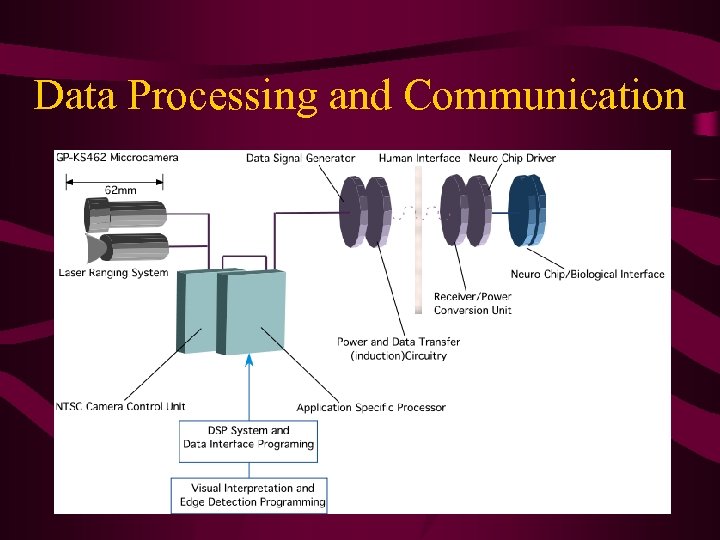
Data Processing and Communication
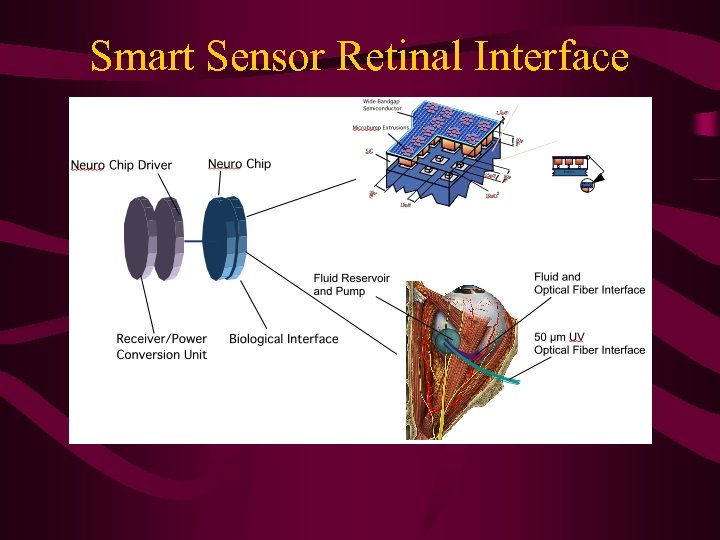
Smart Sensor Retinal Interface
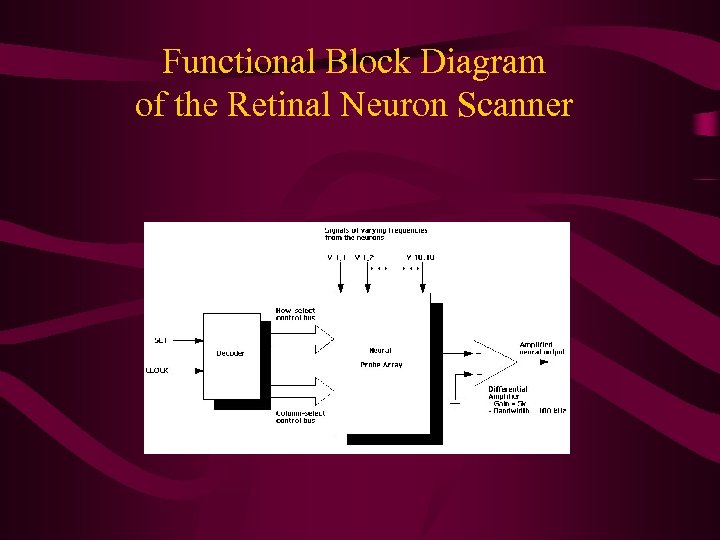
Functional Block Diagram of the Retinal Neuron Scanner
Research Approach • Optimize across protocol layers • Organize communication among sensor nodes • Develop application-specific solutions • Take advantage of biomedical sensor features – fixed topology, pre-defined communication and known membership • Generalize these solutions
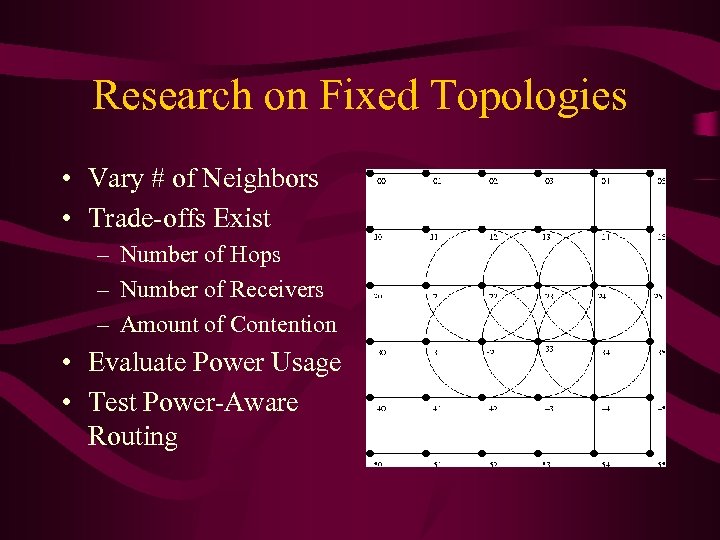
Research on Fixed Topologies • Vary # of Neighbors • Trade-offs Exist – Number of Hops – Number of Receivers – Amount of Contention • Evaluate Power Usage • Test Power-Aware Routing
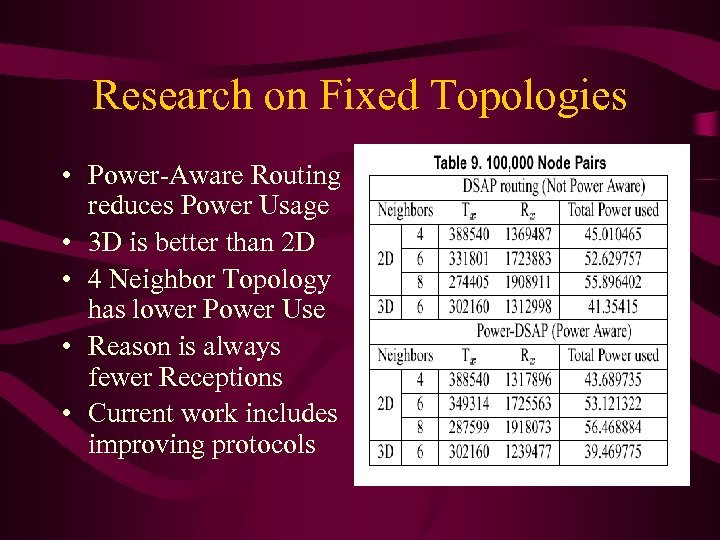
Research on Fixed Topologies • Power-Aware Routing reduces Power Usage • 3 D is better than 2 D • 4 Neighbor Topology has lower Power Use • Reason is always fewer Receptions • Current work includes improving protocols
Research Objectives • Strict Power Management • Efficient Wireless Spectrum Use • Scalability – Support as Many Sensing Elements as Possible • Support Diagnostic Functionality • Standardize Design with Other Research Groups
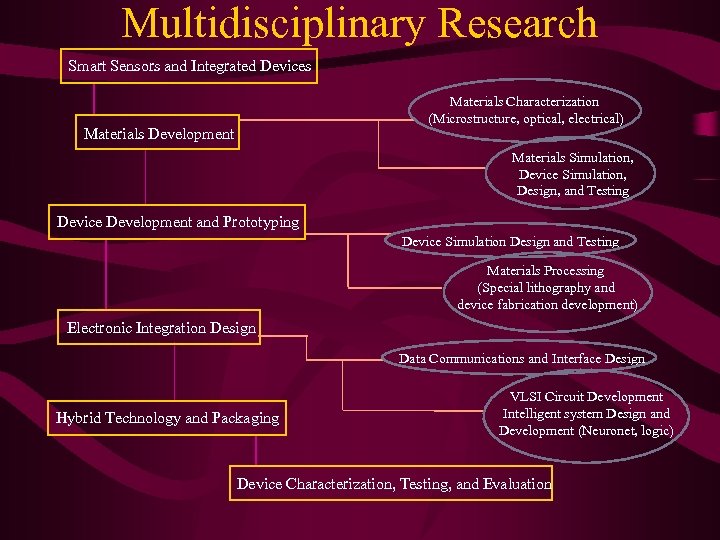
Multidisciplinary Research Smart Sensors and Integrated Devices Materials Characterization (Microstructure, optical, electrical) Materials Development Materials Simulation, Device Simulation, Design, and Testing Device Development and Prototyping Device Simulation Design and Testing Materials Processing (Special lithography and device fabrication development) Electronic Integration Design Data Communications and Interface Design Hybrid Technology and Packaging VLSI Circuit Development Intelligent system Design and Development (Neuronet, logic) Device Characterization, Testing, and Evaluation
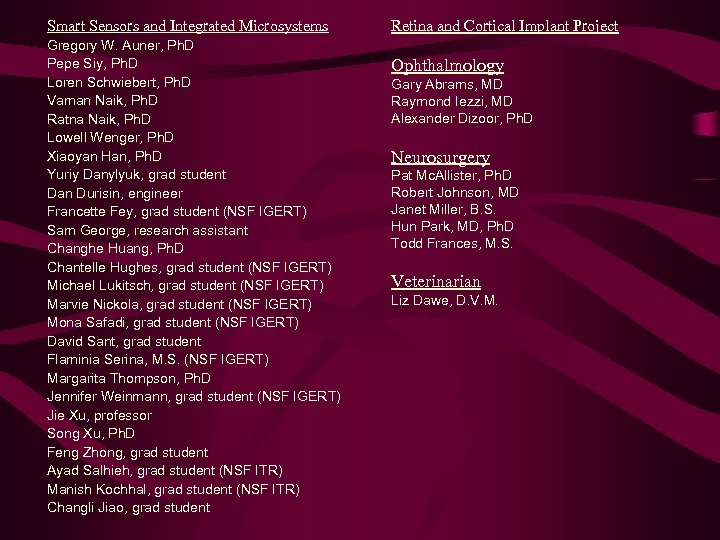
Smart Sensors and Integrated Microsystems Gregory W. Auner, Ph. D Pepe Siy, Ph. D Loren Schwiebert, Ph. D Vaman Naik, Ph. D Ratna Naik, Ph. D Lowell Wenger, Ph. D Xiaoyan Han, Ph. D Yuriy Danylyuk, grad student Dan Durisin, engineer Francette Fey, grad student (NSF IGERT) Sam George, research assistant Changhe Huang, Ph. D Chantelle Hughes, grad student (NSF IGERT) Michael Lukitsch, grad student (NSF IGERT) Marvie Nickola, grad student (NSF IGERT) Mona Safadi, grad student (NSF IGERT) David Sant, grad student Flaminia Serina, M. S. (NSF IGERT) Margarita Thompson, Ph. D Jennifer Weinmann, grad student (NSF IGERT) Jie Xu, professor Song Xu, Ph. D Feng Zhong, grad student Ayad Salhieh, grad student (NSF ITR) Manish Kochhal, grad student (NSF ITR) Changli Jiao, grad student Retina and Cortical Implant Project Ophthalmology Gary Abrams, MD Raymond Iezzi, MD Alexander Dizoor, Ph. D Neurosurgery Pat Mc. Allister, Ph. D Robert Johnson, MD Janet Miller, B. S. Hun Park, MD, Ph. D Todd Frances, M. S. Veterinarian Liz Dawe, D. V. M.
Скачать презентацию Research Challenges in Wireless Networks of Biomedical Sensors
41c1ce2a6bf185ff8d97f82605c8e4dc.ppt