 Скачать презентацию Research and Innovation for Sustainable Development Overview of
d68070223eaa694ebbcfec5715d0b22a.ppt
- Количество слайдов: 29



Research and Innovation for Sustainable Development Overview of ENEA role and activities SIEE 2013 | 4 th CHINA-ITALY INNOVATION FORUM Beijing | 14 -15 -16 November 2013 Marina Leonardi Head of International Relations
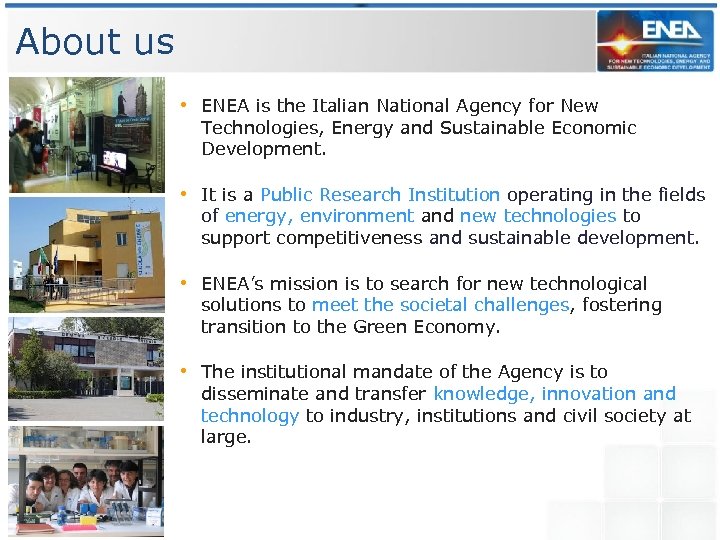
About us • ENEA is the Italian National Agency for New Technologies, Energy and Sustainable Economic Development. • It is a Public Research Institution operating in the fields of energy, environment and new technologies to support competitiveness and sustainable development. • ENEA’s mission is to search for new technological solutions to meet the societal challenges, fostering transition to the Green Economy. • The institutional mandate of the Agency is to disseminate and transfer knowledge, innovation and technology to industry, institutions and civil society at large.
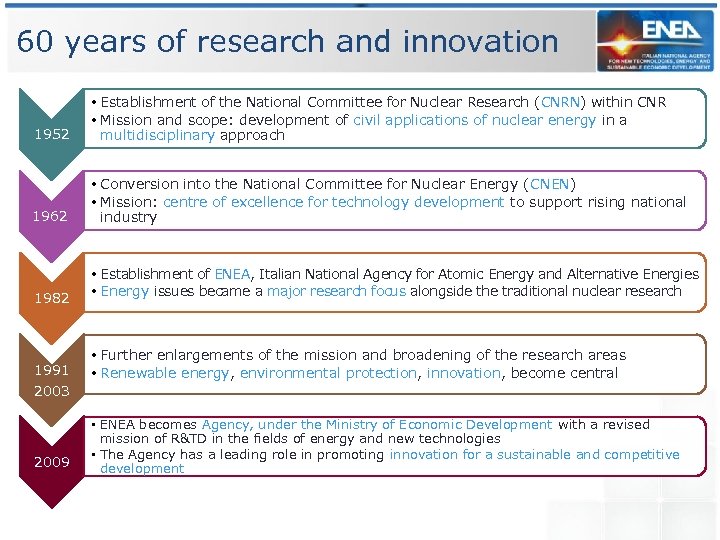
60 years of research and innovation 1952 1962 • Establishment of the National Committee for Nuclear Research (CNRN) within CNR • Mission and scope: development of civil applications of nuclear energy in a multidisciplinary approach • Conversion into the National Committee for Nuclear Energy (CNEN) • Mission: centre of excellence for technology development to support rising national industry 1982 • Establishment of ENEA, Italian National Agency for Atomic Energy and Alternative Energies • Energy issues became a major research focus alongside the traditional nuclear research 1991 • Further enlargements of the mission and broadening of the research areas • Renewable energy, environmental protection, innovation, become central 2003 2009 • ENEA becomes Agency, under the Ministry of Economic Development with a revised mission of R&TD in the fields of energy and new technologies • The Agency has a leading role in promoting innovation for a sustainable and competitive development
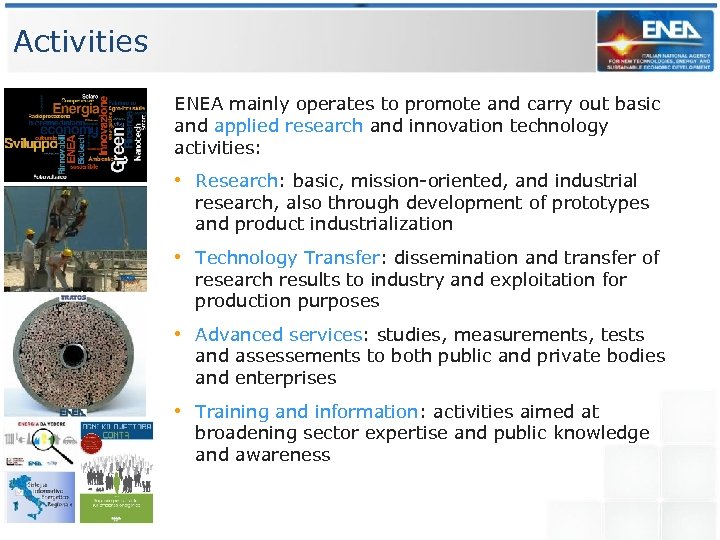
Activities ENEA mainly operates to promote and carry out basic and applied research and innovation technology activities: • Research: basic, mission-oriented, and industrial research, also through development of prototypes and product industrialization • Technology Transfer: dissemination and transfer of research results to industry and exploitation for production purposes • Advanced services: studies, measurements, tests and assessements to both public and private bodies and enterprises • Training and information: activities aimed at broadening sector expertise and public knowledge and awareness
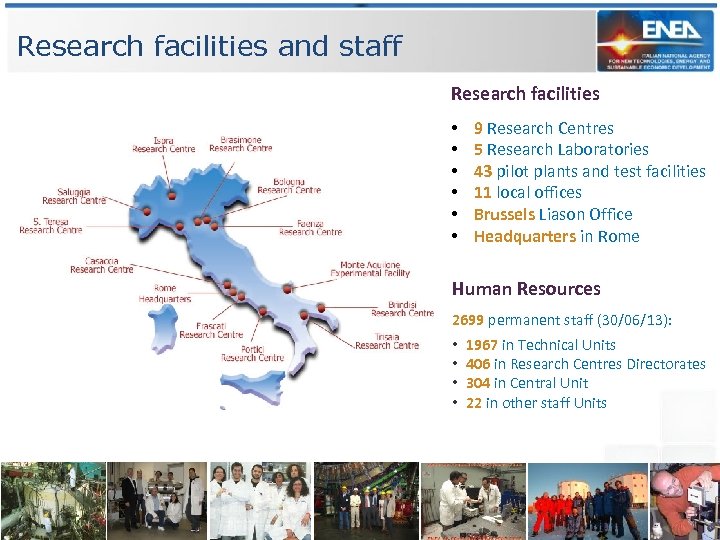
Research facilities and staff Research facilities • • • 9 Research Centres 5 Research Laboratories 43 pilot plants and test facilities 11 local offices Brussels Liason Office Headquarters in Rome Human Resources 2699 permanent staff (30/06/13): • • 1967 in Technical Units 406 in Research Centres Directorates 304 in Central Unit 22 in other staff Units
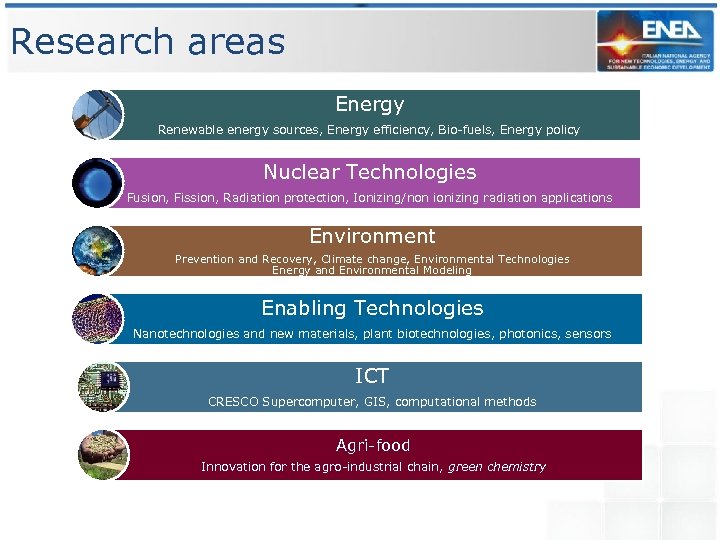
Research areas Energy Renewable energy sources, Energy efficiency, Bio-fuels, Energy policy Nuclear Technologies Fusion, Fission, Radiation protection, Ionizing/non ionizing radiation applications Environment Prevention and Recovery, Climate change, Environmental Technologies Energy and Environmental Modeling Enabling Technologies Nanotechnologies and new materials, plant biotechnologies, photonics, sensors ICT CRESCO Supercomputer, GIS, computational methods Agri-food Innovation for the agro-industrial chain, green chemistry
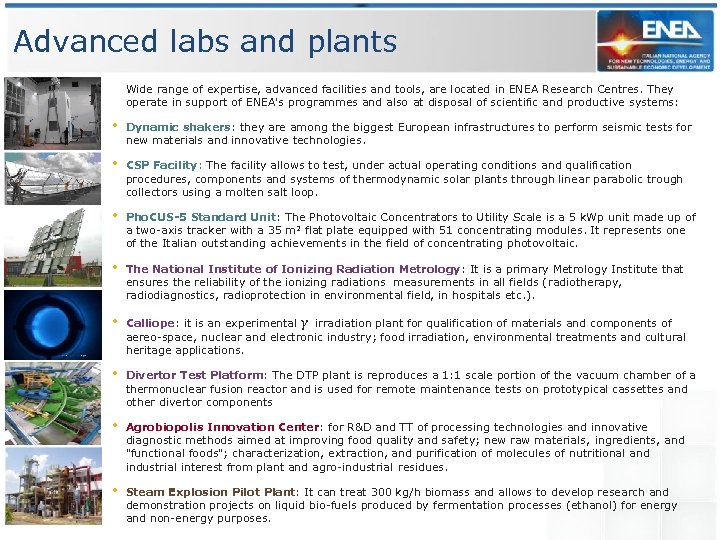
Advanced labs and plants Wide range of expertise, advanced facilities and tools, are located in ENEA Research Centres. They operate in support of ENEA's programmes and also at disposal of scientific and productive systems: • Dynamic shakers: they are among the biggest European infrastructures to perform seismic tests for new materials and innovative technologies. • CSP Facility: The facility allows to test, under actual operating conditions and qualification procedures, components and systems of thermodynamic solar plants through linear parabolic trough collectors using a molten salt loop. • Pho. CUS-5 Standard Unit: The Photovoltaic Concentrators to Utility Scale is a 5 k. Wp unit made up of a two-axis tracker with a 35 m 2 flat plate equipped with 51 concentrating modules. It represents one of the Italian outstanding achievements in the field of concentrating photovoltaic. • The National Institute of Ionizing Radiation Metrology: It is a primary Metrology Institute that ensures the reliability of the ionizing radiations measurements in all fields (radiotherapy, radiodiagnostics, radioprotection in environmental field, in hospitals etc. ). • Calliope: it is an experimental γ irradiation plant for qualification of materials and components of aereo-space, nuclear and electronic industry; food irradiation, environmental treatments and cultural heritage applications. • Divertor Test Platform: The DTP plant is reproduces a 1: 1 scale portion of the vacuum chamber of a thermonuclear fusion reactor and is used for remote maintenance tests on prototypical cassettes and other divertor components • Agrobiopolis Innovation Center: for R&D and TT of processing technologies and innovative diagnostic methods aimed at improving food quality and safety; new raw materials, ingredients, and "functional foods"; characterization, extraction, and purification of molecules of nutritional and industrial interest from plant and agro-industrial residues. • Steam Explosion Pilot Plant: It can treat 300 kg/h biomass and allows to develop research and demonstration projects on liquid bio-fuels produced by fermentation processes (ethanol) for energy and non-energy purposes.
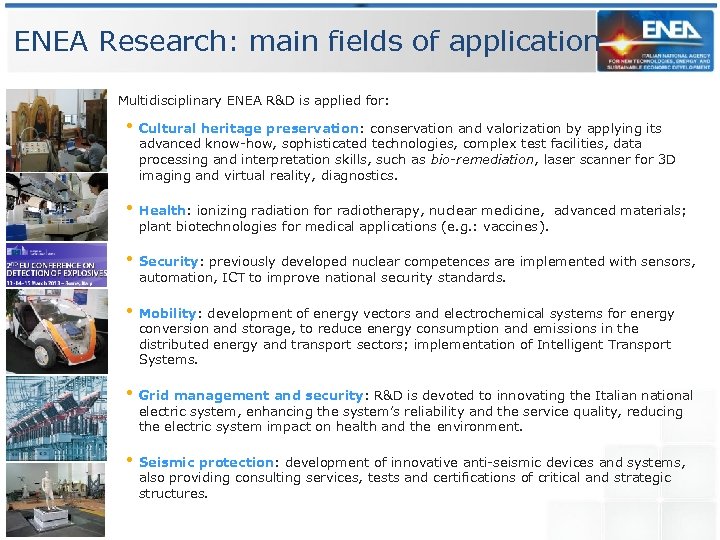
ENEA Research: main fields of application Multidisciplinary ENEA R&D is applied for: • Cultural heritage preservation: conservation and valorization by applying its advanced know-how, sophisticated technologies, complex test facilities, data processing and interpretation skills, such as bio-remediation, laser scanner for 3 D imaging and virtual reality, diagnostics. • Health: ionizing radiation for radiotherapy, nuclear medicine, advanced materials; plant biotechnologies for medical applications (e. g. : vaccines). • Security: previously developed nuclear competences are implemented with sensors, automation, ICT to improve national security standards. • Mobility: development of energy vectors and electrochemical systems for energy conversion and storage, to reduce energy consumption and emissions in the distributed energy and transport sectors; implementation of Intelligent Transport Systems. • Grid management and security: R&D is devoted to innovating the Italian national electric system, enhancing the system’s reliability and the service quality, reducing the electric system impact on health and the environment. • Seismic protection: development of innovative anti-seismic devices and systems, also providing consulting services, tests and certifications of critical and strategic structures.
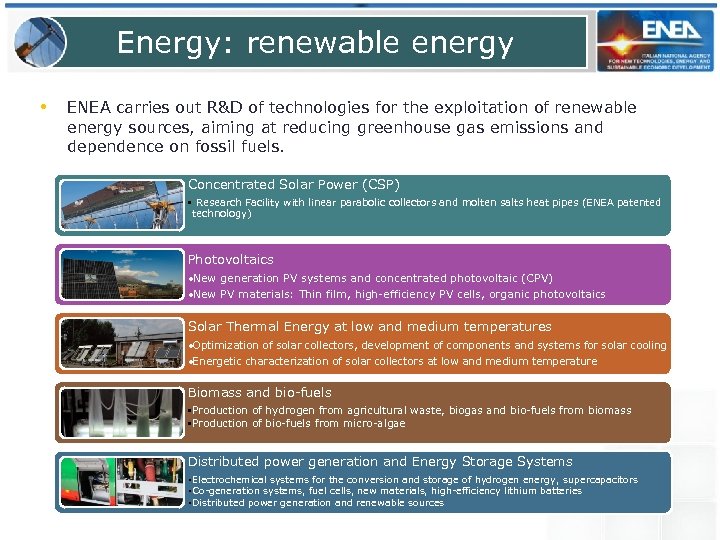
Energy: renewable energy • ENEA carries out R&D of technologies for the exploitation of renewable energy sources, aiming at reducing greenhouse gas emissions and dependence on fossil fuels. Concentrated Solar Power (CSP) • Research Facility with linear parabolic collectors and molten salts heat pipes (ENEA patented technology) Photovoltaics New generation PV systems and concentrated photovoltaic (CPV) New PV materials: Thin film, high-efficiency PV cells, organic photovoltaics Solar Thermal Energy at low and medium temperatures Optimization of solar collectors, development of components and systems for solar cooling Energetic characterization of solar collectors at low and medium temperature Biomass and bio-fuels • Production of hydrogen from agricultural waste, biogas and bio-fuels from biomass • Production of bio-fuels from micro-algae Distributed power generation and Energy Storage Systems • Electrochemical systems for the conversion and storage of hydrogen energy, supercapacitors • Co-generation systems, fuel cells, new materials, high-efficiency lithium batteries • Distributed power generation and renewable sources
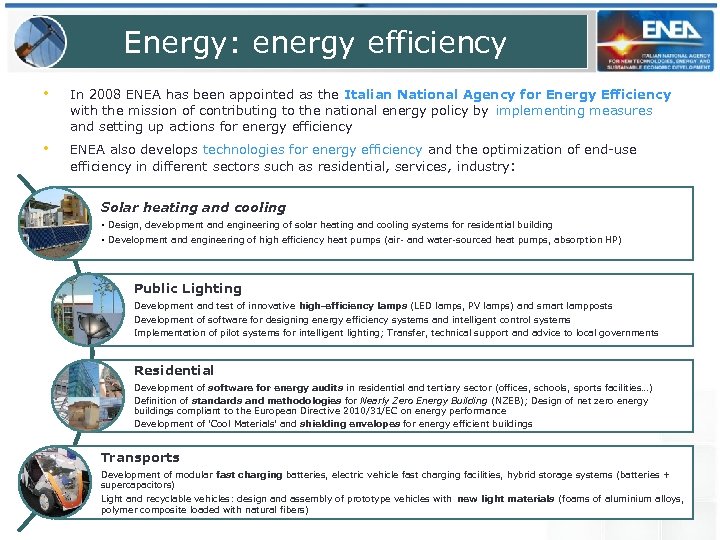
Energy: energy efficiency • In 2008 ENEA has been appointed as the Italian National Agency for Energy Efficiency with the mission of contributing to the national energy policy by implementing measures and setting up actions for energy efficiency • ENEA also develops technologies for energy efficiency and the optimization of end-use efficiency in different sectors such as residential, services, industry: Solar heating and cooling • Design, development and engineering of solar heating and cooling systems for residential building • Development and engineering of high efficiency heat pumps (air- and water-sourced heat pumps, absorption HP) Public Lighting Development and test of innovative high-efficiency lamps (LED lamps, PV lamps) and smart lampposts Development of software for designing energy efficiency systems and intelligent control systems Implementation of pilot systems for intelligent lighting; Transfer, technical support and advice to local governments Residential Development of software for energy audits in residential and tertiary sector (offices, schools, sports facilities…) Definition of standards and methodologies for Nearly Zero Energy Building (NZEB); Design of net zero energy buildings compliant to the European Directive 2010/31/EC on energy performance Development of ’Cool Materials’ and shielding envelopes for energy efficient buildings Transports Development of modular fast charging batteries, electric vehicle fast charging facilities, hybrid storage systems (batteries + supercapacitors) Light and recyclable vehicles: design and assembly of prototype vehicles with new light materials (foams of aluminium alloys, polymer composite loaded with natural fibers)
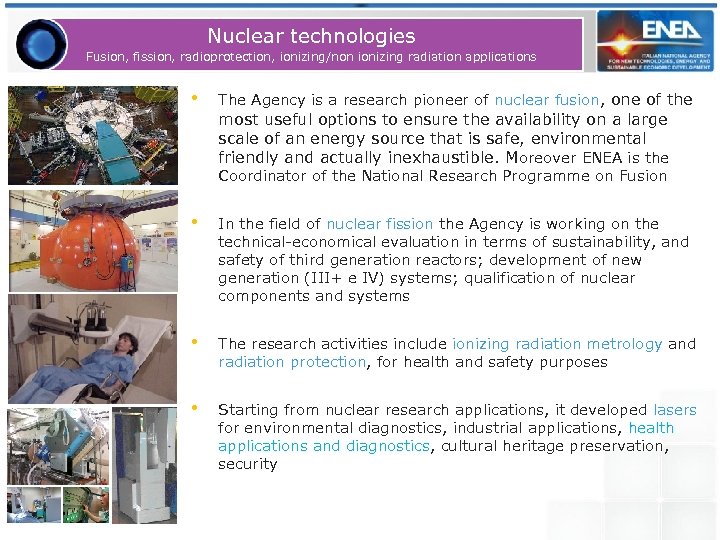
Nuclear technologies Fusion, fission, radioprotection, ionizing/non ionizing radiation applications • The Agency is a research pioneer of nuclear fusion, one of the most useful options to ensure the availability on a large scale of an energy source that is safe, environmental friendly and actually inexhaustible. Moreover ENEA is the Coordinator of the National Research Programme on Fusion • In the field of nuclear fission the Agency is working on the technical-economical evaluation in terms of sustainability, and safety of third generation reactors; development of new generation (III+ e IV) systems; qualification of nuclear components and systems • The research activities include ionizing radiation metrology and radiation protection, for health and safety purposes • Starting from nuclear research applications, it developed lasers for environmental diagnostics, industrial applications, health applications and diagnostics, cultural heritage preservation, security
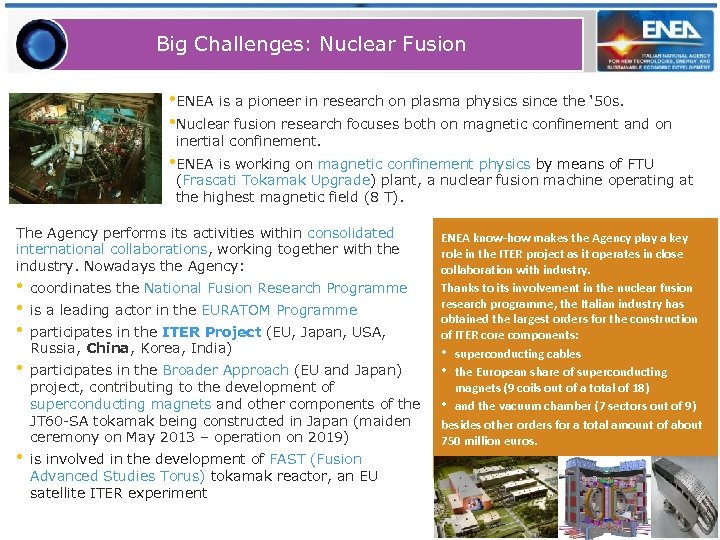
Big Challenges: Nuclear Fusion • ENEA is a pioneer in research on plasma physics since the ‘ 50 s. • Nuclear fusion research focuses both on magnetic confinement and on inertial confinement. • ENEA is working on magnetic confinement physics by means of FTU (Frascati Tokamak Upgrade) plant, a nuclear fusion machine operating at the highest magnetic field (8 T). The Agency performs its activities within consolidated international collaborations, working together with the industry. Nowadays the Agency: • coordinates the National Fusion Research Programme • is a leading actor in the EURATOM Programme • participates in the ITER Project (EU, Japan, USA, Russia, China, Korea, India) • participates in the Broader Approach (EU and Japan) project, contributing to the development of superconducting magnets and other components of the JT 60 -SA tokamak being constructed in Japan (maiden ceremony on May 2013 – operation on 2019) • is involved in the development of FAST (Fusion Advanced Studies Torus) tokamak reactor, an EU satellite ITER experiment ENEA know-how makes the Agency play a key role in the ITER project as it operates in close collaboration with industry. Thanks to its involvement in the nuclear fusion research programme, the Italian industry has obtained the largest orders for the construction of ITER core components: • superconducting cables • the European share of superconducting magnets (9 coils out of a total of 18) • and the vacuum chamber (7 sectors out of 9) besides other orders for a total amount of about 750 million euros.
Enabling technologies Nanotech and new materials, plant biotech, photonics, sensors The Agency works in all those fields where the enabling technologies make technology breakthrough possible: • Nanotechnologies, nanomaterials and advanced materials in: energy and transport, with main advantages in terms of safety, efficiency and costs reduction; residential sector, with increased reliability and resistance, energy efficiency and environmental building sustainability; ceramic industry, chemistry, biomedicine, aeronautics, automotive, agri-food, etc. • Photonics in the fields of high energy physics, aerospace, bio-medical and industrial diagnostics; e. g. : fiber optics systems for the monitoring of residential buildings, transports, cultural heritage, remote sensing systems for aerospace • Plant biotechnologies for human nutrition, food quality and safety, green chemistry, biopharmaceuticals plant vaccines, bioenergy, environmental application and bioremediation ENEA also develops key enabling technologies for the energy sector in an international cooperation context e. g. : in cooperation with the French Commissariat à l’énergie atomique et aux énergies alternatives (CEA) KETs are the hearth and brain of the industrial innovation and possess a still not fully expressed potential, to create new qualified employment in Europe. Antonio Tajani, Vice President of the EU Commission
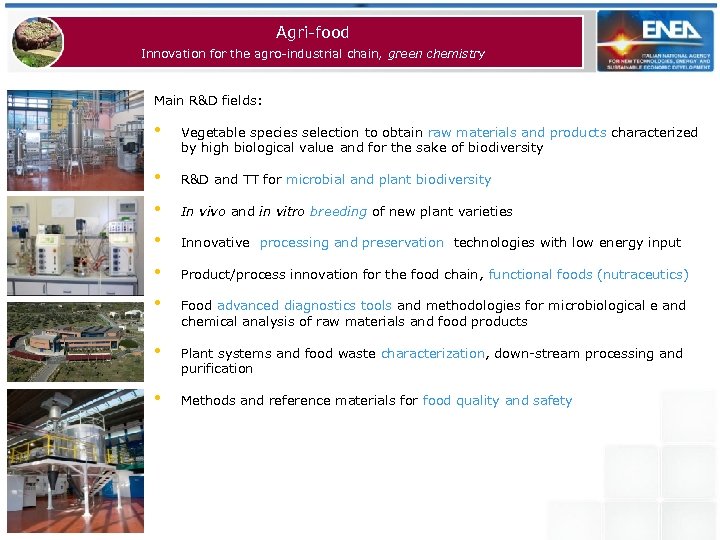
Agri-food Innovation for the agro-industrial chain, green chemistry Main R&D fields: • Vegetable species selection to obtain raw materials and products characterized by high biological value and for the sake of biodiversity • R&D and TT for microbial and plant biodiversity • In vivo and in vitro breeding of new plant varieties • Innovative processing and preservation technologies with low energy input • Product/process innovation for the food chain, functional foods (nutraceutics) • Food advanced diagnostics tools and methodologies for microbiological e and chemical analysis of raw materials and food products • Plant systems and food waste characterization, down-stream processing and purification • Methods and reference materials for food quality and safety
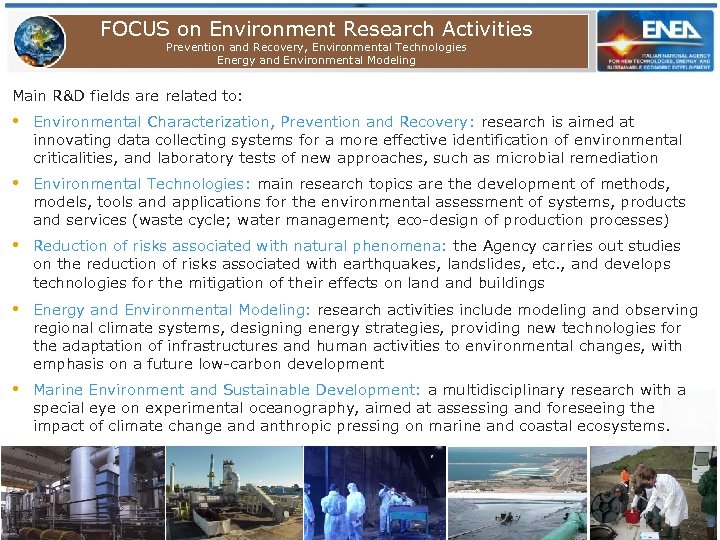
FOCUS on Environment Research Activities Prevention and Recovery, Environmental Technologies Energy and Environmental Modeling Main R&D fields are related to: • Environmental Characterization, Prevention and Recovery: research is aimed at innovating data collecting systems for a more effective identification of environmental criticalities, and laboratory tests of new approaches, such as microbial remediation • Environmental Technologies: main research topics are the development of methods, models, tools and applications for the environmental assessment of systems, products and services (waste cycle; water management; eco-design of production processes) • Reduction of risks associated with natural phenomena: the Agency carries out studies on the reduction of risks associated with earthquakes, landslides, etc. , and develops technologies for the mitigation of their effects on land buildings • Energy and Environmental Modeling: research activities include modeling and observing regional climate systems, designing energy strategies, providing new technologies for the adaptation of infrastructures and human activities to environmental changes, with emphasis on a future low-carbon development • Marine Environment and Sustainable Development: a multidisciplinary research with a special eye on experimental oceanography, aimed at assessing and foreseeing the impact of climate change and anthropic pressing on marine and coastal ecosystems.
Environmental Characterization, Prevention and Recovery Environmental characterization • In the framework of remediation interventions, the Agency performs basic research and analytical support to public organizations and institutions for the preliminary characterization of contaminated sites and post-intervention analysis • The Agency also implement monitoring plan for remediation interventions, by using innovative approaches for the definition of the natural geochemical background levels of potentially toxic elements and of organic micropollutants • Main expertise are related to development, optimization and validation of analytical methods also for organic pollutants in environmental matrices. In particular, organometallic compounds (organotins, methylmercury. . ), biocides for antifouling paints and different classes of pesticides. • ENEA also studies models for the prediction of contaminants’ environmental behaviour, the effects of the intervention strategies on ecosystems, and the ecological, social and economical impacts of such interventions.
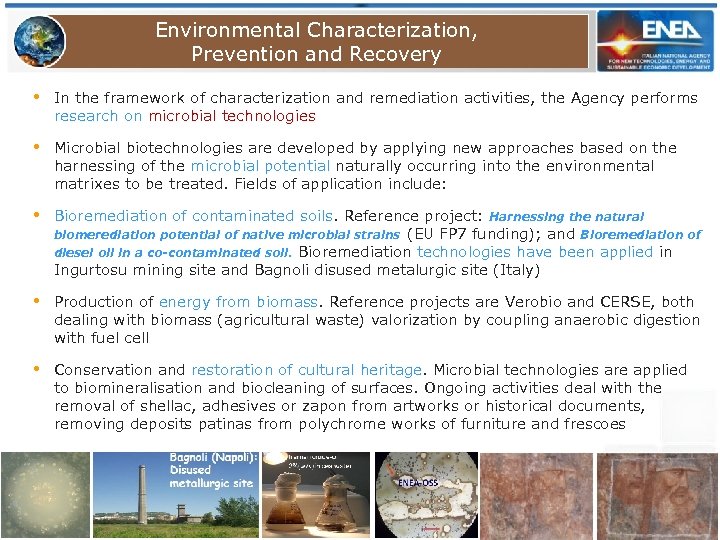
Environmental Characterization, Prevention and Recovery • In the framework of characterization and remediation activities, the Agency performs research on microbial technologies • Microbial biotechnologies are developed by applying new approaches based on the harnessing of the microbial potential naturally occurring into the environmental matrixes to be treated. Fields of application include: • Bioremediation of contaminated soils. Reference project: Harnessing the natural biomerediation potential of native microbial strains (EU FP 7 funding); and Bioremediation of diesel oil in a co-contaminated soil. Bioremediation technologies have been applied in Ingurtosu mining site and Bagnoli disused metalurgic site (Italy) • Production of energy from biomass. Reference projects are Verobio and CERSE, both dealing with biomass (agricultural waste) valorization by coupling anaerobic digestion with fuel cell • Conservation and restoration of cultural heritage. Microbial technologies are applied to biomineralisation and biocleaning of surfaces. Ongoing activities deal with the removal of shellac, adhesives or zapon from artworks or historical documents, removing deposits patinas from polychrome works of furniture and frescoes
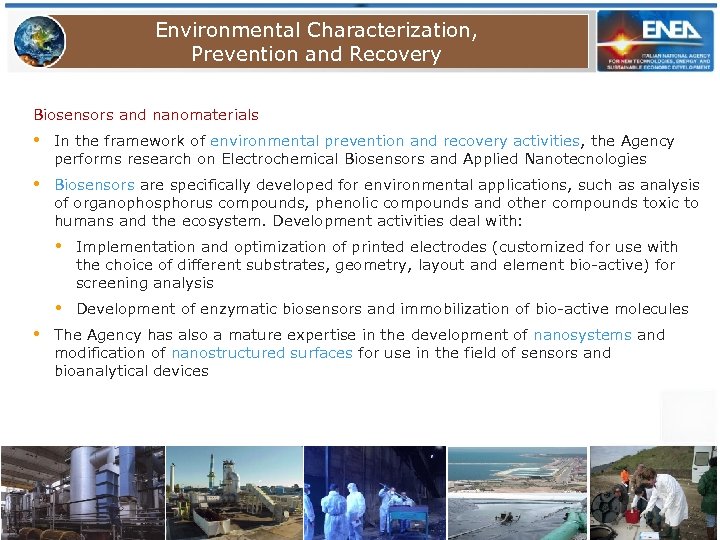
Environmental Characterization, Prevention and Recovery Biosensors and nanomaterials • In the framework of environmental prevention and recovery activities, the Agency performs research on Electrochemical Biosensors and Applied Nanotecnologies • Biosensors are specifically developed for environmental applications, such as analysis of organophosphorus compounds, phenolic compounds and other compounds toxic to humans and the ecosystem. Development activities deal with: • Implementation and optimization of printed electrodes (customized for use with the choice of different substrates, geometry, layout and element bio-active) for screening analysis • Development of enzymatic biosensors and immobilization of bio-active molecules • The Agency has also a mature expertise in the development of nanosystems and modification of nanostructured surfaces for use in the field of sensors and bioanalytical devices
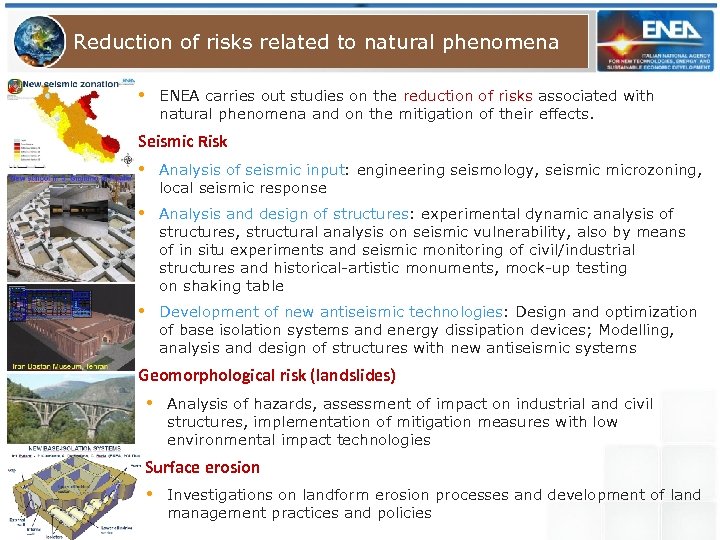
Reduction of risks related to natural phenomena • ENEA carries out studies on the reduction of risks associated with natural phenomena and on the mitigation of their effects. Seismic Risk • Analysis of seismic input: engineering seismology, seismic microzoning, local seismic response • Analysis and design of structures: experimental dynamic analysis of structures, structural analysis on seismic vulnerability, also by means of in situ experiments and seismic monitoring of civil/industrial structures and historical-artistic monuments, mock-up testing on shaking table • Development of new antiseismic technologies: Design and optimization of base isolation systems and energy dissipation devices; Modelling, analysis and design of structures with new antiseismic systems Geomorphological risk (landslides) • Analysis of hazards, assessment of impact on industrial and civil structures, implementation of mitigation measures with low environmental impact technologies Surface erosion • Investigations on landform erosion processes and development of land management practices and policies
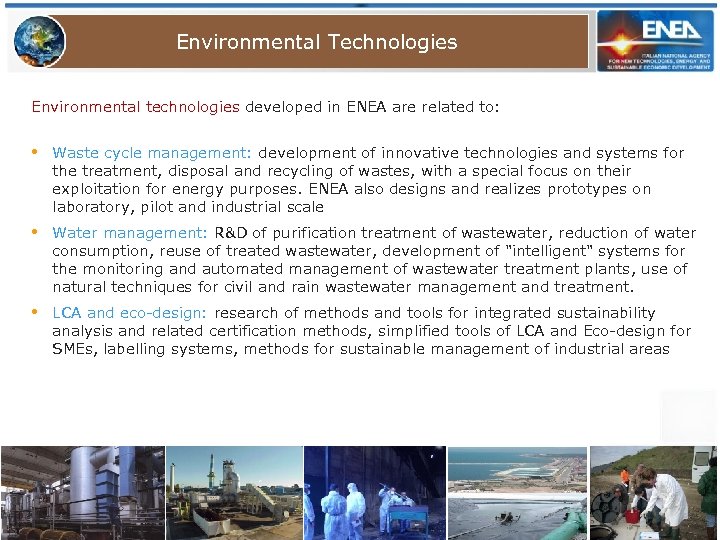
Environmental Technologies Environmental technologies developed in ENEA are related to: • Waste cycle management: development of innovative technologies and systems for the treatment, disposal and recycling of wastes, with a special focus on their exploitation for energy purposes. ENEA also designs and realizes prototypes on laboratory, pilot and industrial scale • Water management: R&D of purification treatment of wastewater, reduction of water consumption, reuse of treated wastewater, development of "intelligent" systems for the monitoring and automated management of wastewater treatment plants, use of natural techniques for civil and rain wastewater management and treatment. • LCA and eco-design: research of methods and tools for integrated sustainability analysis and related certification methods, simplified tools of LCA and Eco-design for SMEs, labelling systems, methods for sustainable management of industrial areas
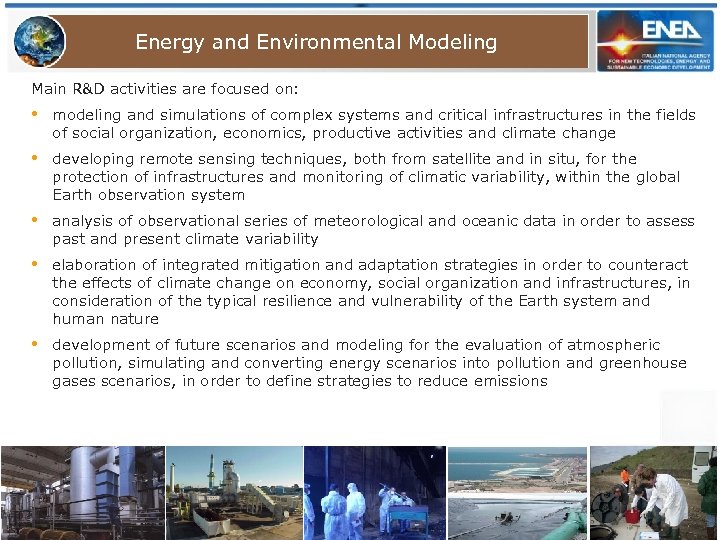
Energy and Environmental Modeling Main R&D activities are focused on: • modeling and simulations of complex systems and critical infrastructures in the fields of social organization, economics, productive activities and climate change • developing remote sensing techniques, both from satellite and in situ, for the protection of infrastructures and monitoring of climatic variability, within the global Earth observation system • analysis of observational series of meteorological and oceanic data in order to assess past and present climate variability • elaboration of integrated mitigation and adaptation strategies in order to counteract the effects of climate change on economy, social organization and infrastructures, in consideration of the typical resilience and vulnerability of the Earth system and human nature • development of future scenarios and modeling for the evaluation of atmospheric pollution, simulating and converting energy scenarios into pollution and greenhouse gases scenarios, in order to define strategies to reduce emissions
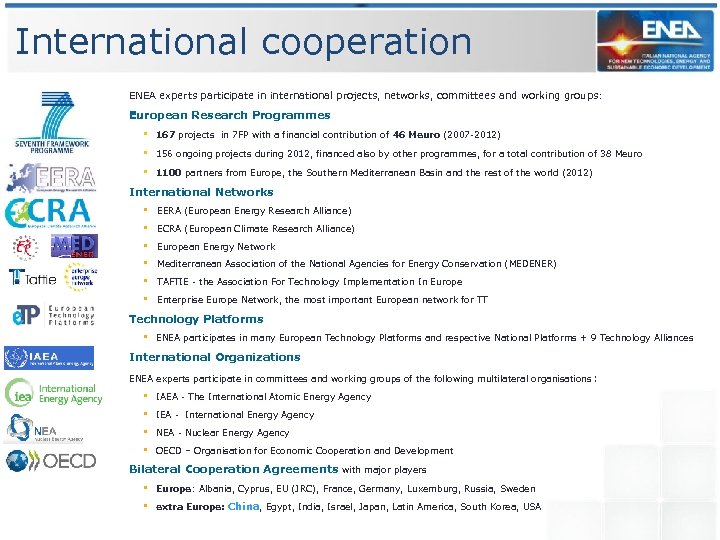
International cooperation ENEA experts participate in international projects, networks, committees and working groups: European Research Programmes • • • 167 projects in 7 FP with a financial contribution of 46 Meuro (2007 -2012) 156 ongoing projects during 2012, financed also by other programmes, for a total contribution of 38 Meuro 1100 partners from Europe, the Southern Mediterranean Basin and the rest of the world (2012) International Networks • • • EERA (European Energy Research Alliance) ECRA (European Climate Research Alliance) European Energy Network Mediterranean Association of the National Agencies for Energy Conservation (MEDENER) TAFTIE - the Association For Technology Implementation In Europe Enterprise Europe Network, the most important European network for TT Technology Platforms • ENEA participates in many European Technology Platforms and respective National Platforms + 9 Technology Alliances International Organizations ENEA experts participate in committees and working groups of the following multilateral organisations : • • IAEA - The International Atomic Energy Agency IEA - International Energy Agency NEA - Nuclear Energy Agency OECD – Organisation for Economic Cooperation and Development Bilateral Cooperation Agreements with major players • • Europe: Albania, Cyprus, EU (JRC), France, Germany, Luxemburg, Russia, Sweden extra Europe: China, Egypt, India, Israel, Japan, Latin America, South Korea, USA
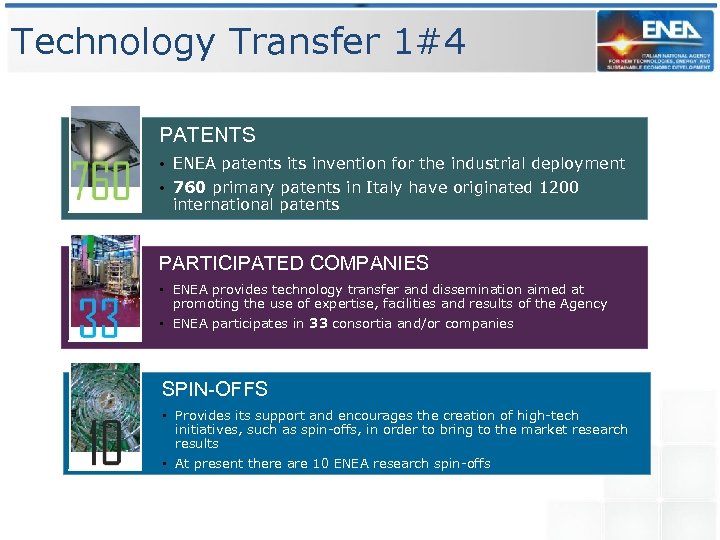
Technology Transfer 1#4 PATENTS • ENEA patents invention for the industrial deployment • 760 primary patents in Italy have originated 1200 international patents PARTICIPATED COMPANIES • ENEA provides technology transfer and dissemination aimed at promoting the use of expertise, facilities and results of the Agency • ENEA participates in 33 consortia and/or companies SPIN-OFFS • Provides its support and encourages the creation of high-tech initiatives, such as spin-offs, in order to bring to the market research results • At present there are 10 ENEA research spin-offs
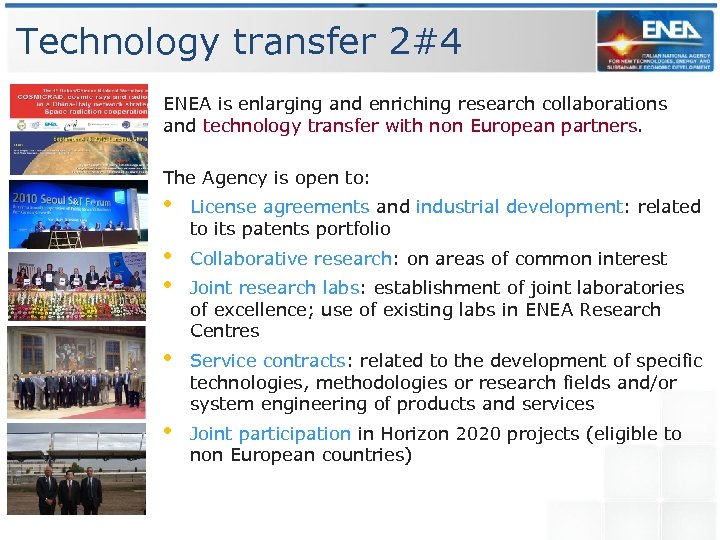
Technology transfer 2#4 ENEA is enlarging and enriching research collaborations and technology transfer with non European partners. The Agency is open to: • License agreements and industrial development: related to its patents portfolio • • Collaborative research: on areas of common interest • Service contracts: related to the development of specific technologies, methodologies or research fields and/or system engineering of products and services • Joint participation in Horizon 2020 projects (eligible to non European countries) Joint research labs: establishment of joint laboratories of excellence; use of existing labs in ENEA Research Centres
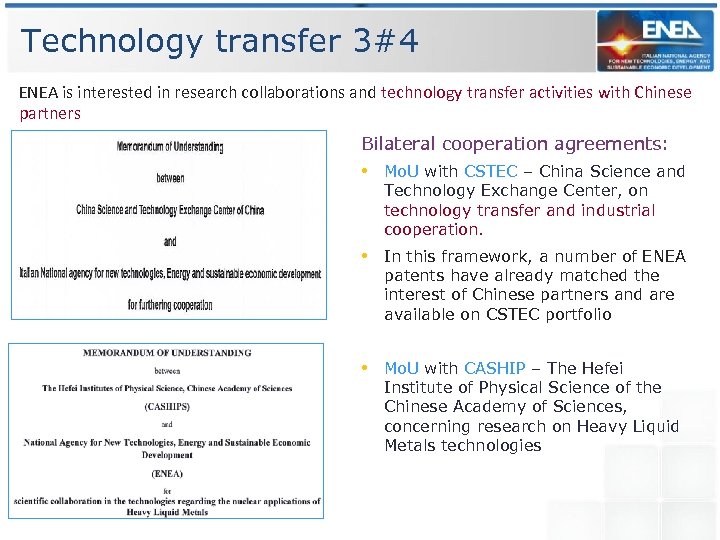
Technology transfer 3#4 ENEA is interested in research collaborations and technology transfer activities with Chinese partners Bilateral cooperation agreements: • Mo. U with CSTEC – China Science and Technology Exchange Center, on technology transfer and industrial cooperation. • In this framework, a number of ENEA CSTEC patents have already matched the interest of Chinese partners and are available on CSTEC portfolio • Mo. U with CASHIP – The Hefei Institute of Physical Science of the Chinese Academy of Sciences, concerning research on Heavy Liquid Metals technologies
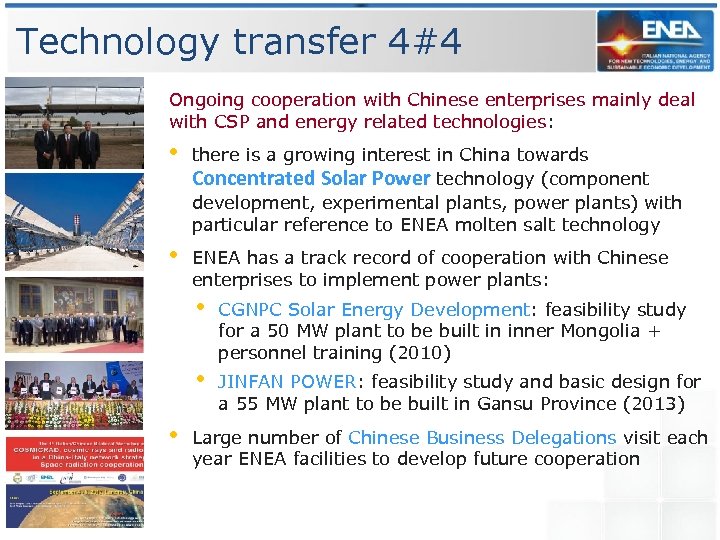
Technology transfer 4#4 Ongoing cooperation with Chinese enterprises mainly deal with CSP and energy related technologies: • there is a growing interest in China towards Concentrated Solar Power technology (component development, experimental plants, power plants) with particular reference to ENEA molten salt technology • ENEA has a track record of cooperation with Chinese enterprises to implement power plants: • • • CGNPC Solar Energy Development: feasibility study for a 50 MW plant to be built in inner Mongolia + personnel training (2010) JINFAN POWER: feasibility study and basic design for a 55 MW plant to be built in Gansu Province (2013) Large number of Chinese Business Delegations visit each year ENEA facilities to develop future cooperation
Further cooperation: some topics Some proposed topics for further cooperation deal with: • Biobased products from poultry dejections: poultry manure/dejections can be used as organic fertilizer or as bating agent for the tanning of leather/hides • Low impact bioremediation technology to reduce Methane emissions and hazardous conditions • • Recover of rare earths from waste Second generation bio-fuels: R&TD is focused on thermochemical and CSTEC biochemical conversion processes of lignocellulosic materials such as gasification into hydrogen and carbon oxide, and the fermentation of carbohydrates into ethanol, as well as the production of hydrogen from fermentation of humid biomass (agricultural waste, urban waste etc. ).
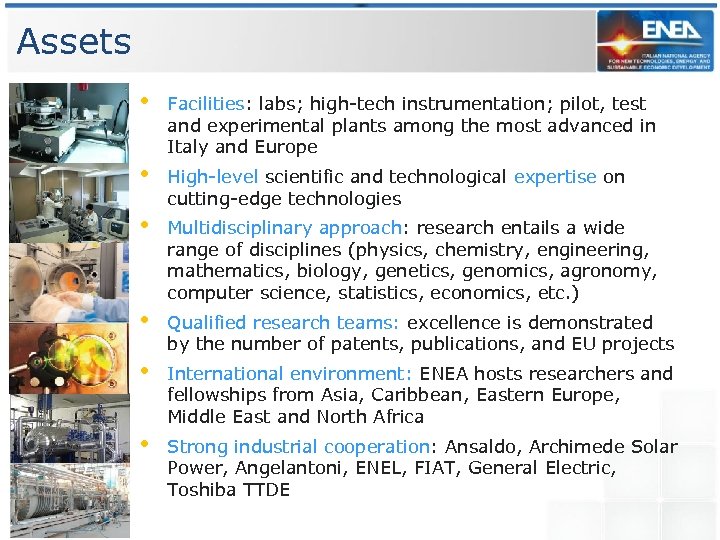
Assets • Facilities: labs; high-tech instrumentation; pilot, test and experimental plants among the most advanced in Italy and Europe • High-level scientific and technological expertise on cutting-edge technologies • Multidisciplinary approach: research entails a wide range of disciplines (physics, chemistry, engineering, mathematics, biology, genetics, genomics, agronomy, computer science, statistics, economics, etc. ) • Qualified research teams: excellence is demonstrated by the number of patents, publications, and EU projects • International environment: ENEA hosts researchers and fellowships from Asia, Caribbean, Eastern Europe, Middle East and North Africa • Strong industrial cooperation: Ansaldo, Archimede Solar Power, Angelantoni, ENEL, FIAT, General Electric, Toshiba TTDE
Thank you for your kind attention! ENEA International Relations relint@enea. it www. enea. it/en
Скачать презентацию Research and Innovation for Sustainable Development Overview of
d68070223eaa694ebbcfec5715d0b22a.ppt