


 Скачать презентацию Requirements Expression and Modelling Exchanging Requirements Expression Modelling
b7c9f5a9197ddc71daaaf844294ddf0e.ppt
- Количество слайдов: 30
 Requirements Expression and Modelling Exchanging Requirements Expression Modelling
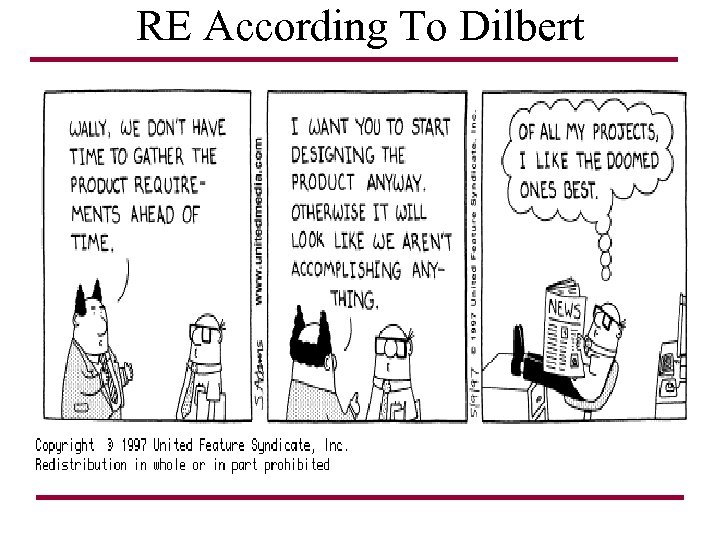 RE According To Dilbert
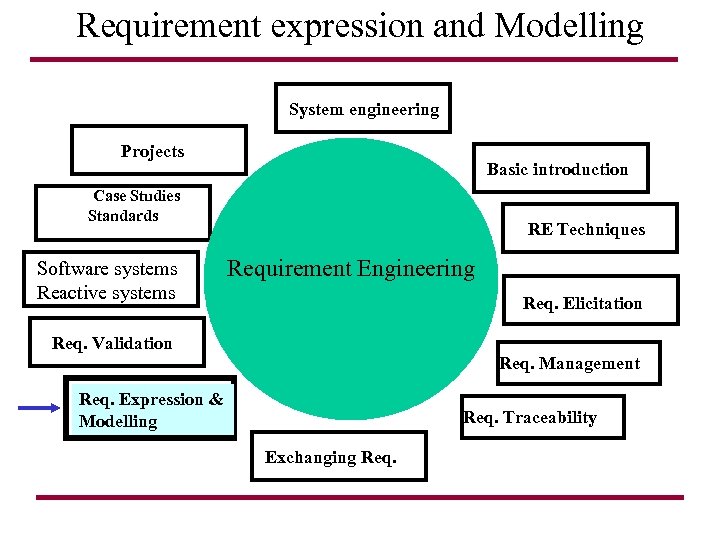 Requirement expression and Modelling System engineering Projects Basic introduction Case Studies Standards Software systems Reactive systems RE Techniques Requirement Engineering Req. Elicitation Req. Validation Req. Management Req. Expression & Modelling Req. Traceability Exchanging Req.
 Introduction Most confused notion in requirement engineering : It concerns the notation in view for exchange, communication and validation for further development
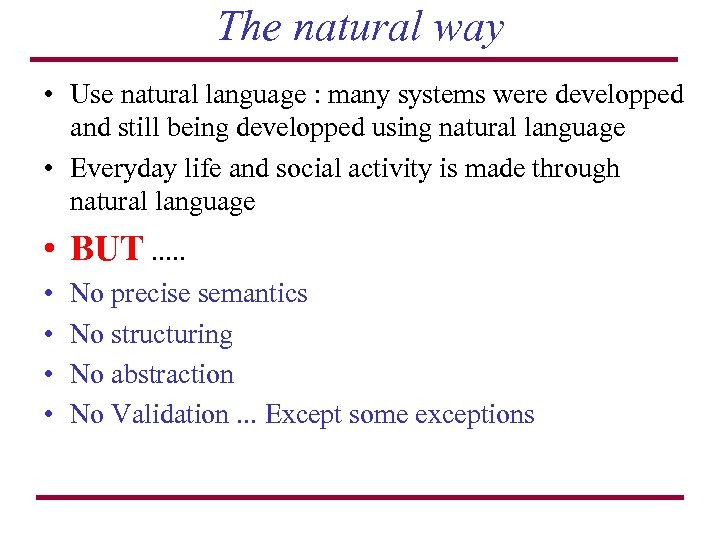 The natural way • Use natural language : many systems were developped and still being developped using natural language • Everyday life and social activity is made through natural language • BUT. . . • • No precise semantics No structuring No abstraction No Validation. . . Except some exceptions
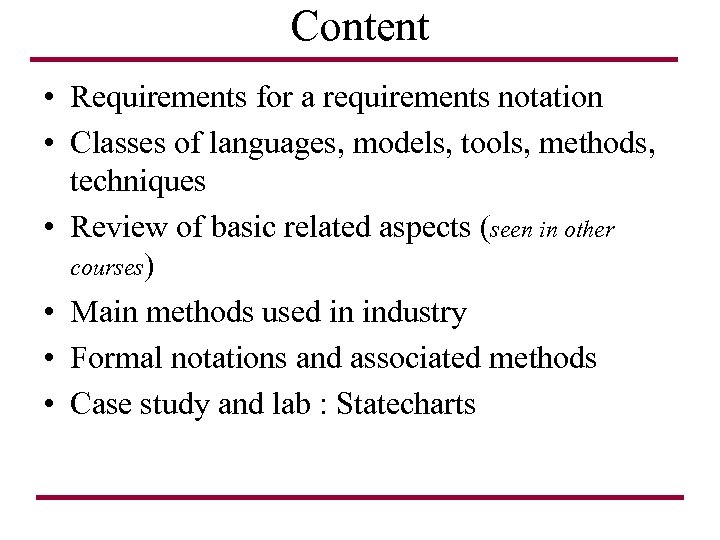 Content • Requirements for a requirements notation • Classes of languages, models, tools, methods, techniques • Review of basic related aspects (seen in other courses) • Main methods used in industry • Formal notations and associated methods • Case study and lab : Statecharts
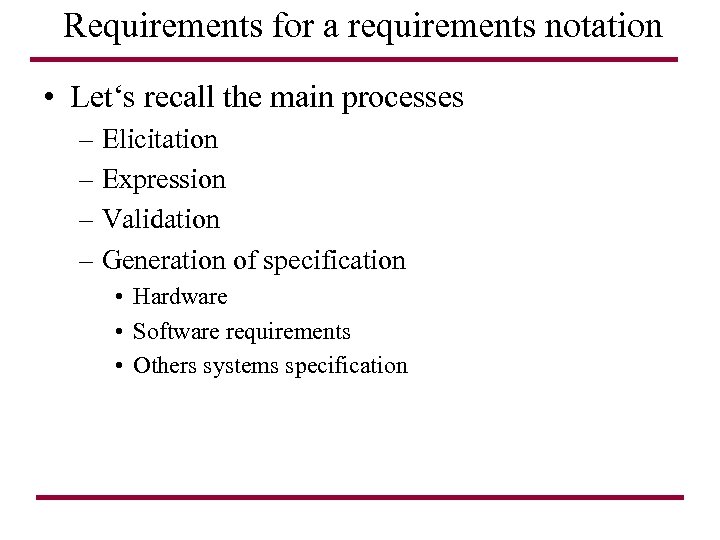 Requirements for a requirements notation • Let‘s recall the main processes – Elicitation – Expression – Validation – Generation of specification • Hardware • Software requirements • Others systems specification
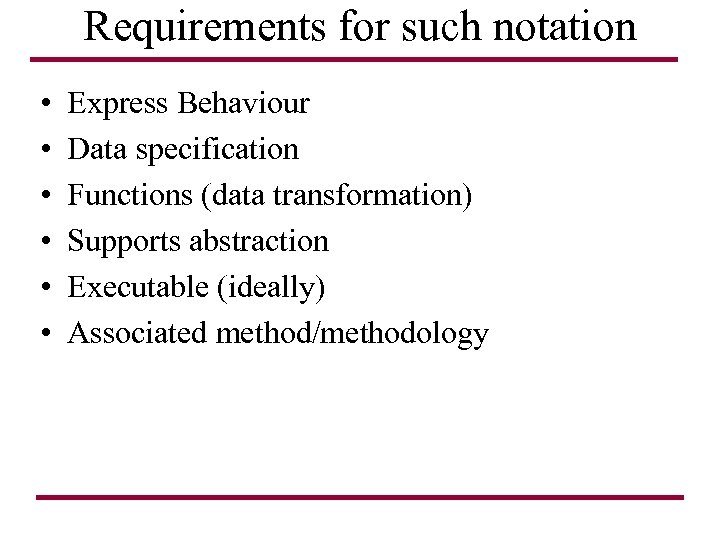 Requirements for such notation • • • Express Behaviour Data specification Functions (data transformation) Supports abstraction Executable (ideally) Associated method/methodology
 What to express • • Requirements that can be understood That can have a single meaning That can be refined when needed That can strcturerd for managing inconsistencies and changes
 The modelling Issue • Modelling can guide elicitation • Modelling can provide a measure of progess • Modelling can help to uncover problems (Inconsistencies) • Central concepts - Abstraction Process modelling Data Modelling Data Flow Behaviour Etc. . .
 Example • The system must be reliable • 1. Not precise • 2. Qualitative attribute • 3. Add a quantitative attribute • Context in which le system must be reliable (the context means system internal context and environment) Writing good requirements : syntax and semantics as any statement
 Classes of languages, models, tools, methodes, techniques • Consider Software systems • Any language can be a requirement language • A programming language is a requirement language for the computer to execute what is required – Example : While {. . } do. . – It is well specified and no ambiguity • However in RE – There many stakeholders – Different cultures (not necessarily computer scientists or familiar with programming languages) – Requirements are of many types
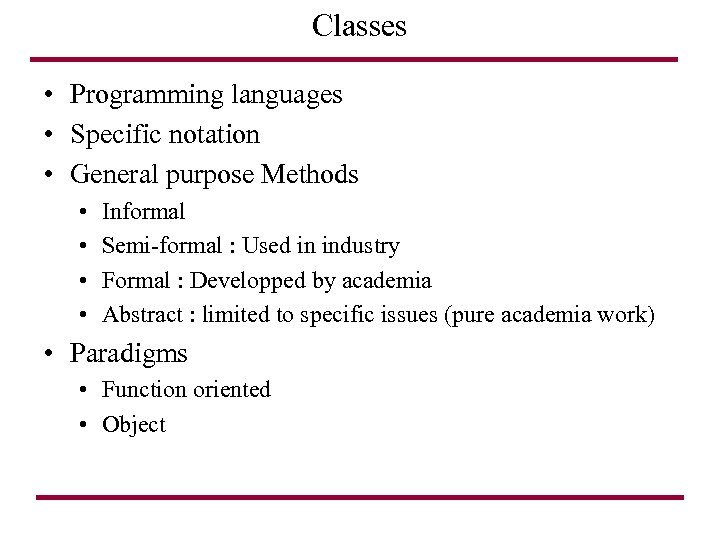 Classes • Programming languages • Specific notation • General purpose Methods • • Informal Semi-formal : Used in industry Formal : Developped by academia Abstract : limited to specific issues (pure academia work) • Paradigms • Function oriented • Object
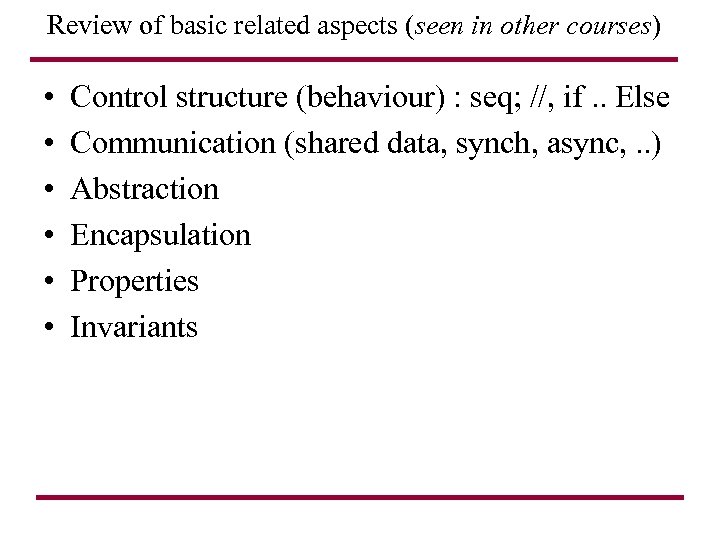 Review of basic related aspects (seen in other courses) • • • Control structure (behaviour) : seq; //, if. . Else Communication (shared data, synch, async, . . ) Abstraction Encapsulation Properties Invariants
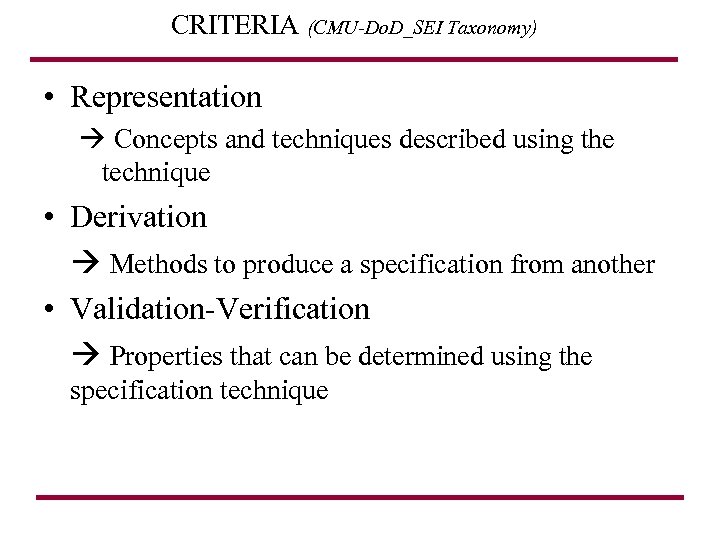 CRITERIA (CMU-Do. D_SEI Taxonomy) • Representation Concepts and techniques described using the technique • Derivation Methods to produce a specification from another • Validation-Verification Properties that can be determined using the specification technique
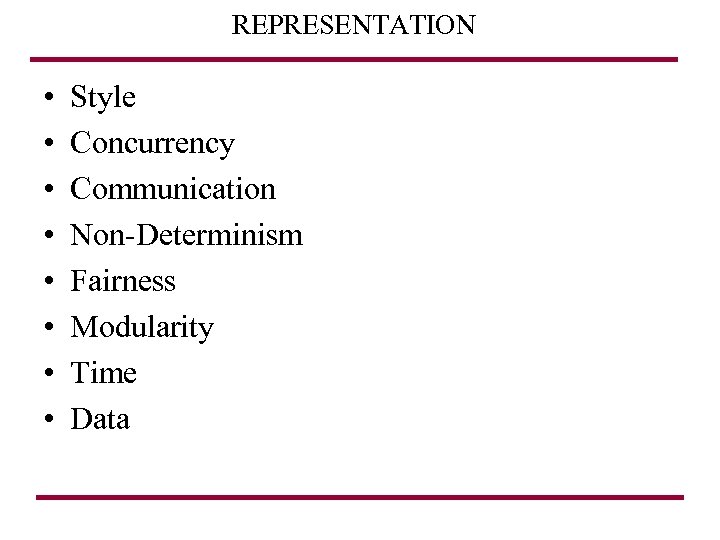 REPRESENTATION • • Style Concurrency Communication Non-Determinism Fairness Modularity Time Data
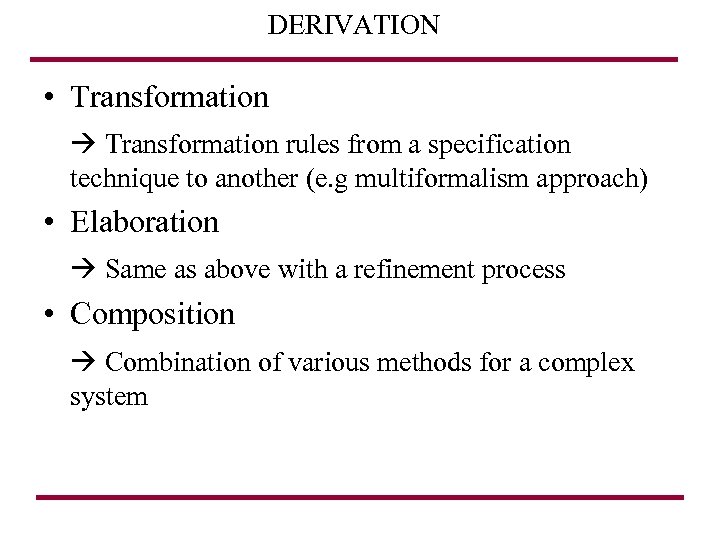 DERIVATION • Transformation rules from a specification technique to another (e. g multiformalism approach) • Elaboration Same as above with a refinement process • Composition Combination of various methods for a complex system
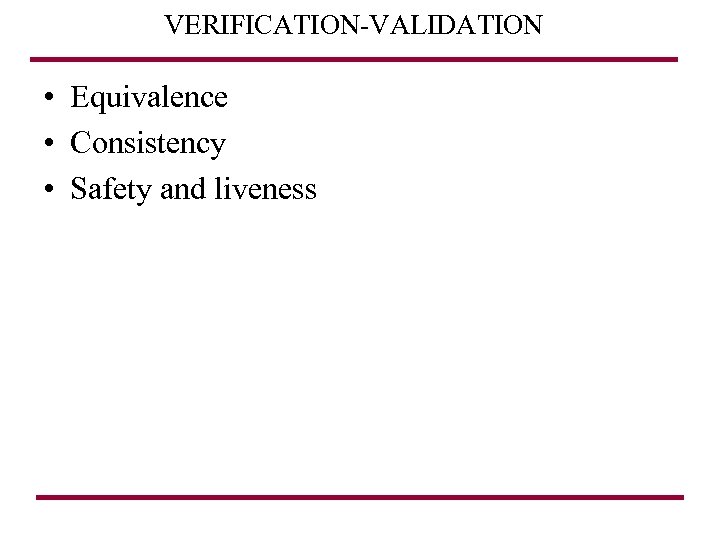 VERIFICATION-VALIDATION • Equivalence • Consistency • Safety and liveness
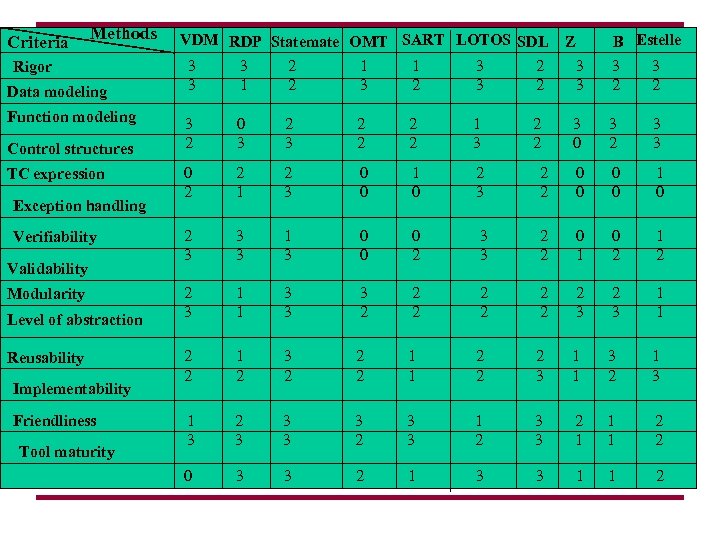 Criteria Methods Rigor Data modeling Function modeling Control structures TC expression Exception handling Verifiability Validability Modularity Level of abstraction Reusability Implementability Friendliness Tool maturity VDM RDP Statemate OMT SART LOTOS SDL B Estelle Z 3 3 3 1 2 2 1 3 1 2 3 3 2 2 3 3 3 2 3 2 0 3 2 2 2 2 1 3 2 2 3 0 3 2 3 3 0 2 2 1 2 3 0 0 1 0 2 3 2 2 0 0 1 0 2 3 3 3 1 3 0 0 0 2 3 3 2 2 0 1 0 2 1 2 2 3 1 1 3 3 3 2 2 2 2 3 2 3 1 1 2 2 1 2 3 2 2 2 1 1 2 2 2 3 1 1 3 2 3 3 2 3 3 1 2 3 3 2 1 1 1 2 2 0 3 3 2 1 3 3 1 1 2
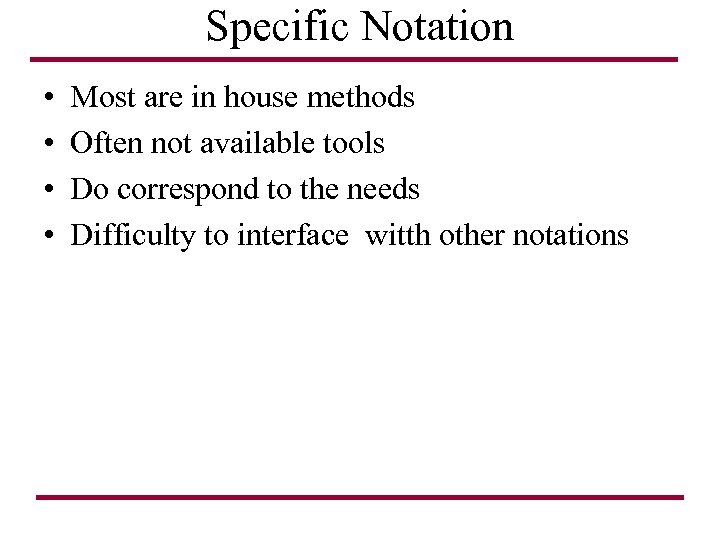 Specific Notation • • Most are in house methods Often not available tools Do correspond to the needs Difficulty to interface witth other notations
 Informal • • • Mostly based on natural language Template Simple to use by everybody Problem with validation Example : Volere template (Natural language)
 Main methods used in industry • Semi-formal • General purpose and dedicated (example : SDL for communication) • Validation • By Simulation • Inspection • Often Graphical notation • A semantic (very rarely formal, but precise)
 Formal methods • Formal semantics (still polemics on the issue mathematical equation and formal notation) • Two types • Model oriented : VDM, Z, B, SCR, OBJ • Behaviour : Petri nets, ‘‘statecharts“, Lotos, . . • Formal validation • Automated tool • Not well established in industry
 Abstract oriented modelling • These are based on agebra, logic • Logic • Temporal logic and extensions for reactive systems • Process algebra
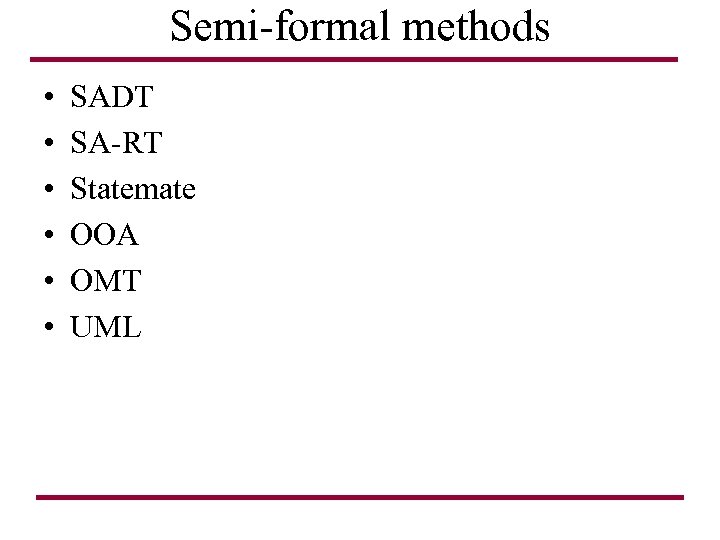 Semi-formal methods • • • SADT SA-RT Statemate OOA OMT UML
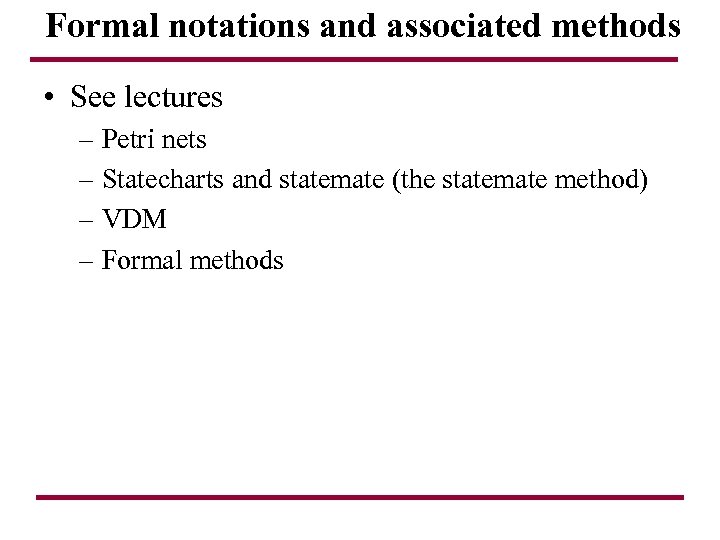 Formal notations and associated methods • See lectures – Petri nets – Statecharts and statemate (the statemate method) – VDM – Formal methods
 Case study and lab : Statecharts • Consider the case study on • • aeronautic application Manufacturing Communication protocols Transportation
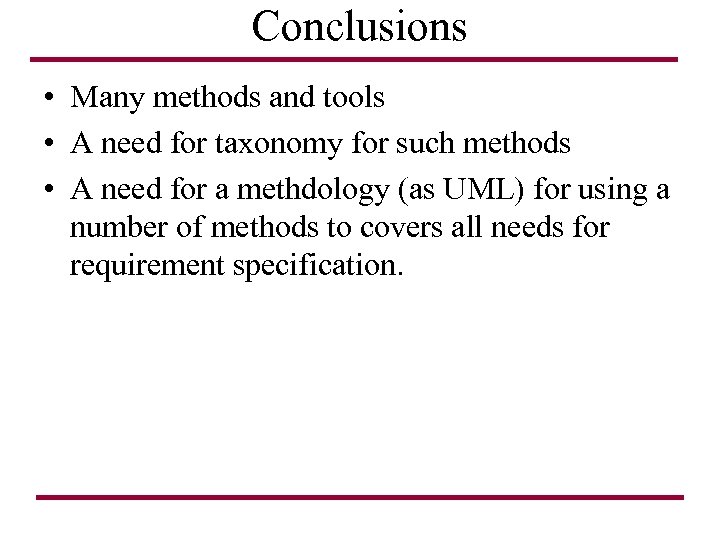 Conclusions • Many methods and tools • A need for taxonomy for such methods • A need for a methdology (as UML) for using a number of methods to covers all needs for requirement specification.
 Next lecture Requirements Expression and Modelling Requirements Validation
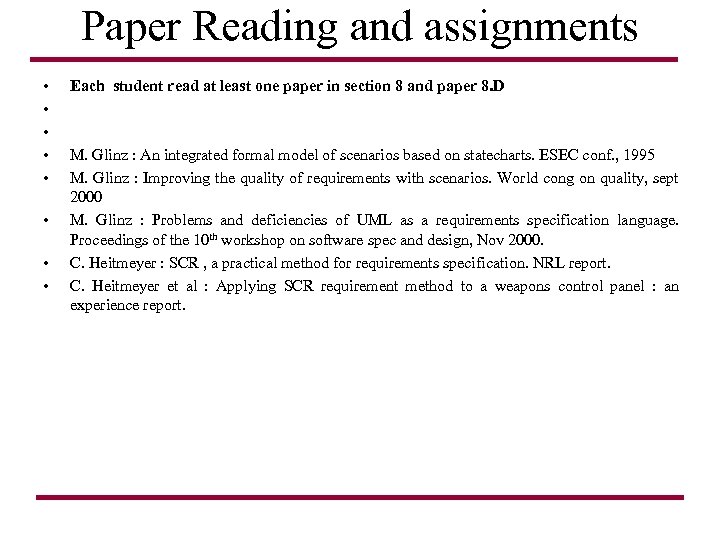 Paper Reading and assignments • • Each student read at least one paper in section 8 and paper 8. D M. Glinz : An integrated formal model of scenarios based on statecharts. ESEC conf. , 1995 M. Glinz : Improving the quality of requirements with scenarios. World cong on quality, sept 2000 M. Glinz : Problems and deficiencies of UML as a requirements specification language. Proceedings of the 10 th workshop on software spec and design, Nov 2000. C. Heitmeyer : SCR , a practical method for requirements specification. NRL report. C. Heitmeyer et al : Applying SCR requirement method to a weapons control panel : an experience report.