 Скачать презентацию REPUBLIC OF TUNISIA Ministry of Social Affairs Solidarity
c0902864e197d8c40eb2181736075142.ppt
- Количество слайдов: 37



REPUBLIC OF TUNISIA Ministry of Social Affairs, Solidarity and Tunisians Abroad Enabling access to ICT for disabled people e-Disabled Project Tarek Ben Youssef Project Leader September 2008
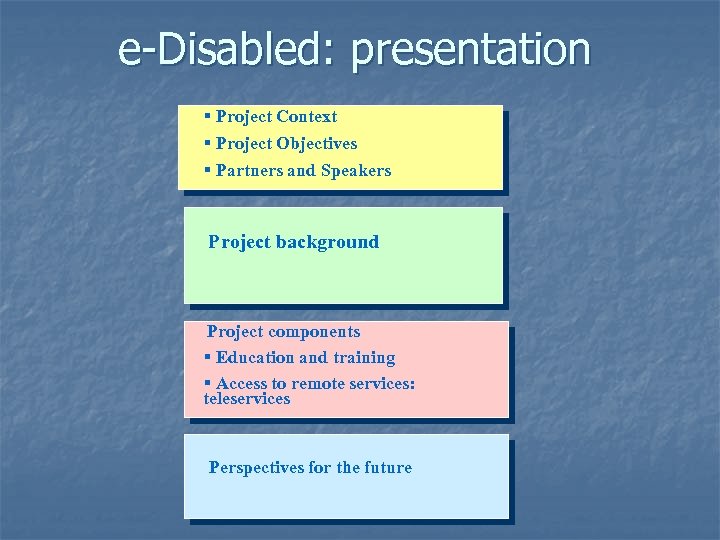
e-Disabled: presentation § Project Context § Project Objectives § Partners and Speakers Project background Project components § Education and training § Access to remote services: teleservices Perspectives for the future
Project context The development of the new information and communication technologies (ICTs) that are invading the audiovisual landscape and penetrating in different degrees every field (services, industry, university, research…) A gap is growing, for people with special needs and particularly for disabled people, due to obstacles that hinder access to ICT.
Project Objectives : Enable access to ICTs for people with disabilities in order to: Ø facilitate access to education, training and culture, Ø facilitate access to remote services, Ø contribute to the creation of employment opportunities.
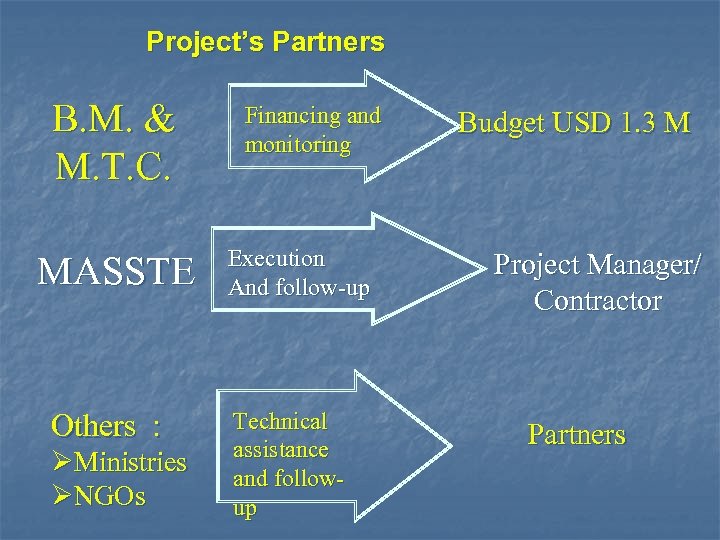
Project’s Partners B. M. & M. T. C. MASSTE Others : ØMinistries ØNGOs Financing and monitoring Budget USD 1. 3 M Execution And follow-up Project Manager/ Contractor Technical assistance and followup Partners

Project background
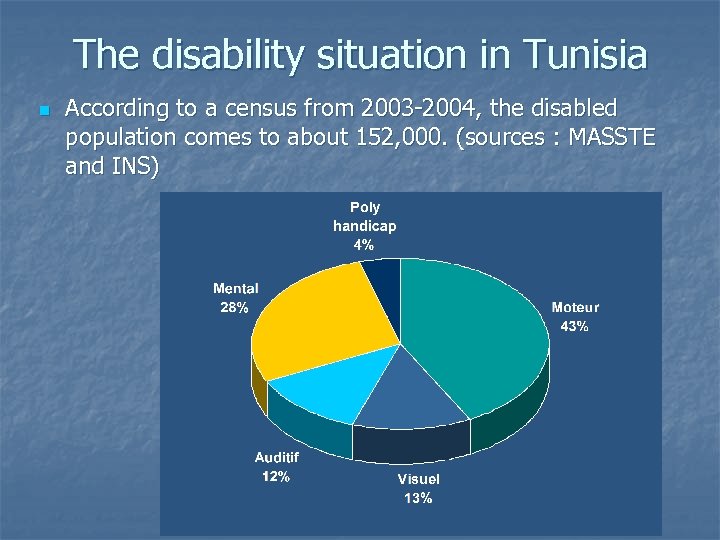
The disability situation in Tunisia n According to a census from 2003 -2004, the disabled population comes to about 152, 000. (sources : MASSTE and INS)
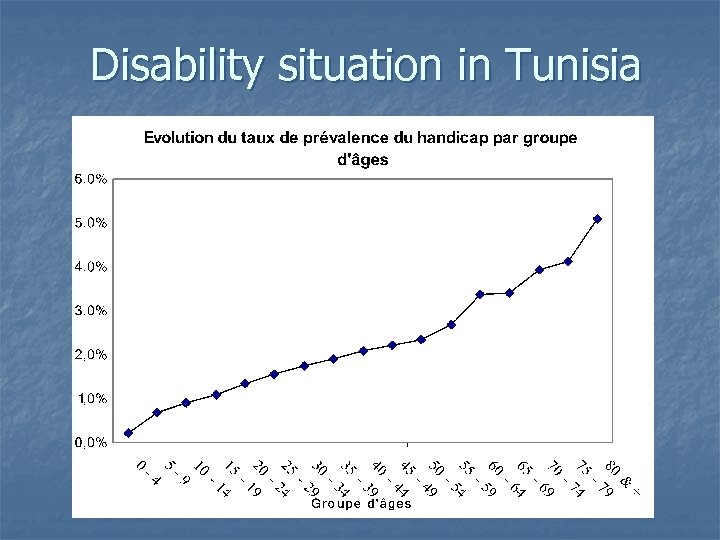
Disability situation in Tunisia
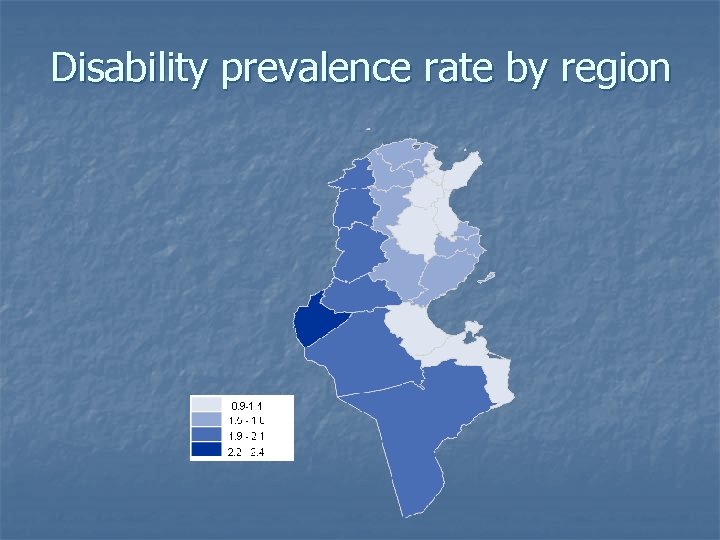
Disability prevalence rate by region
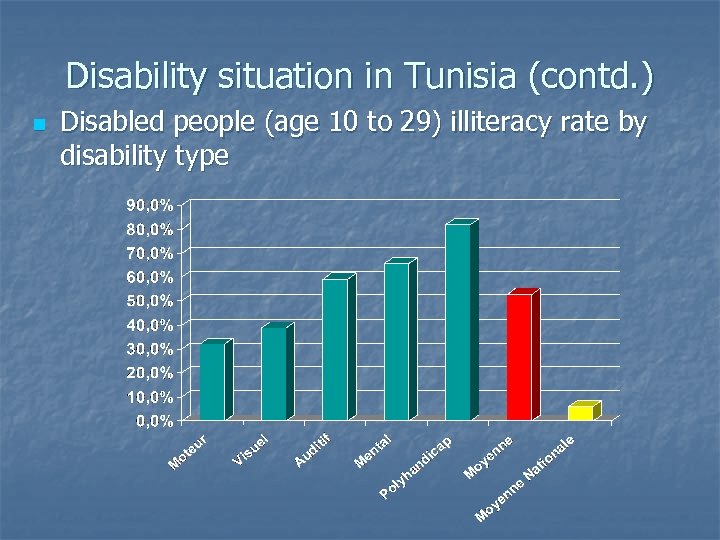
Disability situation in Tunisia (contd. ) n Disabled people (age 10 to 29) illiteracy rate by disability type
National Prevention Strategy Based essentially on strengthening disability n n prevention and early detection, notably through: Development of a perinatality national program, Work against disability-inducing illnesses, Review of the pre-nuptial tests content and generalization of its use Organization of media campaigns about the importance of this issue.
Disabled people case management n n n Improve life conditions for disabled people through free transportation and environment conversion Aid programs for disabled people not able to work Assist in the economic inclusion of disabled people that are able to work
Disabled people case management (contd. ) n n n Strengthen the 24 regional rehabilitation unit’s capacity for intervention. Integrate disabled pupils in education institutions of 11. 000. Upgrade 269 specialized education, training and readaptation centers that depend on associations that host more that 15. 000 disabled pupils.
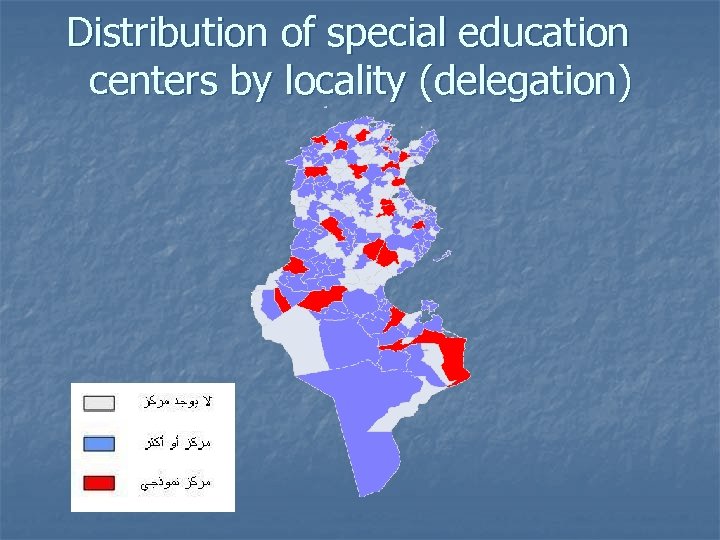
Distribution of special education centers by locality (delegation)
Project e-disabled
Project Components: Two components: Education and training Access to remote services: teleservices
COMPONENT -1 «EDUCATION AND TRAINING »
Presentation Ø Development of digital applications of the Ministry of Education and Training’s official programs from preschool level to basic school 6 th year. ØCreation of 24 special education pilot centers (one center per gouvernorat), in order to allow disabled people to access learning, knowledge and culture and leisure activities in accordance with the educational standards in force, through adequate use of the ICTs. ØApplications widely available in all special education centers and inclusive schools.
Objectives Ø Give disabled people access to higher training levels, which will facilitate their economic insertion. Ø Equal opportunities to access education and training through the use of ICRs (elearning. )
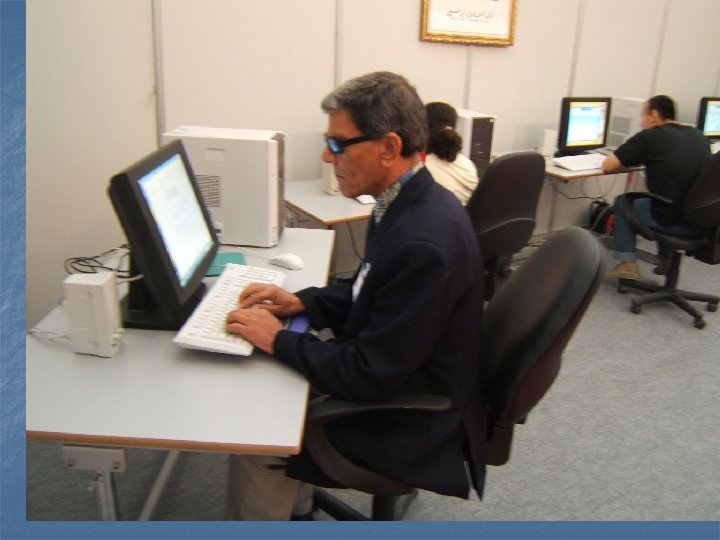
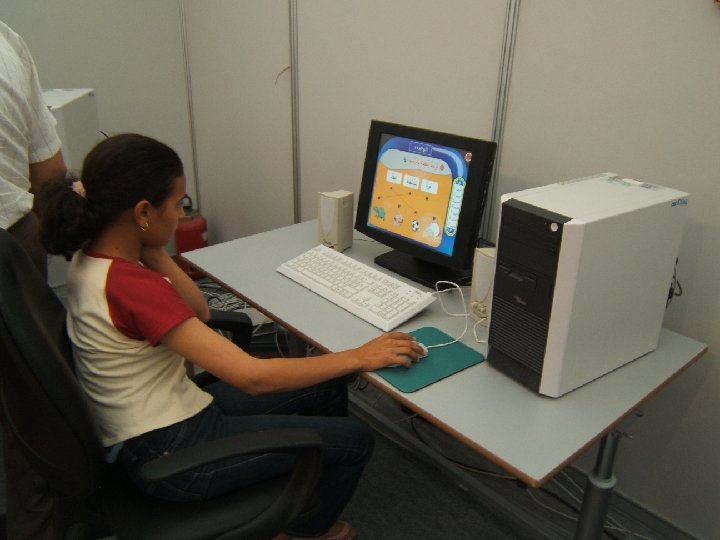
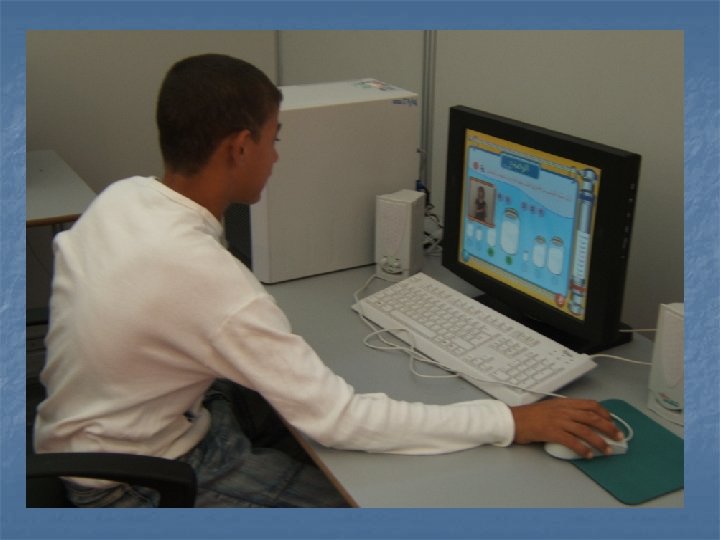
Adapted Programs Content of the Ministry of Education and Training’s official digital programs made available to pupils with: • Impairments mainly in upper limbs, hands, with difficulties in «fine touch » (Ex : myopathy…) • Mental impairment, light or medium • Hearing impairment, • Visual impairment.
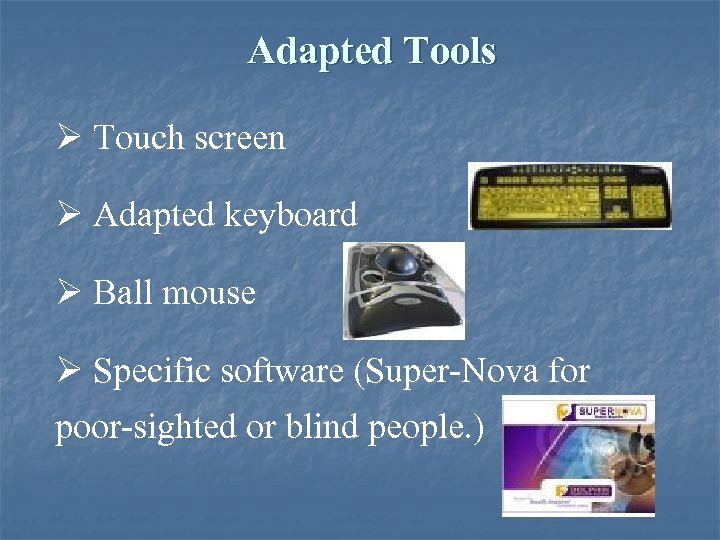
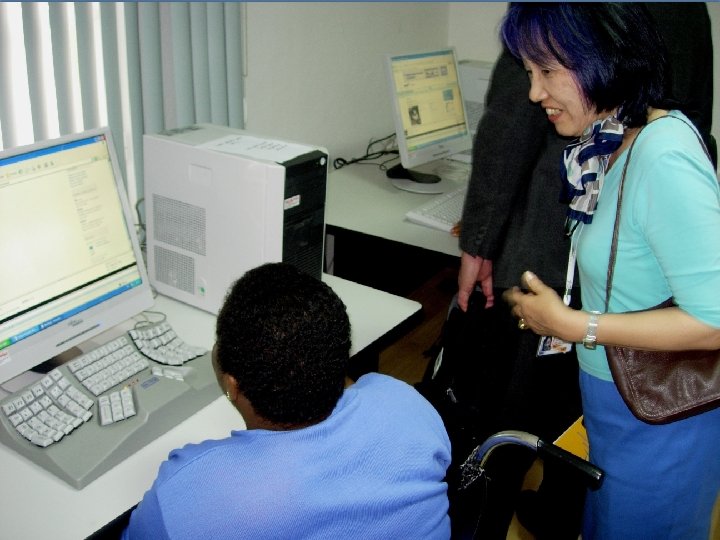
Adapted Tools Ø Touch screen Ø Adapted keyboard Ø Ball mouse Ø Specific software (Super-Nova for poor-sighted or blind people. )
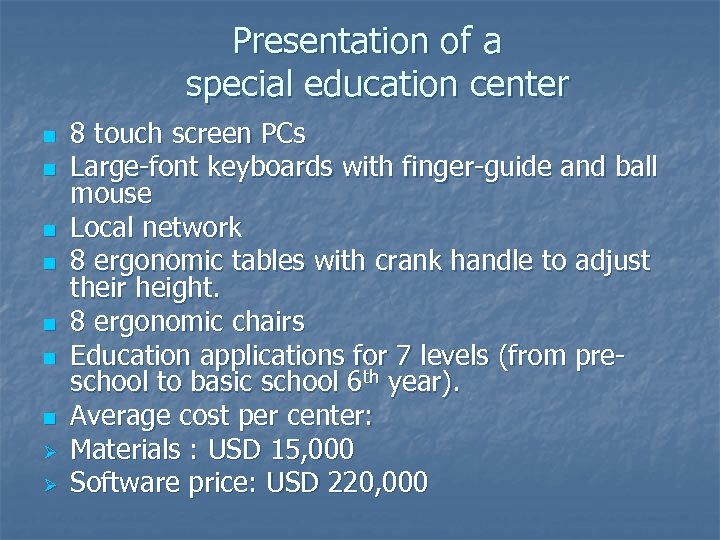
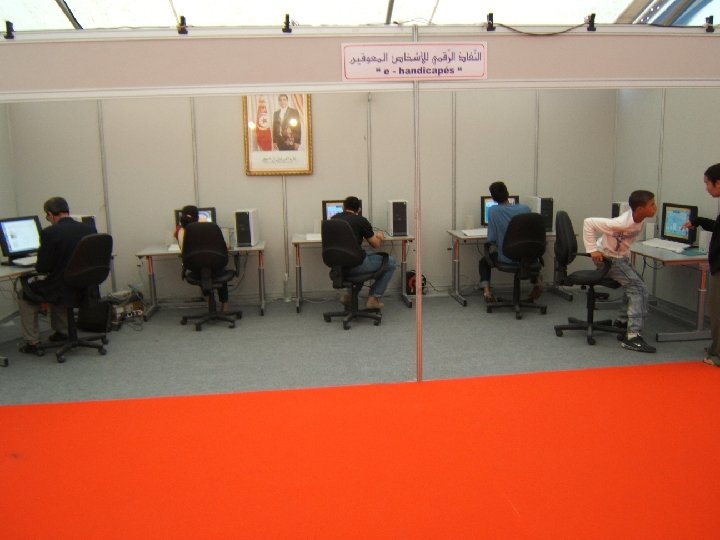
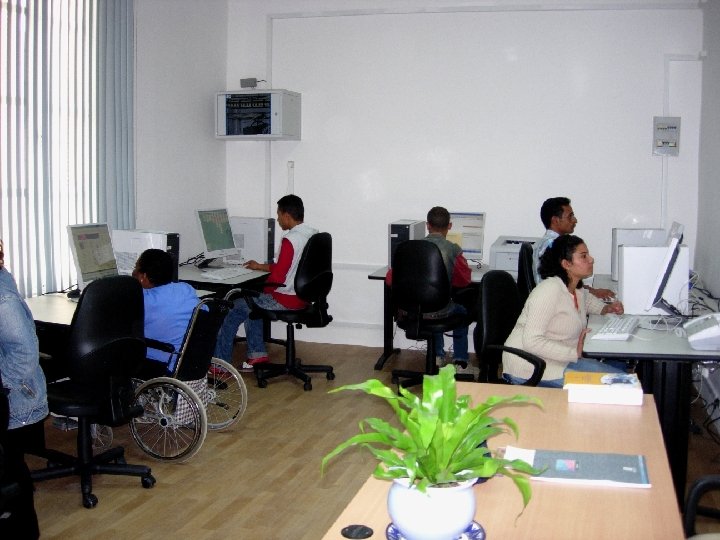
Presentation of a special education center n n n n Ø Ø 8 touch screen PCs Large-font keyboards with finger-guide and ball mouse Local network 8 ergonomic tables with crank handle to adjust their height. 8 ergonomic chairs Education applications for 7 levels (from preschool to basic school 6 th year). Average cost per center: Materials : USD 15, 000 Software price: USD 220, 000
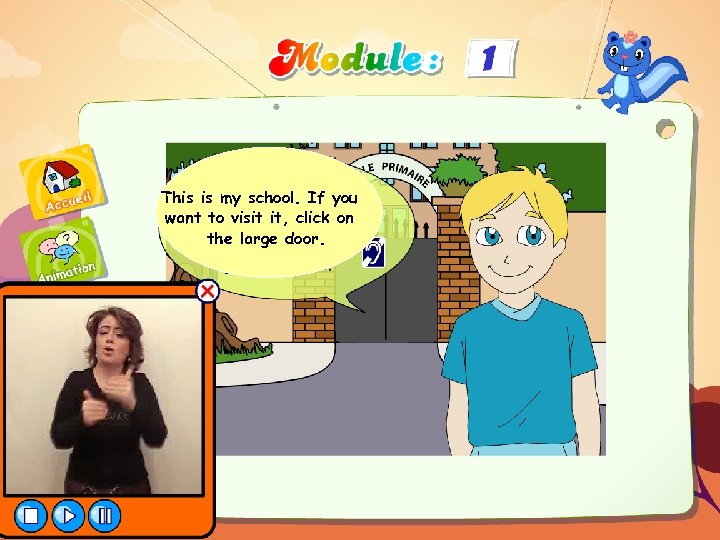
This is my school. If you want to visit it, click on the large door.
Targeted population n Nearly 3, 000 disabled pupils have used this software during school year 2007 – 2008. 10, 000 disabled children will be reached by the program in 2008 – 2009 Generalization to the whole targeted population is expected by the end of 2009.
Virtual schools and perspectives of future n n Already developed educational programs will be used in virtual schools in Tunisia. Development of applications for levels from 7 th basic years to baccalaureat.
COMPONENT 2 : «Orientation and service outlets» Tele-services
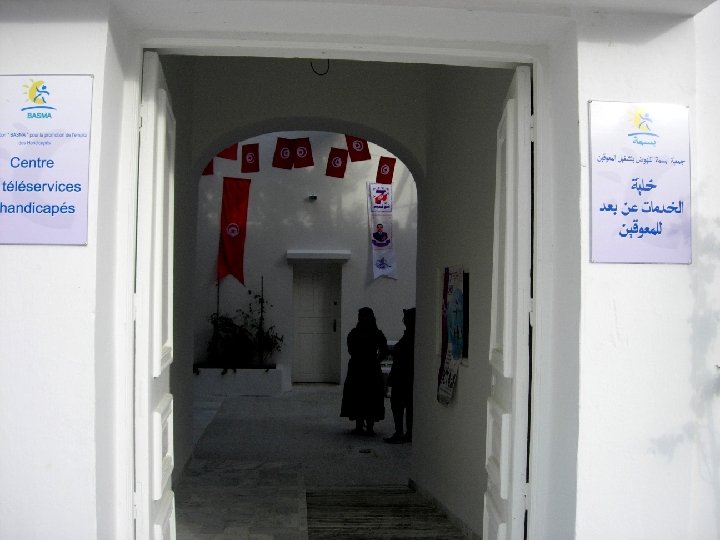
Presentation Tele-service offices that will enable handicaped people to remotely access different services such as: Ø Socio-economic and cultural information Ø « Communication Administration » . These offices are equipped with: § Computer equipment adapted for any disability type § A tele-service office users follow-up software.
Presentation of a tele-service center n n n n One touch-screen PC and two ordinary PCs One Braille screen and specific software A laser printer and a Braille printer with soundproofing case A Scanner and a fax A local network All the necessary equipment for connection to the Internet Average cost per centre: USD 360, 000.
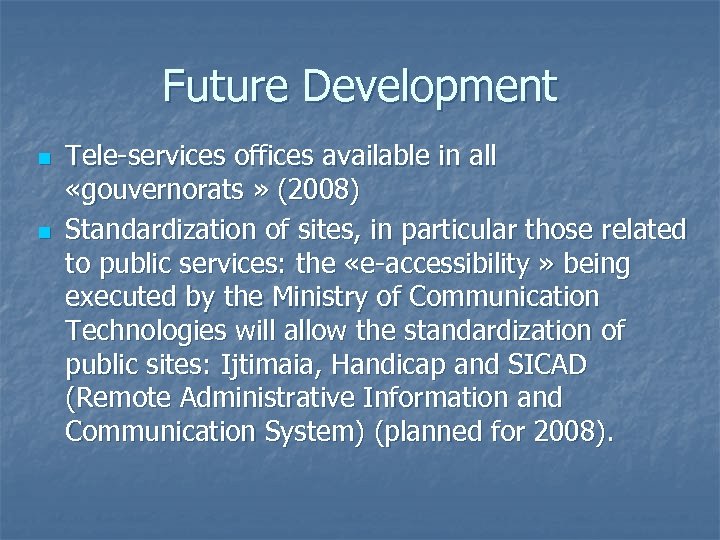
Future Development n n Tele-services offices available in all «gouvernorats » (2008) Standardization of sites, in particular those related to public services: the «e-accessibility » being executed by the Ministry of Communication Technologies will allow the standardization of public sites: Ijtimaia, Handicap and SICAD (Remote Administrative Information and Communication System) (planned for 2008).

Thank You !
Скачать презентацию REPUBLIC OF TUNISIA Ministry of Social Affairs Solidarity
c0902864e197d8c40eb2181736075142.ppt