


 Скачать презентацию Reproductive Health And Human Rights The Futures Group
22d1fbbf11e71abc20d909399a80fc40.ppt
- Количество слайдов: 30
 Reproductive Health And Human Rights The Futures Group International Research Triangle Institute The Centre for Development and Population Activities POL I CY with Funding from the U. S. Agency for International Development
 Outline of Presentation Human rights documents support reproductive rights Good human rights practices contribute to good RH Human rights tools Challenges for POLICY II
 Nat ion er har t s. C 1945 ver of H sal De cla um r an Rig ation hts Con ven of A tion ll F orm for th Aga s of D e Elim ina inst iscr Wo imin tion me atio n n Inte Pop rnatio n ula tion al Co and nfere Dev nce elo pm on ent Con Fourt fere h W nce orld on Wo me n Uni ted Uni Key International Laws, Declarations and Consensus Statements 1948 1982 1994 1995
 Nat ion er har t s. C 1945 ver of H sal De cla um r an Rig ation hts Con ven of A tion ll F orm for th Aga s of D e Elim ina inst iscr Wo imin tion me atio n n Inte Pop rnatio n ula tion al Co and nfere Dev nce elo pm on ent Con Fourt fere h W nce orld on Wo me n Uni ted Uni Key International Laws, Declarations and Consensus Statements 1948 1982 1994 1995
 Nat ion er har t s. C 1945 ver of H sal De cla um r an Rig ation hts Con ven of A tion ll F orm for th Aga s of D e Elim ina inst iscr Wo imin tion me atio n n Inte Pop rnatio n ula tion al Co and nfere Dev nce elo pm on ent Con Fourt fere h W nce orld on Wo me n Uni ted Uni Key International Laws, Declarations and Consensus Statements 1948 1982 1994 1995
 Link Between Human Rights and Reproductive Rights at ICPD Reproductive rights reflect human rights that are already internationally recognized. These rights rest on the recognition of the basic right of all couples and individuals to decide freely and responsibly the number, spacing and timing of their children and to have the information and means to do so, and the right to attain the highest standard of sexual and reproductive health. It also includes their right to make decisions concerning reproduction free of discrimination, coercion and violence as expressed in human rights documents.
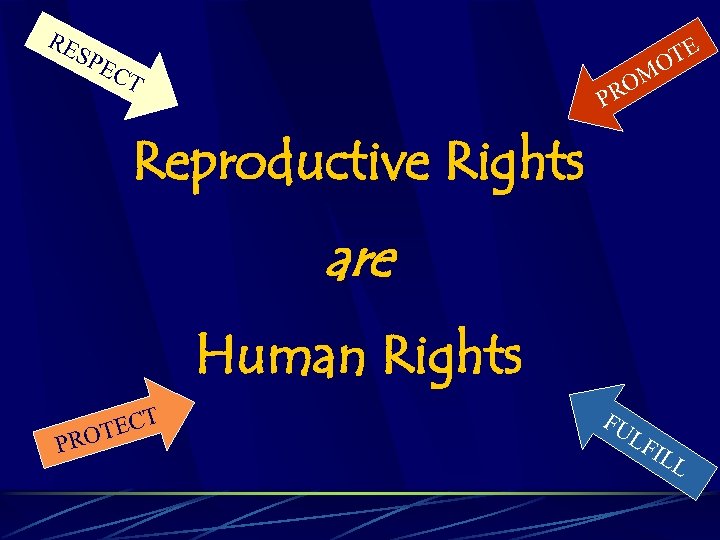 RE SP EC TE O OM PR T Reproductive Rights are Human Rights T P TEC RO FU LF IL L
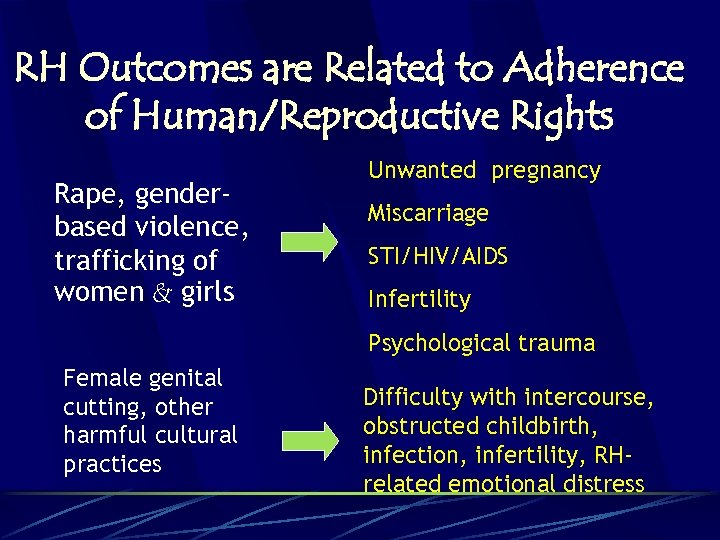 RH Outcomes are Related to Adherence of Human/Reproductive Rights Rape, genderbased violence, trafficking of women & girls Unwanted pregnancy Miscarriage STI/HIV/AIDS Infertility Psychological trauma Female genital cutting, other harmful cultural practices Difficulty with intercourse, obstructed childbirth, infection, infertility, RHrelated emotional distress
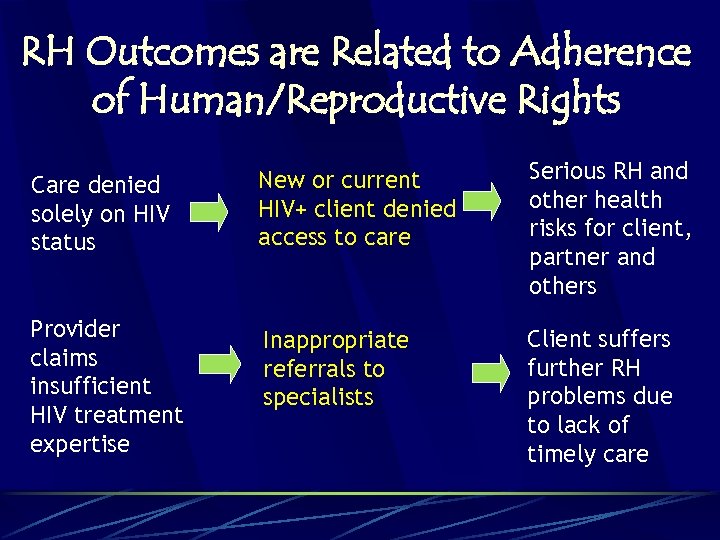 RH Outcomes are Related to Adherence of Human/Reproductive Rights Care denied solely on HIV status New or current HIV+ client denied access to care Serious RH and other health risks for client, partner and others Provider claims insufficient HIV treatment expertise Inappropriate referrals to specialists Client suffers further RH problems due to lack of timely care
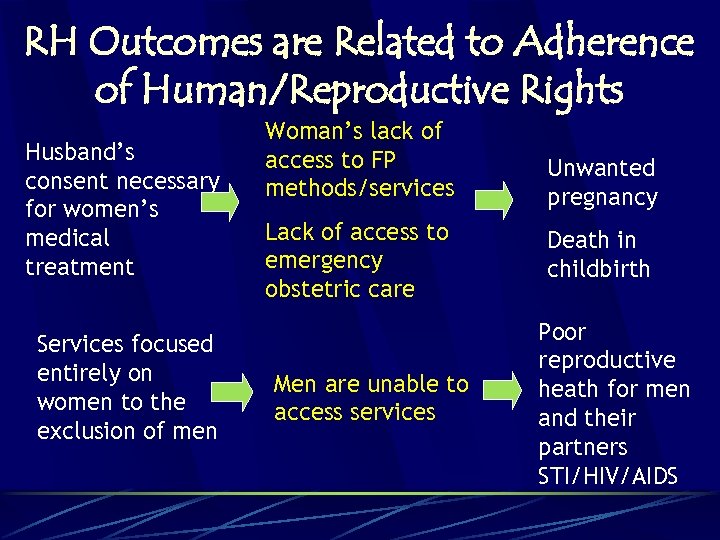 RH Outcomes are Related to Adherence of Human/Reproductive Rights Husband’s consent necessary for women’s medical treatment Services focused entirely on women to the exclusion of men Woman’s lack of access to FP methods/services Lack of access to emergency obstetric care Men are unable to access services Unwanted pregnancy Death in childbirth Poor reproductive heath for men and their partners STI/HIV/AIDS
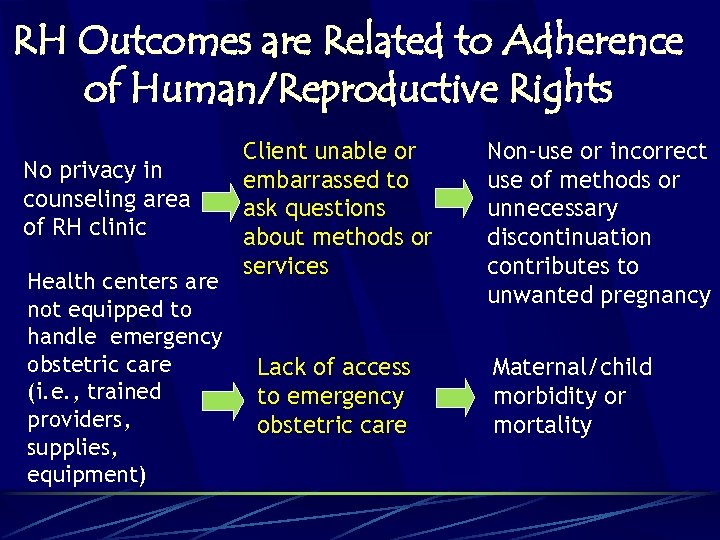 RH Outcomes are Related to Adherence of Human/Reproductive Rights No privacy in counseling area of RH clinic Health centers are not equipped to handle emergency obstetric care (i. e. , trained providers, supplies, equipment) Client unable or embarrassed to ask questions about methods or services Lack of access to emergency obstetric care Non-use or incorrect use of methods or unnecessary discontinuation contributes to unwanted pregnancy Maternal/child morbidity or mortality
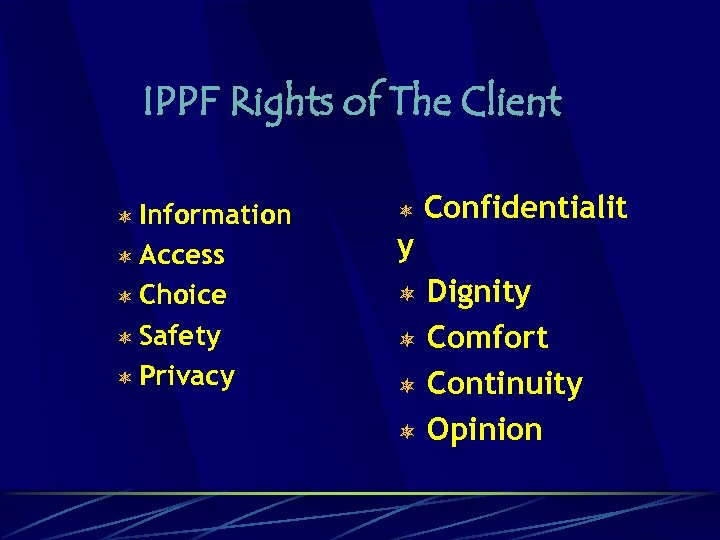 IPPF Rights of The Client ô Information ô ô Access y ô Choice ô ô Safety ô ô Privacy ô Confidentialit ô Dignity Comfort Continuity Opinion
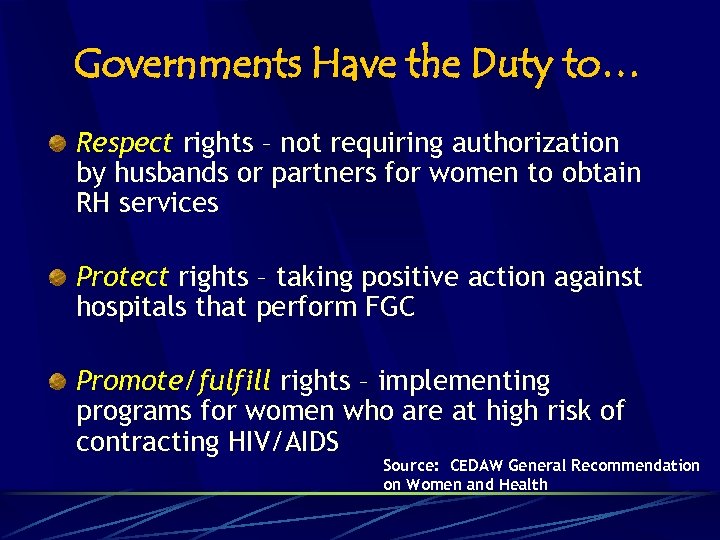 Governments Have the Duty to… Respect rights – not requiring authorization by husbands or partners for women to obtain RH services Protect rights – taking positive action against hospitals that perform FGC Promote/fulfill rights – implementing programs for women who are at high risk of contracting HIV/AIDS Source: CEDAW General Recommendation on Women and Health
 Good Human Rights Practices Contribute to Good Reproductive Health “Promoting women’s full and equal access to and enjoyment of basic human rights (e. g. , education, adequate standard of living, equal employment opportunity, equal rights during and after marriage, access to necessary medical care, and safety and security of person) is not only worthwhile but promotes women’s ability to protect themselves from disease. ” Gostin and Lazzarini, 1997
 “The most difficult issues of behavior or practices like rape, incest, female genital mutilation, the idea of female reproductive rights – all these concepts we would never have been able to discuss just a few years ago…. [This] is an indication of massive, massive change in thinking. ” Nafis Sadik 2000
 Tools for Respecting, Promoting and Protecting Human Rights through Reproductive Health • Laws • Policies • Regulation • Advocacy • Documentation • Reporting
 Laws, Policies, Regulations
 Laws, Policies, Regulations: International Countries that ratified human rights treaties are required to report regularly
 Laws, Policies, Regulations: National laws, regulations, and policies reflect international human rights laws, conventions and declarations
 Laws, Policies, Regulations: Operational Service delivery policies/guidelines respect clients rights to access to quality information and services free from bias, discrimination and violence
 Advocacy, Documentation, & Reporting YOU can make a difference!!
 What Can POLICY Do to Improve Reproductive Health Using Human Rights Tools? P O L IC Y
 Nationally: POLICY üAdvocacy üParticipation üTraining üResources üResearch
 POLICY Advocacy üHold governments accountable for human/reproductive rights obligations üIdentify/document/report violations üAdvocate for changes in law üMake complaints to HR commissions üOffer direct legal services üEnsure women access to courts
 Participation POLICY Emphasize -üGender perspective üInvolve women üInclude young adults
 POLICY Training for Health Workers üComprehensive ü Mandatory ü Gender-sensitive
 Training for Judges POLICY üDevelop culture of respect - for human rights - for women’s rights üCreate women’s access to justice üTeach women's rights in law schools
 POLICY Resources üEnsure that reproductive health care needs are equally represented with other health care needs in national budgets
 POLICY Research üStudy the impact of human/ reproductive rights implementation on reproductive health outcomes
 Assessment Questions What are the current human rights issues in your country related to reproductive health? What types of human rights activities could POLICY do in your country to address these issues? What are the constraints you face in implementing human rights activities? What types of resources would you need to implement these activities?