


 Скачать презентацию REPORTED SPEECH Reported speech refers
Z-_Reported_Speech.ppt
- Количество слайдов: 29
 REPORTED SPEECH
 • Reported speech refers to using a noun clauses to report what someone has said. No quotation marks are used.
 • Notice the changes in the verb forms from qouted speech to reported speech in the following examples:
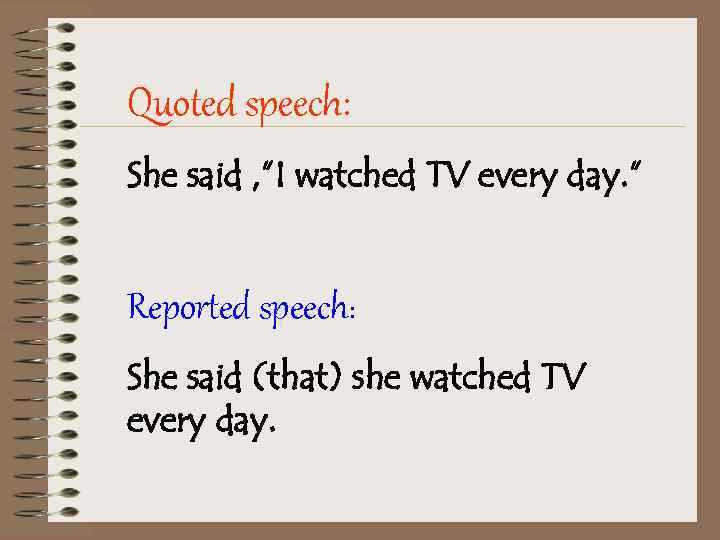 Quoted speech: She said , ”I watched TV every day. ” Reported speech: She said (that) she watched TV every day.
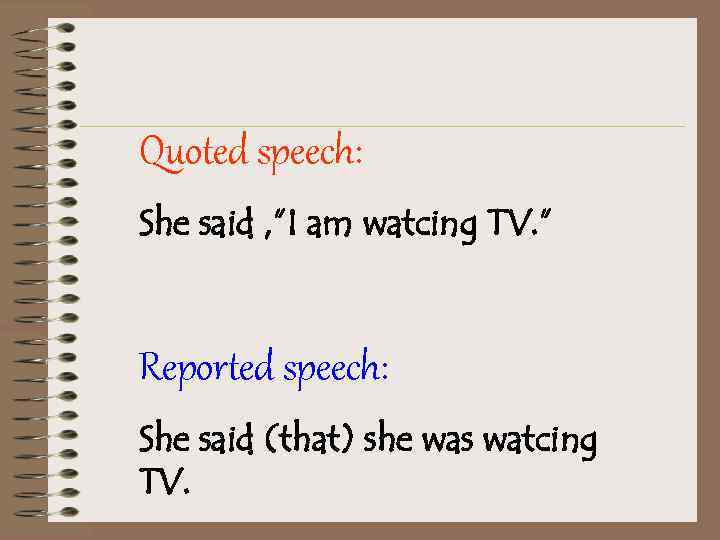 Quoted speech: She said , ”I am watcing TV. ” Reported speech: She said (that) she was watcing TV.
 To report what someone said , we use a reporting verb followed by an optional THAT.
 FOR EXAMPLE: He said that he wants us to read Chapter six. Jeff said that he was coming here.
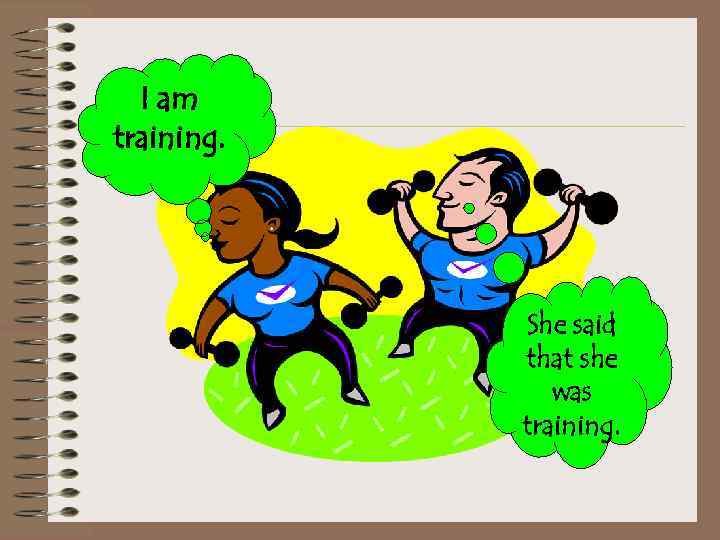 I am training. She said that she was training.
 When you report samebody’s word using (said , asked, etc. ) you usually change the tence to one further back in the past.
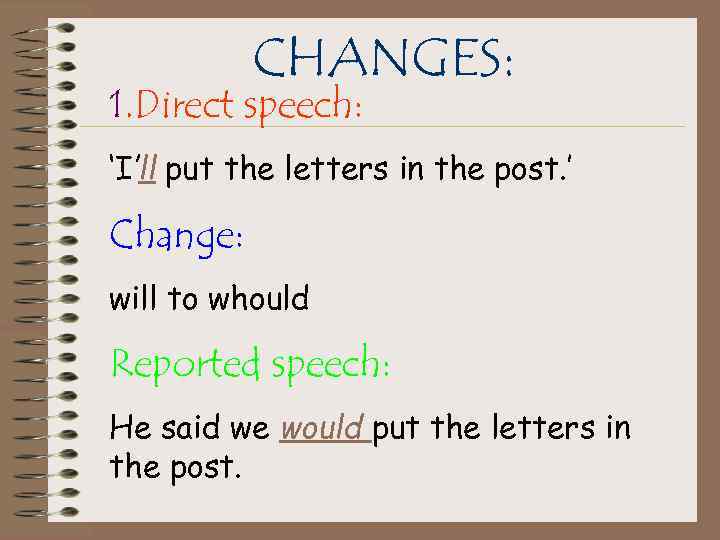 CHANGES: 1. Direct speech: ‘I’ll put the letters in the post. ’ Change: will to whould Reported speech: He said we would put the letters in the post.
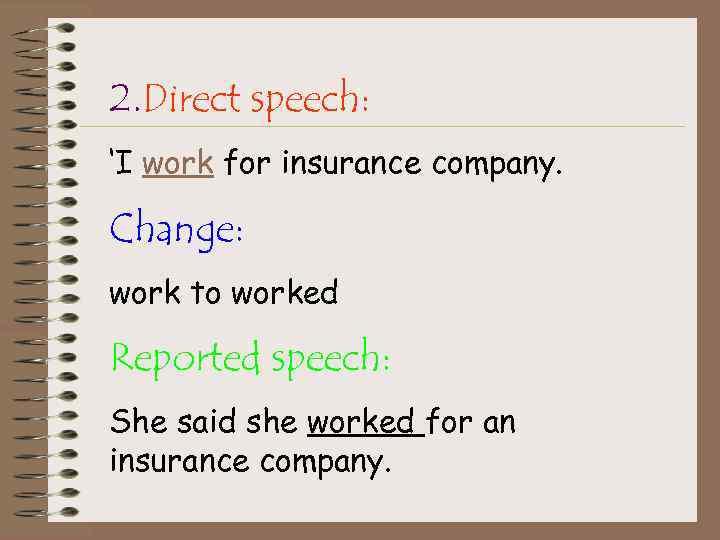 2. Direct speech: ‘I work for insurance company. Change: work to worked Reported speech: She said she worked for an insurance company.
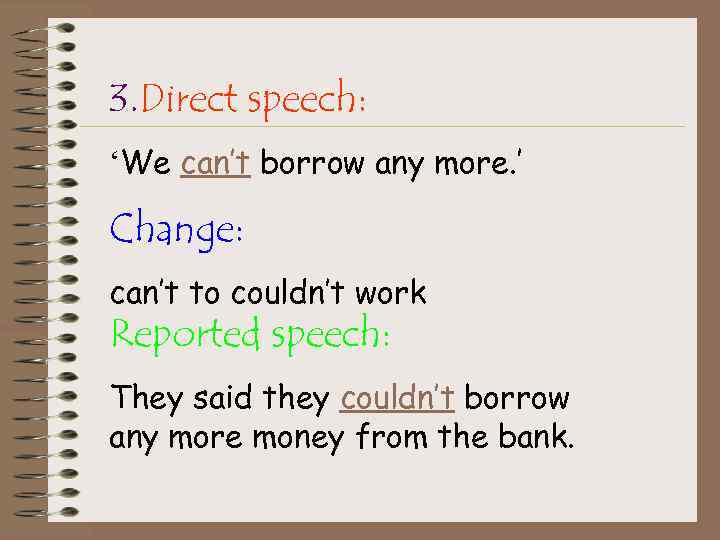 3. Direct speech: ‘We can’t borrow any more. ’ Change: can’t to couldn’t work Reported speech: They said they couldn’t borrow any more money from the bank.
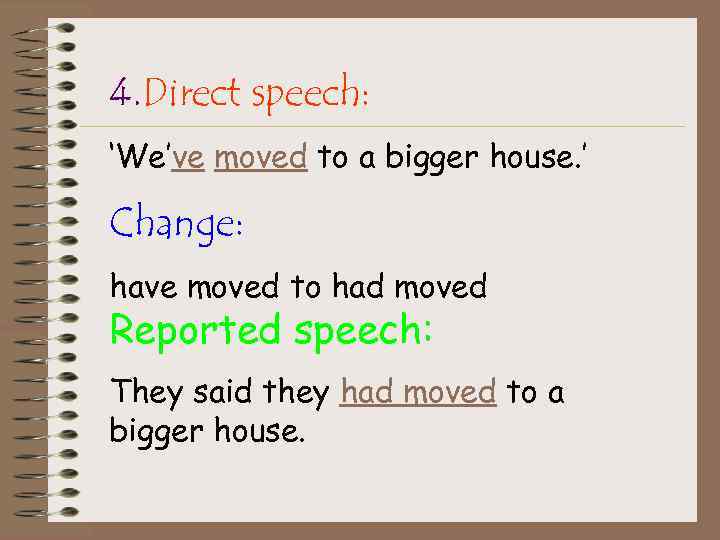 4. Direct speech: ‘We’ve moved to a bigger house. ’ Change: have moved to had moved Reported speech: They said they had moved to a bigger house.
 5. Direct speech: ‘I must pay the gas bill. ’ Change: must to had to Reported speech: She said she had to pay the gas bill.
 NO CHANGES: Some verb tences used in direct speech do not change in reported speech. The ‘reporting’ verb is often in the present tence.
 The verbs do not normally changed when: 1. reporting a present state of affairs e. g. Direct speech: ‘The cost of living here is high. ’ Reported speech: The reporter said that the cost of living here is high.
 2. reporting things which are always true e. g. Direct speech: ‘It’s always cold at this time of year. ’ Reported speech: Mary says it’s always cold at this time of year.
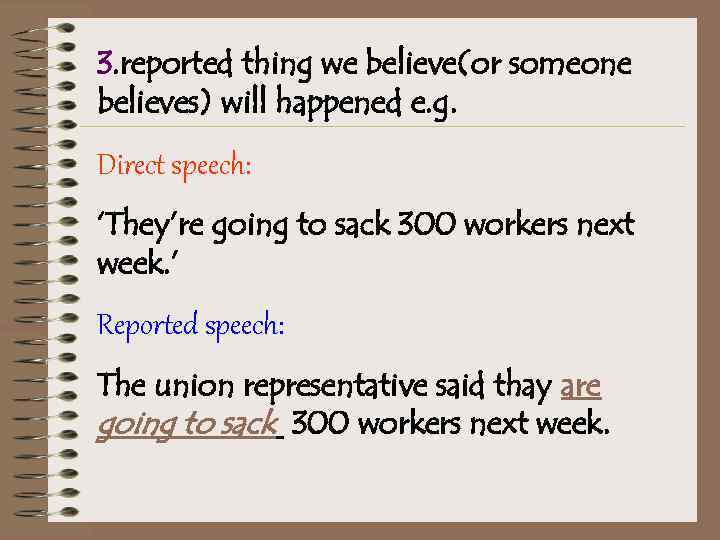 3. reported thing we believe(or someone believes) will happened e. g. Direct speech: ‘They’re going to sack 300 workers next week. ’ Reported speech: The union representative said thay are going to sack 300 workers next week.
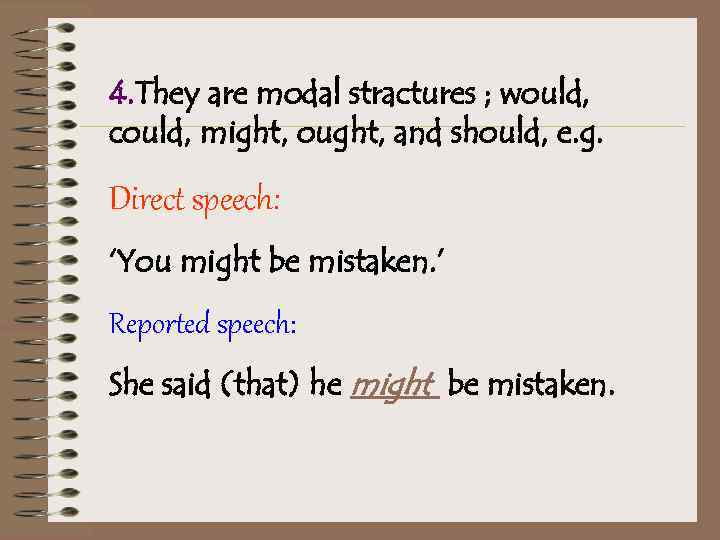 4. They are modal stractures ; would, could, might, ought, and should, e. g. Direct speech: ‘You might be mistaken. ’ Reported speech: She said (that) he might be mistaken.
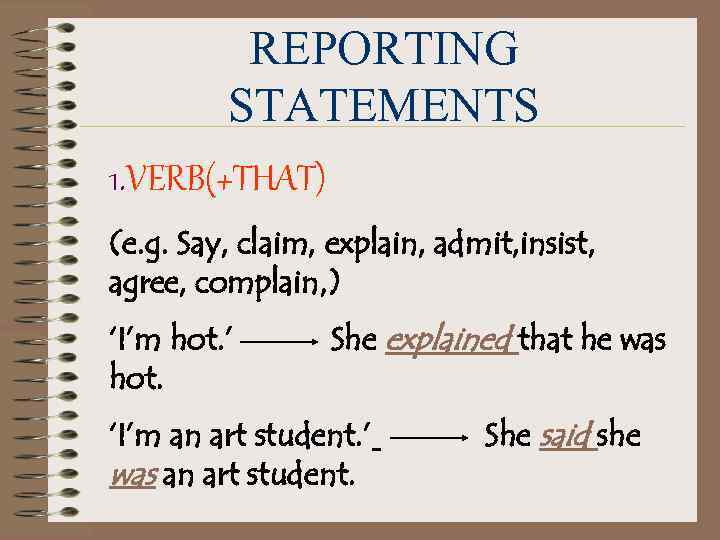 REPORTING STATEMENTS 1. VERB(+THAT) (e. g. Say, claim, explain, admit, insist, agree, complain, ) ‘I’m hot. ’ hot. She explained that he was ‘I’m an art student. ’ was an art student. She said she
 NOTİCE: admit and deny can also be followed by the –ing form.
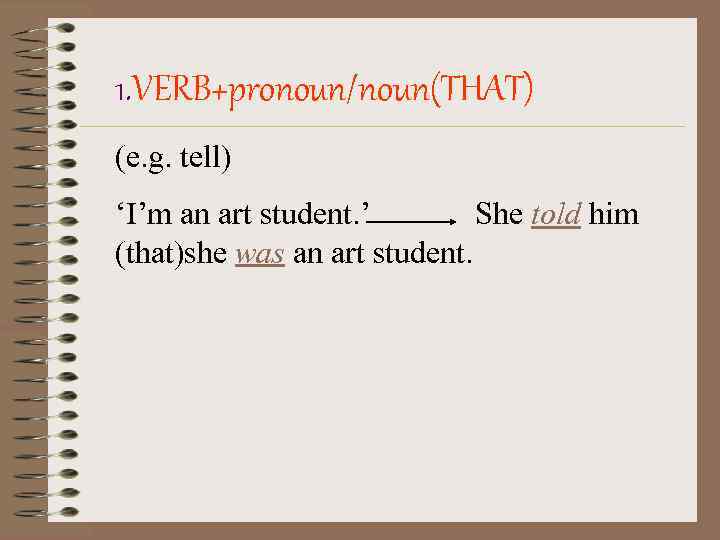 1. VERB+pronoun/noun(THAT) (e. g. tell) ‘I’m an art student. ’ She told him (that)she was an art student.
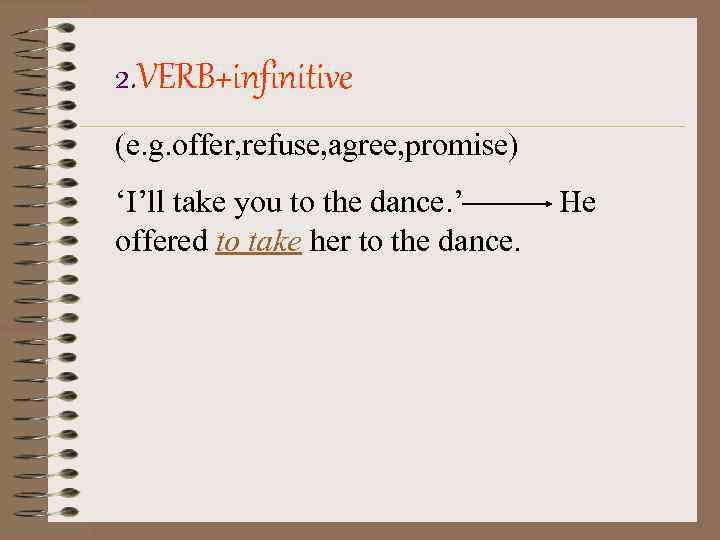 2. VERB+infinitive (e. g. offer, refuse, agree, promise) ‘I’ll take you to the dance. ’ offered to take her to the dance. He
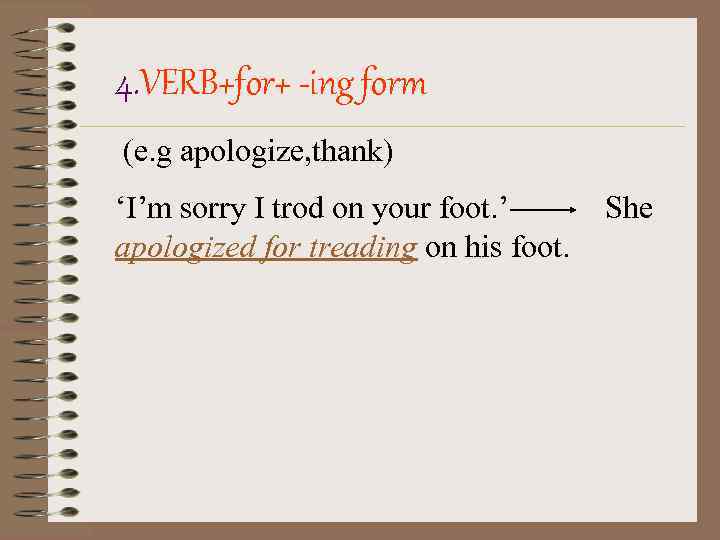 4. VERB+for+ -ing form (e. g apologize, thank) ‘I’m sorry I trod on your foot. ’ apologized for treading on his foot. She
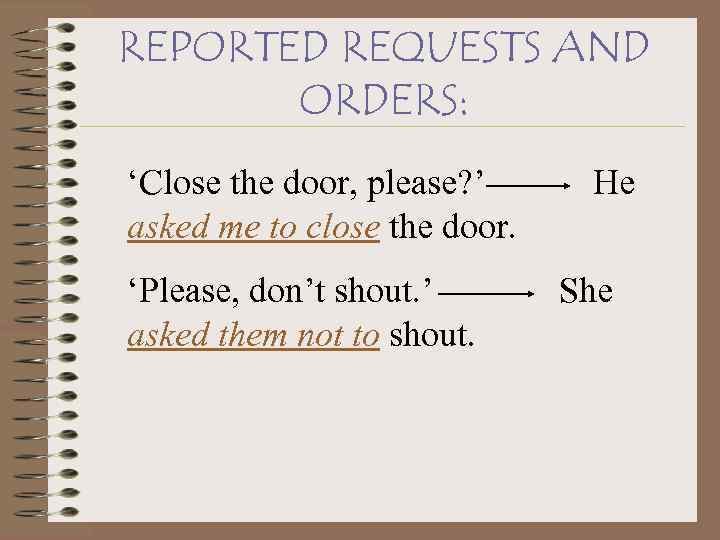 REPORTED REQUESTS AND ORDERS: ‘Close the door, please? ’ asked me to close the door. ‘Please, don’t shout. ’ asked them not to shout. He She
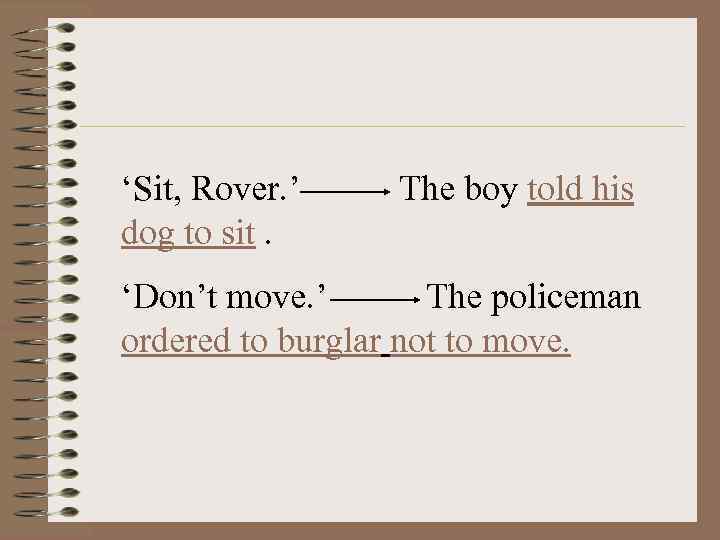 ‘Sit, Rover. ’ dog to sit. The boy told his ‘Don’t move. ’ The policeman ordered to burglar not to move.
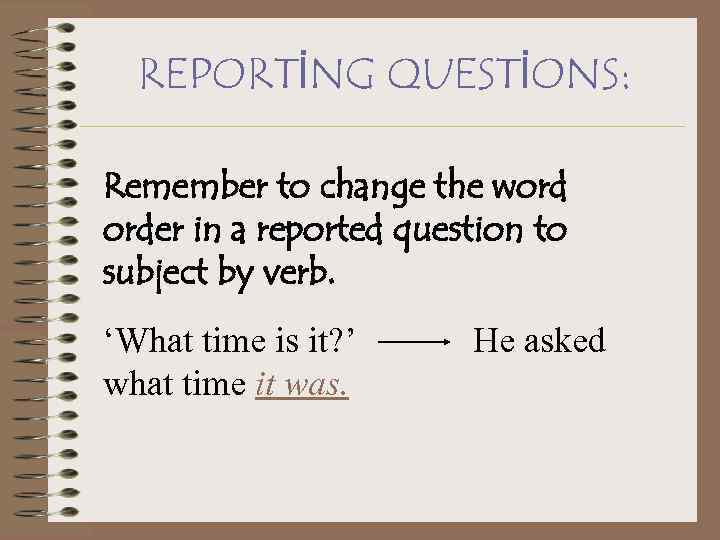 REPORTİNG QUESTİONS: Remember to change the word order in a reported question to subject by verb. ‘What time is it? ’ what time it was. He asked
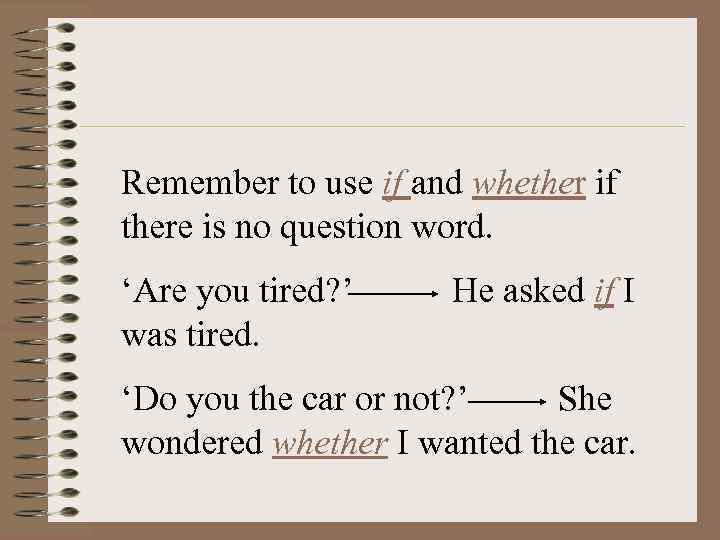 Remember to use if and whether if there is no question word. ‘Are you tired? ’ was tired. He asked if I ‘Do you the car or not? ’ She wondered whether I wanted the car.
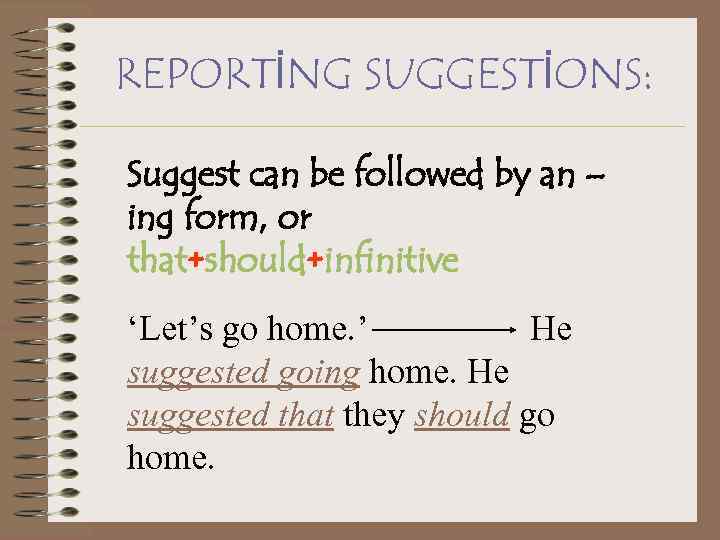 REPORTİNG SUGGESTİONS: Suggest can be followed by an – ing form, or that+should+infinitive ‘Let’s go home. ’ He suggested going home. He suggested that they should go home.