


 Скачать презентацию REPORTED SPEECH 1 INDIREKTNI GOVOR Definicija I
4186171180810fc6e612da4d65845c9a.ppt
- Количество слайдов: 16
 REPORTED SPEECH 1 INDIREKTNI GOVOR
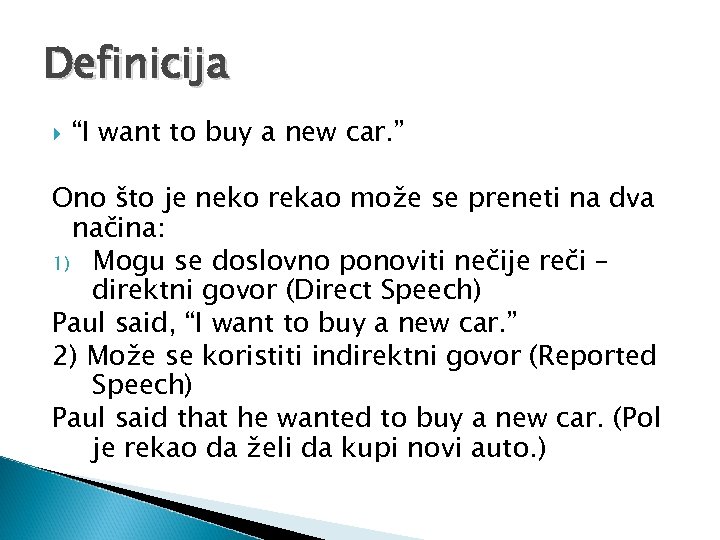 Definicija “I want to buy a new car. ” Ono što je neko rekao može se preneti na dva načina: 1) Mogu se doslovno ponoviti nečije reči – direktni govor (Direct Speech) Paul said, “I want to buy a new car. ” 2) Može se koristiti indirektni govor (Reported Speech) Paul said that he wanted to buy a new car. (Pol je rekao da želi da kupi novi auto. )
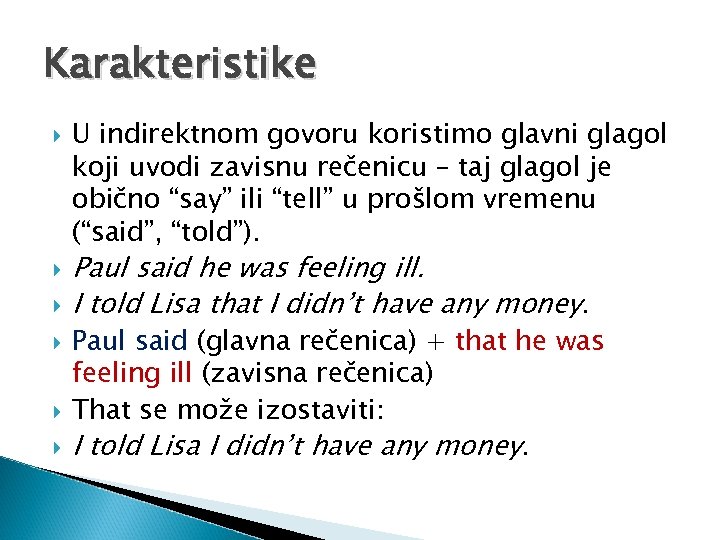 Karakteristike U indirektnom govoru koristimo glavni glagol koji uvodi zavisnu rečenicu – taj glagol je obično “say” ili “tell” u prošlom vremenu (“said”, “told”). Paul said he was feeling ill. I told Lisa that I didn’t have any money. Paul said (glavna rečenica) + that he was feeling ill (zavisna rečenica) That se može izostaviti: I told Lisa I didn’t have any money.
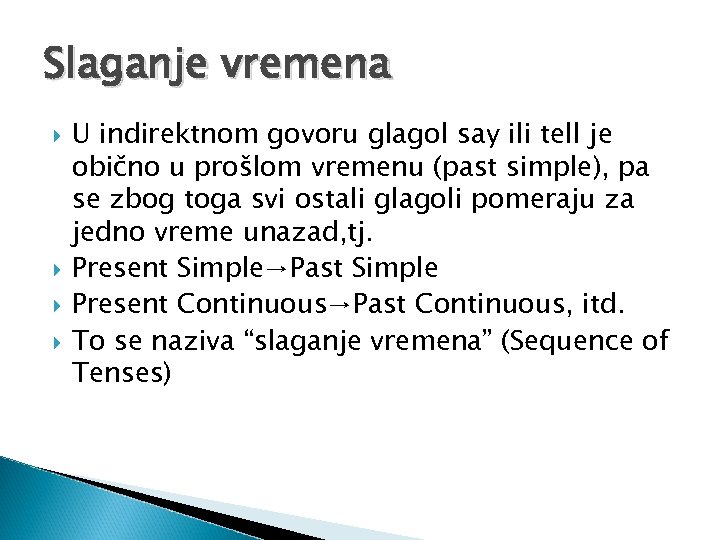 Slaganje vremena U indirektnom govoru glagol say ili tell je obično u prošlom vremenu (past simple), pa se zbog toga svi ostali glagoli pomeraju za jedno vreme unazad, tj. Present Simple→Past Simple Present Continuous→Past Continuous, itd. To se naziva “slaganje vremena” (Sequence of Tenses)
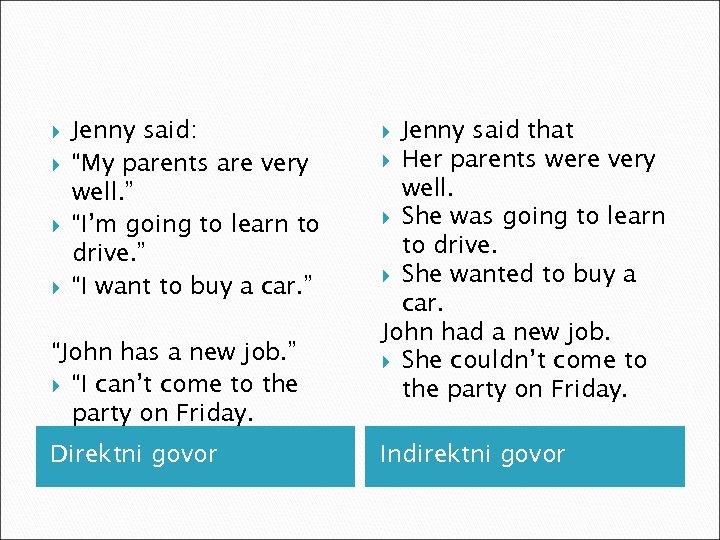 Jenny said: “My parents are very well. ” “I’m going to learn to drive. ” “I want to buy a car. ” “John has a new job. ” “I can’t come to the party on Friday. Direktni govor Jenny said that Her parents were very well. She was going to learn to drive. She wanted to buy a car. John had a new job. She couldn’t come to the party on Friday. Indirektni govor
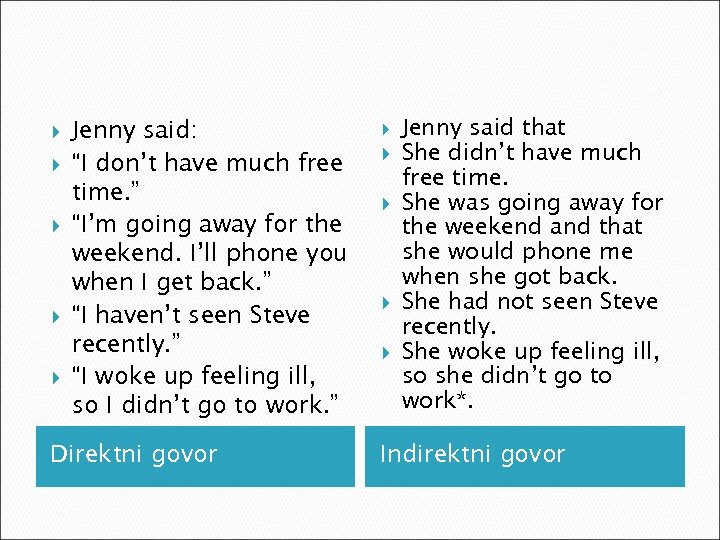 Jenny said: “I don’t have much free time. ” “I’m going away for the weekend. I’ll phone you when I get back. ” “I haven’t seen Steve recently. ” “I woke up feeling ill, so I didn’t go to work. ” Direktni govor Jenny said that She didn’t have much free time. She was going away for the weekend and that she would phone me when she got back. She had not seen Steve recently. She woke up feeling ill, so she didn’t go to work*. Indirektni govor
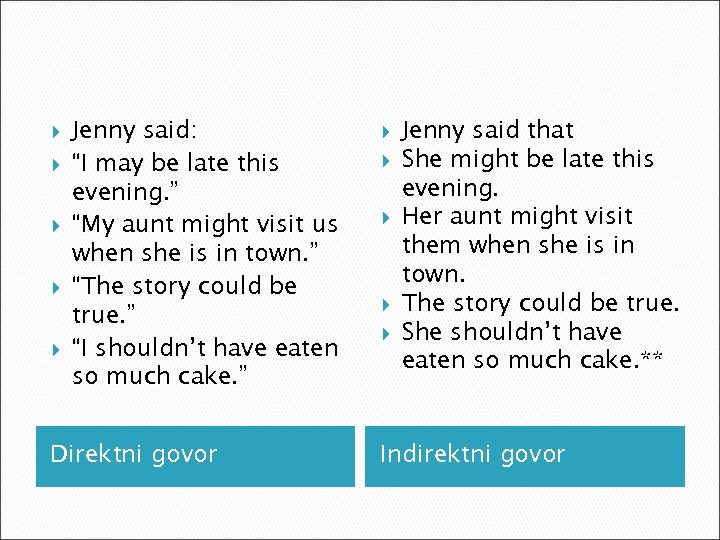 Jenny said: “I may be late this evening. ” “My aunt might visit us when she is in town. ” “The story could be true. ” “I shouldn’t have eaten so much cake. ” Direktni govor Jenny said that She might be late this evening. Her aunt might visit them when she is in town. The story could be true. She shouldn’t have eaten so much cake. ** Indirektni govor
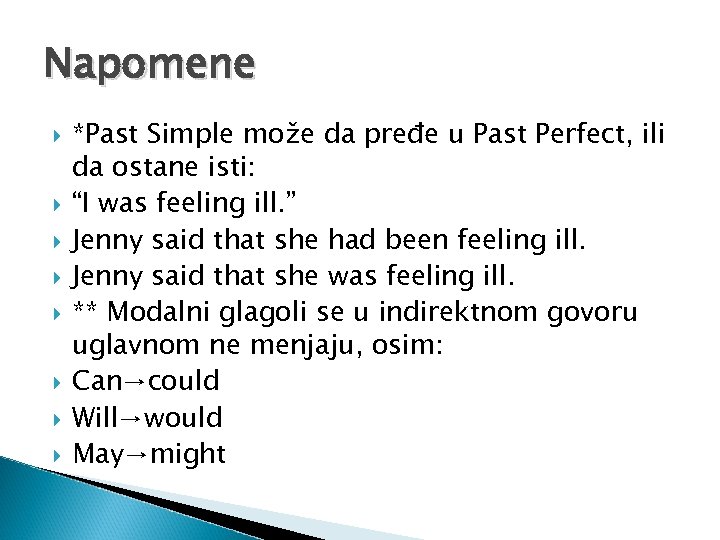 Napomene *Past Simple može da pređe u Past Perfect, ili da ostane isti: “I was feeling ill. ” Jenny said that she had been feeling ill. Jenny said that she was feeling ill. ** Modalni glagoli se u indirektnom govoru uglavnom ne menjaju, osim: Can→could Will→would May→might
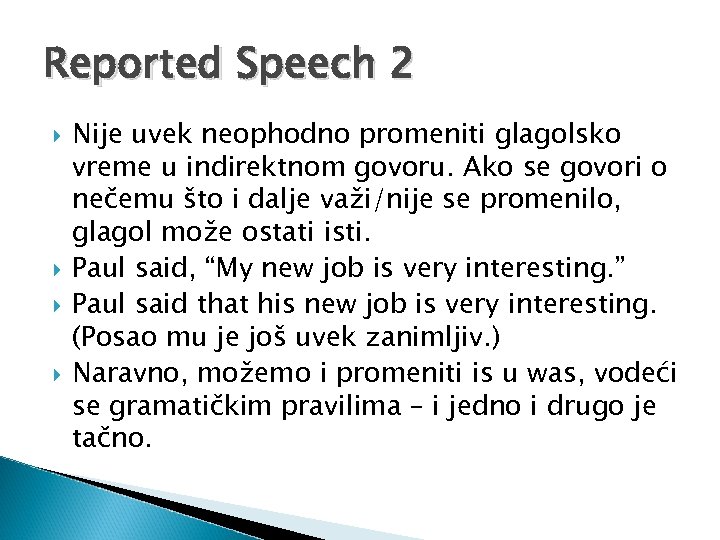 Reported Speech 2 Nije uvek neophodno promeniti glagolsko vreme u indirektnom govoru. Ako se govori o nečemu što i dalje važi/nije se promenilo, glagol može ostati isti. Paul said, “My new job is very interesting. ” Paul said that his new job is very interesting. (Posao mu je još uvek zanimljiv. ) Naravno, možemo i promeniti is u was, vodeći se gramatičkim pravilima – i jedno i drugo je tačno.
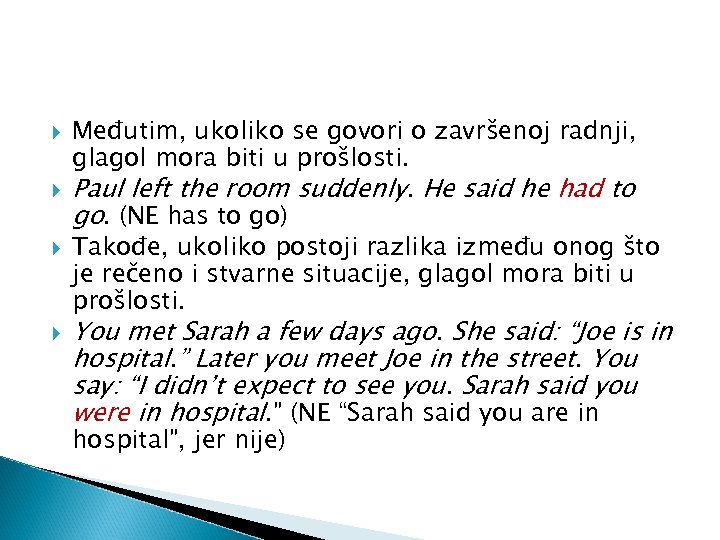 Međutim, ukoliko se govori o završenoj radnji, glagol mora biti u prošlosti. Paul left the room suddenly. He said he had to go. (NE has to go) Takođe, ukoliko postoji razlika između onog što je rečeno i stvarne situacije, glagol mora biti u prošlosti. You met Sarah a few days ago. She said: “Joe is in hospital. ” Later you meet Joe in the street. You say: “I didn’t expect to see you. Sarah said you were in hospital. ” (NE “Sarah said you are in hospital”, jer nije)
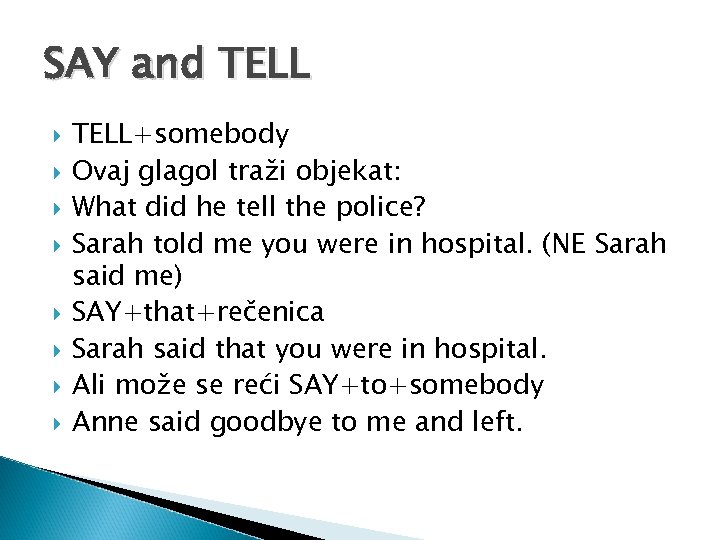 SAY and TELL TELL+somebody Ovaj glagol traži objekat: What did he tell the police? Sarah told me you were in hospital. (NE Sarah said me) SAY+that+rečenica Sarah said that you were in hospital. Ali može se reći SAY+to+somebody Anne said goodbye to me and left.
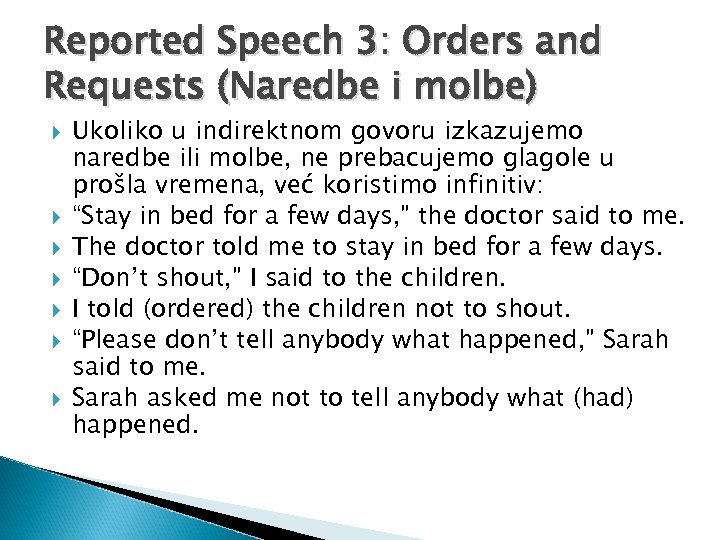 Reported Speech 3: Orders and Requests (Naredbe i molbe) Ukoliko u indirektnom govoru izkazujemo naredbe ili molbe, ne prebacujemo glagole u prošla vremena, već koristimo infinitiv: “Stay in bed for a few days, ” the doctor said to me. The doctor told me to stay in bed for a few days. “Don’t shout, ” I said to the children. I told (ordered) the children not to shout. “Please don’t tell anybody what happened, ” Sarah said to me. Sarah asked me not to tell anybody what (had) happened.
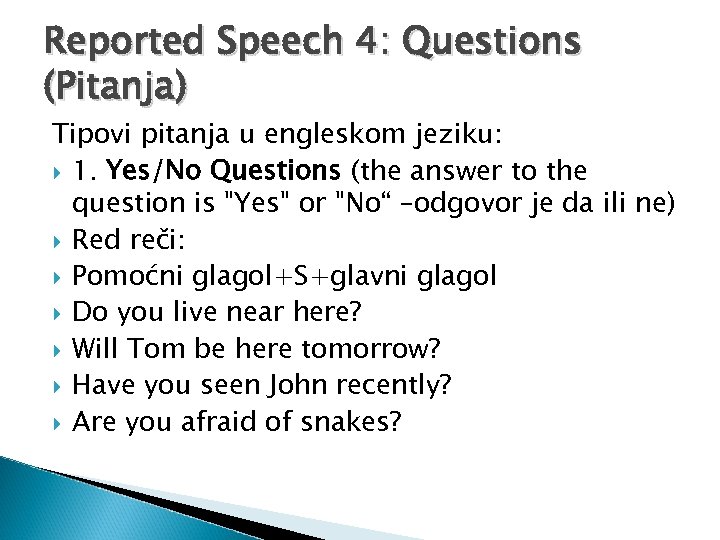 Reported Speech 4: Questions (Pitanja) Tipovi pitanja u engleskom jeziku: 1. Yes/No Questions (the answer to the question is "Yes" or "No“ –odgovor je da ili ne) Red reči: Pomoćni glagol+S+glavni glagol Do you live near here? Will Tom be here tomorrow? Have you seen John recently? Are you afraid of snakes?
 2. Question Word Questions (the answer to the question is "Information“ – odgovor je neka informacija) Red reči: Upitna reč (what/where/when/why/who) + pom. gl+S+glavni gl. When was the house built? What time does the film begin? Who did you see there?
 Pitanja se u indirektnom govoru prenose na sledeći način: 1. Yes/No Questions: “Do you live near here? ” He asked me if I lived near here. He asked me + if+S+glagol Red reči se mora promeniti i biti kao u izjavnoj rečenici: S+glagol a ne glagol+S
 2. Question Word Questions: “Where are you going? ” The policeman asked him where he was going. Zadržava se ista upitna reč, a red reči mora biti kao u izjavnoj rečenici.