 Скачать презентацию Renewable Energy and Corporate Markets Andrew Aulisi World
7c46a890d77507da152990fb67dfb5e9.ppt
- Количество слайдов: 24



Renewable Energy and Corporate Markets Andrew Aulisi World Resources Institute DESC 2004 Worldwide Energy Conference September 29, 2004
Agenda • Introduction to renewable energy and the GPMDG • Business case for green power • New markets
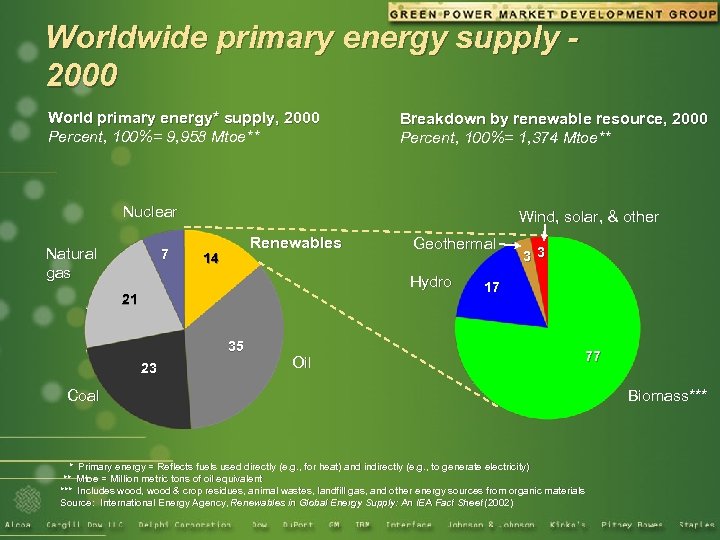
Worldwide primary energy supply 2000 World primary energy* supply, 2000 Percent, 100%= 9, 958 Mtoe** Breakdown by renewable resource, 2000 Percent, 100%= 1, 374 Mtoe** Nuclear Natural gas 7 Wind, solar, & other Renewables 14 Geothermal Hydro 21 35 23 Oil 3 3 17 77 Coal * Primary energy = Reflects fuels used directly (e. g. , for heat) and indirectly (e. g. , to generate electricity) ** Mtoe = Million metric tons of oil equivalent *** Includes wood, wood & crop residues, animal wastes, landfill gas, and other energy sources from organic materials Source: International Energy Agency, Renewables in Global Energy Supply: An IEA Fact Sheet (2002) Source: International Energy Agency, Renewables Sheet (2002) Biomass***
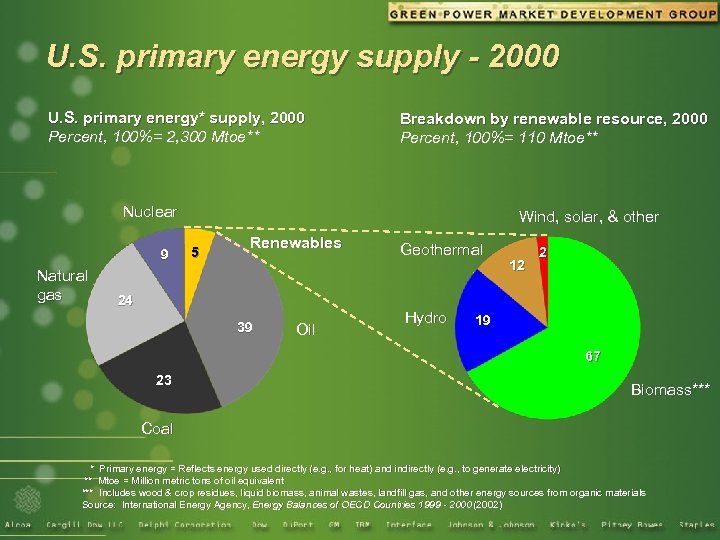
U. S. primary energy supply - 2000 U. S. primary energy* supply, 2000 Percent, 100%= 2, 300 Mtoe** Breakdown by renewable resource, 2000 Percent, 100%= 110 Mtoe** Nuclear 9 Natural gas Wind, solar, & other 5 Renewables 24 39 Oil Geothermal Hydro 12 2 19 67 23 Biomass*** Coal * Primary energy = Reflects energy used directly (e. g. , for heat) and indirectly (e. g. , to generate electricity) ** Mtoe = Million metric tons of oil equivalent *** Includes wood & crop residues, liquid biomass, animal wastes, landfill gas, and other energy sources from organic materials Source: International Energy Agency, Energy Balances of OECD Countries 1999 - 2000 (2002) Source: International Energy Agency, Energy 2000 (2002)
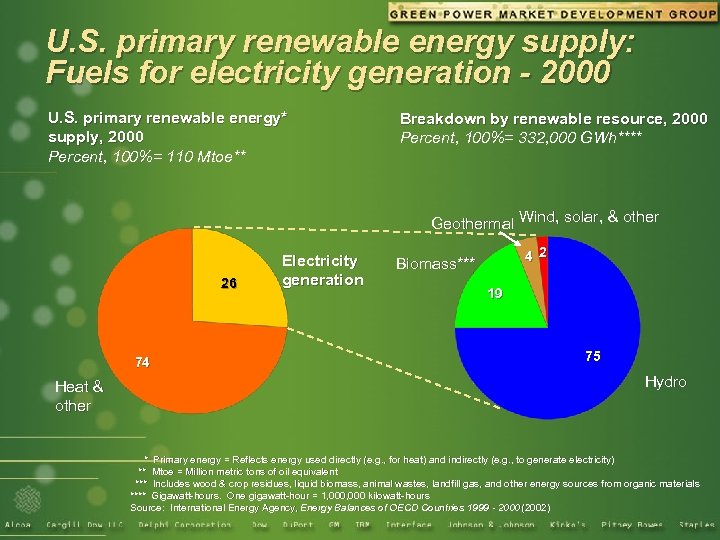
U. S. primary renewable energy supply: Fuels for electricity generation - 2000 U. S. primary renewable energy* supply, 2000 Percent, 100%= 110 Mtoe** Breakdown by renewable resource, 2000 Percent, 100%= 332, 000 GWh**** Geothermal Wind, solar, & other 26 74 Heat & other Electricity generation 4 2 Biomass*** 19 75 Hydro * Primary energy = Reflects energy used directly (e. g. , for heat) and indirectly (e. g. , to generate electricity) ** Mtoe = Million metric tons of oil equivalent *** Includes wood & crop residues, liquid biomass, animal wastes, landfill gas, and other energy sources from organic materials **** Gigawatt-hours. One gigawatt-hour = 1, 000 kilowatt-hours Source: International Energy Agency, Energy Balances of OECD Countries 1999 - 2000 (2002) Source: International Energy Agency, Energy 2000 (2002)
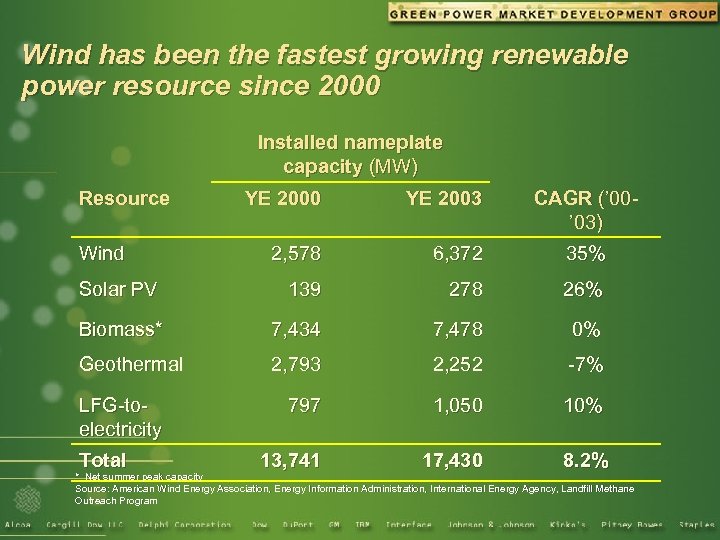
Wind has been the fastest growing renewable power resource since 2000 Installed nameplate capacity (MW) Resource YE 2000 YE 2003 2, 578 6, 372 35% Solar PV 139 278 26% Biomass* 7, 434 7, 478 0% Geothermal 2, 793 2, 252 -7% 797 1, 050 10% 13, 741 17, 430 8. 2% Wind LFG-toelectricity Total CAGR (’ 00’ 03) * Net summer peak capacity Source: American Wind Energy Association, Energy Information Administration, International Energy Agency, Landfill Methane Outreach Program
The Green Power Market Development Group Developing corporate markets for 1, 000 MW of new, cost-competitive green power by 2010 in the US Alcoa Inc. Cargill Dow LLC Delphi Corporation The Dow Chemical Company Du. Pont General Motors IBM Interface Johnson & Johnson Kinko’s Pitney Bowes Staples
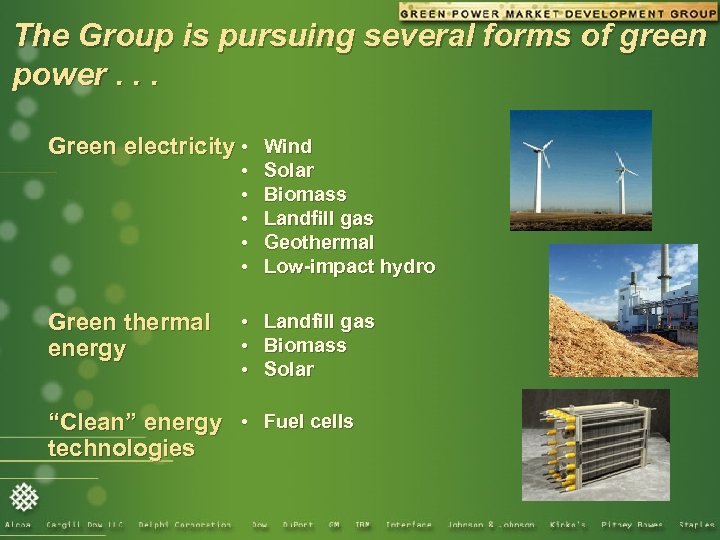
The Group is pursuing several forms of green power. . . Green electricity • Wind • • • Solar Biomass Landfill gas Geothermal Low-impact hydro Green thermal energy • Landfill gas • Biomass • Solar “Clean” energy technologies • Fuel cells
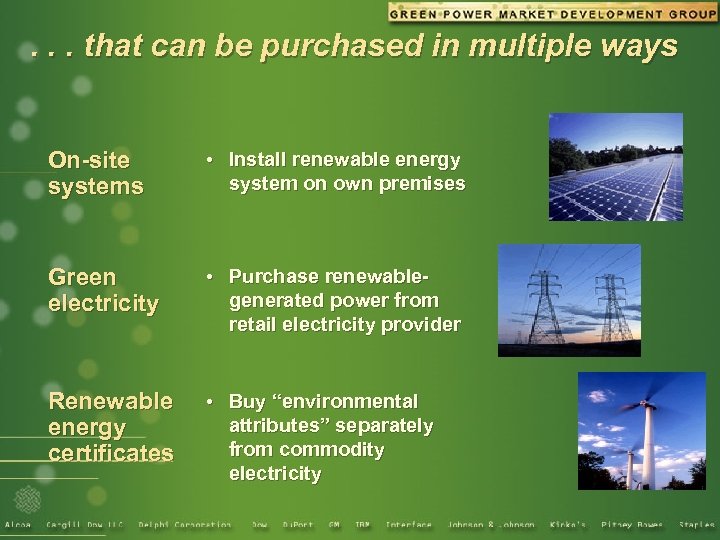
. . . that can be purchased in multiple ways On-site systems • Install renewable energy Green electricity • Purchase renewable- Renewable energy certificates • Buy “environmental system on own premises generated power from retail electricity provider attributes” separately from commodity electricity
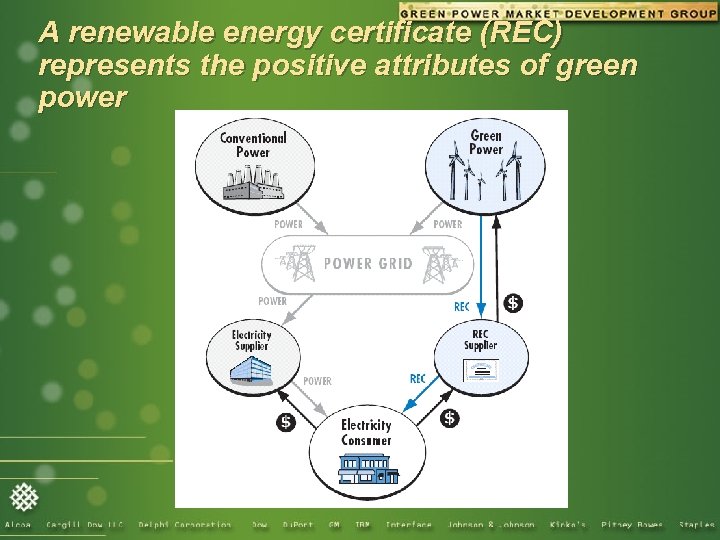
A renewable energy certificate (REC) represents the positive attributes of green power
Agenda • Introduction to renewable energy and the GPMDG • Business case for green power • New markets
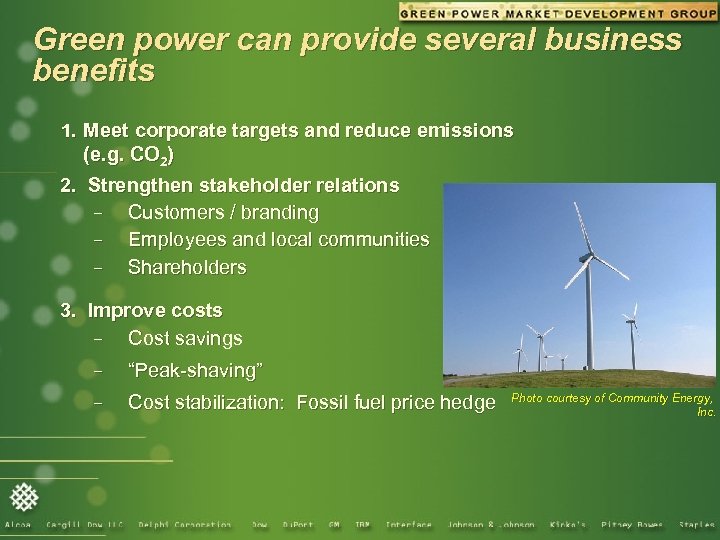
Green power can provide several business benefits 1. Meet corporate targets and reduce emissions (e. g. CO 2) 2. Strengthen stakeholder relations Customers / branding Employees and local communities Shareholders 3. Improve costs Cost savings “Peak-shaving” Cost stabilization: Fossil fuel price hedge Photo courtesy of Community Energy, Inc.
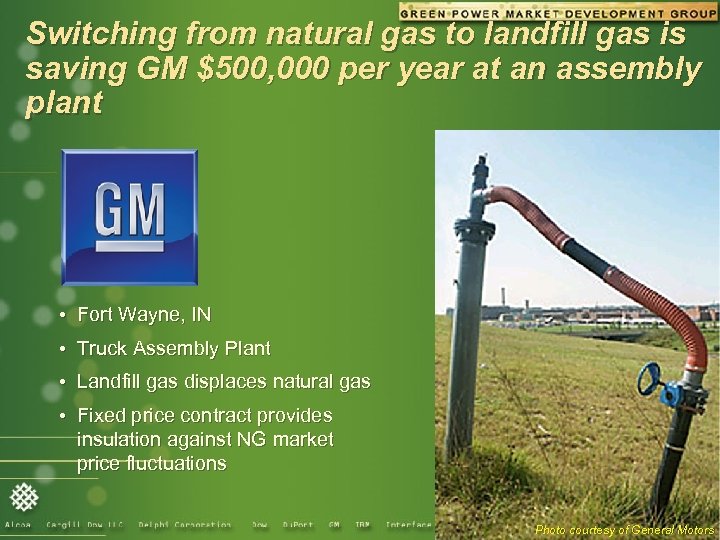
Switching from natural gas to landfill gas is saving GM $500, 000 per year at an assembly plant • Fort Wayne, IN • Truck Assembly Plant • Landfill gas displaces natural gas • Fixed price contract provides insulation against NG market price fluctuations Photo courtesy of General Motors
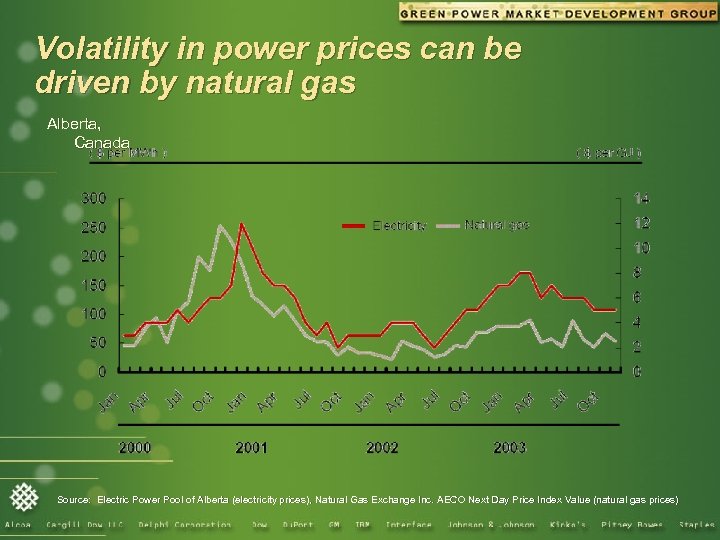
Volatility in power prices can be driven by natural gas Alberta, Canada Source: Electric Power Pool of Alberta (electricity prices), Natural Gas Exchange Inc. AECO Next Day Price Index Value (natural gas prices)
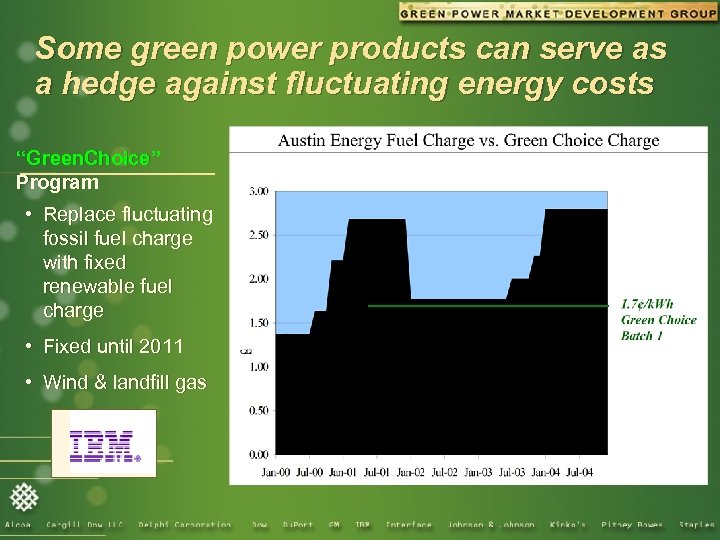
Some green power products can serve as a hedge against fluctuating energy costs “Green. Choice” Program • Replace fluctuating fossil fuel charge with fixed renewable fuel charge • Fixed until 2011 • Wind & landfill gas
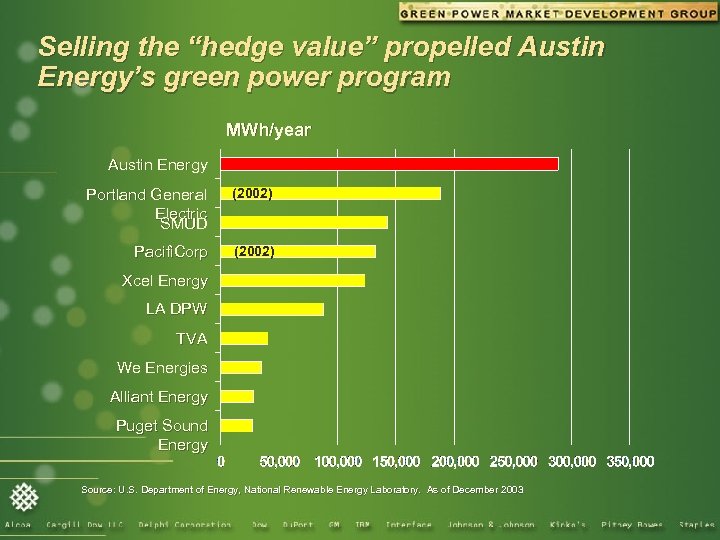
Selling the “hedge value” propelled Austin Energy’s green power program MWh/year Austin Energy Portland General Electric SMUD (2002) Pacifi. Corp (2002) Xcel Energy LA DPW TVA We Energies Alliant Energy Puget Sound Energy Source: U. S. Department of Energy, National Renewable Energy Laboratory. As of December 2003.
Strategies used for buying green power Leverage government incentives • Rebates, accelerated depreciation, etc. for onsite systems Squeeze costs • Competitively bid • Aggregate demand when soliciting proposals (within, with others) • Work with supplier to design new green power product Find creative ways to pay for premium (if any) • Use savings achieved by energy efficiency • Use savings achieved by switching to new electricity supplier • Realize hedge value of green power
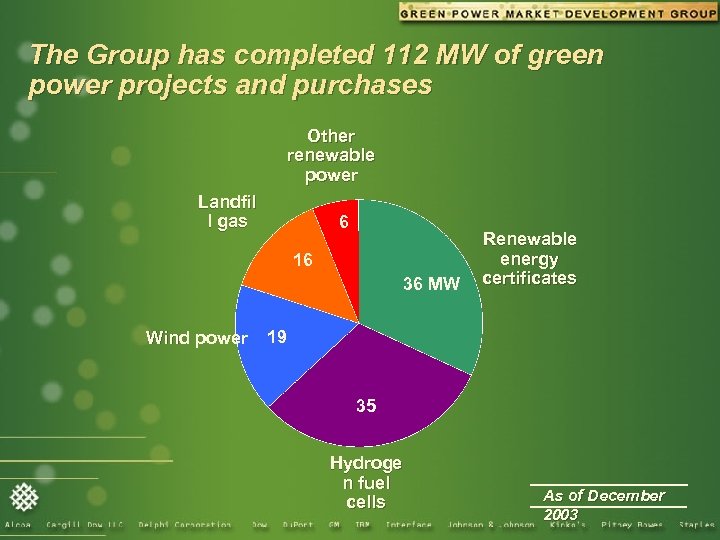
The Group has completed 112 MW of green power projects and purchases Other renewable power Landfil l gas 6 16 36 MW Wind power Renewable energy certificates 19 35 Hydroge n fuel cells As of December 2003
Agenda • Introduction to renewable energy and the GPMDG • Business case for green power • New markets
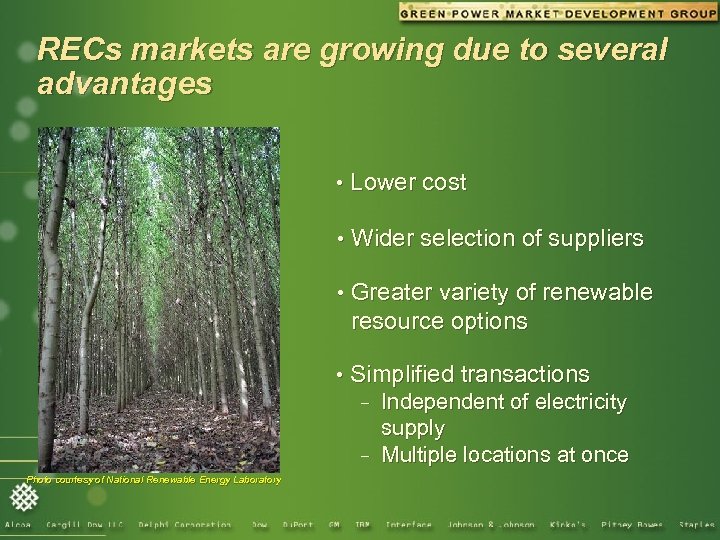
RECs markets are growing due to several advantages • Lower cost • Wider selection of suppliers • Greater variety of renewable resource options • Simplified transactions Independent of electricity supply Multiple locations at once Photo courtesy of National Renewable Energy Laboratory
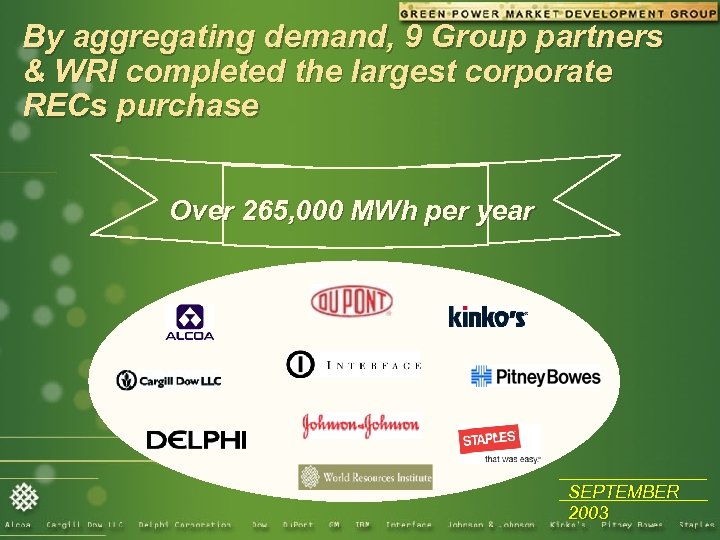
By aggregating demand, 9 Group partners & WRI completed the largest corporate RECs purchase Over 265, 000 MWh per year SEPTEMBER 2003
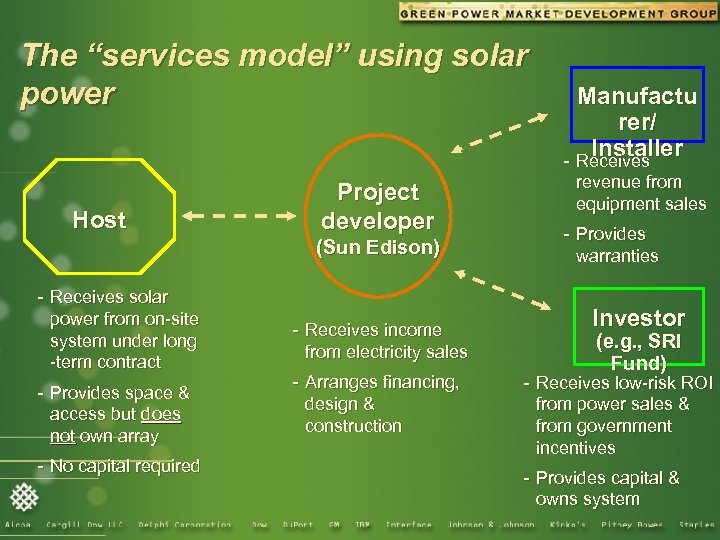
The “services model” using solar power Host Project developer (Sun Edison) - Receives solar power from on-site system under long -term contract - Provides space & access but does not own array - No capital required - Receives income from electricity sales - Arranges financing, design & construction Manufactu rer/ Installer - Receives revenue from equipment sales - Provides warranties Investor (e. g. , SRI Fund) - Receives low-risk ROI from power sales & from government incentives - Provides capital & owns system
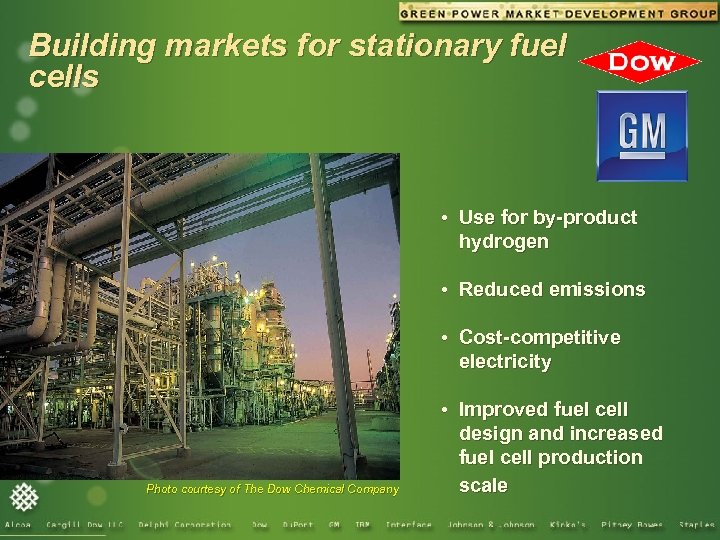
Building markets for stationary fuel cells • Use for by-product hydrogen • Reduced emissions • Cost-competitive electricity • Improved fuel cell Photo courtesy of The Dow Chemical Company design and increased fuel cell production scale
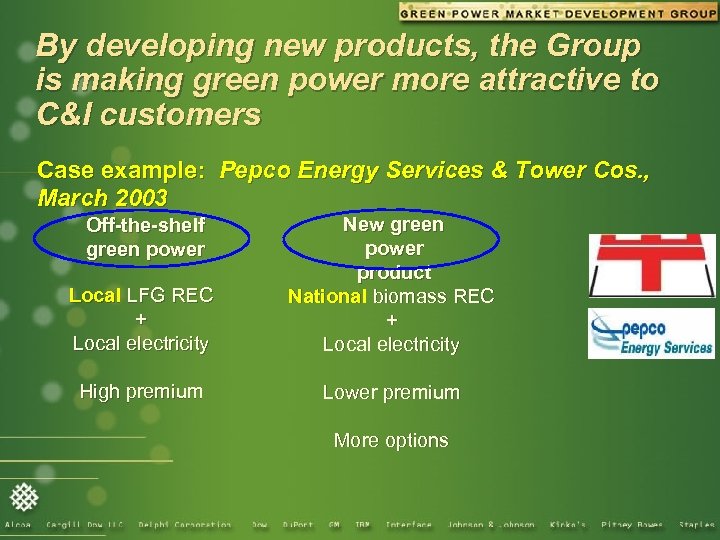
By developing new products, the Group is making green power more attractive to C&I customers Case example: Pepco Energy Services & Tower Cos. , March 2003 Local LFG REC + Local electricity New green power product National biomass REC + Local electricity High premium Lower premium Off-the-shelf green power More options
Скачать презентацию Renewable Energy and Corporate Markets Andrew Aulisi World
7c46a890d77507da152990fb67dfb5e9.ppt