


 Скачать презентацию Renaissance and Reformation Renaissance in Italy I
64f59deac1a8578cb071b58c26880c42.ppt
- Количество слайдов: 67
 Renaissance and Reformation Renaissance in Italy
 I. Renaissance n A. Means Re-Birth n B. 1350 -1600 n 1. Began in Italy expanding throughout Europe na. Florence was starting point
 n 2. Rebirth of literature, art, architecture. n 3. Medici and Borgia families led the way.
 C. Johann Gutenberg n 1. First developed moveable type in Europe n 2. before, written on goat or sheep skin na. Was somewhat costly nb. Later found a way to make paper cheaper
 n 3. First book printed by Gutenberg was the Bible n a. U. of Texas owns one of the originals
 Leonardo da Vinci n 1. Artist and engineer n 2. Designed armored vehicles, flying machines, parachutes, cannons and large sculptures. n 3. Had a code--wrote backwards than used a mirror to read it
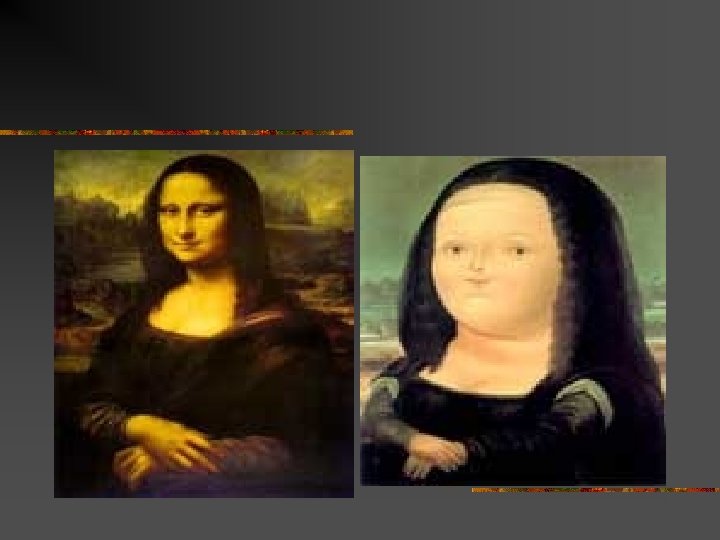
 n 4. Dissected bodies and drew sketches of the anatomy n 5. Also an outstanding artist n a. Mona Lisa n b. Last Supper n 6. Major criticism was that he never finished what he started
 Michealangelo n 1. Artist n a. painted the ceiling in the Sistine Chapel n. I. Genius n. II. It is 134’ long 85’high 44’wide
 n. III. Laid on his back 4 1/2 years n. IV. Painted for Julius II
 n b. Painted the end wall 24 years later n. I. Last Judgement n. II. 60’ high, 30’ wide n. III. Took eight years
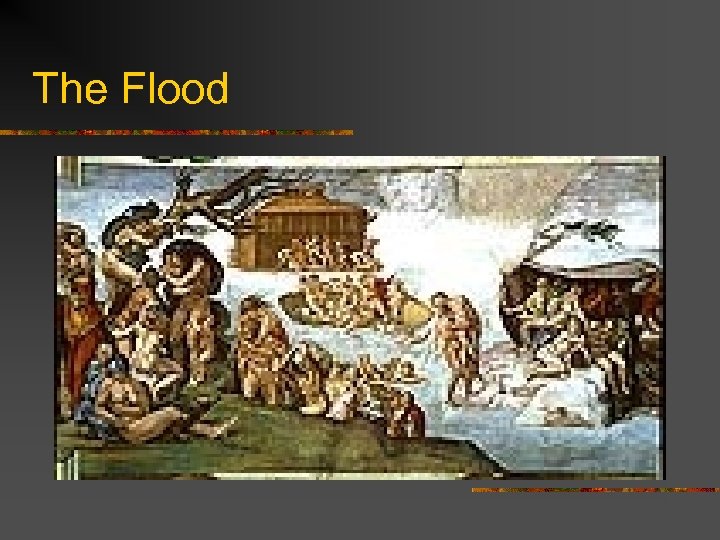 The Flood
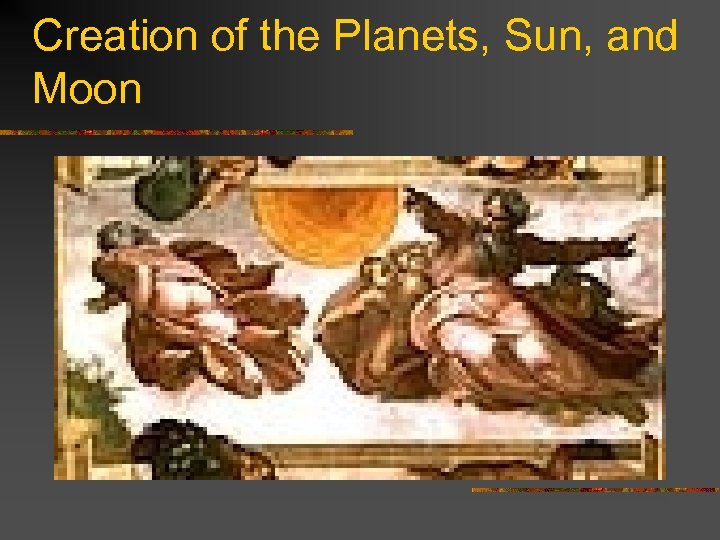 Creation of the Planets, Sun, and Moon
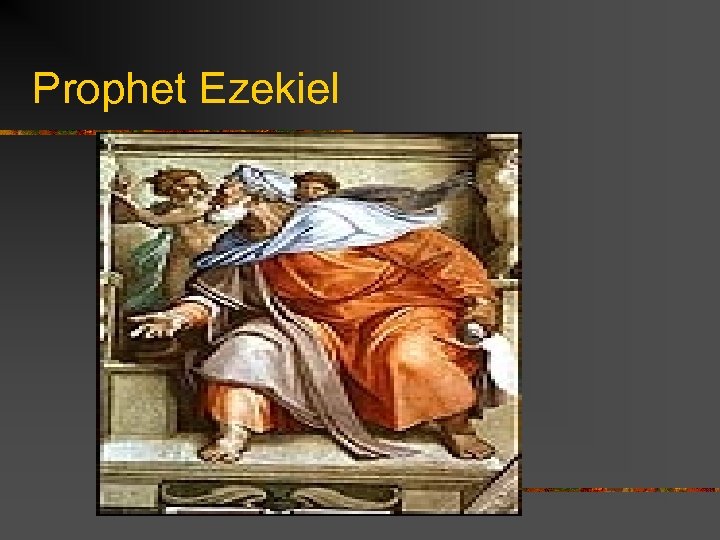 Prophet Ezekiel
 n 2. Sculptor n a. What he enjoyed the most n b. Statues of Moses, David, Pieta
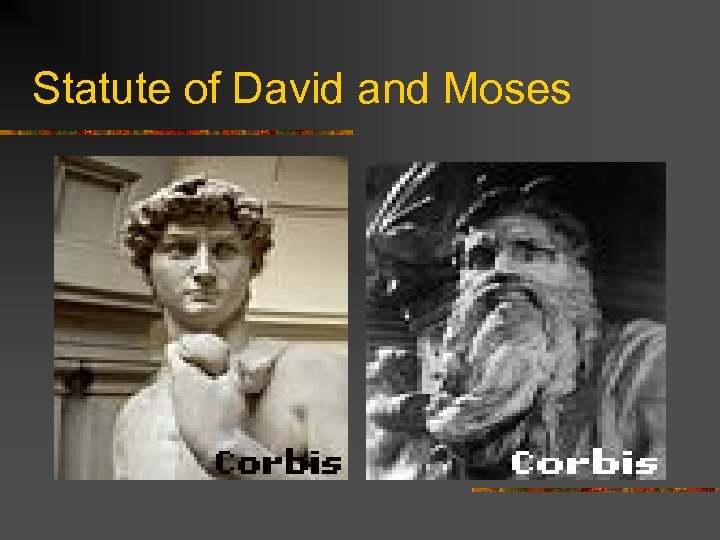 Statute of David and Moses
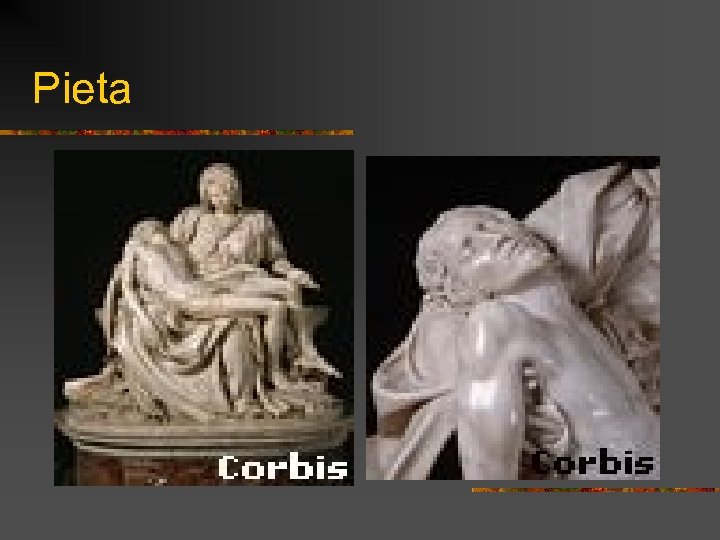 Pieta
Pieta
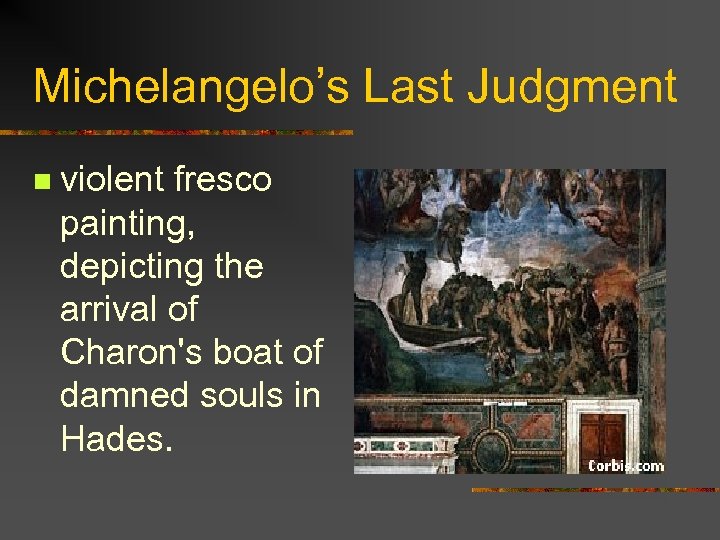 Michelangelo’s Last Judgment n violent fresco painting, depicting the arrival of Charon's boat of damned souls in Hades.
 n 3. Architect n a. Helped design St. Peter’s in Rome n 4. Teacher n used students to do or finish his work n most famous of these was Raphael
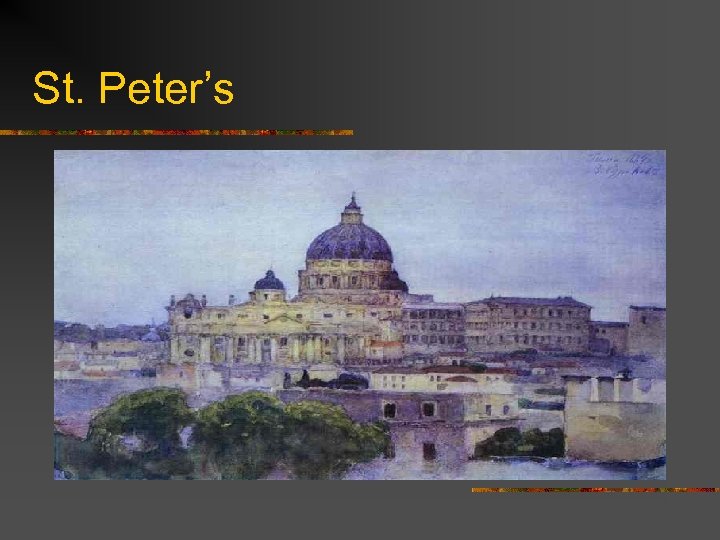 St. Peter’s
 Machiavelli n 1. A writer and a diplomat n 2. The Prince, his most famous work n a. Described his type of gov’t n b. Everything was OK as long as the state existed
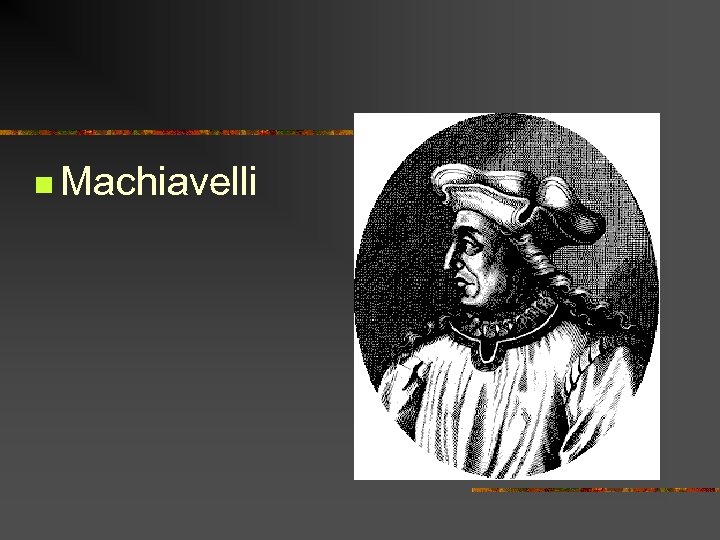 n Machiavelli
 n C. rulers were not under moral rules or laws n D. Deceit was OK n 3. Father of political science
 II. Reformation n A. Inquisition n 1. Set up to eliminate heresy and heretics n 2. Heavy penance for those who recant
 n 3. Condemned were turned over to civil government na. usually burned at the stake
 B. Heresy n 1. Questioning of church doctrine n a. Teachings of Church revealed through the Bible
 John Wycliffe n A. Translated the Bible into English n I. everyone who could read English could read it n B. Felt you didn’t need a priest to be saved
 n C. after he died and was buried, his bones were dug up and burned in a public ceremony
 Martin Luther n A. 95 Theses n 1. Nailed to church door of Wittenberg Cathedral. n. A. protest against some practices of the church n. B. particularly against indulgences
 n. C. An invitation to debate n. D. Leo X--Pope
 2. Indulgences n A. Given for performance of a good work n B. Now used(sold) to raise money for Church projects n C. Were pardons for sins
 3. Simony n A. buying and selling of Church positions n B. Person would recoup the money by charging fees for services
 4. Fake Relics n A. a relic is a piece of a very holy person or something that person has owned or touched n B. Many fake relics floating around Europe n nails from the cross, skulls from John the Baptist
 5. Land n A. Much of land in Europe owned by the Church n B. Church was rich and powerful, money oriented n C. Was one of the largest landowners in Europe
 B. Good Works n 1. Church taught that in order to get to Heaven an individual had to perform good works n 2. Luther believed that n a. Belief in God would achieve salvation
 n B. Salvation could come by faith alone n C. Good deeds and ceremonies would not save you n D. didn’t need clergy to administer the sacraments n only two sacraments--baptism and communion
 n E. Could not buy your way into Heaven
 C. Result n 1. Luther excommunicated n 2. He protest against the Church n 3. People who protested were called Protestants
 n 4. Began his own church-Lutheran Church n a. Had not intended to do this but the Catholic Church left him no choice
 Y. T. T. W. n Determine why the Catholic Church was so fearful of Martin Luther. Why did they eventually allow Martin Luther to set up his own church?

 III. John Calvin n A. Born and raised in France n 1. Saw little hope for reform of Church in France so left. n B. n 1. Geneva Doctrine of predestination
 n. A. God already determined who were to be saved because He knows the future. n. B. The chosen were called the “elect” n. C. Only way to be sure was to lead a righteous life
 n 2. Ideas spread but was never a major religion n 3. Wrote “Institute of Christian Religion: na. Beliefs
 Y. T. T. W. n Explain Calvin’s doctrine of predestination. Determine two common beliefs that Martin Luther and John Calvin shared.
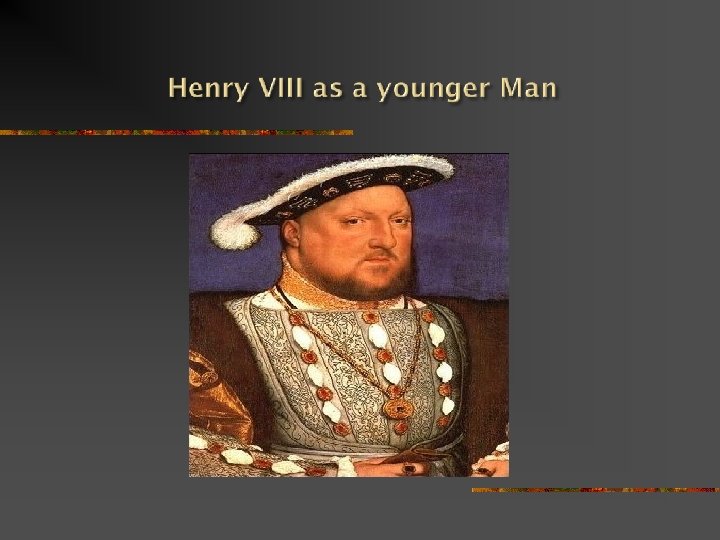
 IV. Reformation in England n A. n 1. Henry VIII Devoted Catholic n 2. Wanted a son--heir to throne na. Only had a daughter
 n 3. Wanted Pope to annul the marriage na. Pope stalled because Henry’s wife was Spanish and he didn’t want to upset the Spanish nb. Henry married total of 6 times
 n 4. Henry excommunicated n a. Made himself head of new church n. Church of England
 n 5. Break was political rather than religious n 6. This was the Tudor Dynasty
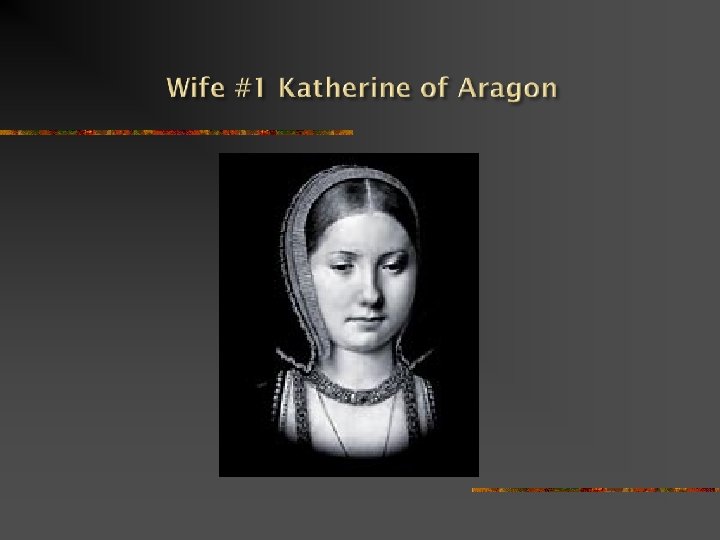
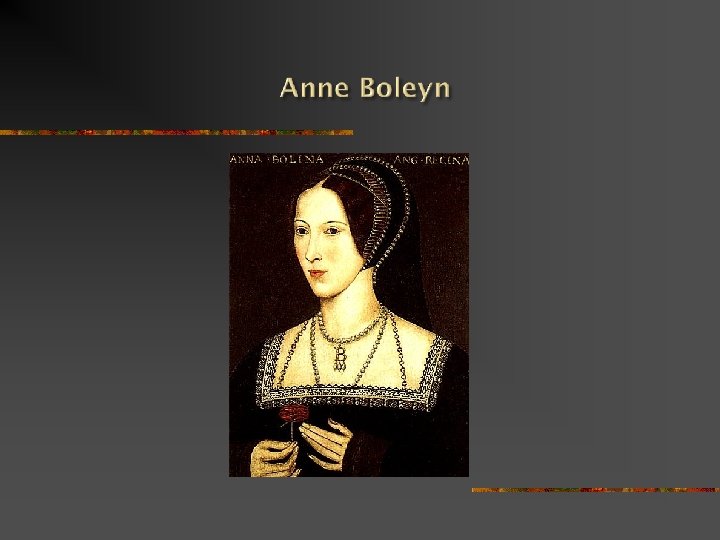
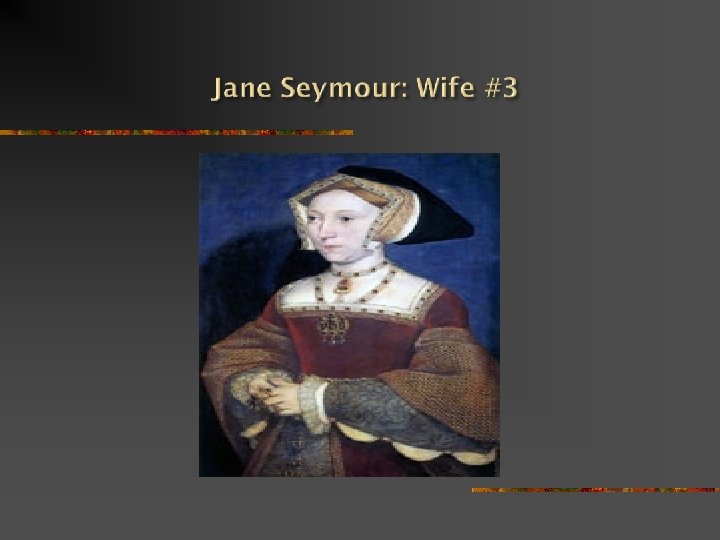
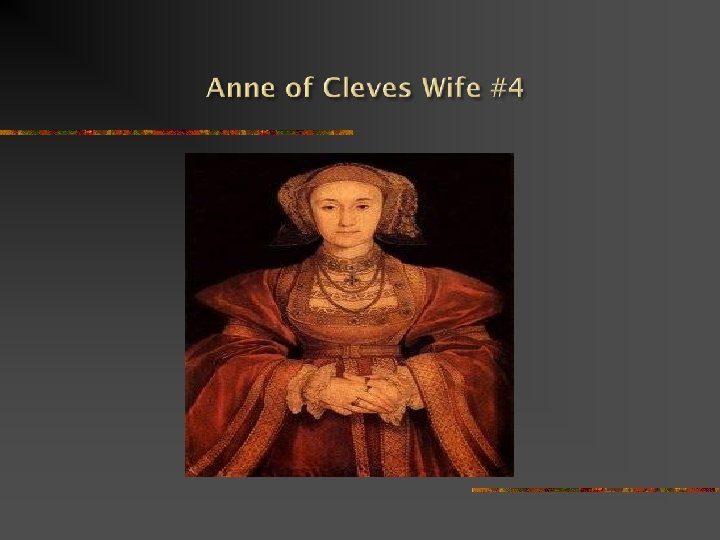
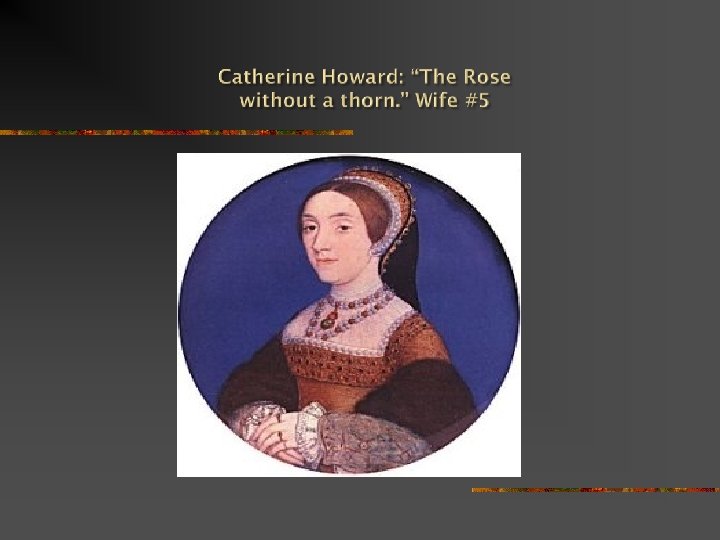
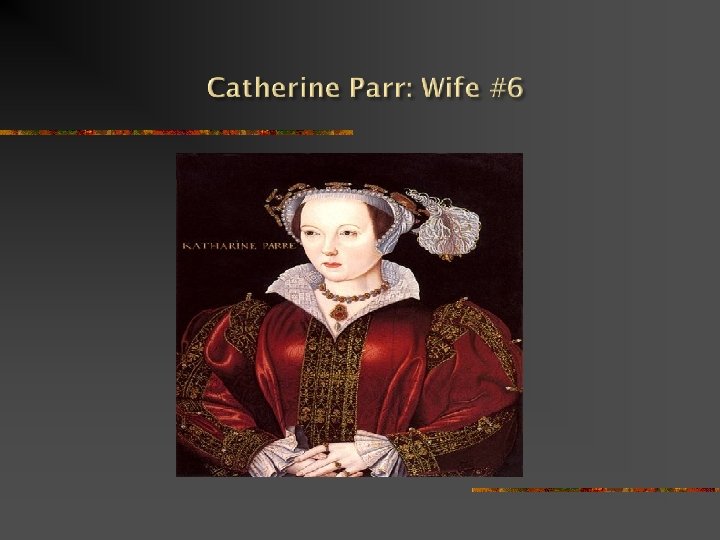
 Divorced, Beheaded, Survived. n Henry VIII died at the age of 55 from a combination of Syphilis and an infection from a leg wound that never healed. n He is buried next to Jane Seymour at Windsor Castle. n
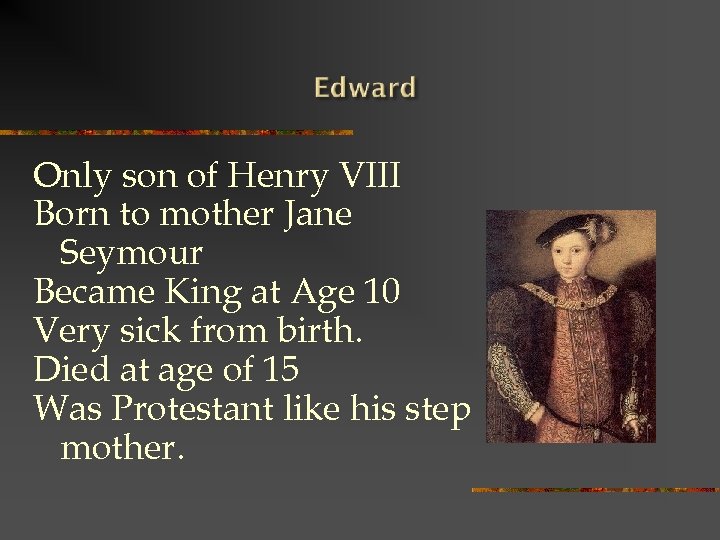 Only son of Henry VIII Born to mother Jane Seymour Became King at Age 10 Very sick from birth. Died at age of 15 Was Protestant like his step mother.
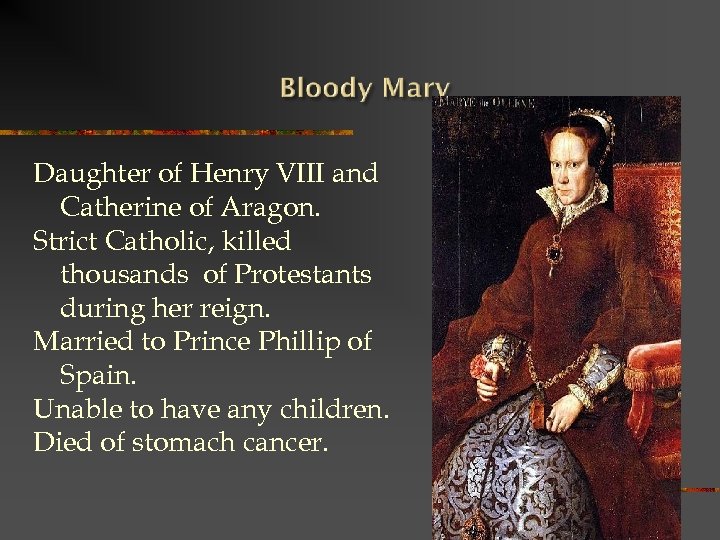 Daughter of Henry VIII and Catherine of Aragon. Strict Catholic, killed thousands of Protestants during her reign. Married to Prince Phillip of Spain. Unable to have any children. Died of stomach cancer.
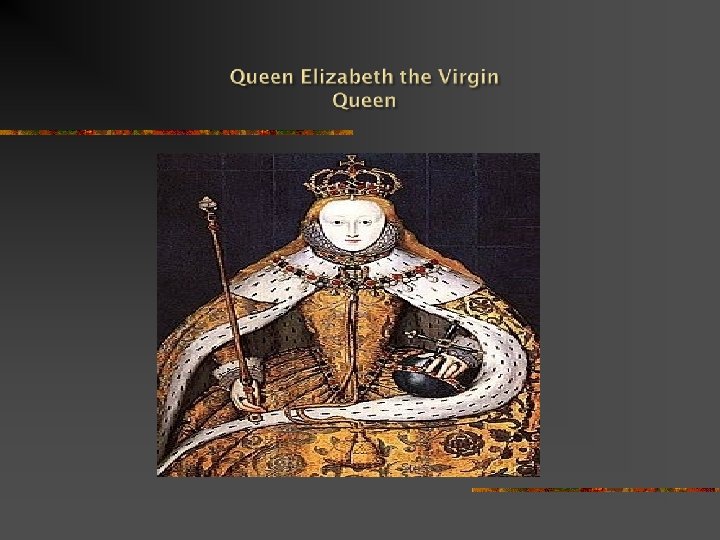
 n n Considered to be the greatest monarch to ever rule England. Daughter of Henry VIII and Anne Boleyn. Hated by her half sister, Mary, loved by her people. Strict Protestant, was almost beheaded by her sister and was locked in the Tower of London.
 n n Elizabeth never married, did not want to share her power with a man. Was very well educated and skilled as a ruler. Was opposed by her dead sister’s husband, Phillip of Spain who did not approve of her Protestant Ways. Beheaded her cousin, Mary Queen of Scots who tried to oppose her rule.
 n One of England’s best rulers n During her reign the Armada is sent to punish England by the Spanish n a. 1588 defeated beginning the end of Spanish dominance
 defeat because of weather, faster English ships and lack of supplies n Result is England is the leading Protestant country and no longer is there one Christian Church in England. n
 Y. T. T. W n Explain the changes the Church went through in England starting with Henry VII then Mary Tudor and finally Elizabeth.