 Скачать презентацию Remarks before the Computing Research Association The Adequacy
5161b83427b59b9bb1cf1ed433b9300c.ppt
- Количество слайдов: 56



Remarks before the Computing Research Association The Adequacy of the U. S. S&E Workforce: A QUANTITATIVE PERSPECTIVE Offshore Outsourcing John Sargent Senior Policy Analyst U. S. Department of Commerce
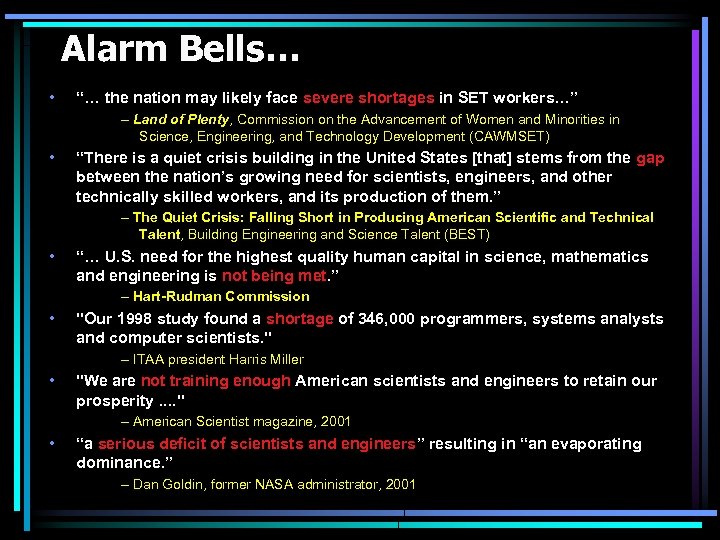
Alarm Bells… • “… the nation may likely face severe shortages in SET workers…” – Land of Plenty, Commission on the Advancement of Women and Minorities in Science, Engineering, and Technology Development (CAWMSET) • “There is a quiet crisis building in the United States [that] stems from the gap between the nation’s growing need for scientists, engineers, and other technically skilled workers, and its production of them. ” – The Quiet Crisis: Falling Short in Producing American Scientific and Technical Talent, Building Engineering and Science Talent (BEST) • “… U. S. need for the highest quality human capital in science, mathematics and engineering is not being met. ” – Hart-Rudman Commission • "Our 1998 study found a shortage of 346, 000 programmers, systems analysts and computer scientists. " – ITAA president Harris Miller • "We are not training enough American scientists and engineers to retain our prosperity. . " – American Scientist magazine, 2001 • “a serious deficit of scientists and engineers” resulting in “an evaporating dominance. ” – Dan Goldin, former NASA administrator, 2001
Demand for S&E Workers
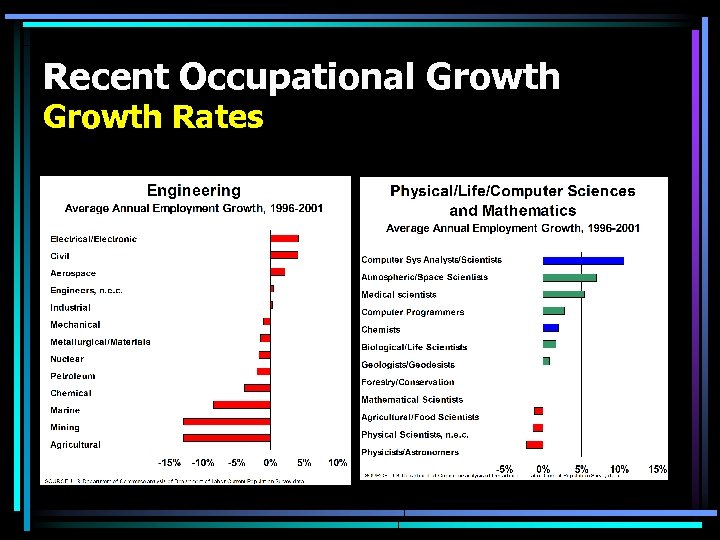
Recent Occupational Growth Rates
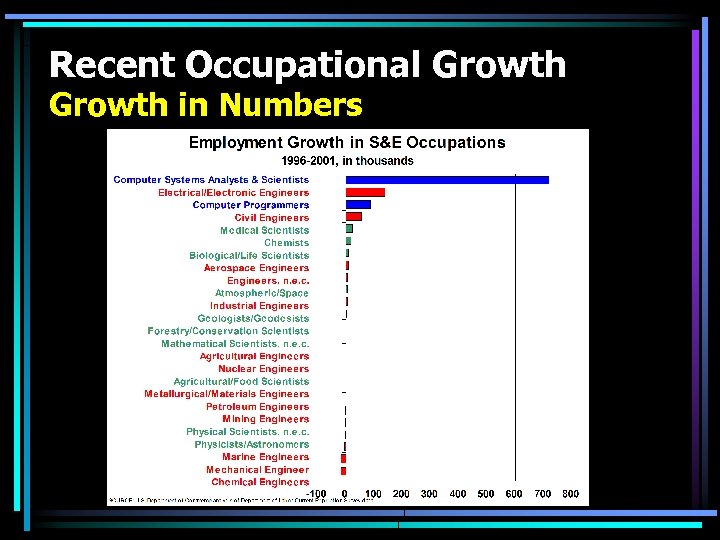
Recent Occupational Growth in Numbers
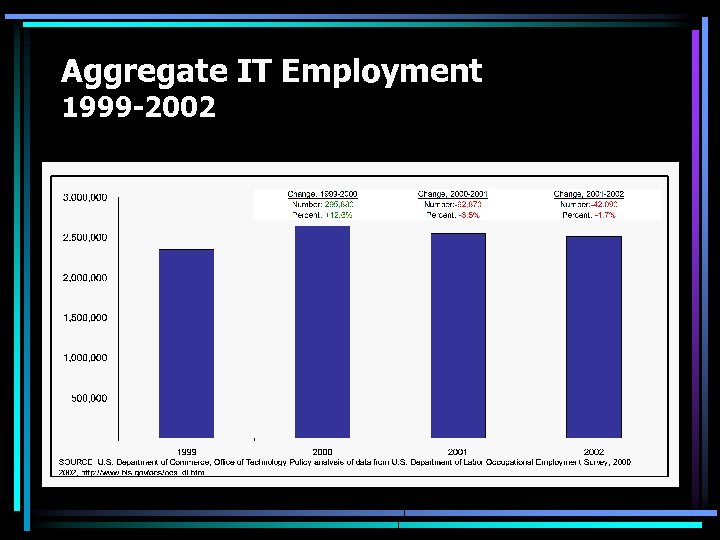
Aggregate IT Employment 1999 -2002
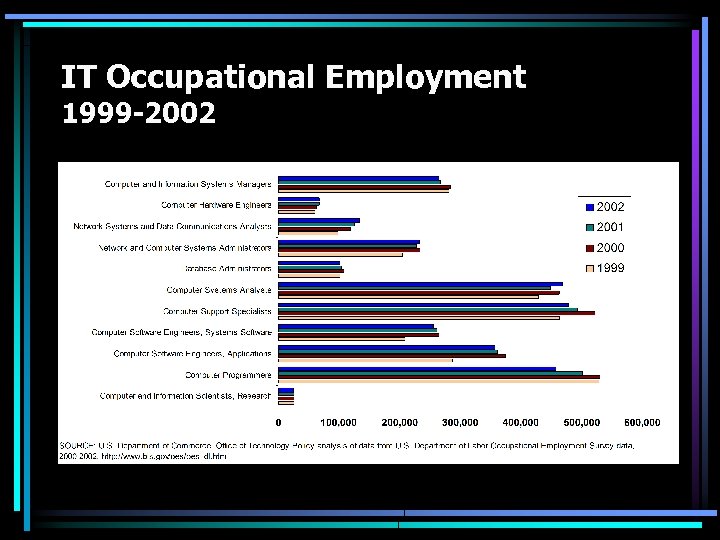
IT Occupational Employment 1999 -2002
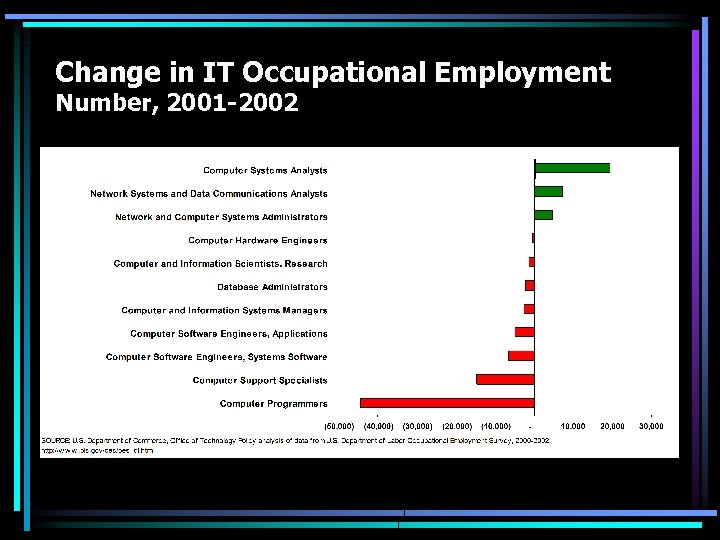
Change in IT Occupational Employment Number, 2001 -2002
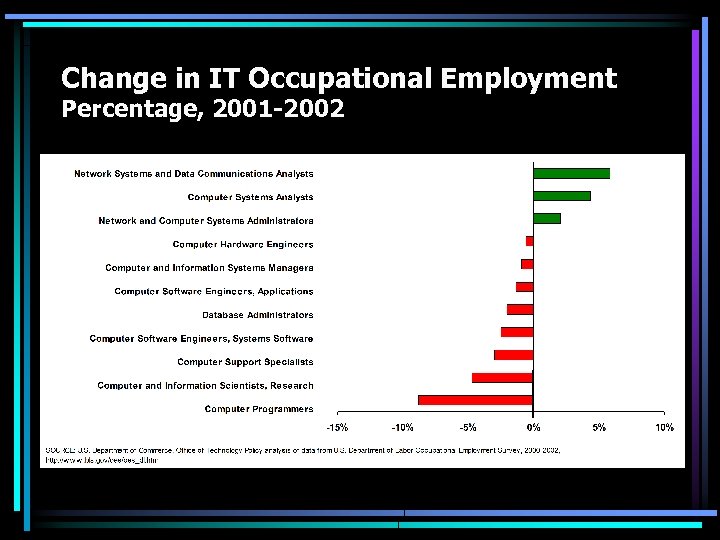
Change in IT Occupational Employment Percentage, 2001 -2002
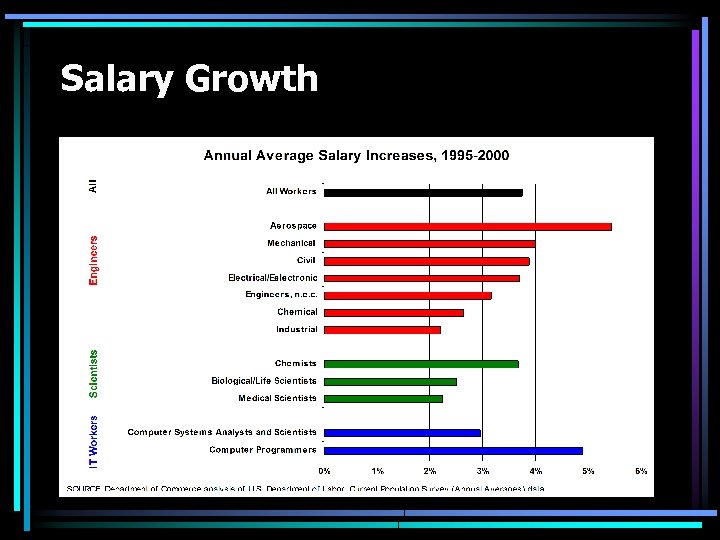
Salary Growth
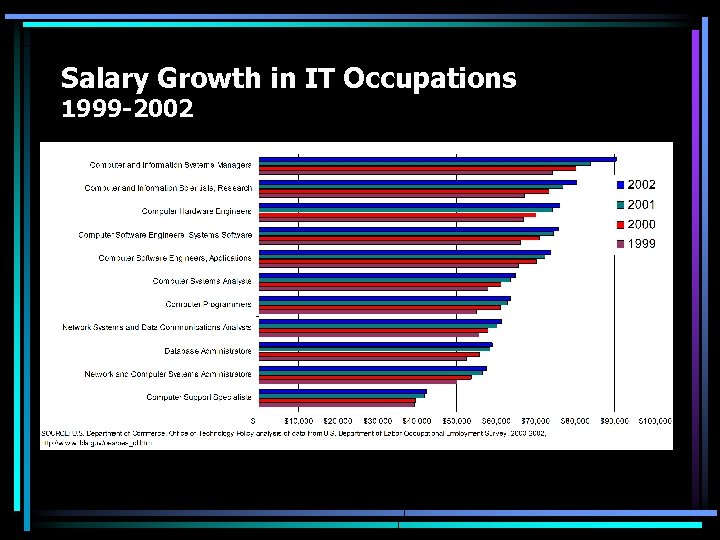
Salary Growth in IT Occupations 1999 -2002
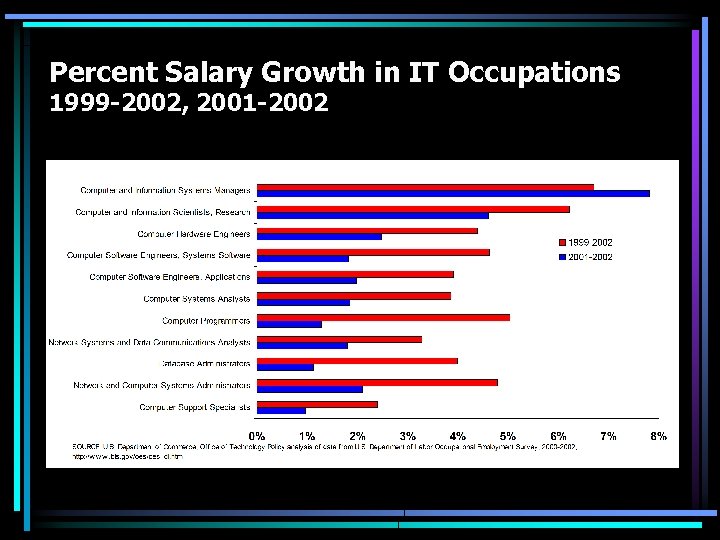
Percent Salary Growth in IT Occupations 1999 -2002, 2001 -2002
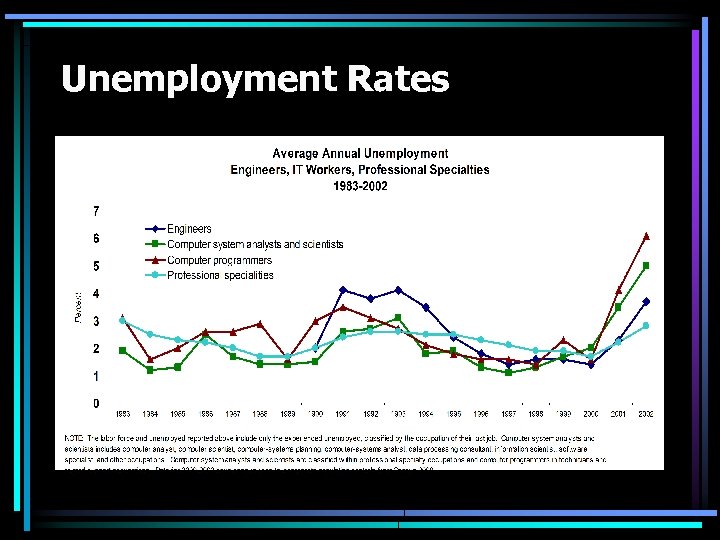
Unemployment Rates
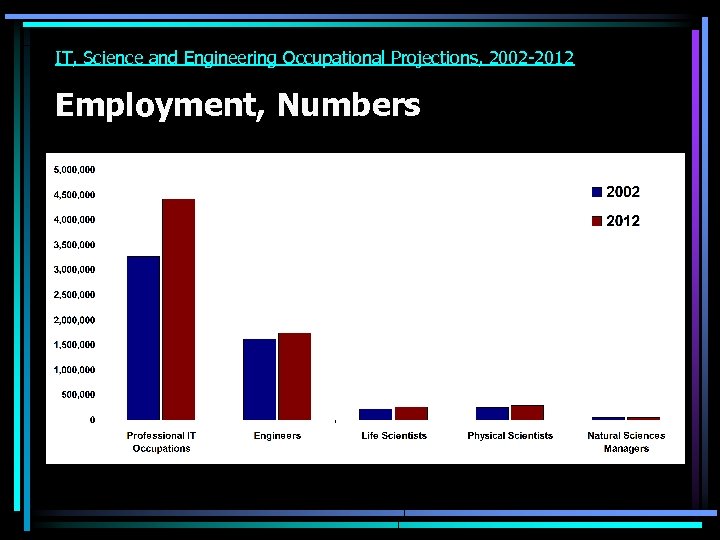
IT, Science and Engineering Occupational Projections, 2002 -2012 Employment, Numbers
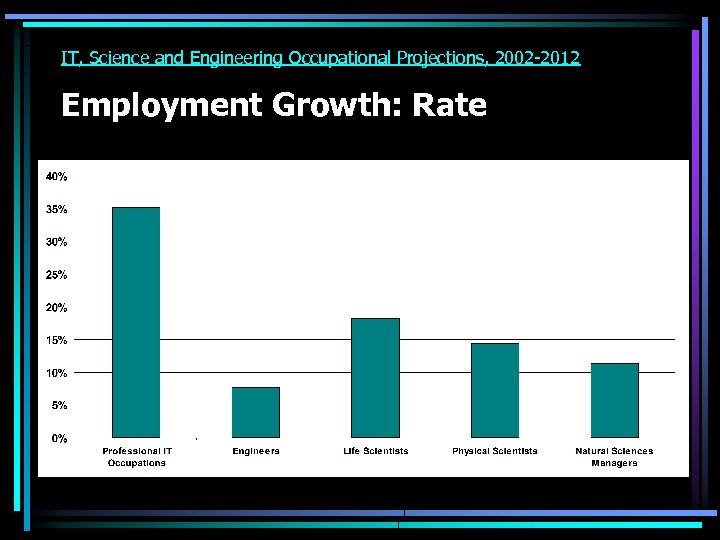
IT, Science and Engineering Occupational Projections, 2002 -2012 Employment Growth: Rate
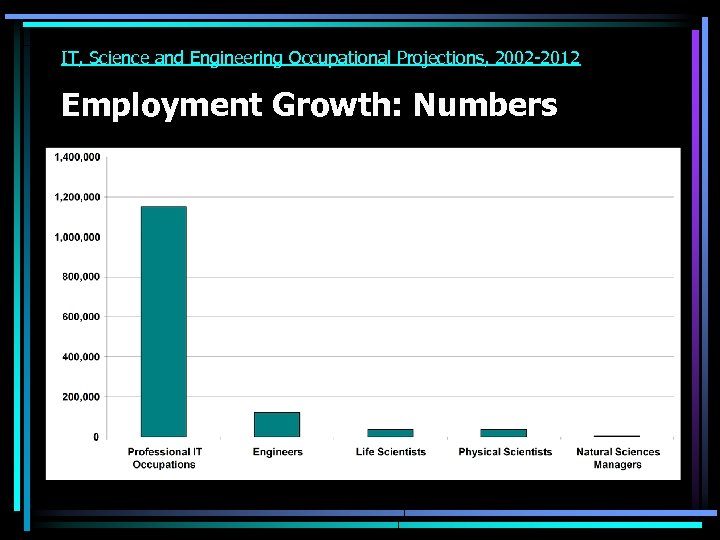
IT, Science and Engineering Occupational Projections, 2002 -2012 Employment Growth: Numbers
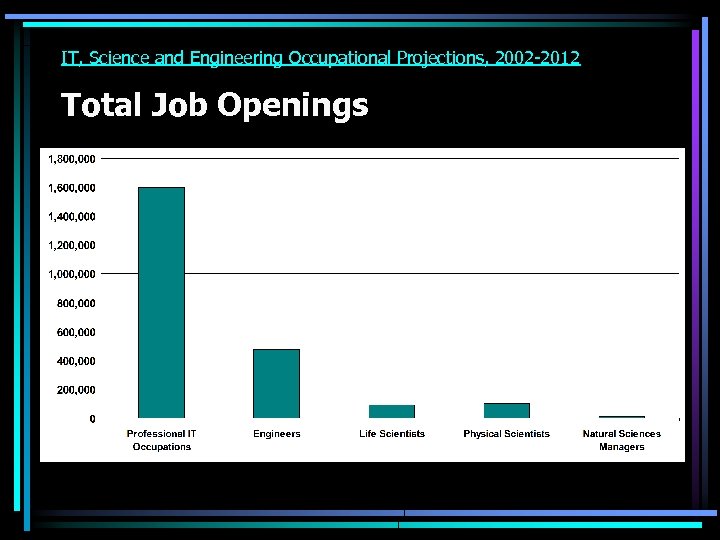
IT, Science and Engineering Occupational Projections, 2002 -2012 Total Job Openings
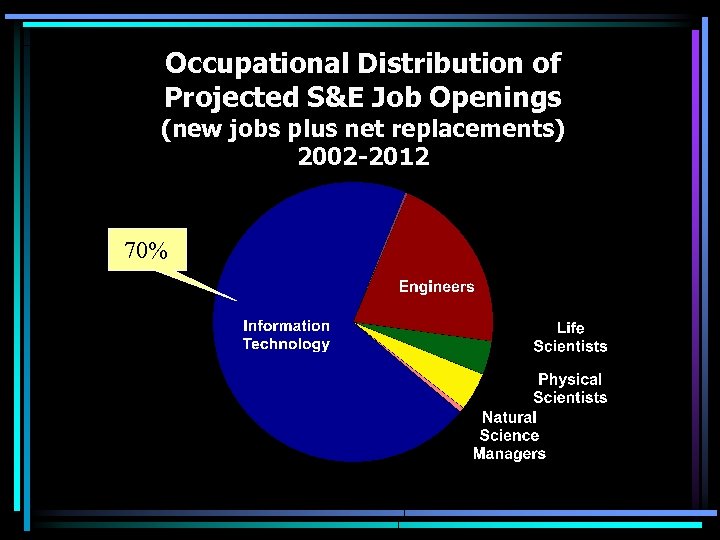
Occupational Distribution of Projected S&E Job Openings (new jobs plus net replacements) 2002 -2012 70%
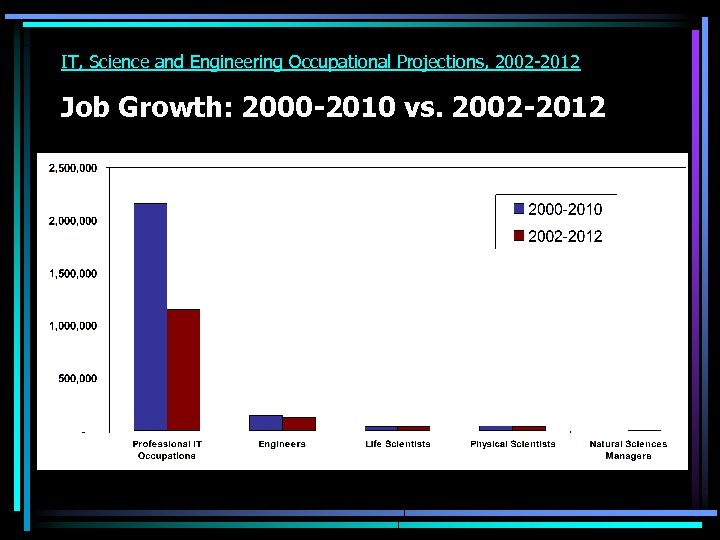
IT, Science and Engineering Occupational Projections, 2002 -2012 Job Growth: 2000 -2010 vs. 2002 -2012
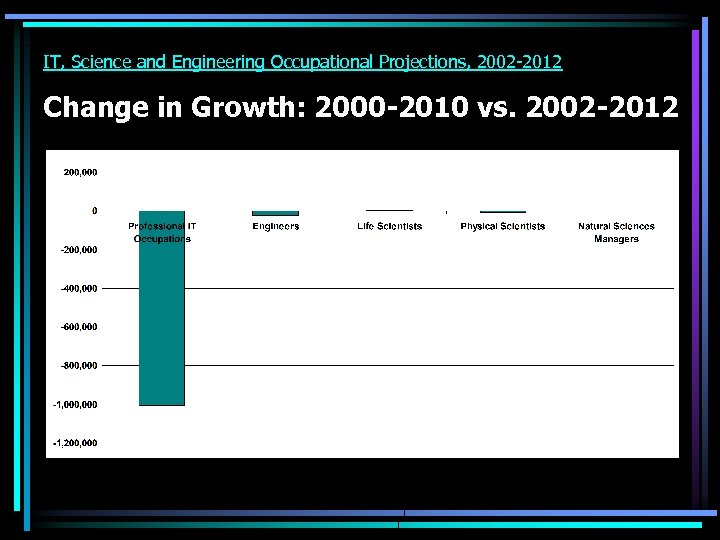
IT, Science and Engineering Occupational Projections, 2002 -2012 Change in Growth: 2000 -2010 vs. 2002 -2012
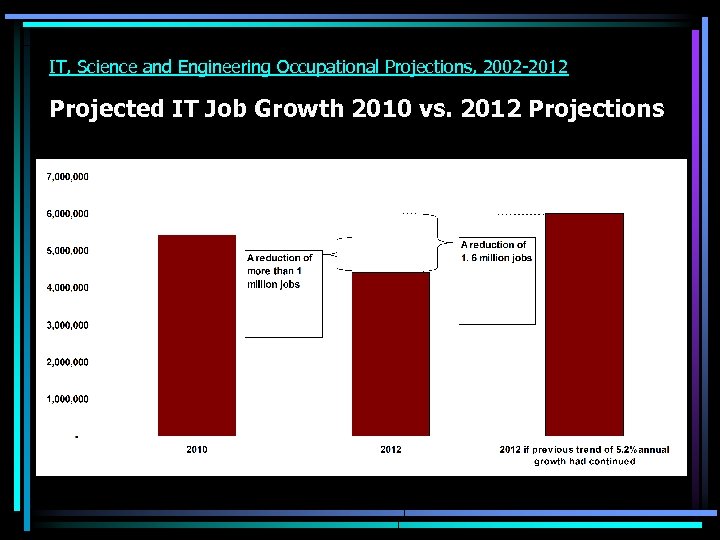
IT, Science and Engineering Occupational Projections, 2002 -2012 Projected IT Job Growth 2010 vs. 2012 Projections
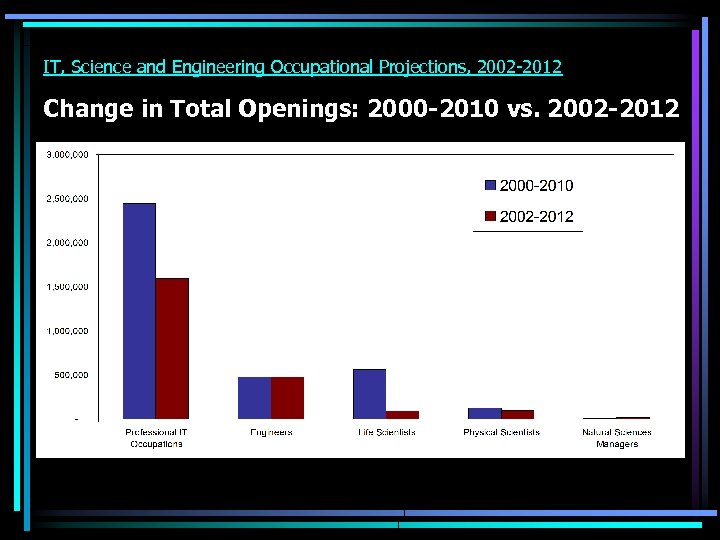
IT, Science and Engineering Occupational Projections, 2002 -2012 Change in Total Openings: 2000 -2010 vs. 2002 -2012
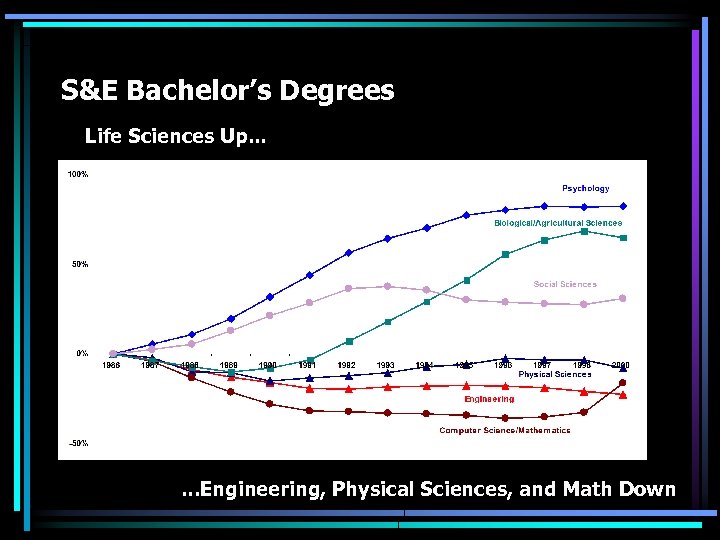
S&E Bachelor’s Degrees Life Sciences Up. . . Engineering, Physical Sciences, and Math Down
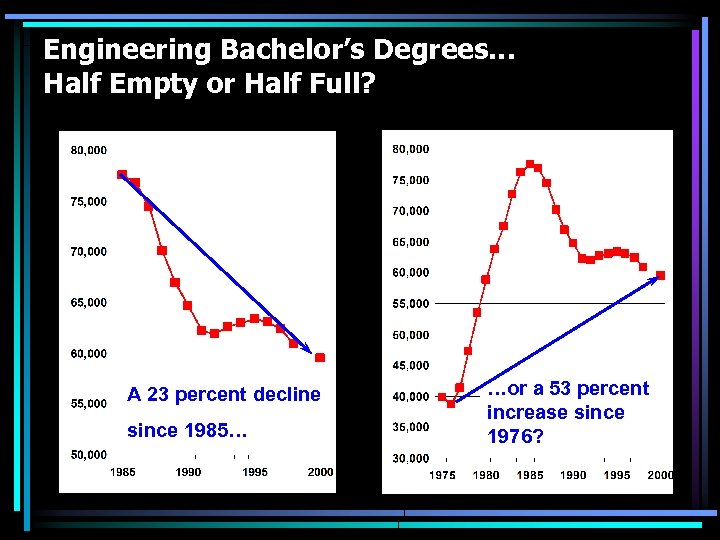
Engineering Bachelor’s Degrees… Half Empty or Half Full? A 23 percent decline since 1985… …or a 53 percent increase since 1976?
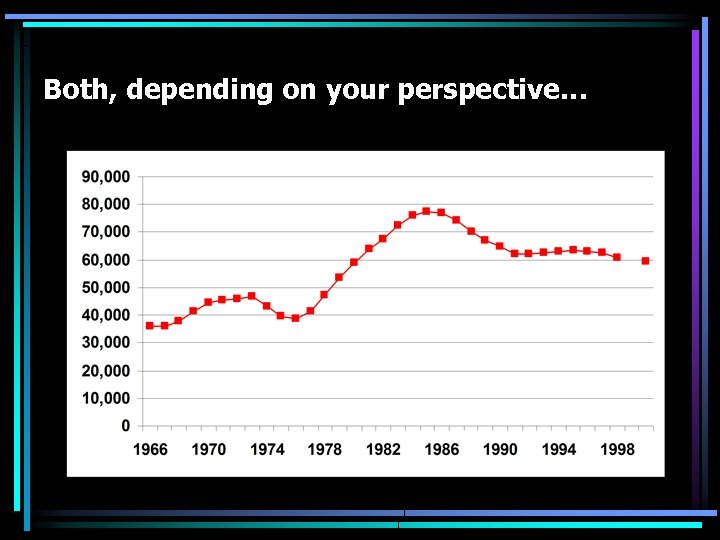
Both, depending on your perspective…
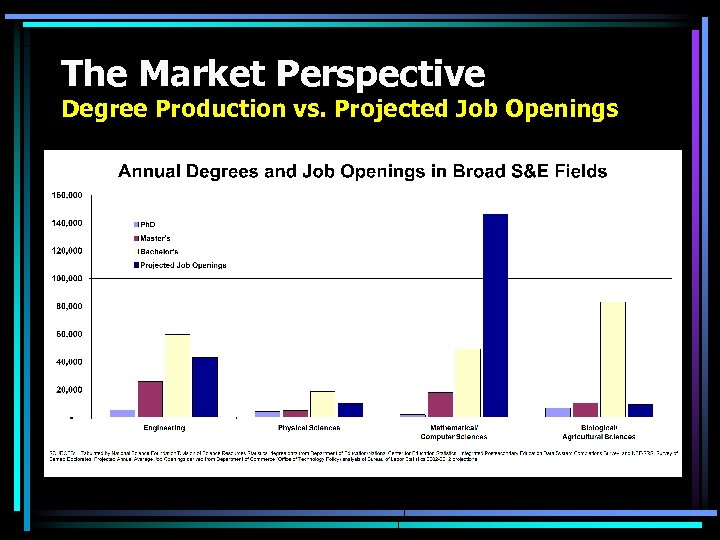
The Market Perspective Degree Production vs. Projected Job Openings
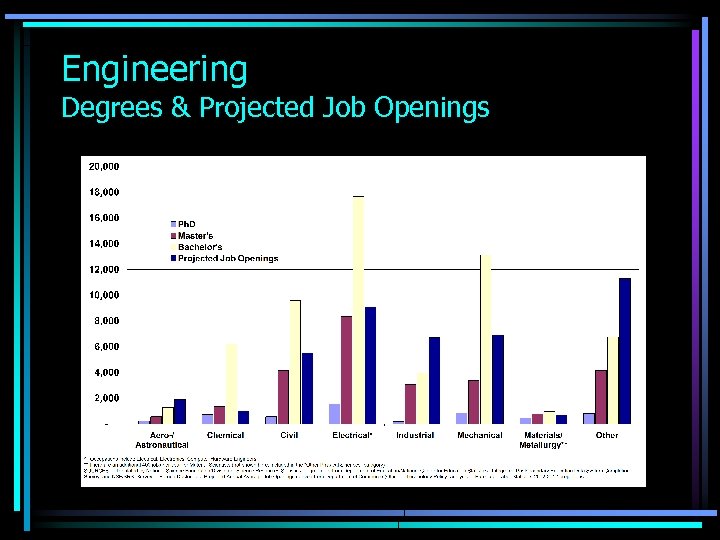
Engineering Degrees & Projected Job Openings
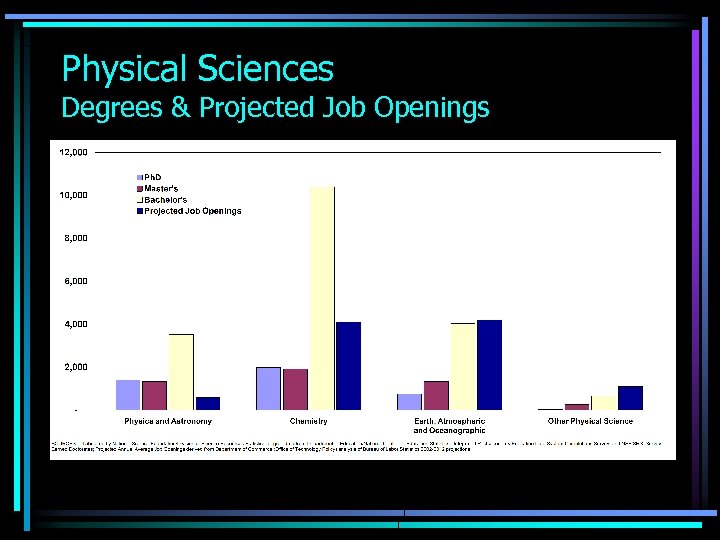
Physical Sciences Degrees & Projected Job Openings
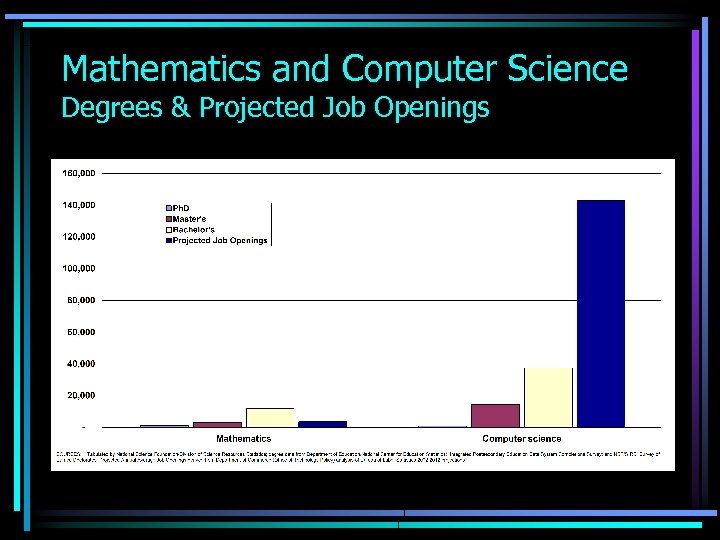
Mathematics and Computer Science Degrees & Projected Job Openings
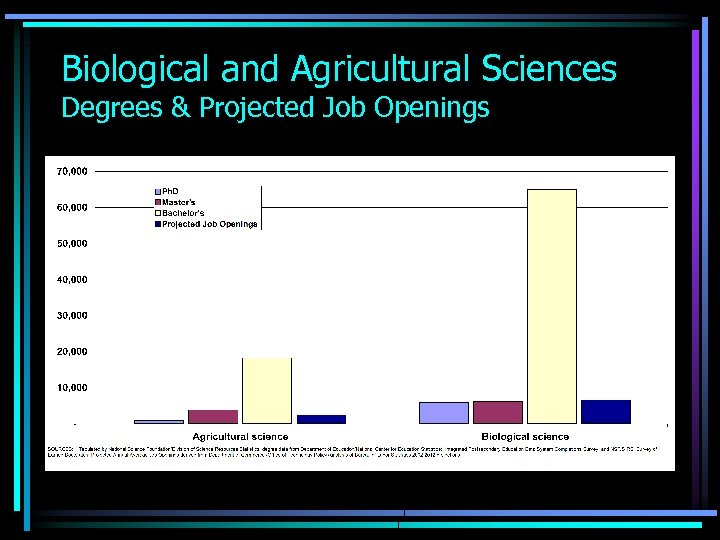
Biological and Agricultural Sciences Degrees & Projected Job Openings
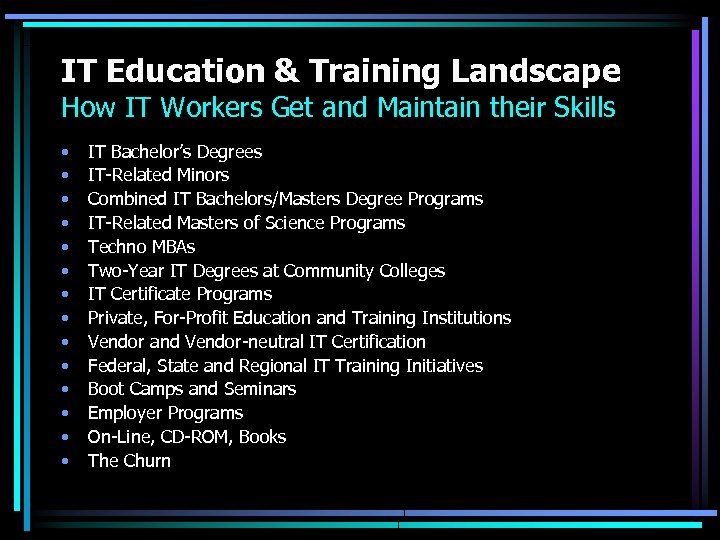
IT Education & Training Landscape How IT Workers Get and Maintain their Skills • • • • IT Bachelor’s Degrees IT-Related Minors Combined IT Bachelors/Masters Degree Programs IT-Related Masters of Science Programs Techno MBAs Two-Year IT Degrees at Community Colleges IT Certificate Programs Private, For-Profit Education and Training Institutions Vendor and Vendor-neutral IT Certification Federal, State and Regional IT Training Initiatives Boot Camps and Seminars Employer Programs On-Line, CD-ROM, Books The Churn
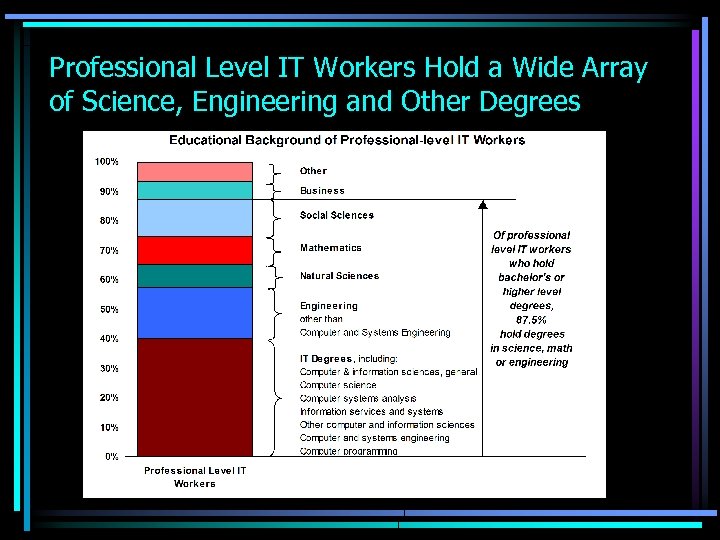
Professional Level IT Workers Hold a Wide Array of Science, Engineering and Other Degrees
Possible Niche Areas of Need • Emerging Disciplines • Converging Disciplines • Industries Affected by Past/Current Federal Demand • University Professors in High Demand Disciplines • Federal S&E Employees: Unique Challenges • Industries with Past Workforce Shocks
Challenge to the Community: Action • Amplify Market Signals • Industry Feedback to Post-Secondary Institutions • Post-Secondary Institutions’ Responsiveness to Market Demands • Preparation for industry careers • Technical skills in demand • Soft and business skills • Career Awareness in Middle, High School • Dissemination of Occupational Data • Demand, job characteristics, unemployment, etc. • Improve Math and Science Education in K-12
Challenge to the Community: Action • • Math and Science Education in K-12 Image of Scientists and Engineers S&E Career Awareness in Middle, High School Industry Feedback to Post-Secondary Institutions • Post-Secondary Institutions’ Responsiveness to Market Demands • Industry Must Help Itself
Challenges to Growing Domestic S&E Workforce • Cost-Benefit of Grad Education in S&E vs. Law, Business
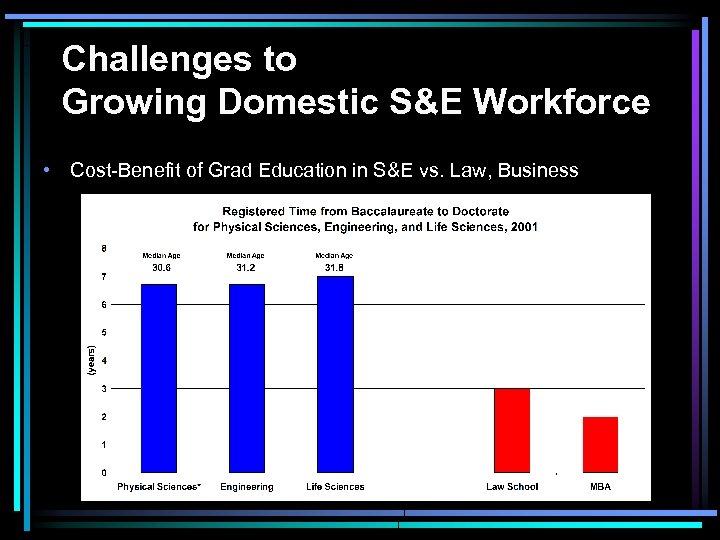
Challenges to Growing Domestic S&E Workforce • Cost-Benefit of Grad Education in S&E vs. Law, Business
Challenges to Growing Domestic S&E Workforce • Cost-Benefit of Grad Education in S&E vs. Law, Business • Attractiveness of Careers in S&E vs. Law, Business • Strong Emphasis by Other Nations, Cultures on S&E Education • Access to Foreign Labor in the U. S. (H-1 B, L 1) • Access to Foreign Labor Abroad (Offshoring—direct and through contract) • Significantly lower salary costs • Pools of well-educated S&E talent • Improved national infrastructure, political stability • Large Government, Industry Focus on Health R&D
Factors Supporting U. S. Ability to Grow Domestic S&E Workforce • Premier Academic Research Institutions • Elite Students Among Best in World • Powerful Industrial Base, Potential Partners in S&E Education and Training • Money Talks!
Contact Information John F. Sargent Senior Policy Analyst Office of Technology Policy, Technology Administration U. S. Department of Commerce 202 -482 -6185 jsargent@ta. doc. gov www. ta. doc. gov
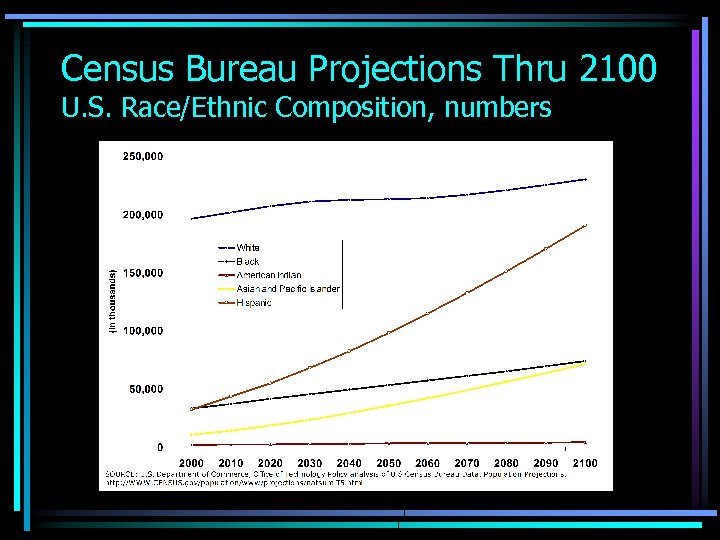
Census Bureau Projections Thru 2100 U. S. Race/Ethnic Composition, numbers
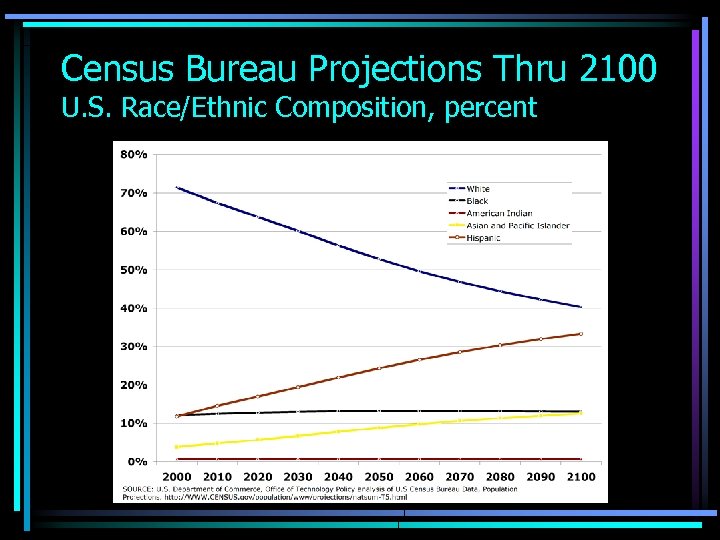
Census Bureau Projections Thru 2100 U. S. Race/Ethnic Composition, percent
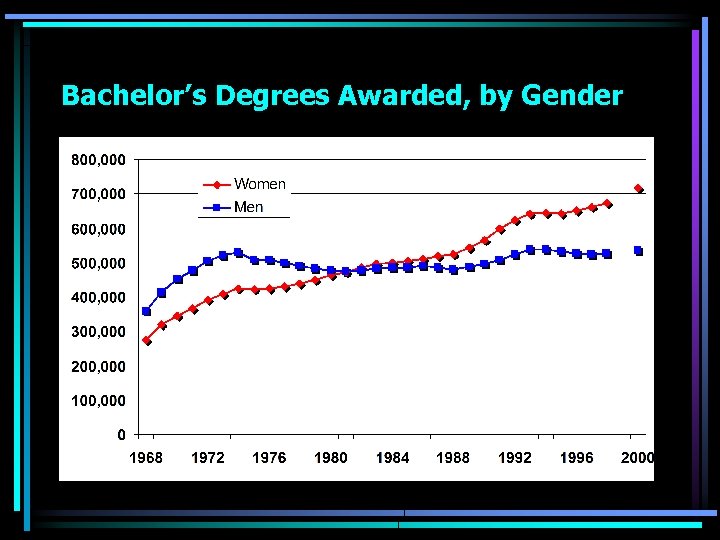
Bachelor’s Degrees Awarded, by Gender
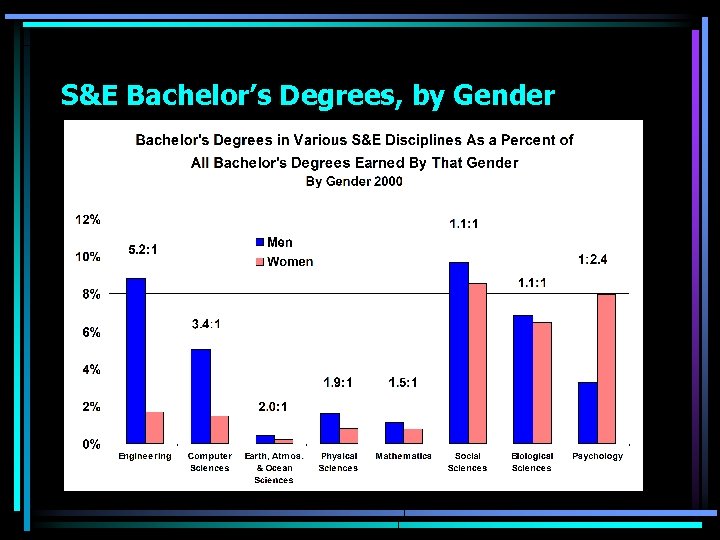
S&E Bachelor’s Degrees, by Gender
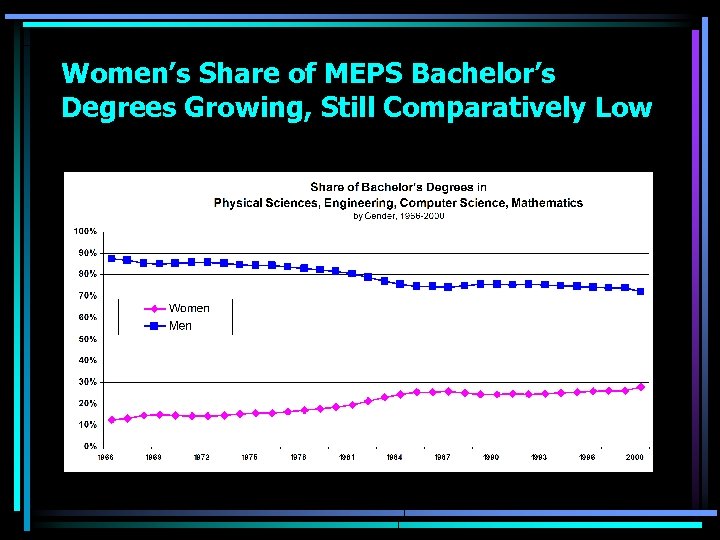
Women’s Share of MEPS Bachelor’s Degrees Growing, Still Comparatively Low
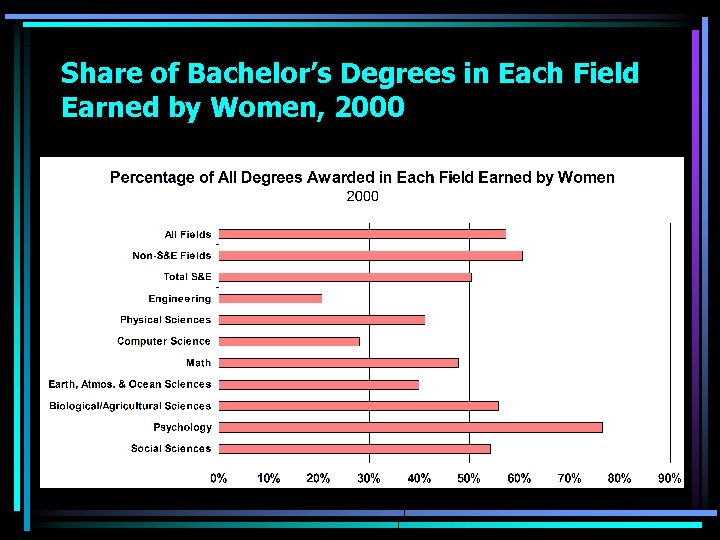
Share of Bachelor’s Degrees in Each Field Earned by Women, 2000
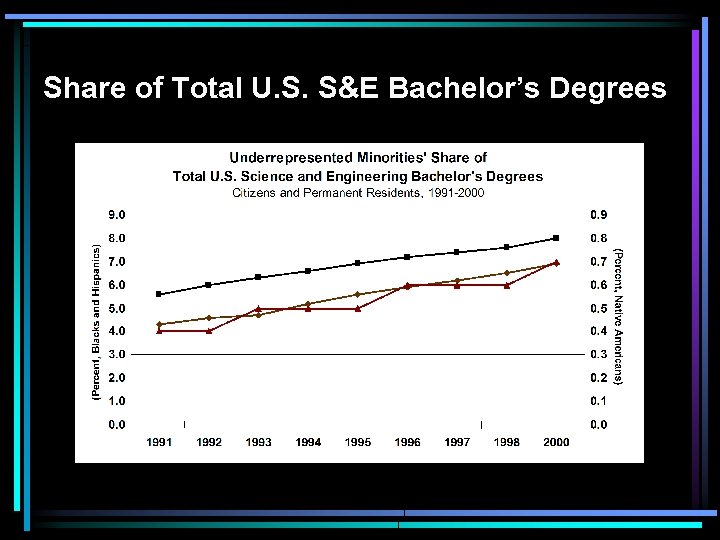
Share of Total U. S. S&E Bachelor’s Degrees
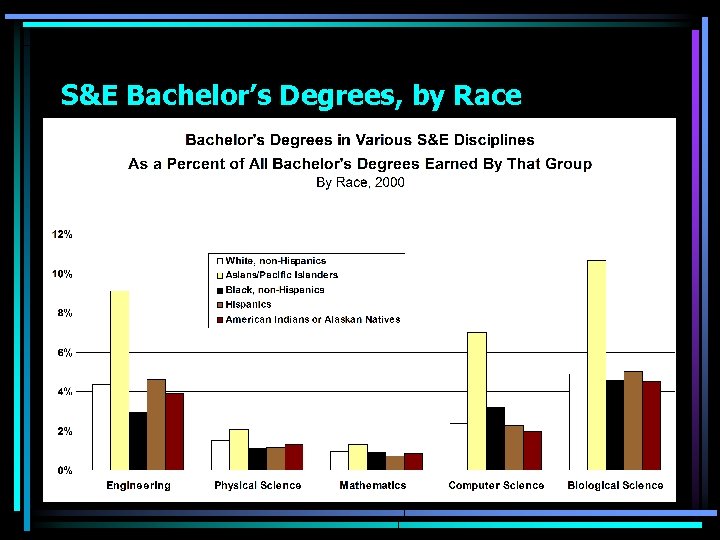
S&E Bachelor’s Degrees, by Race
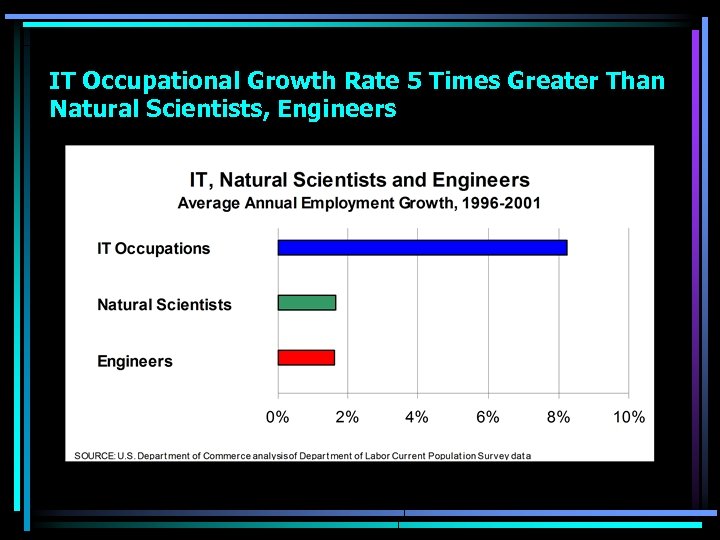
IT Occupational Growth Rate 5 Times Greater Than Natural Scientists, Engineers
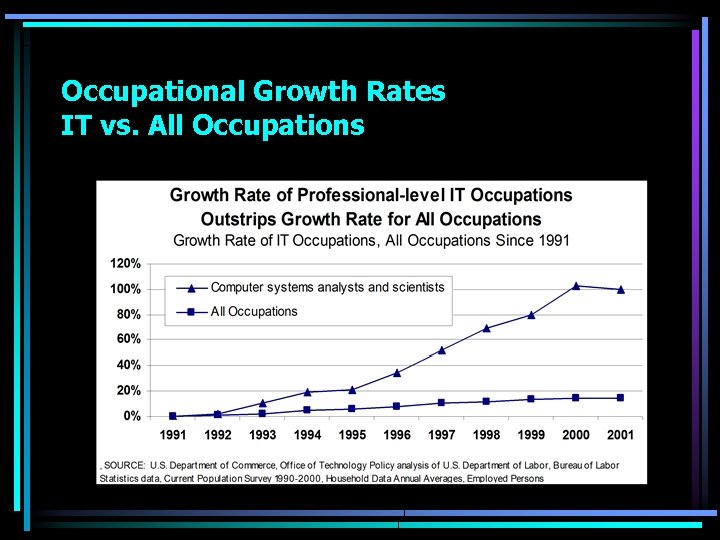
Occupational Growth Rates IT vs. All Occupations
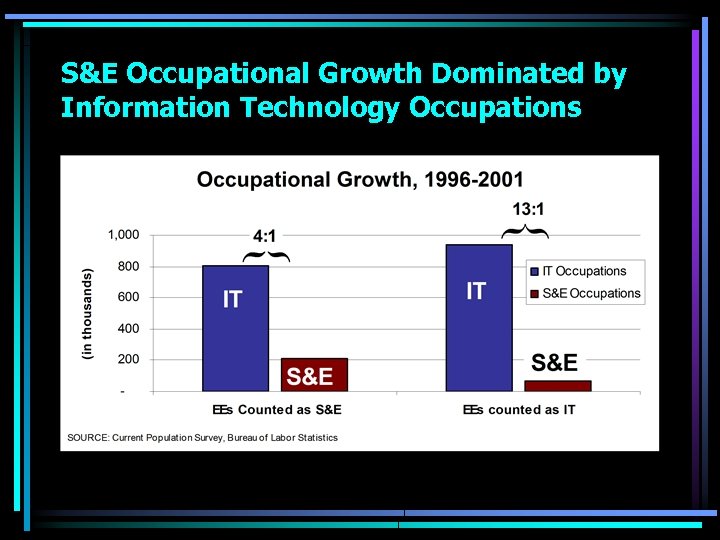
S&E Occupational Growth Dominated by Information Technology Occupations
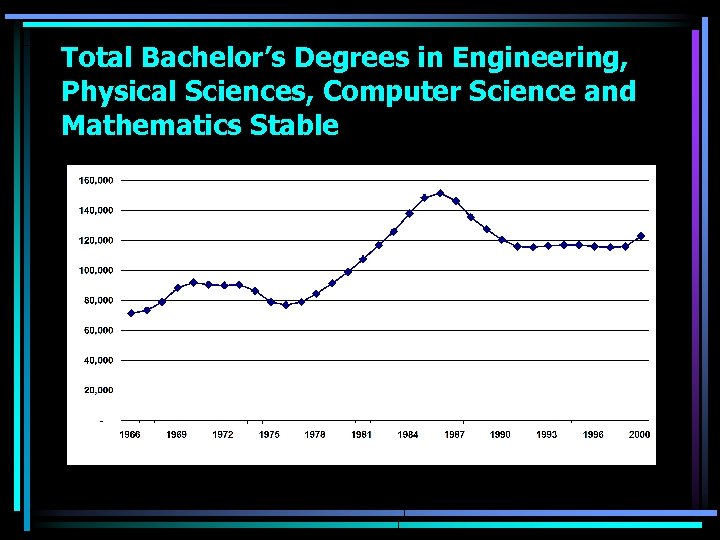
Total Bachelor’s Degrees in Engineering, Physical Sciences, Computer Science and Mathematics Stable
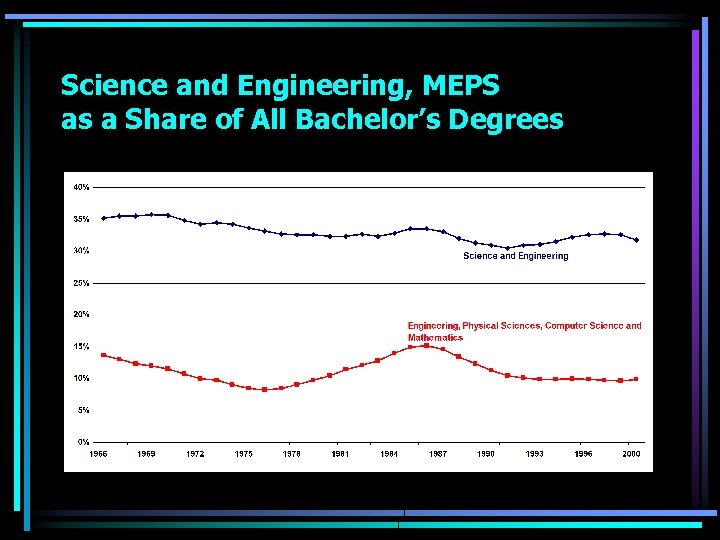
Science and Engineering, MEPS as a Share of All Bachelor’s Degrees
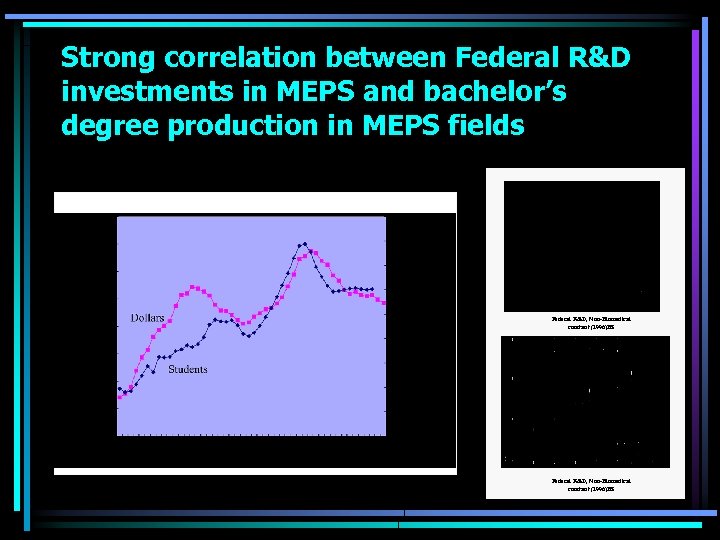
Strong correlation between Federal R&D investments in MEPS and bachelor’s degree production in MEPS fields Federal R&D, Non-Biomedical constant (1996)B$
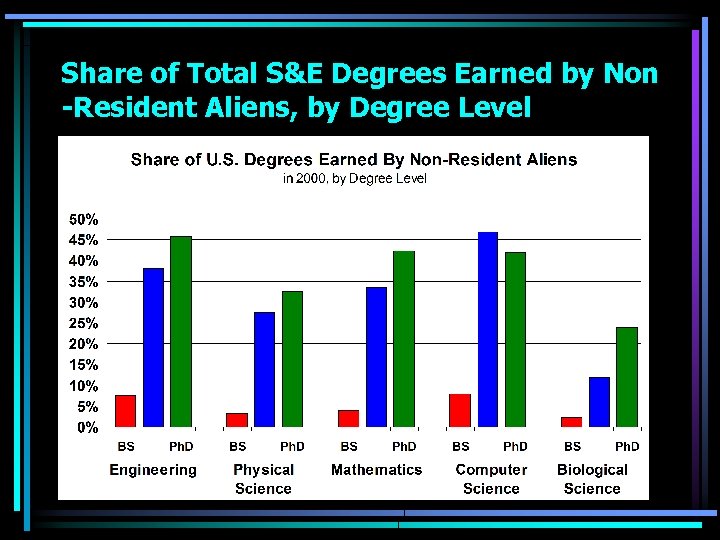
Share of Total S&E Degrees Earned by Non -Resident Aliens, by Degree Level
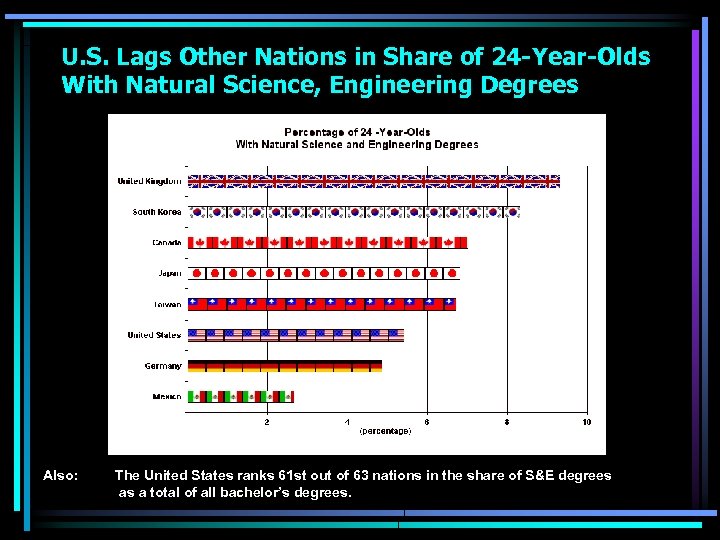
U. S. Lags Other Nations in Share of 24 -Year-Olds With Natural Science, Engineering Degrees Also: The United States ranks 61 st out of 63 nations in the share of S&E degrees as a total of all bachelor’s degrees.
Скачать презентацию Remarks before the Computing Research Association The Adequacy
5161b83427b59b9bb1cf1ed433b9300c.ppt