


 Скачать презентацию Rels 205 Lecture 3 1 Religious Traditions
101e68f5edc34820ff30fe4fd7eb5471.ppt
- Количество слайдов: 54
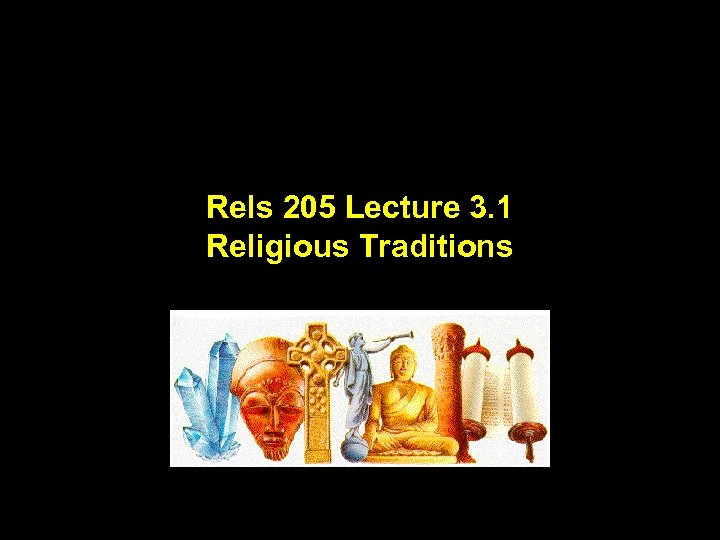 Rels 205 Lecture 3. 1 Religious Traditions
 Lecture Outline for Part One of Rels 205. 01 Week 1 Lecture 1 What is “Religion”? Lecture 2 Studying “Religion” Week 2 Lecture 1 Ritual and the Study of Religion Lecture 2 Religious and Secular Traditions Week 3 Lecture 1 Religious Traditions Lecture 2 Institutions Week 4 Lecture 1 The Meaning of Myth Lecture 2 Sacred Sentiments Week 5 Lecture 1 Changing Worldviews Lecture 2 Review Week 6 Reading Week 7 Lecture 1 First in class test
 Identified with a Tradition
 Tradition “Tradition: that which is handed down or passed on from the past as distinct from modern ideas and theories. ”
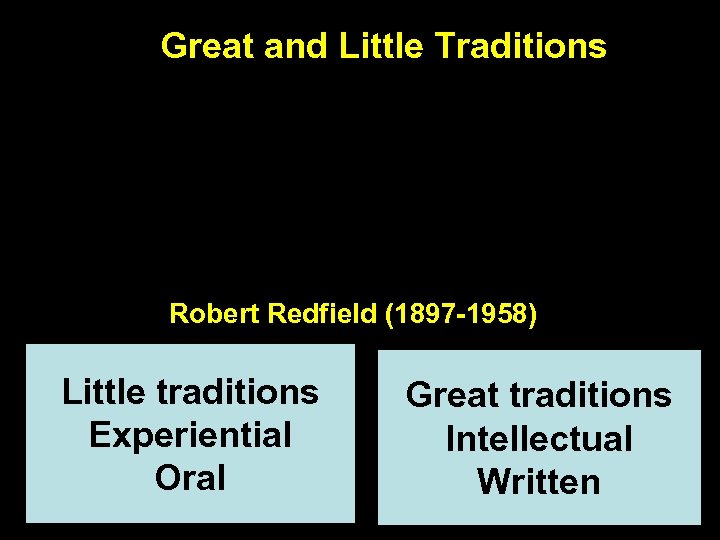 Great and Little Traditions Robert Redfield (1897 -1958) Little traditions Experiential Oral Great traditions Intellectual Written
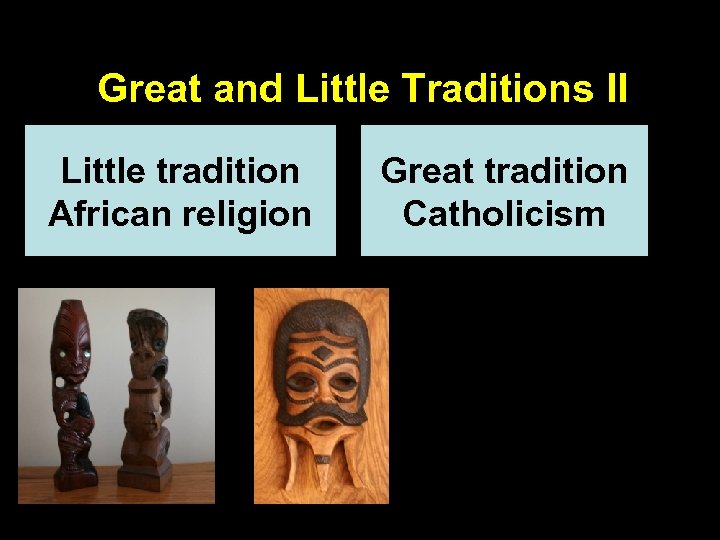 Great and Little Traditions II Little tradition African religion Great tradition Catholicism
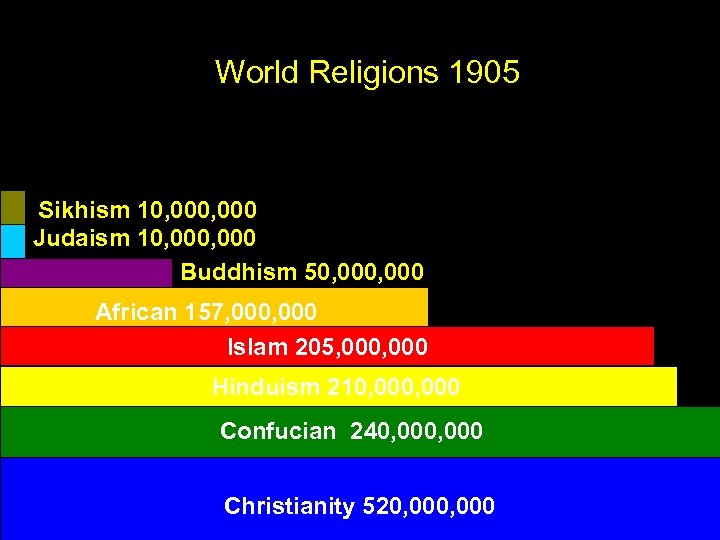 World Religions 1905 Sikhism 10, 000 Judaism 10, 000 Buddhism 50, 000 African 157, 000 Islam 205, 000 Hinduism 210, 000 Confucian 240, 000 Christianity 520, 000
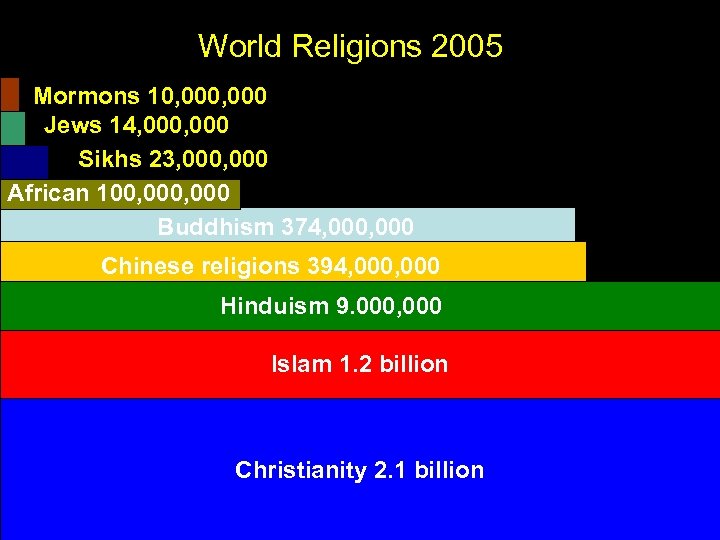 World Religions 2005 Mormons 10, 000 Jews 14, 000 Sikhs 23, 000 African 100, 000 Buddhism 374, 000 Chinese religions 394, 000 Hinduism 9. 000, 000 Islam 1. 2 billion Christianity 2. 1 billion
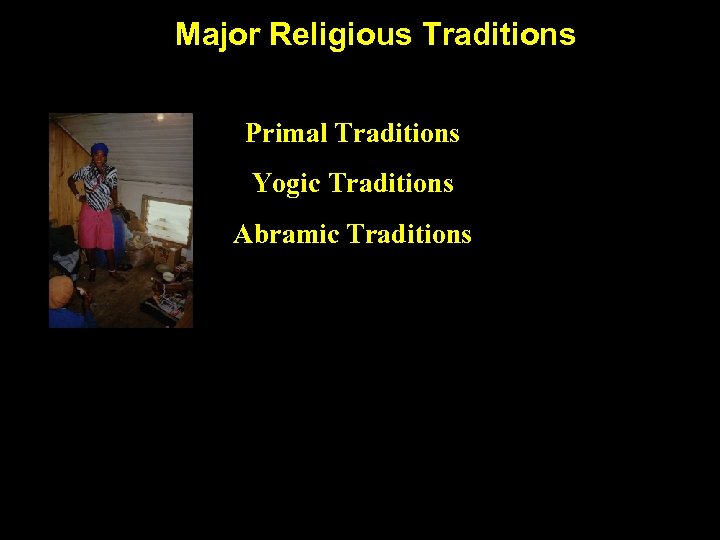 Major Religious Traditions Primal Traditions Yogic Traditions Abramic Traditions
 Primal Experiences Primal experiences are fundamental spiritual experiences that shape our sense of the sacred
 Ancestral Religions Ancestral religions are religions that are directly based on primal experiences involving things like the ancestors and healing.
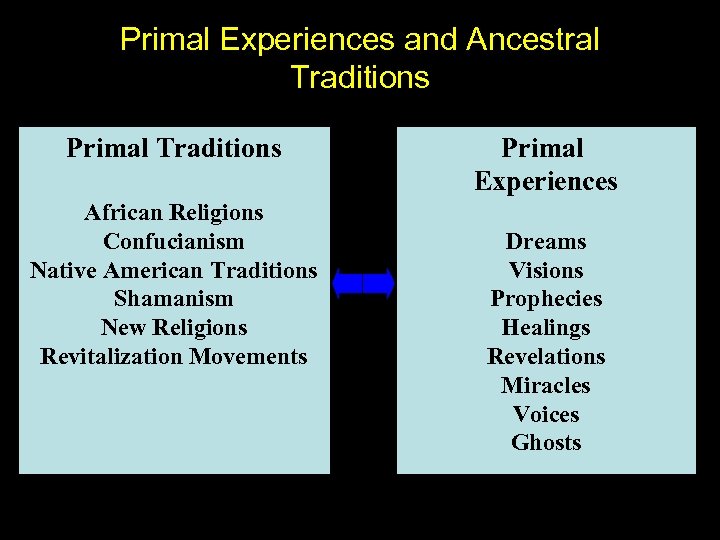 Primal Experiences and Ancestral Traditions Primal Traditions African Religions Confucianism Native American Traditions Shamanism New Religions Revitalization Movements Primal Experiences Dreams Visions Prophecies Healings Revelations Miracles Voices Ghosts
 Yogic Religions Yogic religions are spiritual traditions based on the practice of one of the many forms of yoga. Yogic doctrines include: karma, the wheel of existence, and some form of transmigration or reincarnation.
 Yoga In the West yoga is associated with physical exercises and particular postures used in meditation. Actually yoga is a Sanskrit term meaning “to yoke” and is used to describe various processes of spiritual discipline or harnessing of physical and mental powers to attain self-control and ultimate enlightenment.
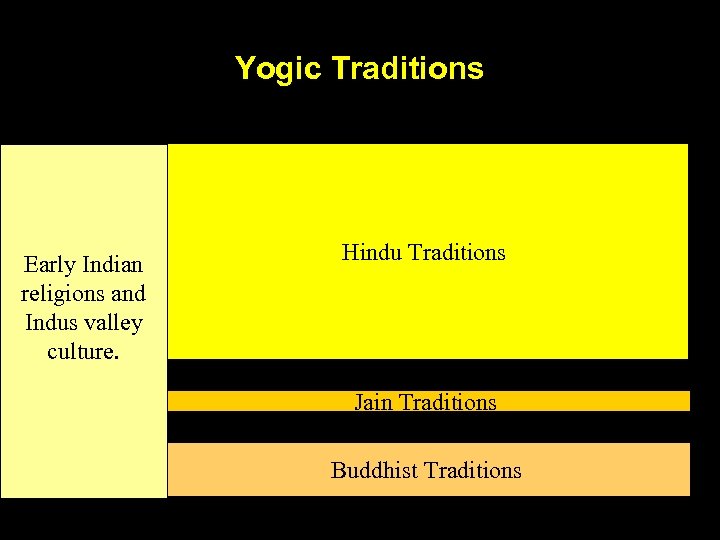 Yogic Traditions Early Indian religions and Indus valley culture. Hindu Traditions Jain Traditions Buddhist Traditions
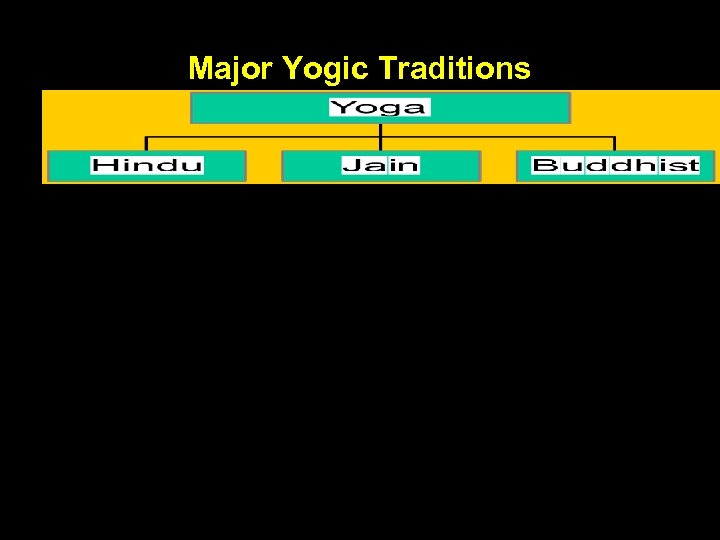 Major Yogic Traditions
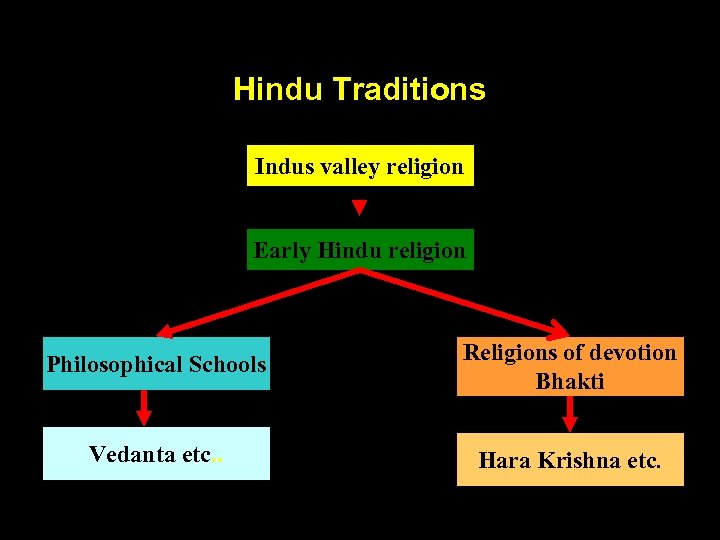 Hindu Traditions Indus valley religion Early Hindu religion Philosophical Schools Religions of devotion Bhakti Vedanta etc. . Hara Krishna etc.
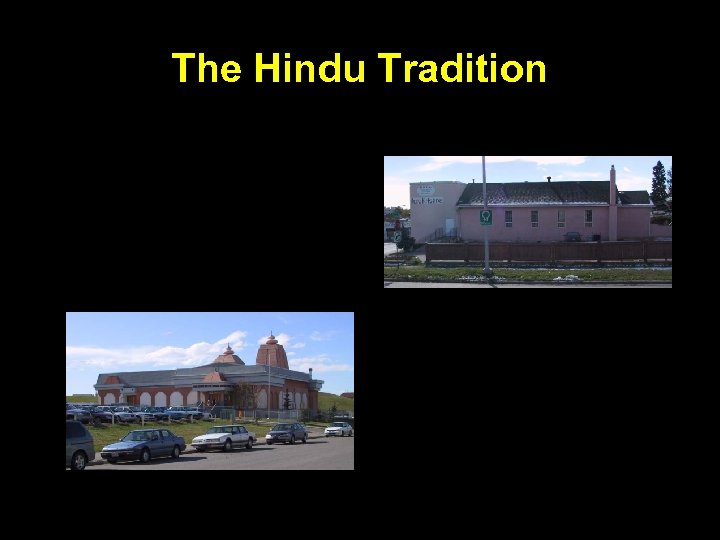 The Hindu Tradition
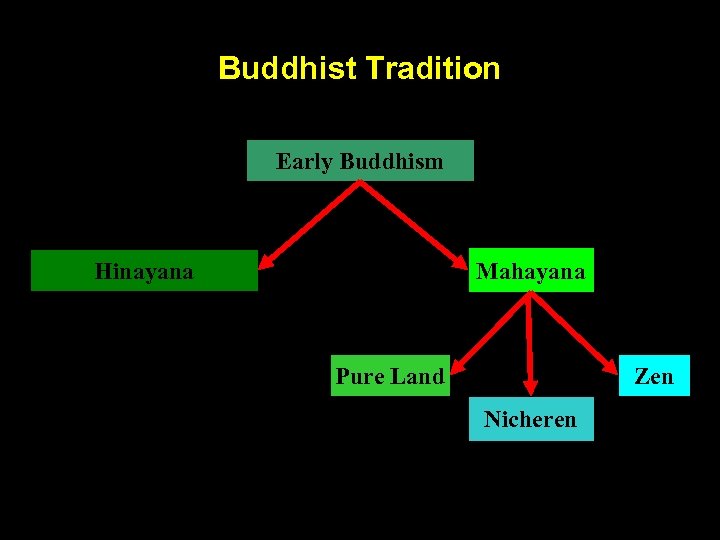 Buddhist Tradition Early Buddhism Hinayana Mahayana Pure Land Zen Nicheren
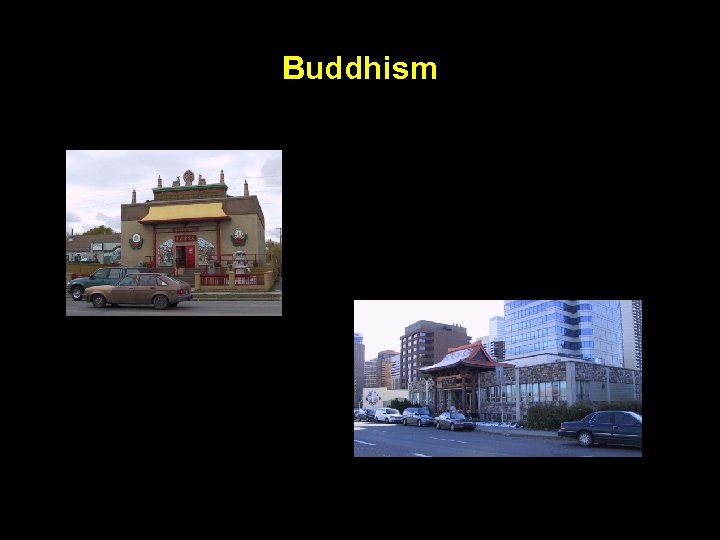 Buddhism
 Abramic Religions Abramic religions trace their ancestry to the patriarch Abraham. The major religions in this grouping are Christianity, Islam and Judaism.
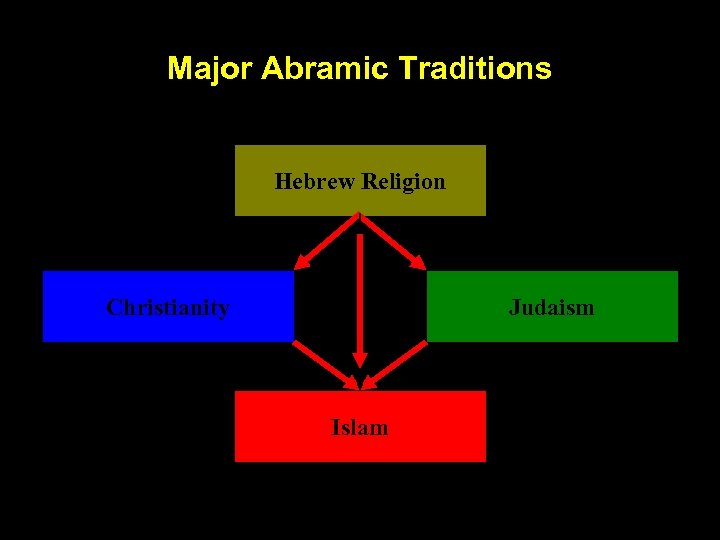 Major Abramic Traditions Hebrew Religion Christianity Judaism Islam
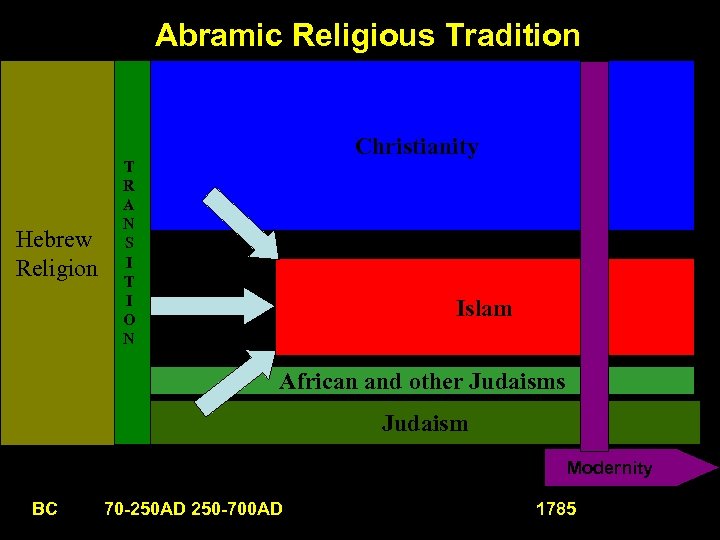 Abramic Religious Tradition Hebrew Religion Christianity T R A N S I T I O N Islam African and other Judaisms Judaism BC 70+ CE Modernity 7 70 -250 AD 250 -700 AD 1785
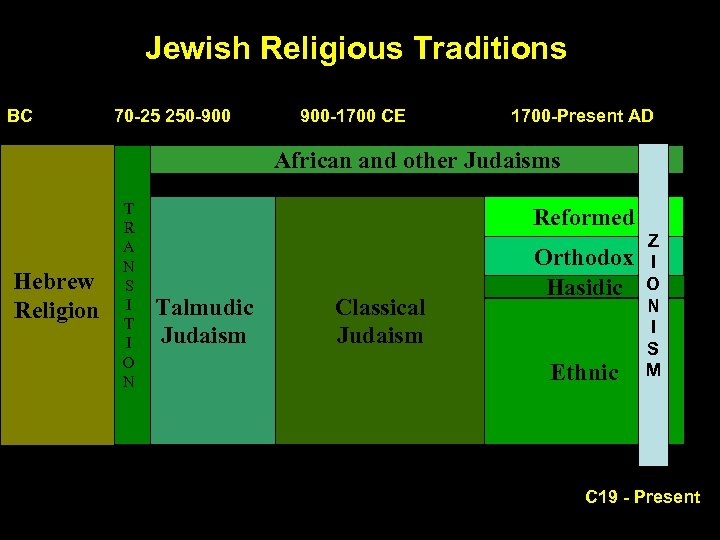 Jewish Religious Traditions BC 70 -25 250 -900 900 -1700 CE 1700 -Present AD African and other Judaisms Hebrew Religion T R A N S I T I O N Reformed Talmudic Judaism Classical Judaism Orthodox Hasidic Ethnic 7 Z I O N I S M C 19 - Present
 Judaism
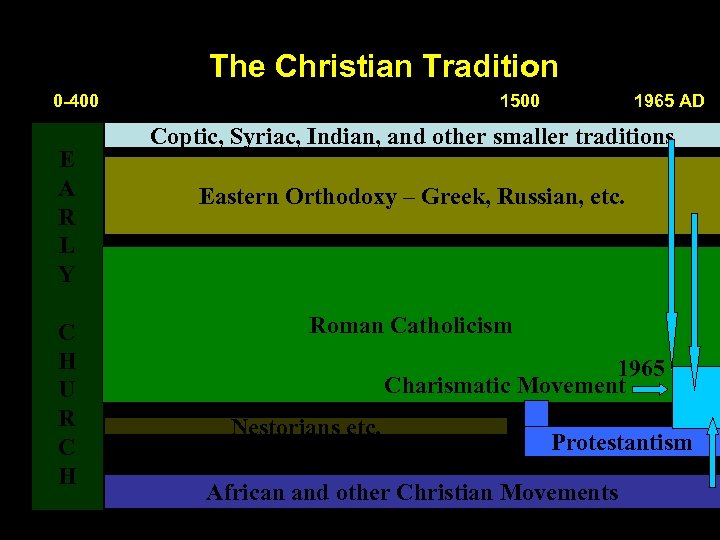 The Christian Tradition 0 -400 E A R L Y C H U R C H 1500 1965 AD Coptic, Syriac, Indian, and other smaller traditions Eastern Orthodoxy – Greek, Russian, etc. Roman Catholicism 1965 Charismatic Movement 1520 Nestorians etc. Protestantism African and other Christian Movements
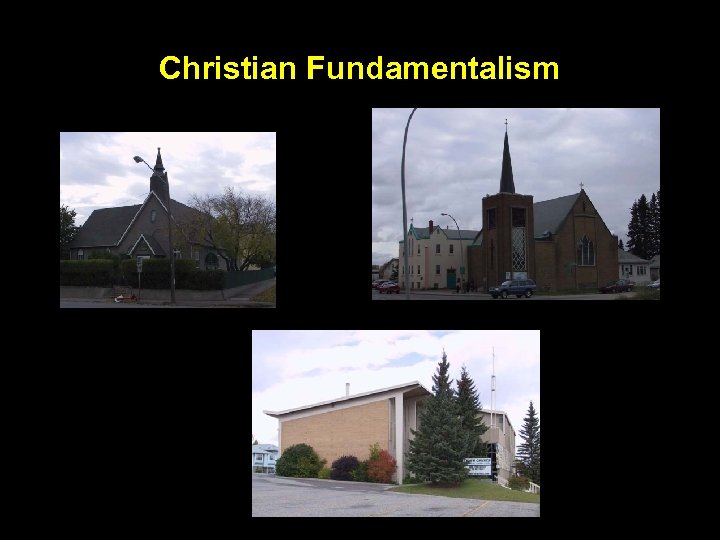 Christian Fundamentalism
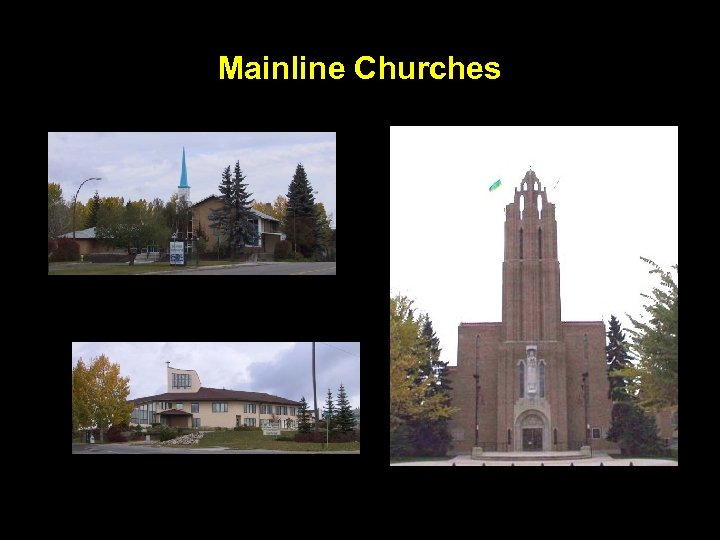 Mainline Churches
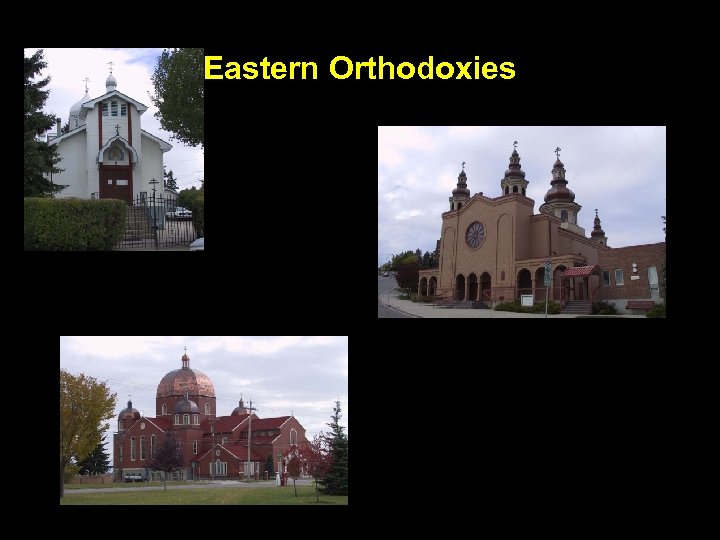 Eastern Orthodoxies
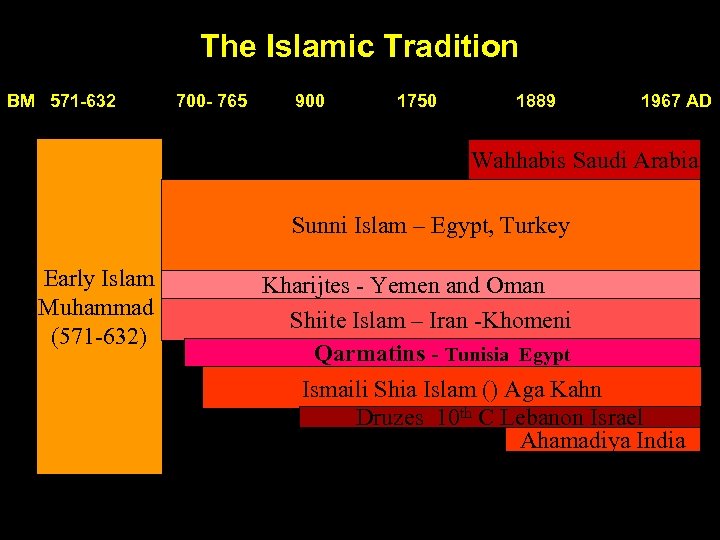 The Islamic Tradition BM 571 -632 700 - 765 900 1750 1889 1967 AD Wahhabis Saudi Arabia Sunni Islam – Egypt, Turkey Early Islam Muhammad (571 -632) Kharijtes - Yemen and Oman Shiite Islam – Iran -Khomeni Qarmatins - Tunisia Egypt Ismaili Shia Islam () Aga Kahn Druzes 10 th C Lebanon Israel Ahamadiya India
 Islam
Islam
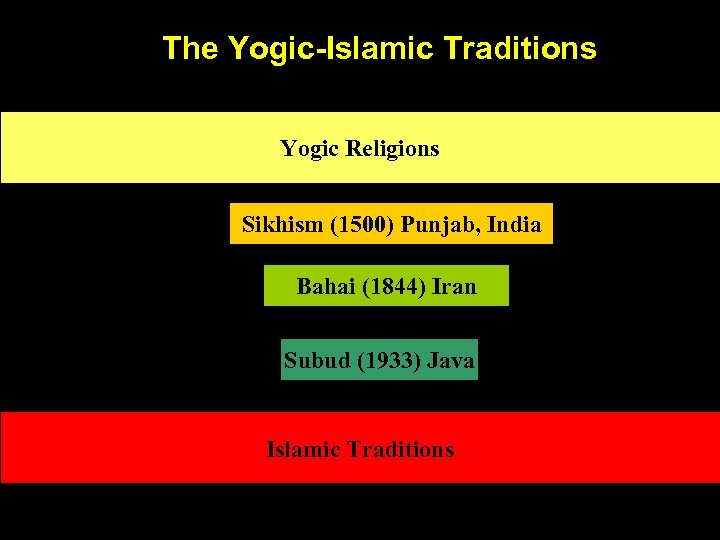 The Yogic-Islamic Traditions Yogic Religions Sikhism (1500) Punjab, India Bahai (1844) Iran Subud (1933) Java Islamic Traditions
 The Canadian Situation
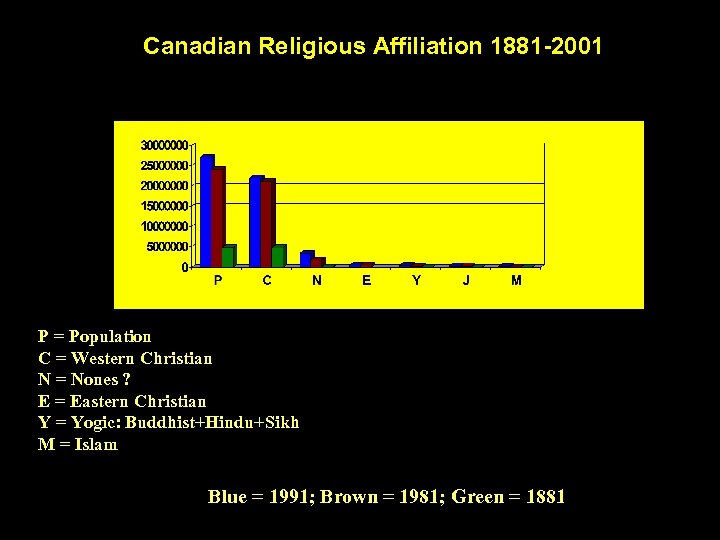 Canadian Religious Affiliation 1881 -2001 P = Population C = Western Christian N = Nones ? E = Eastern Christian Y = Yogic: Buddhist+Hindu+Sikh M = Islam Blue = 1991; Brown = 1981; Green = 1881
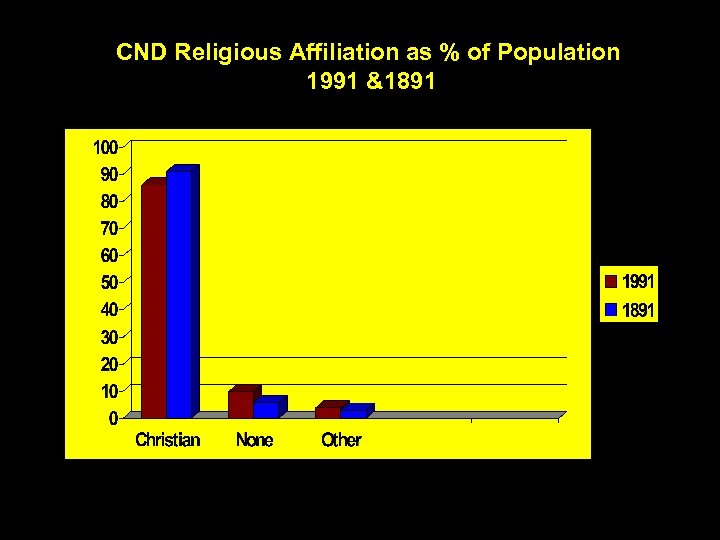 CND Religious Affiliation as % of Population 1991 &1891
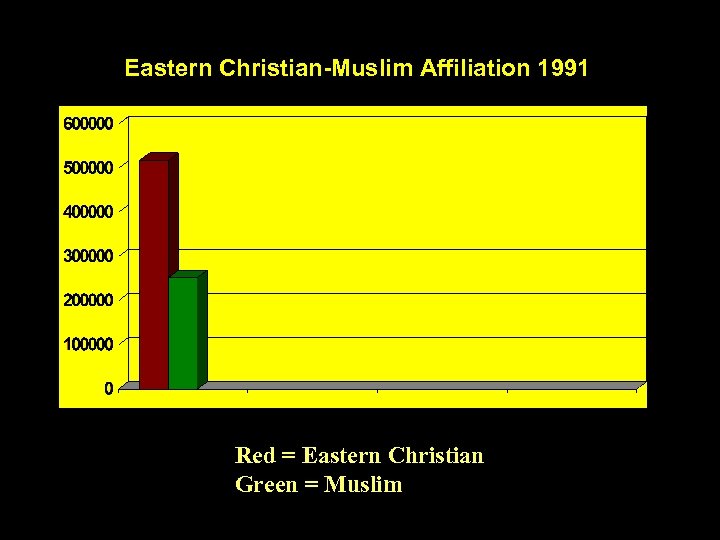 Eastern Christian-Muslim Affiliation 1991 Red = Eastern Christian Green = Muslim
 Millennialism Millennium = 1, 000 years Revelation 20, n. b. vs. 2
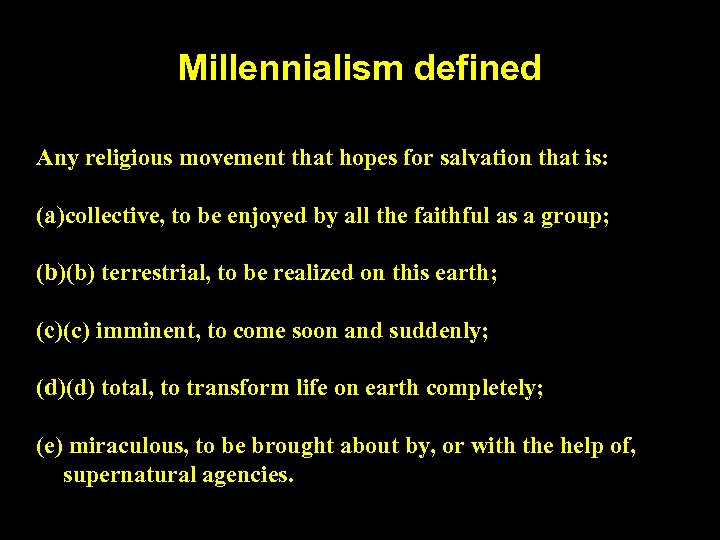 Millennialism defined Any religious movement that hopes for salvation that is: (a)collective, to be enjoyed by all the faithful as a group; (b)(b) terrestrial, to be realized on this earth; (c)(c) imminent, to come soon and suddenly; (d)(d) total, to transform life on earth completely; (e) miraculous, to be brought about by, or with the help of, supernatural agencies.
 A New Heaven and a New Earth
 Paradise on Earth Revelation 21: 1 -4
 Restoration
 Millennial Movements Christian – “End of the world is nigh” Buddhist – Maitraya Islamic – Madhi
 Millennial Types Post-millennialism A-millennialism Pre-millennialism
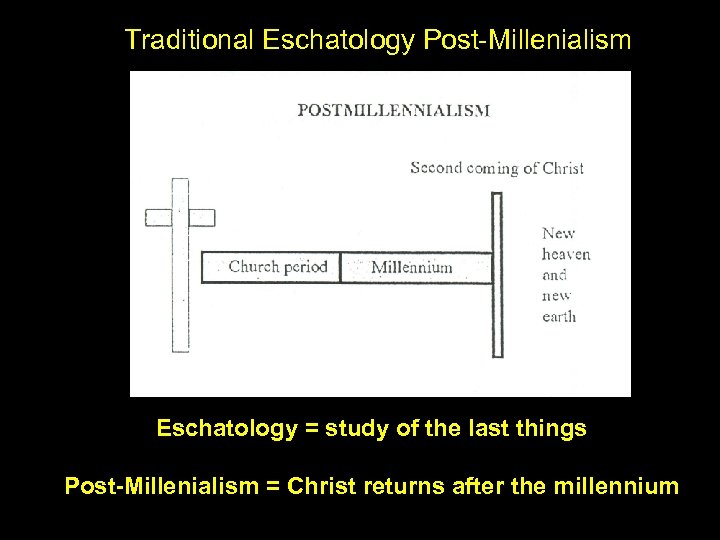 Traditional Eschatology Post-Millenialism Eschatology = study of the last things Post-Millenialism = Christ returns after the millennium
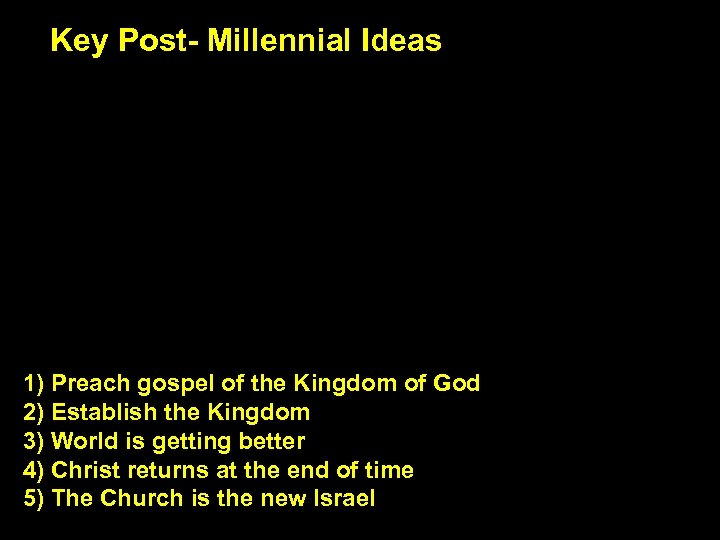 Key Post- Millennial Ideas 1) Preach gospel of the Kingdom of God 2) Establish the Kingdom 3) World is getting better 4) Christ returns at the end of time 5) The Church is the new Israel
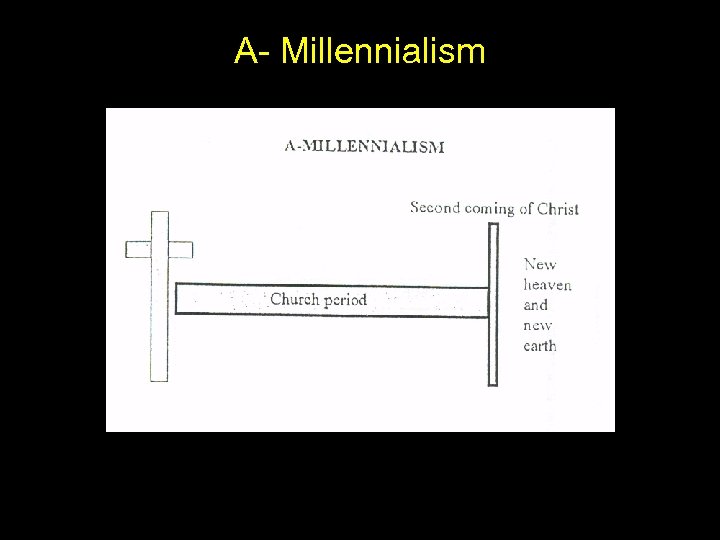 A- Millennialism
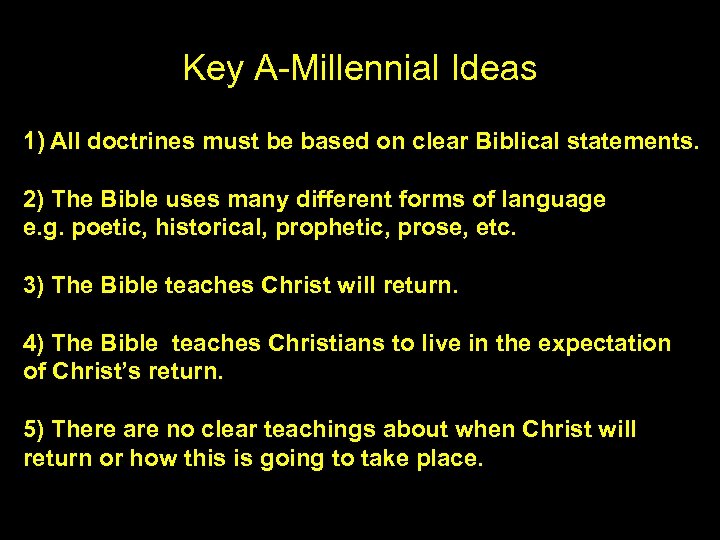 Key A-Millennial Ideas 1) All doctrines must be based on clear Biblical statements. 2) The Bible uses many different forms of language e. g. poetic, historical, prophetic, prose, etc. 3) The Bible teaches Christ will return. 4) The Bible teaches Christians to live in the expectation of Christ’s return. 5) There are no clear teachings about when Christ will return or how this is going to take place.
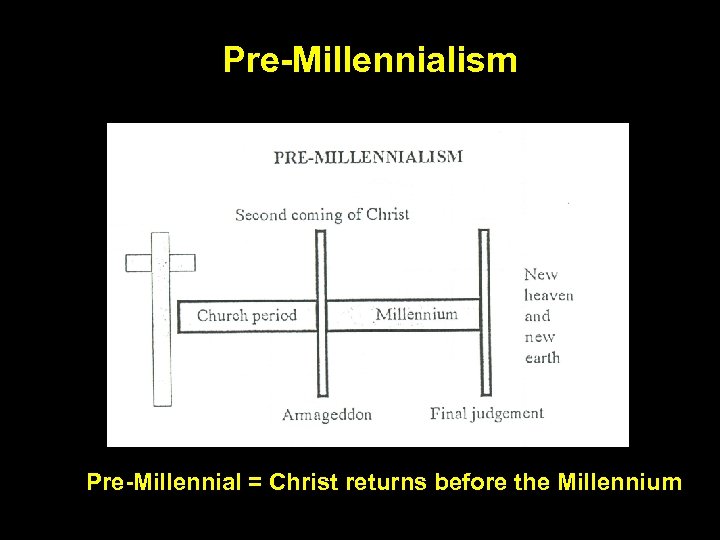 Pre-Millennialism Pre-Millennial = Christ returns before the Millennium
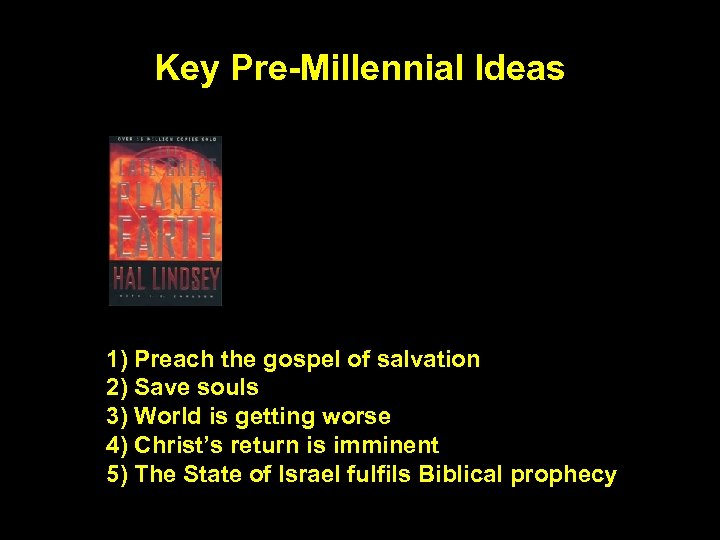 Key Pre-Millennial Ideas 1) Preach the gospel of salvation 2) Save souls 3) World is getting worse 4) Christ’s return is imminent 5) The State of Israel fulfils Biblical prophecy
 Pre-millennialism - Origins Plymouth Brethren John Nelson Darby’s (1800 -1882)
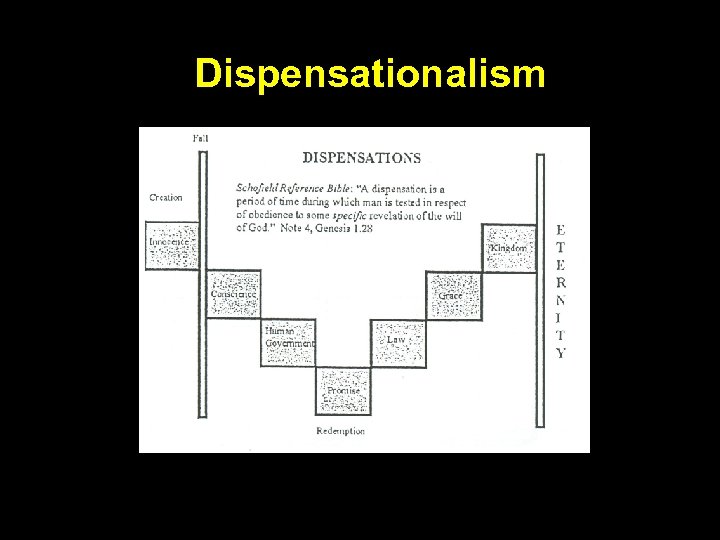 Dispensationalism
 Judge C. I. Schofield (1843 -1921) Schofield Reference Bible (1909) Dispensationalism
 Schofield’s Scheme
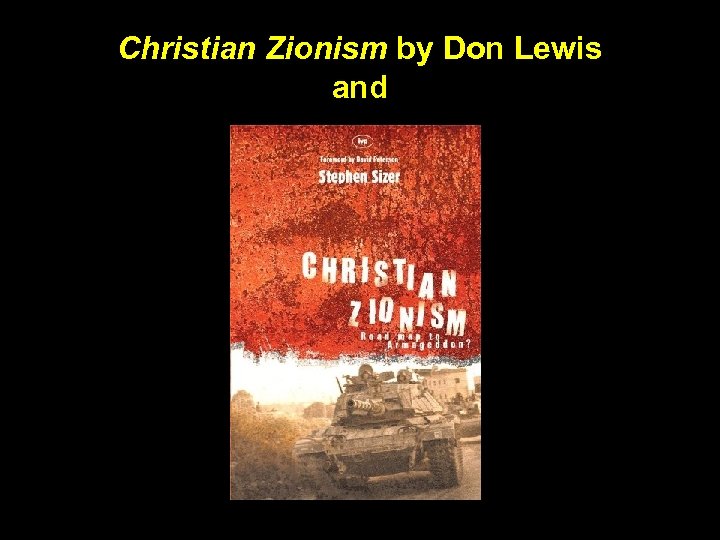 Christian Zionism by Don Lewis and