Скачать презентацию Relationships Are Complicated Where we live and
e6ee5717c8593c3d141053b825cec0e8.ppt
- Количество слайдов: 21
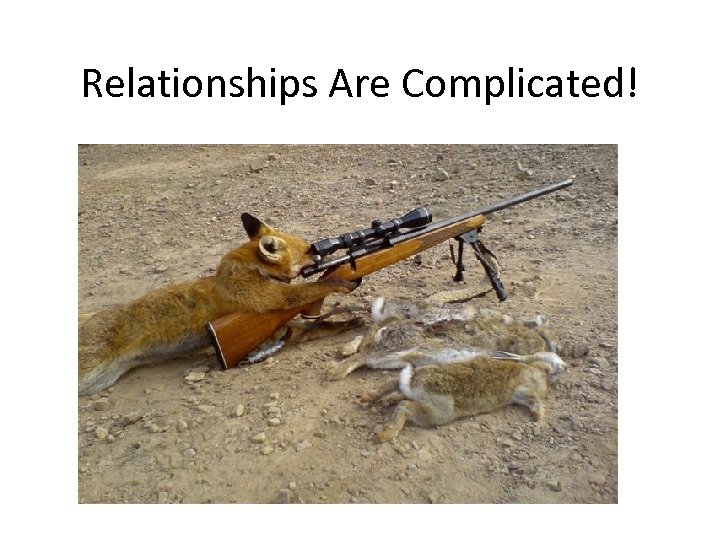 Relationships Are Complicated!
 Where we live and what we do Ø Ø Habitat: Where an organism lives and all the resources (biotic and abiotic) it needs to survive Niche: The species’ role in its environment § e. g. , type of food, predators, ability to reproduce, habitat needs § Competition: When organisms attempt to use the same resource in the same place and time § Competitive exclusion principle: No two species can occupy the same niche in the same habitat at the same time.
 What Is Symbiosis? Symbiosis: a close ecological relationship between the individuals of two (or more) different species (sym = together; bio = life) Ø Competition: Both organisms are harmed Ø Mutualism: Both organisms benefit Ø Ø Commensalism: One organism benefits, other is unaffected Parasitism: Parasite benefits, host is harmed (but not killed) Predation: Predator benefits, prey is killed Herbivory: Herbivore benefits, plant is harmed or killed
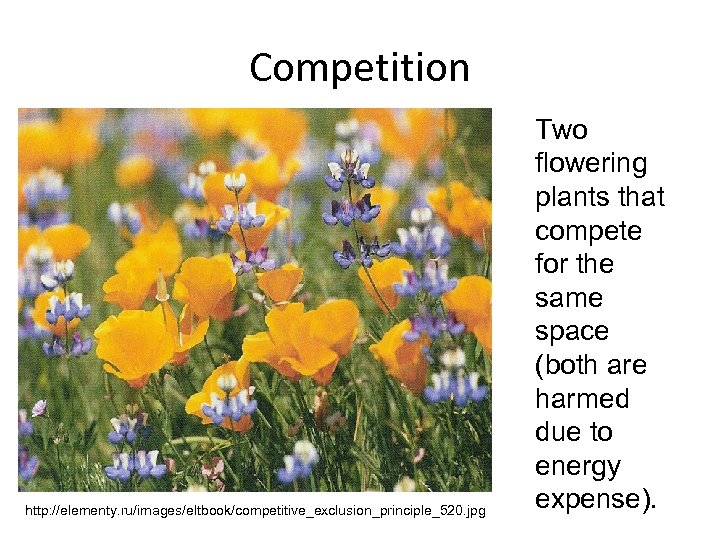 Competition http: //elementy. ru/images/eltbook/competitive_exclusion_principle_520. jpg Two flowering plants that compete for the same space (both are harmed due to energy expense).
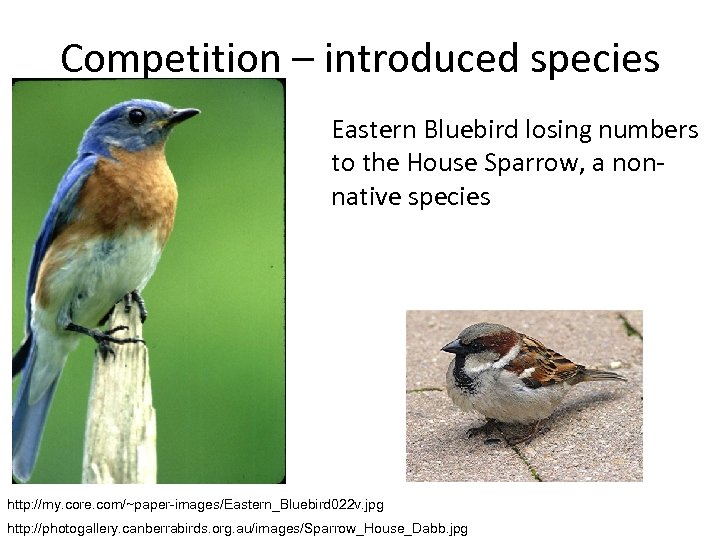 Competition – introduced species Eastern Bluebird losing numbers to the House Sparrow, a nonnative species http: //my. core. com/~paper-images/Eastern_Bluebird 022 v. jpg http: //photogallery. canberrabirds. org. au/images/Sparrow_House_Dabb. jpg
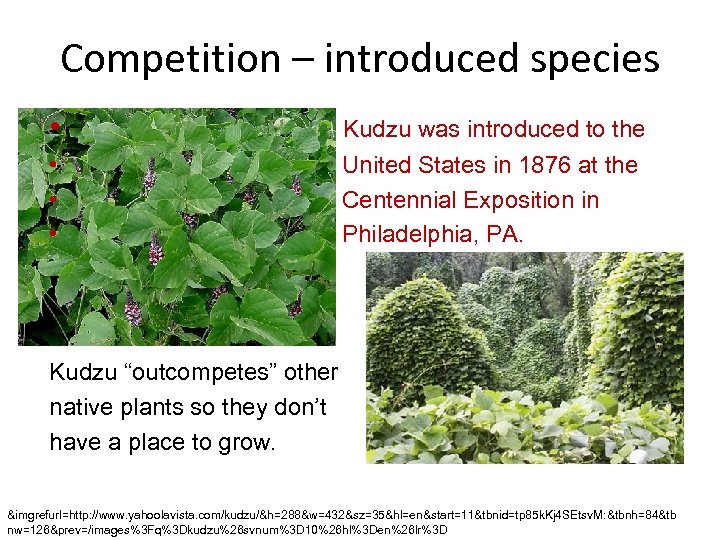 Competition – introduced species • Kudzu was introduced to the • • • United States in 1876 at the Centennial Exposition in Philadelphia, PA. Kudzu “outcompetes” other native plants so they don’t have a place to grow. &imgrefurl=http: //www. yahoolavista. com/kudzu/&h=288&w=432&sz=35&hl=en&start=11&tbnid=tp 85 k. Kj 4 SEtsv. M: &tbnh=84&tb nw=126&prev=/images%3 Fq%3 Dkudzu%26 svnum%3 D 10%26 hl%3 Den%26 lr%3 D
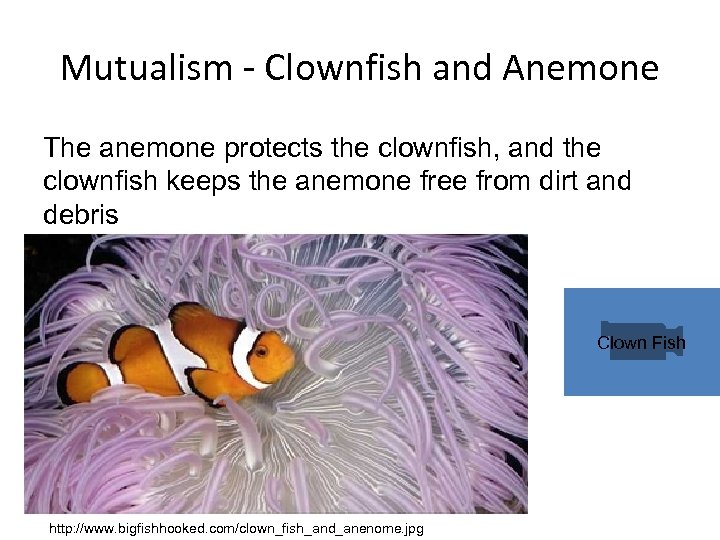 Mutualism - Clownfish and Anemone The anemone protects the clownfish, and the clownfish keeps the anemone free from dirt and debris Clown Fish http: //www. bigfishhooked. com/clown_fish_and_anenome. jpg
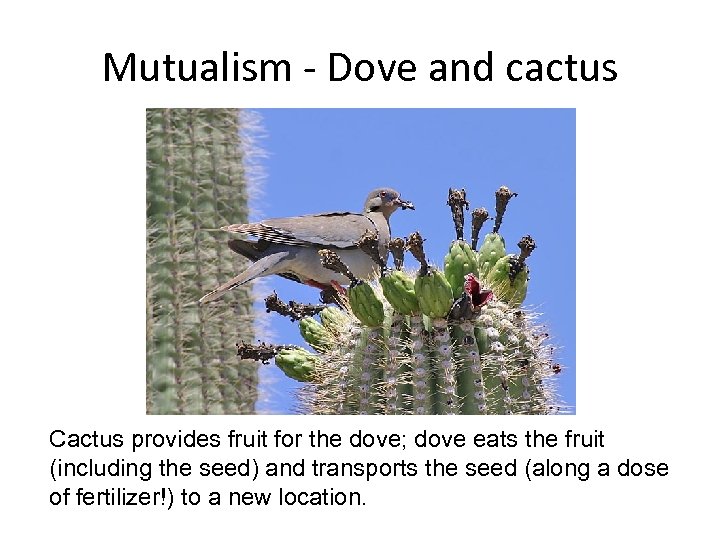 Mutualism - Dove and cactus Cactus provides fruit for the dove; dove eats the fruit (including the seed) and transports the seed (along a dose of fertilizer!) to a new location.
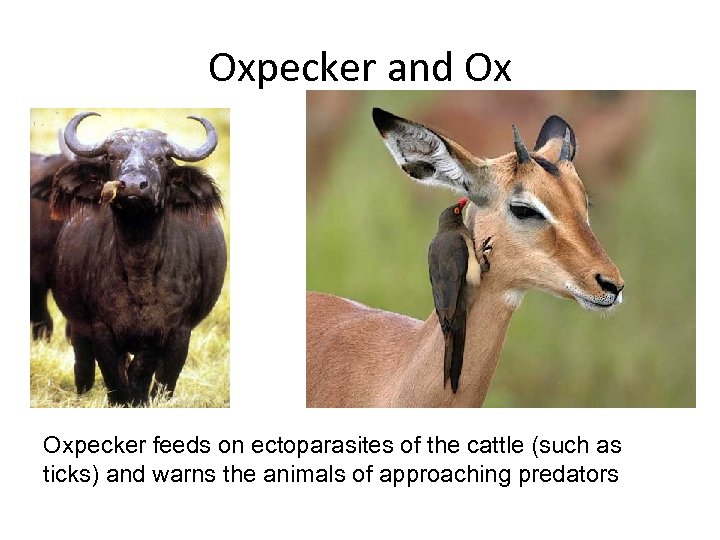 Oxpecker and Ox Oxpecker feeds on ectoparasites of the cattle (such as ticks) and warns the animals of approaching predators
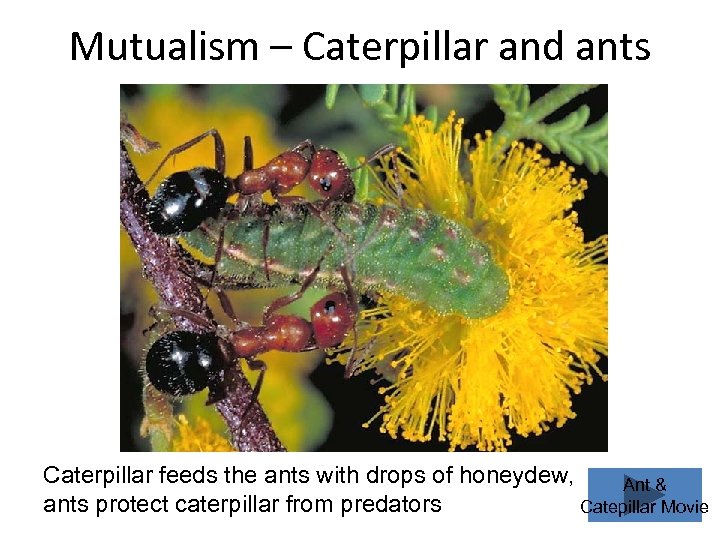 Mutualism – Caterpillar and ants Caterpillar feeds the ants with drops of honeydew, Ant & ants protect caterpillar from predators Catepillar Movie
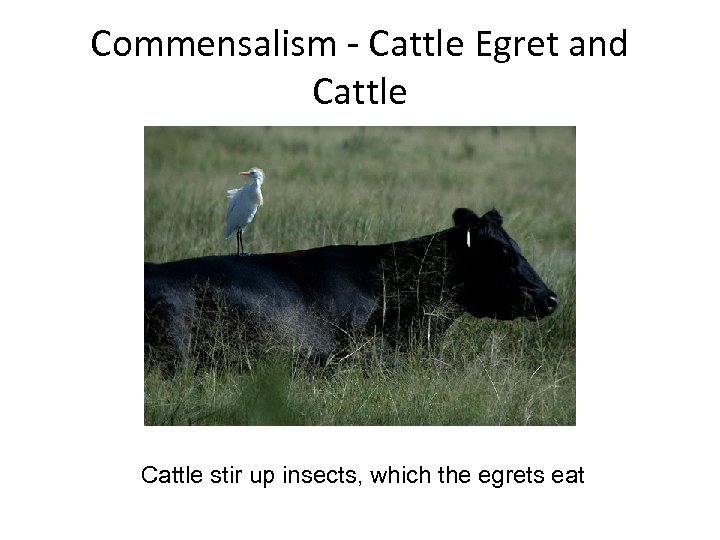 Commensalism - Cattle Egret and Cattle stir up insects, which the egrets eat
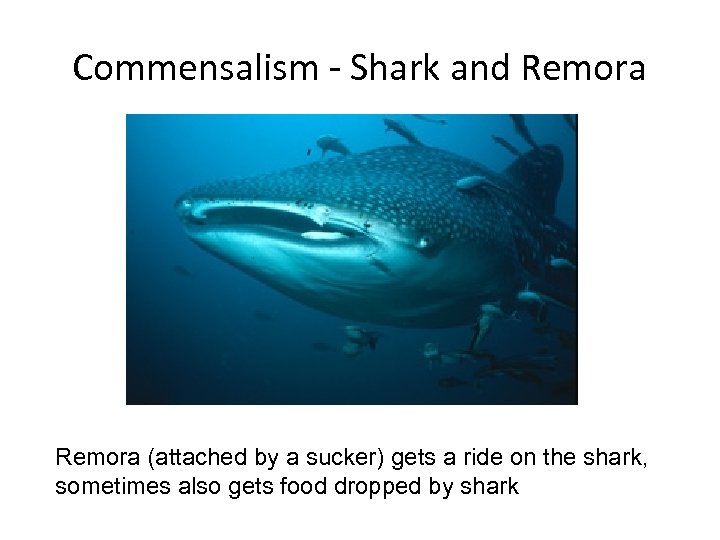 Commensalism - Shark and Remora (attached by a sucker) gets a ride on the shark, sometimes also gets food dropped by shark
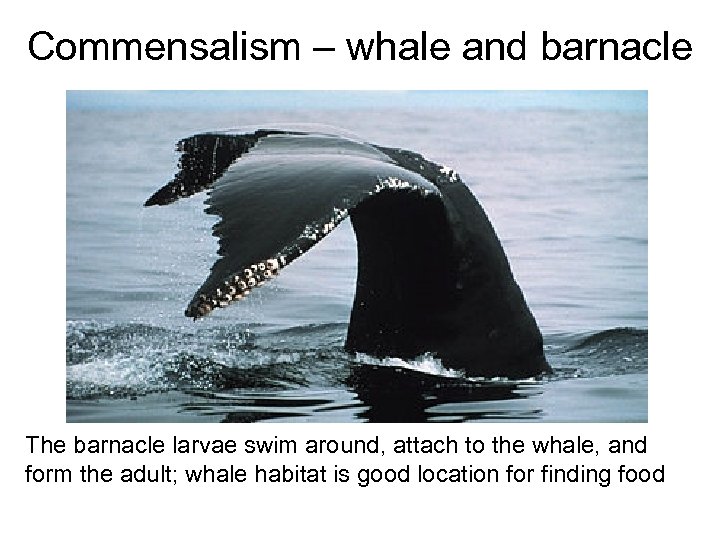 Commensalism – whale and barnacle The barnacle larvae swim around, attach to the whale, and form the adult; whale habitat is good location for finding food
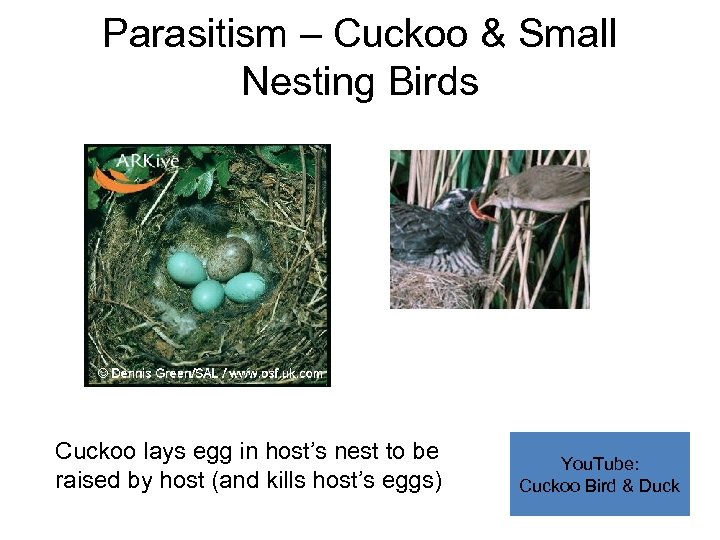 Parasitism – Cuckoo & Small Nesting Birds Cuckoo lays egg in host’s nest to be raised by host (and kills host’s eggs) You. Tube: Cuckoo Bird & Duck
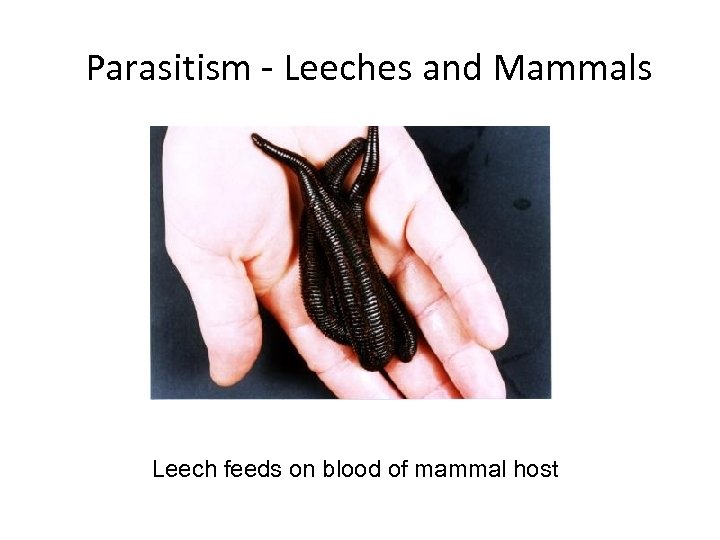 Parasitism - Leeches and Mammals Leech feeds on blood of mammal host
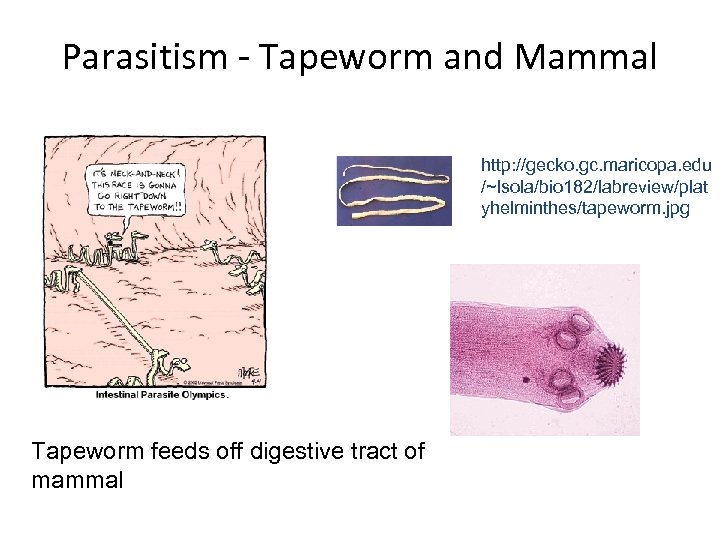 Parasitism - Tapeworm and Mammal http: //gecko. gc. maricopa. edu /~lsola/bio 182/labreview/plat yhelminthes/tapeworm. jpg Tapeworm feeds off digestive tract of mammal
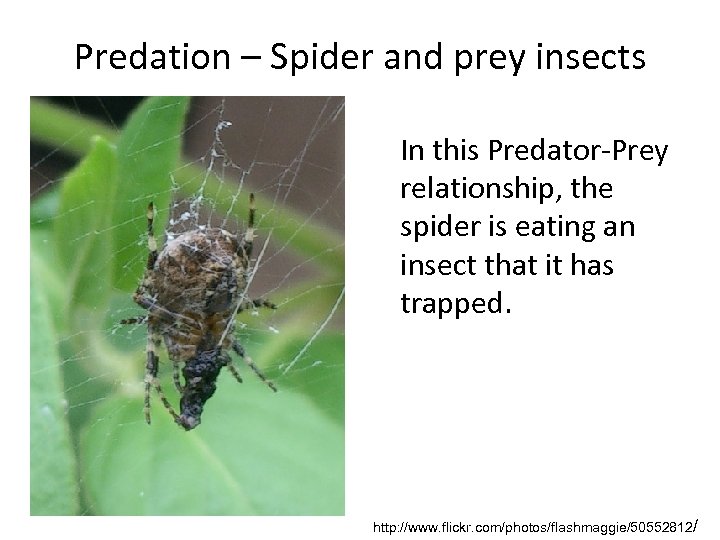 Predation – Spider and prey insects In this Predator-Prey relationship, the spider is eating an insect that it has trapped. http: //www. flickr. com/photos/flashmaggie/50552812/
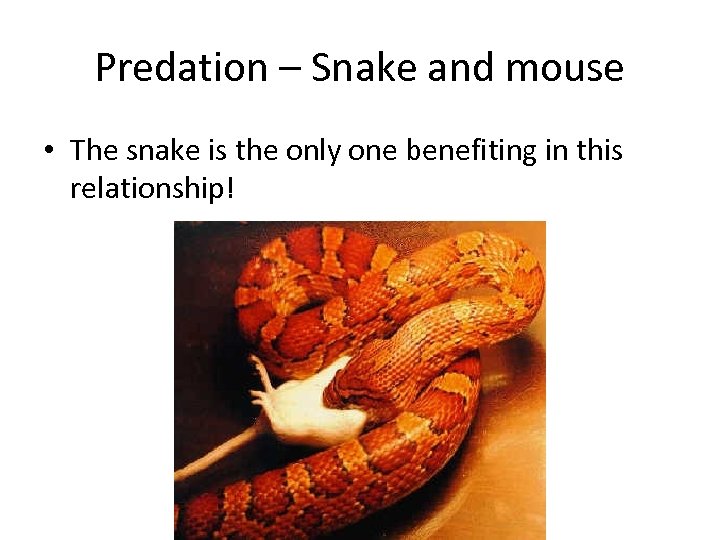 Predation – Snake and mouse • The snake is the only one benefiting in this relationship!
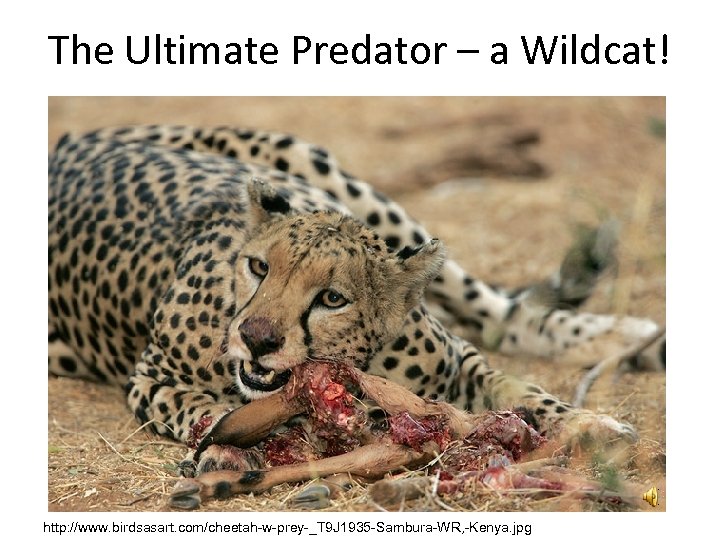 The Ultimate Predator – a Wildcat! http: //www. birdsasart. com/cheetah-w-prey-_T 9 J 1935 -Sambura-WR, -Kenya. jpg
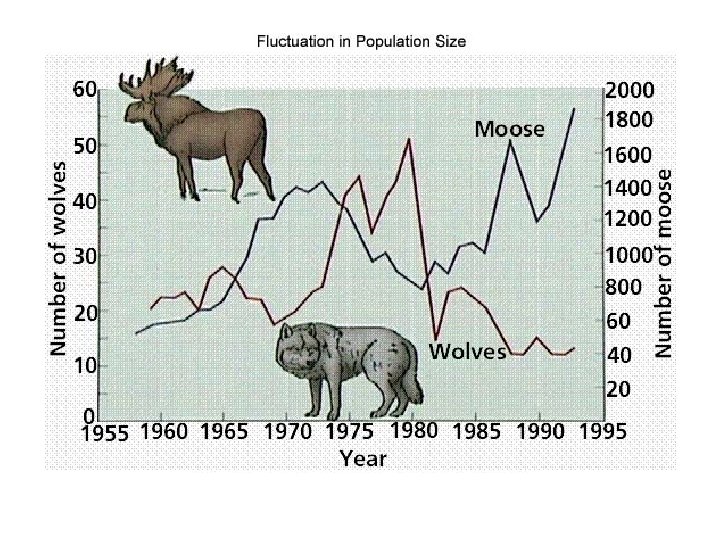
 Predator/Prey “Arms Race” Predators and prey are involved in an everescalating evolutionary “arms race”! e. g. , antelope gets faster, so cheetah gets faster For many populations predation is the main cause of death. BUT the prey determines the predator population When the prey population increases, predator population increases When prey population decreases, predator population decreases