


 Скачать презентацию REIT Accounting It s an Art Not a Science
0541830408cada4c4ec9e5931b9f9c73.ppt
- Количество слайдов: 33
 REIT Accounting It’s an Art Not a Science
 Carl T. Berquist b Deputy Director of Arthur Andersen (AA) Real Estate and Hospitality Services Group (REHSG) Worldwide b Head of AA Southeastern U. S. REHSG and Metropolitan Wash. , D. C. REHSG Practice b National Association of Real Estate Investment Trusts (NAREIT) - Associate Board Member
 Carl T. Berquist b Experience • Initial and Secondary Public Offerings • Assisting in various private real estate capital raises • Financial modeling, projections, strategic planning
 Overview b REITs b Market Performance Indicators • • • FFO AFFO FAD EBITDA Debt to Market Cap b Performance Analysis b Application of Accounting Policies
 Real Estate Investment Trust (REIT) b Assets are primarily composed of real estate held for the long term b Income mainly derived from real estate b Pays out at least 95 percent of taxable income to shareholders b One level of taxation b Mutual fund for real estate
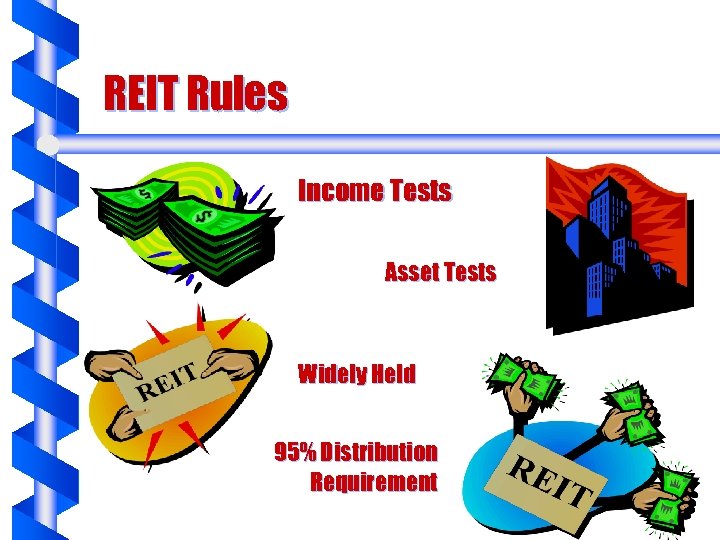 REIT Rules Income Tests Asset Tests Widely Held 95% Distribution Requirement
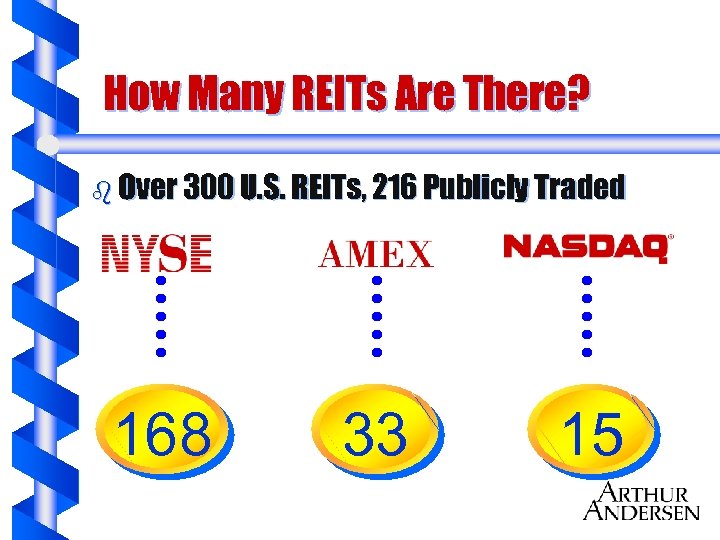 How Many REITs Are There? b Over 300 U. S. REITs, 216 Publicly Traded 168 33 15
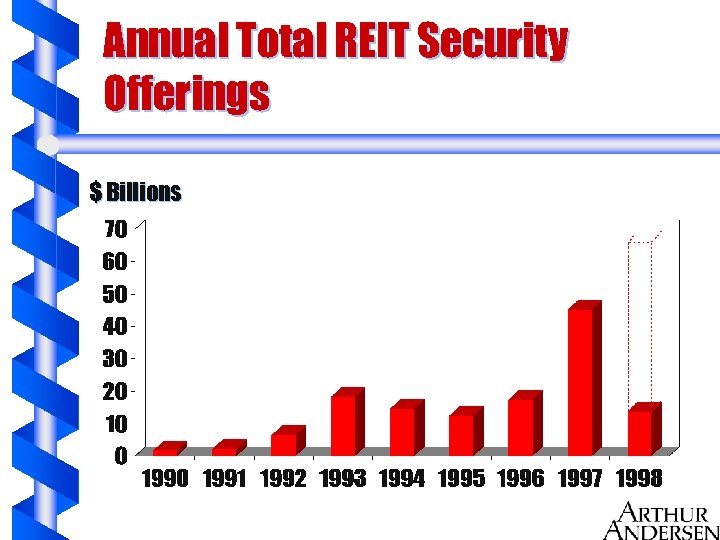 Annual Total REIT Security Offerings $ Billions
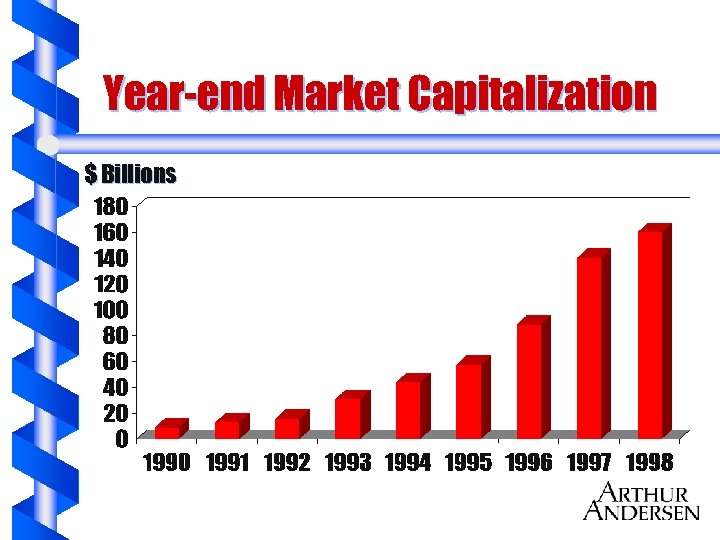 Year-end Market Capitalization $ Billions
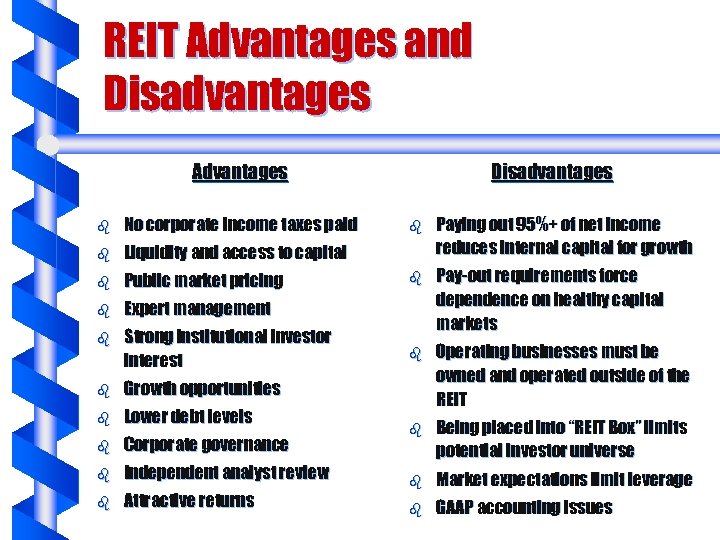 REIT Advantages and Disadvantages Advantages b No corporate income taxes paid b Liquidity and access to capital b Public market pricing b Expert management b Strong institutional investor interest b Growth opportunities b Lower debt levels b Corporate governance b Independent analyst review b Attractive returns Disadvantages b Paying out 95%+ of net income reduces internal capital for growth b Pay-out requirements force dependence on healthy capital markets b Operating businesses must be owned and operated outside of the REIT b Being placed into “REIT Box” limits potential investor universe b Market expectations limit leverage b GAAP accounting issues
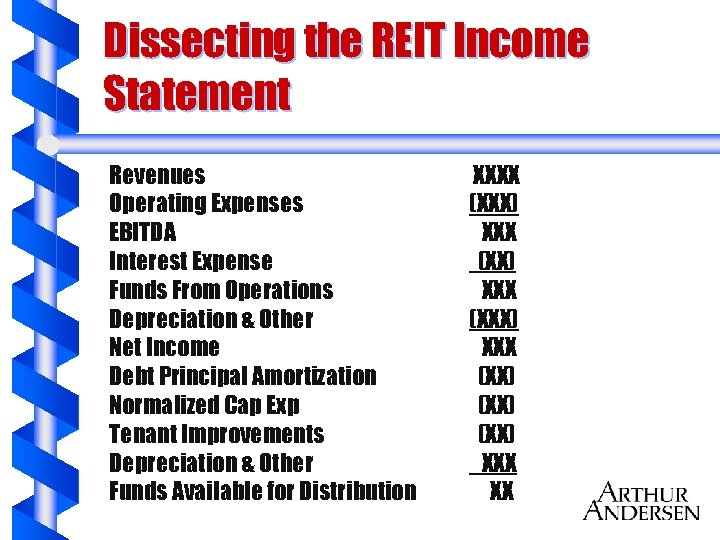 Dissecting the REIT Income Statement Revenues Operating Expenses EBITDA Interest Expense Funds From Operations Depreciation & Other Net Income Debt Principal Amortization Normalized Cap Exp Tenant Improvements Depreciation & Other Funds Available for Distribution XXXX (XXX) XXX (XX) XXX XX
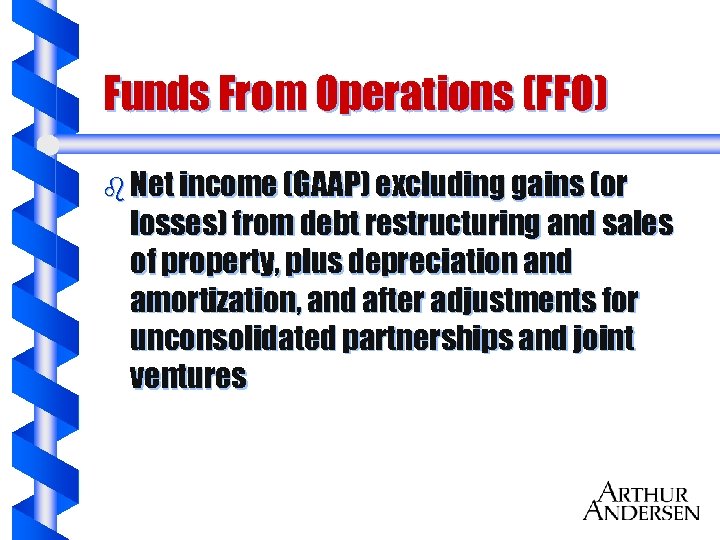 Funds From Operations (FFO) b Net income (GAAP) excluding gains (or losses) from debt restructuring and sales of property, plus depreciation and amortization, and after adjustments for unconsolidated partnerships and joint ventures
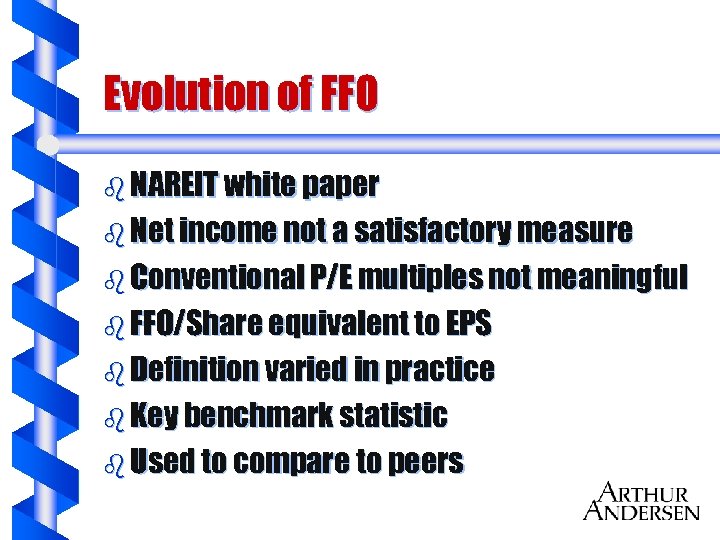 Evolution of FFO b NAREIT white paper b Net income not a satisfactory measure b Conventional P/E multiples not meaningful b FFO/Share equivalent to EPS b Definition varied in practice b Key benchmark statistic b Used to compare to peers
 Key FFO Measurement Benchmarks b Growth Rates b Payout Ratios (Dividends/FFO) b FFO Multiples
 Growth Rates b Done on a Per Share Basis b Compared to Peers b Quality of Earnings • Core vs. Accounting Gimmicks • Accretive Acquisitions
 Payout Ratios b Safety of Dividend b Retained Captial
 FFO Multiples b b Similar to PE Ratio Drives Share Price • Share Price/FF 0 per Share = Multiple b b The Industry Average is 10 - 12 Times Several Subjective Variables • • • Management Business Strategy Leverage Quality of Earnings Dividend Growth Payout Ratio
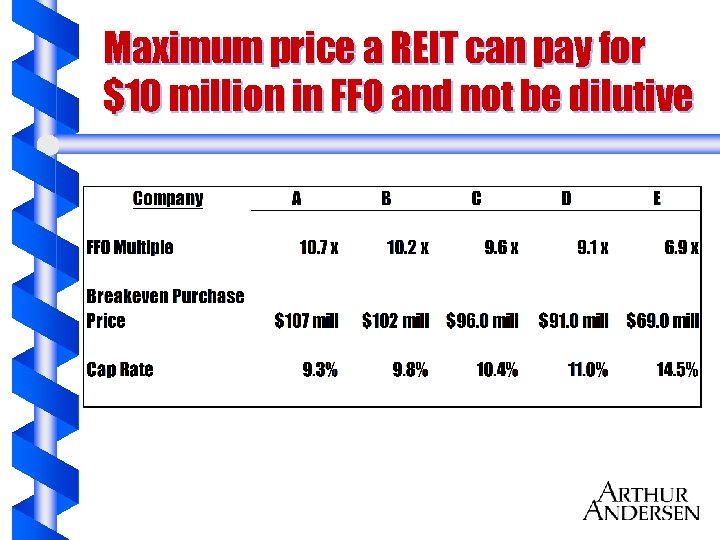 Maximum price a REIT can pay for $10 million in FFO and not be dilutive
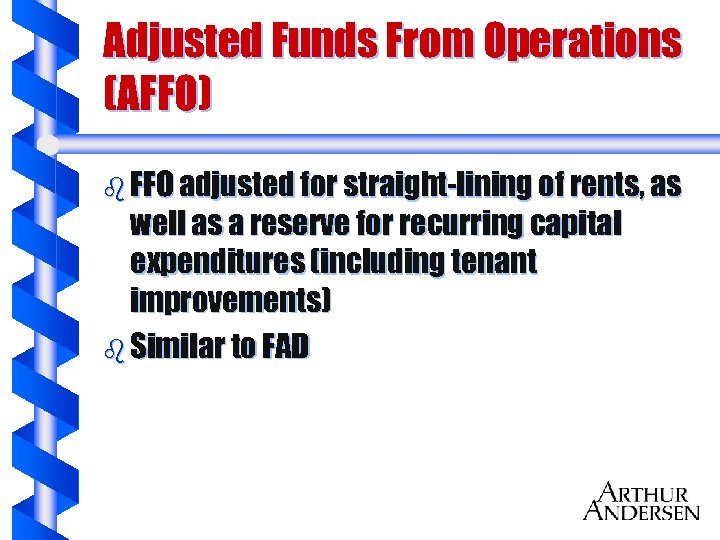 Adjusted Funds From Operations (AFFO) b FFO adjusted for straight-lining of rents, as well as a reserve for recurring capital expenditures (including tenant improvements) b Similar to FAD
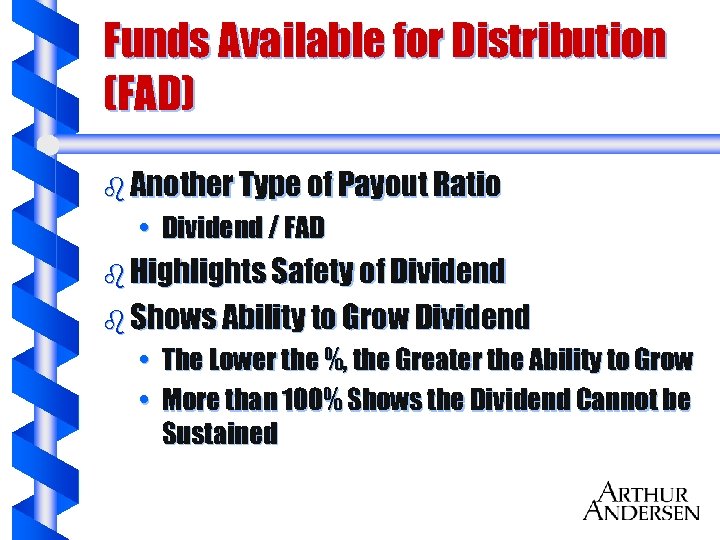 Funds Available for Distribution (FAD) b Another Type of Payout Ratio • Dividend / FAD b Highlights Safety of Dividend b Shows Ability to Grow Dividend • The Lower the %, the Greater the Ability to Grow • More than 100% Shows the Dividend Cannot be Sustained
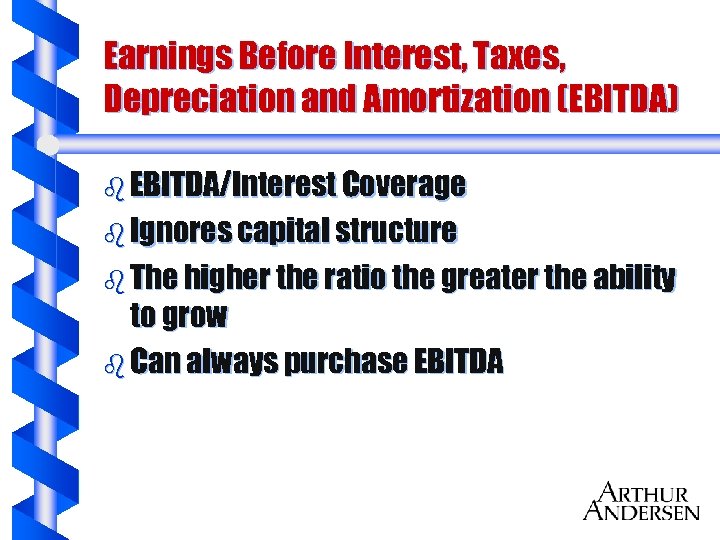 Earnings Before Interest, Taxes, Depreciation and Amortization (EBITDA) b EBITDA/Interest Coverage b Ignores capital structure b The higher the ratio the greater the ability to grow b Can always purchase EBITDA
 Debt to Market Capitalization b Total Debt / (Debt + Equity Capitalization) b The Lower the Ratio, the Greater the Ability to Grow • Acquisitions can be leveraged • Expansions can be financed • Reduced Refinancing Risk
 Stock Price b Quality Earnings b Growing FFO b Strong Management b Well Defined Growth Strategy b Low Debt to Market Cap b Ability to Execute
 Accounting “Gimmicks” b b b b Capitalization vs. expense Straight-lining of rental revenue Tenant improvement costs vs. rental rates Off balance sheet financing Off balance sheet ventures One time transactions FFO adjustments • • deferred finance fees percentage rent preferred returns unusual items
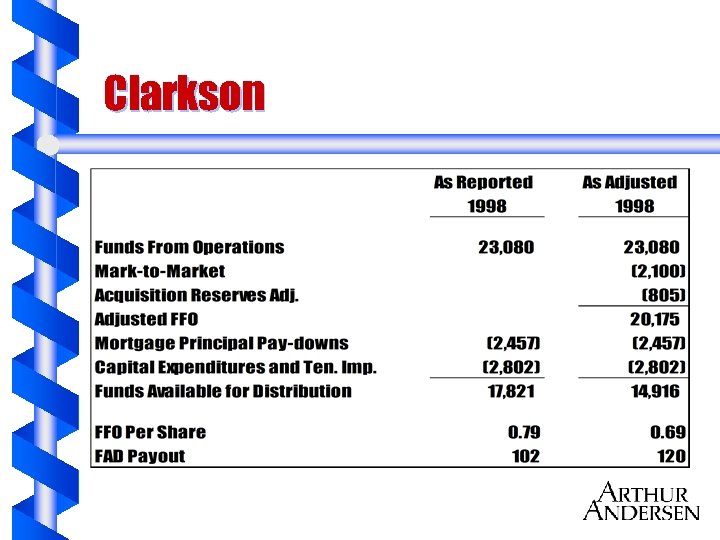
 Clarkson b Acquisition reserves b Leverage (Mark-to-Market) b FAD pay out ratio
 Clarkson b “The company continued its innovative policy of renovating apartments to fit specific tenant needs and notes that this is a growing source of revenue for the future. ”
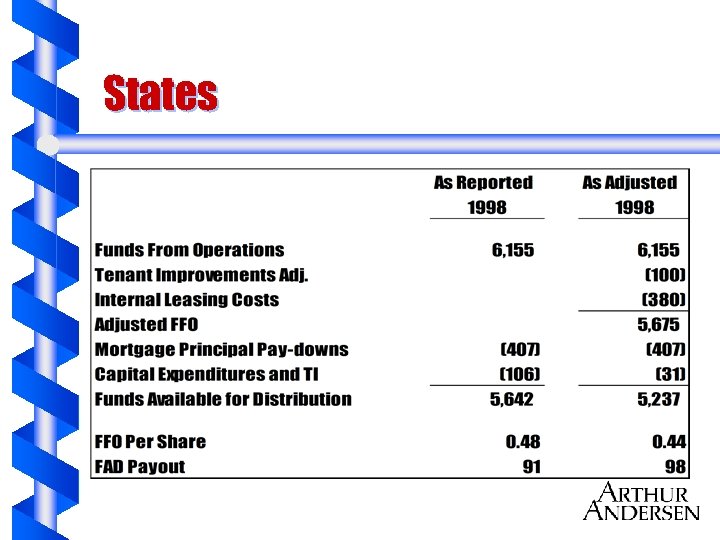
 States b Tenant improvements b Income from joint ventures b Internal development costs b Straight-lining of rents
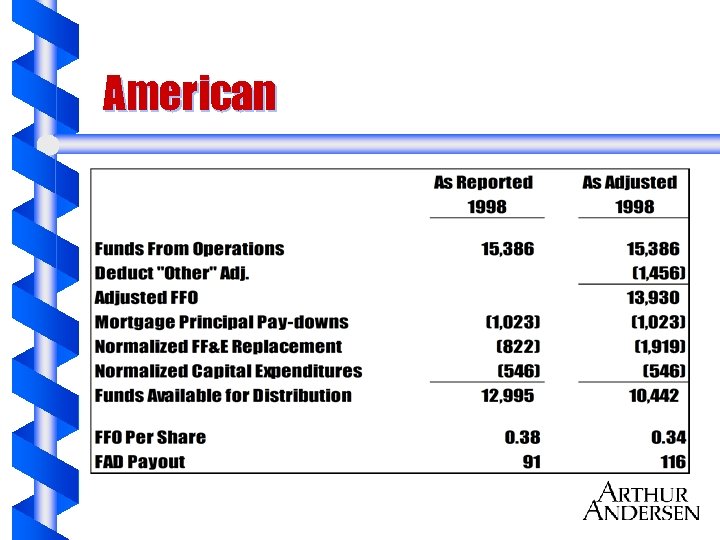
 American b Reserves b Other adjustment
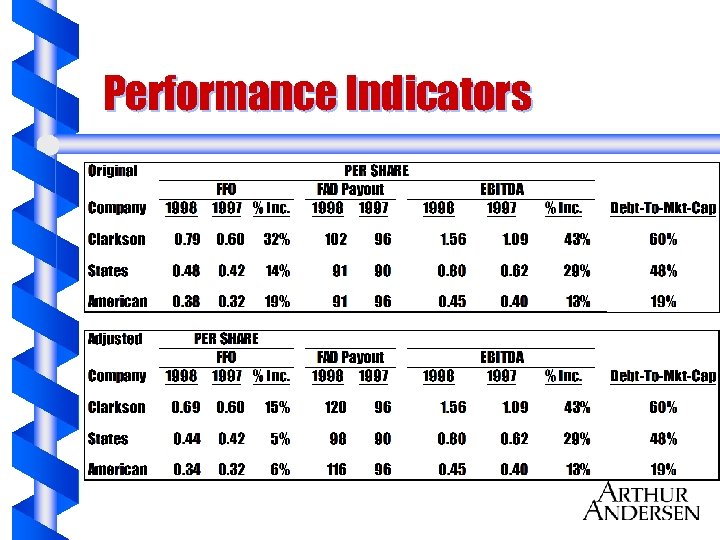 Performance Indicators
 American
 States
 Clarkson
 REIT Accounting Its an Art Not a Science b Summary • There is no easy answer • Understand the numbers • Research is critical