


 Скачать презентацию Regional Supplier Networks and Competitive Advantage Case
6a40b2438e5d693ef0240d191b64727d.ppt
- Количество слайдов: 34
 Regional Supplier Networks and Competitive Advantage – Case Studies of Honda and Vietnamese Motorcycle Companies – (Draft) Pham Truong Hoang Graduate School of Information and Environment Sciences – Yokohama National University JVEC Workshop – 11/22/2003 1
 Background and Motive for Study n Japanese style supplier system’s competitive advantage n n n Japanese direct investment in Vietnam condition- near China, in ASEAN Vietnamese motorcycle industry in recent years 2
 Contents n n n Introduction Key concepts and frameworks Review of Motorcycle industry in Vietnam and East-Asian region Regional supplier system – Case of Honda Vietnam Company Product architecture and component’s supplier system – Cases of Honda and Vietnamese motorcycle companies Conclusion 3
 1. Key Concepts and Frameworks (1) Supplier system n Production cost & transaction cost: n n Production cost: cost of input Transaction cost: cost to sustain “asset specific” – (1)search cost, (2)contracting cost, (3)monitoring cost, (4)enforcement cost 4
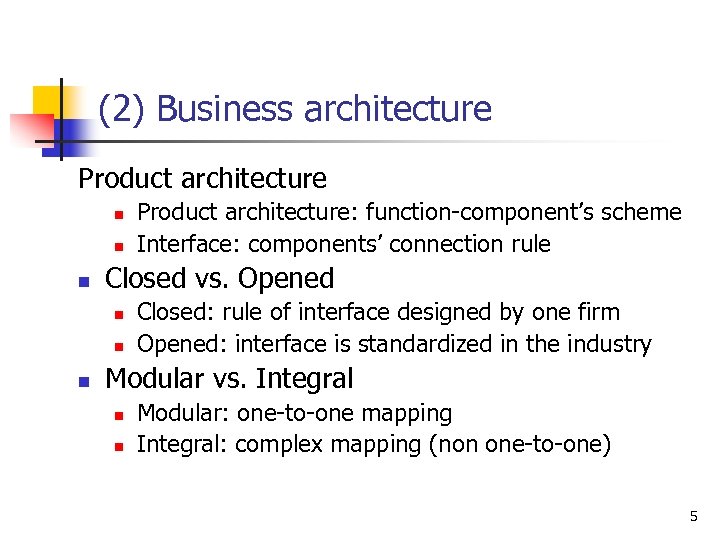 (2) Business architecture Product architecture n n n Closed vs. Opened n n n Product architecture: function-component’s scheme Interface: components’ connection rule Closed: rule of interface designed by one firm Opened: interface is standardized in the industry Modular vs. Integral n n Modular: one-to-one mapping Integral: complex mapping (non one-to-one) 5
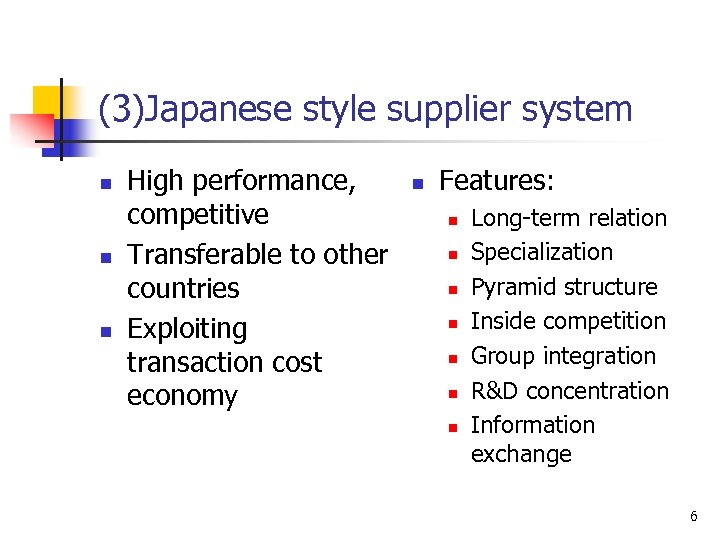 (3)Japanese style supplier system n n n High performance, competitive Transferable to other countries Exploiting transaction cost economy n Features: n n n n Long-term relation Specialization Pyramid structure Inside competition Group integration R&D concentration Information exchange 6
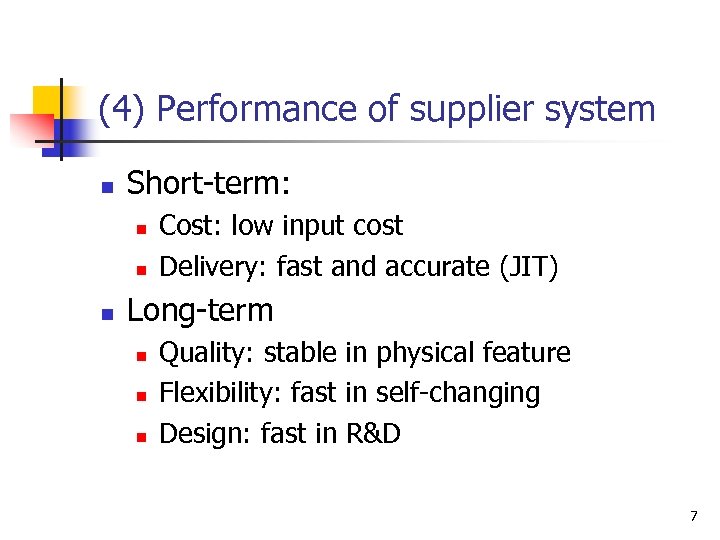 (4) Performance of supplier system n Short-term: n n n Cost: low input cost Delivery: fast and accurate (JIT) Long-term n n n Quality: stable in physical feature Flexibility: fast in self-changing Design: fast in R&D 7
 2. Review of Motorcycle Industry in Vietnam and in East Asian region n Motorcycle industry in Vietnam Development, Consumer market, Competitors, Domestic suppliers n Motorcycle industry in East Asian region Overviews, Chinese motorcycle industry, Thailand’s motorcycle industry 8
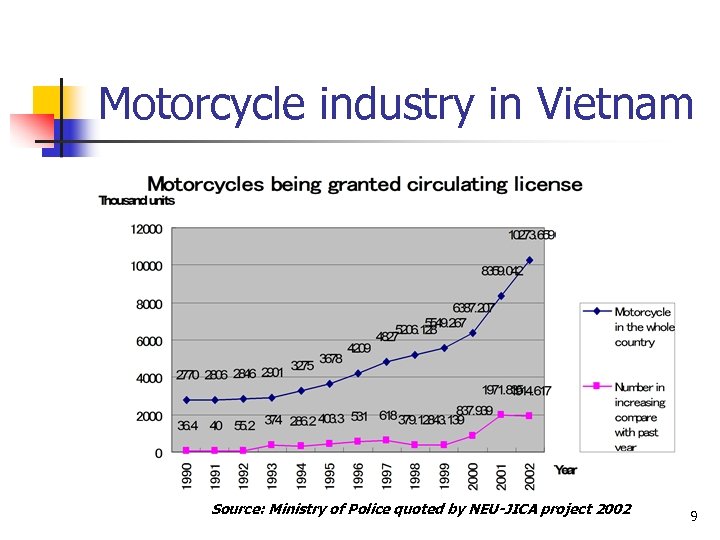 Motorcycle industry in Vietnam Source: Ministry of Police quoted by NEU-JICA project 2002 9
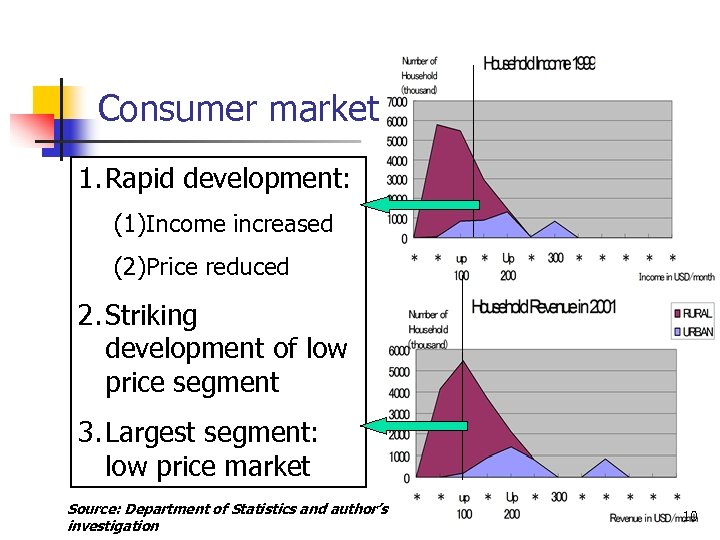 Consumer market 1. Rapid development: (1)Income increased (2)Price reduced 2. Striking development of low price segment 3. Largest segment: low price market Source: Department of Statistics and author’s investigation 10
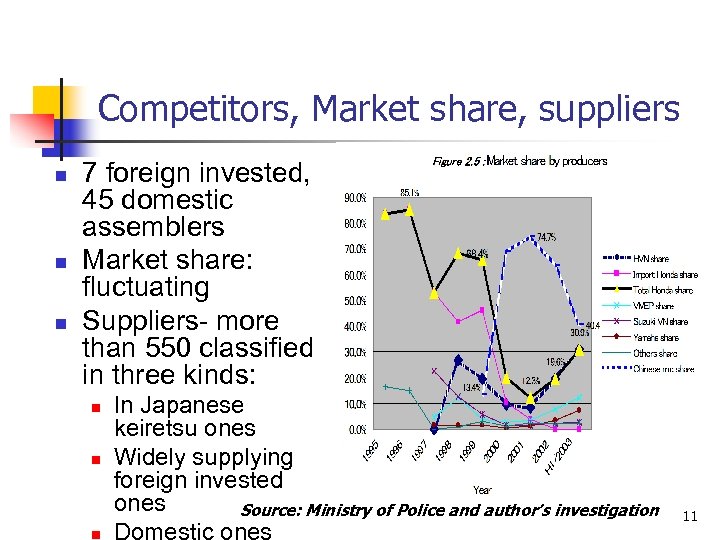 Competitors, Market share, suppliers n n n 7 foreign invested, 45 domestic assemblers Market share: fluctuating Suppliers- more than 550 classified in three kinds: n n n In Japanese keiretsu ones Widely supplying foreign invested ones Source: Ministry of Police and author’s investigation Domestic ones 11
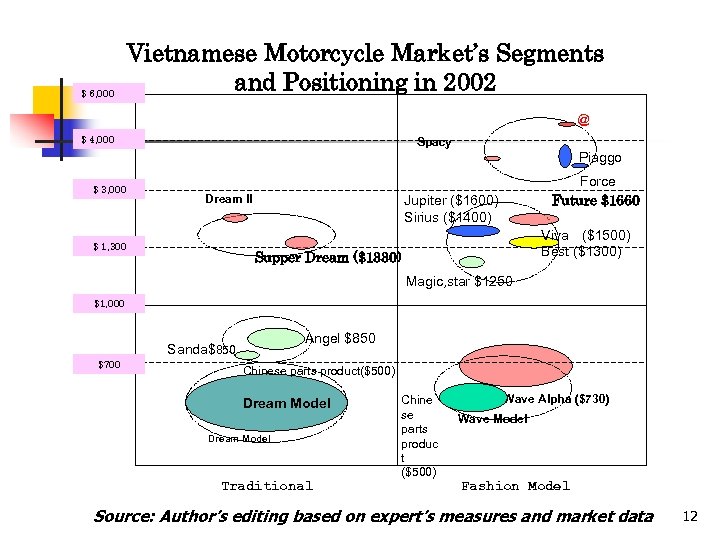 $ 6, 000 Vietnamese Motorcycle Market’s Segments and Positioning in 2002 @ $ 4, 000 Spacy Piaggo $ 3, 000 Dream II $ 1, 300 Force Future $1660 Jupiter ($1600) Sirius ($1400) Viva ($1500) Best ($1300) Supper Dream ($1330) Magic, star $1250 $1, 000 Angel $850 Sanda$850 $700 Chinese parts product($500) Dream Model Traditional Chine se parts produc t ($500) Wave Alpha ($730) Wave Model Fashion Model Source: Author’s editing based on expert’s measures and market data 12
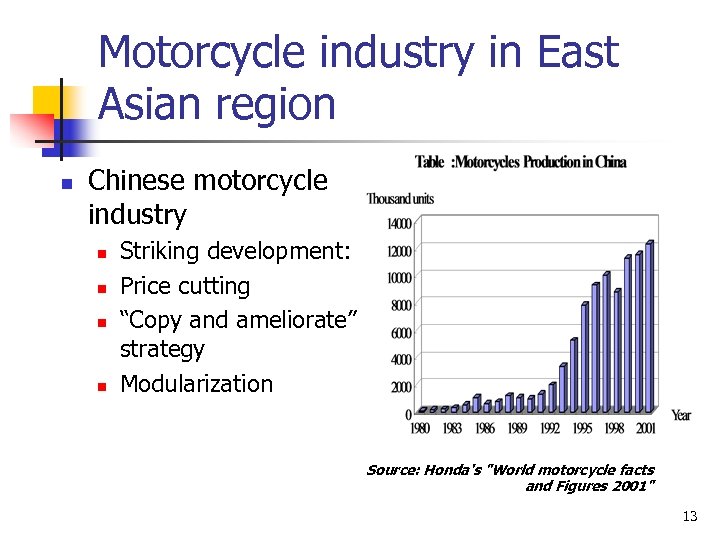 Motorcycle industry in East Asian region n Chinese motorcycle industry n n Striking development: Price cutting “Copy and ameliorate” strategy Modularization Source: Honda's "World motorcycle facts and Figures 2001" 13
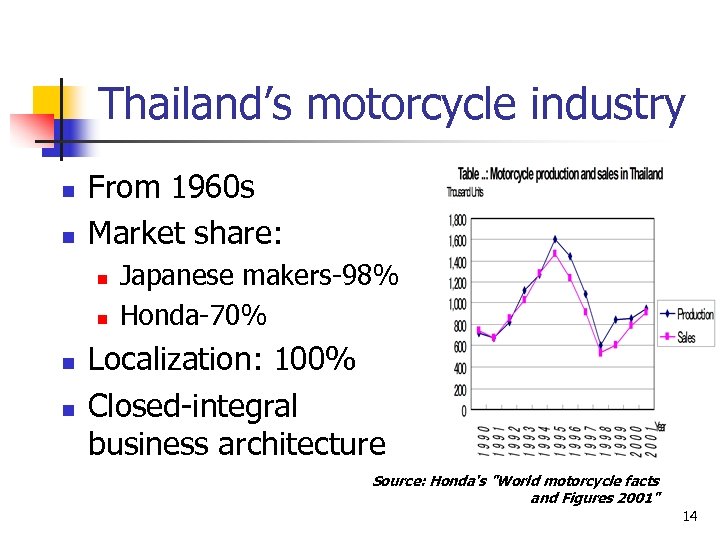 Thailand’s motorcycle industry n n From 1960 s Market share: n n Japanese makers-98% Honda-70% Localization: 100% Closed-integral business architecture Source: Honda's "World motorcycle facts and Figures 2001" 14
 Summary n Vietnamese motorcycle industry: n n n Striking development Increasing competition Low price segment enlargement Chinese component’s role East-Asian regional motorcycle industry n n n Striking development Chinese motorcycle industry modularization Low price of components 15
 Hypothesis (1) n n n Change in Vietnamese market Decline of Honda in Vietnam before 2002 Development and modularization in regional motorcycle industry Transferability of Japanese style suppliers system Advantage of Japanese style supplier system (1) Honda in Vietnam enlarged its supplier system to regional supplier network (2) Change of suppliers is in some components 16
 Hypothesis (2) n n n Modularizing in Japanese automobile industry Modularization in regional motorcycle industry Modularization in components Outsourcing and modularization’s relation Dynamics of product architecture (3) Honda in Vietnam is modularizing partly and based on components (4) Modularization in Vietnamese motorcycle companies and product architecture is changing dynamically 17
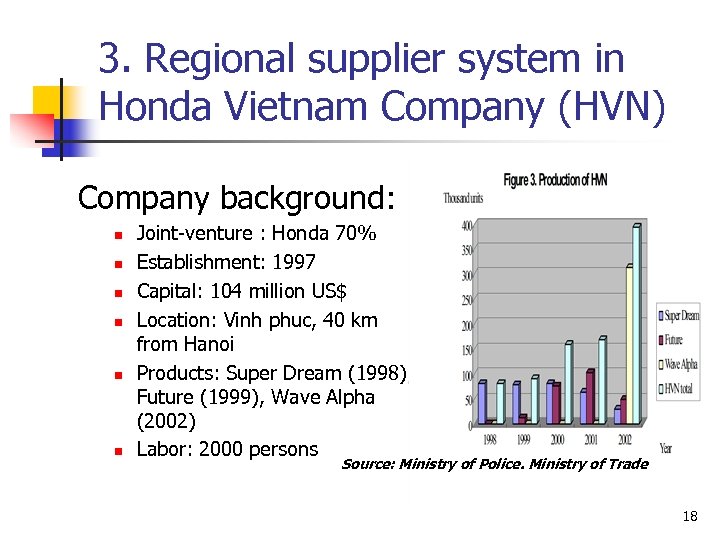 3. Regional supplier system in Honda Vietnam Company (HVN) Company background: n n n Joint-venture : Honda 70% Establishment: 1997 Capital: 104 million US$ Location: Vinh phuc, 40 km from Hanoi Products: Super Dream (1998), Future (1999), Wave Alpha (2002) Labor: 2000 persons Source: Ministry of Police. Ministry of Trade 18
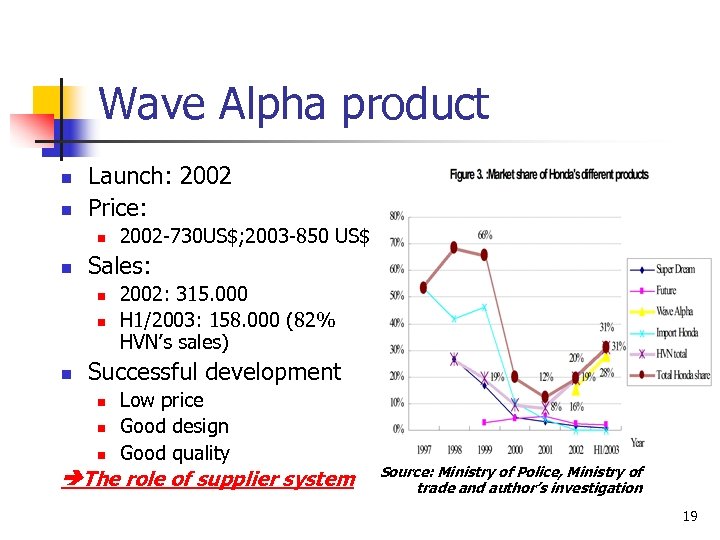 Wave Alpha product n n Launch: 2002 Price: n n Sales: n n n 2002 -730 US$; 2003 -850 US$ 2002: 315. 000 H 1/2003: 158. 000 (82% HVN’s sales) Successful development n n n Low price Good design Good quality The role of supplier system Source: Ministry of Police, Ministry of trade and author’s investigation 19
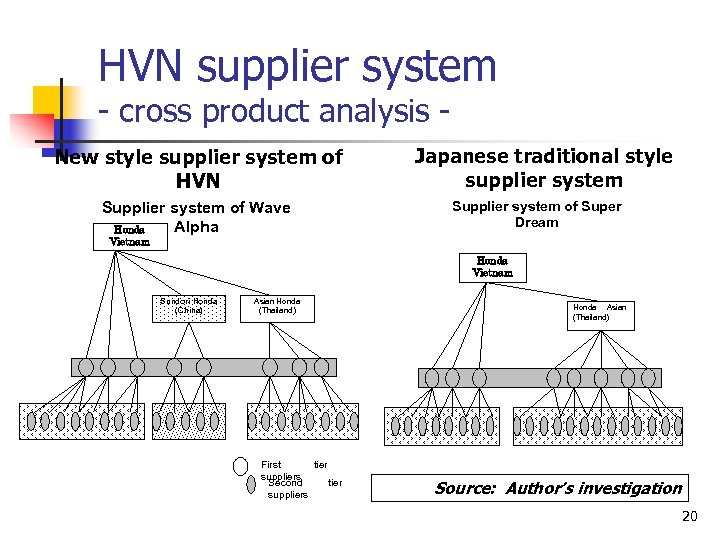 HVN supplier system - cross product analysis New style supplier system of HVN Supplier system of Wave Alpha Honda Japanese traditional style supplier system Supplier system of Super Dream Vietnam Honda Vietnam Sundori Honda (China) Asian Honda (Thailand) First tier suppliers Second tier suppliers Honda Asian (Thailand) Source: Author’s investigation 20
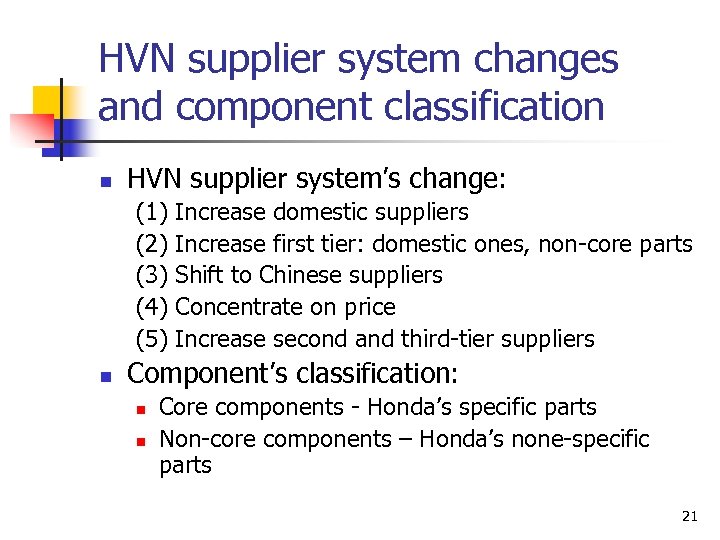 HVN supplier system changes and component classification n HVN supplier system’s change: (1) (2) (3) (4) (5) n Increase domestic suppliers Increase first tier: domestic ones, non-core parts Shift to Chinese suppliers Concentrate on price Increase second and third-tier suppliers Component’s classification: n n Core components - Honda’s specific parts Non-core components – Honda’s none-specific parts 21
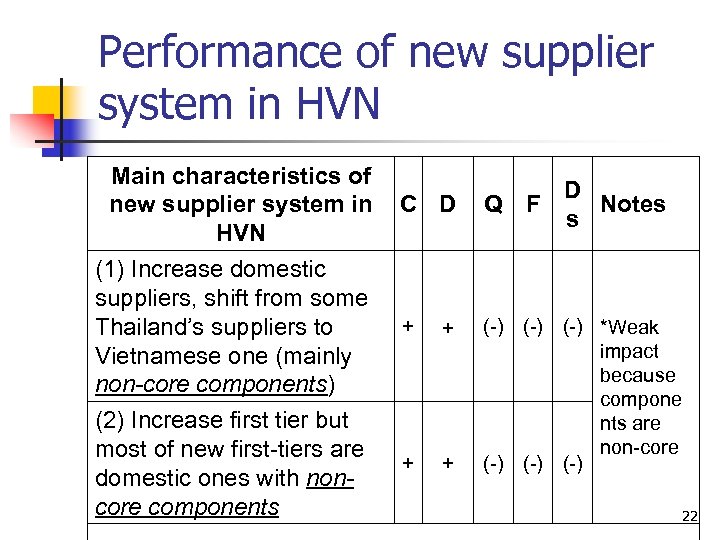 Performance of new supplier system in HVN Main characteristics of new supplier system in HVN (1) Increase domestic suppliers, shift from some Thailand’s suppliers to Vietnamese one (mainly non-core components) (2) Increase first tier but most of new first-tiers are domestic ones with noncore components C D + + D Q F Notes s (-) (-) *Weak impact because compone nts are non-core (-) (-) 22
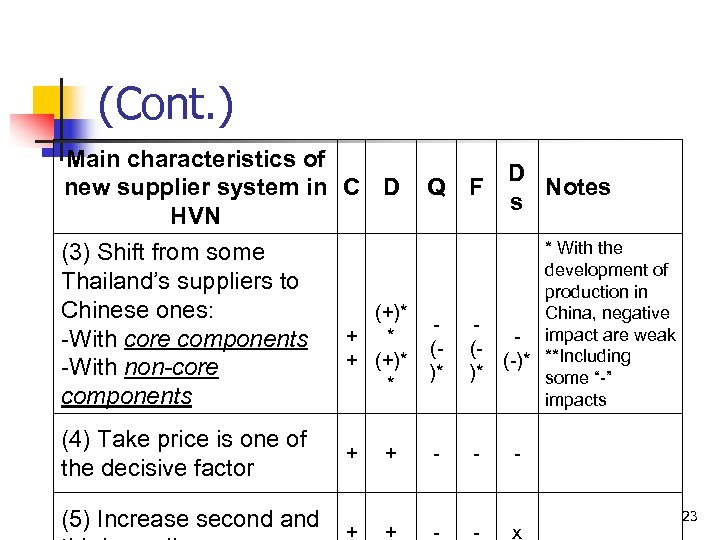 (Cont. ) Main characteristics of D new supplier system in C D Q F Notes s HVN * With the (3) Shift from some development of Thailand’s suppliers to production in Chinese ones: (+)* China, negative + * - impact are weak -With core components (- (+ (+)* (-)* **Including -With non-core )* )* some “-” * components impacts (4) Take price is one of the decisive factor (5) Increase second and + + - - - x 23
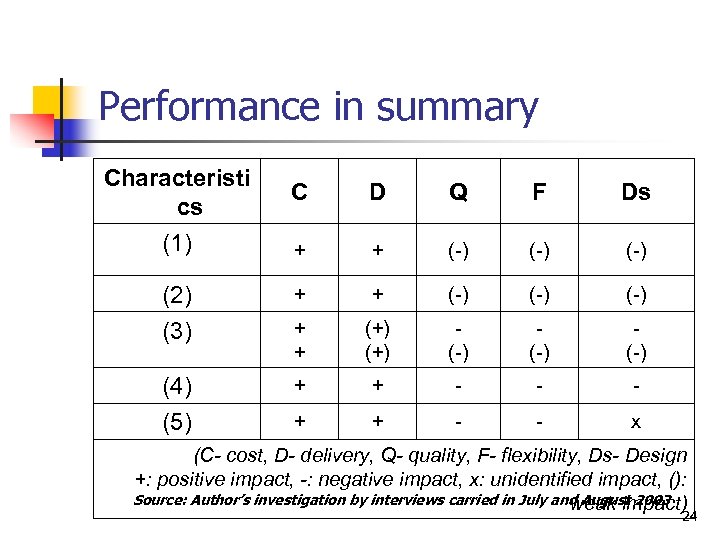 Performance in summary Characteristi cs C D Q F Ds (1) + + (-) (-) (2) + + (-) (-) (3) + + (+) (-) (-) (4) (5) + + - - - + + - - x (C- cost, D- delivery, Q- quality, F- flexibility, Ds- Design +: positive impact, -: negative impact, x: unidentified impact, (): Source: Author’s investigation by interviews carried in July and August 2003 weak impact) 24
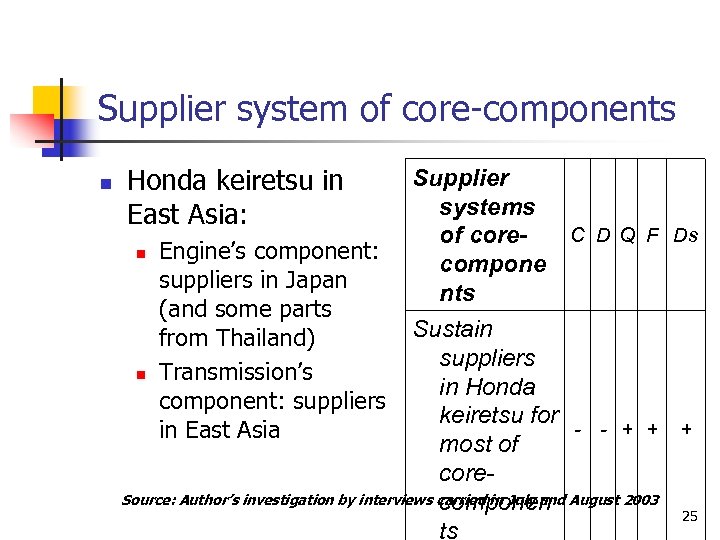 Supplier system of core-components n Honda keiretsu in East Asia: n Engine’s component: suppliers in Japan (and some parts from Thailand) Transmission’s component: suppliers in East Asia Supplier systems of corecompone nts C D Q F Ds Sustain suppliers n in Honda keiretsu for - - + + + most of core. Source: Author’s investigation by interviews carried in July and August 2003 componen 25 ts
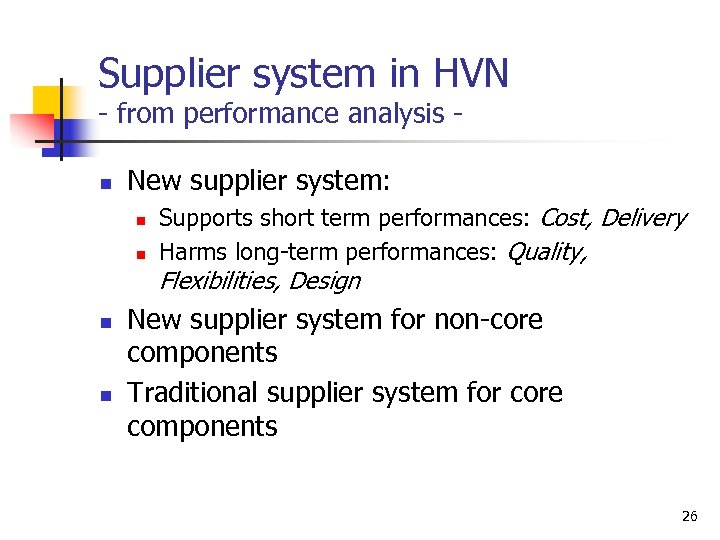 Supplier system in HVN - from performance analysis n New supplier system: n n Supports short term performances: Cost, Delivery Harms long-term performances: Quality, Flexibilities, Design n n New supplier system for non-core components Traditional supplier system for core components 26
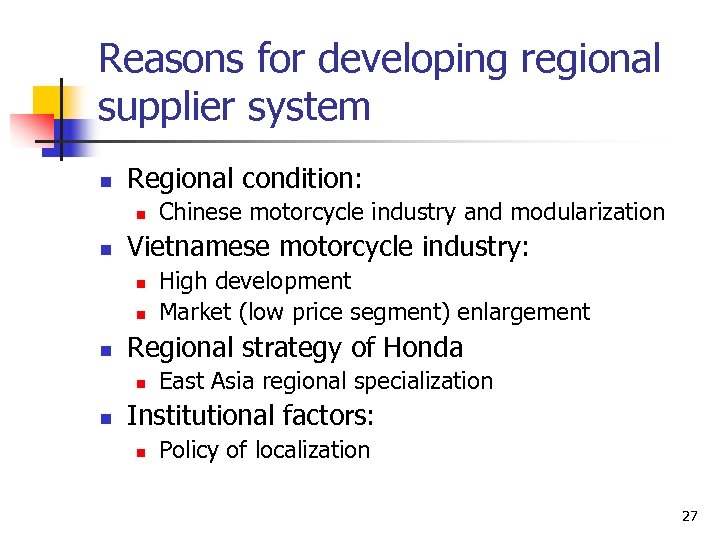 Reasons for developing regional supplier system n Regional condition: n n Vietnamese motorcycle industry: n n n High development Market (low price segment) enlargement Regional strategy of Honda n n Chinese motorcycle industry and modularization East Asia regional specialization Institutional factors: n Policy of localization 27
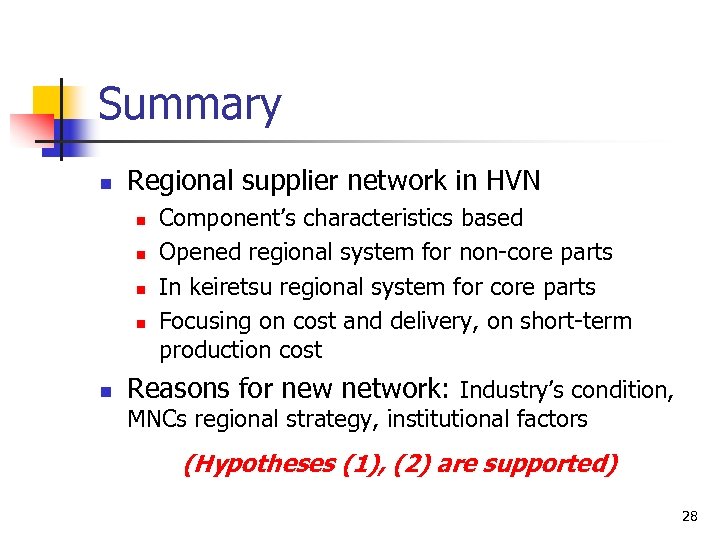 Summary n Regional supplier network in HVN n n n Component’s characteristics based Opened regional system for non-core parts In keiretsu regional system for core parts Focusing on cost and delivery, on short-term production cost Reasons for new network: Industry’s condition, MNCs regional strategy, institutional factors (Hypotheses (1), (2) are supported) 28
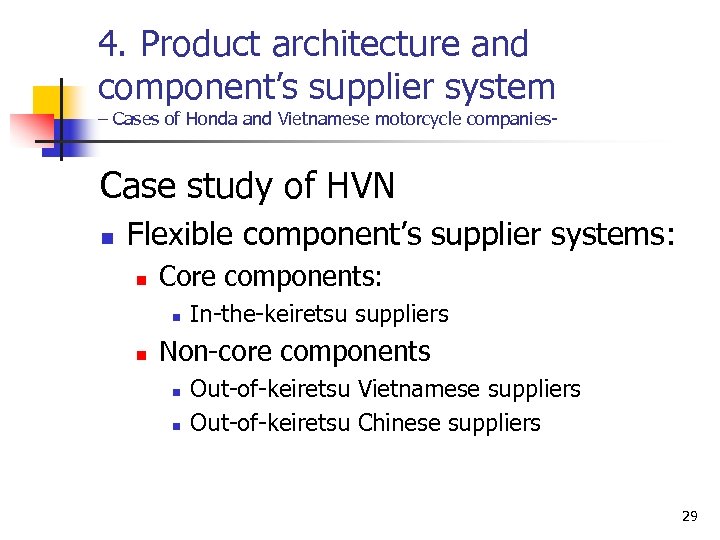 4. Product architecture and component’s supplier system – Cases of Honda and Vietnamese motorcycle companies- Case study of HVN n Flexible component’s supplier systems: n Core components: n n In-the-keiretsu suppliers Non-core components n n Out-of-keiretsu Vietnamese suppliers Out-of-keiretsu Chinese suppliers 29
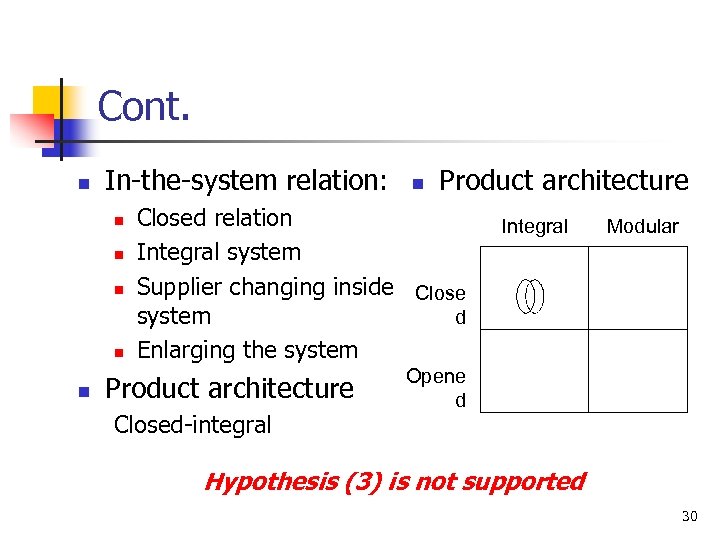 Cont. n In-the-system relation: n n n Product architecture Closed relation Integral system Supplier changing inside Close system d Enlarging the system Product architecture Closed-integral Integral Modular Opene d Hypothesis (3) is not supported 30
 Cases of Vietnamese domestic companies n Company A n n Company B n n Moving to closer relationship in system Company C n n Increasing in-house production Keeping open supplier system Company D n Moving to component manufacturing 31
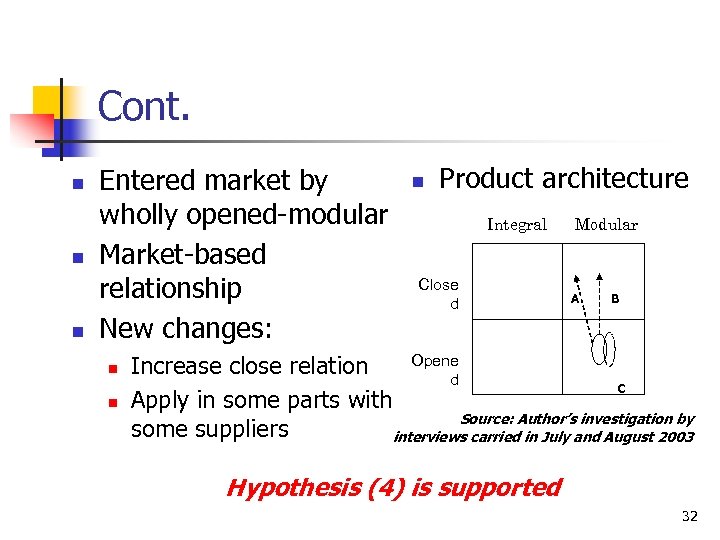 Cont. n n n Entered market by wholly opened-modular Market-based relationship New changes: n n n Product architecture Integral Close d Modular A B Opene Increase close relation d C Apply in some parts with Source: Author’s investigation by some suppliers interviews carried in July and August 2003 Hypothesis (4) is supported 32
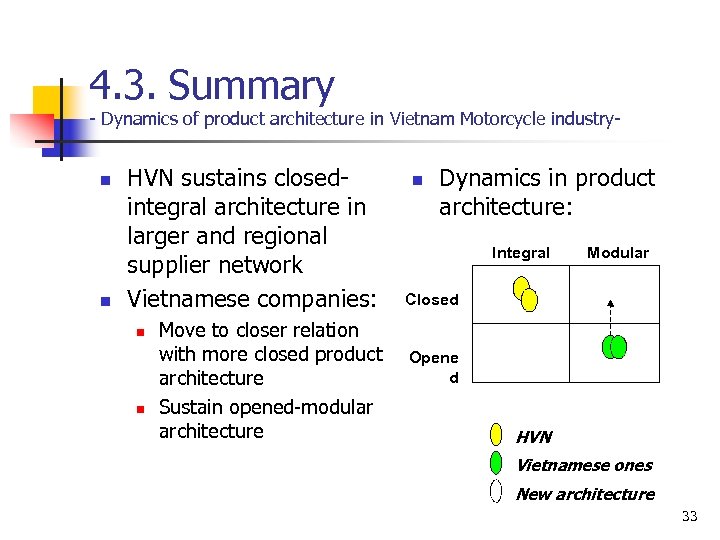 4. 3. Summary - Dynamics of product architecture in Vietnam Motorcycle industryn n HVN sustains closedintegral architecture in larger and regional supplier network Vietnamese companies: n n Move to closer relation with more closed product architecture Sustain opened-modular architecture n Dynamics in product architecture: Integral Modular Closed Opene d HVN Vietnamese ones New architecture 33
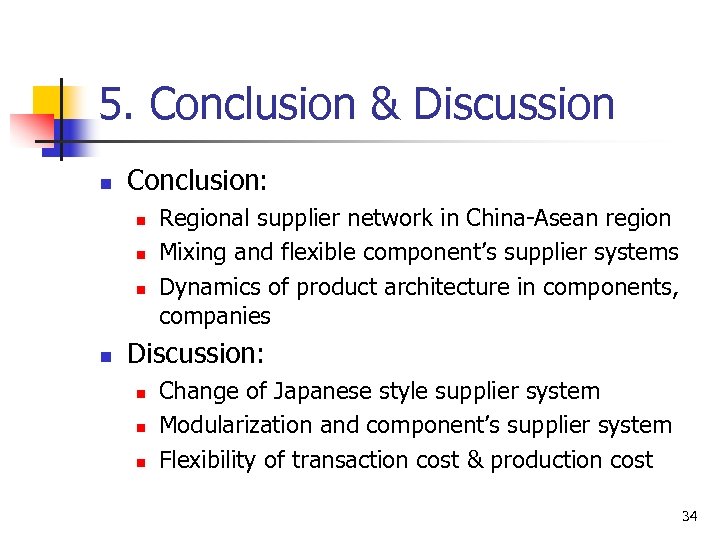 5. Conclusion & Discussion n Conclusion: n n Regional supplier network in China-Asean region Mixing and flexible component’s supplier systems Dynamics of product architecture in components, companies Discussion: n n n Change of Japanese style supplier system Modularization and component’s supplier system Flexibility of transaction cost & production cost 34