 Скачать презентацию Regional Program of Action and Demonstration of Sustainable
043db54beca757851be9a2dcc6899915.ppt
- Количество слайдов: 22



Regional Program of Action and Demonstration of Sustainable Alternatives to DDT for Malaria Vector Control in Mexico and Central America Third Biennial International Waters Conference Salvador, Bahia, Brazil. 20 -25 June 2005
WHO on DDT use in disease vector control under the Stockholm Convention on POP’s (May-2004) “The Convention reconizes three important facts: 1. . To mantain thier reliance on the use of DDT for indoor residual spraying to control insect vectors, particularly malaria vectors, . . . 2. A need to acelerate research and development of safe, effective and affordable alternatives to DDT, . . 3. A longer-term goal of reducing the over-reliance of vector control programmes on pesticides in general, to protect both the ecosystem and human from negative impacts of POP pesticides. ”
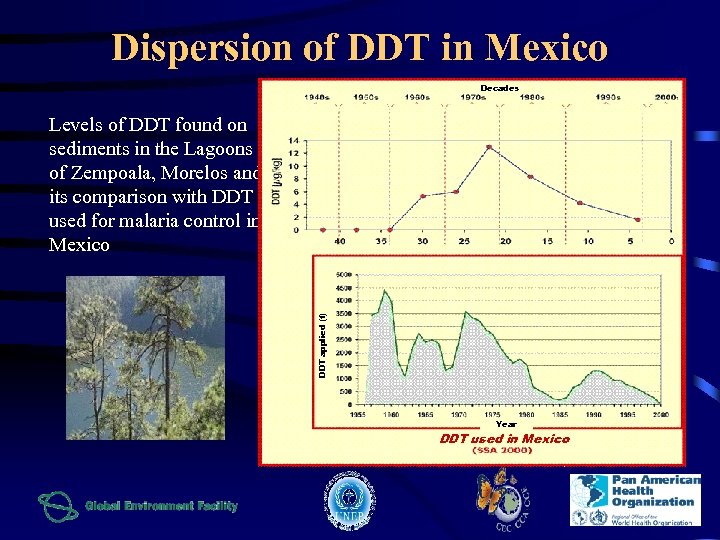
Dispersion of DDT in Mexico Decades DDT applied (t) Levels of DDT found on sediments in the Lagoons of Zempoala, Morelos and its comparison with DDT used for malaria control in Mexico Year DDT used in Mexico
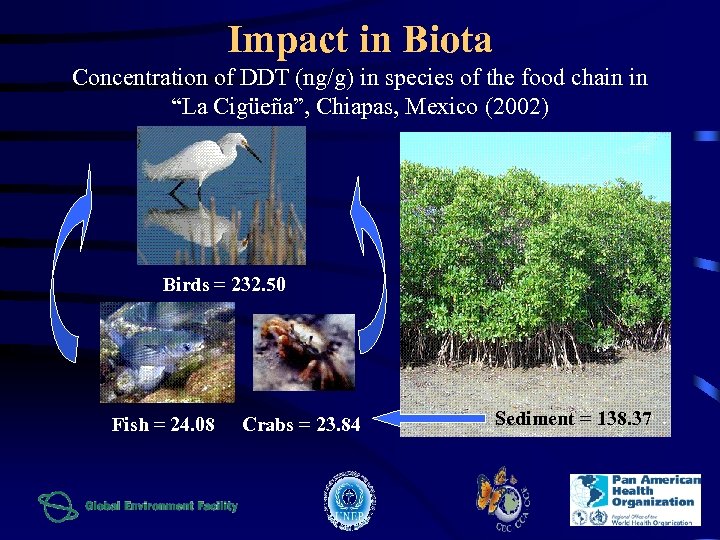
Impact in Biota Concentration of DDT (ng/g) in species of the food chain in “La Cigüeña”, Chiapas, Mexico (2002) Birds = 232. 50 Fish = 24. 08 Crabs = 23. 84 Sediment = 138. 37
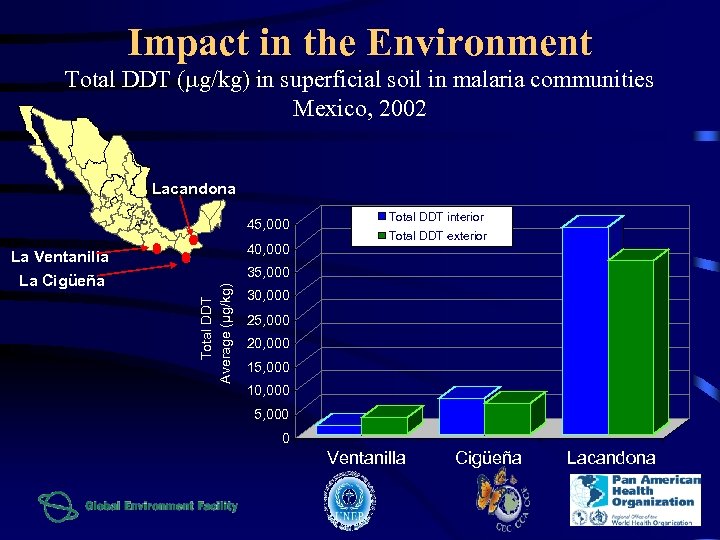
Impact in the Environment Total DDT ( g/kg) in superficial soil in malaria communities Mexico, 2002 Lacandona 45, 000 Total DDT exterior 35, 000 Total DDT Average (µg/kg) La Ventanilla La Cigüeña 40, 000 Total DDT interior 30, 000 25, 000 20, 000 15, 000 10, 000 5, 000 0 Ventanilla Cigüeña Lacandona
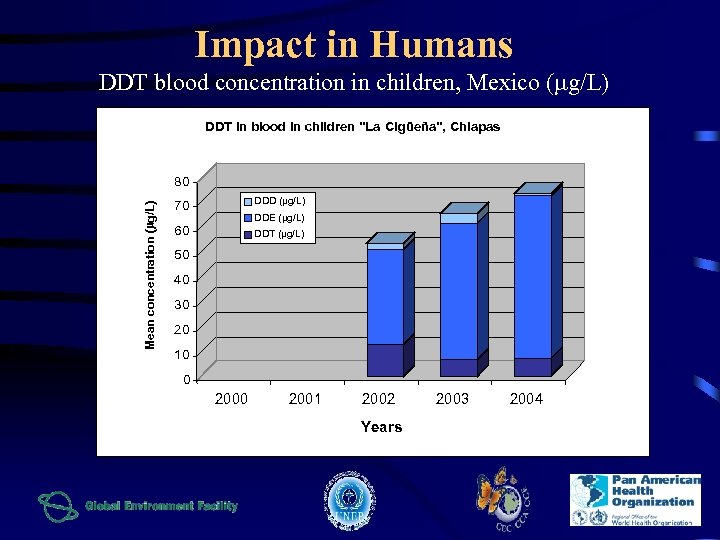
Impact in Humans DDT blood concentration in children, Mexico ( g/L) DDT in blood in children "La Cigüeña", Chiapas Mean concentration ( g/L) 80 DDD (µg/L) 70 DDE (µg/L) 60 DDT (µg/L) 50 40 30 20 10 0 2001 2002 Years 2003 2004
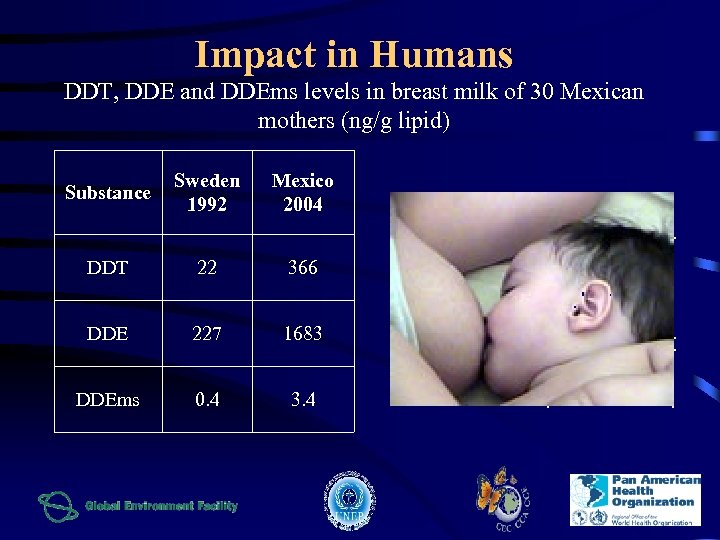
Impact in Humans DDT, DDE and DDEms levels in breast milk of 30 Mexican mothers (ng/g lipid) Substance Sweden 1992 Mexico 2004 DDT 22 366 DDE 227 1683 DDEms 0. 4 3. 4
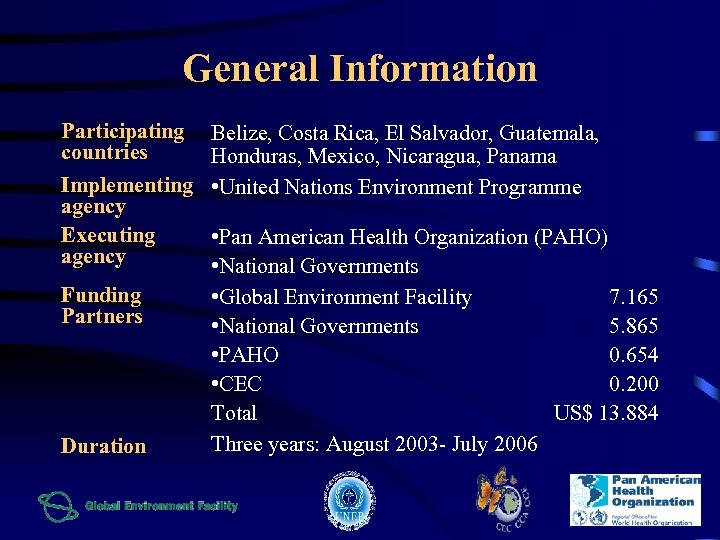
General Information Participating countries Implementing agency Executing agency Funding Partners Duration Belize, Costa Rica, El Salvador, Guatemala, Honduras, Mexico, Nicaragua, Panama • United Nations Environment Programme • Pan American Health Organization (PAHO) • National Governments • Global Environment Facility 7. 165 • National Governments 5. 865 • PAHO 0. 654 • CEC 0. 200 Total US$ 13. 884 Three years: August 2003 - July 2006
Overall Objective • To demonstrate that methods for malaria vector control without DDT or other persistent pesticides are replicable, cost-effective and sustainable thus preventing the reintroduction of DDT in the Region. Components 1. Implementation of demonstration projects and dissemination 2. Strengthening of national institutional capacity to control malaria without DDT 3. Elimination of DDT stockpiles 4. Coordination and management
Focal Areas This Project conforms with the Contaminantbased Operational Program No. 10 and will help demonstrate ways of overcoming barriers to the adoption of best practices that limit contamination of the international waters environment. The proposed activities are also consistent with several provisions with adopted Stockholm Convention on Pops.
Implementation Strategy • To integrate epidemiology with social sciences, entomology, public health, environment and provision of health care. – Epidemiological stratification with risk approach – Elimination of the persistent parasite – Ecological larvae control with social participation – Control of the adult mosquito with inexpensive techniques and low environmental impact – Sustained sanitation educational program aimed at the community
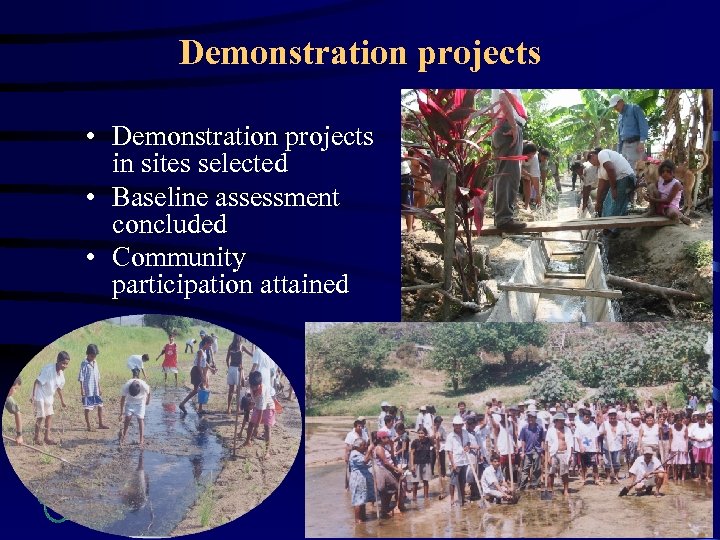
Demonstration projects • Demonstration projects in sites selected • Baseline assessment concluded • Community participation attained
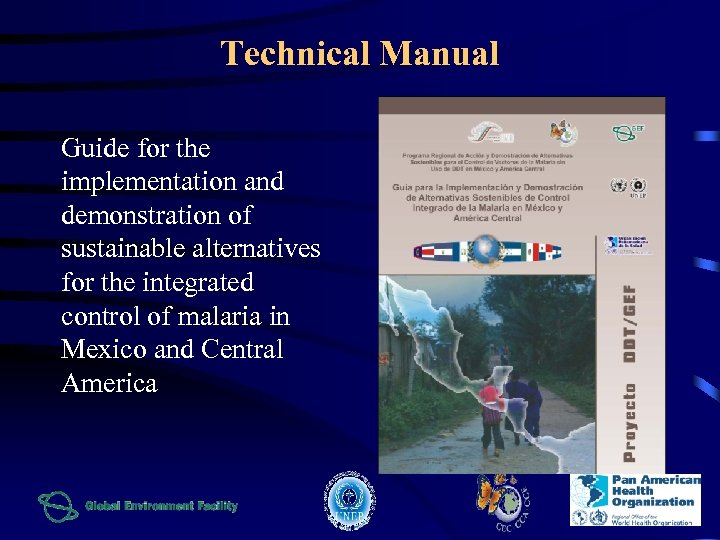
Technical Manual Guide for the implementation and demonstration of sustainable alternatives for the integrated control of malaria in Mexico and Central America
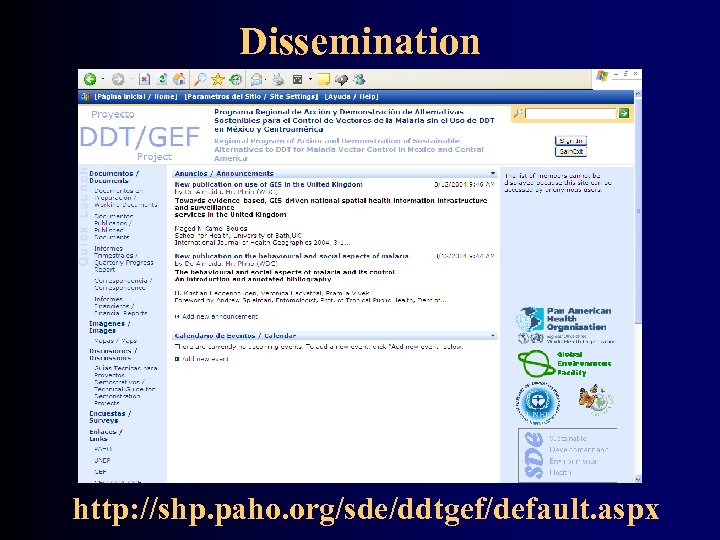
Dissemination http: //shp. paho. org/sde/ddtgef/default. aspx
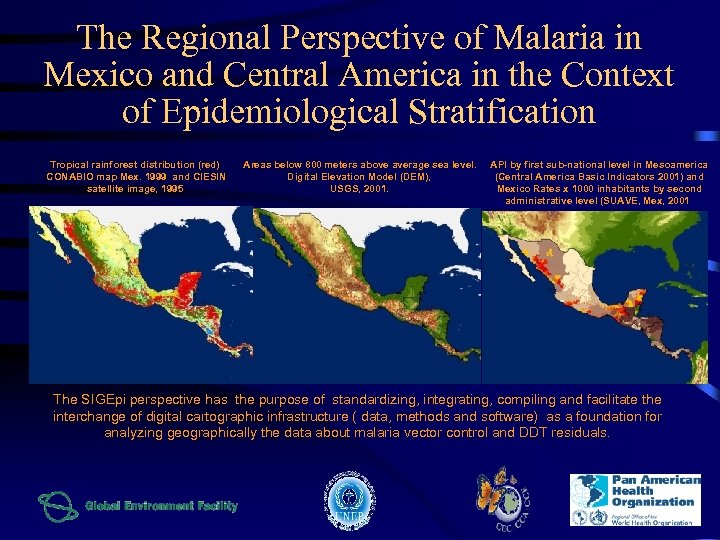
The Regional Perspective of Malaria in Mexico and Central America in the Context of Epidemiological Stratification Tropical rainforest distribution (red) CONABIO map Mex. 1999 and CIESIN satellite image, 1995 Areas below 800 meters above average sea level. Digital Elevation Model (DEM), USGS, 2001. API by first sub-national level in Mesoamerica (Central America Basic Indicators 2001) and Mexico Rates x 1000 inhabitants by second administrative level (SUAVE, Mex, 2001) The SIGEpi perspective has the purpose of standardizing, integrating, compiling and facilitate the interchange of digital cartographic infrastructure ( data, methods and software) as a foundation for analyzing geographically the data about malaria vector control and DDT residuals.
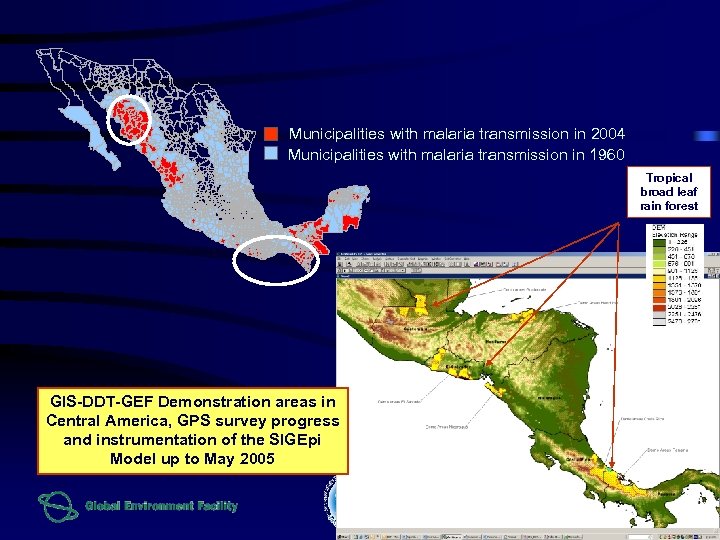
Municipalities with malaria transmission in 2004 Municipalities with malaria transmission in 1960 Tropical broad leaf rain forest GIS-DDT-GEF Demonstration areas in Central America, GPS survey progress and instrumentation of the SIGEpi Model up to May 2005
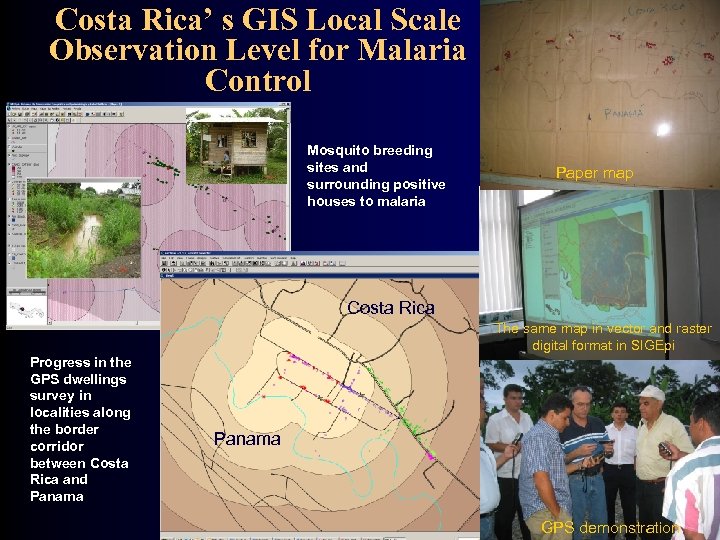
Costa Rica’ s GIS Local Scale Observation Level for Malaria Control Mosquito breeding sites and surrounding positive houses to malaria Paper map Costa Rica The same map in vector and raster digital format in SIGEpi Progress in the GPS dwellings survey in localities along the border corridor between Costa Rica and Panama GPS demonstration
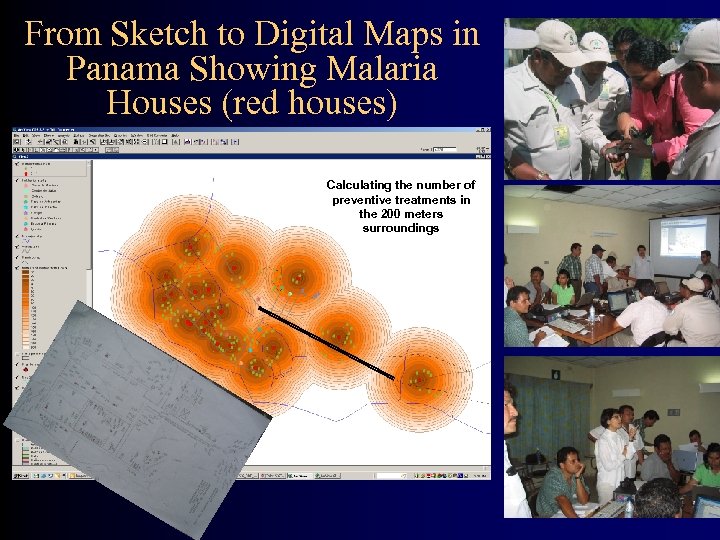
From Sketch to Digital Maps in Panama Showing Malaria Houses (red houses) Calculating the number of preventive treatments in the 200 meters surroundings
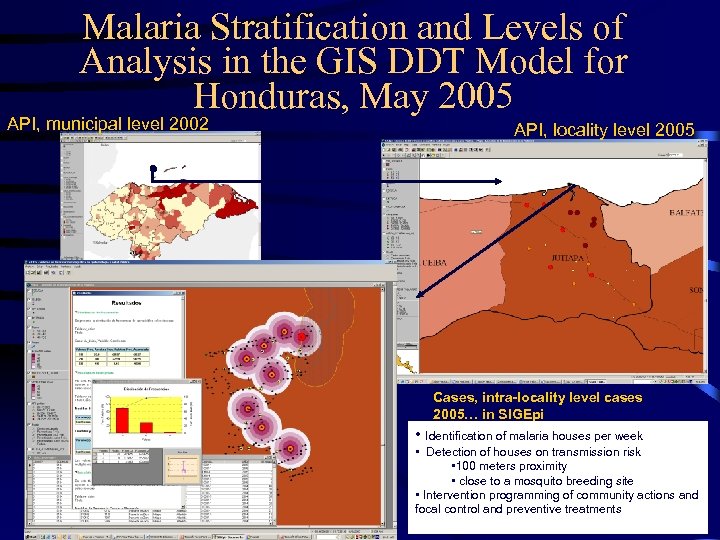
Malaria Stratification and Levels of Analysis in the GIS DDT Model for Honduras, May 2005 API, municipal level 2002 API, locality level 2005 Cases, intra-locality level cases 2005… in SIGEpi • Identification of malaria houses per week • Detection of houses on transmission risk • 100 meters proximity • close to a mosquito breeding site • Intervention programming of community actions and focal control and preventive treatments
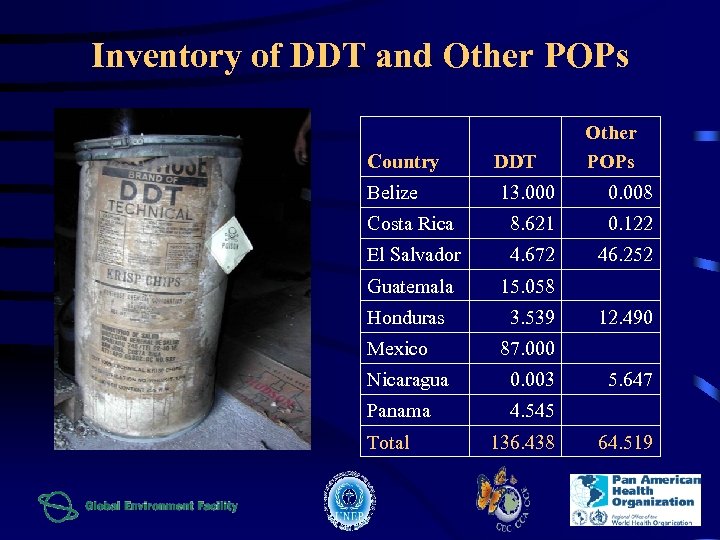
Inventory of DDT and Other POPs Country DDT Belize 13. 000 0. 008 Costa Rica 8. 621 0. 122 El Salvador 4. 672 46. 252 Guatemala 15. 058 Honduras 3. 539 Mexico 12. 490 87. 000 Nicaragua 0. 003 Panama 4. 545 Total 136. 438 5. 647 64. 519
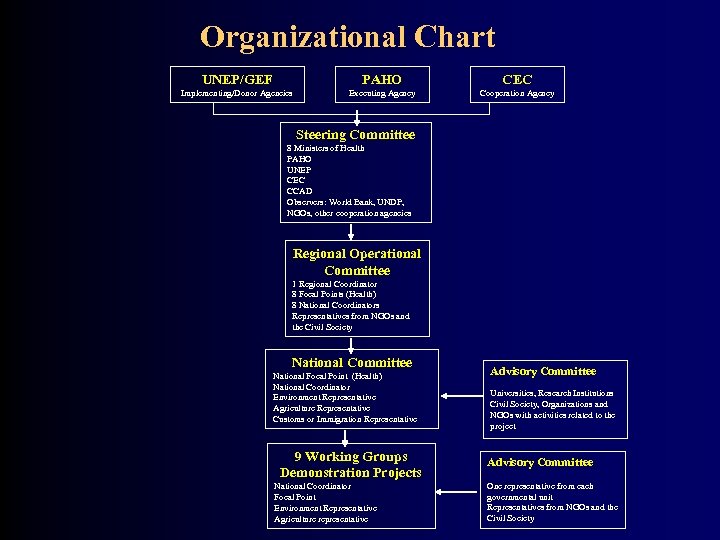
Organizational Chart UNEP/GEF PAHO CEC Implementing/Donor Agencies Executing Agency Cooperation Agency Steering Committee 8 Ministers of Health PAHO UNEP CEC CCAD Observers: World Bank, UNDP, NGOs, other cooperation agencies Regional Operational Committee 1 Regional Coordinator 8 Focal Points (Health) 8 National Coordinators Representatives from NGOs and the Civil Society National Committee National Focal Point (Health) National Coordinator Environment Representative Agriculture Representative Customs or Immigration Representative 9 Working Groups Demonstration Projects National Coordinator Focal Point Environment Representative Agriculture representative Advisory Committee Universities, Research Institutions Civil Society, Organizations and NGOs with activities related to the project Advisory Committee One representative from each governmental unit Representatives from NGOs and the Civil Society
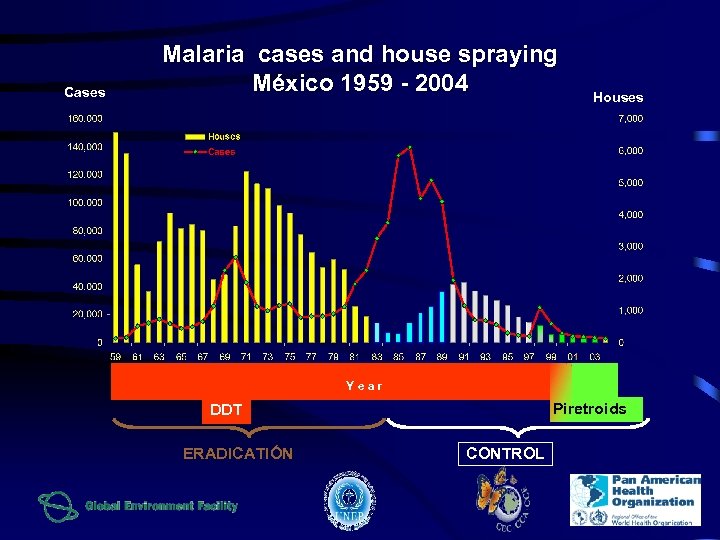
Cases Malaria cases and house spraying México 1959 - 2004 Houses Year Piretroids DDT ERADICATIÓN CONTROL
Скачать презентацию Regional Program of Action and Demonstration of Sustainable
043db54beca757851be9a2dcc6899915.ppt