


 Скачать презентацию Regional Inequalities in Small Countries Determinants and
918572e6c00371228aba1027915869f3.ppt
- Количество слайдов: 30
 Regional Inequalities in Small Countries – Determinants and Measurement Boris A. Portnov* & Daniel Felsenstein** * Haifa University; **Hebrew University of Jerusalem 5/17/2005 Annual Conference of Israel Regional Science Association – June 21 st, 2005, Haifa University 1
 Research questions: • Can we expect small countries to have smaller regional disparities? • What are the main factors affecting the extent of regional disparities in small countries? • Lastly, do small countries require specific inequality measurement, as opposed to their larger counterparts? 2
 Popular belief “small states … succeeded in spreading the fruits of economic growth more widely. . . than the larger states at comparable levels of income per capita” Simon Kuznets (1960) “…income is distributed more equally … in the Scandinavian countries and Switzerland than say in France, Germany or even the United States…. These smaller countries have no …large regions like our South with a per capita income distinctly lower than the rest of the country” (ibid. ) 3
 “…in small developed countries there seems to be less inequality in income distribution than in large ones” (Streeten, 1993) “…if inequality between regions in a country is a major source of inequality between households, then one would expect large countries to have greater regional diversity and hence higher levels of inequality” (Perkins and Syrquin, 1989) 4
 Regional growth theories • Neo-classical growth theory (NGT): competitive forces and interregional migration equalize differences and factor prices across regions and lead to more even regional development, specifically in a small country (CONVERGENCE); • New economic geography (NEG): the uneven concentration of production is sustained by circular production linkages and may become increasingly entrenched over time (DIVERGENCE). 5
 Empirical evidence Much of the evidence, in both directions, is based on large countries such as the U. S. A. and U. K. or areas within a supra-national economy such as the EU (Armstrong 1995, Le Gallo and Ertur 2003, Tsionas 2000 etc) 6
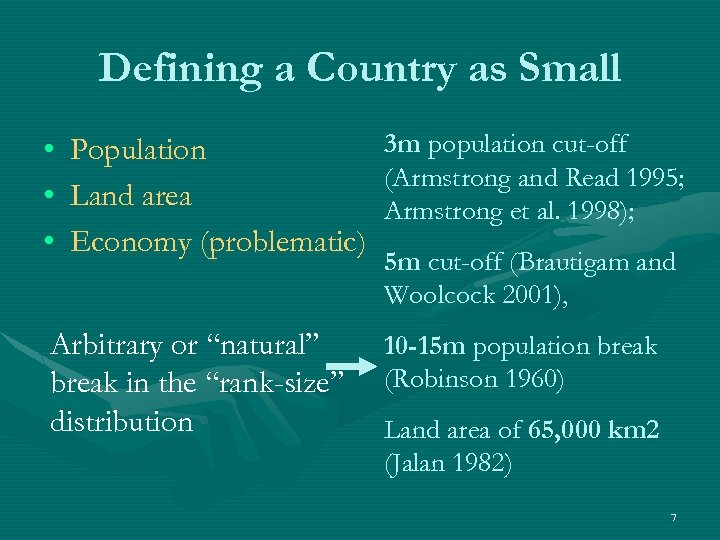 Defining a Country as Small • • • 3 m population cut-off Population (Armstrong and Read 1995; Land area Armstrong et al. 1998); Economy (problematic) Arbitrary or “natural” break in the “rank-size” distribution 5 m cut-off (Brautigam and Woolcock 2001), 10 -15 m population break (Robinson 1960) Land area of 65, 000 km 2 (Jalan 1982) 7
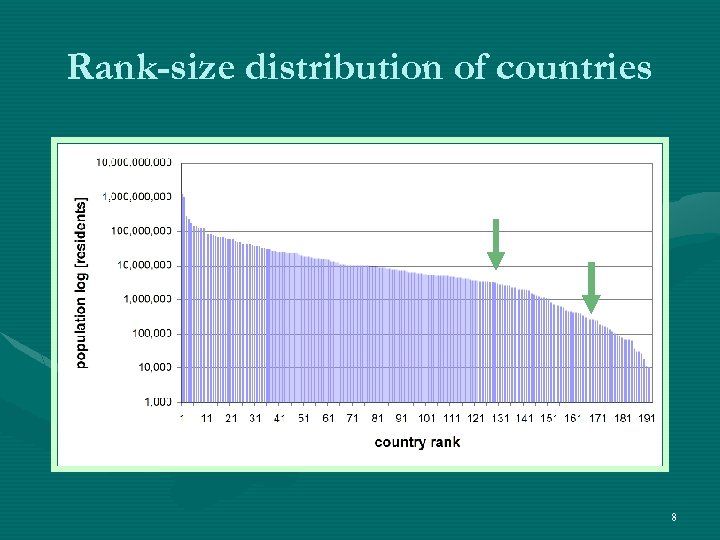 Rank-size distribution of countries 8
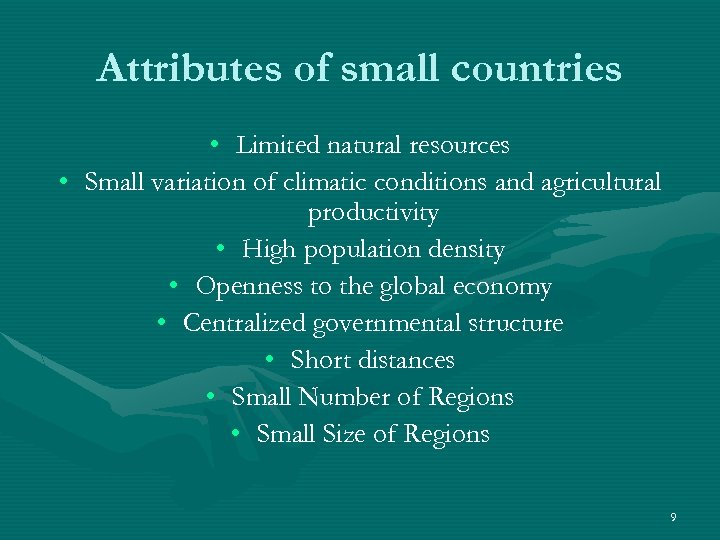 Attributes of small countries • Limited natural resources • Small variation of climatic conditions and agricultural productivity • High population density • Openness to the global economy • Centralized governmental structure • Short distances • Small Number of Regions • Small Size of Regions 9
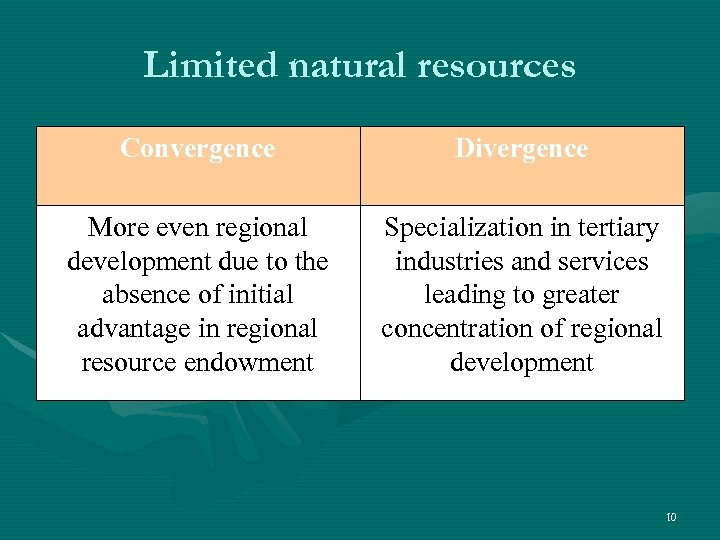 Limited natural resources Convergence Divergence More even regional development due to the absence of initial advantage in regional resource endowment Specialization in tertiary industries and services leading to greater concentration of regional development 10
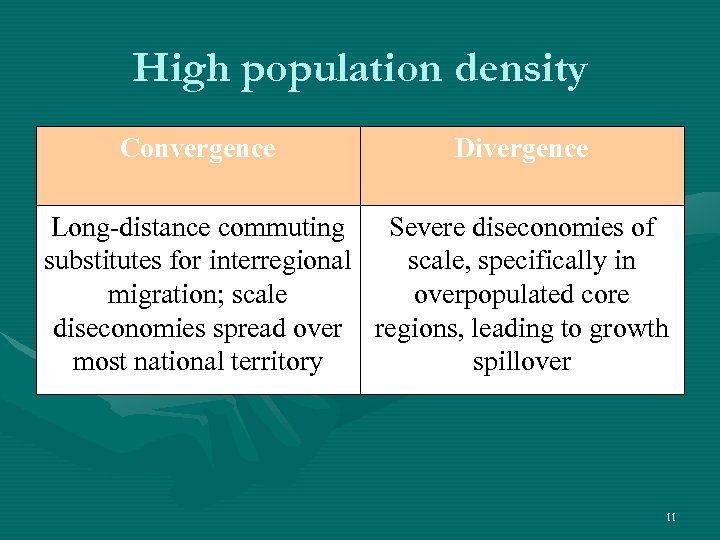 High population density Convergence Divergence Long-distance commuting Severe diseconomies of substitutes for interregional scale, specifically in migration; scale overpopulated core diseconomies spread over regions, leading to growth most national territory spillover 11
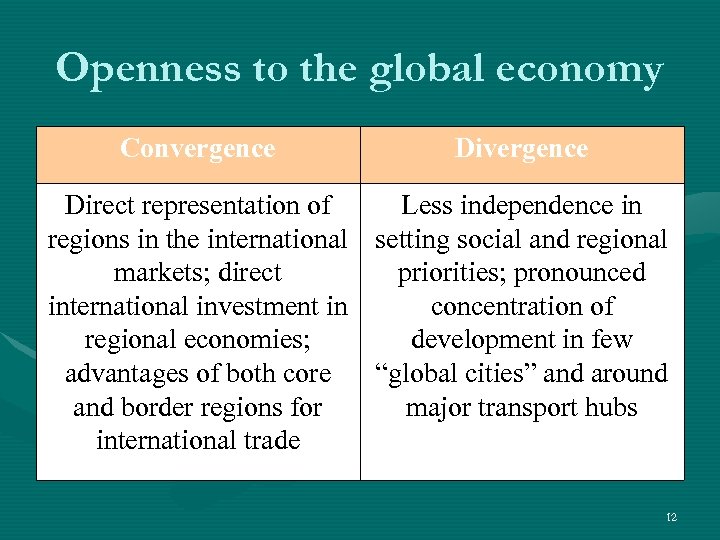 Openness to the global economy Convergence Direct representation of Less independence in regions in the international setting social and regional markets; direct priorities; pronounced international investment in concentration of regional economies; development in few advantages of both core “global cities” and around and border regions for major transport hubs international trade 12
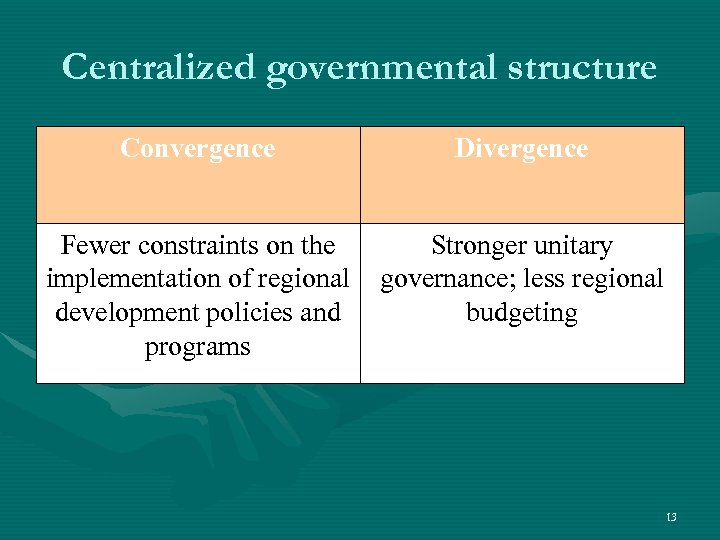 Centralized governmental structure Convergence Divergence Fewer constraints on the Stronger unitary implementation of regional governance; less regional development policies and budgeting programs 13
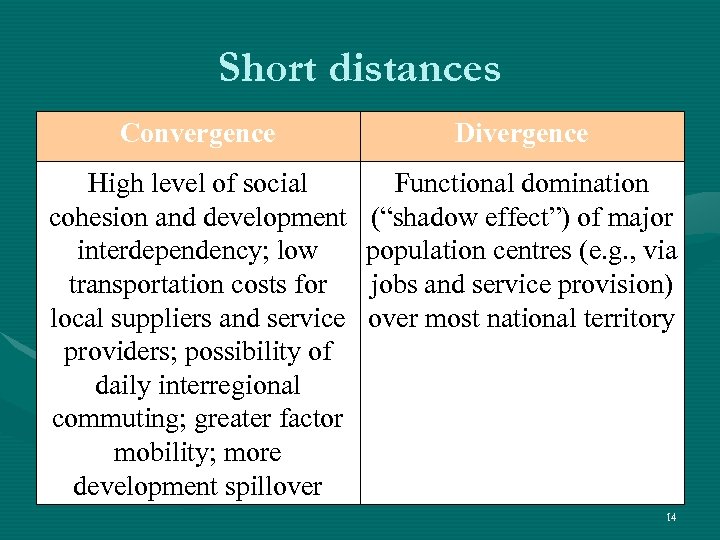 Short distances Convergence Divergence High level of social cohesion and development interdependency; low transportation costs for local suppliers and service providers; possibility of daily interregional commuting; greater factor mobility; more development spillover Functional domination (“shadow effect”) of major population centres (e. g. , via jobs and service provision) over most national territory 14
 Preliminary conclusion • There is no reason to expect a priory that small countries may exhibit smaller regional disparities than their larger counterparts. Depending on the local setting (e. g. , agglomeration economies, openness to external trade, government structure, and practicability of daily commuting), the outcome of regional development may be indeterminate, leading in either direction - both towards regional divergence and convergence. 15
 Empirical test • Dependent variables - the population weighted coefficient of variation of regional GDPpc, or Williamson Index (WI) and ratio of regional GDPpc (max/min); • Explanatory variables - Land area in 1, 000 km 2 (Land); GDPpc, $1000 US in PPS terms (GDP); the coefficient of variation of the population sizes of a country's regions (Pop_Distrib); population size of a country, million residents (Pop); : a country-size dummy (1 for a small country, and 0 otherwise (Smallness); • Sample – 22 European countries of different size (NUTS II regions or their equivalents) 16
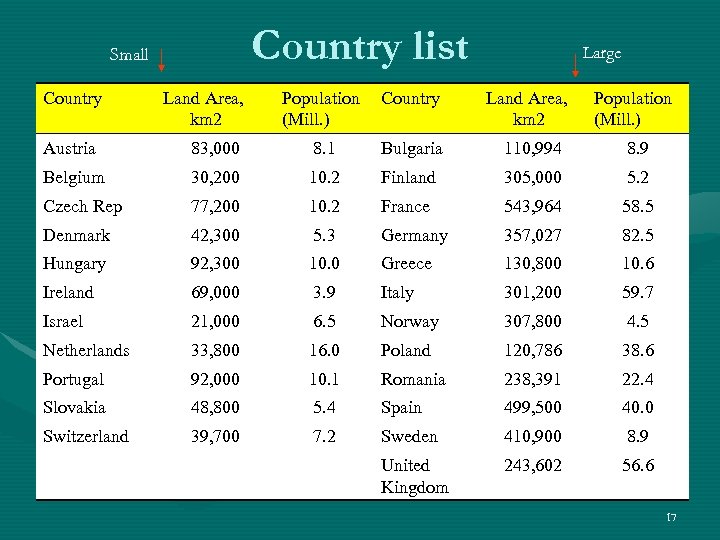 Country list Small Country Land Area, km 2 Population Country (Mill. ) Large Land Area, km 2 Population (Mill. ) Austria 83, 000 8. 1 Bulgaria 110, 994 8. 9 Belgium 30, 200 10. 2 Finland 305, 000 5. 2 Czech Rep 77, 200 10. 2 France 543, 964 58. 5 Denmark 42, 300 5. 3 Germany 357, 027 82. 5 Hungary 92, 300 10. 0 Greece 130, 800 10. 6 Ireland 69, 000 3. 9 Italy 301, 200 59. 7 Israel 21, 000 6. 5 Norway 307, 800 4. 5 Netherlands 33, 800 16. 0 Poland 120, 786 38. 6 Portugal 92, 000 10. 1 Romania 238, 391 22. 4 Slovakia 48, 800 5. 4 Spain 499, 500 40. 0 Switzerland 39, 700 7. 2 Sweden 410, 900 8. 9 United Kingdom 243, 602 56. 6 17
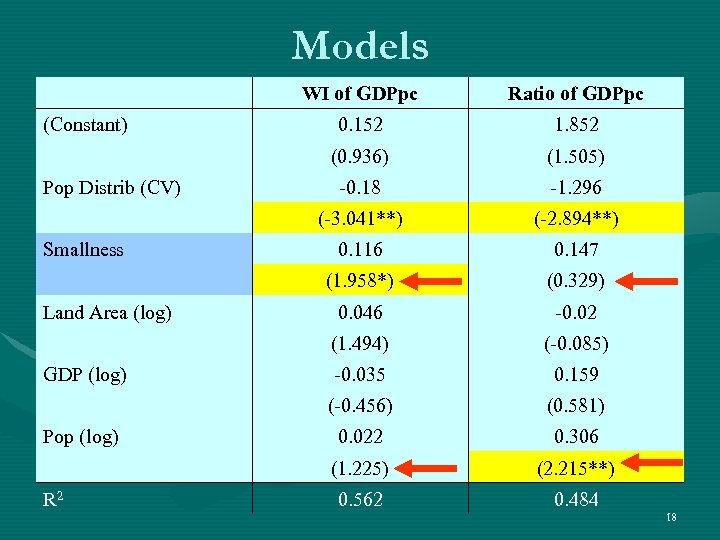 Models R 2 -1. 296 (-2. 894**) 0. 116 0. 147 (0. 329) 0. 046 -0. 02 (-0. 085) -0. 035 0. 159 (0. 581) 0. 022 0. 306 (1. 225) Pop (log) -0. 18 (-0. 456) GDP (log) (1. 505) (1. 494) Land Area (log) 1. 852 (1. 958*) Smallness 0. 152 (-3. 041**) Pop Distrib (CV) Ratio of GDPpc (0. 936) (Constant) WI of GDPpc (2. 215**) 0. 562 0. 484 18
 Conclusion • In general, the analysis supports our initial assumption that small countries do not necessarily have smaller regional gaps than their larger counterparts. To the contrary, smallness (i. e. the combination of small population size and small land area) tends to result, ceteris paribus, in larger regional gaps. 19
 Measurement issues • The commonly used inequality indices (WI, GINI, etc. ) are abstract mathematical formulas. Therefore, one can assume that they can be applied to both large and small countries alike. • Is this assumption correct? 20
 Characteristic features of small countries: • Smaller number of regions than a large and more populous nation (e. g. , 47 prefectures in Japan vs. 6 districts in Israel); • Varying population sizes of regions (small countries are often mono-centric with a clearly emphasized urban core); • Possibility of rapid change in the parameter distribution 21
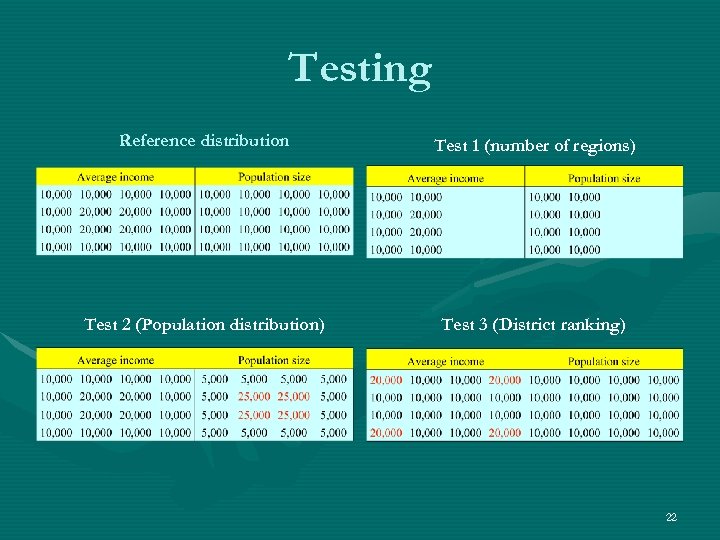 Testing Reference distribution Test 1 (number of regions) Test 2 (Population distribution) Test 3 (District ranking) 22
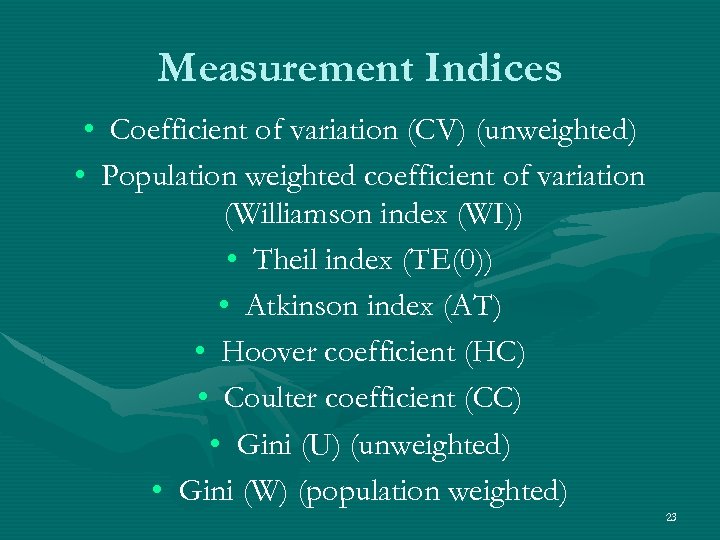 Measurement Indices • Coefficient of variation (CV) (unweighted) • Population weighted coefficient of variation (Williamson index (WI)) • Theil index (TE(0)) • Atkinson index (AT) • Hoover coefficient (HC) • Coulter coefficient (CC) • Gini (U) (unweighted) • Gini (W) (population weighted) 23
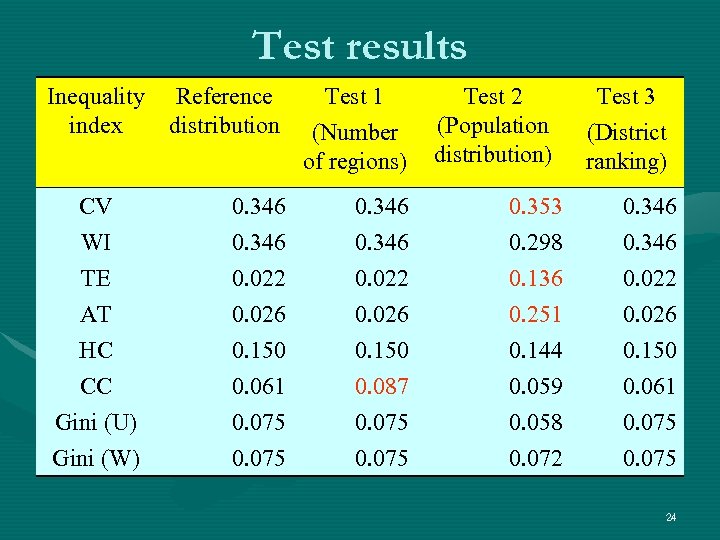 Test results Inequality Reference index distribution Test 1 (Number of regions) Test 2 (Population distribution) Test 3 (District ranking) CV 0. 346 0. 353 0. 346 WI TE AT HC CC Gini (U) Gini (W) 0. 346 0. 022 0. 026 0. 150 0. 061 0. 075 0. 346 0. 022 0. 026 0. 150 0. 087 0. 075 0. 298 0. 136 0. 251 0. 144 0. 059 0. 058 0. 072 0. 346 0. 022 0. 026 0. 150 0. 061 0. 075 24
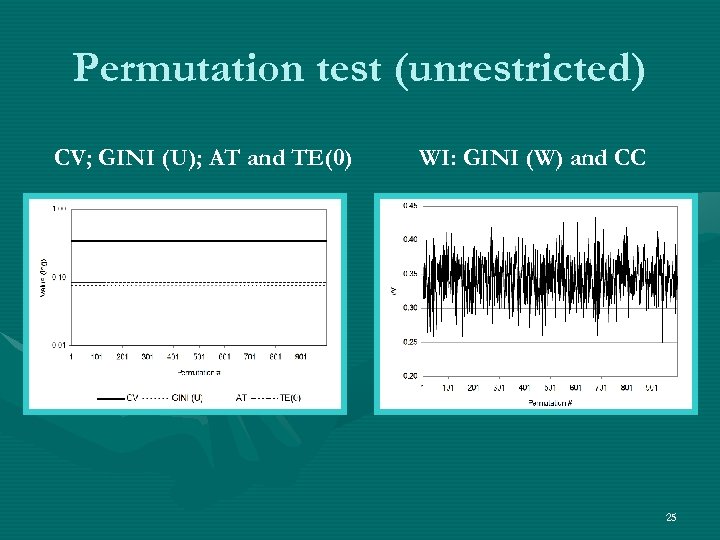 Permutation test (unrestricted) CV; GINI (U); AT and TE(0) WI: GINI (W) and CC 25
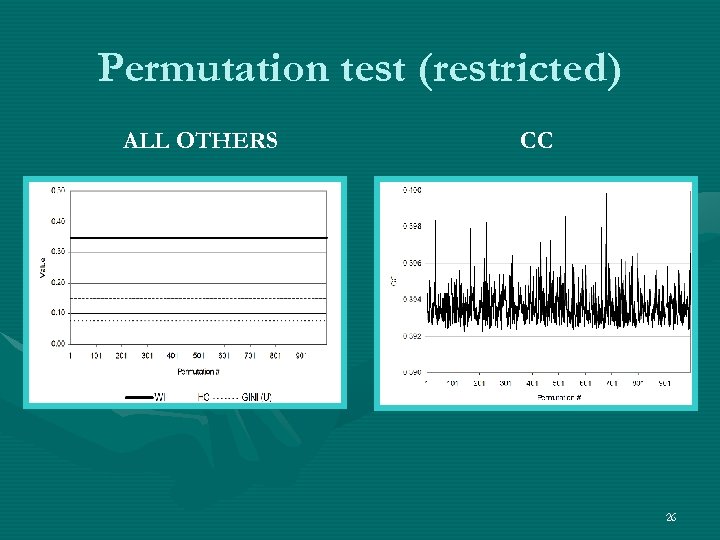 Permutation test (restricted) ALL OTHERS CC 26
 Conclusions A small country may differ from a country of larger size in three fundamental features: • First, it is likely to have a relatively small number of regional divisions. • Second, its regional divisions are likely to vary considerably in their population sizes. • Lastly, regions of a small country may rapidly change rank-order positions in the country-wide hierarchy, by changing their attributes (e. g. , population and incomes). 27
 • In order to formalize these distinctions, we designed a number of simple empirical tests, in which income and population distributions, presumably characteristic for small countries, were compared with the “reference” distribution, assumed to fit better a country of a larger size. In the latter (reference) distribution, the population was distributed evenly across regional divisions and assumed to be static. 28
 • Somewhat surprisingly, none of the indices we tested appeared to pass all the tests, meaning that they may produce (at least theoretically) misleading estimates if used for small countries and compared to countries of bigger size. • Although further studies on the performance of different inequality indices may be needed to verify the generality of our observations, the present analysis clearly cautions against indiscriminate use of inequality indices for regional analysis and comparison. 29
 Catch-22 • There are big and small countries: • Small countries are like big countries, but smaller; • Everything is small in small countries, but inequalities… 30