 Скачать презентацию Regional Distribution of Orofacial Cleft Defects in Wisconsin
0ba4488316278394e4f444d1dbf589c3.ppt
- Количество слайдов: 18



Regional Distribution of Orofacial Cleft Defects in Wisconsin Allison Derrick Masters of Public Health Candidate UW School of Medicine and Public Health
Acknowledgements • Delora Mount, MD; UW Plastic and Reconstructive Surgery • Glen Leverson, Ph. D; Biostatistics • Henry Anderson, MD, MPH; DHFS • Kristen Malecki, Ph. D; DHFS • Liz Oftedahl, MPH; DHFS • Laura Ninneman, DHFS
Outline • • • Background Objectives Methods Results Discussion Conclusion
Background
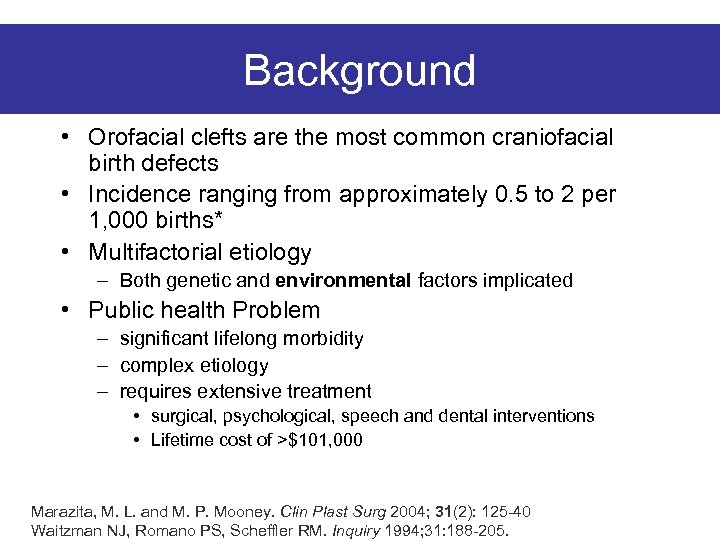
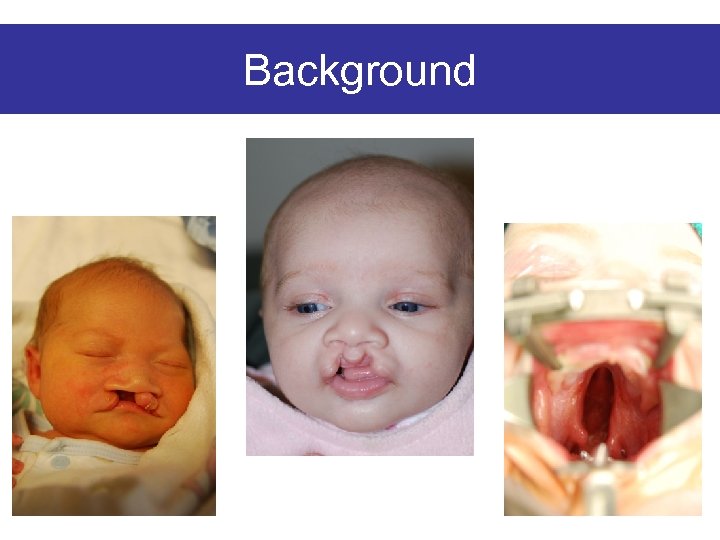
Background • Orofacial clefts are the most common craniofacial birth defects • Incidence ranging from approximately 0. 5 to 2 per 1, 000 births* • Multifactorial etiology – Both genetic and environmental factors implicated • Public health Problem – significant lifelong morbidity – complex etiology – requires extensive treatment • surgical, psychological, speech and dental interventions • Lifetime cost of >$101, 000 Marazita, M. L. and M. P. Mooney. Clin Plast Surg 2004; 31(2): 125 -40 Waitzman NJ, Romano PS, Scheffler RM. Inquiry 1994; 31: 188 -205.
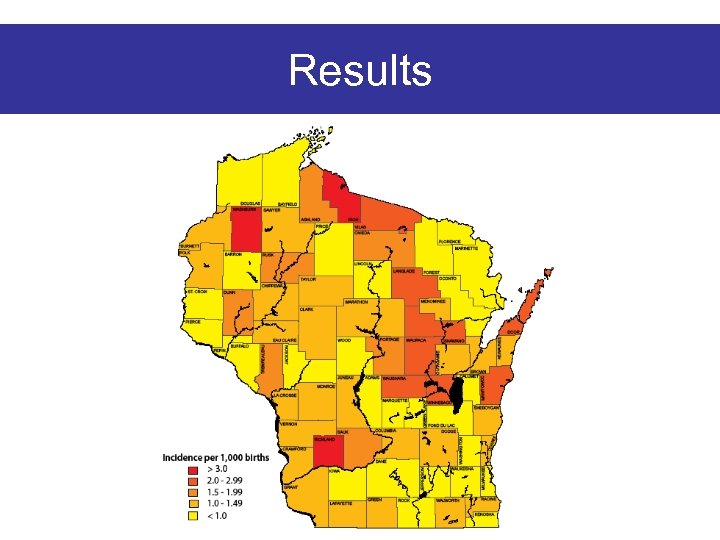
Objectives • Perform the first analysis of the distribution of orofacial cleft births in Wisconsin • Evaluate the incidence of orofacial cleft births in the Fox River Valley with respect to the rest of Wisconsin • Examine the geographical distribution for potential associations between environmental factors and orofacial cleft defects
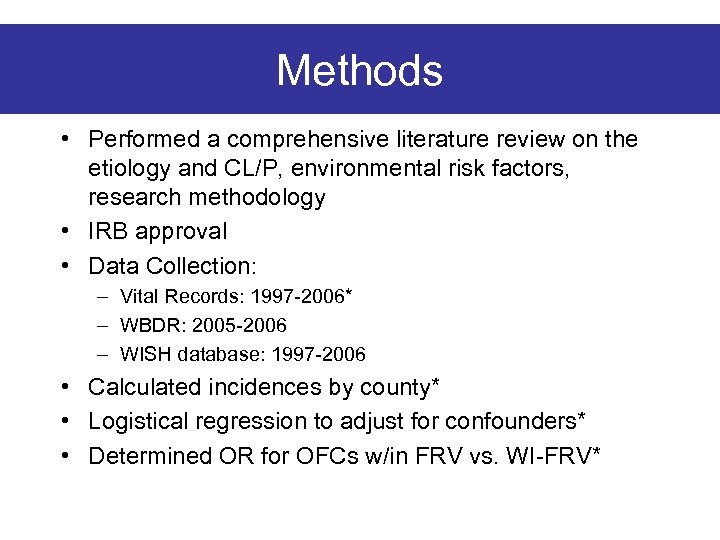
Methods • Performed a comprehensive literature review on the etiology and CL/P, environmental risk factors, research methodology • IRB approval • Data Collection: – Vital Records: 1997 -2006* – WBDR: 2005 -2006 – WISH database: 1997 -2006 • Calculated incidences by county* • Logistical regression to adjust for confounders* • Determined OR for OFCs w/in FRV vs. WI-FRV*
Results
Results
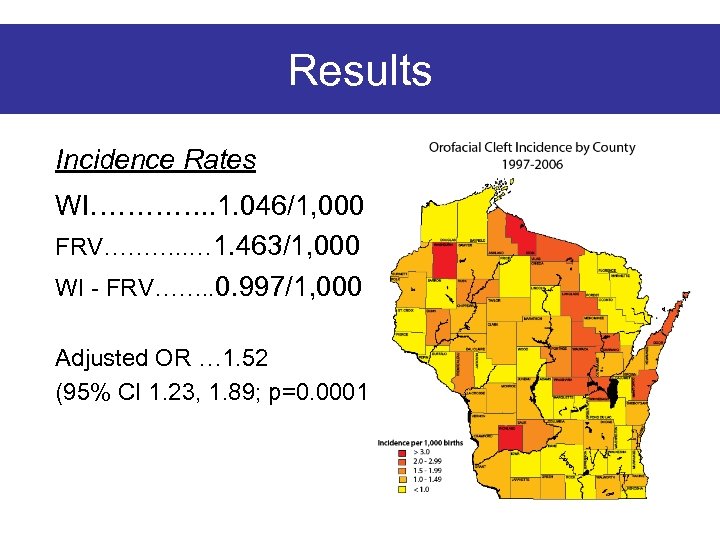
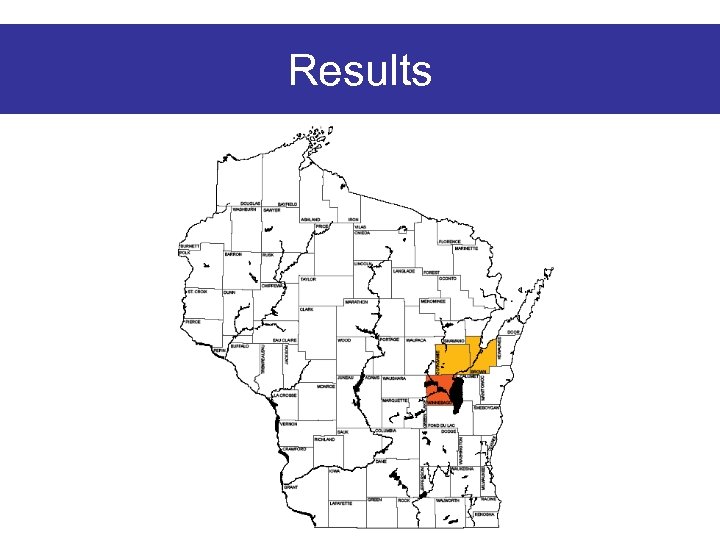
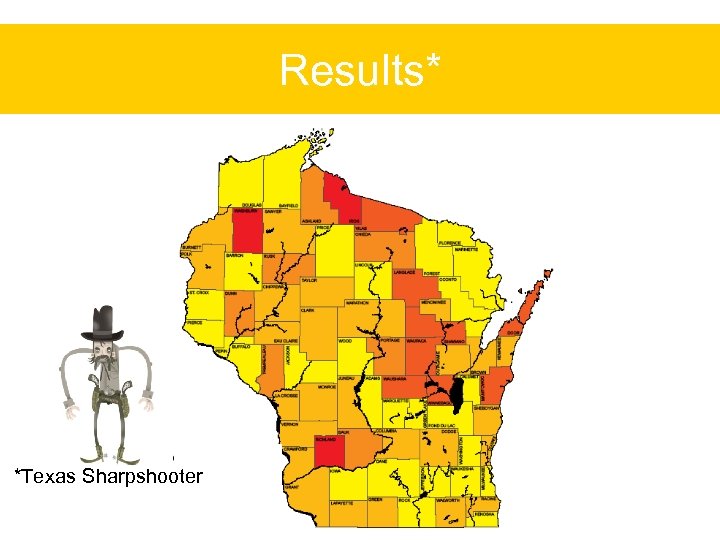
Results Incidence Rates WI…………. . 1. 046/1, 000 FRV………. . … 1. 463/1, 000 WI - FRV……. . 0. 997/1, 000 Adjusted OR … 1. 52 (95% CI 1. 23, 1. 89; p=0. 0001)
Results Demographic Trends • Maternal age - NS • Maternal race - NS • Maternal educational achievement - NS • Maternal smoking status OR 1. 032 (95% CI 1. 017, 1. 048) P-value = 0. 0009
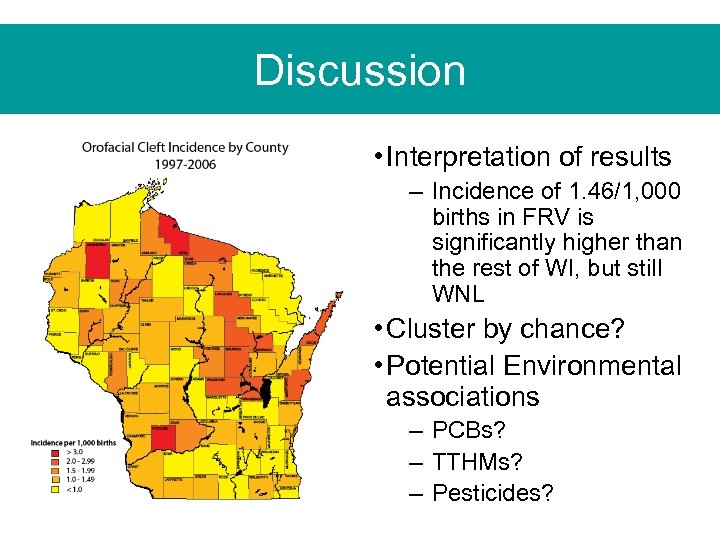
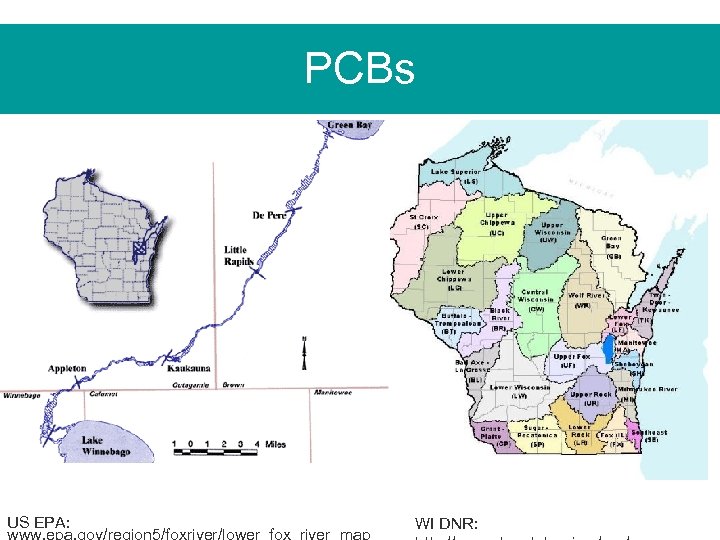
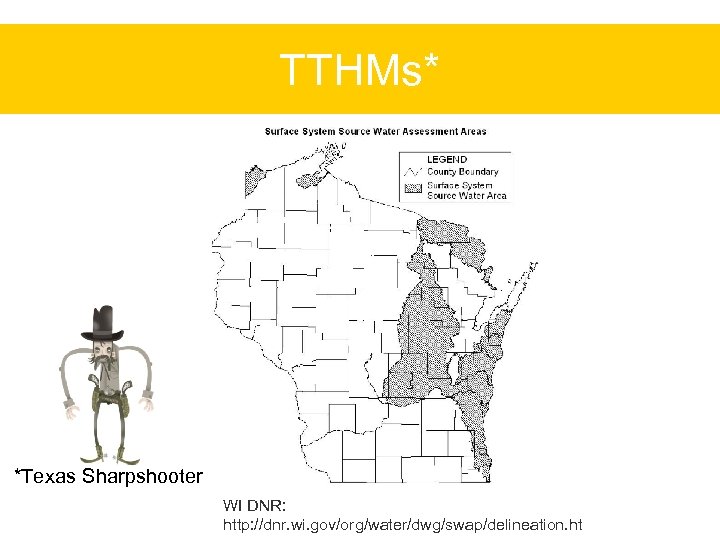
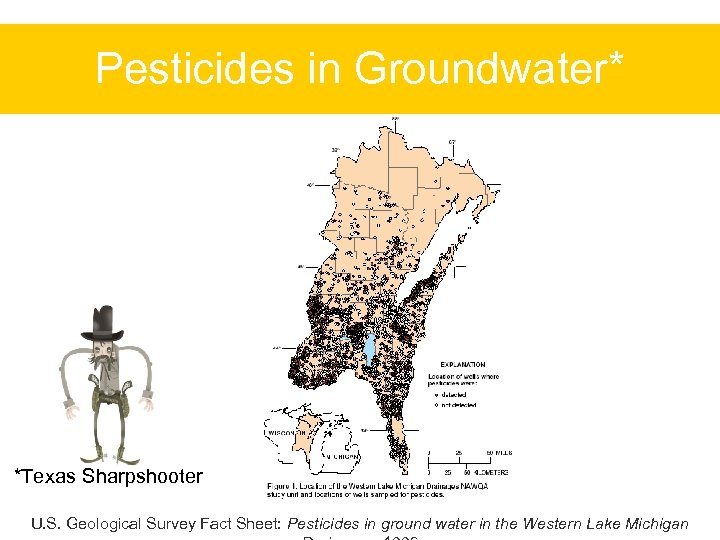
Discussion • Interpretation of results – Incidence of 1. 46/1, 000 births in FRV is significantly higher than the rest of WI, but still WNL • Cluster by chance? • Potential Environmental associations – PCBs? – TTHMs? – Pesticides?
PCBs US EPA: www. epa. gov/region 5/foxriver/lower_fox_river_map WI DNR:
Results* *Texas Sharpshooter
Distribution of Drinking Water from Surface Water TTHMs* Sources *Texas Sharpshooter WI DNR: http: //dnr. wi. gov/org/water/dwg/swap/delineation. ht
Pesticides in Groundwater* *Texas Sharpshooter U. S. Geological Survey Fact Sheet: Pesticides in ground water in the Western Lake Michigan
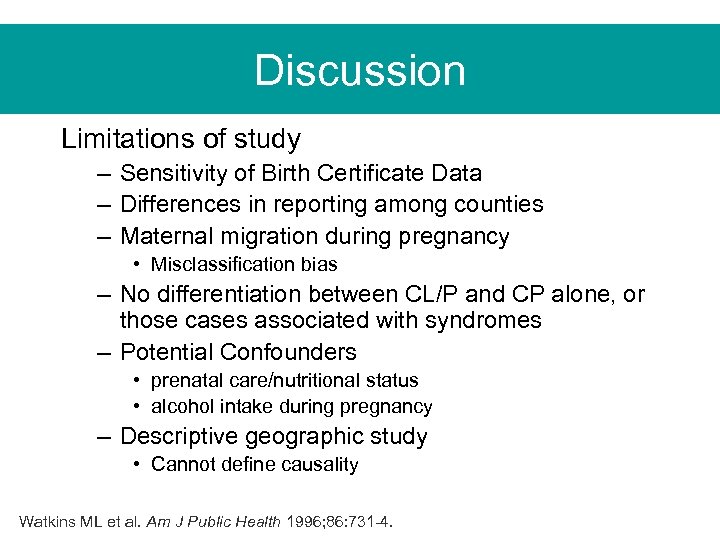
Discussion Limitations of study – Sensitivity of Birth Certificate Data – Differences in reporting among counties – Maternal migration during pregnancy • Misclassification bias – No differentiation between CL/P and CP alone, or those cases associated with syndromes – Potential Confounders • prenatal care/nutritional status • alcohol intake during pregnancy – Descriptive geographic study • Cannot define causality Watkins ML et al. Am J Public Health 1996; 86: 731 -4.
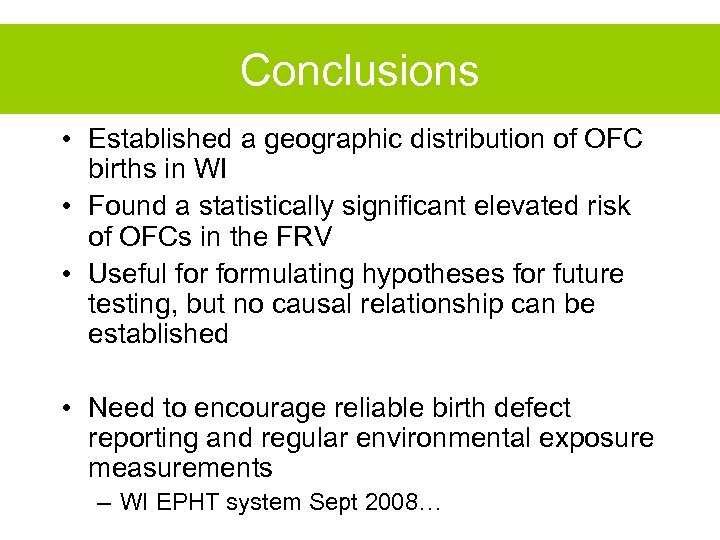
Conclusions • Established a geographic distribution of OFC births in WI • Found a statistically significant elevated risk of OFCs in the FRV • Useful formulating hypotheses for future testing, but no causal relationship can be established • Need to encourage reliable birth defect reporting and regular environmental exposure measurements – WI EPHT system Sept 2008…
Скачать презентацию Regional Distribution of Orofacial Cleft Defects in Wisconsin
0ba4488316278394e4f444d1dbf589c3.ppt