Скачать презентацию Regional climate change scenarios Products and services of
b7c86c998247595f28609934c1b5c706.ppt
- Количество слайдов: 25
 Regional climate change scenarios: Products and services of the South East European Virtual Climate Change Centre Vladimir Djurdjevic South East European Virtual Climate Change Centre
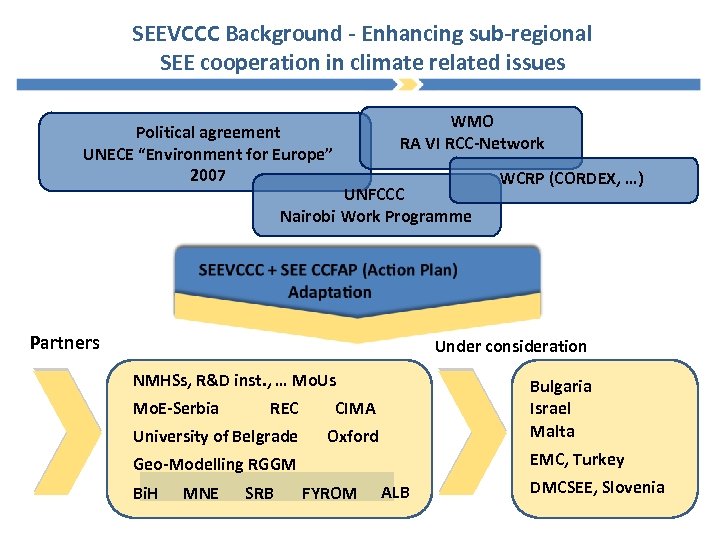 SEEVCCC Background - Enhancing sub-regional SEE cooperation in climate related issues WMO RA VI RCC-Network Political agreement UNECE “Environment for Europe” 2007 UNFCCC Nairobi Work Programme Partners WCRP (CORDEX, …) Under consideration NMHSs, R&D inst. , … Mo. Us REC CIMA University of Belgrade Bulgaria Israel Malta Oxford Mo. E-Serbia EMC, Turkey Geo-Modelling RGGM Bi. H MNE SRB FYROM ALB DMCSEE, Slovenia
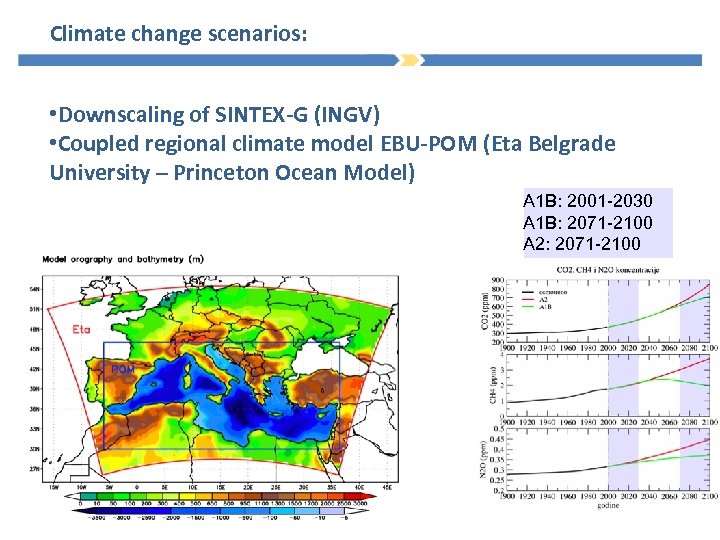 Climate change scenarios: • Downscaling of SINTEX-G (INGV) • Coupled regional climate model EBU-POM (Eta Belgrade University – Princeton Ocean Model) A 1 B: 2001 -2030 A 1 B: 2071 -2100 A 2: 2071 -2100
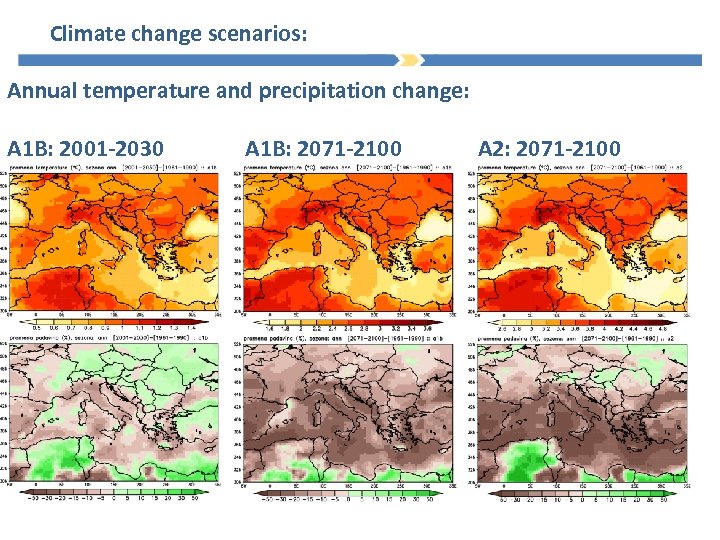 Climate change scenarios: Annual temperature and precipitation change: A 1 B: 2001 -2030 A 1 B: 2071 -2100 A 2: 2071 -2100
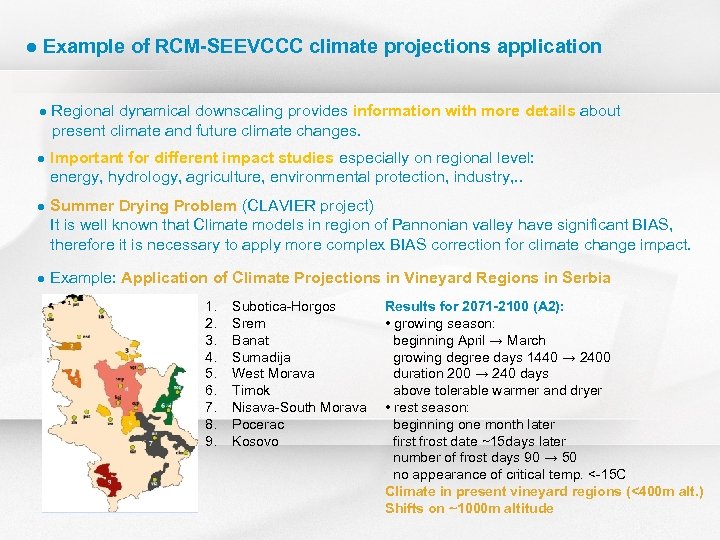 ● Example of RCM-SEEVCCC climate projections application ● Regional dynamical downscaling provides information with more details about present climate and future climate changes. ● Important for different impact studies especially on regional level: energy, hydrology, agriculture, environmental protection, industry, . . ● Summer Drying Problem (CLAVIER project) It is well known that Climate models in region of Pannonian valley have significant BIAS, therefore it is necessary to apply more complex BIAS correction for climate change impact. ● Example: Application of Climate Projections in Vineyard Regions in Serbia 1. 2. 3. 4. 5. 6. 7. 8. 9. Subotica-Horgos Srem Banat Sumadija West Morava Timok Nisava-South Morava Pocerac Kosovo Results for 2071 -2100 (A 2): • growing season: beginning April → March growing degree days 1440 → 2400 duration 200 → 240 days above tolerable warmer and dryer • rest season: beginning one month later first frost date ~15 days later number of frost days 90 → 50 no appearance of critical temp. <-15 C Climate in present vineyard regions (<400 m alt. ) Shifts on ~1000 m altitude
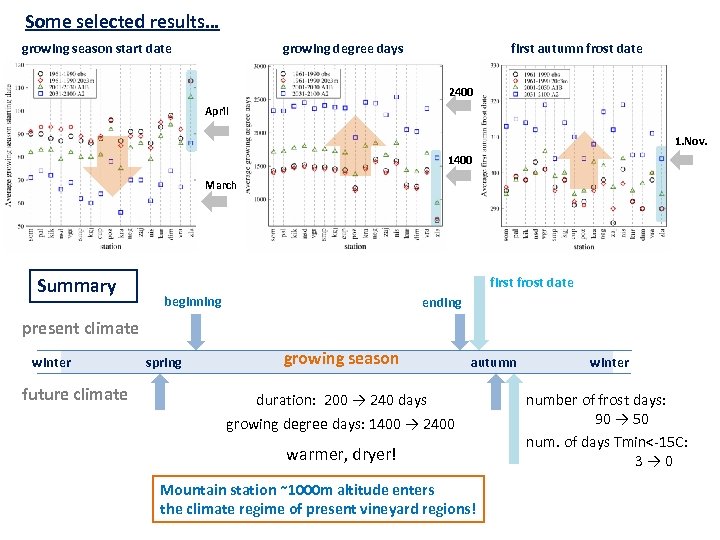 Some selected results… growing season start date growing degree days first autumn frost date 2400 April 1. Nov. 1400 March Summary first frost date beginning ending present climate winter future climate spring growing season autumn duration: 200 → 240 days growing degree days: 1400 → 2400 warmer, dryer! Mountain station ~1000 m altitude enters the climate regime of present vineyard regions! winter number of frost days: 90 → 50 num. of days Tmin<-15 C: 3→ 0
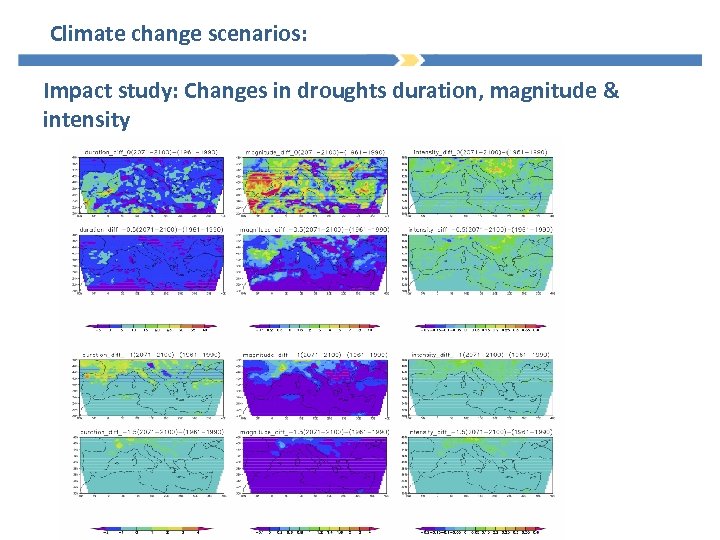 Climate change scenarios: Impact study: Changes in droughts duration, magnitude & intensity
 WMO RA VI-Europe RCC Network SEEVCCC : ● Climate Data Node Lead: KNMI/Netherlands (consortium member SEEVCCC/RHMS-Serbia) South East European gridded model datasets for 1961 -1990 (ready) ● Climate Monitoring Node Lead: DWD/Germany (participate SEEVCCC/RHMS-Serbia) • collecting data from the stations (monthly, 400 -500 stations; main source for data KNMI -ECA&D, other climate bulletins NCDC) • mean temperature and accumulated precipitation, • temperature anomaly and precipitation percent of normal, • all available monthly/three-monthly ● Long Range Forecast Node Lead: Météo-France & ROSHYDROMET (participate SEEVCCC/RHMS-Serbia) Once a month ensemble run of a regional long range forecast - 7 months ahead: dynamical downscaling ECMWF 41 ensemble with RCM-SEEVCCC
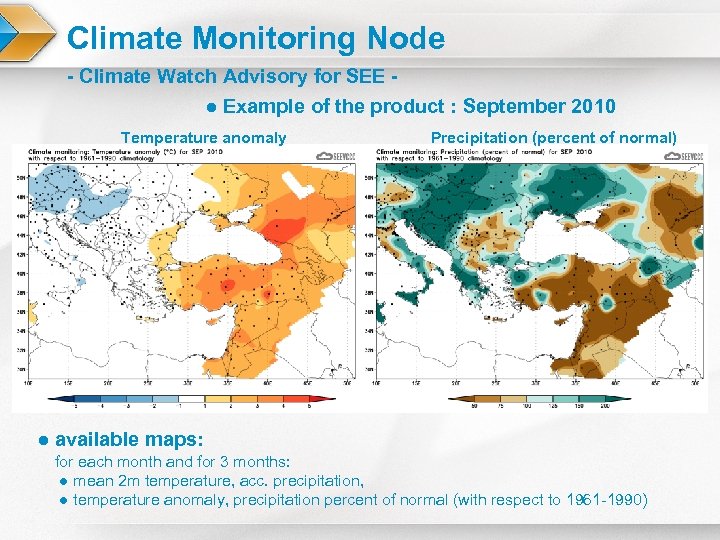 Climate Monitoring Node - Climate Watch Advisory for SEE ● Example of the product : September 2010 Temperature anomaly Precipitation (percent of normal) ● available maps: for each month and for 3 months: ● mean 2 m temperature, acc. precipitation, ● temperature anomaly, precipitation percent of normal (with respect to 1961 -1990)
 Long Range Forecast Node - Seasonal forecast for SEE ● Probabilistic forecast • provides statistical summary of the atmosphere and ocean state in coming season. ● RCM-SEEVCCC LRF (Long Range Forecast – Seasonal Forecast) • regional dynamical downscaling using fully coupled atmosphere-ocean Regional Climate Model • model start: 16 th of each month • forecast duration: 7 months (~215 days) • model resolution: ~35 km atmosphere ; ~20 km ocean • model domain: Euro - Mediterranean region extended toward Caspian Sea • 41 ensemble members • initial and boundary conditions: ECMWF, resolution: 125 km • results prepared for South East European region in form of: mean ensemble maps (mean 2 m temperature, precipitation accumulation, temperature anomaly and precipitation anomaly with respect to CRU data 1961 -1990) for month and three months (season) diagrams (probabilistic forecast of mean monthly temperature and monthly precipitation accumulation for specific place)
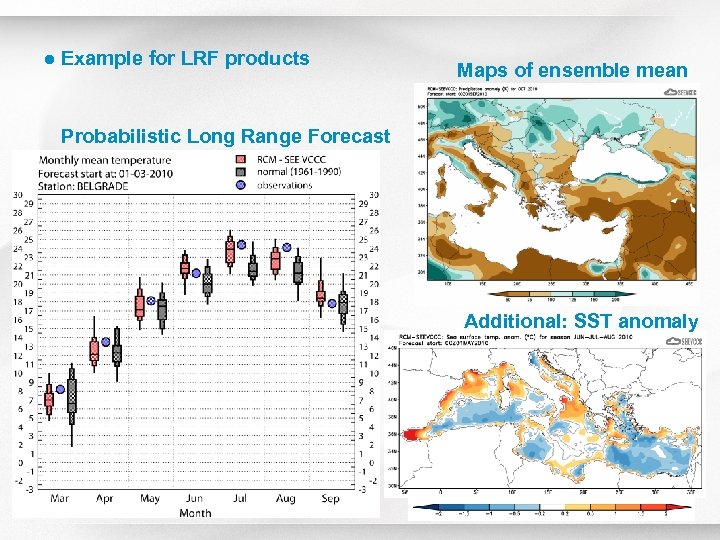 ● Example for LRF products Maps of ensemble mean Probabilistic Long Range Forecast Additional: SST anomaly
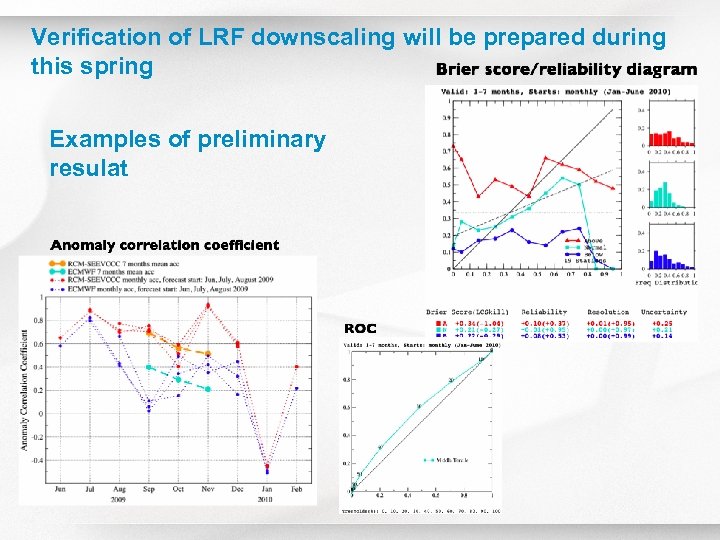 Verification of LRF downscaling will be prepared during this spring Examples of preliminary resulat
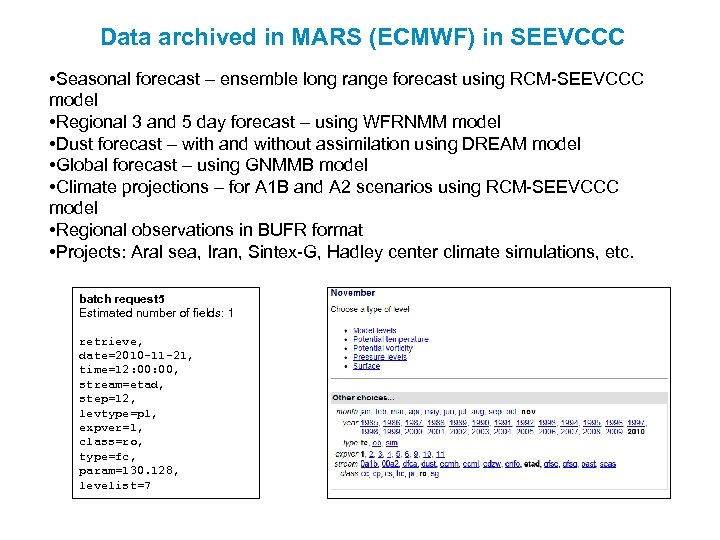 Data archived in MARS (ECMWF) in SEEVCCC • Seasonal forecast – ensemble long range forecast using RCM-SEEVCCC model • Regional 3 and 5 day forecast – using WFRNMM model • Dust forecast – with and without assimilation using DREAM model • Global forecast – using GNMMB model • Climate projections – for A 1 B and A 2 scenarios using RCM-SEEVCCC model • Regional observations in BUFR format • Projects: Aral sea, Iran, Sintex-G, Hadley center climate simulations, etc. batch request 5 Estimated number of fields: 1 retrieve, date=2010 -11 -21, time=12: 00, stream=etad, step=12, levtype=pl, expver=1, class=ro, type=fc, param=130. 128, levelist=7
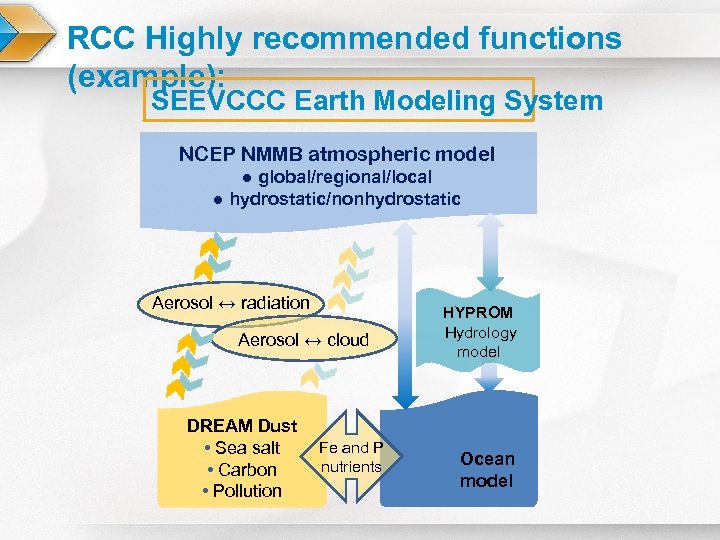 RCC Highly recommended functions (example): SEEVCCC Earth Modeling System NCEP NMMB atmospheric model ● global/regional/local ● hydrostatic/nonhydrostatic Aerosol ↔ radiation Aerosol ↔ cloud DREAM Dust • Sea salt • Carbon • Pollution Fe and P nutrients HYPROM Hydrology model Ocean model
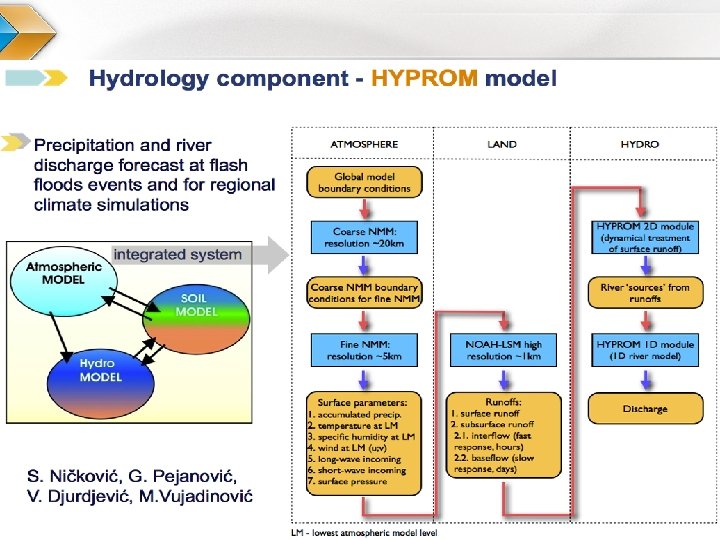
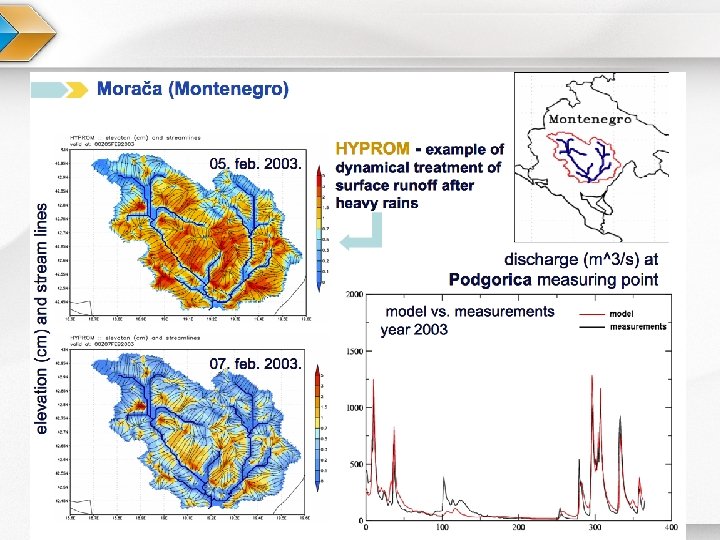
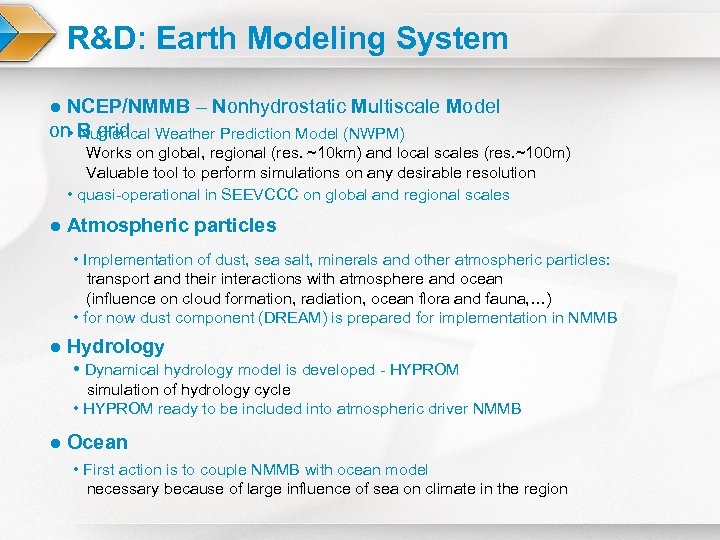 R&D: Earth Modeling System ● NCEP/NMMB – Nonhydrostatic Multiscale Model on • B grid Weather Prediction Model (NWPM) Numerical Works on global, regional (res. ~10 km) and local scales (res. ~100 m) Valuable tool to perform simulations on any desirable resolution • quasi-operational in SEEVCCC on global and regional scales ● Atmospheric particles • Implementation of dust, sea salt, minerals and other atmospheric particles: transport and their interactions with atmosphere and ocean (influence on cloud formation, radiation, ocean flora and fauna, …) • for now dust component (DREAM) is prepared for implementation in NMMB ● Hydrology • Dynamical hydrology model is developed - HYPROM simulation of hydrology cycle • HYPROM ready to be included into atmospheric driver NMMB ● Ocean • First action is to couple NMMB with ocean model necessary because of large influence of sea on climate in the region
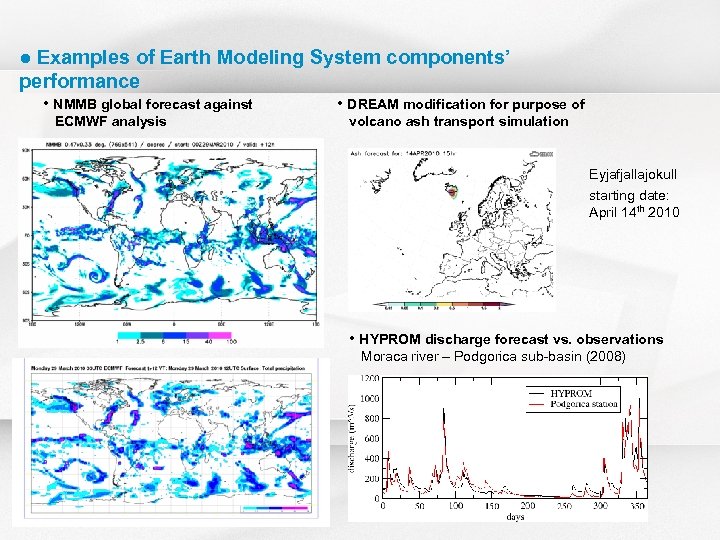 ● Examples of Earth Modeling System components’ performance • NMMB global forecast against ECMWF analysis • DREAM modification for purpose of volcano ash transport simulation Eyjafjallajokull starting date: April 14 th 2010 • HYPROM discharge forecast vs. observations Moraca river – Podgorica sub-basin (2008)
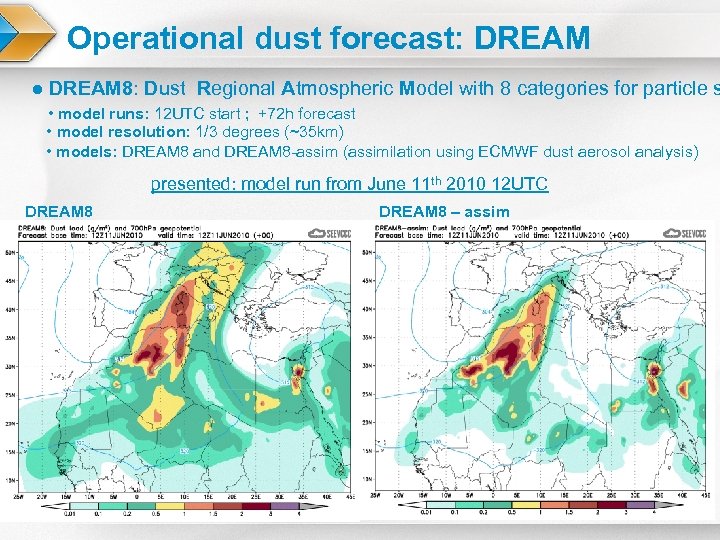 Operational dust forecast: DREAM ● DREAM 8: Dust Regional Atmospheric Model with 8 categories for particle s • model runs: 12 UTC start ; +72 h forecast • model resolution: 1/3 degrees (~35 km) • models: DREAM 8 and DREAM 8 -assim (assimilation using ECMWF dust aerosol analysis) presented: model run from June 11 th 2010 12 UTC DREAM 8 – assim
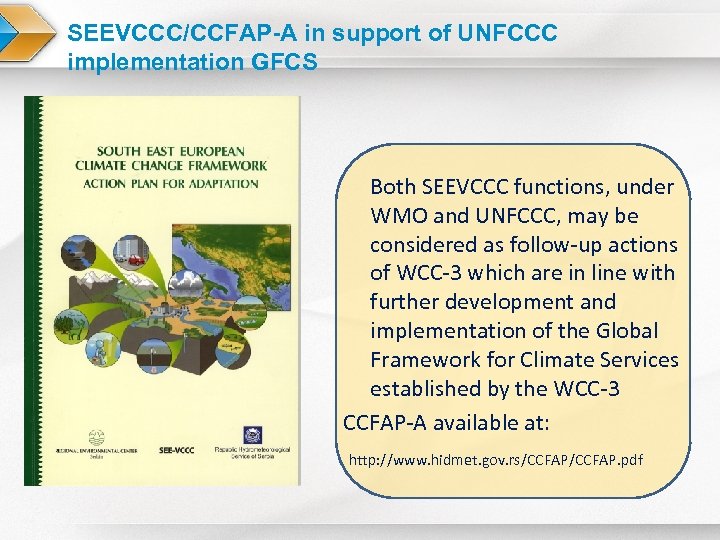 SEEVCCC/CCFAP-A in support of UNFCCC implementation GFCS Both SEEVCCC functions, under WMO and UNFCCC, may be considered as follow-up actions of WCC-3 which are in line with further development and implementation of the Global Framework for Climate Services established by the WCC-3 CCFAP-A available at: http: //www. hidmet. gov. rs/CCFAP. pdf
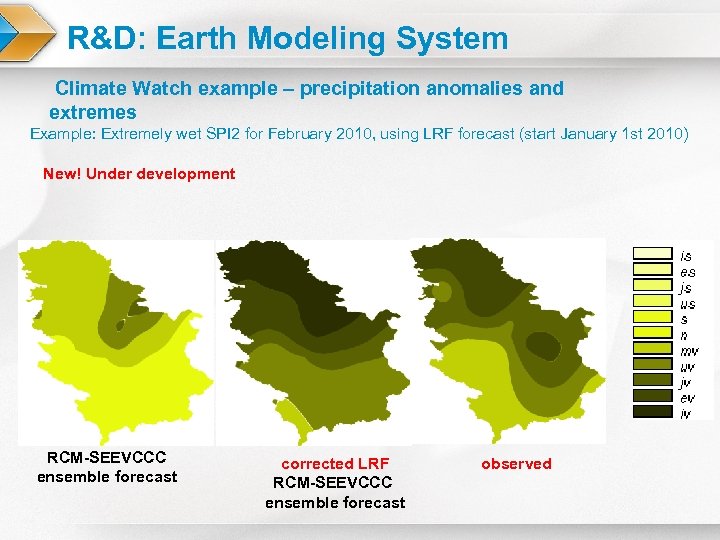 R&D: Earth Modeling System Climate Watch example – precipitation anomalies and extremes Example: Extremely wet SPI 2 for February 2010, using LRF forecast (start January 1 st 2010) New! Under development RCM-SEEVCCC ensemble forecast corrected LRF RCM-SEEVCCC ensemble forecast observed
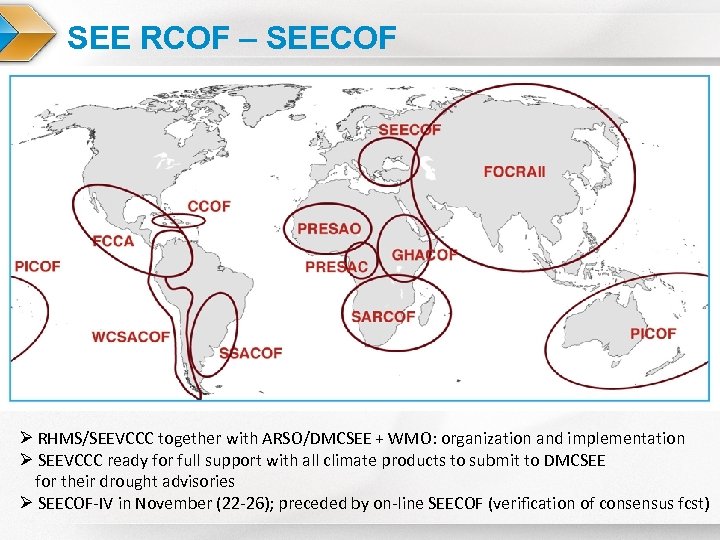 SEE RCOF – SEECOF Ø RHMS/SEEVCCC together with ARSO/DMCSEE + WMO: organization and implementation Ø SEEVCCC ready for full support with all climate products to submit to DMCSEE for their drought advisories Ø SEECOF-IV in November (22 -26); preceded by on-line SEECOF (verification of consensus fcst)
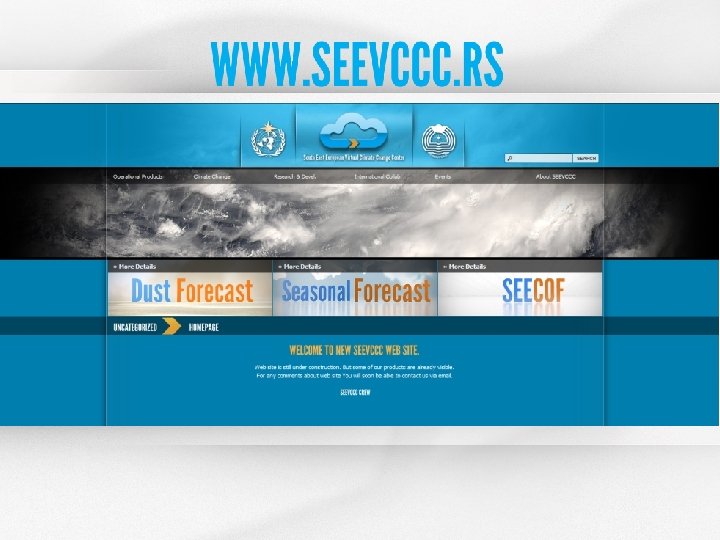
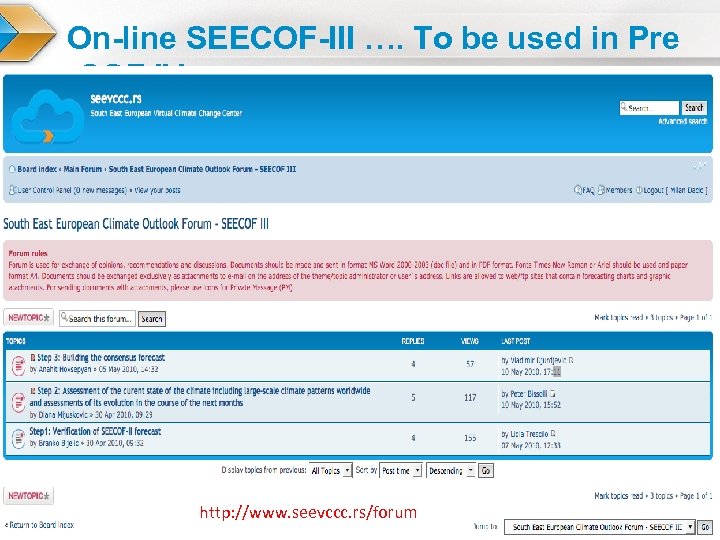 On-line SEECOF-III …. To be used in Pre -COF IV http: //www. seevccc. rs/forum
 Facing Problems and Future Plans • setting up of sub-regional teams + CB • enhancing of sub-regional data exchange (data policy issue!) • use of other existing RCMs (Reg. CM 4, PRECIS, etc. ) • collaboration in further application and improvement of Climate Watch Advisory System • Research and Development Agenda in SEE – Meeting in 11 -13 April 2011 • Task Team on RCOF - TT-RCOF …